
Third-party cookies are going away. For insurance companies that rely on retargeting and cross-site tracking, this creates a massive challenge. How do you reach potential customers without traditional tracking methods?
Here's the reality: 78% of programmatic ad buys rely on cookies. Insurance companies face even higher dependency rates. Google's Privacy Sandbox initiative continues reducing third-party cookie reliance while still enabling personalized ads.
The good news? Companies that master cookieless insurance advertising gain significant competitive advantages. You'll reach customers more effectively while staying compliant with privacy regulations like GDPR and CCPA.
This guide shows you exactly how to adapt your insurance marketing for a cookieless world. You'll learn proven strategies that work today and protect your advertising investment for the future.
What You'll Learn
Insurance companies face unique hurdles as third-party cookies disappear. Understanding these challenges helps you prepare better strategies for reaching potential customers.
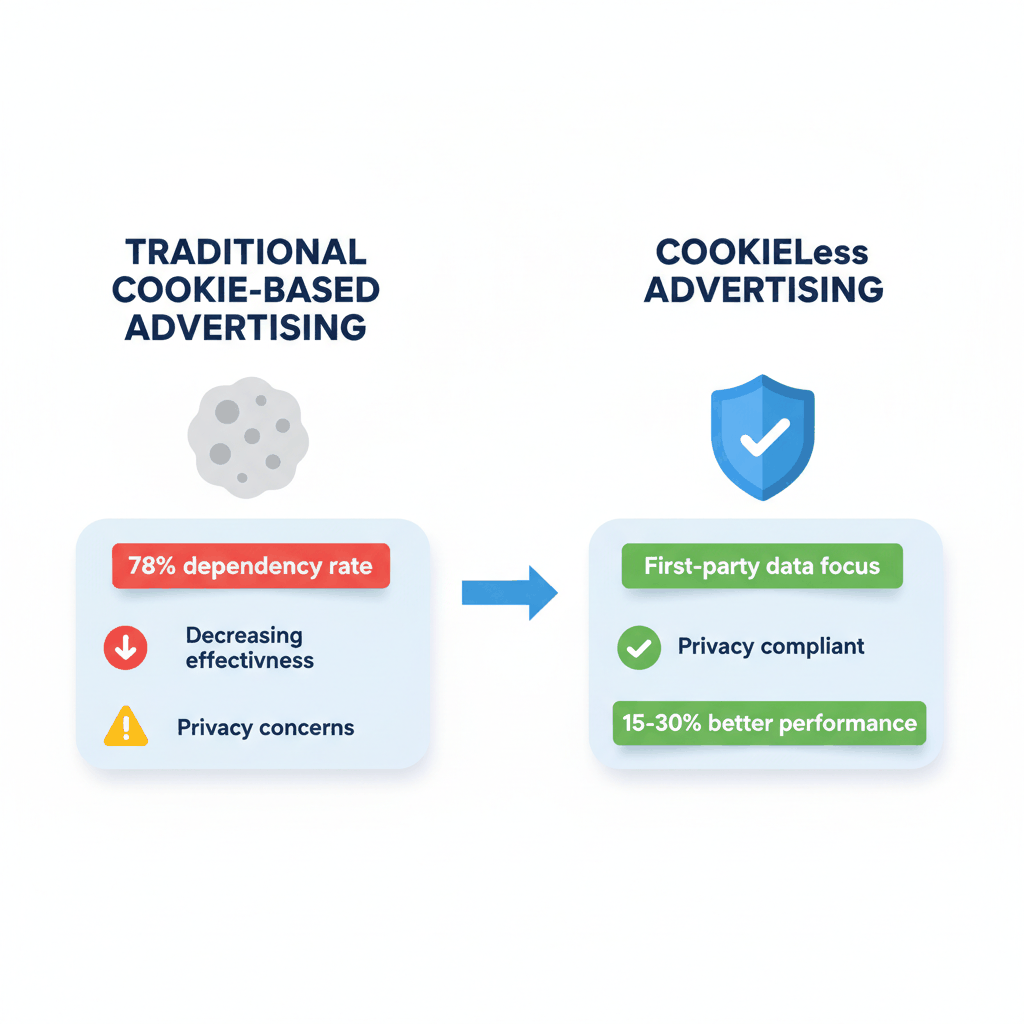
79% of Americans worry about how companies use their data. Plus, 41% regularly delete cookies and 30% use ad blockers. This means traditional tracking methods reach fewer prospects each year.
For insurance marketers, this creates immediate problems. Your retargeting campaigns lose effectiveness. Cross-site tracking becomes nearly impossible. Customer journey data gets fragmented and incomplete.
Without third-party cookies, measuring campaign success becomes much harder. You can't easily track prospects across different websites. This makes it difficult to understand which marketing channels drive the best insurance leads.
Google's own testing reveals serious measurement problems. Their 2024 report found that 85% of conversions were inaccurate by 60% to 100% using Privacy Sandbox tools.
Many insurance companies struggle with technical preparation. Only 60% of brands feel mostly prepared for cookie loss. This percentage dropped from 78% in 2022.
The main barriers include limited technical resources, budget constraints for testing new solutions, and difficulty implementing alternatives while cookies still work on some browsers.
Early testing shows significant performance drops. Criteo, a Google partner testing new APIs, reported that Topics API was five times less effective than third-party cookies after one year of testing.
Insurance marketers cite three major concerns: difficulty tracking user behaviors across channels (66%), decreased effectiveness of targeted advertising (57%), and attribution measurement difficulties (57%).
First-party data becomes your most valuable asset in cookieless advertising. This is information customers willingly share directly with your insurance company. Here's how to collect and use it effectively.
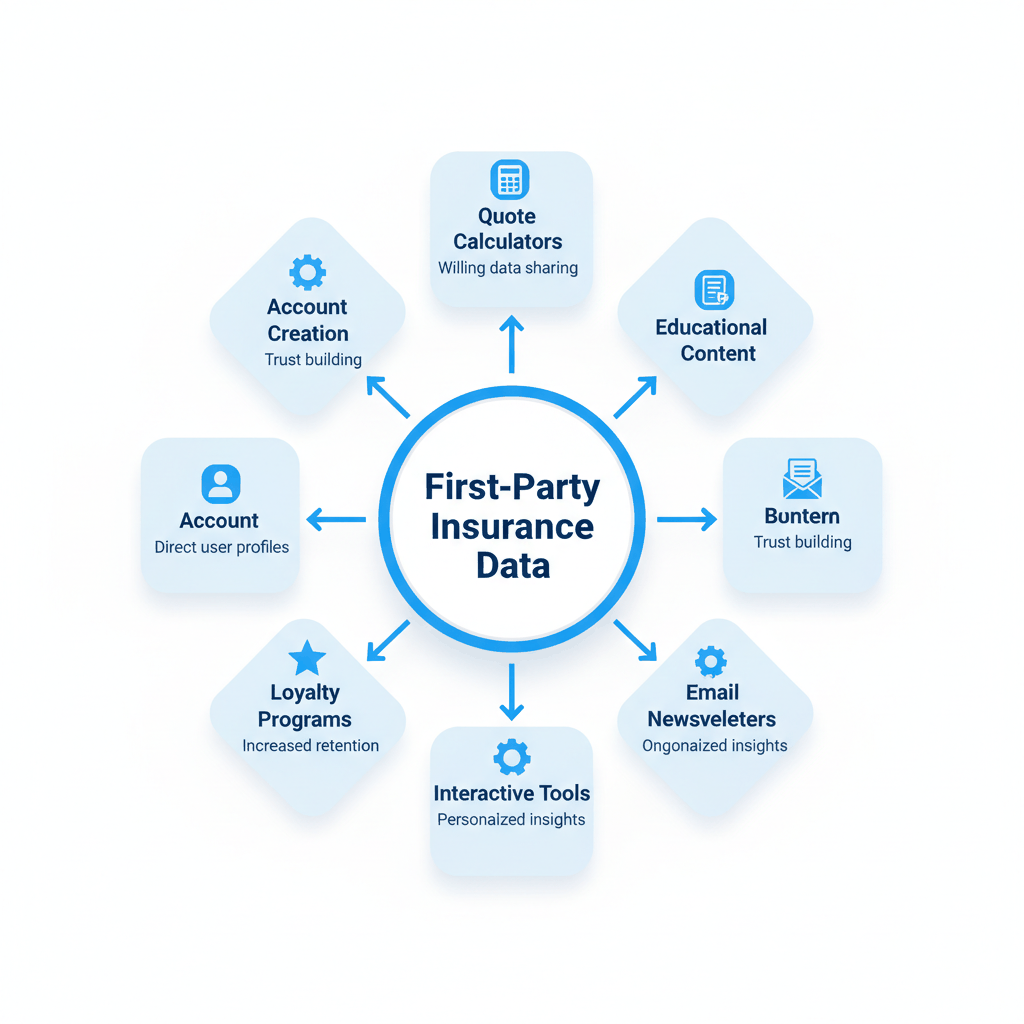
Customers share data when they receive something valuable in return. Create compelling reasons for prospects to provide their information willingly.
Effective collection methods include:
Insurance quote calculators requiring basic demographic information
Educational content like coverage guides in exchange for email addresses
Newsletter sign-ups offering exclusive insurance tips and discounts
Interactive tools like coverage comparison charts
Loyalty programs rewarding existing customers for referrals
Account creation providing personalized policy management
Don't ask for everything upfront. Start with basic information and gradually collect more data as trust builds. This approach increases completion rates and data quality.
For example, start with email and zip code for quotes. Later, request phone numbers for follow-up. Finally, ask for detailed coverage preferences during the application process.
A Customer Data Platform (CDP) centralizes all first-party data from different touchpoints. This creates complete customer profiles without relying on third-party cookies.
Your CDP should integrate data from your website, email campaigns, phone calls, and policy management systems. This unified view enables better targeting and personalization across all marketing channels.
High-quality first-party data requires proper collection and storage practices. Always obtain clear consent before collecting personal information. Provide easy opt-out options and transparent privacy policies.
Regular data cleaning ensures accuracy and compliance. Remove outdated information and respect customer preferences for communication frequency and channels.
Contextual advertising targets prospects based on website content rather than tracking behavior. Research shows contextual ads achieve 50% higher click rates compared to behavioral ads.
Place insurance ads on websites with relevant content. For auto insurance, target automotive websites and car shopping platforms. For home insurance, focus on real estate and home improvement sites.
This approach works because visitors to these sites already show intent for related insurance products. You reach prospects during active research phases without invasive tracking.
Use keyword targeting to place ads alongside relevant content. Target terms like "buying a home," "new car purchase," or "starting a family" to reach prospects needing insurance coverage.
Topic targeting focuses on broader content themes. Target categories like personal finance, automotive, or home improvement to reach audiences likely needing insurance products.
Align contextual campaigns with seasonal patterns and major life events. Target college-related content during back-to-school season for renters insurance. Focus on wedding content for life insurance campaigns.
Life events create natural insurance needs. Contextual targeting helps you reach prospects during these important decision-making periods without invasive tracking methods.
Combine contextual targeting with geographic and demographic information. This creates more precise targeting while respecting privacy preferences.
For example, target home improvement content in areas with older housing stock for home insurance. Focus on family-oriented content in suburban areas for life insurance campaigns.
Server-side tracking and enhanced conversion tools replace traditional cookie-based retargeting. These solutions provide accurate attribution while respecting privacy preferences.
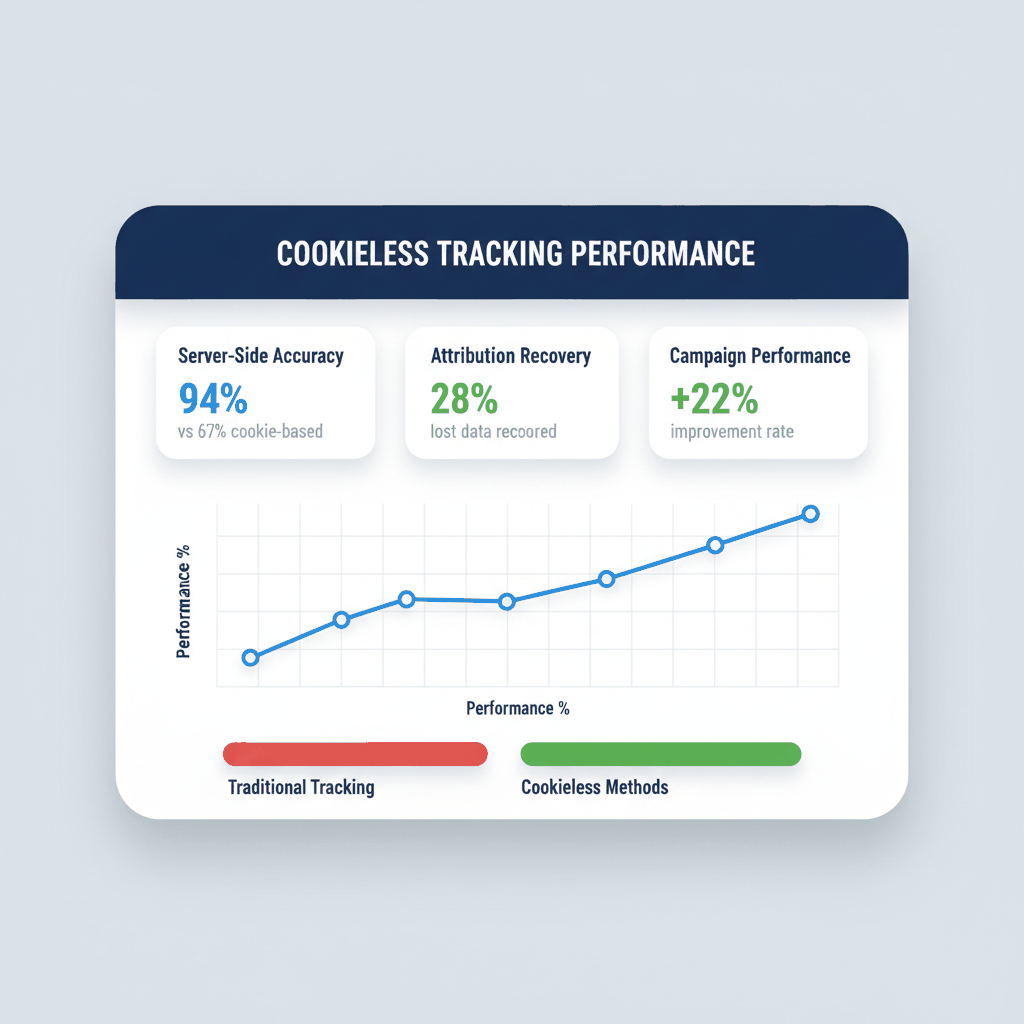
Server-side tracking moves data collection from browsers to your servers. This improves accuracy and bypasses browser restrictions on third-party cookies and tracking scripts.
Meta's Conversions API and Google's Enhanced Conversions represent the most direct path to cookieless tracking. These tools send conversion data directly from your servers to advertising platforms.
Benefits include improved data accuracy, better iOS 14+ performance, reduced impact from ad blockers, and enhanced campaign optimization capabilities.
Enhanced conversions use hashed customer information to match conversions with ad clicks. This works without third-party cookies while providing accurate attribution data.
Implementation requires capturing customer information like email addresses and phone numbers during the conversion process. This data gets hashed and sent securely to advertising platforms for matching.
Build custom audiences using first-party data instead of website pixel information. Upload customer email lists to create lookalike audiences and retargeting segments.
This approach often performs better than cookie-based targeting because it uses actual customer data rather than inferred behavior patterns.
Alternative identity solutions like The Trade Desk's UID2 and ID5's Universal ID maintain customer views across channels without third-party cookies.
These solutions require customer consent but enable comprehensive tracking and attribution across multiple platforms and devices.
The right tools make cookieless insurance advertising manageable and effective. Here are the most important platforms and solutions for insurance marketers.
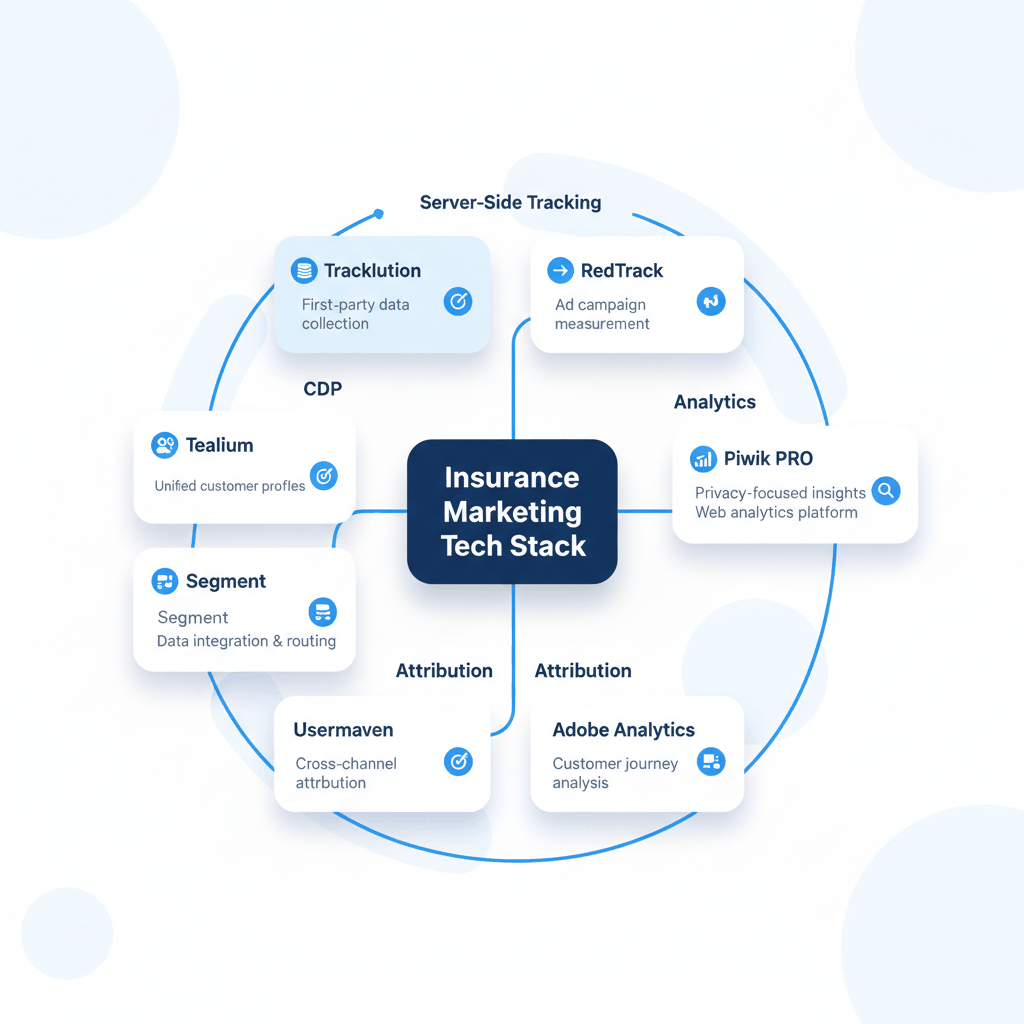
Tracklution provides easy server-side tracking without complex infrastructure requirements. Marketing teams can implement cookieless tracking without heavy technical resources or developer dependence.
RedTrack offers comprehensive tracking for performance marketers using server-side and cookieless methods. The platform enables accurate attribution while maintaining privacy compliance.
Piwik PRO delivers an enterprise suite including analytics, tag manager, consent manager, and customer data platform. The platform operates in cookieless mode using browser storage and server-side APIs.
Swetrix provides fully cookieless analytics using first-party data and server-side processing. The platform includes automatic IP anonymization and privacy-focused measurement capabilities.
Usermaven's multi-touch attribution tool provides insights through seven attribution models including first-click, last-click, linear, position-based, and time-decay approaches for examining channel contribution.
Adobe Analytics helps gather and analyze data from every point in the customer journey. The platform uses machine learning to identify patterns in customer behavior without relying on third-party cookies.
CDPs centralize first-party data from all touchpoints to create unified customer profiles. These platforms enable personalization and targeting without third-party cookie dependence.
Key features include real-time data integration, audience segmentation, cross-channel activation, and privacy compliance management.
Real insurance companies achieve significant results using cookieless advertising strategies. These case studies show practical implementation approaches and measurable outcomes.
TruStone Financial, a Minnesota-based credit union, used first-party audience targeting and conversion-based optimizations with their new website launch.
Results included 29% brand awareness lift in new markets, 7% home market awareness lift year-over-year, and 22% drop in cost per applications. First-party data and retargeting became their top converting targeting tactics.
Park Insurance achieved a 10% increase in organic traffic from search engines in three months and a 20% increase in sales over 12 months through content marketing strategies.
After targeting specific sectors like horsebox insurance, taxi insurance and catering insurance, their keywords started climbing and organic traffic increased significantly.
Pet Insurance Australia (PIA) grew from a challenger brand to one of Australia's top pet insurance companies. They doubled sales through digital marketing strategy implementation despite competing against 23 established brands with multimillion-dollar advertising budgets.
Insurance marketers implementing server-side tracking recover lost attribution data and feed advertising platforms clean conversion signals. This enables better audience targeting, more effective bid optimization, and stronger campaign results.
Companies typically see 15-30% improvement in campaign performance after implementing proper server-side tracking compared to traditional pixel-based measurement.
Start your cookieless insurance advertising transition with these practical steps. Focus on quick wins while building long-term capabilities.
Audit your current data collection methods. Identify where you capture customer information and how you can expand these opportunities.
Implement basic server-side tracking for your most important conversion events. Start with Meta Conversions API or Google Enhanced Conversions for immediate improvement.
Create compelling lead magnets that encourage prospects to share contact information willingly. Focus on valuable content like insurance guides, calculators, and comparison tools.
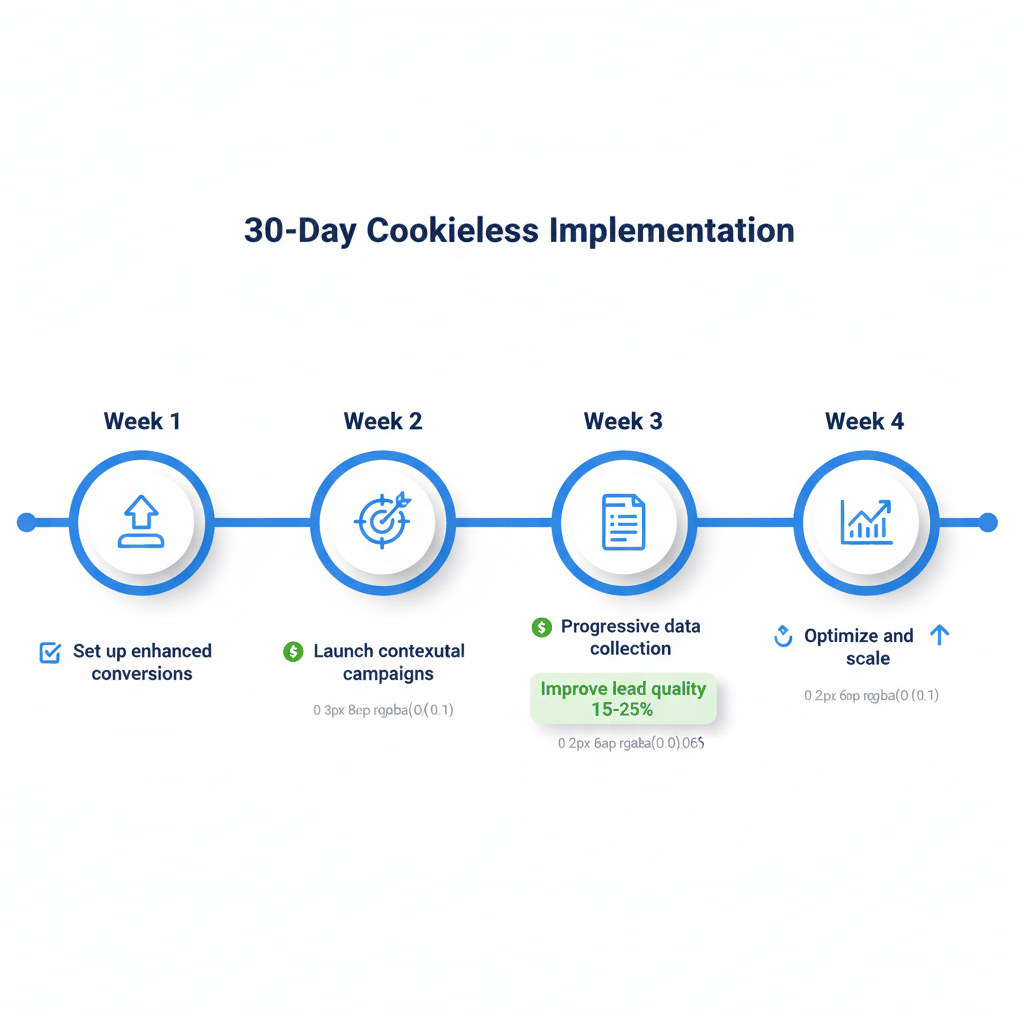
Week 1: Set up enhanced conversions for your primary advertising platforms. Test data flow and accuracy compared to existing tracking methods.
Week 2: Launch contextual advertising campaigns targeting relevant websites and content categories. Start with small budgets to test effectiveness.
Week 3: Develop progressive data collection strategies for your website. Add forms and interactive elements that capture customer information gradually.
Week 4: Analyze performance data and optimize based on early results. Identify which strategies work best for your specific insurance products and target audiences.
Invest in customer data platform technology to unify all first-party data sources. This creates the foundation for advanced personalization and targeting capabilities.
Develop comprehensive content marketing strategies that support contextual advertising efforts. Create valuable resources that attract prospects and encourage data sharing.
Build partnerships with relevant websites and platforms for second-party data sharing opportunities. This expands your reach while maintaining privacy compliance.
How effective is cookieless insurance advertising compared to traditional methods?
Cookieless insurance advertising can be equally effective when implemented properly. Companies using first-party data and server-side tracking often see 15-30% better performance than cookie-based campaigns. The key is building direct customer relationships and using contextual targeting strategies.
What's the biggest challenge in implementing first-party data insurance marketing?
The biggest challenge is creating compelling value exchanges that encourage prospects to share information willingly. Insurance companies need valuable content like calculators, guides, and exclusive offers. Start with simple tools and gradually expand data collection as trust builds.
How much budget should insurance companies allocate to cookieless advertising strategies?
Start with 20-30% of your digital advertising budget for testing cookieless strategies. As performance improves and third-party cookies become less reliable, gradually increase allocation. Most successful insurance companies plan to shift 70-80% of their budget to cookieless methods in 2026.
Can small insurance agencies compete without expensive tracking technology?
Absolutely. Many cookieless strategies work well for small agencies. Focus on collecting customer emails, creating valuable content, and using contextual advertising. Tools like Google Enhanced Conversions and Meta Conversions API are free to implement and provide significant advantages over traditional tracking.
How does privacy-focused insurance marketing affect lead quality?
Privacy-focused marketing often improves lead quality because prospects voluntarily engage with your content and share information. These leads show higher intent and convert better than those tracked through invasive methods. Contextual targeting also reaches prospects during active research phases.
Ready to get pay per call auto insurance leads? Sign up for free with ResultCalls today!

Hello everyone! My name is Alex and I write these blogs to help educate small business owners on different ways to grow their business. My goal is to make lead generation as easy as possible for you. After reading these blogs, I hope you leave with some actionable steps that will get you closer to growing your business :)