
Your plumbing website gets visitors. But are they calling you? Most plumbing websites waste their traffic. They get clicks but no calls.
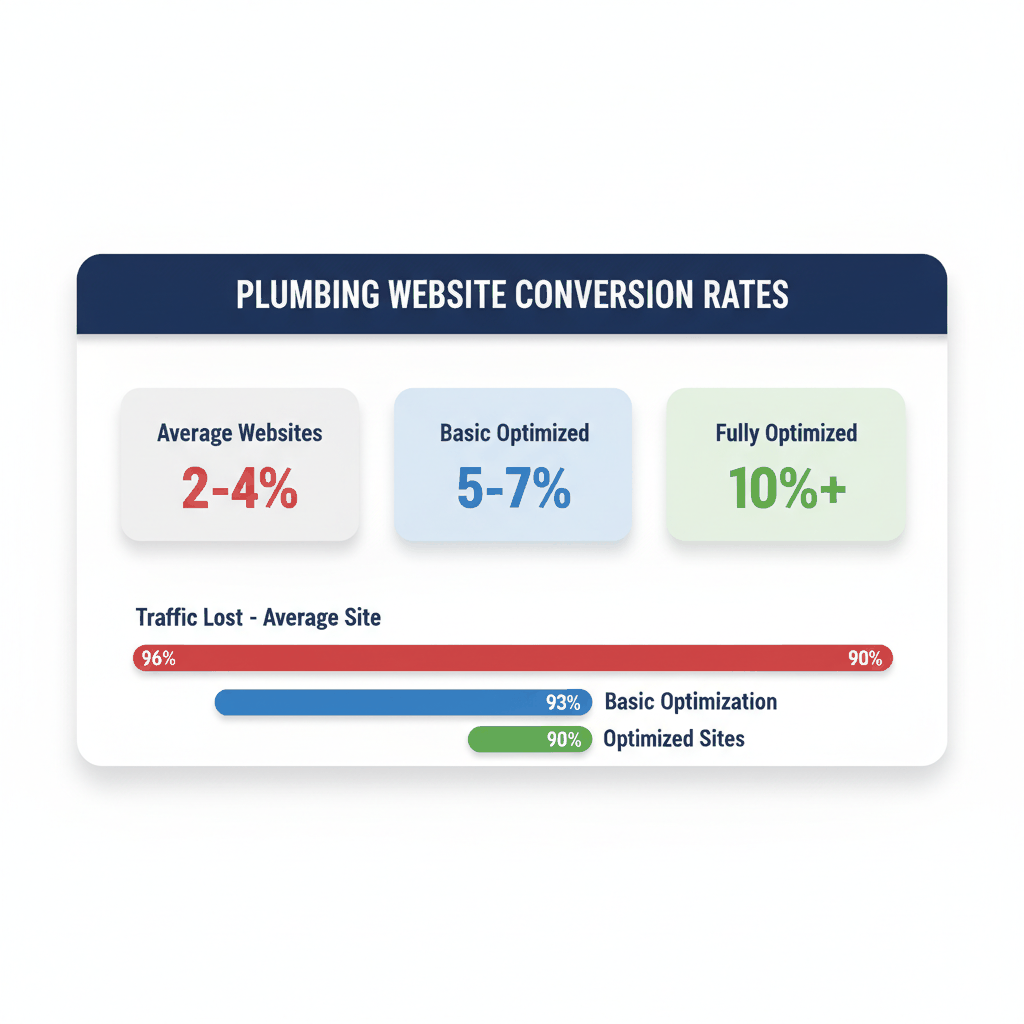
Here's the problem. The average website conversion rate is just 2-5%. That means 95% of your website visitors leave without contacting you. They go to your competitors instead.
But optimized plumbing websites can achieve much higher performance. Some reach 10% or higher conversion rates. That means a properly designed website can double or triple your leads.
This guide shows you exactly how to build a perfect plumbing website conversion machine. You'll learn the specific elements that turn visitors into calls.
Table of Contents
Plumbing is a high-trust industry. Homeowners let you into their homes. They need to trust you before they call.
Trust signals make the difference between visitors and customers. 92% of consumers hesitate to make purchases without customer reviews. For plumbers, this number is even higher.
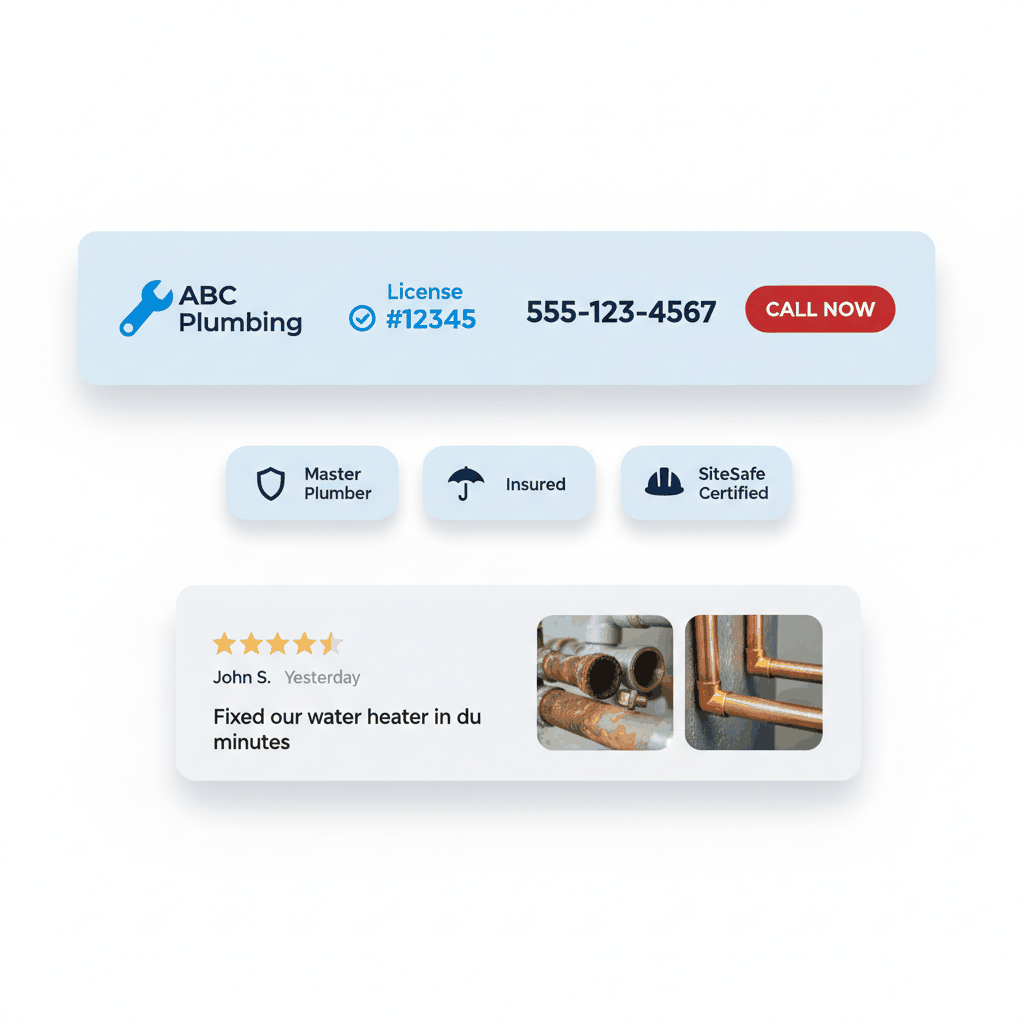
Your license number should appear directly beneath your logo. This pairs trust with brand recognition. Just like your license is required to operate, it's required for website credibility.
Show your accreditation logos prominently. Master Plumbers, SiteSafe, and industry certifications build instant credibility. Place these in your header and footer.
Display Google Review snippets with names and timestamps. Real reviews with details convert better than generic testimonials. Include photos when customers provide them.
Feature short customer quotes on your homepage. Use specific details like "Fixed our water heater in 30 minutes" instead of generic praise.
Real photos of your team and completed jobs beat stock images. Customers want to see actual plumbers, not models in clean uniforms.
Show before-and-after photos of your work. Visual proof builds confidence in your skills. Include photos of your trucks and equipment.
Mobile-First Design Excellence
Over 60% of website traffic comes from mobile devices. For local service businesses, that number often exceeds 70%.
Mobile-first design isn't optional anymore. Google uses mobile-first indexing for all websites. Your mobile site determines your search rankings.
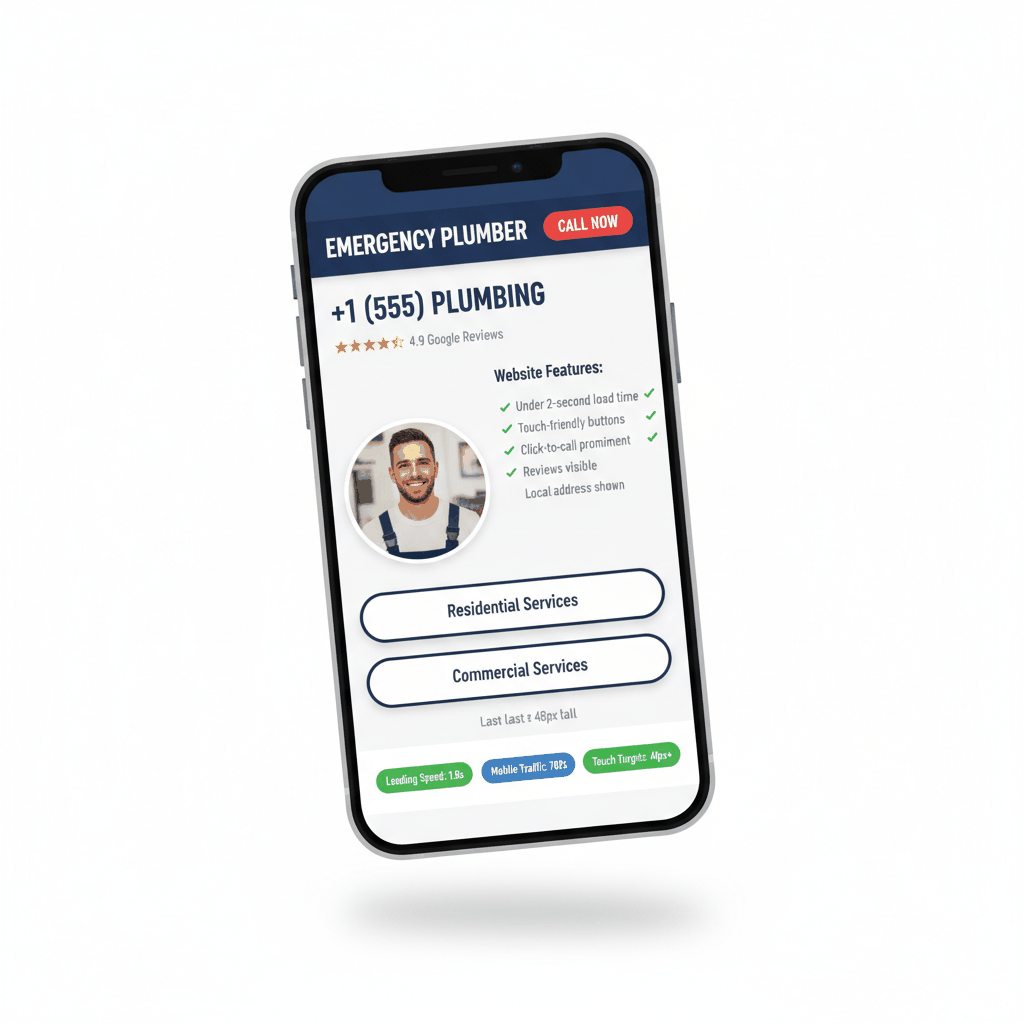
Your website must fully load in under 2 seconds on mobile. 53% of users abandon sites that take longer than 3 seconds.
Fast loading prevents bounces and maximizes conversions. Every extra second of load time kills potential customers.
Mobile-friendly button sizing increases clicks by 90%. Use minimum 48px by 48px touch targets. Larger buttons prevent tap accuracy problems.
Space clickable elements properly. Buttons too close together cause user frustration. This kills mobile conversions instantly.
Click-to-call buttons are essential for mobile users. Place them prominently at the top of your mobile site. Use urgent language like "Call Now for Emergency Service."
Make your phone number clickable everywhere it appears. Users expect immediate calling ability on mobile devices.
Call-to-action placement directly impacts plumbing website conversion rates. CTAs visible above the fold generate the most engagement.
Your primary CTA should appear in at least four places. The header, hero section, sticky mobile bar, and footer. This gives visitors multiple conversion opportunities.
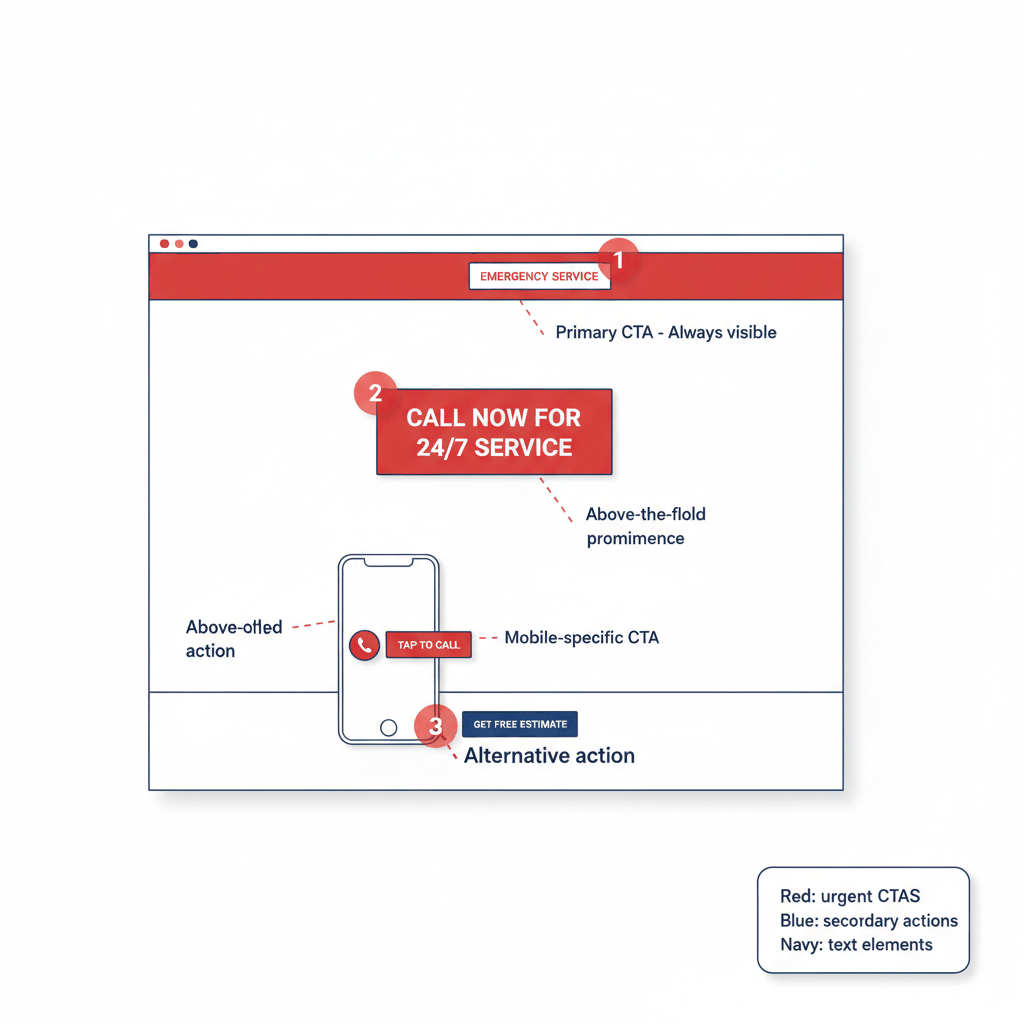
Red consistently performs well for call-to-action buttons. It creates urgency and draws attention. However, contrast with your brand colors matters more than specific colors.
Test different CTA colors against your website background. High contrast increases visibility and click rates.
Compelling CTAs have urgency built in. "Call Now for 24/7 Emergency Service" works better than "Contact Us." Deadlines and time-sensitive offers increase response rates.
Use action words that match searcher intent. "Get Emergency Plumbing Help" aligns with urgent searches. "Schedule Routine Maintenance" works for planned services.
Offer different contact methods for different visitors. Some prefer calling, others want forms or chat. Provide phone, form, and live chat options.
Primary CTAs should focus on phone calls. Secondary CTAs can include "Get Free Estimate" or "Schedule Online."
Great plumber website design goes beyond looking good. It guides visitors toward contacting you. Every element serves the conversion goal.
Visitors want to know if you handle their specific problem. Break services into clear categories like Drainage, Hot Water, and Gas Fitting.
Use short, specific descriptions rather than broad labels. "Blocked Drain Clearing" works better than "Drainage Services." Be exact about what you do.
Strong local SEO signals throughout your site build trust. Include your service area in headers and content. "Our Adelaide Plumbers" or "Serving Northern Suburbs" shows local focus.
Display your physical address prominently. Local businesses with visible addresses get more trust from visitors.
Many plumbing searches are urgent. Highlight 24/7 emergency availability above the fold. Emergency services often convert at higher rates.
Use emergency-focused headlines like "24/7 Emergency Plumber" or "Same-Day Service Available." Match the urgency visitors feel.
Plumbing Website Optimization Strategies
Website optimization for plumbers requires specific strategies. Unlike other businesses, plumbers deal with emergency situations and high-trust requirements.
Live chat helps capture leads when customers have questions. Our research shows live chat can generate up to 11x more inbound leads from websites.
Be available when customers are deciding between plumbers. Real-time answers beat waiting for callbacks every time.
90% of customers say video helps them make buying decisions. For plumbers, video builds trust and shows expertise.
Create videos showing common repairs or introducing your team. Video makes your business more personal and trustworthy.
Install Google Analytics to track website performance. Set up conversion tracking for phone calls and form submissions.
Test different CTA colors, placement, and language. Only measurable data reveals what actually works for your specific market.
Google's Core Web Vitals affect both rankings and user experience. Fast-loading pages keep visitors engaged and improve conversions.
Monitor loading speed, interactivity, and visual stability. Poor Core Web Vitals hurt both SEO and conversion rates.
Real plumbing businesses achieve dramatic results with optimized websites. These case studies show what's possible with the right approach.
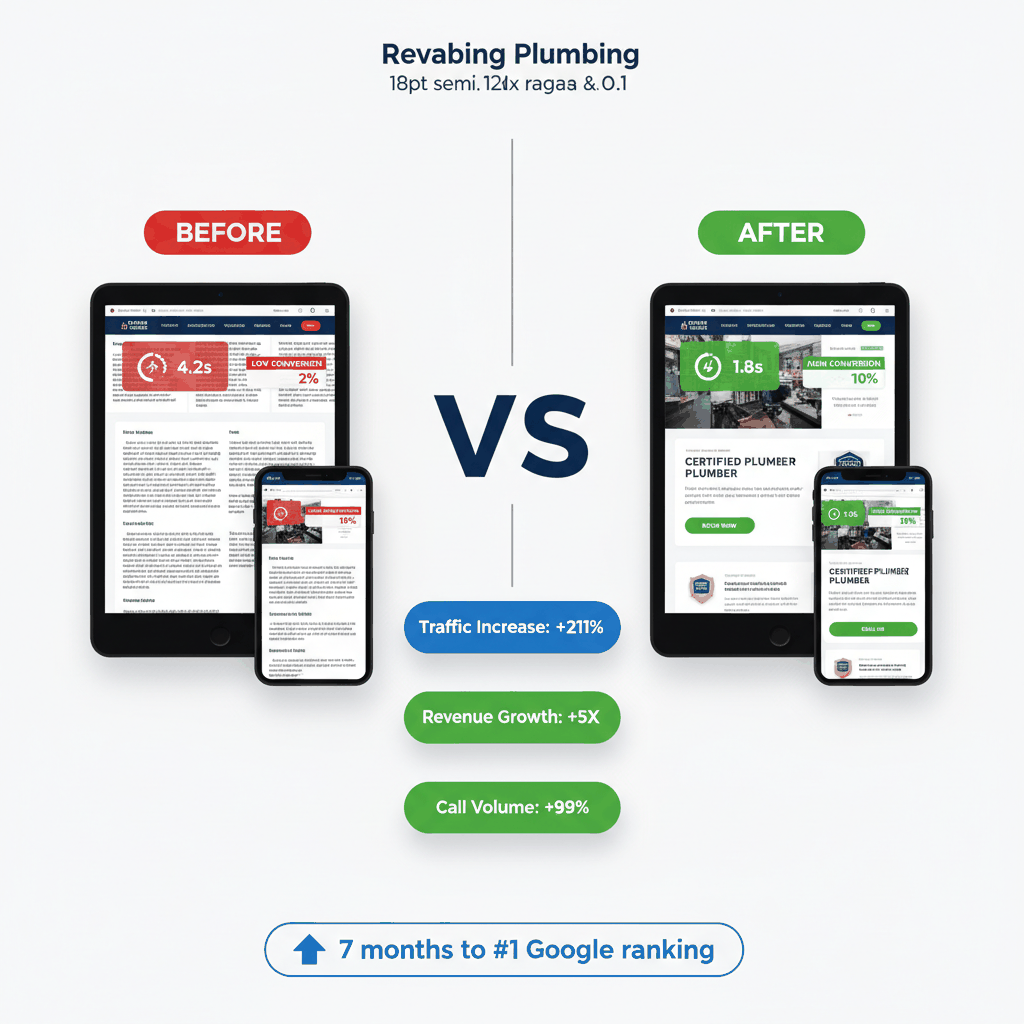
One Call Plumbing started in a shed and achieved 5X revenue growth in 12 months. Their website optimization was key to this success.
They climbed from page 3 of Google to the #1 position in just 7 months. They also claimed the #1 local map listing for "Plumbers Spartanburg SC."
The result? Their phone rings constantly with qualified leads.
This company grew from a one-man operation to over 8 trucks and $2.5 million in annual revenue. Professional website design was crucial for their growth.
Partnering with professional web services nearly doubled their call volume. The website became their most effective marketing tool.
A US-based plumbing company achieved a 99% increase in conversions through website redesign and optimization.
The improvements included technical SEO, better CTA implementation, and mobile optimization. These changes doubled their website's effectiveness.
This Toronto plumbing company achieved 700 additional visitors through technical optimization and mobile improvements.
The traffic increase came from better mobile performance and local SEO optimization. More traffic plus better conversion rates equals significant growth.
What is the average plumbing website conversion rate?
The average conversion rate for plumbing customers ranges from 2% to 4%. However, optimized plumbing websites can achieve 10% or higher conversion rates through proper design and trust signals.
How important is mobile optimization for plumber website design?
Mobile optimization is critical since 70-80% of plumbing website traffic comes from mobile devices. Google also uses mobile-first indexing, making mobile performance essential for search rankings.
What trust signals work best for plumbing website optimization?
License numbers, customer reviews, professional certifications, and real photos of your team work best. These elements build credibility before customers call your business.
Where should I place call-to-action buttons for maximum conversion?
Place CTAs in your header, hero section above the fold, sticky mobile bottom bar, and footer. Multiple CTA locations give visitors more opportunities to contact you.
How fast should my plumbing website load on mobile?
Your website should load in under 2 seconds on mobile devices. 53% of users abandon sites taking longer than 3 seconds to load, directly hurting your conversion rates.
Ready to buy plumbing leads? Sign up for free with ResultCalls today!

Hello everyone! My name is Alex and I write these blogs to help educate small business owners on different ways to grow their business. My goal is to make lead generation as easy as possible for you. After reading these blogs, I hope you leave with some actionable steps that will get you closer to growing your business :)