Are you an HVAC business owner watching competitors get all the best customers? You fix air conditioners and heating systems perfectly. But your phone isn't ringing enough. The problem isn't your technical skills.
Most HVAC companies fail at marketing because they don't have a clear plan. They waste money on random ads. They compete on price instead of value. Meanwhile, their competitors with solid marketing plans book jobs weeks in advance.
A well-built marketing plan for HVAC company growth changes everything. You'll attract better customers who pay fair prices. You'll book more jobs during slow seasons. Plus, you'll stop wasting money on marketing that doesn't work.
This guide shows you exactly how to create a marketing plan that generates consistent leads and grows your business. You'll learn proven strategies that successful HVAC companies use to dominate their local markets.
Table of Contents
The North American HVAC system market will grow from $43.67 billion in 2022 to $62.31 billion by 2029. But most HVAC companies won't capture their fair share. They make costly marketing mistakes that drain their budgets.
Most small business owners invest only 2% to 5% of sales in marketing. Small budgets yield small results. HVAC experts say contractors need to dedicate 10% to 20% of sales toward their HVAC marketing budget if they want real growth.
A 5% marketing budget is a maintenance budget. It won't help you grow. Your competitors who spend 10% will get the leads you're missing.
Many HVAC business owners skip free marketing channels completely. They only spend money on paid ads and social media marketing. This is backwards.
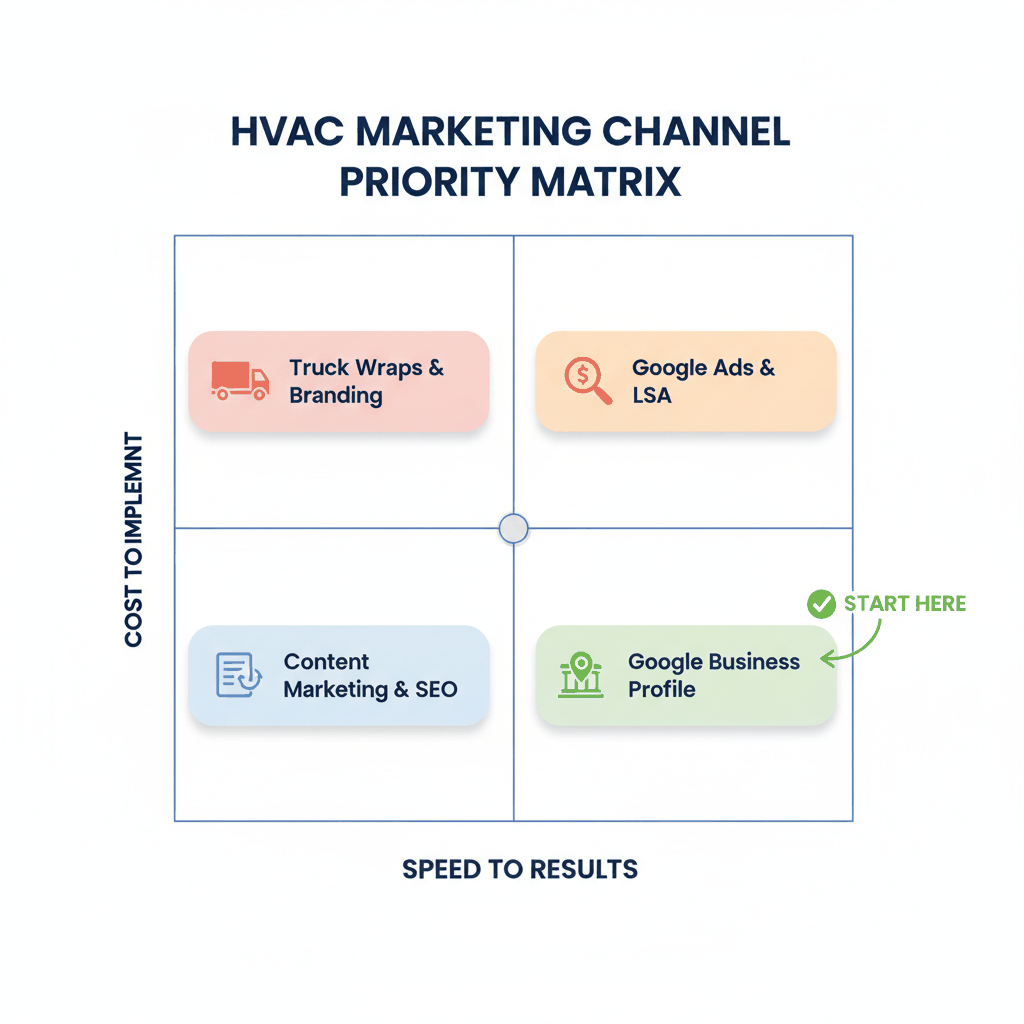
Before you spend money on marketing, use every free channel first. Google Business Profile is the most important free listing you'll ever create. When someone searches "HVAC repair near me," Google shows local businesses first.
A $10,000 truck wrap looks impressive. But it's a branding expense, not a marketing expense. When you're trying to land your first customers, that money works better in other places.
Spend $10,000 on six months of Facebook ads instead. Add 200 yard signs and 1,000 door hangers. Get professional photos for your Google Business Profile. These activities generate leads faster than truck wraps.
Many contractors turn marketing off during slow seasons. This forces them to rebuild momentum at higher costs each time. Home services businesses operate in predictable cycles. Your HVAC marketing strategy should reflect those rhythms.
Shoulder seasons provide opportunities to build pipeline strength. Run tune-up campaigns and maintenance agreement enrollment. This keeps your calendar full year-round.
Every successful marketing plan for HVAC company growth starts with a solid foundation. You need clear goals, defined audiences, and focused messaging before spending money on ads.
Start with two to three measurable goals for the year. Examples include increasing service calls by 15% or adding 100 new service plan members. Clear objectives keep your marketing focused and measurable.
Avoid vague goals like "get more customers." Instead, use specific targets like "generate 50 emergency repair calls per month" or "book 20 system installations quarterly." Specific goals help you choose the right marketing channels.
The best HVAC companies understand who they serve first. Then they tailor their HVAC marketing plan to their niche. Consider these factors:
Years in business and local reputation
Your current visibility in the market
Target customer demographics and income levels
Competition density in your service area
Available marketing budget and resources
Homeowners over 40 with household incomes above $75,000 make the best HVAC customers. They own their homes and have money for quality work. They also understand the importance of regular maintenance.
Your value proposition explains why customers should choose you over competitors. Focus on what makes your HVAC business unique and trustworthy.
Avoid generic claims like "quality service" or "fair prices." Every HVAC company says that. Instead, highlight specific benefits like "24/7 emergency response" or "lifetime warranty on installations."
For example: "We're the only HVAC company in [city] that guarantees same-day emergency repairs, even on weekends. Plus, all our technicians have 10+ years of experience."
Smart budget allocation separates growing HVAC companies from struggling ones. You need the right mix of channels and realistic spending levels.
Allocate 5% to 10% of projected annual revenue toward marketing. If you're in growth mode, aim closer to 10%. Digital marketing services for HVAC companies typically cost $2,500 to $12,000 per month.
For a company doing $500,000 in revenue, that translates to roughly $3,000 to $4,200 per month across all marketing activities. This covers digital ads, website maintenance, and other promotional expenses.
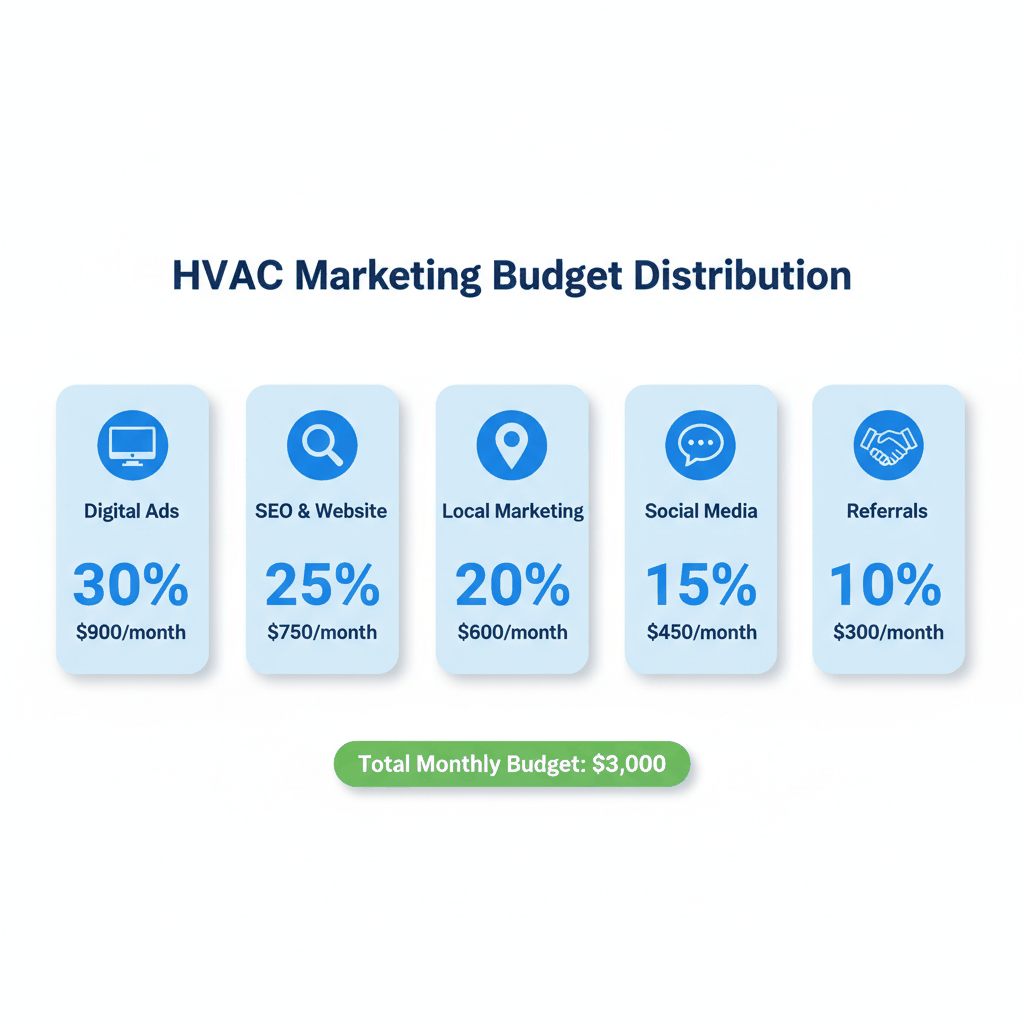
Divide your budget by channel effectiveness:
30% - Digital ads (Google, Facebook, Local Services Ads)
25% - Search engine optimization and website
20% - Local marketing (direct mail, yard signs)
15% - Social media and content marketing
10% - Referral programs and customer retention
Start with the highest-impact, lowest-cost channels first. Build momentum before adding expensive advertising options.
The best HVAC marketing strategy combines local SEO, Google Business Profile optimization, and Google Ads. These channels work together seamlessly.
SEO builds long-term visibility while Google Ads and Local Services Ads deliver immediate results. This combination captures customers at every stage of their buying journey.
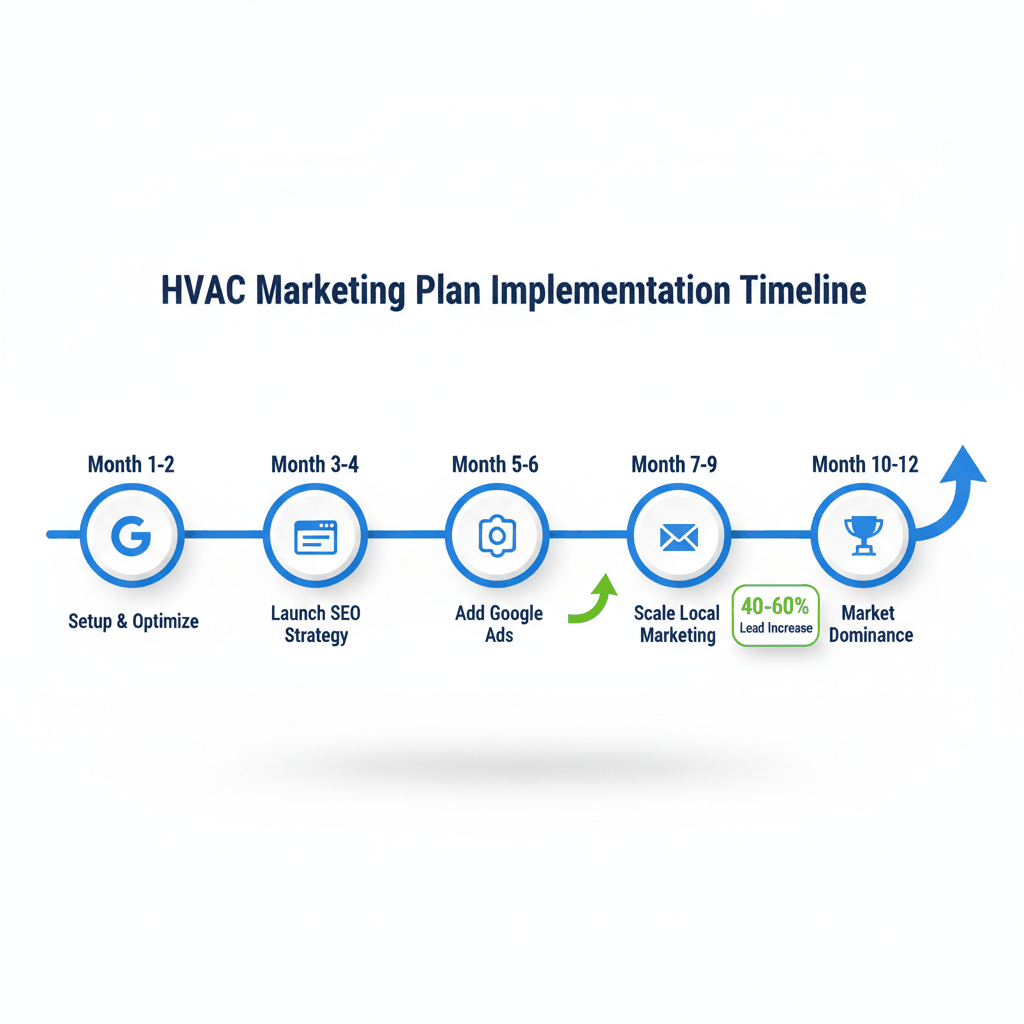
Phase your channel rollout over 3 to 6 months. Perfect one channel before adding another. This prevents spreading your budget too thin across too many platforms.
Successful HVAC companies use multiple lead generation channels that complement each other. Here are the most effective options for your HVAC advertising strategy.
Google Business Profile is the most important free listing you'll ever create. When someone searches "HVAC repair near me," Google shows the local map pack first. This appears above every website and paid ad.
Optimize your profile with complete business information, photos of your work, and regular posts about services. Encourage satisfied customers to leave reviews. Businesses with 100+ reviews see 50% more traffic from local searches.
Post weekly updates about seasonal maintenance tips or emergency repair availability. These posts keep your profile active and improve visibility in local search results.
Google Local Services Ads let you advertise at the top of search results when customers look for HVAC services. The Google Guarantee Badge builds immediate trust with potential customers.
Allocate at least $1,000 per month to Local Services Ads, especially in the early stages. These ads show when people search for emergency repairs or installations in your area.
You only pay when customers contact you directly through the ads. This makes Local Services Ads more cost-effective than traditional Google Ads for emergency services.
Local SEO helps customers find your website when they search for HVAC services. Focus on location-based keywords in your titles, meta descriptions, and content.
Target commercial intent keywords like "emergency HVAC repair" or "best HVAC installation service." These phrases signal customers ready to hire someone immediately.
Create separate pages for each service you offer. Write helpful content that answers common customer questions. This builds authority and improves search rankings over time.
Educational content makes customers trust your expertise. Write about HVAC maintenance tips, energy efficiency, and system troubleshooting. This establishes your company as knowledgeable and trustworthy.
For example, create seasonal content like "How to Prepare Your AC for Summer" or "Winter Heating System Checklist." Share these articles on your website and social media.
Answer common customer questions in your content. Address concerns about costs, repair timelines, and system replacement. This helps customers feel confident about hiring your company.
Direct mail still works for HVAC companies, especially for seasonal campaigns. Mail postcards before busy seasons to generate leads when demand increases.
Successful campaigns achieve 50% to 60% response rates with targeted seasonal messaging. Focus on maintenance reminders and special offers for tune-ups.
Target neighborhoods where you've completed recent work. Happy customers often refer neighbors when they see your marketing materials.
You can't improve what you don't measure. Track key performance metrics to optimize your HVAC marketing plan and maximize return on investment.
Create one spreadsheet updated monthly with these key metrics:
Cost per lead by channel
Number of booked jobs
Revenue generated per channel
Channel budget allocation
Conversion rate from lead to customer
Watch for red flags like any channel where cost per lead exceeds $300 consistently. High-cost channels can still be profitable if they generate replacement jobs rather than small service calls.
Install conversion tracking for form submissions and phone calls on your website. Running pay-per-click ads without accurate tracking wastes money.
Use tools like Google Analytics and call tracking software to monitor which marketing channels generate the most valuable customers. This data helps you allocate budget to the most profitable activities.
Return on Investment Analysis
Calculate ROI for each marketing channel monthly. Divide revenue generated by marketing spend to get your return ratio.
For example, if you spend $1,000 on Google Ads and generate $5,000 in revenue, your ROI is 5:1. Aim for at least 3:1 ROI on paid advertising channels.
Track lifetime customer value, not just initial job value. Customers who hire you for emergency repairs often become long-term maintenance customers.
These real-world examples show how proper marketing plans transform HVAC businesses. Learn from companies that built successful growth strategies.
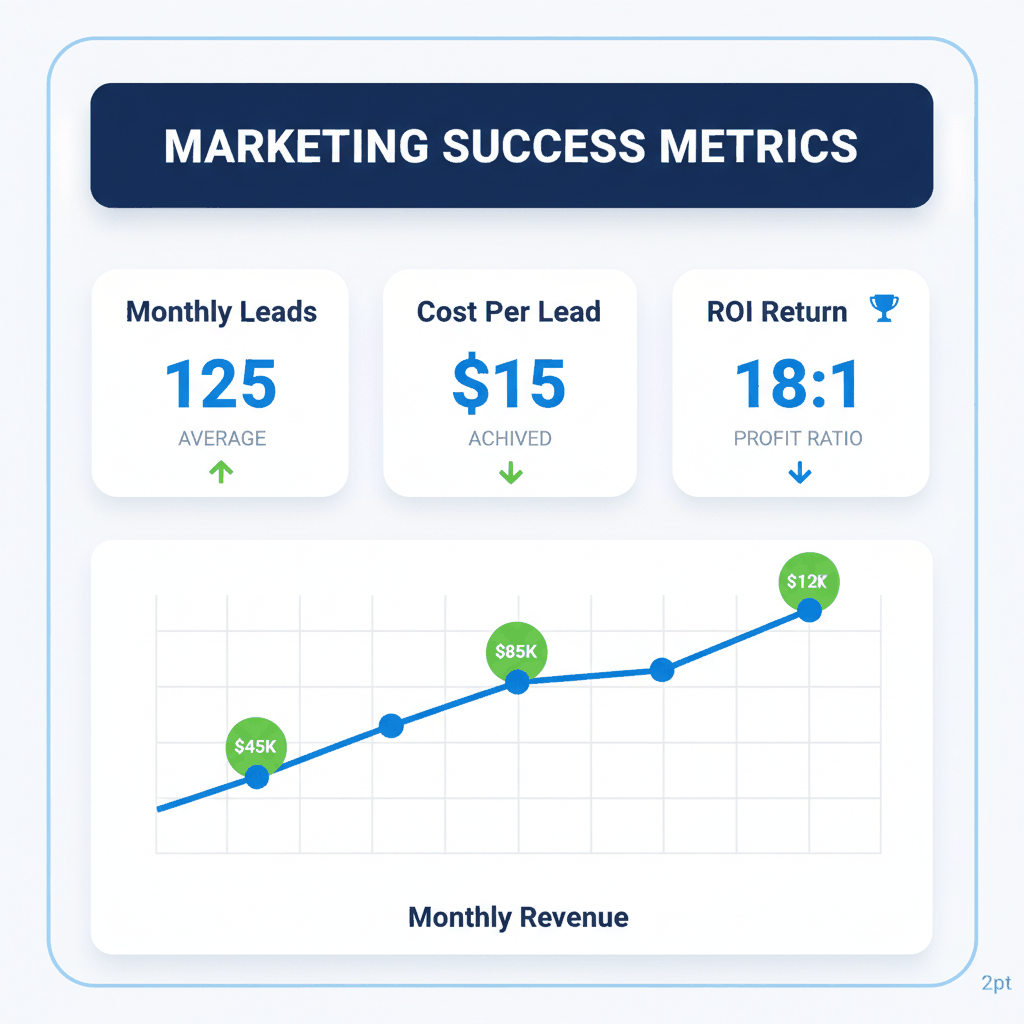
Max's HVAC generated 375 leads in 12 months through strategic pay-per-click advertising. The campaign earned $13.24 profit for every $1 spent after media budget and agency fees.
After 24 months, Max averaged 125 leads per month for under $15 each. He earned roughly $18.38 profit for every $1 spent on marketing.
The success required hiring more technicians and purchasing additional trucks to handle increased demand. Max's systematic approach to PPC advertising created sustainable business growth.
McCormick Heating and Cooling focused on search engine optimization for local visibility. Revenue grew 80% over four years through organic lead generation.
The company hired 4 more technicians and 6 more installers because of business growth. SEO generated consistent leads without ongoing advertising costs.
Their strategy focused on creating helpful content and optimizing for local search terms. This approach doubled company gross profits through organic lead generation.
Multiple HVAC companies achieved impressive results with targeted direct mail campaigns:
One company generated $285,000 in revenue from seasonal postcard campaigns
Another grew from 4,500 customers to over 14,000 using postcard marketing
A third company produced more than $150,000 in annual revenue from direct mail
These campaigns worked because they targeted the right neighborhoods with timely seasonal messaging. Maintenance reminders sent before busy seasons generated the best response rates.
ABC Heating & Cooling improved their website conversion rate from 6% to 14% in three months. They added an online booking tool and highlighted 24/7 emergency service on the homepage.
Customer reviews featured prominently on every page. This social proof helped visitors trust the company and book services immediately.
The improved conversion rate doubled lead volume from the same website traffic. Better website design eliminated the need for expensive advertising to generate more leads.
What percentage of revenue should HVAC companies spend on marketing?
HVAC companies should spend 5% to 10% of annual revenue on marketing for steady growth. Companies in aggressive growth mode should allocate closer to 10% to 15%. This investment generates consistent lead flow and builds long-term market presence.
Which marketing channels work best for HVAC lead generation?
Google Local Services Ads, search engine optimization, and Google Business Profile optimization work best for HVAC lead generation. These channels capture customers actively searching for heating and cooling services in your area.
How do I create an HVAC marketing budget for my business plan?
Start with 7% to 10% of projected annual revenue for your HVAC marketing budget. Allocate 30% to digital ads, 25% to SEO, 20% to local marketing, 15% to content, and 10% to referral programs. Adjust based on what generates the best results.
What's the average cost per lead for HVAC advertising strategy?
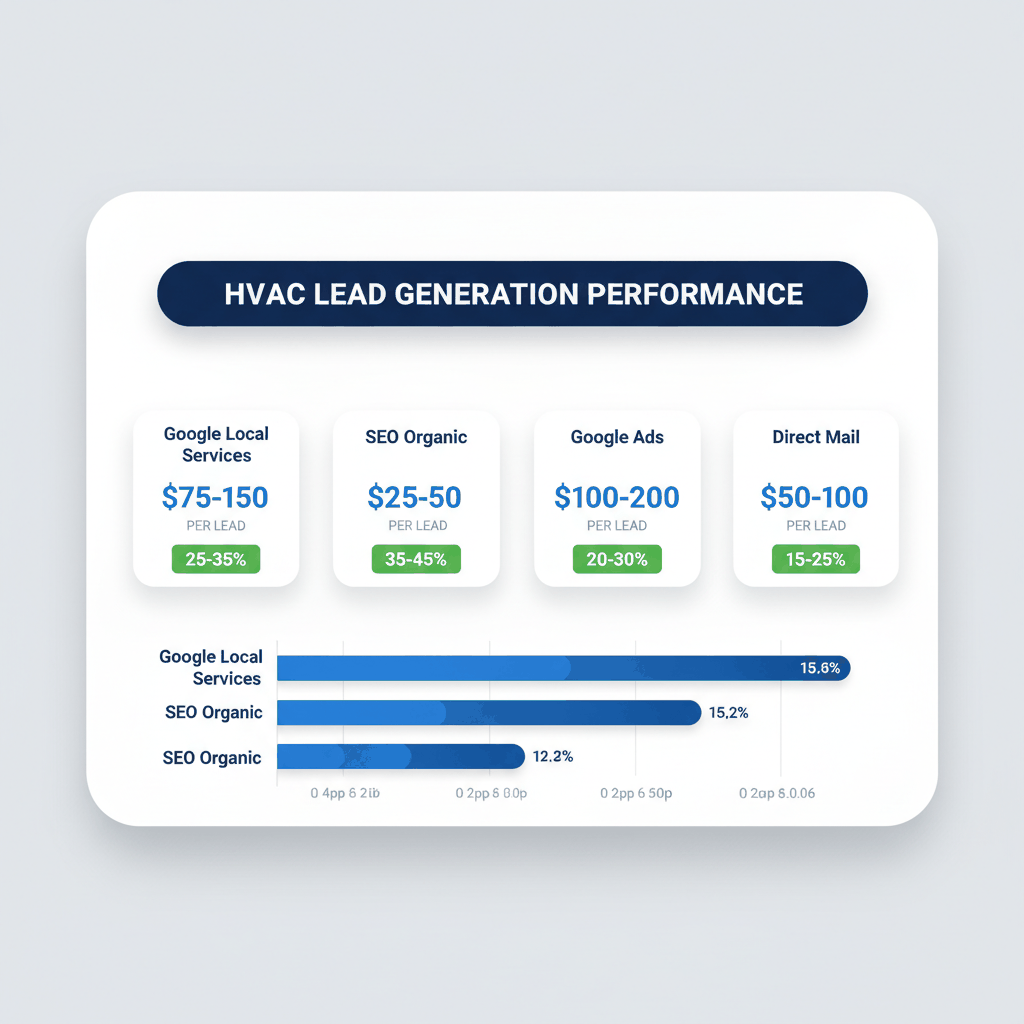
HVAC companies typically pay $50 to $200 per lead depending on the marketing channel and local competition. Google Local Services Ads often deliver leads for $75 to $150 each, while SEO generates leads at lower long-term costs.
How long does it take to see results from an HVAC marketing plan?
Google Ads and Local Services Ads generate leads within days of launching. SEO and content marketing take 3 to 6 months for significant results. Direct mail campaigns show results within 2 to 4 weeks of mailing.
Ready to get exclusive HVAC leads? Sign up for free with ResultCalls today!

Hello everyone! My name is Alex and I write these blogs to help educate small business owners on different ways to grow their business. My goal is to make lead generation as easy as possible for you. After reading these blogs, I hope you leave with some actionable steps that will get you closer to growing your business :)