You have the skills. You can fix anything. You show up on time. Yet somehow, you're losing jobs to competitors who might not even be as qualified as you are. What's going on?
The truth is, homeowners don't just hire handymen based on skills alone. They make decisions using psychological shortcuts that have nothing to do with your ability to hang drywall or fix a leaky faucet. Understanding handyman customer psychology is the difference between struggling for every lead and having customers call you first.
Here's what most handymen miss: for many families, the real test isn't whether you can hang a door straight. It's whether you show up when you say you will. It's whether you explain the job in terms they can understand. Transparency builds confidence, and confidence is what keeps homeowners calling back year after year.
In this guide, you'll discover the specific psychological triggers that drive homeowner decisions and learn proven strategies to position yourself as the obvious choice.
Table of Contents
There's a term in psychology called the halo effect. When someone looks polished and speaks clearly, we assume they're good at everything else too. This happens in hiring decisions every day. When a candidate appears sharp and seems prepared, we're quicker to believe in their competence before seeing actual proof.
For handymen, this means homeowners make decisions about your abilities in seconds, not minutes. Your appearance, punctuality, and communication style create that crucial first impression. Research shows that first impressions form within the first few seconds of meeting someone.
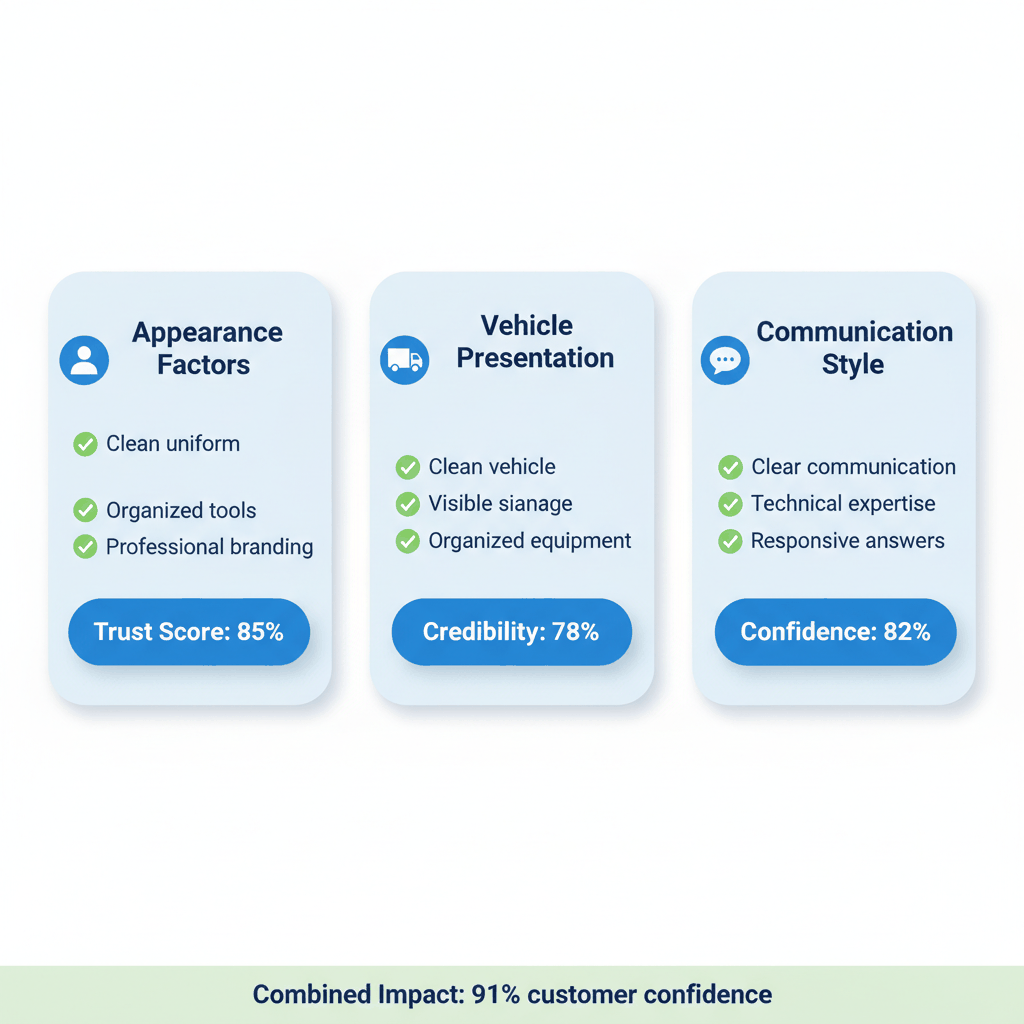
Here's how to leverage the halo effect strategically:
Arrive in a clean, organized vehicle with visible business branding
Wear clean, professional work clothes with your company name
Carry a professional-looking clipboard or tablet for estimates
Speak confidently about the work and timeline
Ask thoughtful questions that show expertise
The key is understanding that homeowners are looking for reasons to trust you from the moment you pull into their driveway. Every detail either builds that trust or chips away at it.
Your appearance communicates competence before you say a word. This doesn't mean expensive clothes. It means clean, appropriate work attire that shows you take your business seriously. A branded shirt costs $15 but signals professionalism worth thousands in potential contracts.
Your vehicle is often the first thing customers see. A clean, organized truck or van with business signage suggests you're established and professional. Messy, unmarked vehicles raise questions about legitimacy. Keep your tools organized and easily accessible. When you need a specific tool, you should be able to find it quickly.
Here's the uncomfortable truth about what homeowners feel when hiring a contractor: fear. They've heard the horror stories. The contractor who took a deposit and disappeared. The roofer who did shoddy work without insurance, leaving the homeowner responsible. The bathroom remodeler who was three months late and thousands over budget.
These stories circulate in local Facebook groups, on Nextdoor, and at neighborhood gatherings. Every homeowner carries some version of this fear: "How do I know this person is legitimate?"
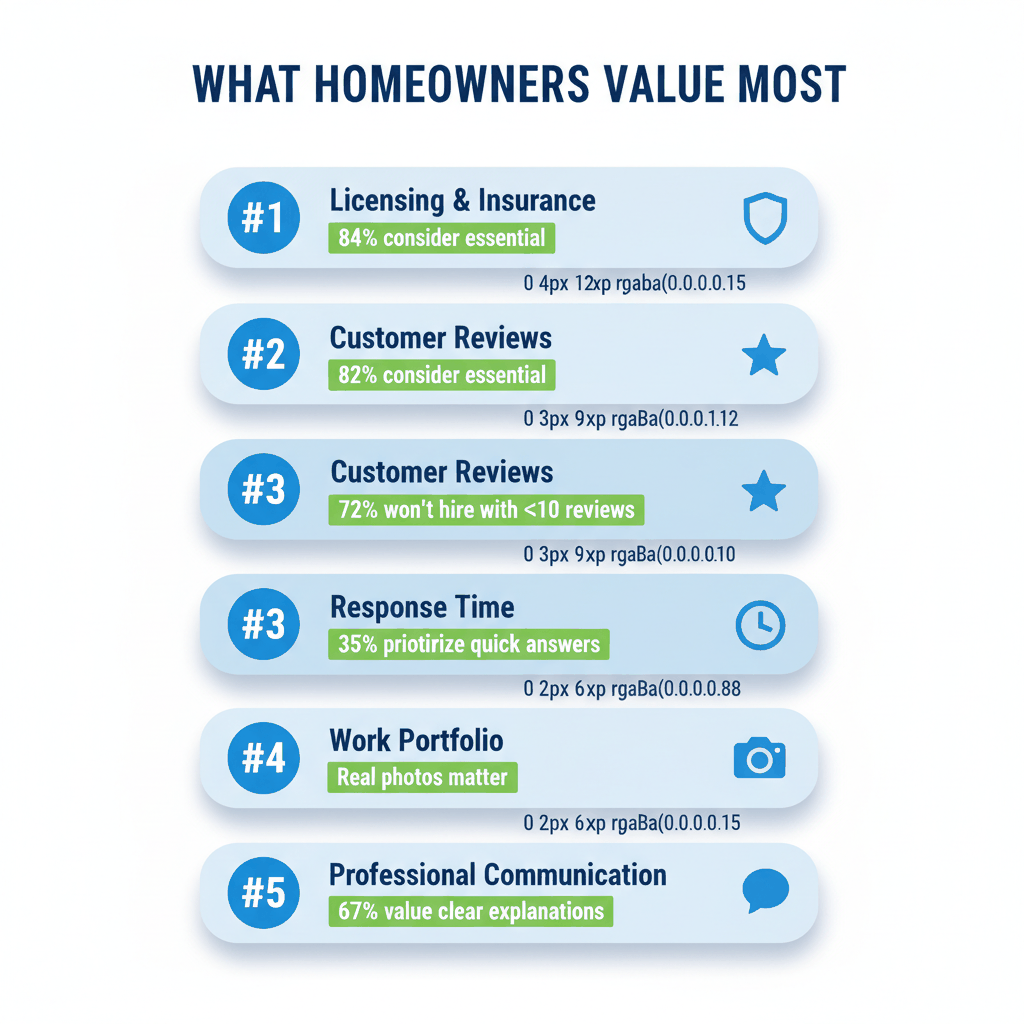
The data shows they care about five things above all else:
Proof you've done the work before (photos, not stock images)
What other homeowners say about you (reviews)
That you're licensed and insured (documentation)
How easy it is to contact you (responsiveness)
That you serve their specific area and problem (relevance)
According to industry research, 25% of respondents say licensing and insurance are the most important factors when choosing contractors. An additional 84% believe membership in professional organizations like BBB or Chamber of Commerce matters.
Make your credentials visible and easy to verify. Include license numbers on your website, business cards, and estimates. Provide insurance certificates when requested. Some handymen resist this transparency, but smart ones embrace it. When landing pages include visible trust bars with license info and insurance verification, conversion rates typically increase by 12-18%.
Stock photos hurt more than they help. Homeowners want to see real work you've completed in real homes. Take before and after photos of every job. Build a portfolio that shows the range and quality of your work. Include details about each project: the challenge, your solution, and the result.
Social proof drives decision-making more than most handymen realize. Research shows that 72% of homeowners won't hire someone with fewer than 10 reviews. Local businesses ranking in the top 3 Google positions average 47 reviews.
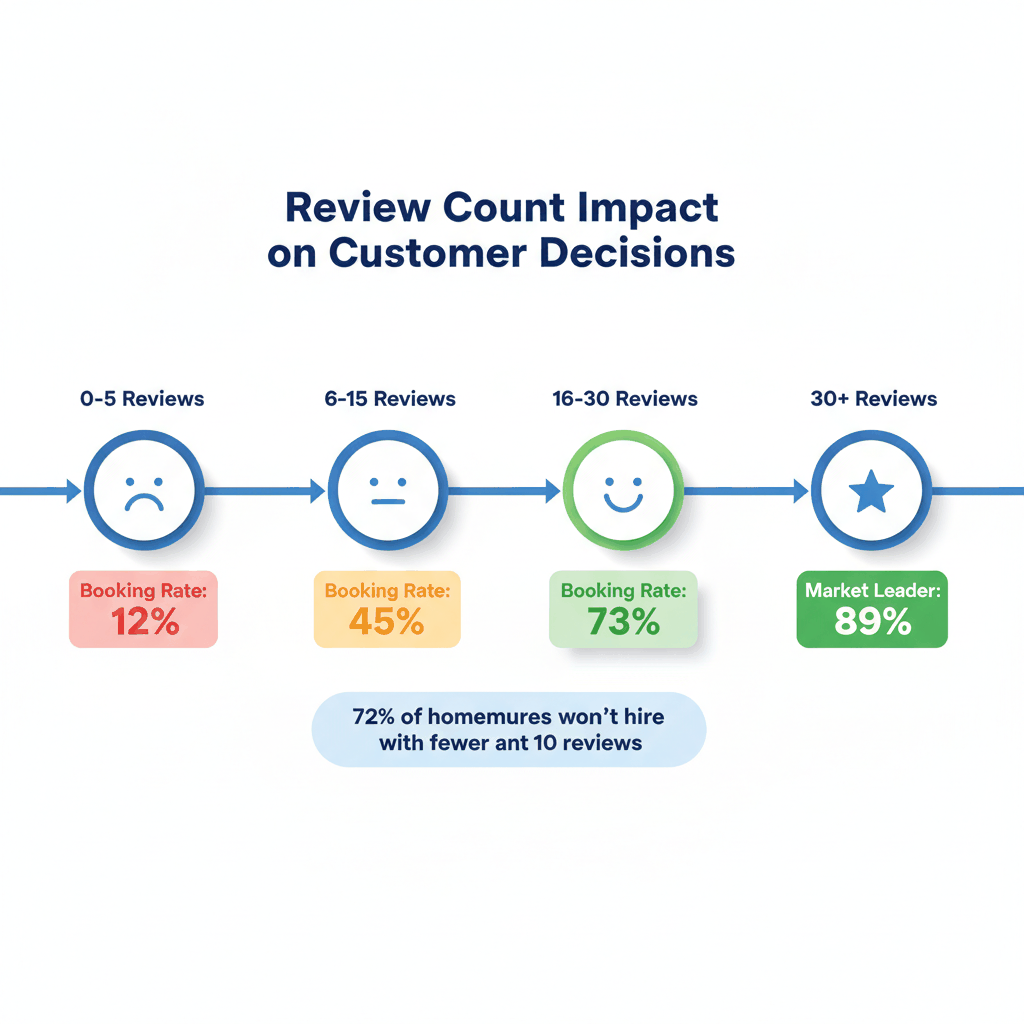
Here's what makes social proof so powerful: it reduces risk perception. When homeowners see that others had positive experiences, they feel safer making the same choice. This psychological shortcut saves them from extensive research and reduces anxiety about their decision.
Most effective review collection happens with a simple conversation: "Hey, if you're happy with the work, would you mind taking a minute to leave a quick review on Google? It really helps other folks in the area find us when they need help. I can send you a link that makes it super easy."
Five detailed reviews beat 20 generic ones. Encourage customers to mention specific aspects of your service: timeliness, cleanliness, communication, quality of work. These details help future customers understand what to expect and address common concerns before they arise.
Response to reviews shows you care about customer satisfaction. Thank customers for positive reviews and address any concerns in negative ones professionally. This public interaction demonstrates your commitment to service quality and professionalism.
Every homeowner hiring a handyman has three core fears: getting ripped off, dealing with poor quality work, and facing unexpected problems. Smart handymen address these fears directly rather than hoping they'll go away.
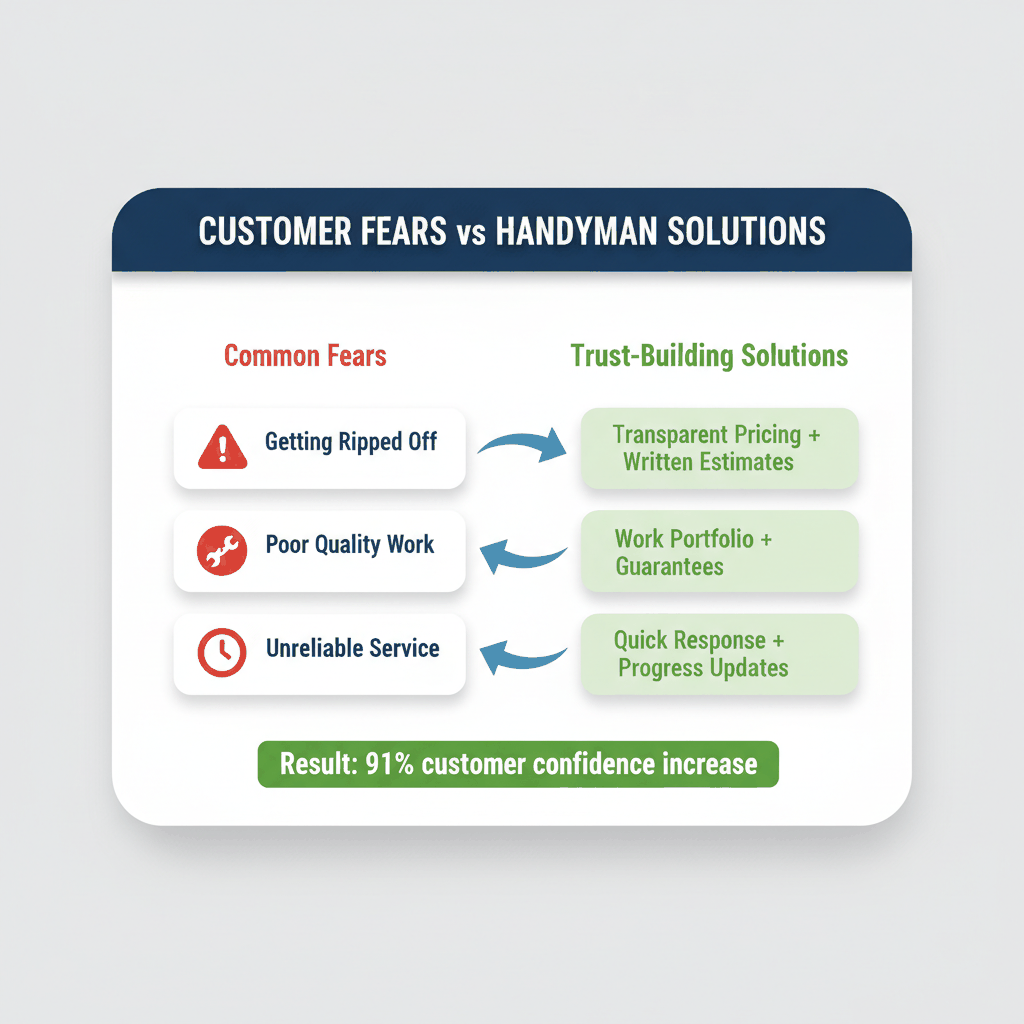
The fear of getting ripped off stems from stories about contractors who disappear after taking deposits or charge excessive markups. Combat this by being transparent about pricing, providing detailed written estimates, and explaining your payment structure clearly.
Quality concerns arise because homeowners can't easily evaluate craftsmanship until after the work is done. Address this by showing examples of previous work, explaining your process, and offering guarantees on your workmanship.
When you discover additional issues during a job, how you handle the conversation determines whether customers trust you or suspect you're trying to upsell them. Explain what you found, why it needs attention, and what happens if they ignore it. Give them options and let them decide.
For example: "I found some water damage behind this wall that we need to address before installing the new fixture. Here are your options: we can fix it properly now for $200, or you can get a second opinion and decide later. If we don't fix it, moisture will continue to be a problem."
Under-promise and over-deliver beats the opposite every time. If a job might take three hours, quote four. If you can finish by Friday, promise Monday. Customers appreciate pleasant surprises more than they hate missed expectations, even small ones.
Speed of response often matters more than price, especially for urgent repairs. When a system fails (no heat, no water, an active leak), homeowners don't have time to deliberate. They're calling until someone picks up. Price sensitivity drops fast in emergencies.
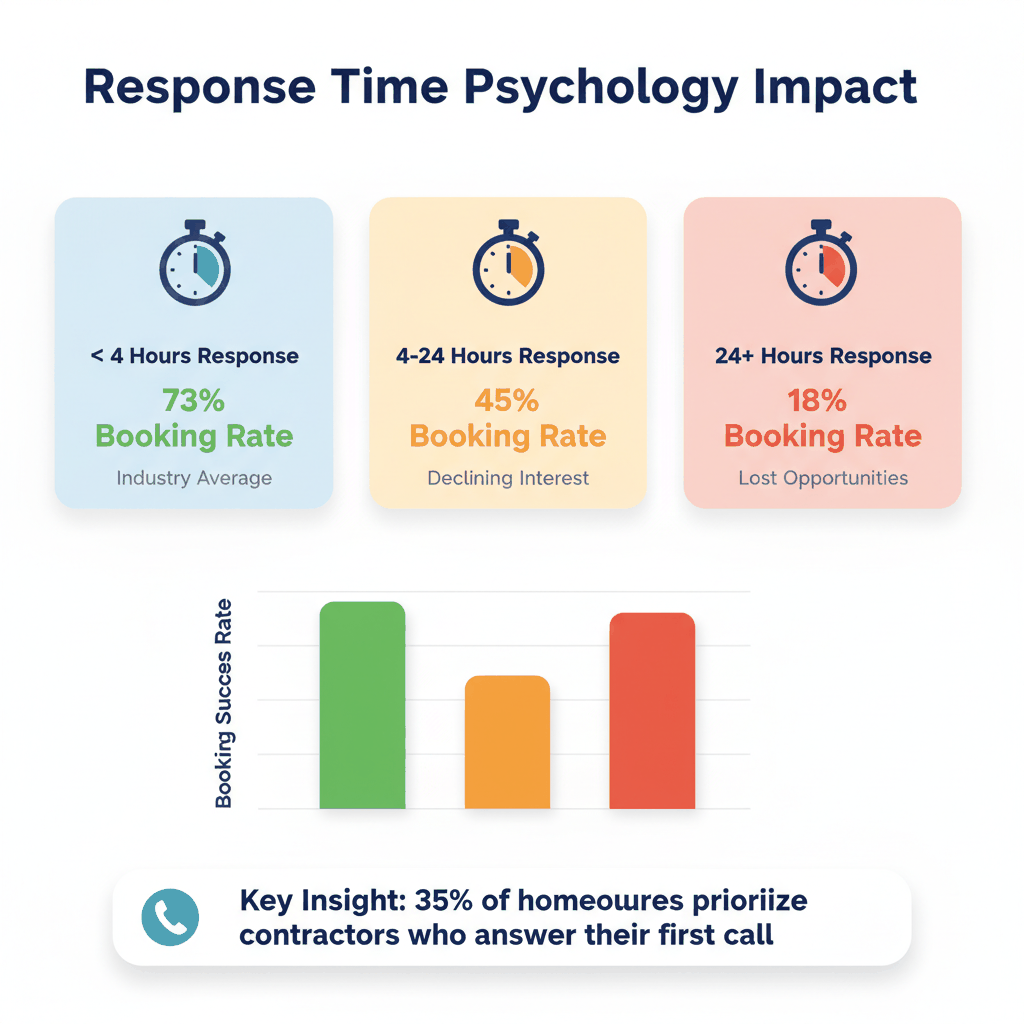
Research shows that 35% of homeowners say answering their initial call is most important when booking a contractor. Nearly 40% rarely work with contractors who don't answer their first call.
The psychology here is simple: answering quickly signals availability and reliability. It suggests you'll be equally responsive if problems arise during or after the work. Slow response times raise questions about dependability.
Have a clear system for handling emergency calls. Even if you can't get there immediately, answer the phone and let them know when you can arrive. A quick callback beats a missed call every time. Consider offering premium pricing for same-day emergency service.
After completing work, follow up within 48 hours to ensure satisfaction. This simple step differentiates you from competitors and often leads to additional work or referrals. Nearly 80% of homeowners feel it's important that companies reach out after work completion.
Poor communication ranks as the biggest challenge homeowners face when working with contractors. Research shows that 40% of homeowners identify poor communication as their primary frustration. When choosing between contractors, 67% say better communication is most important.
Effective communication isn't just about being friendly. It's about explaining technical concepts in terms homeowners understand, setting clear expectations, and keeping customers informed throughout the process.
Here's how to communicate in ways that build confidence:
Explain what you're doing and why it matters
Use simple terms instead of technical jargon
Give time estimates for each part of the work
Update customers if timelines change
Ask if they have questions before you start
Turn estimates into mini-consultations. Explain not just what needs to be done, but why. Help homeowners understand the consequences of delaying work or choosing cheaper alternatives. This positions you as an advisor, not just another vendor submitting a bid.
For example: "This electrical outlet isn't grounded, which is a safety issue. I can install a GFCI outlet for $85, or you can upgrade the entire circuit for $200. The GFCI protects you from electrical shock. The circuit upgrade future-proofs this area for any electrical work."
Keep homeowners informed about progress, especially during longer jobs. A quick update every few hours shows professionalism and helps prevent misunderstandings. Let them know if you discover additional issues before proceeding with solutions.
Pricing transparency reduces customer anxiety and builds trust. Research indicates that 78% of homeowners are more likely to call contractors who provide pricing information on their websites. This represents an increase from 66% in previous surveys, showing growing demand for upfront pricing.
The psychology behind this preference is risk reduction. When homeowners can see approximate costs before calling, they feel more in control of the process. They can budget appropriately and avoid the anxiety of unknown pricing.
However, providing pricing doesn't mean giving exact quotes without seeing the job. It means offering helpful ranges and explaining what factors influence final costs.
Break down estimates into clear components: materials, labor, and any additional fees. Explain what's included in your labor rate (cleanup, disposal, travel time). This transparency builds trust and helps customers understand the value they're receiving.
Include payment terms and schedules in written estimates. For larger jobs, explain when you require deposits and why. Most customers understand that materials need to be purchased upfront, but they appreciate clear communication about payment expectations.
Help customers understand value, not just cost. Explain the benefits of quality materials and proper installation techniques. Compare your approach to cheaper alternatives and explain why your method provides better long-term results.
For example: "I could use standard screws for $30 less, but stainless steel screws won't rust and will hold this fixture securely for decades. The $30 investment now prevents problems and replacement costs later."
How quickly should handymen respond to customer inquiries?
Answer within 4 hours for regular inquiries and immediately for emergencies. Research shows 35% of homeowners prioritize contractors who answer their initial call, and 40% rarely work with contractors who don't respond to their first call.
What trust factors matter most to homeowners choosing handymen?
The top five trust factors are licensing and insurance verification, positive customer reviews, examples of previous work, professional communication, and local service area coverage. These elements address core customer fears about legitimacy and quality.
How many reviews do handymen need to be competitive?
Aim for at least 10-15 quality reviews to be competitive locally. Research indicates 72% of homeowners won't hire contractors with fewer than 10 reviews, while top-ranking local businesses average 47 reviews.
Why do homeowners care about pricing transparency on websites?
Pricing transparency reduces anxiety and builds trust. 78% of homeowners prefer contractors who provide pricing information online because it helps them budget and feel more in control of the hiring process.
What's the best way to overcome customer fears about handyman credibility?
Address fears directly through transparent communication, visible credentials, customer testimonials, and professional presentation. Show don't just tell by providing documentation, examples, and clear explanations of your process.
Ready to buy handyman leads? Sign up with ResultCalls today!

Hello everyone! My name is Alex and I write these blogs to help educate small business owners on different ways to grow their business. My goal is to make lead generation as easy as possible for you. After reading these blogs, I hope you leave with some actionable steps that will get you closer to growing your business :)