Most HVAC contractors struggle with a frustrating cycle. Summer arrives with emergency calls flooding in. You're booked solid and profitable. Then winter hits differently. The phone stops ringing. Your best techs sit around waiting for work. You watch cash flow problems pile up like last season's invoices.
Here's what successful HVAC companies figured out years ago. The secret isn't chasing more emergency calls. It's building recurring revenue streams that keep money flowing year-round. Smart HVAC maintenance programs solve your revenue volatility problem while creating the most profitable customer relationships in your business.
You'll learn how to build a maintenance program that generates 50% of your annual revenue. Plus how to achieve 90% customer retention rates that transform seasonal stress into predictable monthly income. This isn't theory. It's the exact system that turns struggling contractors into market leaders.
What You'll Learn
HVAC maintenance programs represent the single most effective retention tool for contractors. They transform seasonal businesses into year-round revenue generators. For many successful firms, maintenance programs account for 50% or more of total annual revenue.
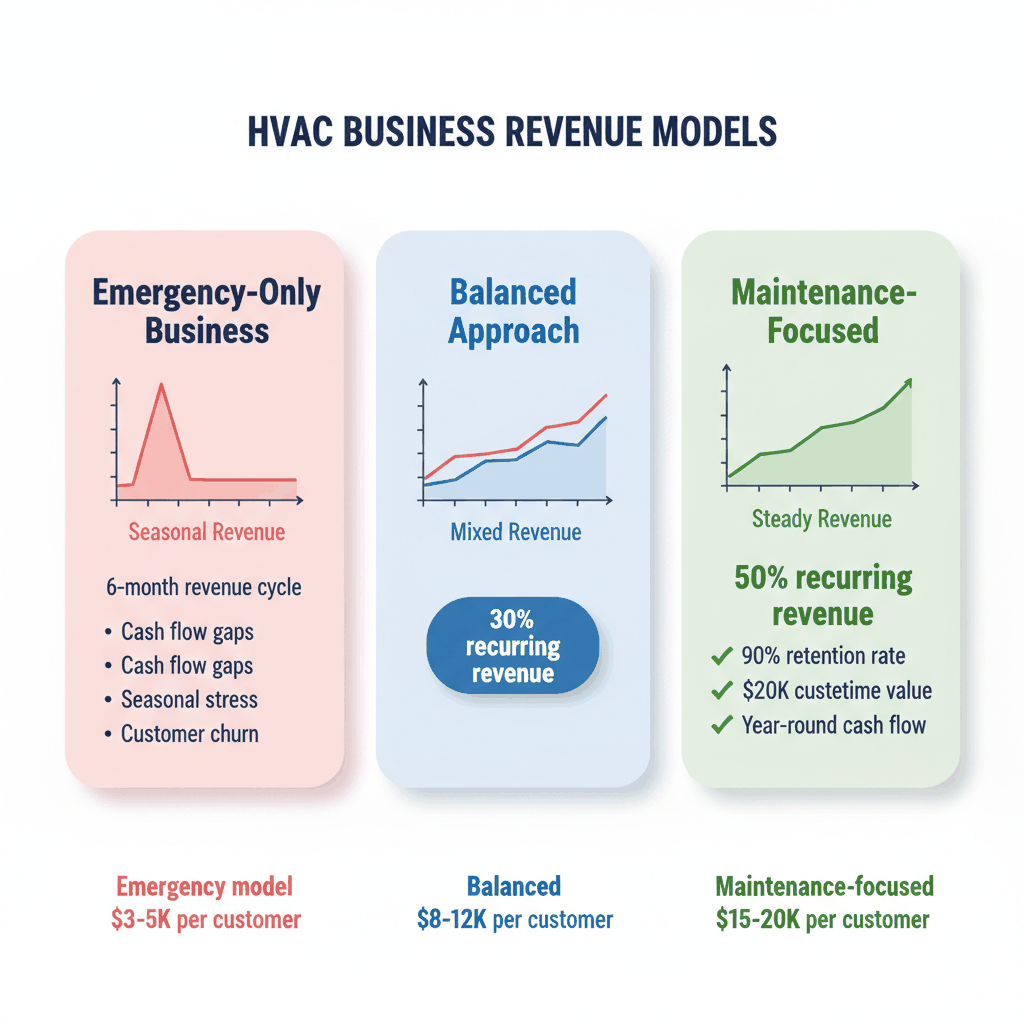
Peak HVAC seasons often last only seven months. Many contractors use credit lines to cover off-season expenses. This cycle keeps you stressed about money instead of focused on growth. Maintenance plans change this equation completely.
Studies show that increasing customer retention rates by just 5% can increase profits by 25% to 95%. The lifetime value of a loyal HVAC customer can exceed $20,000 over a 15-year equipment lifecycle.
Here's something that will make you think. In 2024, recurring service agreements captured 55% of industry revenue. That segment is expected to grow at an 8.3% yearly rate. More than half of all HVAC service money comes from ongoing agreements, not one-time jobs.
Acquiring a new customer costs 5-7 times more than retaining an existing one. In the HVAC industry, a lost contract doesn't just mean the agreement fee disappears. It takes the pull-through revenue with it. The repairs, replacements, and upgrades that come from ongoing service relationships.
Industry benchmarks show that for every $1 of maintenance contract value, companies generate $2 in additional pull-through work. A single lost $300 residential agreement can represent $900 in total annual revenue gone.
Every contractor makes these same mistakes at some point. Learn from others' failures instead of creating your own expensive lessons.
The biggest mistake is pricing maintenance agreements based on competitors' rates rather than the work's actual value. Contractors treat these plans as a necessary evil rather than what they should be. The most profitable, predictable revenue stream in the business.
I recently spoke with a commercial HVAC business owner who signed three-year maintenance contracts with no escalation clause. By the third year, due to rising labor costs, refrigerant price spikes, and fuel inflation, he was losing money on every visit. He was legally obligated to honor those contracts for another full year.
Only about 30% of customers currently schedule preventive maintenance. The average contractor loses approximately 11% of customers each year. Nearly 70% of those losses are tied to one issue. Customers didn't feel valued enough to return.
The number one contract killer happens after the sale. You sold the agreement and collected payment. But you never scheduled or completed the maintenance visits. The customer realizes months later they've been paying for nothing. They feel taken advantage of and cancel. This is 100% preventable.
Maintenance agreements are the most undermarketed service in HVAC. A $150-$300 yearly maintenance customer has the highest lifetime value of any HVAC customer. They become your $5,000-$15,000 system replacement customer when their equipment eventually fails.
Industry surveys show that fewer than 35% of residential HVAC companies actively sell service agreements. The ones that do report 20-40% higher annual revenue per customer and dramatically lower seasonal revenue swings.
Here's the complete maintenance plan that keeps customers coming back. Each point addresses a specific customer concern while generating revenue opportunities for your business.
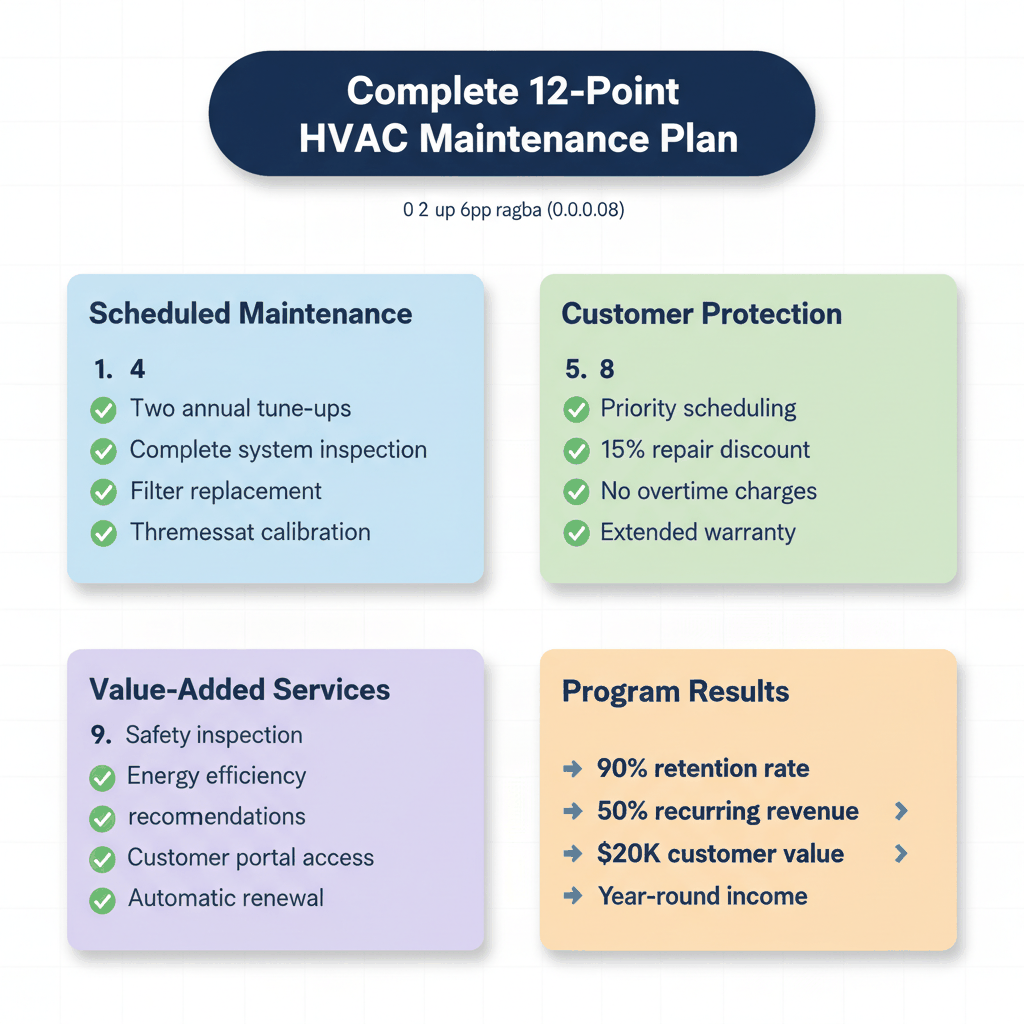
Two annual tune-ups (pre-season heating and cooling)
Complete system inspection with detailed reporting
Filter replacement and air quality assessment
Thermostat calibration and programming review
These four points ensure customers see immediate value. Their systems run better after every visit. You document improvements and identify potential issues before they become emergencies.
Priority scheduling for emergency service calls
10-15% discount on all repairs and parts
No overtime or after-hours charges for members
Extended parts warranty beyond manufacturer coverage
Protection benefits make customers feel valued. They save money on every service call. Plus they get faster response when problems occur.
Annual safety inspection and carbon monoxide testing
Energy efficiency recommendations with cost savings
Customer portal access with service history
Automatic renewal with 30-day cancellation option
Value-added services differentiate your program from competitors. Customers receive ongoing benefits that extend beyond basic maintenance.
Price your plan based on your market. Most residential HVAC maintenance agreements range from $150 to $300 per year. The revenue from the plan itself is valuable. But the real value is in the retention it creates and the repair opportunities discovered during maintenance visits.
Effective pricing requires understanding your costs, market rates, and desired profit margins. Don't guess at numbers that determine your profitability.
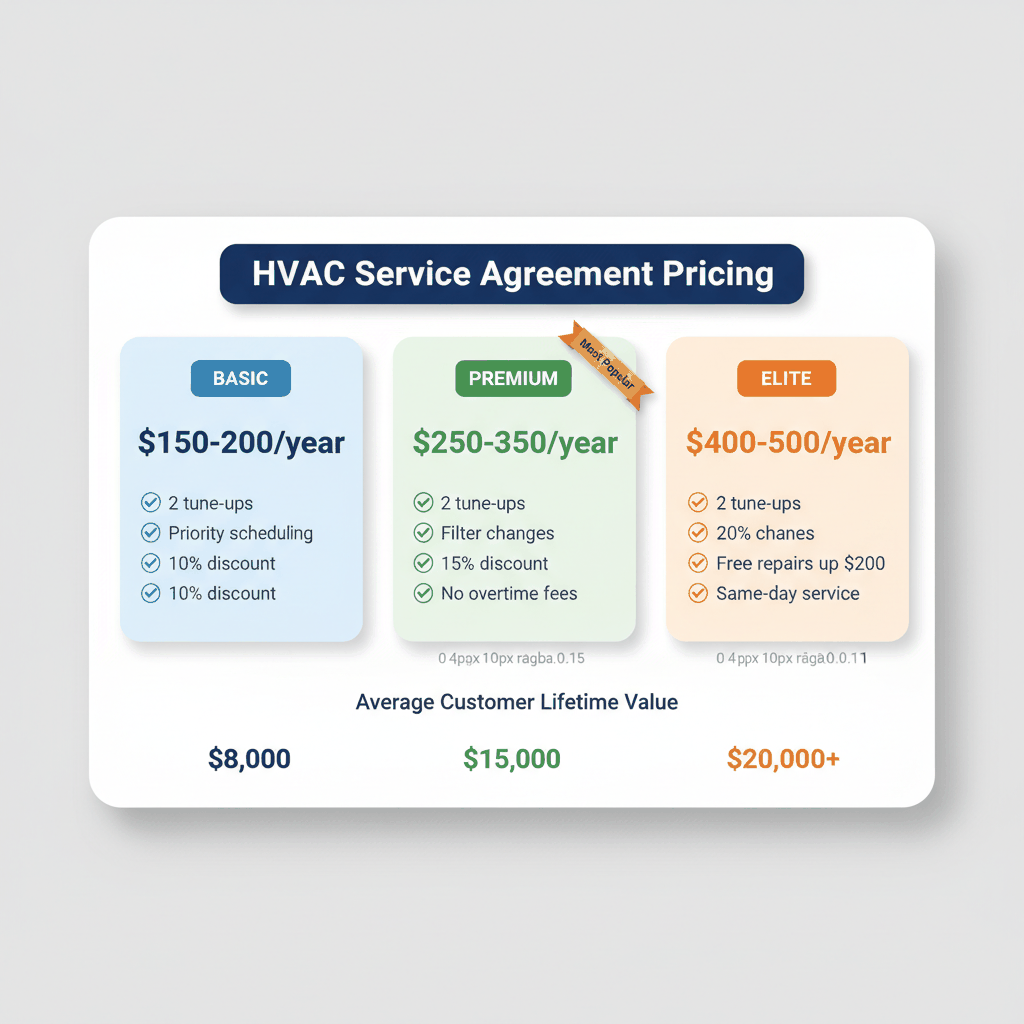
Create three pricing tiers that appeal to different customer budgets and needs. This approach converts more prospects than single-price offers.
Basic Level ($150-200 annually): Include two tune-ups per year, priority scheduling, and a small repair discount. Keep it simple and affordable.
Premium Level ($250-350 annually): Add bigger repair discounts, free filter changes, and no overtime charges for emergencies. This becomes your most popular option.
Elite Level ($400-500 annually): Include everything from other levels, plus free repairs up to a certain dollar amount, same-day emergency service, and annual safety inspections.
Commercial agreements require different pricing structures. Use a per-unit model within tiered pricing. For example, Basic plans might be $150 per unit quarterly, Standard $250 per unit quarterly, and Premium $400 per unit quarterly.
These are illustrative examples. Your actual pricing must reflect your costs, market rates, and desired profit margin. Commercial pricing strategies require careful calculation of labor, travel time, and equipment complexity.
Monthly billing converts twice as many prospects than annual upfront pricing on residential agreements. Offer monthly billing to attract more customers with lower initial barriers. Provide an annual pre-pay option for customers who prefer simplicity and upfront payment.
Customer retention separates successful maintenance programs from money-losing contracts. Focus on these proven retention strategies.
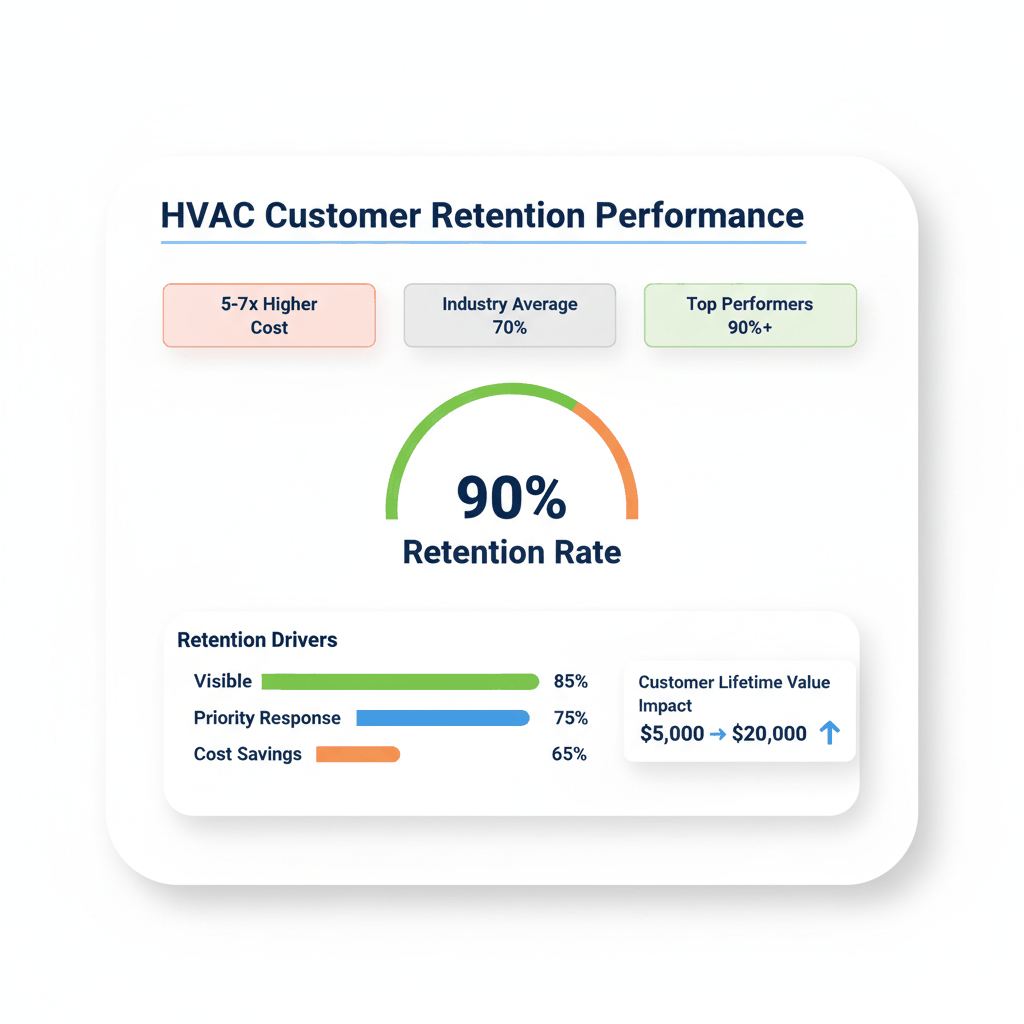
The target renewal rate for HVAC service agreements is 70-80% or higher. Companies with strong contract bases see 90% retention year over year. Top-performing companies with dedicated retention processes achieve 90% retention.
Agreements that renew at the highest rates include visible, tangible value. Scheduled maintenance visits that actually happen on time. Priority response guarantees with documented SLA compliance. Parts and labor discounts that customers can see applied on every invoice.
The single biggest renewal driver is demonstrated value. Customers who can see that their agreement delivered exactly what was promised renew at rates above 85%.
Email marketing to past customers about seasonal maintenance is the highest-ROI HVAC marketing idea. These customers already trust you. According to FieldEdge, the average return is $42 in revenue for every $1 spent on email marketing.
Send seasonal reminders about upcoming maintenance visits. Share energy-saving tips throughout the year. Provide exclusive offers for agreement members. Keep your company top-of-mind between service visits.
The best time to offer a maintenance agreement is at the conclusion of a service call. The customer just experienced the value of professional HVAC service and is thinking about preventing future problems.
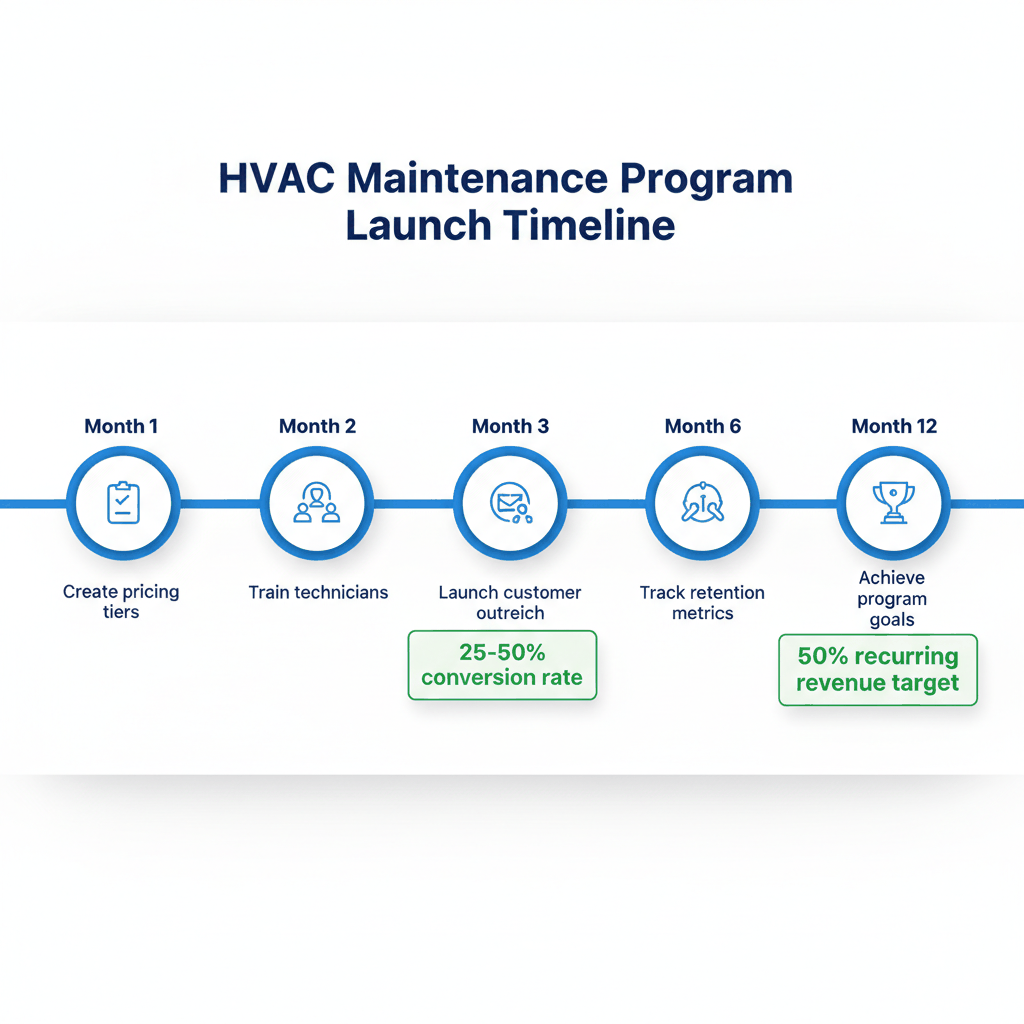
Train your technicians to present the maintenance plan as a recommendation, not a sales pitch. Technicians should be able to convert 25-50% of their demand service calls into a service agreement sale. Every time your techs go out on a job, they have a chance to sign someone up.
Teach techs to explain the value in customer terms. Instead of saying "You need annual maintenance," say "This plan saves you money and prevents emergency breakdowns when you need cooling most."
When you offer choices in your HVAC service agreement programs, more people find something that fits their budget and needs. Present all three options during every sales conversation. Let customers choose their comfort level.
Most customers choose the middle option when presented with three choices. Price your middle tier where you want most customers to land. Use the basic option to attract price-sensitive customers. Use the premium option to capture customers who want maximum protection.
Track your conversion rates by technician and service call type. Emergency calls convert differently than planned maintenance visits. New customers convert differently than existing customers. Use this data to refine your sales approach and training programs.
HVAC service agreements can be difficult to efficiently manage, especially for contractors with large customer bases. The right tools make the difference between profitable programs and administrative nightmares.
When evaluating HVAC CRM software, prioritize platforms that offer user-friendly design, mobile accessibility, and service agreement management. Your CRM should let you build and manage maintenance agreements directly within the platform.
ServiceTitan makes it easy to create and manage recurring service agreements that generate predictable revenue. Monitor agreement profitability with real-time budget versus actuals data. Track materials, equipment, and labor costs to identify margin opportunities. Best for larger operations with complex needs and higher budgets.
FieldEdge connects every part of your operation on one platform. Real-time updates and easy access from anywhere keep your team on the same page. It helps you stay organized and focused, making it easier to manage customer relationships.
For commercial operations managing large maintenance contract portfolios, consider specialized tools. Oxmaint's retention dashboard scores every agreement's health, flags at-risk accounts, and automates the renewal timeline.
BuildOps delivers tools tailored for complex HVAC maintenance. It organizes recurring preventive maintenance, centralizes asset history, and provides live job progress updates.
Look for platforms that handle automated scheduling for recurring maintenance visits. Manual scheduling for large customer bases leads to mistakes and missed appointments. Automated renewal reminders prevent contracts from lapsing due to oversight.
Customer portal access lets clients view their service history, schedule appointments, and track agreement benefits. This self-service capability reduces your administrative workload while improving customer satisfaction.
What should I charge for HVAC maintenance programs?
Most residential HVAC maintenance agreements range from $150 to $300 per year. Price based on your costs, local market rates, and desired profit margins. Don't copy competitor pricing without understanding your own economics.
How do I improve HVAC customer retention rates?
Focus on delivering visible value through scheduled maintenance visits, priority emergency response, and documented cost savings. The single biggest retention driver is demonstrated value that customers can clearly see.
What's included in effective HVAC service agreements?
Include two scheduled maintenance visits per year, priority scheduling for emergencies, 10-15% repair discounts, no overtime charges, and extended parts warranty. Add value through safety inspections and energy efficiency recommendations.
How much recurring revenue should HVAC maintenance generate?
Successful HVAC businesses generate 30-50% of total revenue from recurring agreements. Aim for 250 service agreements per million dollars of service sales as your baseline target.
When should technicians sell HVAC maintenance programs?
The best time is at the conclusion of service calls when customers just experienced professional service value. Train technicians to convert 25-50% of demand service calls into maintenance agreement sales.
Ready to get HVAC leads? Sign up with ResultCalls today!

Hello everyone! My name is Alex and I write these blogs to help educate small business owners on different ways to grow their business. My goal is to make lead generation as easy as possible for you. After reading these blogs, I hope you leave with some actionable steps that will get you closer to growing your business :)