
Are your final expense clients disappearing after their first year? You're not alone. Most insurance agents struggle with customer retention.
The harsh reality is this: losing clients costs you money. Research from Harvard Business School shows that increasing customer retention rates by just 5% can grow profits by 25% to 95%. Yet many agents focus only on finding new clients.
Final expense customer retention isn't just about keeping policies active. It's about building relationships that generate referrals and create lifetime value. When you serve clients well, they trust you with their families.
This guide shows you exactly how to keep more final expense clients. You'll learn proven strategies that work in today's competitive market.
What You'll Learn
Final expense agents face unique retention problems. Understanding these challenges helps you fix them.
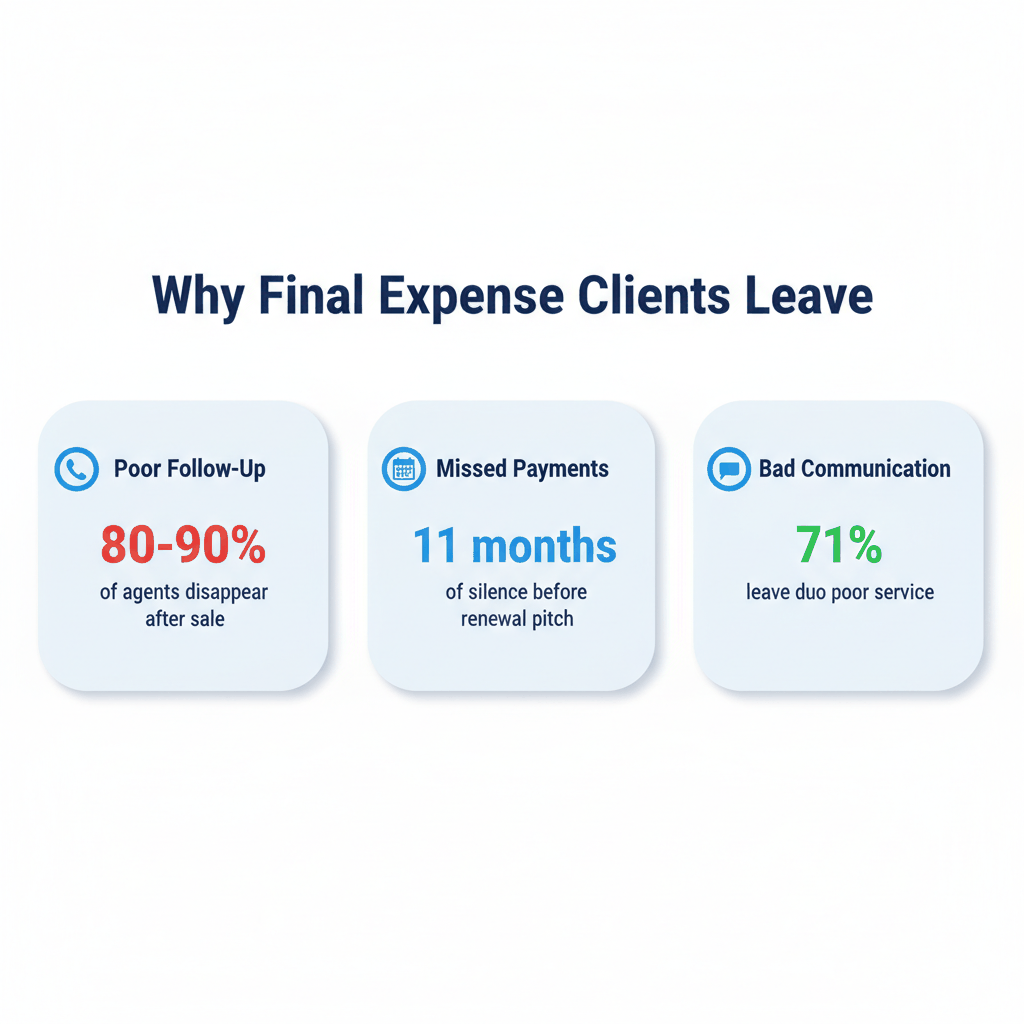
Most agents disappear after the sale. They stay silent for 11 months. Then they call with an aggressive sales pitch 30 days before renewal.
Clients feel used. They think you only care about commissions. This approach kills retention faster than anything else.
Successful agents use multiple touchpoints throughout the year. They build relationships, not just collect premiums.
The sign of a healthy book of business is what percentage of policies stay active for 12 months. Agents want to shoot for a 90% persistency rate.
However, failure rates for life insurance policies run 80-90%. This indicates the insurance marketplace isn't serving consumers well.
Lapses happen for predictable reasons: missed payments, forgotten due dates, or changed financial situations. Most are preventable with proper systems.
Insurers contribute to policy lapses through poor communication. Customers don't receive timely reminders about payment deadlines. They're unaware of policy status changes.
About 71% of customers leave because of poor service. Having a negative front-line interaction causes 74% of consumers to switch brands.
Your communication system determines retention success. Make it systematic, personal, and valuable.
Structured follow-up systems separate successful agents from those who struggle. You need multiple touchpoints throughout the customer lifecycle.
Here's a proven touch campaign for final expense clients:
Thank-you card sent while waiting for policy approval
Welcome packet delivery within 30 days of policy issue
90-day check-in call to ensure satisfaction
6-month policy review and update
Birthday card with personal note
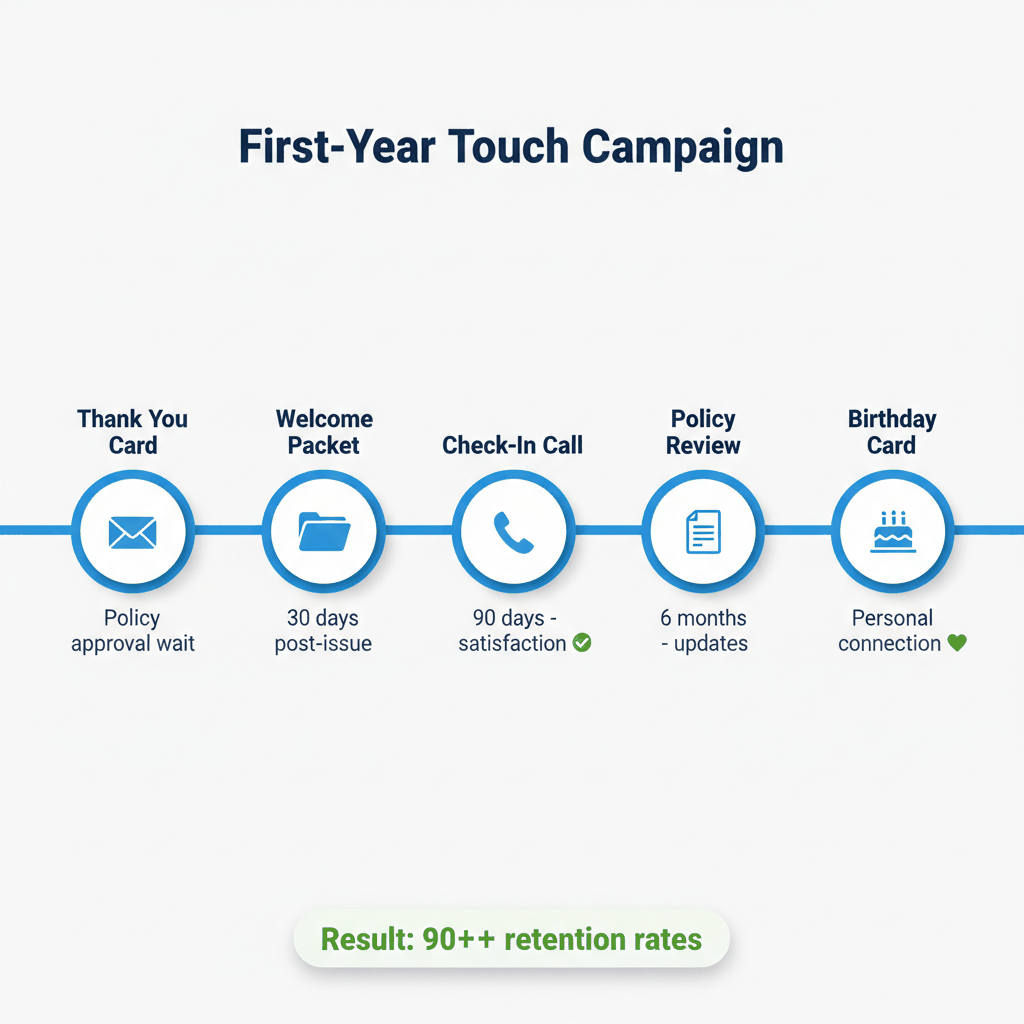
Mike Smith uses this strategy with great success. His touch strategy includes "a thank you card, follow-up card, and birthday card to help keep clients on the books. Sending cards also helps with establishing rapport and trust from the beginning."
Don't rely on one method. Mix phone calls, cards, emails, and text messages. Different clients prefer different channels.
For example, younger clients might prefer text updates. Older clients often appreciate handwritten cards. Test what works for your specific client base.
Prevent Policy Lapses Before They Happen
Policy lapses kill retention. The good news? Most lapses are preventable with the right approach.
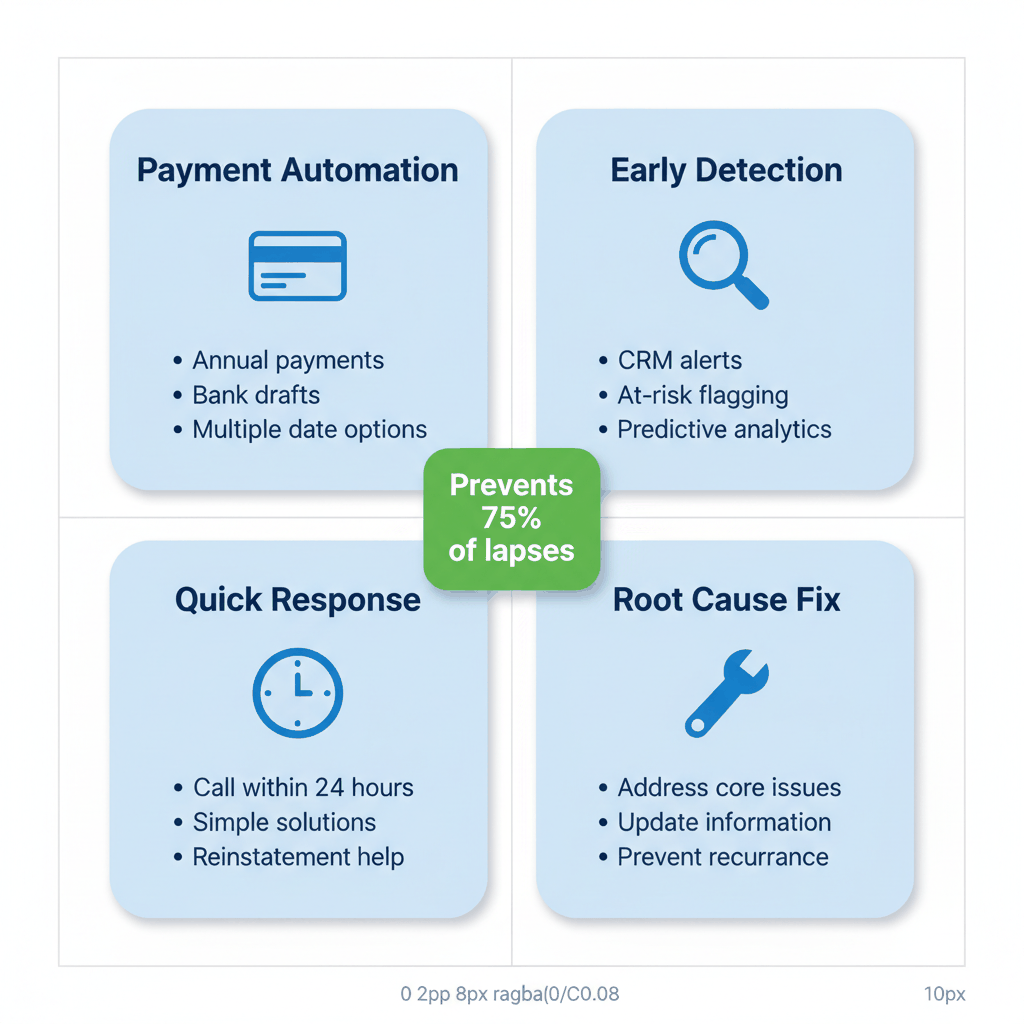
The best way to avoid lapses is consistent premium payments. Help clients automate their payments whenever possible.
Strategies that work include:
Annual payment schedules that handle 12 months at once
Automatic monthly payments from checking accounts
Bank draft systems that prevent missed payments
Multiple payment date options to match client income
Annual payments work especially well for final expense clients. They eliminate 11 chances for missed payments. Plus, clients often get discounts.
Lapses happen despite your best efforts. Always call your lapsed clients. Sometimes it's a simple fix, and you can get them back on the books.
Common lapse reasons include:
Forgotten payment due dates
Changed bank account information
Temporary financial difficulties
Misunderstood billing procedures
Most of these problems have easy solutions. The key is catching them quickly.
Some CRM systems flag "at-risk" clients. These are people who haven't been contacted in 90 days or whose renewal is approaching without confirmation.
Modern AI-powered solutions can predict lapse likelihood and trigger interventions. This prevents surprise churn before it happens.
Great communication builds trust and prevents problems. Your clients need to feel valued between renewals.
Don't wait for problems to call clients. Schedule regular check-ins throughout the year.
Effective check-in calls include:
Asking about life changes that might affect coverage
Reviewing beneficiary information for accuracy
Explaining any policy updates or improvements
Offering additional products that make sense
Keep these calls conversational, not sales-focused. The goal is relationship building.
Share valuable information that helps clients make better decisions. This positions you as a trusted advisor, not just a salesperson.
Seasonal tips work well. Send hurricane preparedness checklists in summer. Share reminders about updating beneficiaries after major life events.
Use simple, compassionate language. Create clear materials that help clients understand complex concepts without overwhelming jargon.
Log every client interaction in your CRM. Every call, email, and meeting should create a record.
This creates valuable history. When you review a client, you can see "I called them 45 days ago about life changes" or "They referred a client 6 months ago." Context improves retention conversations.
Using your system to log notes ensures anyone on your team can continue where the last person stopped. This creates seamless, personal experiences for clients.
Satisfied clients are your best source of new business. Yet most agents don't ask for referrals systematically.
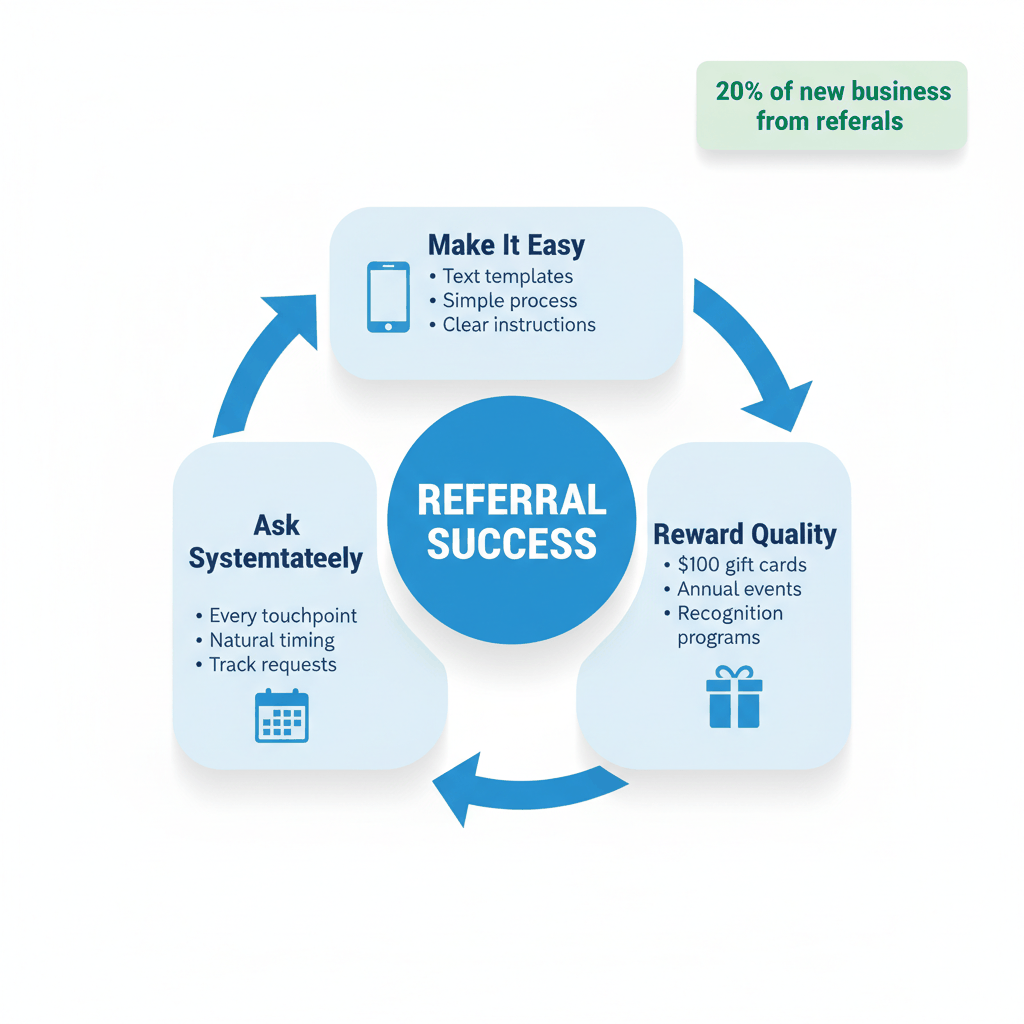
Give clients a simple way to refer friends and family. Prepare a text template they can use:
"I work with [Your Name] on my insurance and he's great. He can help with [product]. Want his info?"
Have this pre-written and share it with happy clients. Remove friction from the referral process.
Create incentives that encourage ongoing referrals:
$100 Visa gift card for every referred client who buys
$500 for every referred client still active after one year
Annual appreciation events for top referral sources
Special recognition programs for loyal clients
Referrals that stick are worth rewarding generously. The lifetime value makes it profitable.
Don't just hope referrals happen. Ask every client at every interaction. Make it part of your standard process.
Natural times to ask include after completing service, during annual reviews, and when receiving thank you notes.
The right tools make retention easier and more effective. Technology handles routine tasks so you can focus on relationships.
A good CRM system is essential for retention. It tracks client information, schedules follow-ups, and flags important dates.
Key features to look for:
Automated birthday and anniversary reminders
Policy renewal date tracking
Communication history for every client
Task scheduling for regular touchpoints
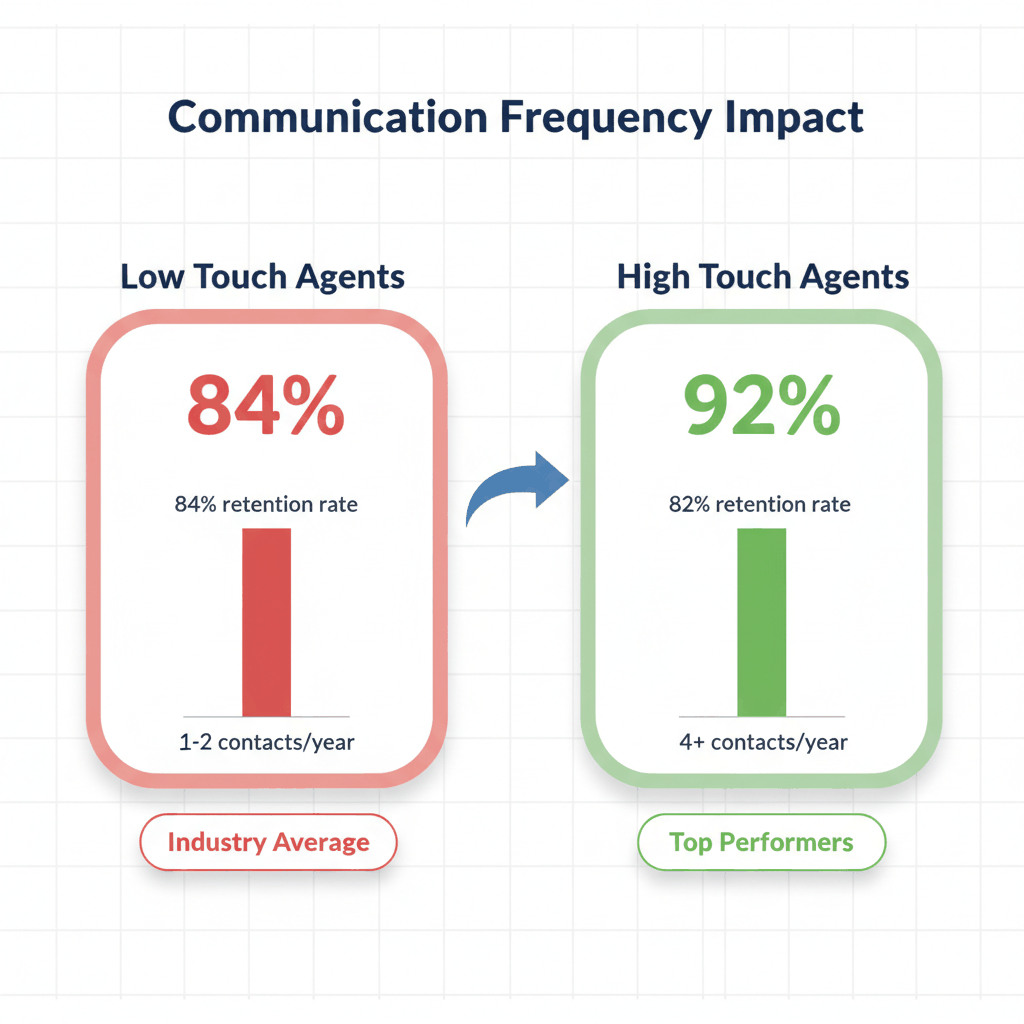
The average retention rate for the insurance industry is 84%. Companies using advanced CRM systems typically perform above average.
Automation saves time while maintaining personal touch. Set up automated sequences for different client types and situations.
Examples include welcome series for new clients, renewal reminders, and birthday greetings. Customize messages to feel personal, not generic.
Make premium payments as easy as possible. Offer online payment portals, automatic bank drafts, and mobile payment options.
Clients appreciate convenience. The easier you make payments, the fewer lapses you'll experience.
You can't improve what you don't measure. Track key metrics to understand your retention performance.
Monitor these key indicators:
12-month persistency rate (aim for 90% or higher)
Client lifetime value calculations
Referral rates from existing clients
Communication frequency per client
Time between sale and first lapse
Industry research shows companies that employ advanced data analytics can see retention jump from 5% to 10%.
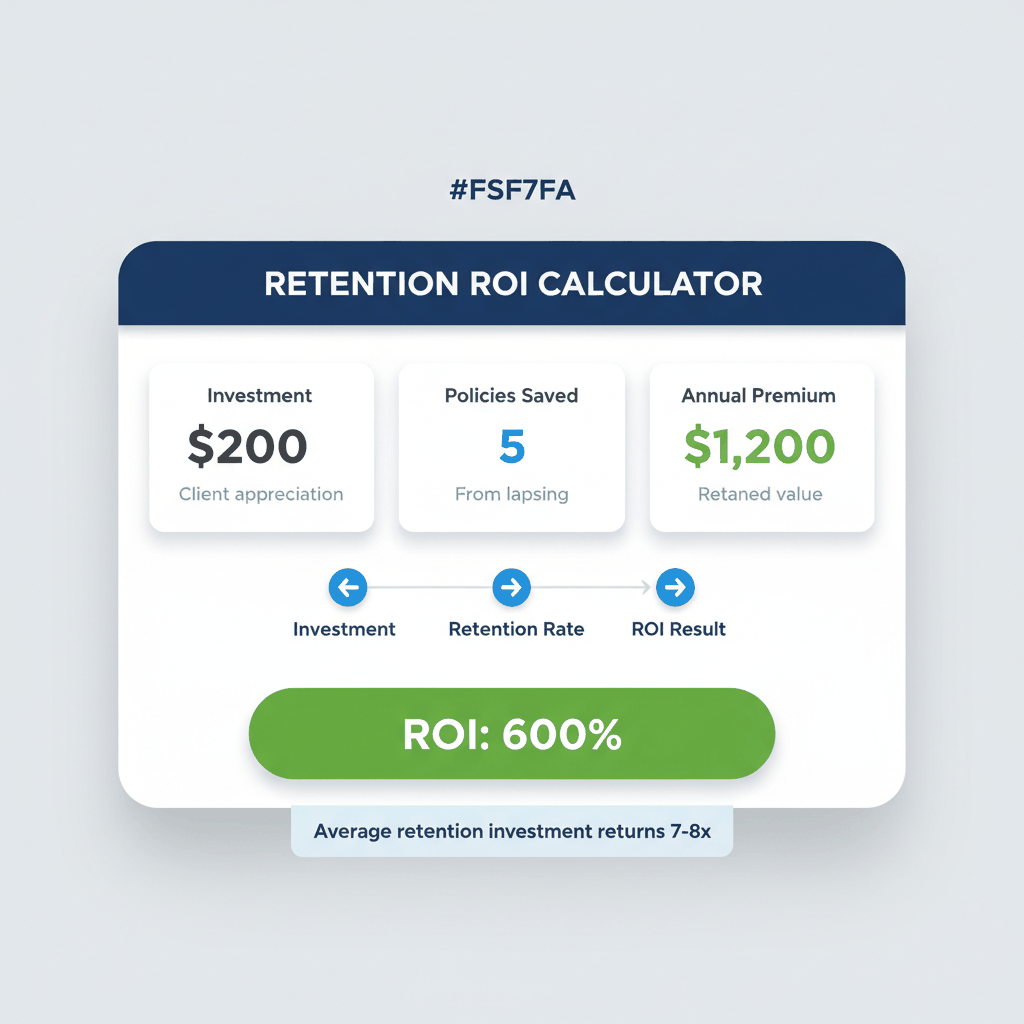
Retention efforts require investment. Track your return to ensure profitability.
For example, if you spend $200 on client appreciation events and keep five policies from lapsing, calculate the annual premium value saved. Most retention investments pay for themselves quickly.
At even a 1% improvement in retention, you'd typically see 7-8 times your investment in retained premium income.
Establish specific, measurable retention goals. For example:
Increase 12-month persistency from 85% to 92%
Generate 20% of new business from client referrals
Contact every client at least four times per year
Reduce average days between lapse and reinstatement
Review progress monthly and adjust strategies based on results.
What's the average final expense customer retention rate?
The average client retention rate for the insurance industry is 84%. However, successful final expense agents often achieve 90% or higher first-year persistency rates through systematic follow-up and relationship building.
How often should I contact final expense clients?
Contact clients at least four times per year through various channels. This includes thank you cards, birthday cards, policy reviews, and check-in calls. More frequent contact generally improves burial insurance renewals.
What causes final expense policy lapses?
Common causes include missed payment deadlines, forgotten automatic payment setup, changed bank information, and inadequate communication from agents. Most policy lapse prevention issues are addressable through proactive follow-up.
How can I prevent clients from switching to competitors?
Focus on superior life insurance customer service, regular communication, and building personal relationships. Clients rarely leave agents who consistently add value and maintain personal connections.
What's the best way to get final expense referrals?
Ask systematically at every client interaction. Provide simple referral templates and reward quality referrals with gift cards or special recognition. Make the referral process easy for clients to complete.
Ready to buy final expense leads? Sign up for free with ResultCalls today!

Hello everyone! My name is Alex and I write these blogs to help educate small business owners on different ways to grow their business. My goal is to make lead generation as easy as possible for you. After reading these blogs, I hope you leave with some actionable steps that will get you closer to growing your business :)