
Are you losing money because you forgot to follow up on that $4,500 removal quote? Do storm calls slip through the cracks when your crews are already busy? You're not alone.
Tree service companies lose 35-50% of potential leads to what experts call "lead leakage." That's thousands of dollars walking away because of missed calls, slow responses, or forgotten follow-ups. The solution isn't working harder. It's working smarter with a tree service CRM.
A good CRM captures the leads you're missing and turns them into paying customers. Plus, it automates the boring stuff so you can focus on growing trees and growing profits. This guide shows you exactly how to choose and use CRM systems that work for arborists.
You'll learn which platforms handle emergency storm calls, how to automate seasonal reminders, and real numbers from tree services that recovered $60,000-$240,000 in lost annual revenue.
Table of Contents
Tree service CRM systems solve the biggest problem facing arborists today. Lead leakage is killing your revenue.
Here's what lead leakage looks like in real money. When storms hit at 6 AM and homeowners need emergency tree removal, you lose $2,000-$8,000 per missed call. When customers request quotes and you respond three days later, they've already hired someone who called back in 30 minutes.
The math is simple but painful. If you generate 40 leads per month but only close 14, you're losing 26 potential jobs. That's 65% of your revenue walking away to competitors who respond faster and follow up better.
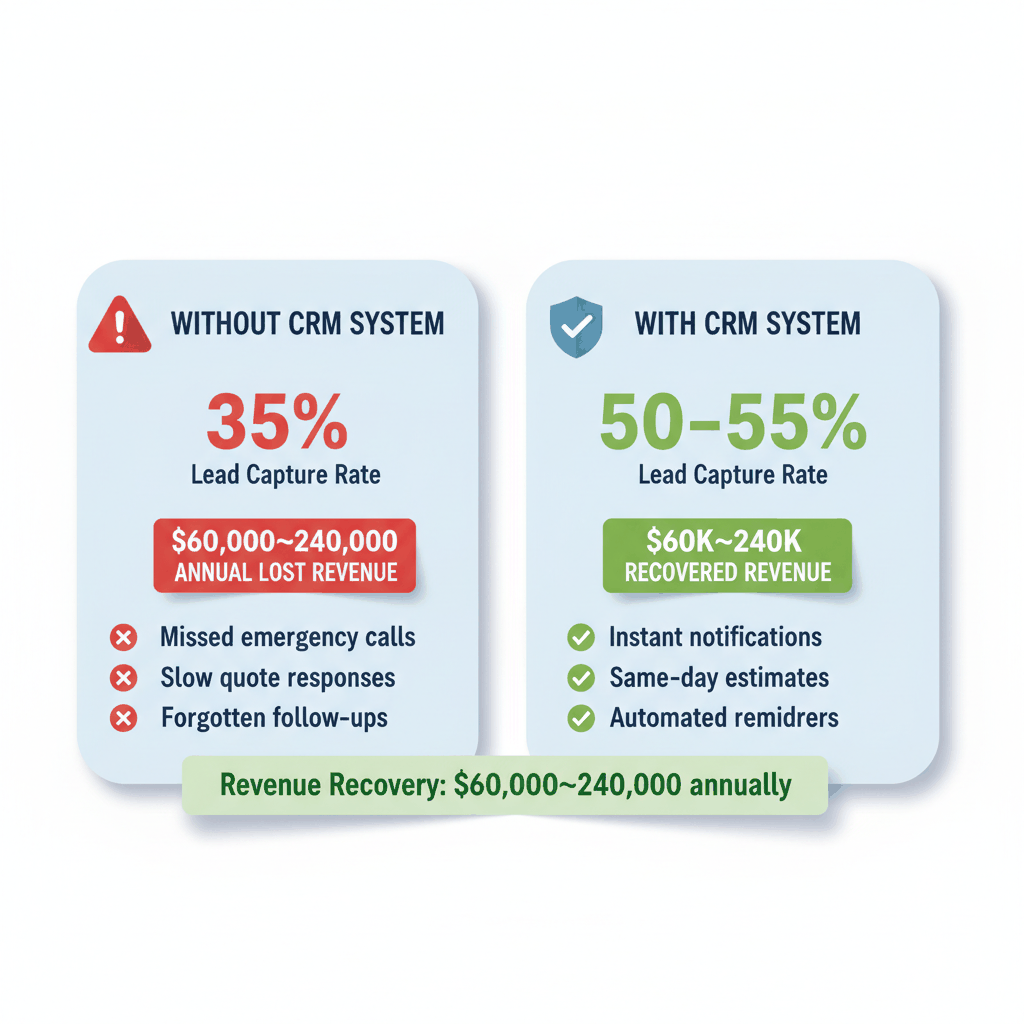
Companies using proper tree service CRM systems capture 50-55% of their leads instead of 35%. At average job values of $800-$2,500, that means recovering $60,000-$240,000 in annual revenue you're currently losing.
One tree service company grew from $500,000 to $5 million annually in 11 years using CRM systems. The owner said it wouldn't have happened without the right software tracking every lead and customer interaction.
Emergency response delays cost you the biggest jobs. When homeowners have trees on their roofs, they call multiple companies. The first one to answer gets the $5,000 removal job. The rest get nothing.
Slow quote responses lose medium-sized jobs. Customers won't wait three days for a $3,000 oak removal estimate when your competitor sends one the same day.
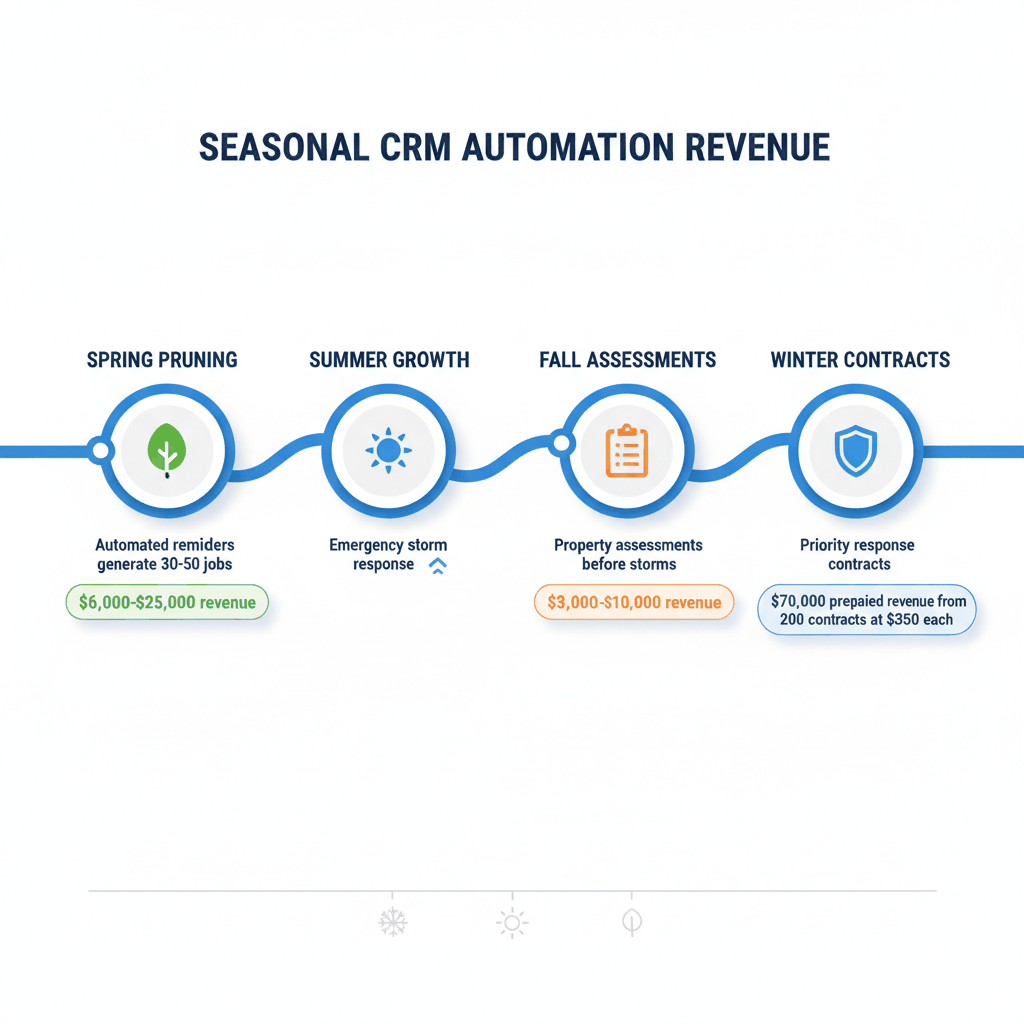
Forgotten seasonal follow-ups lose recurring revenue. Spring pruning reminders to past customers can generate 30-50 jobs worth $200-$500 each. That's $6,000-$25,000 in easy revenue if you remember to reach out.
Good arborist customer management goes beyond contact information. The best systems track every interaction from first call to final invoice.
Your CRM should store customer history in one place. Previous jobs, estimates, maintenance schedules, and billing records help you serve customers better and spot upsell opportunities.
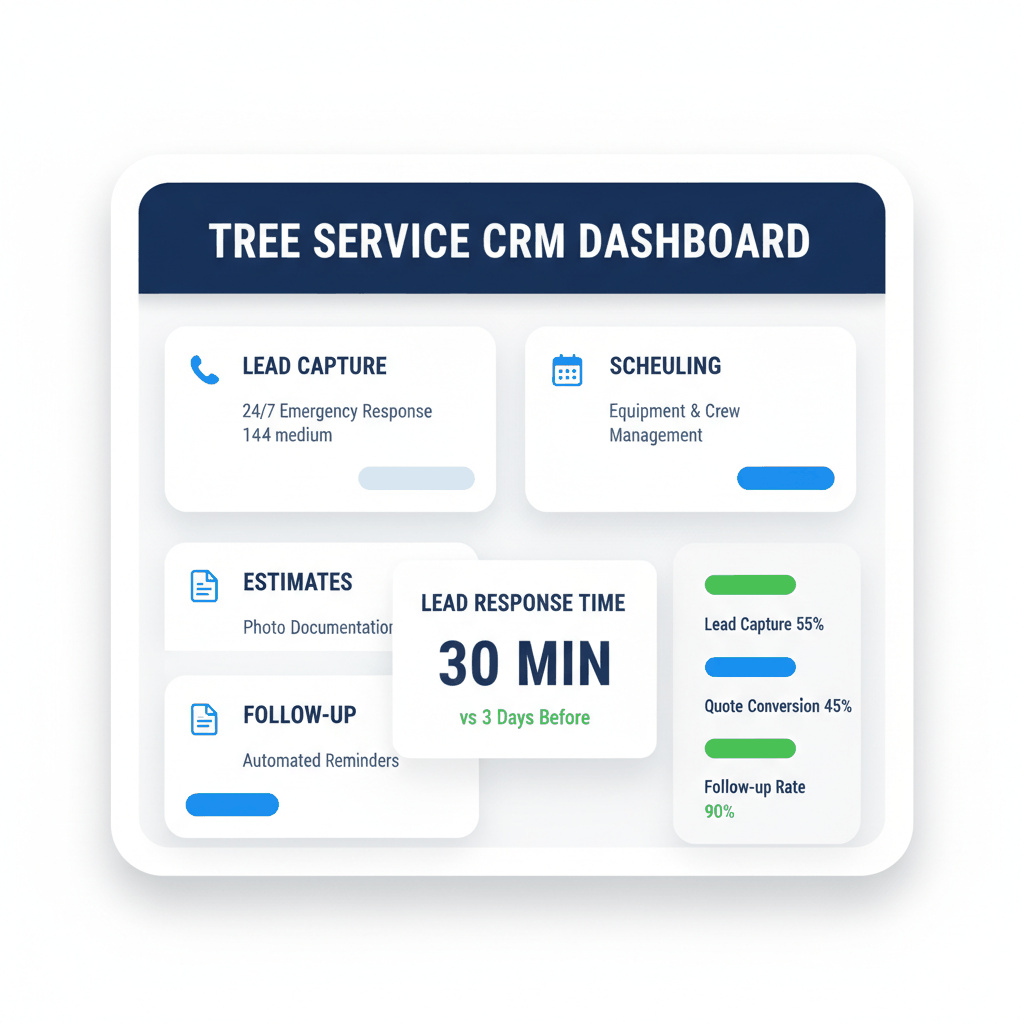
Fast response wins tree service jobs. The best CRM systems capture leads from multiple sources automatically. Website forms, phone calls, and referrals all flow into one system.
Instant notifications matter most. When someone submits an emergency tree removal request at 11 PM, you need to know immediately. Automated text and email alerts ensure you respond first, even outside business hours.
AI assistants handle after-hours inquiries. They collect basic information, schedule callbacks, and send automatic responses so customers know you received their request.
Every phone call, email, and text message should be logged automatically. This prevents customers from repeating their story to different team members. It also helps you track which communication methods work best.
Photo documentation improves estimates and builds trust. Take pictures of problem trees, annotate hazards, and attach everything to the customer record. Visual evidence supports your pricing and shows professionalism.
Service history tracking identifies patterns. Customers who needed emergency removals often need stump grinding services. Those with large properties usually need annual maintenance contracts.
Tree service scheduling software prevents double-booking equipment and maximizes crew efficiency. The best systems assign the right equipment to the right jobs automatically.
Equipment conflicts kill productivity. When you book two jobs requiring bucket trucks on the same day, one crew sits idle while the other works. Scheduling software prevents these expensive mistakes.
Estimators spend their day driving between properties. Mobile CRM access lets them build quotes on-site instead of returning to the office to write estimates from memory.
Photo capture and voice notes speed up documentation. Take pictures of problem areas, record verbal notes about access challenges, and upload everything while still on the property.
Real-time schedule updates keep everyone informed. When jobs run long or weather delays work, instant notifications help dispatch adjust remaining appointments.
Smart routing saves fuel costs and travel time. The best scheduling software groups jobs by geographic area and suggests efficient daily routes.
Crew specialization matching improves results. Some teams excel at removals while others focus on pruning. Good scheduling software considers crew strengths when assigning jobs.
Equipment requirements planning prevents delays. Jobs requiring stump grinders, chippers, or specialized climbing gear get scheduled with proper equipment automatically.
Different CRM platforms serve different business sizes and needs. Here's how the top options compare for tree service companies.
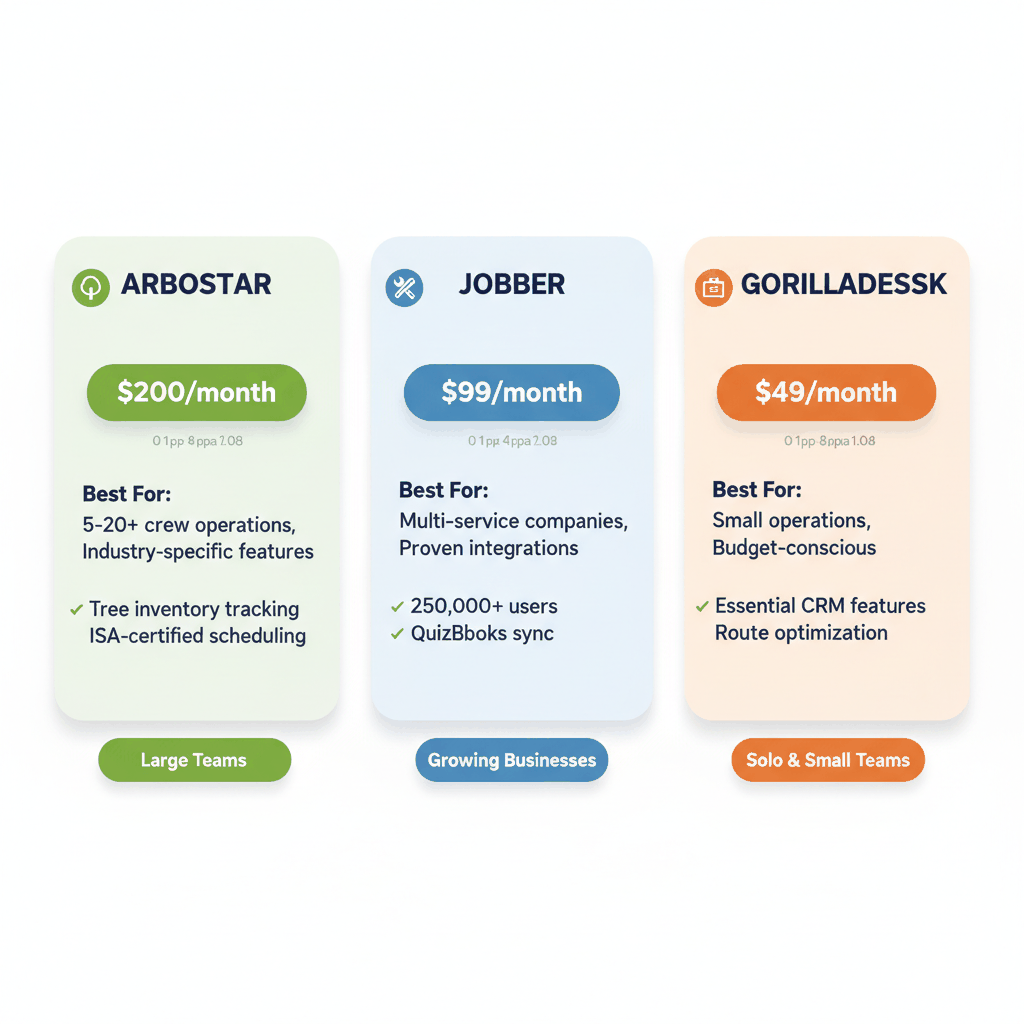
ArboStar was built by arborists for tree care companies. It handles everything from lead capture to final billing in one system.
The platform scales from solo operators to 20+ crew operations without losing functionality. Users consistently praise its industry-specific features like tree inventory tracking and ISA-certified arborist scheduling.
Pricing starts at $200 monthly for up to five users. The cost includes unlimited estimates, work orders, and customer communications.
ArborNote specializes in tree inventory management and professional proposals. It's particularly strong for companies doing municipal work or managing large commercial properties.
The mapping features help track tree health over time. This creates opportunities for ongoing maintenance contracts with property managers and HOAs.
Integration with other business software streamlines operations. ArborNote connects with QuickBooks, scheduling platforms, and proposal generation tools.
Jobber serves multiple home service industries, including tree care. It's a good choice for companies wanting proven software with extensive integrations.
The platform includes estimating, scheduling, invoicing, and payment processing. Over 250,000 service professionals use Jobber to organize their businesses.
QuickBooks integration keeps accounting synchronized. Jobs completed in Jobber automatically create invoices in your accounting software.
GorillaDesk offers essential CRM features starting at $49 monthly. The basic plan includes scheduling, customer management, and simple invoicing.
The Pro plan at $99 monthly adds QuickBooks sync, automated follow-ups, and route optimization. This pricing works well for smaller operations just starting with CRM systems.
Combining affordable CRM with pay per call tree service leads helps smaller companies compete with larger operations.
Tree care business organization improves when you standardize processes across all customer interactions. CRM systems force consistency by guiding team members through the same steps every time.
Create estimate templates for common jobs. Removal, pruning, and stump grinding estimates should follow the same format every time. This speeds up quote generation and improves accuracy.
Include photos with every estimate. Visual documentation supports your pricing and helps customers understand the scope of work.
Set follow-up reminders automatically. Every estimate should trigger a follow-up task three days later. If customers haven't responded, your system reminds you to call.
Fall customer list reviews generate winter work. Your CRM should remind you to contact previous customers for property assessments before storm season.
Priority response contracts create guaranteed revenue. Email automation can market these contracts to every past customer. Companies selling 200 priority contracts at $350 each generate $70,000 in prepaid revenue annually.
Spring pruning campaigns target dormant season work. Automated reminders sent to customers with large trees generate 30-50 jobs worth $200-$500 each.
The most profitable tree services build multiple revenue channels. Stump grinding upsells on removals, builder relationships for new construction, and commercial maintenance contracts provide steady income.
CRM systems track these opportunities automatically. When you complete a removal, the system suggests stump grinding services. When you work in new developments, it reminds you to contact other builders.
CRM implementation takes patience but delivers significant returns. Most companies need about five months before everyone fully adopts the new system.
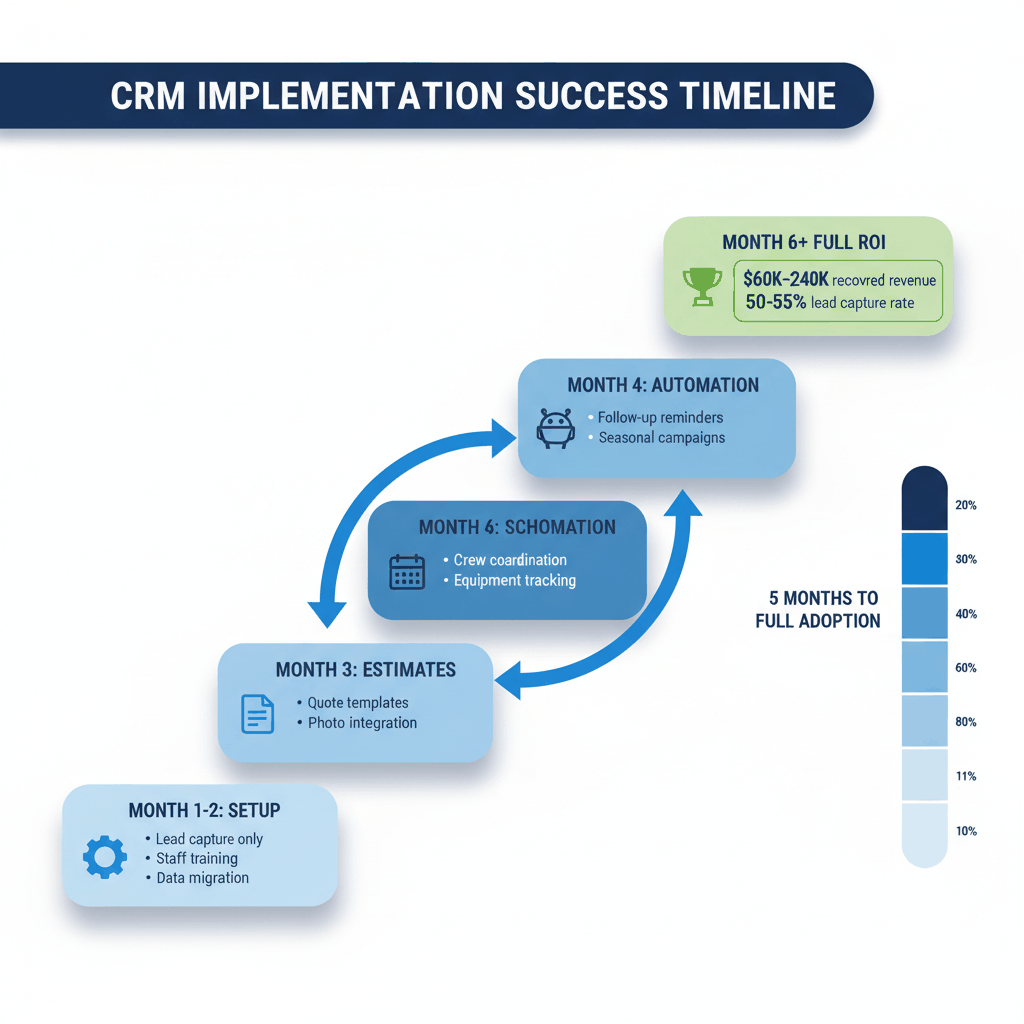
Initial setup complexity overwhelms some teams. Linking data to QuickBooks, customizing job templates, and setting up crew calendars takes time to configure properly.
Staff resistance slows adoption. Long-time employees prefer familiar paper systems to new technology. Training and patience help overcome this resistance.
Data migration from old systems causes temporary confusion. Importing customer records, job history, and pricing information requires careful planning.
Start with lead capture and estimates only. Don't try to implement every feature immediately. Master the basics before adding advanced automation.
Train one person thoroughly, then have them teach others. This creates internal experts who understand both the software and your business processes.
Track specific metrics before and after implementation. Lead response time, estimate-to-sale conversion rates, and follow-up completion rates show concrete improvements.
Most tree services see positive ROI within six months. Companies generating $75,000-$100,000 annually typically recover their CRM investment through reduced lead leakage alone.
Year two brings larger returns as automation and customer retention improve. Seasonal campaigns, upsell tracking, and referral management compound over time.
What's the best tree service CRM for small companies?
GorillaDesk and Jobber work well for smaller operations. Both start at $49 monthly and include essential features like scheduling, estimates, and customer management. ArboStar offers more tree-specific features but costs $200 monthly.
How much revenue can tree service CRM systems recover?
Companies typically recover $60,000-$240,000 annually by improving lead capture from 35% to 50-55%. The exact amount depends on your current lead volume and average job values.
Do arborist customer management systems work on mobile devices?
Yes, modern CRM systems include mobile apps for field teams. Estimators can build quotes on-site, upload photos, and access customer history from their phones or tablets.
How long does CRM implementation take for tree care businesses?
Most companies need about five months to fully adopt their CRM system. Start with basic lead capture and estimates, then gradually add scheduling, invoicing, and automation features.
Can tree service scheduling software prevent equipment conflicts?
Quality scheduling software prevents double-booking by tracking equipment assignments automatically. It ensures bucket trucks, chippers, and stump grinders go to the right jobs on the right days.
Ready to get pay per call tree service leads? Sign up for free with ResultCalls today!

Hello everyone! My name is Alex and I write these blogs to help educate small business owners on different ways to grow their business. My goal is to make lead generation as easy as possible for you. After reading these blogs, I hope you leave with some actionable steps that will get you closer to growing your business :)