
Picture this: You just won a major car accident case for a client. They received a fair settlement. Yet three months later, you discover a scathing one-star review online claiming you're incompetent. This happens to good attorneys every day.
Legal reputation management for MVA attorneys isn't just about damage control. It's about protecting your practice's future. Over 90% of potential clients read reviews before choosing a lawyer. One negative review can lose you 22% of potential customers.
Here's the truth: Your legal expertise means nothing if potential clients never contact you. The solution lies in strategic legal reputation management. This approach protects your practice while staying within ethical boundaries.
You'll learn how to respond to negative reviews professionally, build positive review volume, and monitor your online presence. Plus, discover the best tools for MVA attorneys and proven response templates that comply with all ethics rules.
What You'll Learn
MVA attorneys face unique reputation challenges. Car accident victims often feel stressed, frustrated, or disappointed with legal outcomes. These emotions can lead to harsh reviews, even when you provided excellent representation.
The numbers tell the story. 86% of consumers avoid businesses with negative reviews. For attorneys, this means lost revenue before potential clients even call your office.
Negative reviews hit MVA practices particularly hard. Research shows that 94% of people have avoided a business due to negative feedback. When three or more negative reviews appear on the first page, you lose 59% of potential customers.
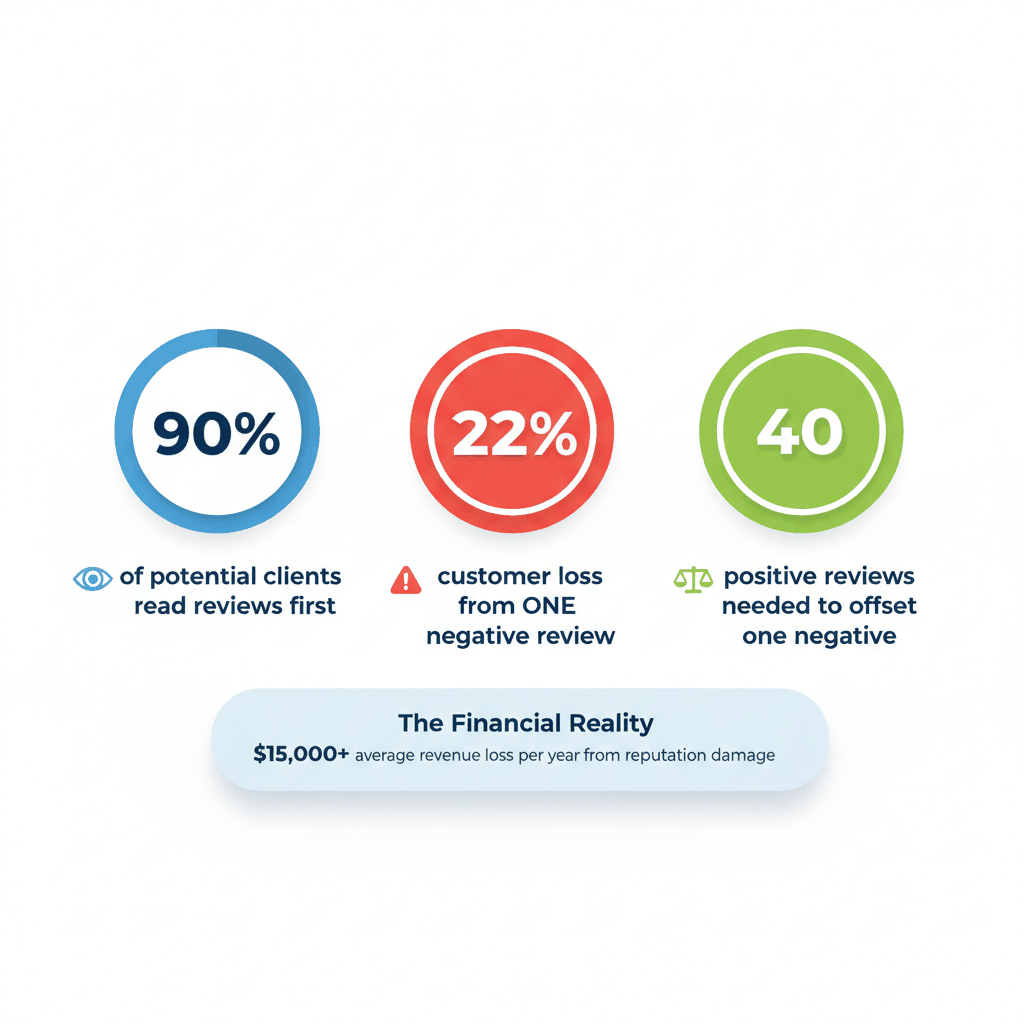
The financial impact is severe. Companies facing reputation issues report losing both brand value and revenue. Plus, you'll pay 10% more to hire quality staff when your reputation suffers.
MVA attorneys can't defend themselves like other businesses. ABA Model Rule of Professional Conduct 1.9(c) prevents you from revealing client information. Even when clients post false claims, you can't share case details to correct the record.
This creates a frustrating situation. You must respond professionally while staying within ethical bounds. The key lies in using approved response templates and focusing on process rather than case specifics.
Your response to negative reviews can make or break your reputation. Responding quickly and professionally shows potential clients you care about client satisfaction. However, rushing your response often backfires.
The golden rule: Wait 24 hours before responding. This cooling-off period prevents emotional reactions that could damage your reputation further. Plus, it gives you time to craft an ethical response.
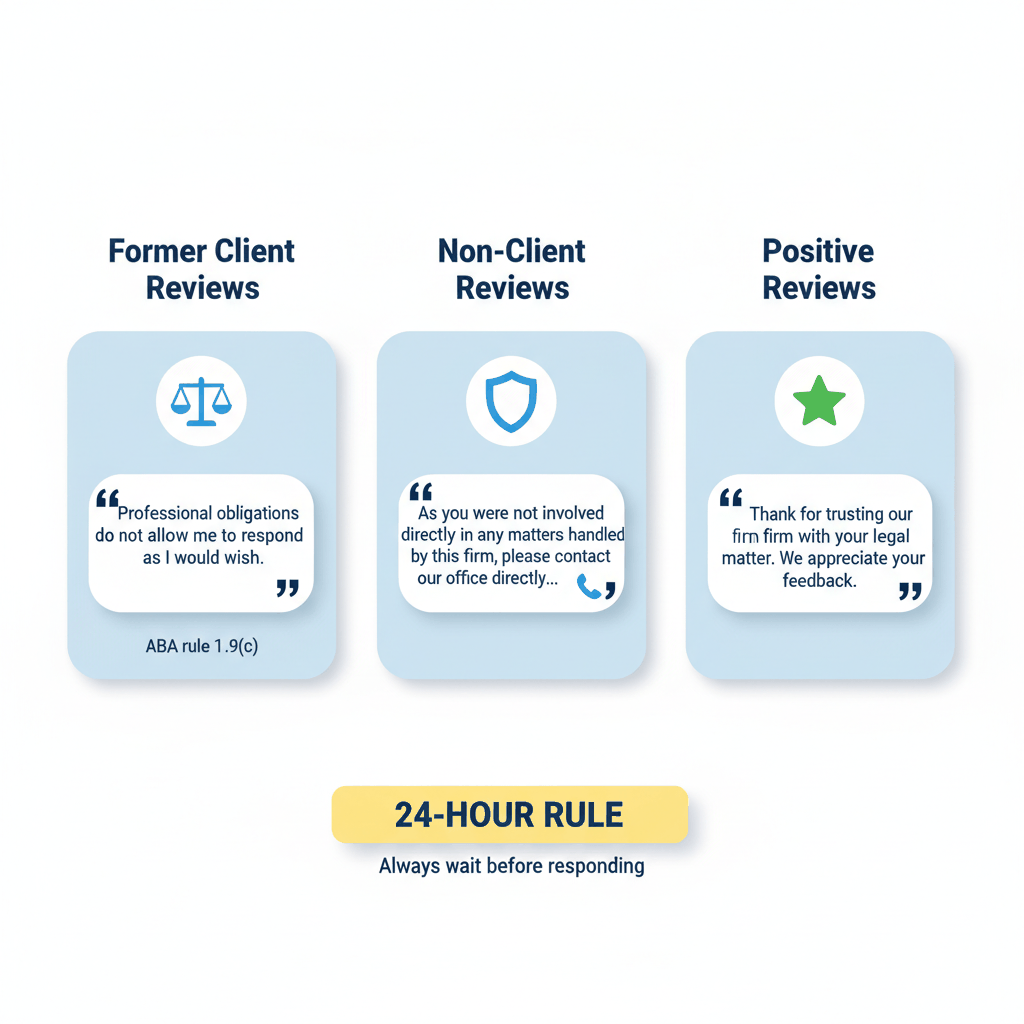
The ABA provides specific language for different review scenarios. For reviews from former clients, use this template: "Professional obligations do not allow me to respond as I would wish." This acknowledges the review while protecting confidentiality.
For suspected non-clients, respond with: "As you were not involved directly in any matters handled by this firm, please contact our office directly so that we may discuss your concerns." This template protects against fake reviews while maintaining professionalism.
Businesses that respond to reviews increase customer trust by 1.7x. Your response shows potential clients how you handle difficult situations. Focus on empathy, professionalism, and your commitment to client satisfaction.
For example: "We are sorry to hear that you had a negative experience with our law firm. We are committed to providing high-quality legal services to our clients and value your feedback. Please call us at [phone number] so that we can discuss your concerns."
One negative review requires around 40 positive reviews to offset its impact. This means you need a systematic approach to generating positive feedback from satisfied clients.
The timing matters. Request reviews after case conclusion, never during active representation. This prevents any appearance that review content could affect your representation quality.
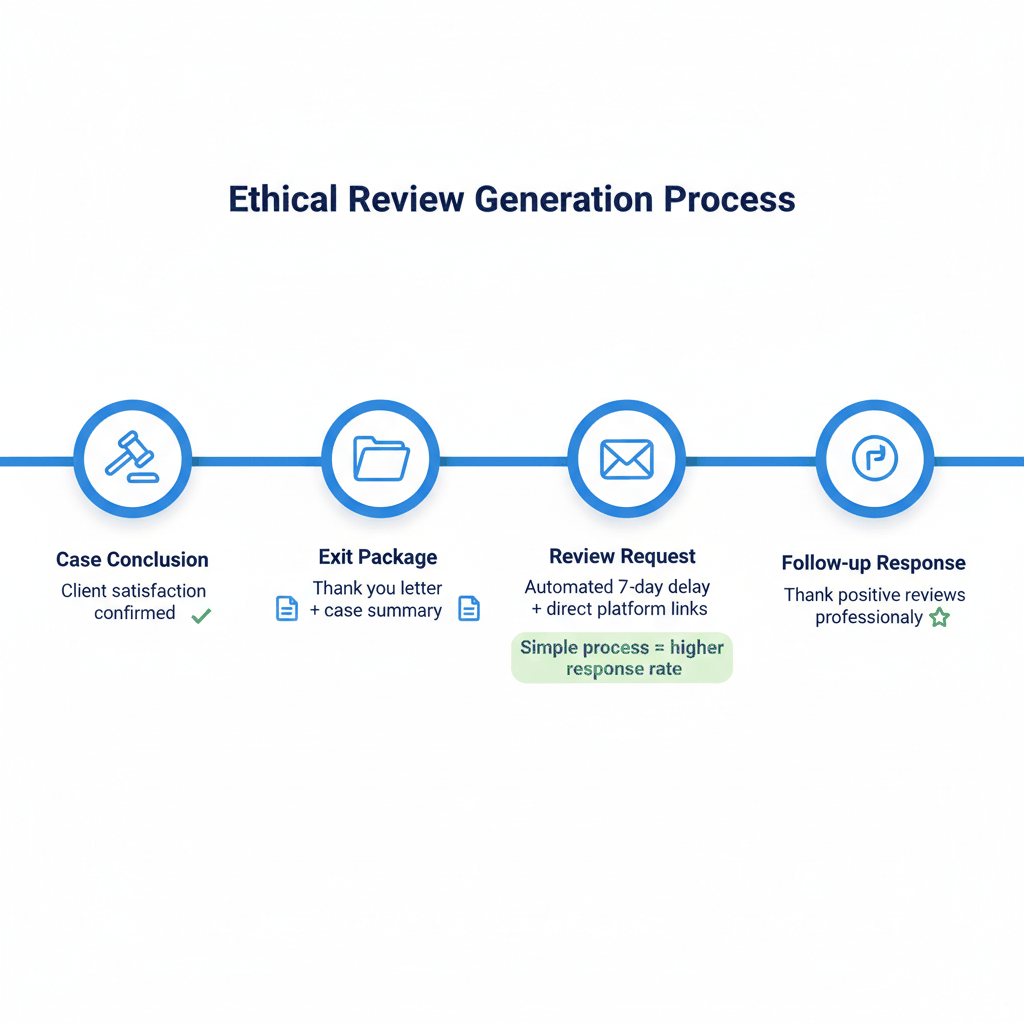
Develop a standardized exit package for closed cases. Include a thank-you letter, case summary, and gentle review request. Make the process simple for clients by providing direct links to your Google Business Profile and other review platforms.
Consider using automated systems like NiceJob with Clio integration. These tools trigger review requests automatically when you close a case in your practice management software.
Don't ignore positive reviews. Responding to positive feedback shows you value client relationships and read all feedback carefully. Keep responses brief, genuine, and professional.
Thank the client for their trust and highlight specific aspects they mentioned. This approach helps potential clients understand your strengths while showing your attention to detail.
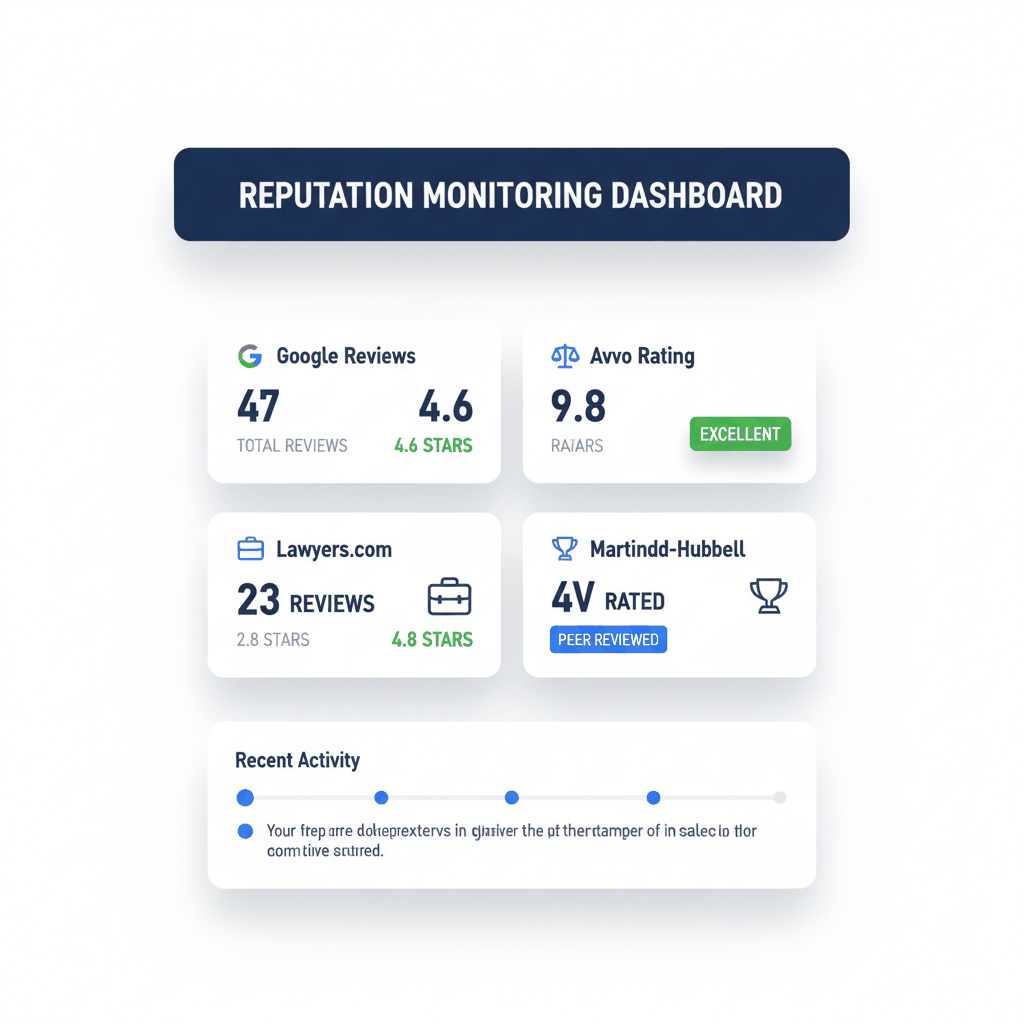
You can't manage what you don't monitor. 92% of legal reviews appear on Google, but you also need to watch Avvo, Lawyers.com, and Martindale-Hubbell.
Check your Google and Bing search results every few months. Search for your name, your firm's name, and variations of both. Set up alerts so you learn about new mentions quickly.
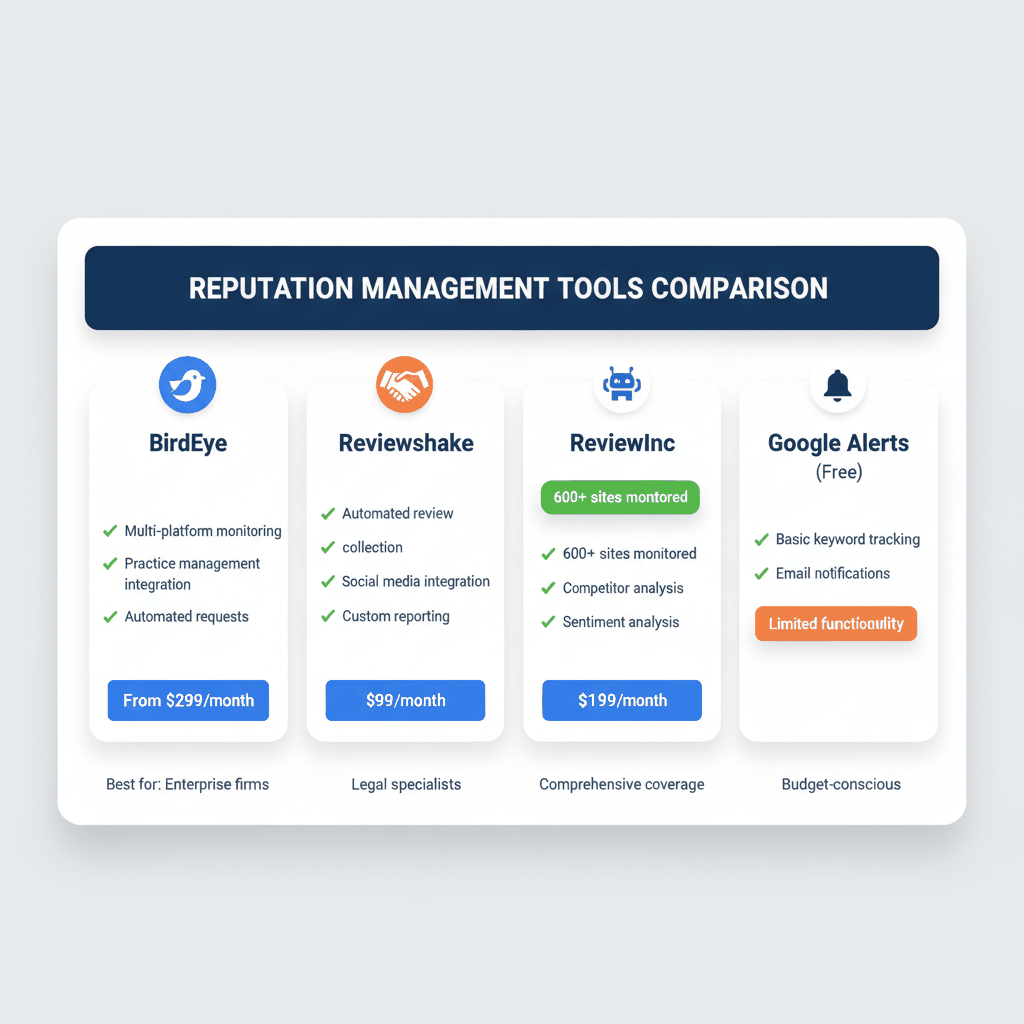
BirdEye offers comprehensive reputation management for law firms. The platform monitors multiple review sites, sends automated review requests, and provides response templates. Plus, it integrates with most legal practice management systems.
Reviewshake focuses specifically on legal professionals. Features include automated review requests, instant notifications, and easy integration with existing systems. The interface is designed for busy attorneys who need efficiency.
ReviewInc uses AI-backed technology to monitor over 600 review sites. The platform integrates with CRMs and includes social media monitoring tools. This comprehensive approach catches mentions across the entire digital landscape.
Google Alerts provides basic monitoring for your name and firm. Set up alerts for various combinations and check results regularly. Talkwalker offers more comprehensive monitoring but may include irrelevant mentions.
Reputology focuses specifically on local markets. You receive email notifications about new reviews and can respond through their platform. This tool works well for smaller firms with limited budgets.
Legal reputation management must comply with professional responsibility rules. These guidelines protect both attorneys and clients while maintaining the integrity of the legal profession.
Never reveal confidential client information, even when defending against false claims. The client's decision to post a negative review doesn't waive attorney-client privilege. Your professional obligations remain intact regardless of the review content.
Don't argue with reviewers or provide case details. Avoid emotional language or personal attacks. Never encourage friends, family, or staff to post fake positive reviews. These tactics violate ethics rules and often backfire spectacularly.
Some attorneys try to have negative reviews removed through legal action. This strategy rarely succeeds and often draws more attention to the negative review. Focus on professional responses and building positive review volume instead.
Develop internal policies for review management. Train staff on appropriate responses and escalation procedures. Create templates that comply with all ethics rules and have them reviewed by ethics counsel.
Document your review management process. This creates consistency in your responses and demonstrates your commitment to ethical practices. Plus, it protects your firm if ethics questions arise later.
Can MVA attorneys legally remove negative reviews?
Attorneys can request removal of clearly false reviews that violate platform policies. However, legal action rarely succeeds and often increases the review's visibility. Professional responses and positive review generation prove more effective for legal reputation management.
How quickly should lawyers respond to negative reviews?
Respond within 24 hours, but never immediately. Take time to craft an appropriate, ethical response that complies with attorney-client privilege rules. Quick responses show you care, but rushed responses often cause more reputation damage.
What's the best platform for MVA lawyer reviews?
Google dominates with 92% of legal reviews, making your Google Business Profile the top priority. Also monitor Avvo, Lawyers.com, and Martindale-Hubbell, as these platforms influence potential client decisions for attorney review management.
Can attorneys incentivize clients to leave positive reviews?
Attorneys can request reviews after case conclusion but cannot offer incentives or compensation for positive reviews. This violates professional ethics rules and platform policies. Focus on excellent client service to earn genuine positive feedback naturally.
How many positive reviews offset one negative review?
Research shows approximately 40 positive reviews are needed to offset the impact of one negative review. This highlights why MVA attorneys need systematic approaches to legal practice reputation building and consistent client satisfaction.
Ready to get MVA pay per call leads? Sign up for free with ResultCalls today!

Hello everyone! My name is Alex and I write these blogs to help educate small business owners on different ways to grow their business. My goal is to make lead generation as easy as possible for you. After reading these blogs, I hope you leave with some actionable steps that will get you closer to growing your business :)