When a homeowner's basement floods at 2 AM, they don't spend hours researching every restoration company in town. They call the business they already know and trust. This makes water damage social media marketing completely different from other industries.
Most restoration companies struggle with social media because they treat it like direct sales. They post promotional messages and wonder why nobody responds. The truth is, social media for water damage companies isn't about immediate sales. It's about staying top-of-mind before disaster strikes.
The real challenge is creating consistent, valuable content that builds trust over time. When you become the restoration expert people recognize, you win the midnight emergency calls that generate the highest revenue.
This guide provides proven social media post templates that position your water damage company as the trusted local expert. You'll learn exactly what to post, when to post it, and how to build brand familiarity that translates to emergency calls.
Table of Contents
Traditional marketing focuses on immediate conversions. Water damage social media works differently. Your goal is brand familiarity, not instant sales.
When emergencies happen, people make quick decisions. They choose companies they already recognize. Brand familiarity increases your selection rate when customers must decide fast.
The biggest mistake restoration companies make is posting only promotional content. According to industry research, companies that focus on educational and community content generate 3x more engagement than those posting only service promotions.
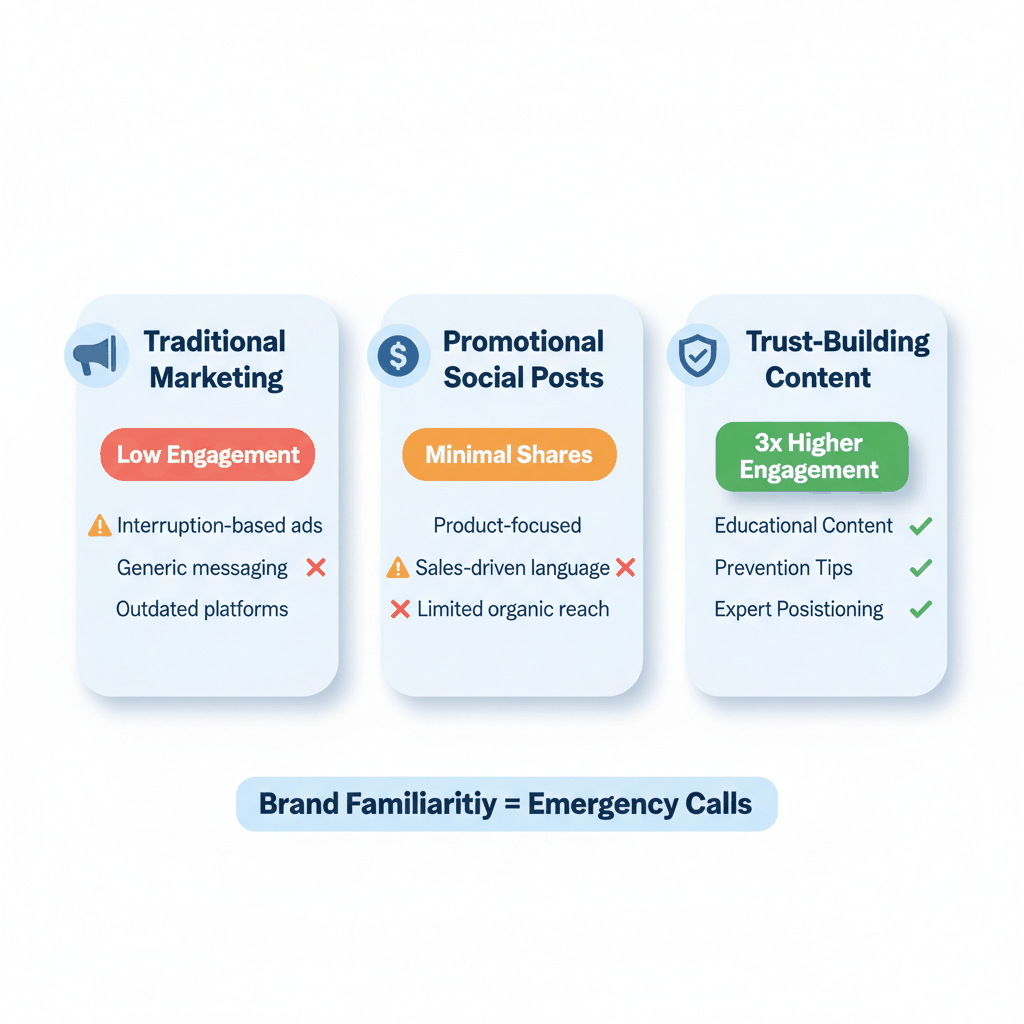
Social media trust builds slowly. Your audience needs multiple touchpoints before considering your services.
Start with educational posts that solve common problems. Share prevention tips and emergency procedures. Show your expertise through helpful content, not sales pitches.
Document your team's professionalism through behind-the-scenes content. Post photos of your crew using advanced equipment. This demonstrates your technical capabilities.
Emergency decisions happen under stress. Homeowners want familiar, trusted companies when disaster strikes.
Your social media creates mental availability. When someone sees your truck in the neighborhood or your logo on their feed, they remember your brand during emergencies.
Research shows that brand recognition influences 80% of emergency service selections. This makes consistent posting more valuable than sporadic promotional campaigns.
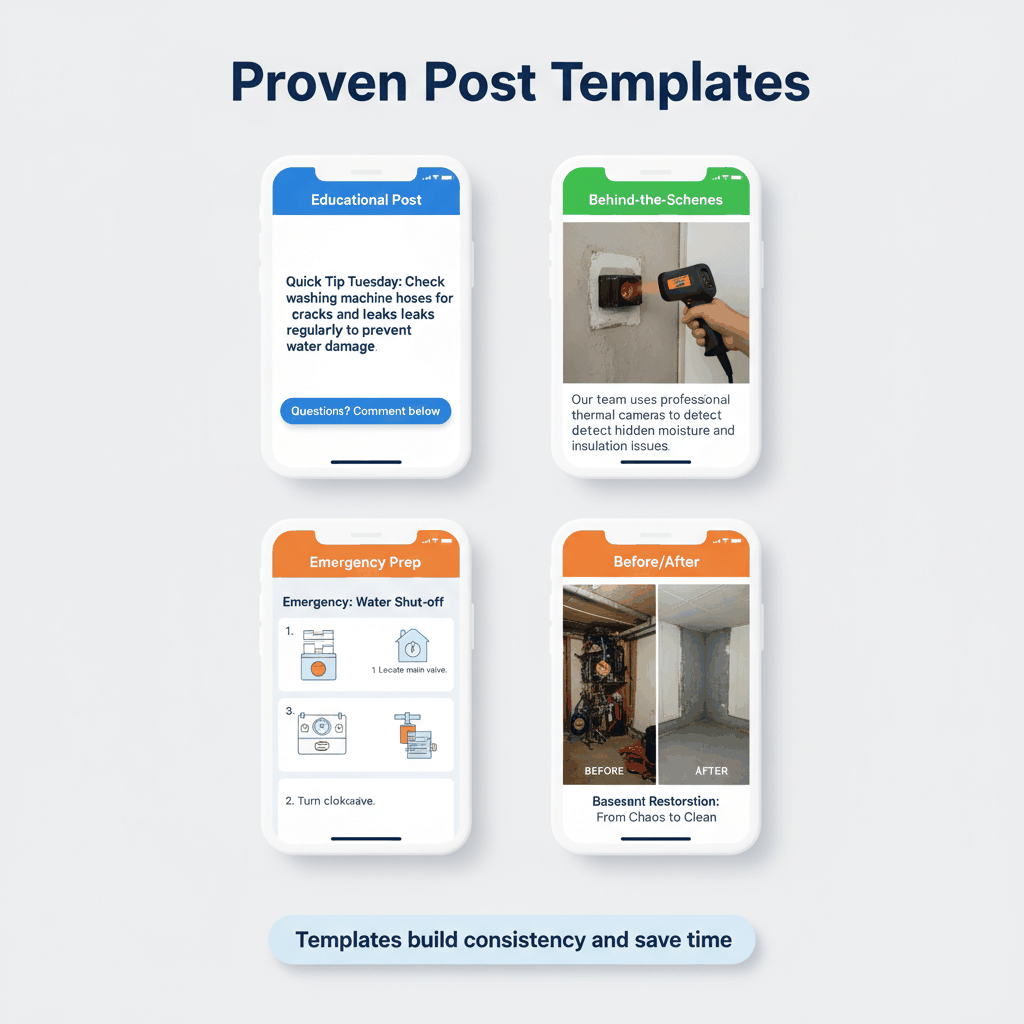
These templates work because they focus on education and trust-building rather than direct promotion. Use them as starting points and customize for your local market.
Prevention posts position you as the expert while helping homeowners avoid problems. They generate high engagement and shares.
Template: "Quick Tip Tuesday: [Specific prevention advice]. This simple step can [specific benefit]. Have questions? Drop them in the comments."
Example: "Quick Tip Tuesday: Check your washing machine hoses every 6 months for cracks or bulges. This simple step can prevent thousands in flood damage. Have questions? Drop them in the comments."
These posts work because they provide immediate value. Homeowners save and share helpful tips. Your brand stays visible in their social feeds.
Show your team's expertise through equipment and process photos. These build credibility and demonstrate professional standards.
Template: "Our team uses [specific equipment] to [specific benefit]. This ensures [quality outcome] for every client. #ProfessionalRestoration #[YourCity]"
Example: "Our team uses thermal cameras to find hidden moisture other companies miss. This ensures complete drying for every client. #ProfessionalRestoration #DenverWaterDamage"
Include photos of your technicians using advanced equipment. Show containment barriers, air scrubbers, and moisture meters in action.
Emergency preparedness posts help homeowners while positioning you as the go-to expert when disasters happen.
Template: "Emergency Preparedness: Know how to [specific action] in [emergency situation]. Here's what to do: [3-step process]. Save this post for when you need it."
Example: "Emergency Preparedness: Know how to shut off your main water valve during a pipe burst. Here's what to do: 1) Locate the valve near your water meter 2) Turn clockwise to close 3) Call us at [phone]. Save this post for when you need it."
Visual proof builds instant credibility. Before and after photos demonstrate your capabilities without aggressive promotion.
Template: "Transformation Tuesday: [Brief description of damage] to [outcome]. Professional restoration makes all the difference. [Brief process explanation]."
Example: "Transformation Tuesday: Flooded basement to like-new condition. Professional restoration makes all the difference. Our team removed damaged materials, dried thoroughly, and rebuilt better than before."
Always get client permission before posting photos. Focus on the technical process rather than dramatic damage descriptions.
Community posts humanize your brand and build local connections. They show you care about more than just business.
Template: "Proud to support [local event/cause]. Our team believes in giving back to the [city name] community that supports us. [Brief event description]."
Example: "Proud to support the Denver Food Bank volunteer day. Our team believes in giving back to the Denver community that supports us. Together we sorted 500 meals for local families."
Consistency beats perfection in water damage social media marketing. A simple content calendar keeps you posting regularly without overwhelming your schedule.
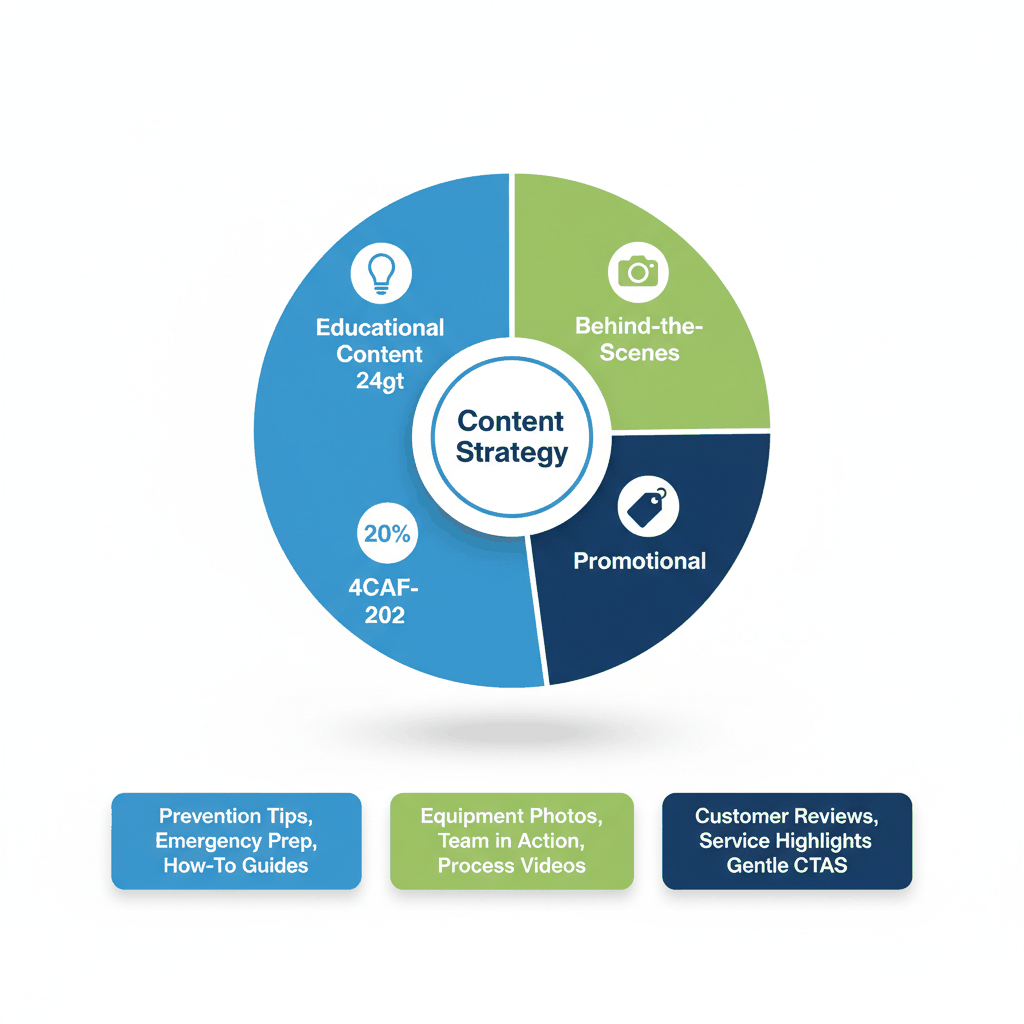
Divide your content into three categories for maximum effectiveness. This approach builds trust while maintaining visibility.
Sixty percent educational content helps homeowners solve problems and prevent damage. This positions you as the expert and generates the most engagement.
Twenty percent behind-the-scenes content shows your professionalism and expertise. Post photos of your team, equipment, and processes in action.
Twenty percent promotional content includes customer reviews, service highlights, and gentle calls-to-action. Keep promotion subtle and value-focused.
Maintain a simple schedule that fits your team's capacity. Research shows consistent posting 3-4 times per week outperforms daily posting with lower quality content.
Monday: Educational tips or prevention advice. Tuesday: Behind-the-scenes or equipment showcase. Thursday: Customer review or testimonial. Friday: Community involvement or team highlight.
This schedule provides consistent value while staying manageable for busy restoration companies. Adjust posting days based on when your audience is most active.
Plan seasonal content around weather patterns and common water damage causes in your area. This demonstrates local expertise.
Spring: Basement flooding from snowmelt, gutter maintenance, sump pump testing. Summer: Storm preparation, humidity control, vacation home tips. Fall: Pipe insulation, HVAC maintenance, holiday hosting preparation. Winter: Frozen pipe prevention, ice dam awareness, heating system safety.
Create templates for each season and adapt them yearly. This saves time while keeping content relevant and timely.
Use simple tools to create professional-looking posts without hiring designers. Canva offers free templates designed specifically for service businesses.
Take high-quality photos with your smartphone. Good lighting and clean backgrounds make equipment and before/after photos look professional.
Write captions in advance and store them in a document. This speeds up posting and ensures consistent messaging across platforms.
Each social media platform serves different purposes for water damage companies. Focus your efforts on platforms where your customers spend time.
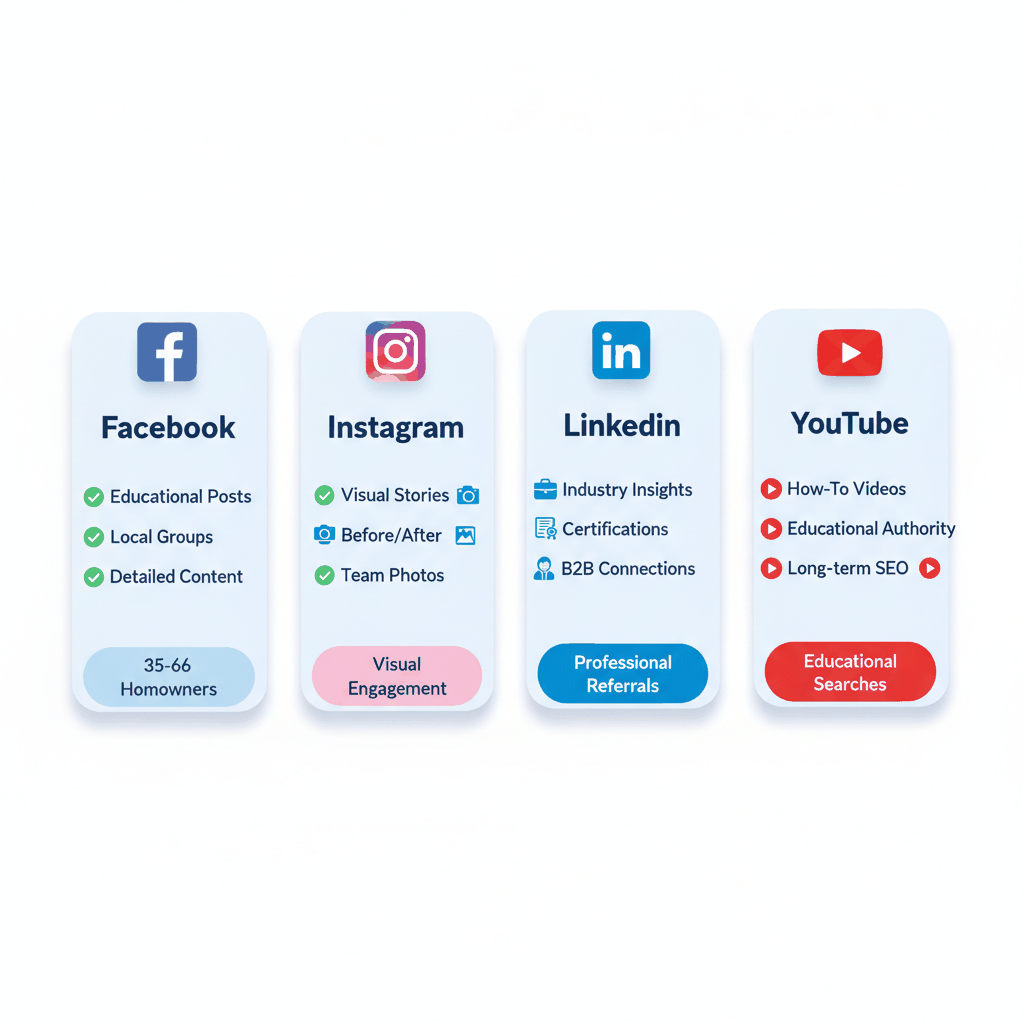
Facebook works best for building local community connections and sharing detailed educational content. Your target audience - homeowners aged 35-65 - actively uses Facebook for local business information.
Post longer-form educational content that explains processes and prevention tips. Facebook users engage with detailed posts more than other platforms.
Use local hashtags like #[YourCity]WaterDamage and #[YourCity]Restoration to appear in local searches. Join local Facebook groups and participate helpfully without being promotional.
Facebook Reviews significantly impact your local reputation. Studies indicate that 87% of homeowners read online reviews before choosing emergency services.
Instagram showcases your work through high-quality visuals. Use it to highlight your team's professionalism and technical expertise.
Post before-and-after photos, equipment in action, and team members working professionally. Instagram users respond well to authentic workplace content.
Use Instagram Stories for real-time updates from job sites. Show your team arriving quickly, setting up equipment, and maintaining clean work areas.
Instagram hashtags help local discovery. Use combinations like #WaterDamageRestoration #[YourCity] #EmergencyServices #FloodDamage to reach people searching for local services.
LinkedIn connects you with property managers, insurance adjusters, and other business referral sources. Your content here should be more professional and industry-focused.
Share industry insights, training certifications, and company growth updates. Position yourself as the professional restoration company that businesses trust.
Connect with local insurance agents, property managers, and business owners. These relationships often generate high-value commercial projects.
Post about your team's certifications and continuing education. This builds credibility with professional referral sources who value expertise.
YouTube videos establish long-term authority and appear in Google searches for years. Create educational content that helps homeowners while showcasing your expertise.
Film simple how-to videos like "How to Shut Off Your Home's Main Water Valve" or "What to Do Immediately After a Pipe Burst." These videos continue generating leads long after publication.
Video marketing delivers exceptional ROI, with 93% of marketers reporting positive returns from video content.
Keep videos under 5 minutes and focus on actionable advice. Homeowners want quick solutions during emergencies, not lengthy explanations.
Water damage social media success looks different from other industries. Track metrics that matter for emergency services rather than traditional e-commerce measurements.
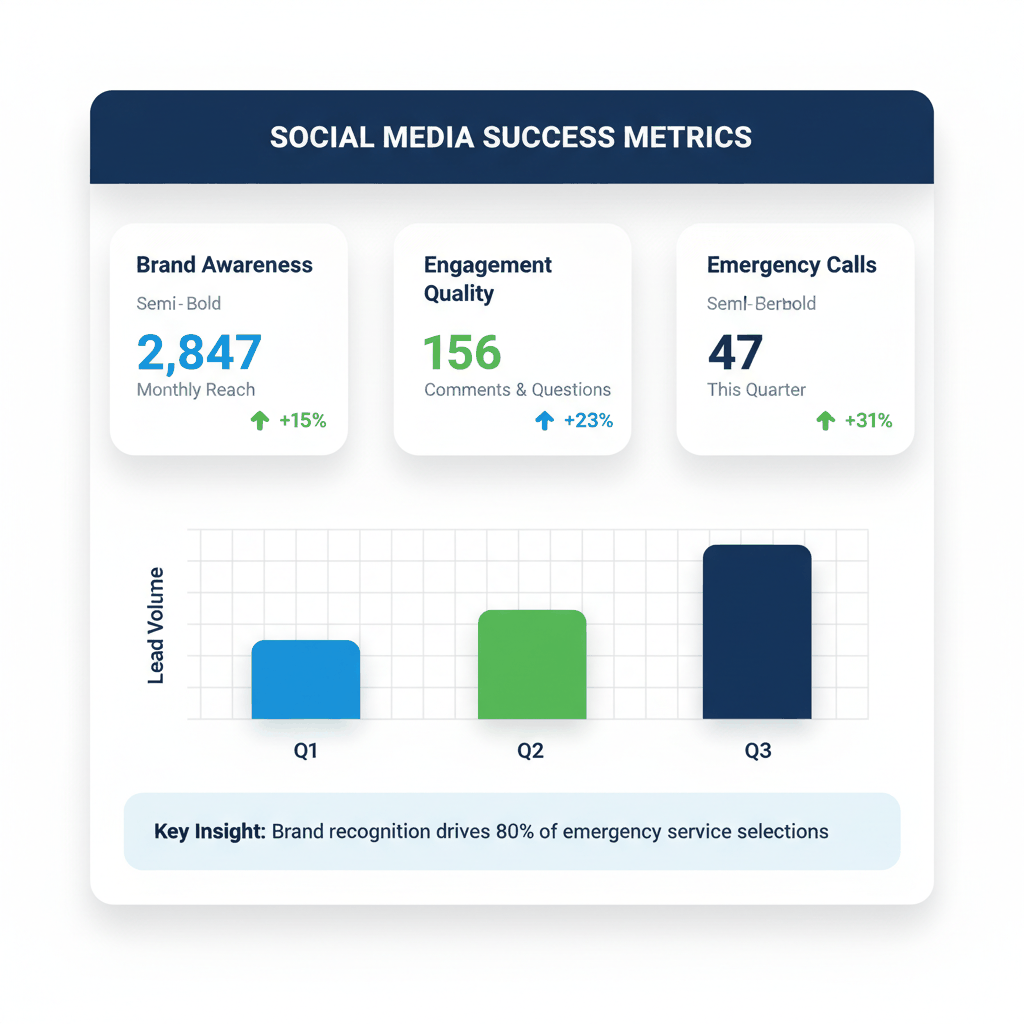
Brand recognition matters more than immediate conversions for restoration companies. Track metrics that indicate growing familiarity in your market.
Monitor reach and impressions to see how many people view your content regularly. Growing reach indicates expanding brand awareness in your local market.
Track saves and shares on educational posts. When people save your emergency tips or share prevention advice, they're more likely to remember your brand during actual emergencies.
Watch for direct searches for your company name. Increasing branded searches indicate growing local recognition and trust.
Focus on meaningful engagement rather than vanity metrics. Comments asking questions or sharing experiences indicate genuine interest.
Respond quickly to comments and questions. Fast response times build trust and demonstrate your customer service standards.
Track which types of posts generate the most comments and questions. Educational content typically drives higher engagement than promotional posts.
Monitor mentions and tags when other businesses or customers reference your company. This indicates growing local reputation and referral potential.
Track metrics that connect social media activity to actual business growth. These measurements prove social media value to your bottom line.
Monitor website traffic from social media platforms. Quality traffic from social platforms often converts better than paid advertising traffic.
Track phone calls and form submissions that reference social media. Many customers discover you through social media but convert through direct contact.
Watch for increases in emergency calls during active posting periods. Consistent social media activity often correlates with more emergency service calls.
Long-Term Growth Measurements
Social media benefits compound over time. Track long-term trends rather than weekly fluctuations.
Monitor quarterly growth in followers, engagement rates, and website traffic from social platforms. Steady growth indicates effective brand building.
Track customer lifetime value for customers acquired through social media. These customers often have higher retention rates due to existing brand familiarity.
Measure referrals from social media customers. Satisfied customers who discovered you through social media often refer friends and neighbors.
How often should water damage companies post on social media?
Post 3-4 times per week for optimal results. Consistency matters more than frequency. Focus on quality educational content rather than daily posting with lower value.
What's the best water damage social media content for generating leads?
Educational prevention tips and emergency preparedness content perform best. These posts build trust and position you as the local expert homeowners remember during emergencies.
Should restoration companies post before and after photos on social media?
Yes, with client permission. Before and after photos demonstrate your capabilities and build credibility. Focus on the professional restoration process rather than dramatic damage descriptions.
Which social media platforms work best for water damage marketing?
Facebook and Instagram work best for local water damage companies. Facebook builds community connections while Instagram showcases your work visually. LinkedIn helps with B2B referral relationships.
How do you measure social media ROI for restoration companies?
Track brand awareness metrics like reach and engagement rather than immediate conversions. Monitor website traffic from social media and correlate posting activity with emergency call volume over time.
Ready to buy water damage restoration leads? Sign up for free with ResultCalls today!

Hello everyone! My name is Alex and I write these blogs to help educate small business owners on different ways to grow their business. My goal is to make lead generation as easy as possible for you. After reading these blogs, I hope you leave with some actionable steps that will get you closer to growing your business :)