
Price objections kill more insurance deals than any other factor. You know the feeling when a prospect says "It's too expensive" or "I can get it cheaper elsewhere." Your heart sinks because you know they need coverage.
Here's the truth: price objections happen when agents fail to build value first. Most insurance agents focus on price comparison instead of demonstrating coverage benefits. This creates a race to the bottom that nobody wins.
This guide shows you proven scripts and techniques to handle auto insurance sales objections. You'll learn how to shift conversations from cost to value. Plus, you'll discover word-for-word responses that turn price objections into closed deals.
What You'll Learn
The biggest sales objection typically revolves around budget constraints. Prospects feel the price exceeds their current financial capacity. But that's only the surface issue.
The real problem? You failed to build value before discussing price. Research shows that price objections happen when customers don't understand the protection they're buying.
Auto insurance shopping hit record highs in 2024. Over 45% of policies were shopped at least once during the year. Even customers with 10+ year relationships are switching more frequently.
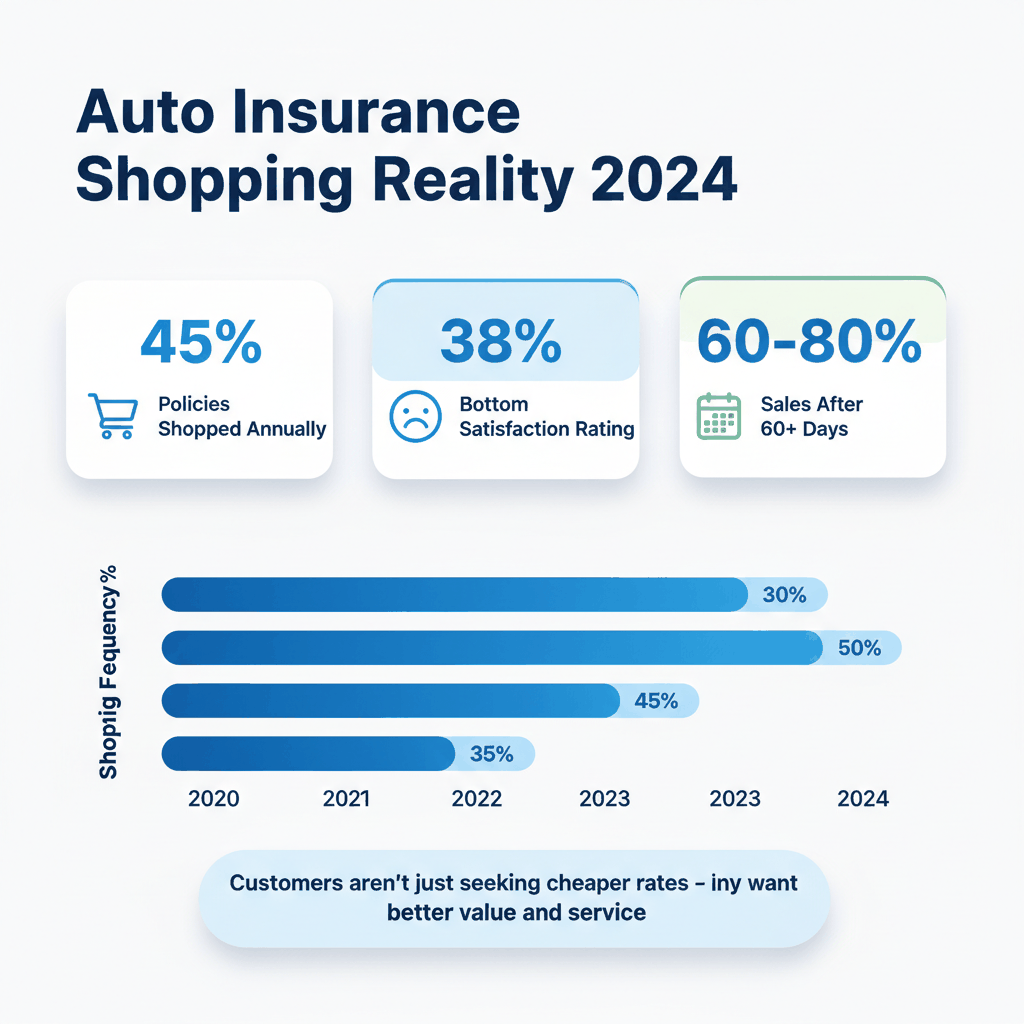
This creates intense price pressure. But here's what most agents miss: customers aren't just shopping for cheaper rates. They're looking for better value and service.
Many agencies have a quoting process but lack a real sales process. A sales process puts the client at the center of everything you do. It builds value before revealing price.
For example, ask prospects about their current coverage gaps. Find out what happened during their last claim. Understand their family situation and protection needs. This information becomes your value foundation.
The most effective way to handle objections uses the CENT formula. This provides structure for consistent objection handling across all your sales calls.
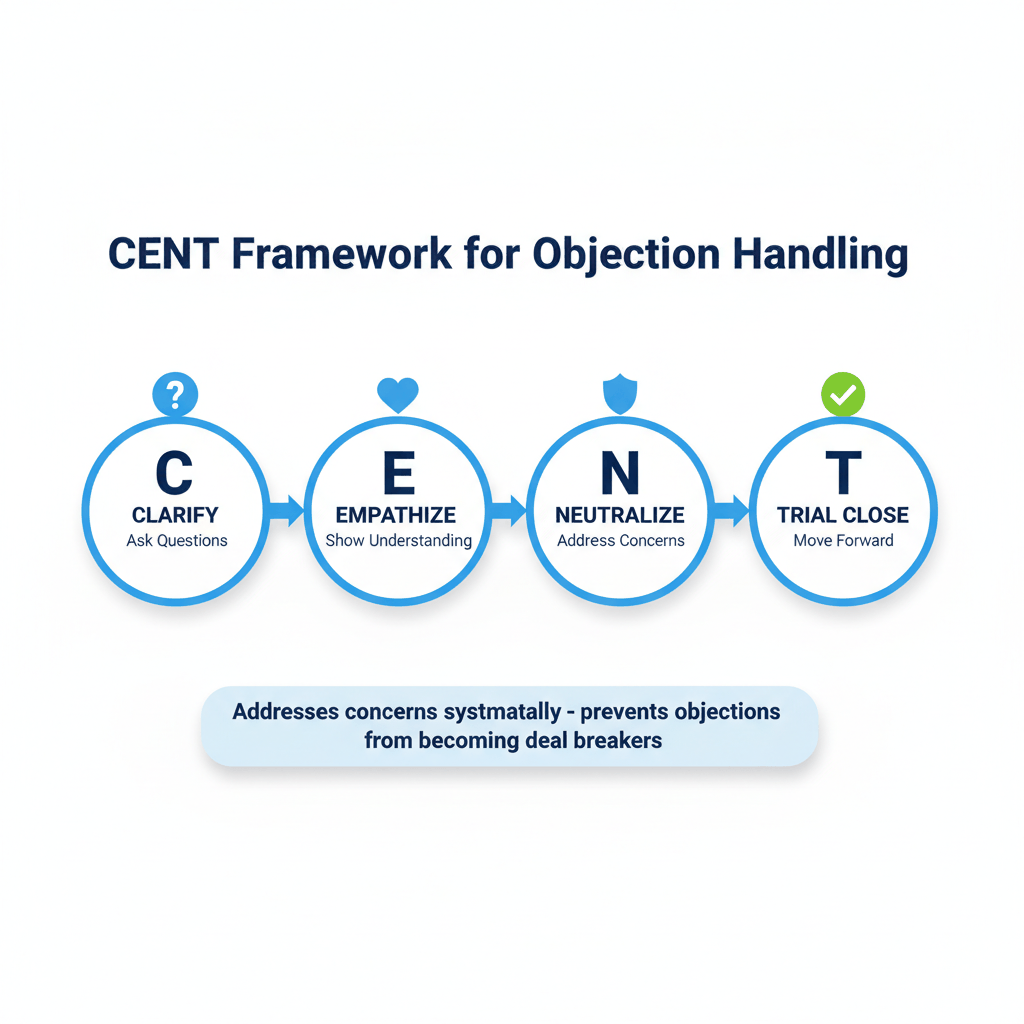
C - Clarify: Ask questions to understand the real concern
E - Empathize: Acknowledge their feelings and show understanding
N - Neutralize: Address the specific objection with facts or benefits
T - Trial close: Ask for commitment or move forward
This framework works because it addresses concerns systematically. You don't just overcome objections - you prevent them from becoming deal breakers.
Try to resolve each objection two to three times before accepting defeat. Industry data shows most successful sales happen after multiple objection handling attempts.
However, don't be pushy. Space your attempts throughout the conversation. Address different aspects of their concern each time.
Find out your client's budget early in the conversation. Ask what they're currently paying and what their renewal quote shows. You need to beat the renewal price, not their current rate.
Most clients want to keep paying their current amount. But renewal rates often jump 10-15% annually. This gives you room to provide better coverage at competitive prices.
Here are proven scripts that convert price objections into closed deals. Practice these until they feel natural in conversation.
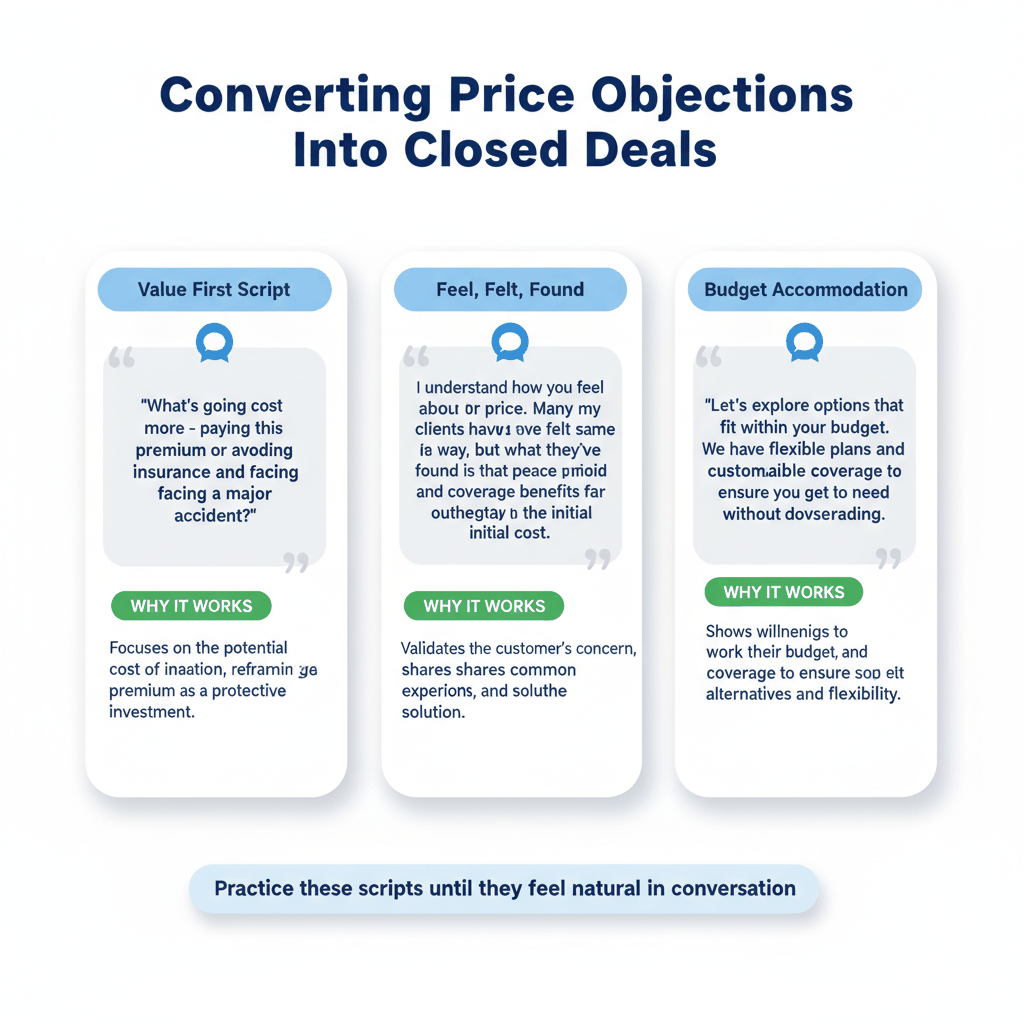
"I hear you on the price concern. But you mentioned you need insurance coverage. What's going to cost more - paying this premium or avoiding insurance and facing a major accident without coverage?"
This script works because it reframes the conversation. You're not selling insurance - you're helping them avoid financial disaster.
"I understand how this sounds expensive. Many of my clients felt the same way initially. But here's what they found - when they compared the actual coverage benefits, they realized they were getting much better protection for just a few dollars more per month."
This approach validates their feelings while introducing social proof. It shows other smart people made the same decision.
"What's your ideal budget for auto insurance? I want to work with you to fit your needs. If we need to adjust coverage to meet your budget, let me show you the options. But first, let me explain what additional peace of mind these dollars provide for your family."
This demonstrates flexibility while maintaining value focus. You're solving their budget concern without immediately dropping price.
"A single accident can cost $30,000 to $50,000 in damages and medical bills. This policy saves you from that risk for less than $3 per day. When you break it down, that's less than a cup of coffee for complete financial protection."
Breaking down the premium into daily costs makes it feel more manageable. Comparing it to claim costs shows the real value.
Closing techniques help move prospects from consideration to commitment. These methods work especially well after handling price objections.
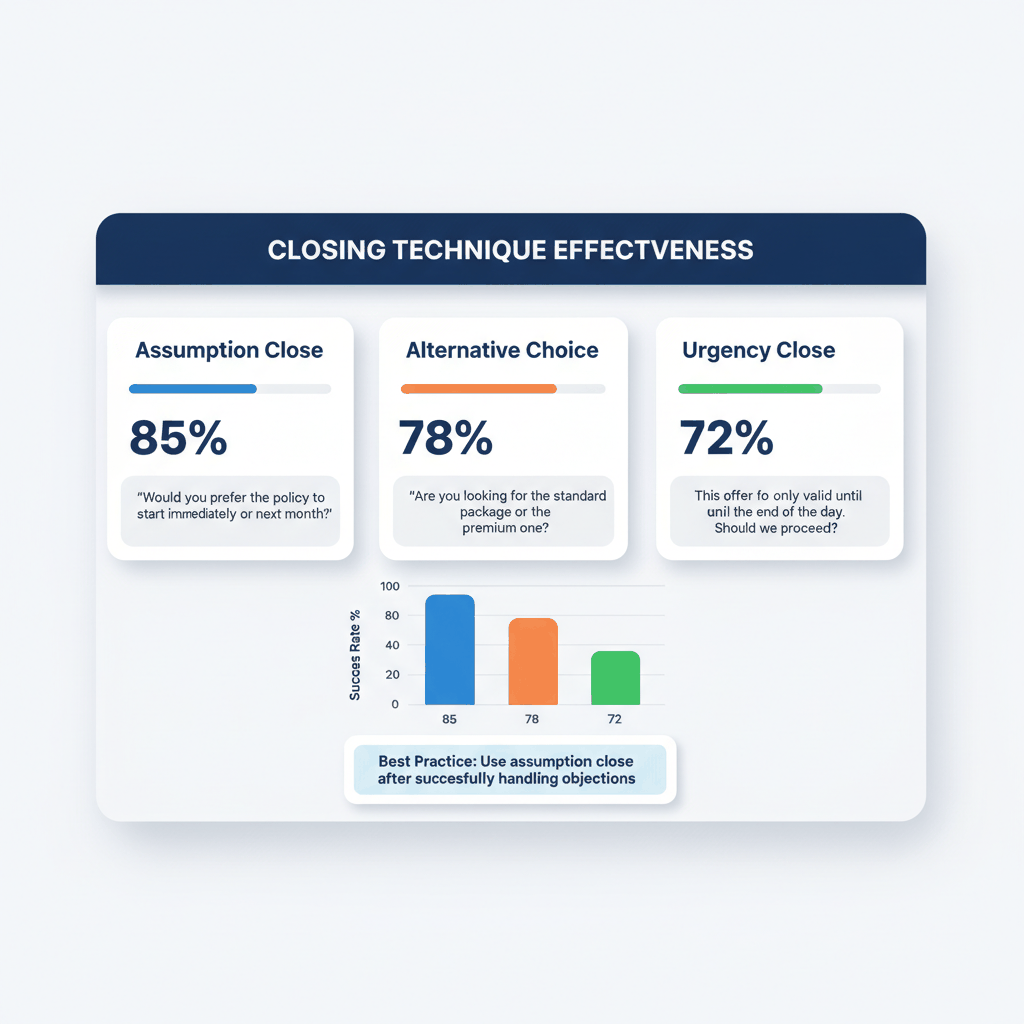
"Great, I can get this coverage started for you today. Would you prefer the policy to start immediately or at the beginning of next month?"
This technique assumes they're ready to move forward. It shifts the conversation from "if" to "when."
"I can offer you two excellent options. Option A provides comprehensive coverage at $180 per month. Option B has the same protection with a higher deductible at $145 per month. Which fits your budget better?"
This gives prospects control while keeping both options profitable for you. They're choosing between your solutions, not between you and a competitor.
"I can lock in this rate for you today. However, rates are scheduled to increase next week due to rising claim costs in your area. Should we get your coverage started now to secure this pricing?"
Use urgency honestly. Rate increases of about 10% happened across the industry in 2024, making this a legitimate concern.
Value building prevents price objections from happening in the first place. Here's how to demonstrate worth throughout your sales process.
Ask questions that reveal coverage gaps and protection needs:
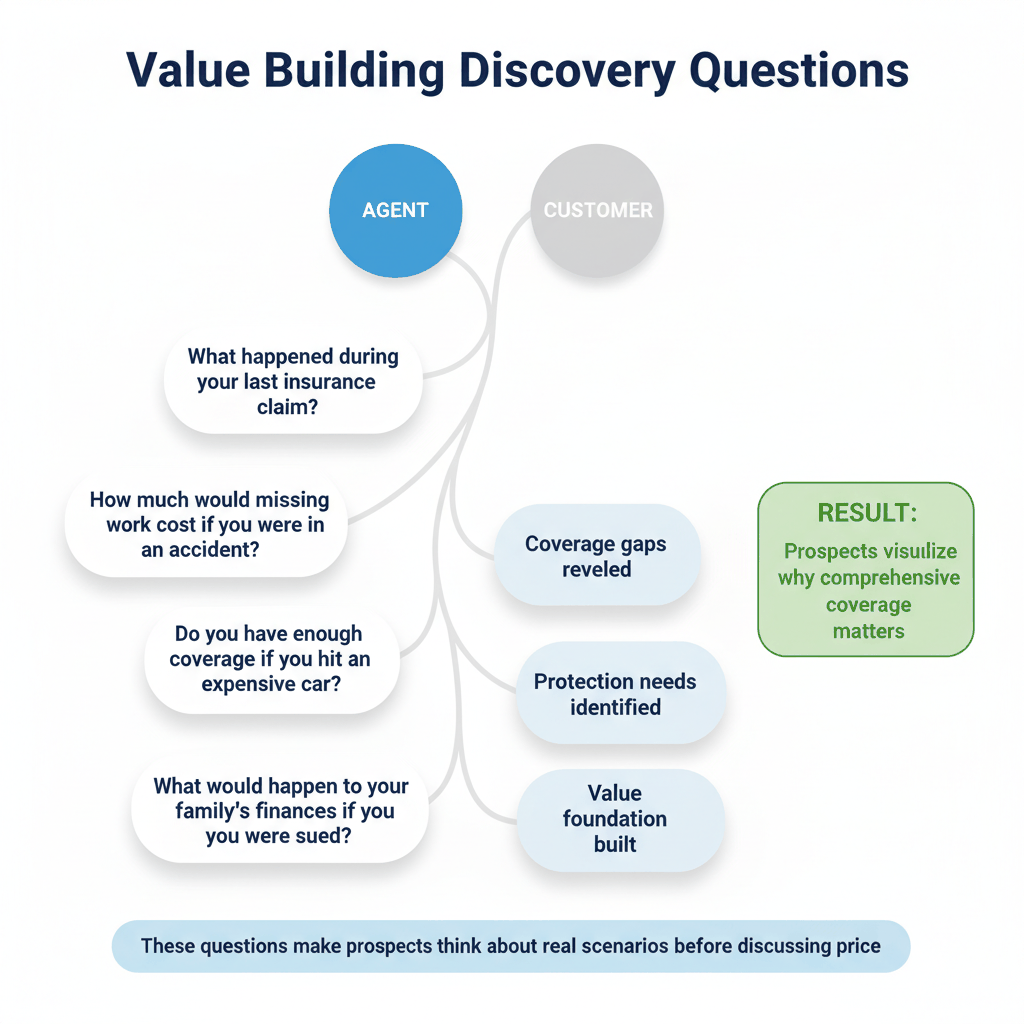
"What happened during your last insurance claim?"
"How much would missing work cost if you were in an accident?"
"Do you have enough coverage if you hit an expensive car?"
"What would happen to your family's finances if you were sued?"
These questions make prospects think about real scenarios. They start visualizing why comprehensive coverage matters.
Some U.S. agents increased sales by 40-80% using visual proof during calls. Tools like CrankWheel let you share coverage comparisons instantly.
Show side-by-side coverage charts. Highlight where their current policy falls short. Make the value difference obvious through visual comparison.
With 38% of customers rating their insurer in the bottom satisfaction segment, personal service becomes a major differentiator.
Explain your claims support process. Share examples of how you've helped other clients. Position yourself as their advocate, not just a policy seller.
Emphasize the lifetime value of the relationship. Explain how you'll review their coverage annually. Discuss multi-policy discounts for bundling home and auto coverage.
Calculate the total potential savings over 5-10 years. This makes your current pricing look like an investment in long-term protection and savings.
The best objection handling happens before objections arise. These strategies set the right expectations from the start.
Start by discussing the cost of being underinsured. Mention average claim amounts in your area. Share stories of clients who saved thousands by having proper coverage.
This creates a high anchor point. When you reveal your actual premium, it feels reasonable compared to potential claim costs.
Always present payment options that make coverage affordable. Break annual premiums into monthly amounts. Offer automatic payment discounts.
For example: "This comprehensive coverage works out to just $147 per month with automatic payments. That's less than most people spend on cable TV for complete financial protection."
Know your competitive advantages and weave them throughout your presentation. This might include:
Faster claims processing
Local agent support
Accident forgiveness programs
New car replacement coverage
Rental car allowances
Position these as value-adds that competitors don't offer. Make switching to your coverage feel like an upgrade, not just a price comparison.
The right technology makes objection handling easier and more effective. These tools help you stay organized and persuasive.
A good CRM tracks objection patterns and successful responses. Popular options include:
Salesforce: Easy integration, automated workflows, 30-day free trial
HubSpot: Starting at $0/month, good for growing agencies
Zoho CRM: Flexible options with 360-degree client views
Use your CRM to note which objections each prospect raises. This helps you prepare better responses for follow-up calls.
Record successful objection handling calls (with permission). Review what worked and create scripts from your best conversations.
Share successful call examples with your team. This spreads best practices and improves everyone's closing rates.
Track conversion rates by objection type. This data shows which scripts work best and where you need more practice.
Remember that 60-80% of policies are sold more than 60 days after first inquiry. Good lead management ensures you don't lose deals to poor follow-up.
What's the most effective auto insurance sales script for price objections?
The "Feel, Felt, Found" technique works best. Acknowledge their concern, share that others felt similarly, then explain what those clients discovered about the value. This validates their feelings while providing social proof for your solution.
How many times should I try to overcome a price objection before giving up?
Follow the 2-3 attempt rule. Try to resolve the objection two to three times using different approaches. Space these attempts throughout your conversation rather than pushing back immediately each time.
What's the best way to build value before discussing auto insurance pricing?
Ask discovery questions about their current coverage, claim experiences, and protection needs. Help them visualize scenarios where comprehensive coverage saves money. This builds value foundation before revealing price.
How do I handle prospects who say they can get cheaper insurance elsewhere?
Ask them to compare actual coverage details, not just price. Most cheap policies have significant gaps. Show them what they're risking to save a few dollars and calculate the potential cost difference during a claim.
What insurance phone sales techniques work best for closing deals?
Use assumption closes and alternative choice closes. Visual selling tools like CrankWheel can increase sales by 40-80% by showing coverage comparisons instantly. Always focus on value and protection benefits rather than just price.
Ready to get pay per call auto insurance leads? Sign up for free with ResultCalls today!

Hello everyone! My name is Alex and I write these blogs to help educate small business owners on different ways to grow their business. My goal is to make lead generation as easy as possible for you. After reading these blogs, I hope you leave with some actionable steps that will get you closer to growing your business :)