When water floods your property, panic sets in first. Your customers aren't just searching for water damage restoration. They're looking for emotional relief and professional expertise wrapped into one trustworthy solution.
The restoration industry faces a unique marketing challenge. How do you reach desperate homeowners without seeming opportunistic? How do you build trust when people need help most?
Smart water damage content marketing uses psychology to connect with customers before, during, and after emergencies. This approach builds lasting relationships instead of one-time transactions. Companies using these strategies see 10,000% return on their marketing spend.
You'll discover how to create content that acknowledges fear without overwhelming customers. Plus, you'll learn to offer hope through expertise while building your authority in the restoration industry.
Table of Contents
Water damage creates immediate psychological trauma. Homeowners experience feelings similar to grief. They feel helpless, scared, and overwhelmed by the situation.
Your content must acknowledge these emotions first. Recognition builds connection. Connection builds trust. Trust drives business decisions during crisis moments.
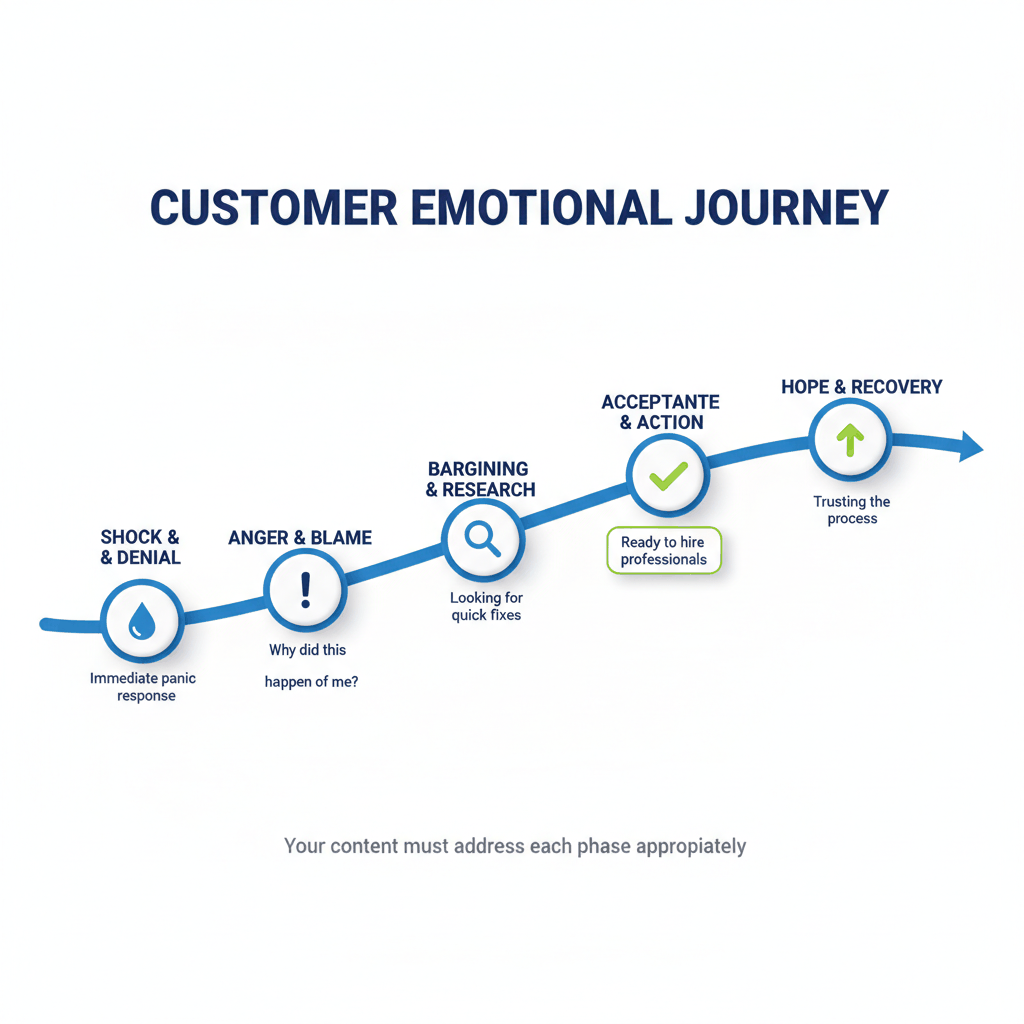
Research shows homeowners go through distinct emotional phases. They start with shock and denial. Then anger and bargaining follow. Finally, acceptance and hope emerge.
Your water damage content marketing must address each phase. Early content provides immediate relief and clear next steps. Later content focuses on recovery and prevention.
Emergency searches happen on mobile devices 64% of the time. Your customers are often standing in flooded basements at midnight. They need answers fast.
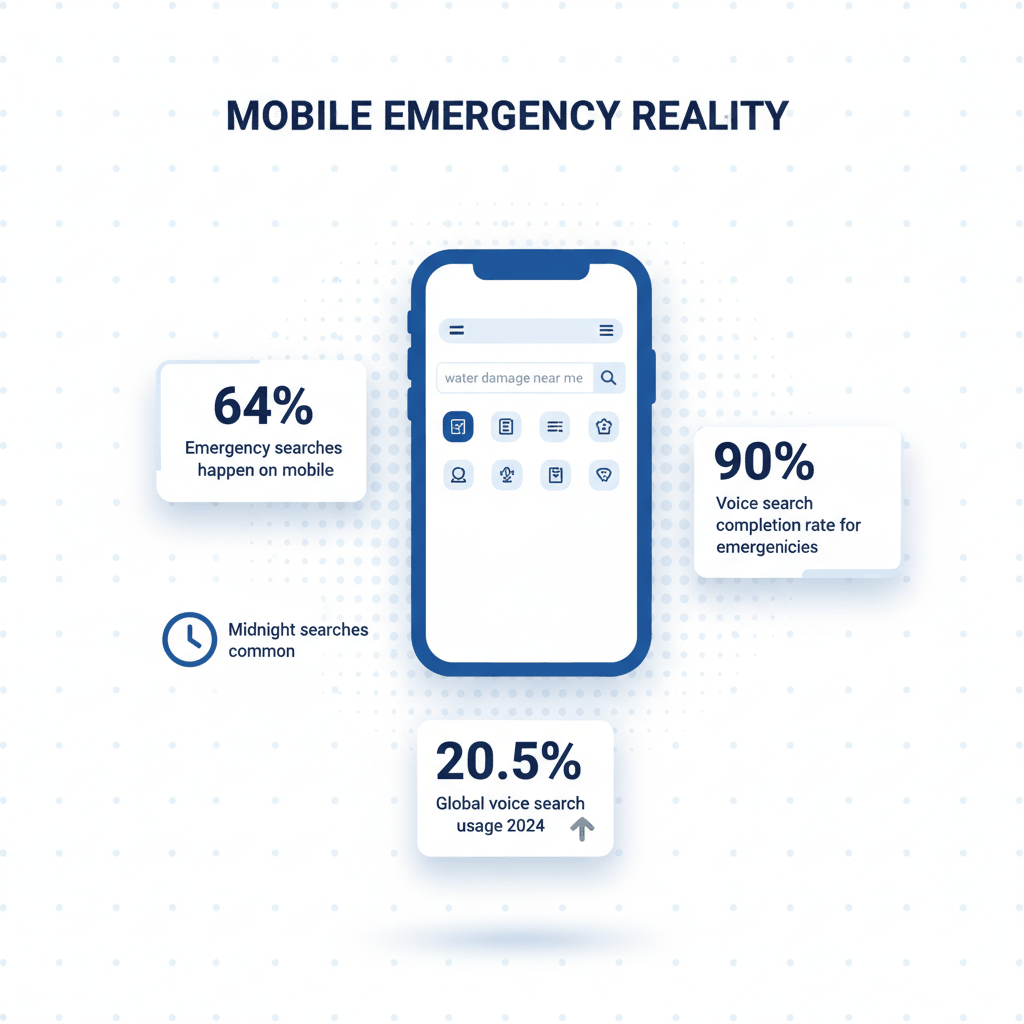
Mobile-first content means short paragraphs and clear action steps. Use bullet points for quick scanning. Include one-click calling buttons throughout your pages.
Crisis communication requires empathy over sales tactics. ATI Restoration recognizes every customer faces stressful situations. They treat customers with dignity and respect while providing peace of mind.
This approach works because it prioritizes human needs over business goals. When customers feel understood, they choose your services over competitors.
Most restoration companies make costly content mistakes. These errors prevent them from connecting with emergency customers effectively.
Technical specifications don't comfort scared homeowners. Equipment details matter less than emotional support during emergencies.
Your customers want to know you understand their situation. They need reassurance that everything will return to normal. Save technical details for educational blog posts.
Focus on outcomes instead: "Your home will be dry within 48 hours" works better than "We use industrial-grade dehumidifiers."
Aggressive sales tactics come off as insensitive during crises. Promotional content feels opportunistic when families face property damage.
Instead, listen to your audience's concerns. Address their real needs. Offer relevant solutions without appearing pushy.
For example: "Water damage feels overwhelming, but here's exactly what happens next" beats "Call now for 20% off restoration services."
Most companies only become visible when disasters strike. This reactive approach misses opportunities to build relationships beforehand.
Proactive content marketing positions you as the local restoration authority. Educational content builds trust before emergencies happen. When crisis strikes, people remember your helpful advice.
Water damage restoration lead generation requires year-round visibility, not just emergency response advertising.
Fear and Hope Balance Framework
Effective water damage content marketing balances fear acknowledgment with hope delivery. This psychological approach drives action without overwhelming customers.
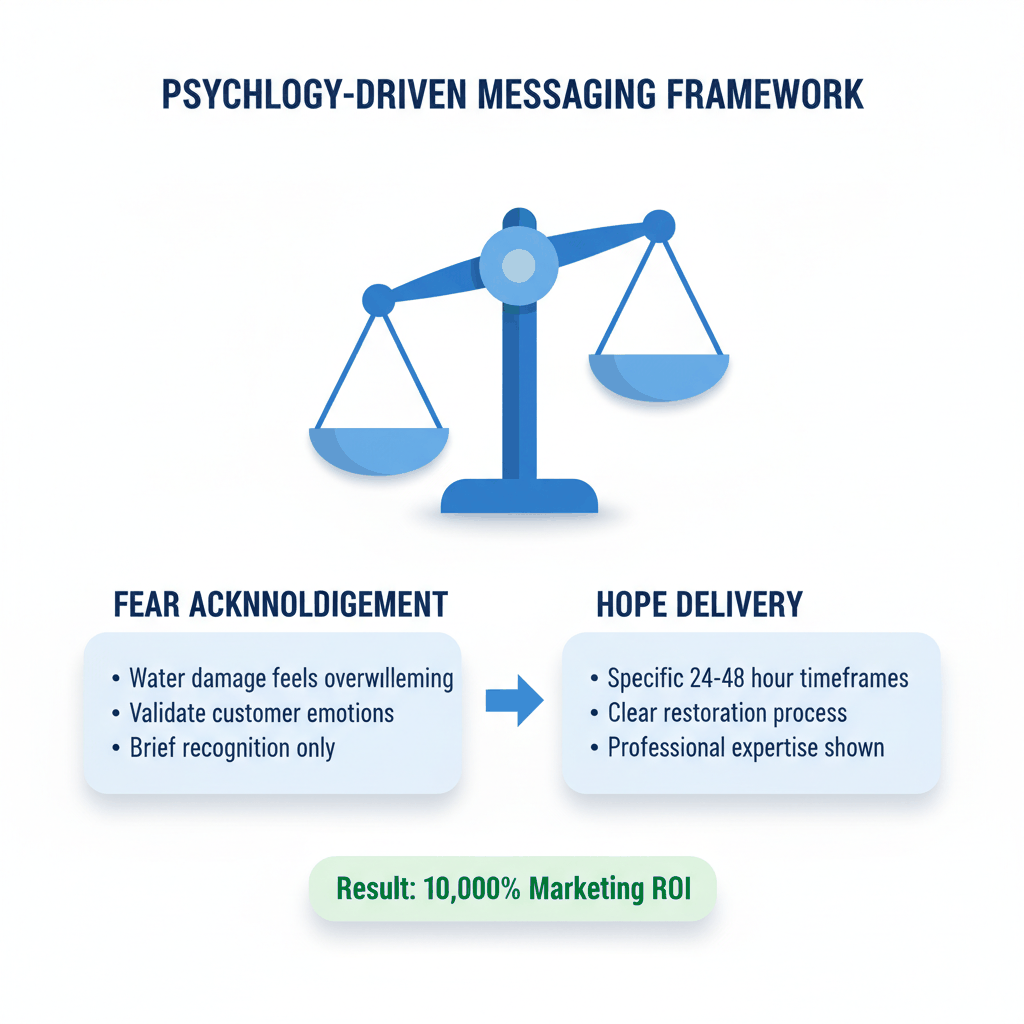
Start by recognizing your customer's real concerns. Address their worst fears directly but briefly.
Use specific language like: "Water damage can feel overwhelming, but here's exactly what happens next." This validates their emotions while promising solutions.
Avoid dramatic language that increases anxiety. Skip phrases like "devastating damage" or "total destruction." These words trigger panic instead of productive action.
Follow fear acknowledgment with concrete hope. Share specific timeframes and processes. Explain exactly how you solve their problems.
For example: "Most water extraction completes within 24-48 hours. Your furniture and belongings often return to pre-damage condition."
Process transparency helps customers understand restoration steps. This knowledge provides comfort during stressful situations.
Choose words that calm instead of alarm. Replace "damage" with "affected areas." Use "restore" instead of "repair." Say "temporary situation" rather than "disaster."
These subtle changes reduce emotional stress. Lower stress leads to better decision-making. Better decisions mean more customers choose your services.
Crisis content requires different strategies than regular marketing. Emergency situations demand immediate value and clear direction.
Share job-site photos in real time. Show your team in action. Let customers see the messy work and professional equipment.
This transparency builds credibility. People trust companies that show actual work instead of stock photos. Job-site photos in real time let people feel your expertise.
Include behind-the-scenes content like equipment setups and team spotlights. These human elements create emotional connections with your brand.
Prevention content performs exceptionally well for restoration companies. Topics include water damage prevention tips and safety guidance.
Before-and-after case studies generate strong social sharing. Step-by-step restoration process explanations build trust and authority.
Create seasonal content around predictable problems:
Frozen pipe prevention in winter
Storm preparedness in spring
HVAC and mold risks in summer
Fire safety in fall
Develop standard responses for emergency situations. Train your team on empathetic language patterns.
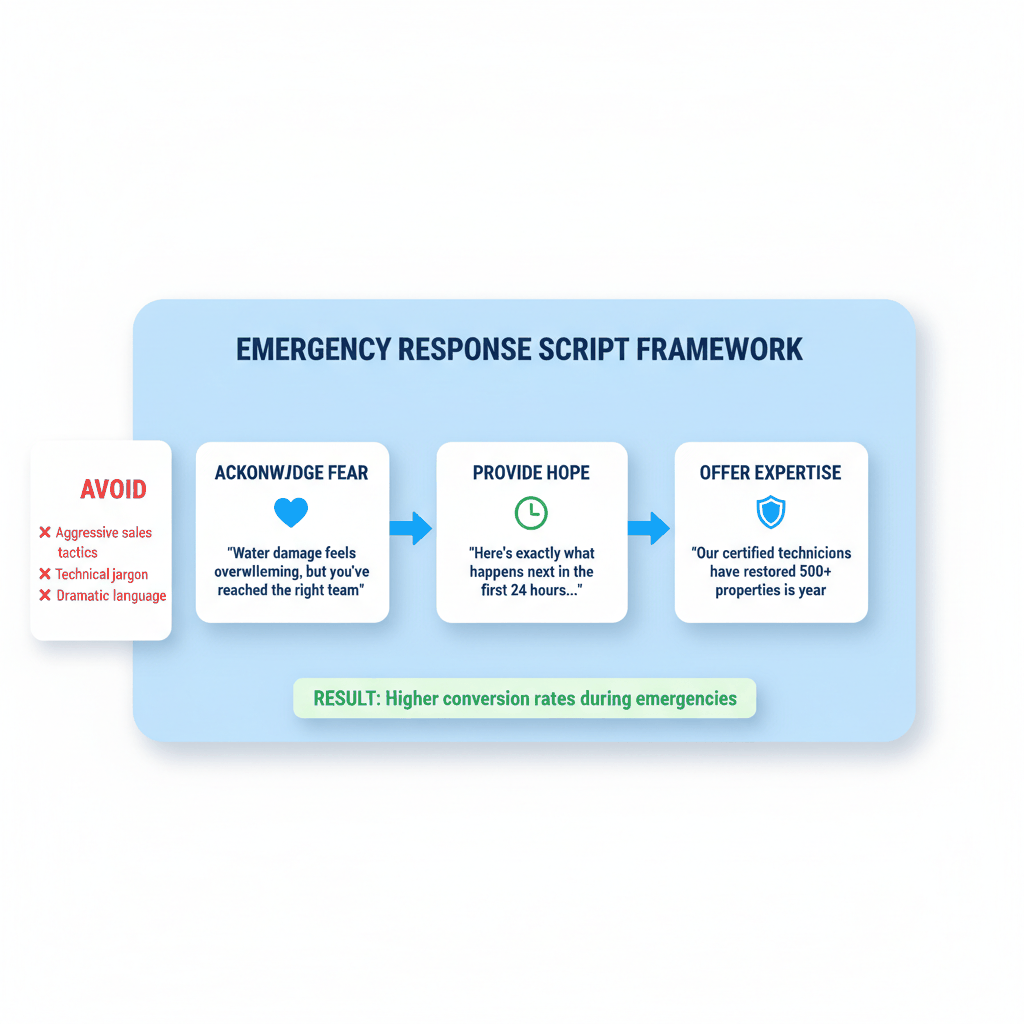
Example emergency response script: "In the chaotic aftermath of water damage, time matters. When you call, our team leaps into action. We provide quick, effective, and compassionate care you deserve."
This language acknowledges the crisis while promising specific solutions. The emotional tone matches what customers need during emergencies.
Smart restoration companies build relationships before emergencies strike. Pre-disaster marketing creates awareness and trust that pays off during crisis moments.
Reserve intimate channels like email for key updates during crises. Use subtle distribution approaches for educational materials.
SEO-optimized articles work better than direct emails for educational content. People discover helpful information naturally instead of feeling marketed to.
Social media works well for community building and prevention tips. Blog posts establish authority and capture search traffic.
Email newsletters provide exceptional ROI for restoration companies. Studies show newsletter distribution gives 40 times return on each dollar invested.
Share prevention tips, seasonal reminders, and industry insights. Avoid promotional content in favor of helpful information.
When emergencies happen, subscribers remember your expertise. They choose you over competitors because you've already proven your knowledge.
Position yourself as the local restoration expert through consistent educational content. Answer common questions before people ask them.
Create comprehensive guides about local risks. Address regional weather patterns and seasonal problems. Show deep understanding of your market's unique challenges.
Authority building takes time but creates lasting competitive advantages. Customers choose recognized experts over unknown companies.
Different content types serve different purposes in your water damage content marketing strategy. Mix formats to reach customers across various situations and platforms.
Video marketing delivers exceptional returns. 93% of marketers report good ROI from video content.
Create quick tip videos for social media. Show equipment in action during real jobs. Record customer testimonials highlighting emotional recovery.
Keep emergency videos short and action-focused. People need immediate answers, not lengthy explanations. Save detailed content for educational blog posts.
Voice search usage reaches 20.5% globally in 2024. Mobile voice searches for emergency services show 90% completion rates.
Optimize content for voice queries like "call water damage company near me." Use natural language and question-answer formats.
Local intent appears in 76% of voice searches. Include location-specific keywords throughout your content strategy.
AI chatbots handle 24/7 emergency inquiries. They provide automated damage assessment and direct booking capabilities.
Program chatbots with empathetic responses. Include immediate action steps and clear escalation paths to human representatives.
Industry leaders embrace AI technology. 70% of restoration companies plan AI adoption by 2025.
Track specific metrics to measure your water damage content marketing effectiveness. Focus on business outcomes, not just engagement numbers.
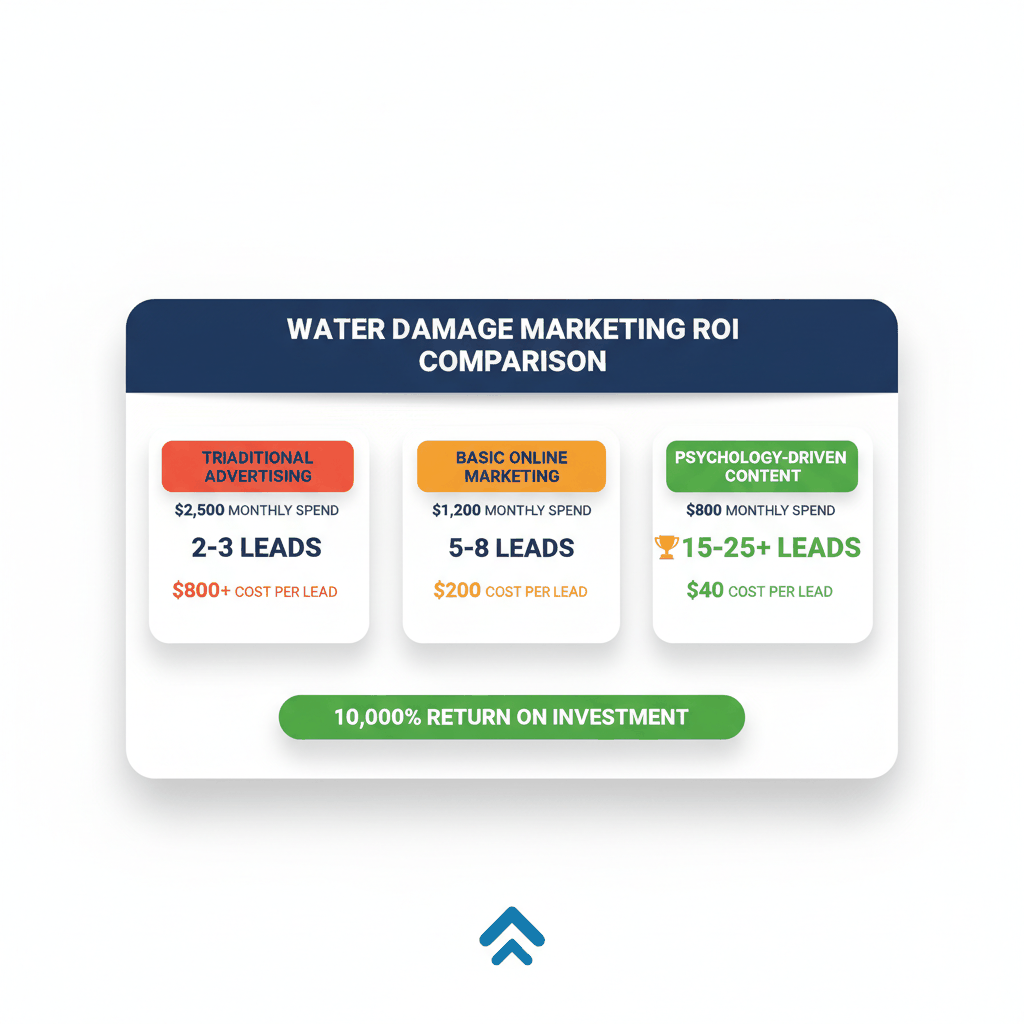
Monitor leads generated from different content types. Track which blog posts convert visitors into customers. Measure social media inquiry rates.
Companies using data-driven approaches see leads increase from 1 per month to 10+ monthly. This improvement directly impacts revenue growth.
Use client reporting dashboards to track lead sources. Every online lead should be tracked and measured for accurate ROI calculation.
Measure response time between content publication and inquiry generation. Track conversion rates during actual emergencies versus normal periods.
Monitor mobile website performance during crisis events. Emergency traffic often spikes suddenly, requiring robust technical infrastructure.
Professional marketing support helps restoration companies track these complex metrics accurately.
Track search rankings for local restoration keywords. Monitor online review generation and sentiment improvements.
Measure website engagement metrics like time on page and bounce rates. Educational content should keep visitors engaged longer than promotional content.
Survey customers about how they discovered your company. Brand awareness often translates into higher-value emergency calls.
How do I create water damage content marketing without seeming opportunistic?
Focus on education and empathy over sales messages. Address emotional needs first, then provide practical solutions. Share helpful information consistently, not just during disasters. Build relationships before emergencies happen.
What emergency restoration content performs best on social media?
Real-time job photos, prevention tips, and behind-the-scenes team content get the highest engagement. Before-and-after transformations also generate strong sharing. Keep content authentic and avoid overly polished promotional material.
How often should restoration companies publish water damage educational content?
Publish educational content weekly for best results. Create seasonal prevention content quarterly. Share real-time updates during active jobs. Consistency matters more than frequency for building local authority.
What crisis communication mistakes hurt restoration company reputation?
Aggressive sales tactics during emergencies damage trust. Overly technical content confuses scared customers. Delayed response to online inquiries loses potential clients. Focus on empathy and immediate value instead.
How do I optimize water damage content for mobile emergency searches?
Use short paragraphs and bullet points for easy scanning. Include one-click calling buttons prominently. Optimize page loading speed for urgent situations. Write in conversational language that matches voice search patterns.
Ready to buy water damage restoration leads? Sign up for free with ResultCalls today!

Hello everyone! My name is Alex and I write these blogs to help educate small business owners on different ways to grow their business. My goal is to make lead generation as easy as possible for you. After reading these blogs, I hope you leave with some actionable steps that will get you closer to growing your business :)