Your phone rings at 2 AM. Another emergency water damage call. You rush to the job, work all night, and send your invoice.
Most water damage companies wait for disasters to happen. They rely on emergency calls and expensive advertising. This reactive approach creates unpredictable revenue and high customer acquisition costs.
A structured water damage referral program transforms sporadic emergency calls into predictable revenue. Over 65% of restoration jobs come through referrals. Plus, referred customers have 30% higher conversion rates than other leads.
You'll learn proven strategies that restoration companies use to build reliable referral networks. These methods create consistent business flow from plumbers, insurance agents, and property managers who encounter water damage regularly.
Table of Contents
Research shows that two-sided referral models are the most effective. This means both parties receive benefits for participating.
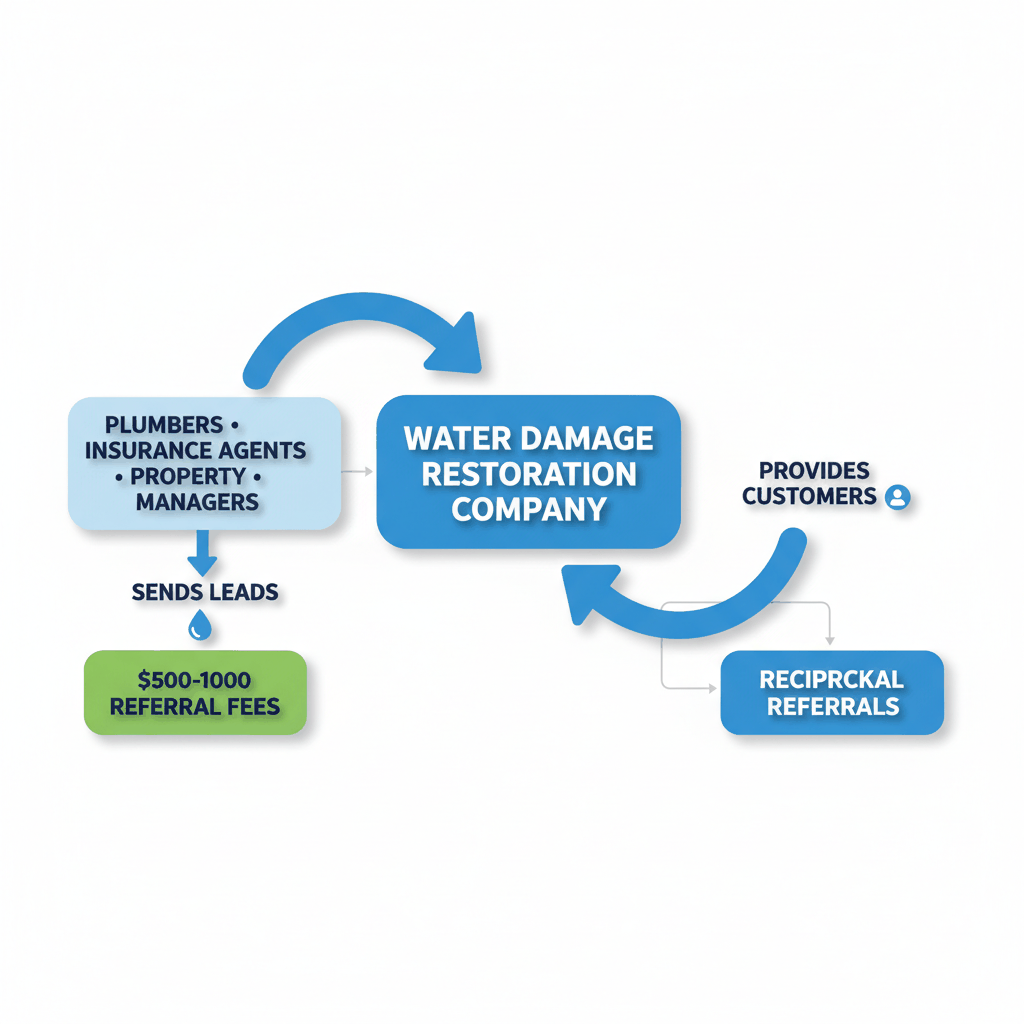
Your referral partners get financial incentives for sending quality leads. You provide reciprocal referrals when your customers need their services. This creates mutual dependency and stronger relationships.
For example, when a plumber refers a water damage job, they earn $500-1000 if insurance covers the case. When your customers need plumbing work, you refer them back to your partners. Both businesses grow together.
Your average referral fee should reflect job value. Most successful programs pay 10-15% of the total job cost. The bigger the project, the bigger the payout.
Process payments quickly after job completion. Waiting 90 days frustrates partners and weakens relationships. Successful programs like NuBilt's system process payments within days, not months.
Your partners want more than money. They want customers to see them as valuable resources. When you handle their referrals professionally, their reputation improves with their clients.
Keep referring partners updated on project progress. Send them completion photos and customer testimonials. This shows their clients that they connected them with a trusted professional.
Not all referral sources are equal. Focus your efforts on three high-value partnership categories that encounter water damage regularly.
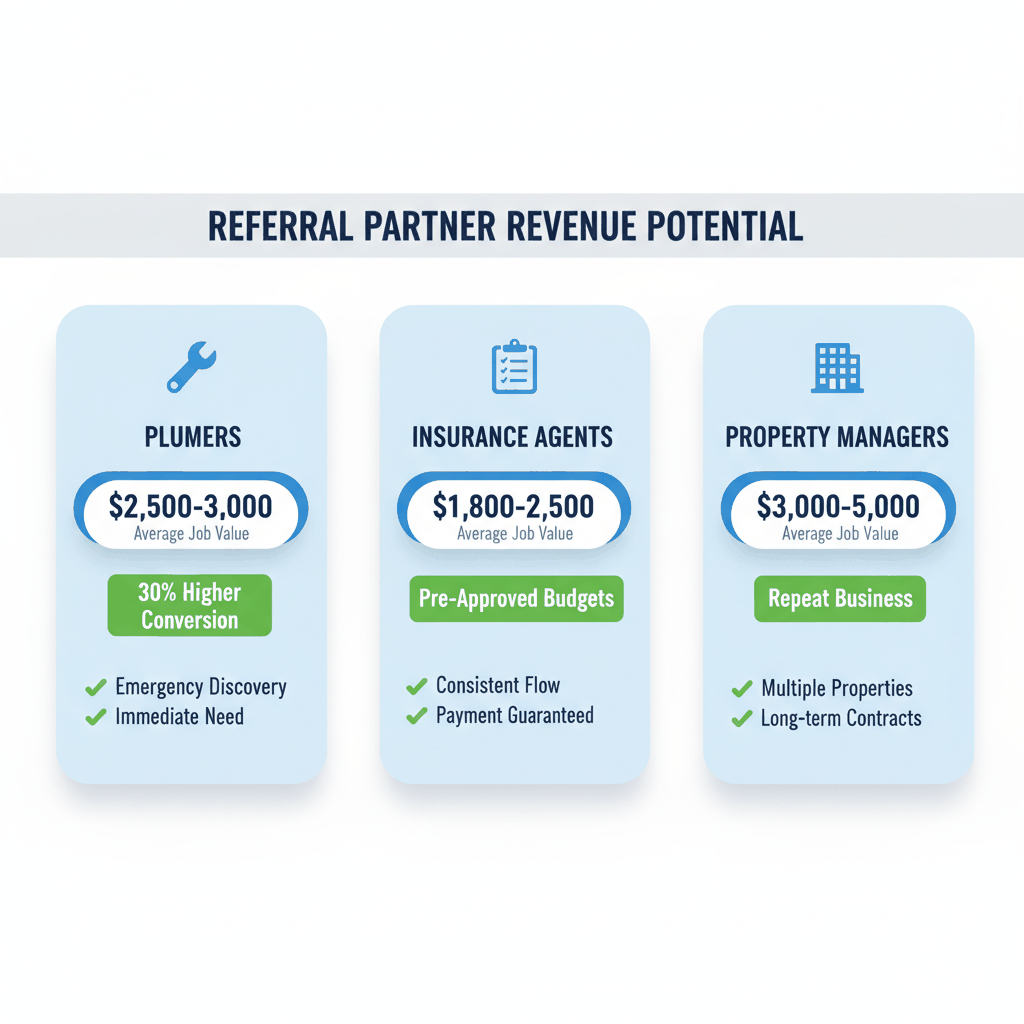
Plumbers discover water damage during routine service calls. They see burst pipes, leaking water heaters, and hidden moisture before customers realize the extent of damage.
The average plumber referral generates $2500-3000 in revenue. These jobs often have higher conversion rates because plumbers identify problems that require immediate attention.
Build relationships with local plumbers by offering emergency backup coverage. When their repair work causes minor water damage, handle the cleanup at little or no cost. This gesture creates long-term loyalty.
Insurance agents handle water damage claims every week. Getting on their preferred vendor list creates steady business without advertising costs.
These referrals come with pre-approved budgets. Customers already know insurance will cover the work. This eliminates payment concerns and speeds up project approval.
Focus on local independent agents rather than large national companies. Independent agents have more flexibility in choosing restoration partners.
Property managers and facility directors handle complex projects regularly. They prioritize risk mitigation, proper liability coverage, and proven capability to handle large jobs.
These partnerships generate repeat business. A single property management company might manage dozens of buildings. One good relationship creates multiple project opportunities.
Demonstrate your capabilities with detailed case studies and proof of proper licensing and insurance coverage. Property managers want documentation that protects them from liability.
Emergency restoration requires immediate response. Your referral system must connect you with leads instantly, not hours later.
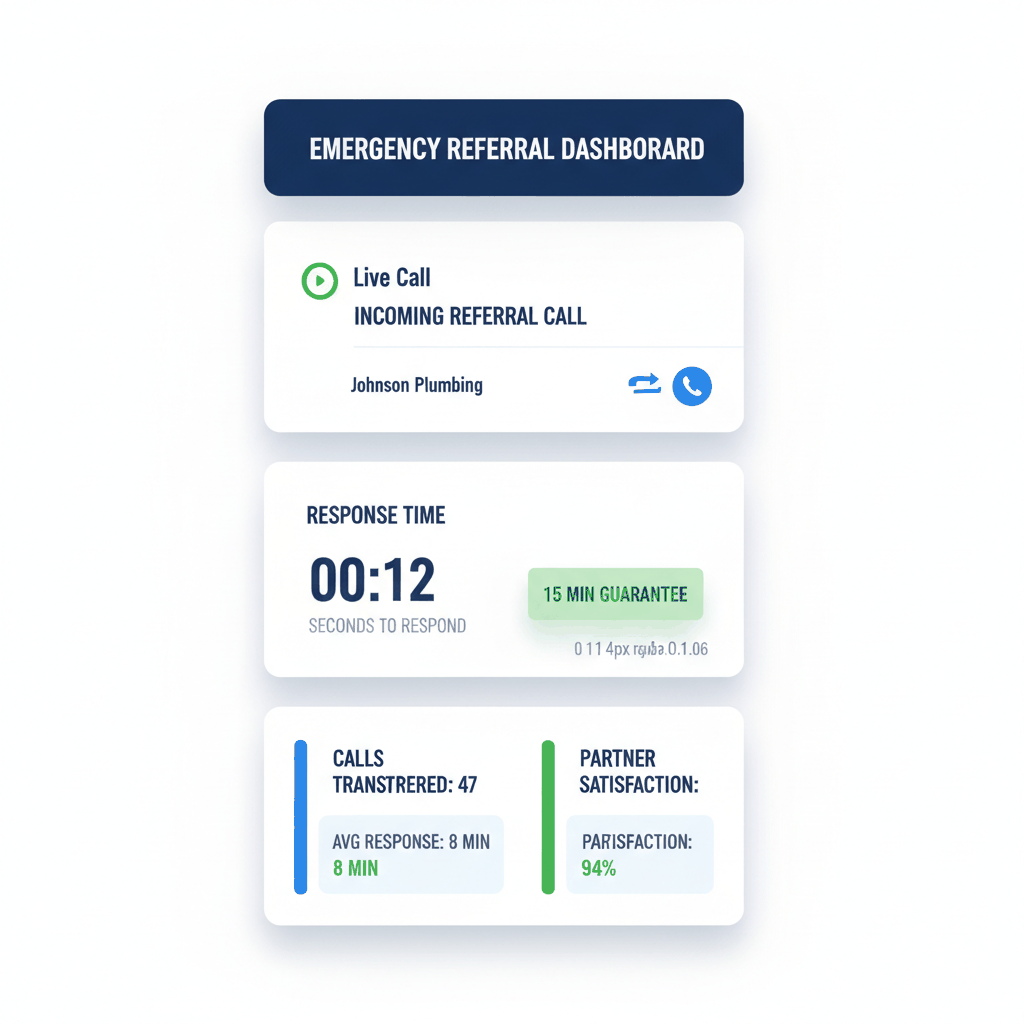
RestorationSOS systems transfer qualified calls in real time. When customers call their hotline, agents screen the loss and immediately connect qualified leads to restoration partners.
Set up systems that transfer live calls rather than generating voicemails. Water damage customers need immediate answers. Delays mean lost jobs to faster competitors.
Use automated SMS and email notifications to backup phone calls. Send partner information via text messaging so you have customer details before the call completes.
Give referral partners access to simple tracking dashboards. They want to see referral status, project progress, and payout history without calling your office.
Transparency builds trust. When partners can track their referrals independently, they refer more confidently.
Promise specific response times and deliver consistently. Emergency restoration customers expect callbacks within 15-30 minutes, even during off hours.
Train your team to prioritize referral leads. Partners who see their referrals handled professionally send more business. Poor response times destroy referral relationships quickly.
Your referral partners want seamless customer experiences that enhance their reputation. Handle every aspect of the restoration process professionally.
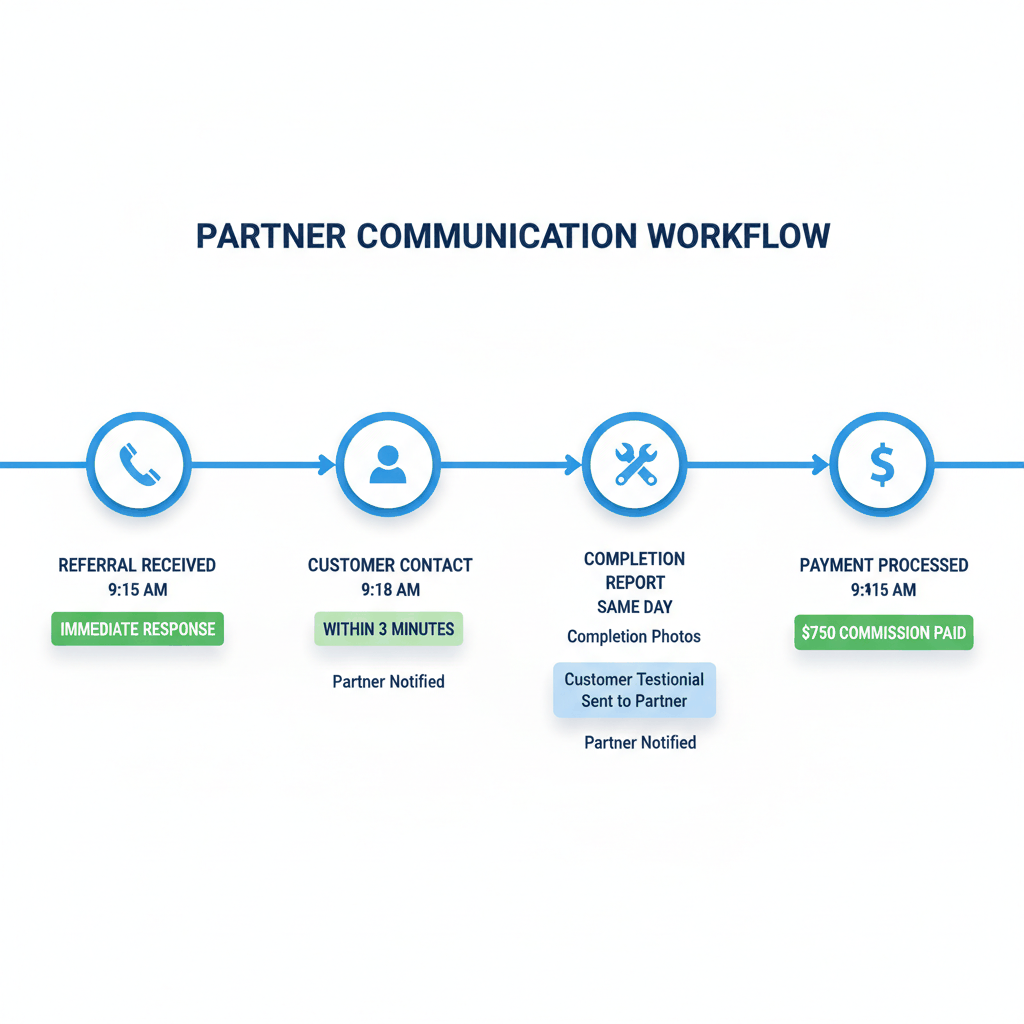
Take responsibility for documentation, estimates, adjuster coordination, and direct billing. Partners appreciate not having to explain insurance complexities to their customers.
Comprehensive claim management keeps customers happy and reduces partner workload. This service differentiation creates stronger referral relationships.
Keep referring partners updated throughout the project. Send progress photos, completion notifications, and customer feedback. Partners want to know their referrals received excellent service.
Acknowledge referrals publicly when appropriate. Social media posts thanking partners for referrals reinforce your relationship and encourage future referrals.
Cross-sell related services like mold remediation, structural drying, and content restoration. These additions can increase average job value by $500-2000 per project.
Train partners to identify opportunities for additional services. When plumbers understand signs of mold growth, they can suggest comprehensive restoration rather than just water extraction.
Effective water damage referral programs require systematic tracking and continuous optimization. Measure what matters and adjust your approach based on real data.
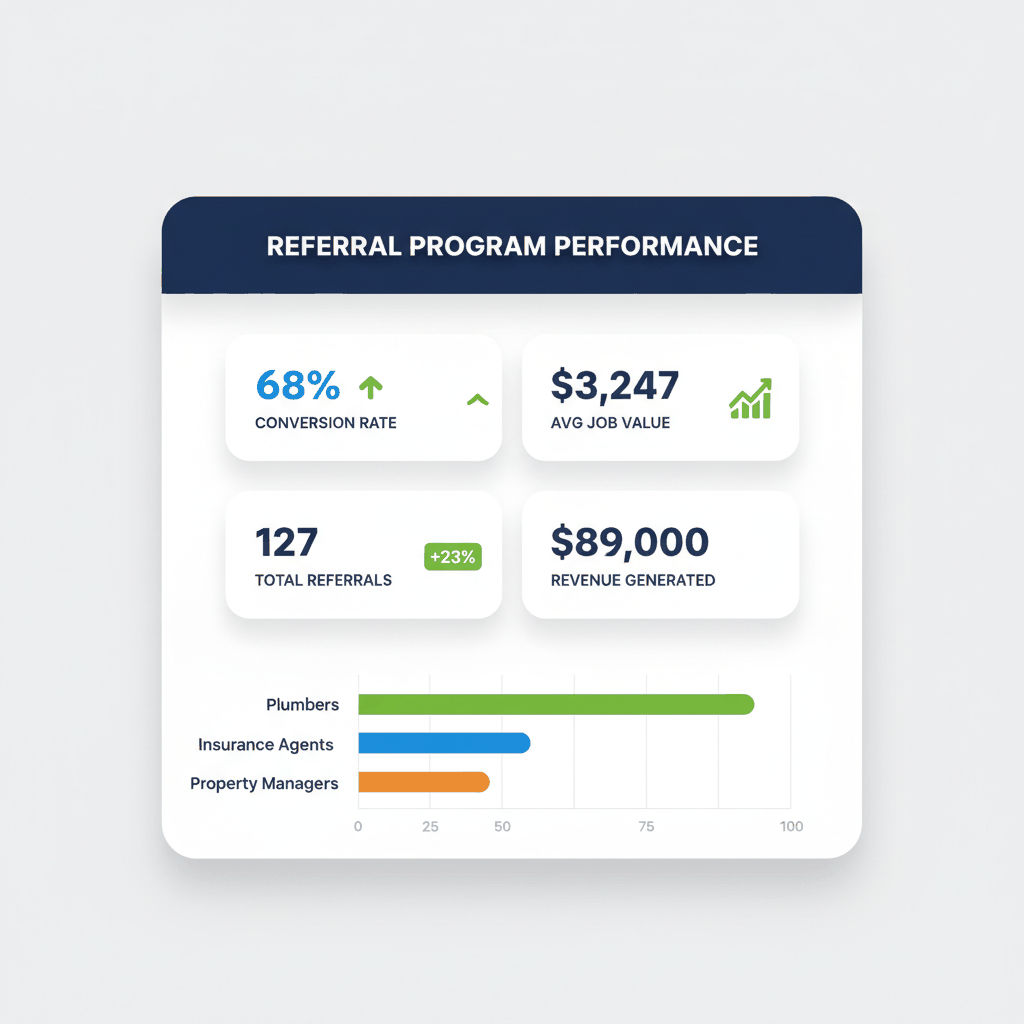
Track referral conversion rates by source. Some partners consistently send higher-quality leads than others. Focus your resources on relationships that generate the best results.
Measure average job value from different referral sources. Insurance agent referrals might be larger than plumber referrals. Property manager jobs could be more complex but more profitable.
Calculate customer lifetime value for referred customers. Research shows referred customers have higher retention rates and generate more repeat business.
Schedule regular check-ins with top referral partners. Ask about their experiences and suggestions for improvement. Partners who feel heard become stronger advocates.
Identify and eliminate friction points in your referral process. If partners complain about slow payments or poor communication, fix these issues immediately.
Create partner appreciation events. Annual dinners, holiday gifts, or industry conference invitations strengthen personal relationships beyond business transactions.
Document your most successful referral partnerships. Create templates and processes that can be replicated with new partners in adjacent markets.
Consider franchise or expansion opportunities. Successful referral systems can be scaled geographically if you maintain quality standards and partner satisfaction.
How much should I pay for water damage referral program commissions?
Most successful programs pay 10-15% of total job value. Average referral fees range from $500-1000 for insurance-covered jobs. Higher fees attract better partners, but ensure profitability by factoring commission costs into your pricing structure.
Which types of businesses make the best referral partners for restoration companies?
Plumbers, insurance agents, and property managers generate the highest-quality referrals. These professionals encounter water damage regularly and can identify problems early. Focus on local independent businesses rather than large national chains for better partnership flexibility.
How quickly should I respond to referral leads for water damage jobs?
Respond within 15-30 minutes maximum, even during off hours. Emergency restoration requires immediate response. Delays mean lost jobs to faster competitors and damaged relationships with referring partners who promised quick service.
What tracking systems work best for emergency restoration referral programs?
Use CRM systems with real-time call transfer, automated notifications, and partner dashboards. Partners need to track referral status and payments independently. Transparency builds trust and encourages more referrals.
How do I maintain referral partner relationships long-term?
Provide reciprocal referrals, process payments quickly, and maintain excellent communication throughout projects. Schedule regular check-ins and create partner appreciation events. Strong personal relationships extend beyond business transactions.
If you want to buy water damage restoration leads and get calls, sign up with ResultCalls today!

Hello everyone! My name is Alex and I write these blogs to help educate small business owners on different ways to grow their business. My goal is to make lead generation as easy as possible for you. After reading these blogs, I hope you leave with some actionable steps that will get you closer to growing your business :)