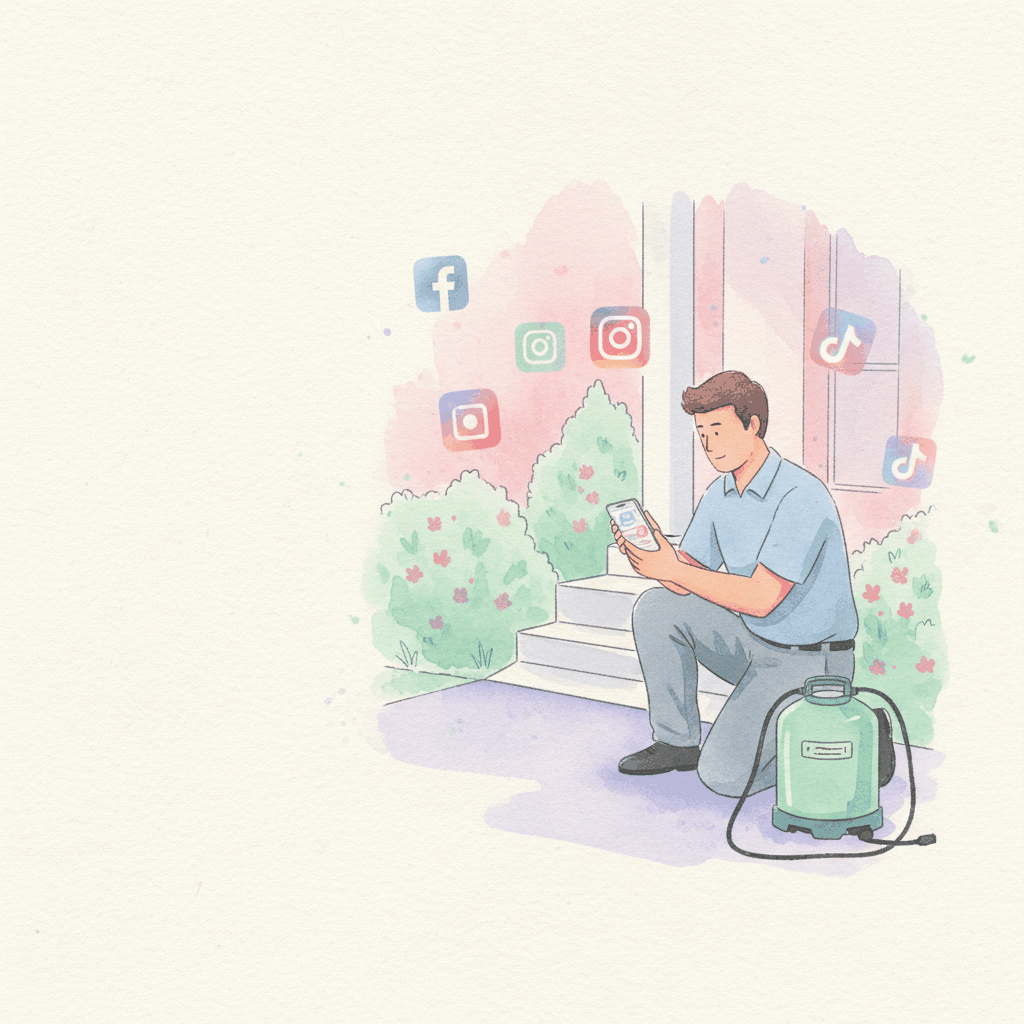
Your pest control business needs more service calls. You've heard about social media marketing success stories. But here's the problem: most pest control companies think their work isn't visual enough for social media.
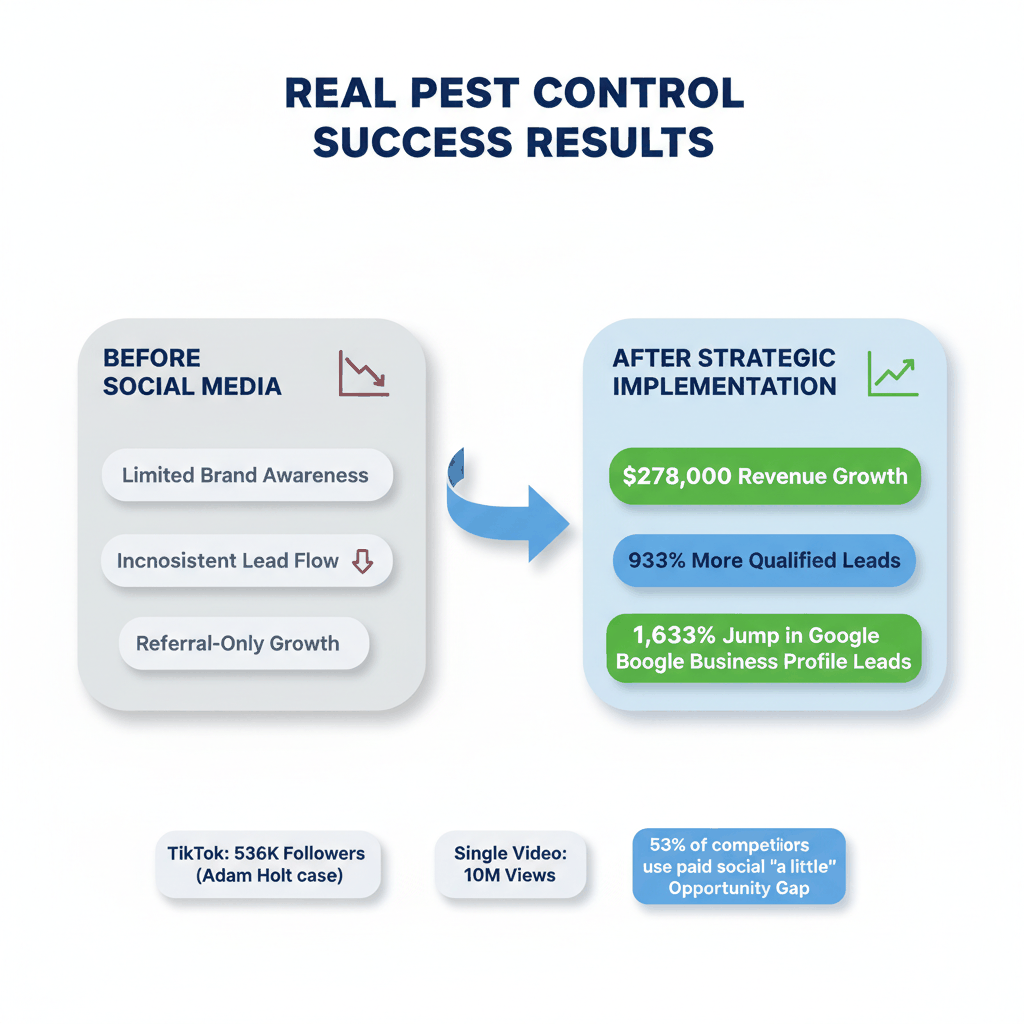
The truth is, pest control social media marketing works incredibly well when done right. 53% of respondents said they use paid social media advertising only "a little" to market their pest control services. This leaves the field wide open for businesses that can master the strategy.
You'll learn proven strategies to transform your social media from a "nice-to-have" into a lead generation engine. We'll show you exactly how to create content that builds trust, demonstrates expertise, and drives phone calls for service bookings.
Here's what you'll discover: platform selection that works, content frameworks that convert, and automation tools that save time. Plus, we'll share case studies of pest control companies generating millions of views and substantial revenue through smart lead generation strategies.
Table of Contents
Most pest control companies face the same challenge. They think their work isn't visual enough for social media. This perception problem costs them thousands of potential customers.
The average person spends about 2.5 hours daily on social media networks. Almost 70% of American adults use at least one social media site. Your potential customers are already there, scrolling through feeds, looking for solutions to their problems.
Here's the key insight: people want raw authenticity over polished content. Users want to see the actual process, complete with all the details that make pest control work fascinating. A before-and-after of a rodent-infested attic turned safe and clean gets attention. A time-lapse video of ants forming a trail to a bait trap educates and engages.
Pest control is a trust-based business. Homeowners invite you into their most personal spaces. Social media builds that trust before you ever knock on their door.
Educational content positions you as the expert. When someone sees your "myth-busting Monday" series, they learn to trust your knowledge. When they need pest control services, guess who they call?
Reviews and testimonials shared on social media carry huge weight. Clients are 21% more likely to write a review about a negative experience than a good one. Social media lets you showcase positive experiences proactively.
Most pest problems happen suddenly. A homeowner discovers ants in the kitchen on Saturday morning. They turn to social media for quick answers and immediate solutions.
Your social media presence puts you in front of them at exactly the right moment. While competitors rely on customers finding their website through search, you're already in their social feed with helpful content and clear contact information.
Don't spread yourself thin across every platform. Social media strategy starts with knowing which platforms your target audience uses. Pick one to three platforms where you can consistently create quality content.
Pest control professionals find the most value from Meta (Facebook), Instagram, and surprisingly, TikTok. Here's why each platform works and how to decide where to focus your efforts.
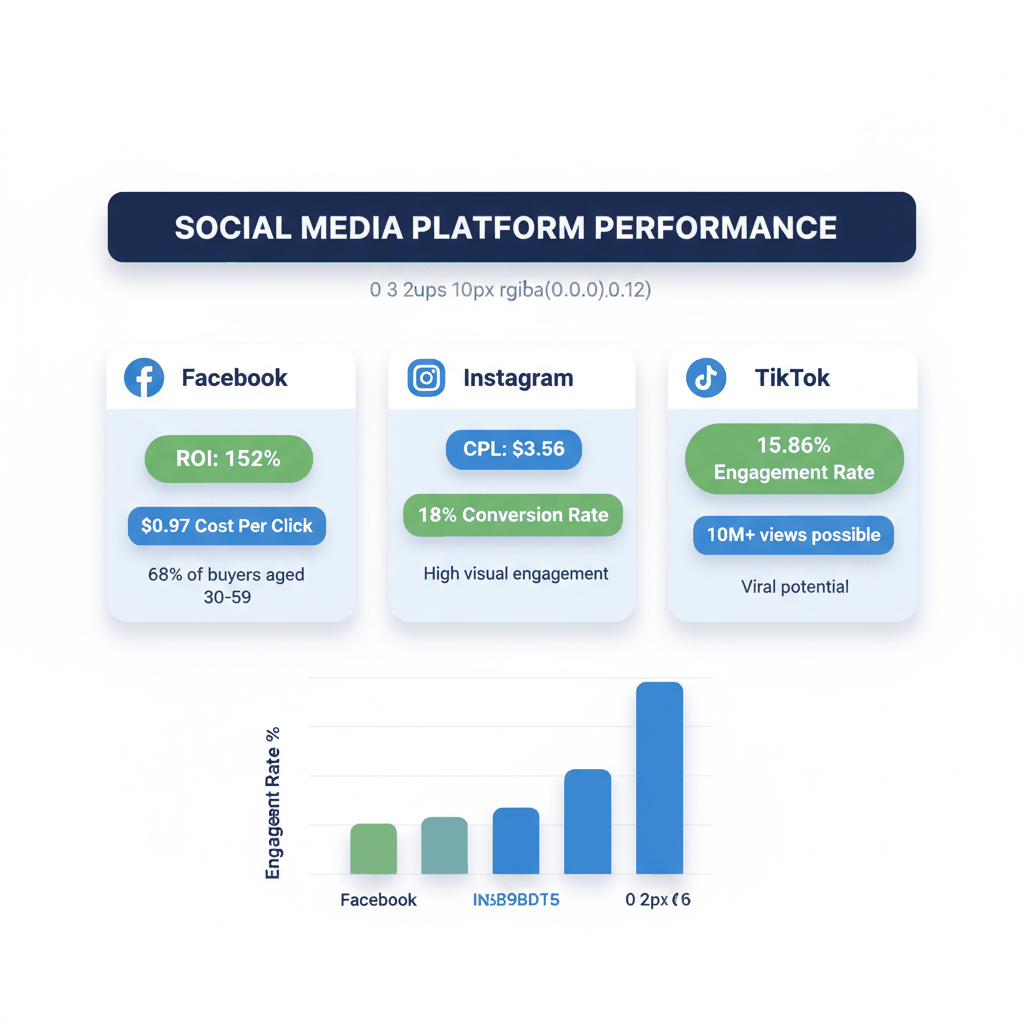
Facebook remains the powerhouse for pest control Facebook marketing. It has 2.2 billion active users and the most refined targeting algorithm. This helps target your ad spend effectively.
Facebook ads give 152% ROI on average. You get more back than you spend. The platform excels at reaching homeowners, families, and property managers who convert faster and cost less.
Use Facebook for:
Customer testimonials and reviews
Educational video content
Local community engagement
Before and after photos
Seasonal pest prevention tips
Instagram works perfectly for pest control companies willing to embrace the visual nature of their work. The average cost is higher at $3.56 per click versus $0.97 on Facebook. However, conversions are high at 18% for both paid and organic content.
Instagram users expect authentic, behind-the-scenes content. Show your technicians in action. Share the detective work that goes into identifying pest entry points. Create time-lapse videos of treatment processes.
If you dismissed TikTok as a platform for dance videos, you're missing a huge opportunity. TikTok engagement rates average 15.86%, three times higher than Instagram or Facebook.
Adam Holt, founder of Name.Bug, amassed over 536,000 TikTok followers by creating "gross-out content." One video showing tick removal with dental floss reached nearly 10 million views.
A pest control company in Florida racked up millions of views by posting short, funny, behind-the-scenes clips from their daily work. They turned a niche service into viral content.
Content creation becomes simple when you follow a proven framework. Every post should provide value to the customer. This value comes in three forms: financial (promotions), educational (tips), or social (storytelling and connection).
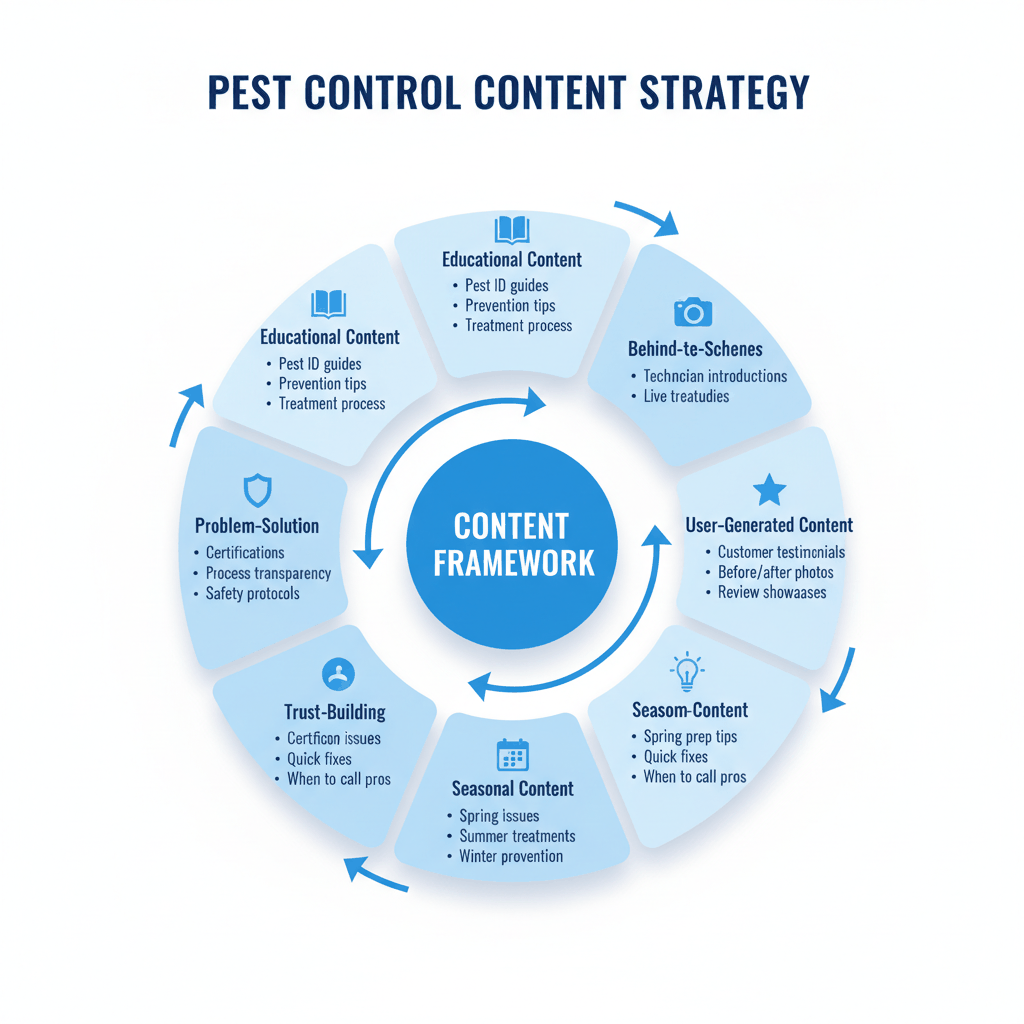
Educational content works best for pest control social media marketing. People have questions about pests, and you have the answers. This positions you as the trusted expert.
Create content around these topics:
Seasonal pest prevention strategies
DIY prevention tips (that show when to call professionals)
Pest identification guides
Treatment process explanations
Common pest myths and facts
For example, create a "Pest Prevention Monday" series. Each Monday, share one actionable tip homeowners can implement. This builds your reputation while keeping your business top-of-mind.
Show the human side of your business. Introduce your technicians. Share their expertise and personality. People hire people, not companies.
Rid-a-Bug Pest Control shared videos of pest control technicians in action. These posts got high engagement because they showed real people doing real work. Customers could see the care and professionalism that goes into each service call.
Document interesting cases (with customer permission). A severe termite infestation discovery makes compelling content. Show the problem, explain the solution, and reveal the results.
Encourage customers to share their experiences. Create a hashtag for your business and ask satisfied customers to use it when posting about your services.
Repost customer testimonials, photos, and reviews. This provides social proof while creating content you don't have to produce yourself.
Run contests that encourage engagement. "Share a photo of your pest-free home" contests generate content and engagement while showcasing your results.
Smart targeting separates successful campaigns from money-wasting efforts. Target the right audience to maximize your pest control social media marketing results. Focus on homeowners, families, pet owners, and property managers who convert faster and cost less.
Your ideal customers share common characteristics. 68% of pest control service buyers are aged between 30-59. They own homes, have decision-making power, and face recurring pest problems.
Target these demographics:
Homeowners aged 30-59
Families with children
Pet owners
Property managers and landlords
New homeowners in your service area
Use geographic targeting to focus on areas where you provide service. Facebook allows targeting by zip code, which helps you avoid wasted ad spend on people outside your service area.
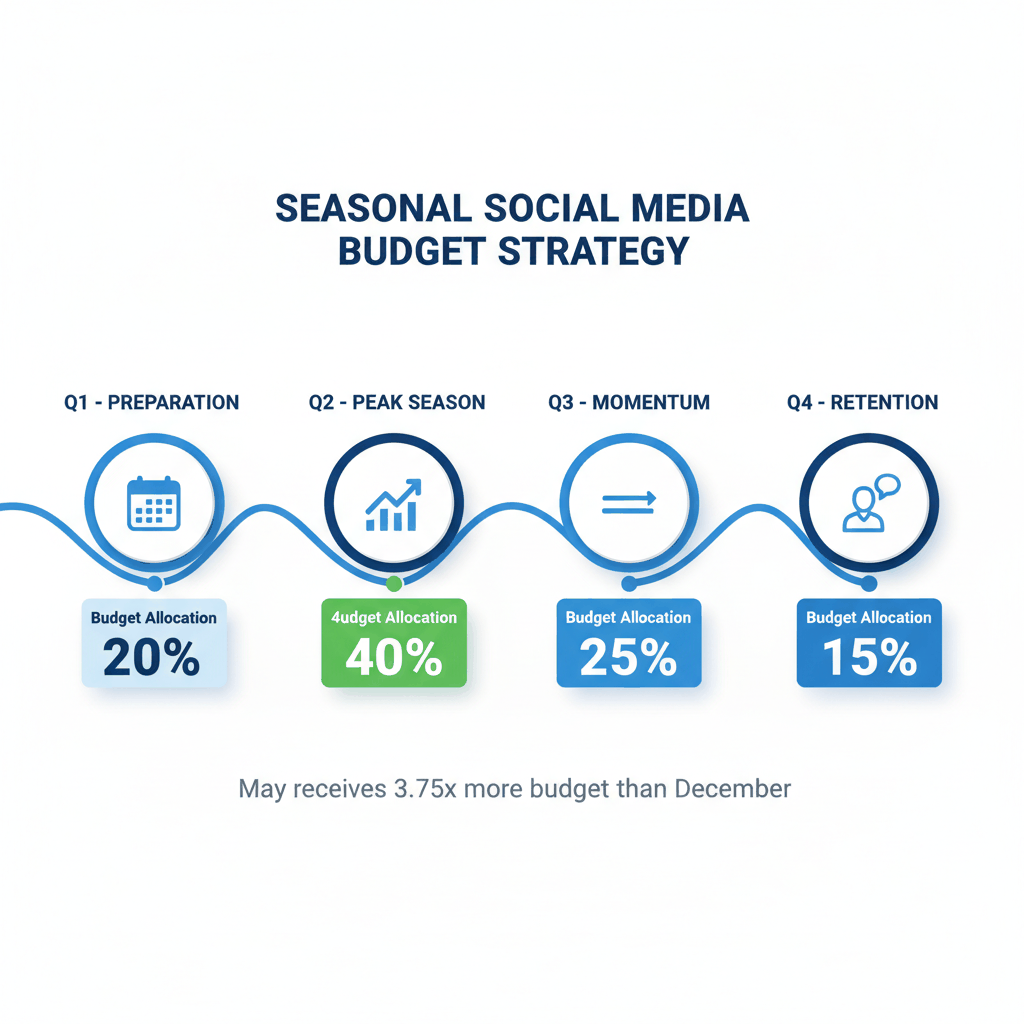
Pest problems follow seasonal patterns. Smart pest control companies allocate budgets seasonally, not evenly. Spend 20% in Q1 for preparation, 40% in Q2 for peak season capture, 25% in Q3 for momentum, and 15% in Q4 for retention.
May should receive 3.75 times more budget than December. This matches customer demand patterns and maximizes your return on ad spend.
Automation saves time and ensures consistent posting. Free social media scheduling tools like HubSpot and Hootsuite simplify post scheduling and data tracking.
Set up automated campaigns for:
Seasonal pest prevention reminders
Follow-up messages after service calls
Review requests from satisfied customers
Educational content series
Google Alerts help with social listening. Set up alerts for your business name, competitors, and pest-related keywords in your area. This helps you join conversations and address customer concerns quickly.
Tracking the right metrics shows whether your pest control social media marketing actually drives calls and revenue. Focus on metrics that connect directly to business growth, not just vanity metrics like likes and followers.
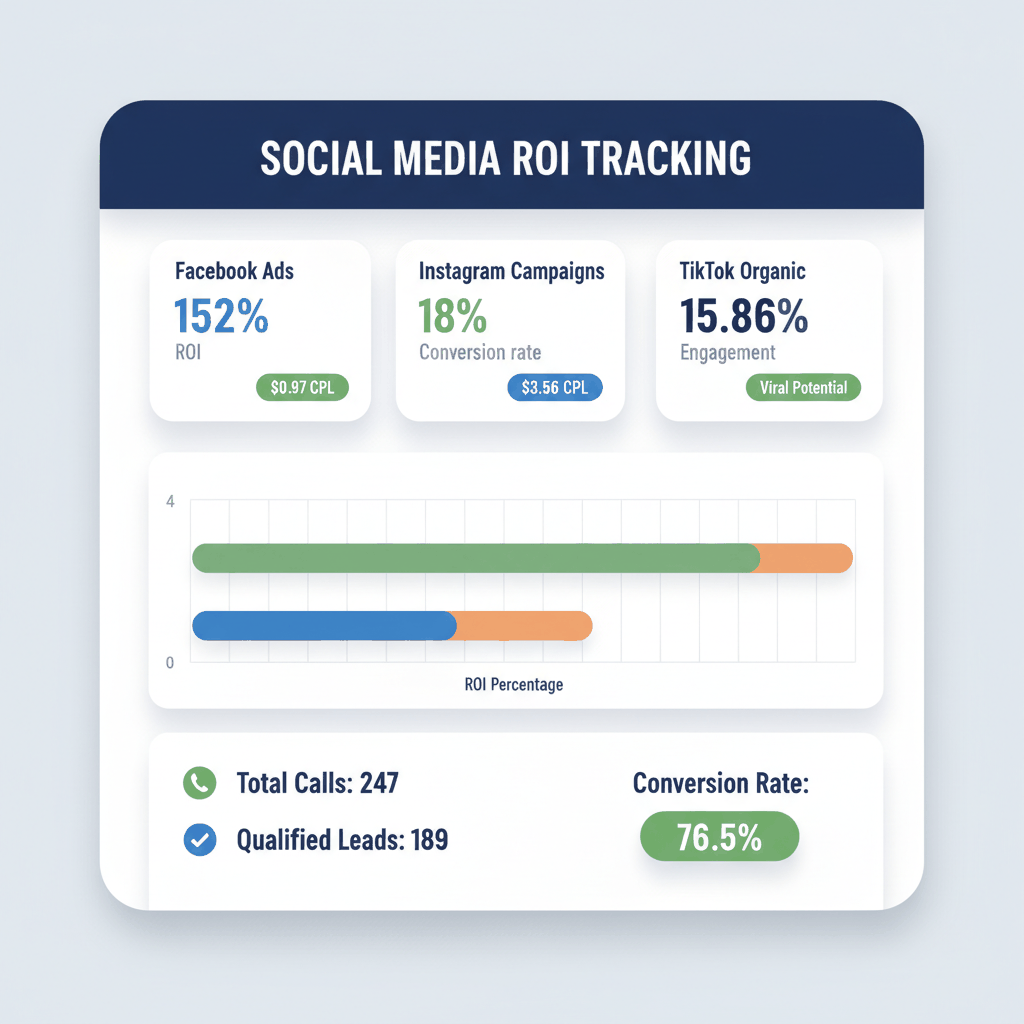
Track these essential metrics:
Cost per lead (CPL)
Lead conversion rate
Customer acquisition cost
Revenue per customer
Return on ad spend (ROAS)
Analytics tools provide valuable insights into your ad performance. Platforms like Facebook Ads Manager and Google Analytics offer detailed reports on metrics such as cost per click, click-through rates, and conversion rates.
Smart pest control operators allocate 5-8% of their marketing budget to social media and automation tools. For a company with a $100,000 annual marketing budget, this means dedicating $5,000 to $8,000 to these technologies.
However, social media shouldn't be your only marketing channel. Google Local Services Ads should represent your largest acquisition investment at 20-25% of budget, delivering $20-30 cost per lead with higher conversion rates than traditional PPC.
Phone calls are your primary conversion goal. Use call tracking numbers on social media campaigns to measure which platforms and posts drive actual calls.
Set up unique phone numbers for each social media platform. This shows exactly which channels generate calls and help you optimize budget allocation.
Track call quality, not just call quantity. A campaign that generates 50 calls but only 5 bookings needs improvement. Focus on campaigns that generate qualified leads who book services.
Real pest control companies are generating substantial results through strategic social media marketing. These case studies show what's possible when you implement the right strategies.
Dream Weaver Pest Control focused on leveraging Facebook to share customer testimonials and educational content. Gary, the founder and owner, created a series of short videos addressing common pest control questions and concerns.
This positioned his company as a trusted resource in the community. By encouraging satisfied customers to leave reviews on their Facebook page, Dream Weaver built a strong reputation and attracted new business through word-of-mouth referrals.
The key was consistency. Gary posted educational content weekly and responded to every comment and question. This built trust and kept the business top-of-mind for potential customers.
Adam Holt transformed his pest control expertise into TikTok fame by embracing what he calls "gross-out content." His authentic, educational approach resonated with viewers who were curious about pest control processes.
One video showing effective tick removal with dental floss reached nearly 10 million views. This viral content led to brand recognition, referrals, and business opportunities he never expected from social media.
The lesson: don't hide the "gross" parts of your work. People are fascinated by what you do. Embrace the curiosity and turn it into content.
Marketing Pro transformed Florida's Prodigy Pest Solutions, driving $278,000 in revenue for one office through strategic digital marketing campaigns. Their approach combined social media with other digital channels for maximum impact.
Another success story shows dramatic results from integrated marketing efforts. After tightening local search rankings and Google Business Profile optimization, Pest Control Technicians saw 933% more qualified leads and a 1,633% jump in Google Business Profile leads in just 3 months.
Different platforms deliver different results. Facebook excels at generating local leads through targeted advertising. Instagram builds brand awareness and showcases work quality. TikTok creates viral moments that lead to massive brand exposure.
One Florida company found that TikTok drove brand awareness but Facebook converted better for actual service bookings. They used TikTok for top-of-funnel marketing and Facebook for bottom-of-funnel conversions.
The strategy worked because they understood each platform's strengths. TikTok introduced their brand to new audiences. Facebook converted those audiences into paying customers through targeted ads and pest control lead generation strategies.
How much should pest control companies spend on social media marketing?
Allocate 5-8% of your total marketing budget to social media and automation tools. For a $100,000 annual marketing budget, this means $5,000-$8,000 dedicated to social media marketing efforts including content creation and paid advertising.
Which social media platform works best for pest control Facebook marketing?
Facebook delivers the best ROI for most pest control companies, averaging 152% return on investment. It offers the most refined targeting options and reaches homeowners aged 30-59 who make up 68% of pest control service buyers.
How do I create engaging pest control content for social media?
Focus on educational content that builds authority. Share before-and-after photos, create time-lapse videos of treatments, bust common pest myths, and show your technicians in action. People want authentic, behind-the-scenes content more than polished marketing materials.
Can pest control companies really go viral on social media?
Yes, pest control content performs surprisingly well on platforms like TikTok. Adam Holt gained over 536,000 followers with educational "gross-out content," and a Florida company generated millions of views with funny behind-the-scenes clips from daily work.
How do I track ROI from pest control social media marketing?
Use call tracking numbers unique to each social media platform. Track cost per lead, conversion rates, and revenue per customer. Focus on qualified leads that book services, not just total calls or engagement metrics.
Ready to buy pest control leads? Sign up for free with ResultCalls today!

Hello everyone! My name is Alex and I write these blogs to help educate small business owners on different ways to grow their business. My goal is to make lead generation as easy as possible for you. After reading these blogs, I hope you leave with some actionable steps that will get you closer to growing your business :)