
Want to stay ahead in the solar installation business? The solar energy industry is moving faster than ever. New technology breakthroughs are hitting the market. Customer demands are changing rapidly.
Many solar installers struggle to keep up with these changes. They miss out on new opportunities. They lose customers to competitors who understand emerging trends.
The smart approach is staying informed about key developments. This means understanding new panel technologies, market shifts, and customer preferences. It also means knowing how to adapt your business strategy.
This guide covers the most important solar energy trends shaping the industry in 2026. You'll learn about breakthrough technologies, market opportunities, and practical strategies to grow your installation business.
Table of Contents
Solar panel technology reached new heights in 2024. Panels are now 60% cheaper and 40% more efficient than they were in 2010. These improvements create better opportunities for installers and customers.
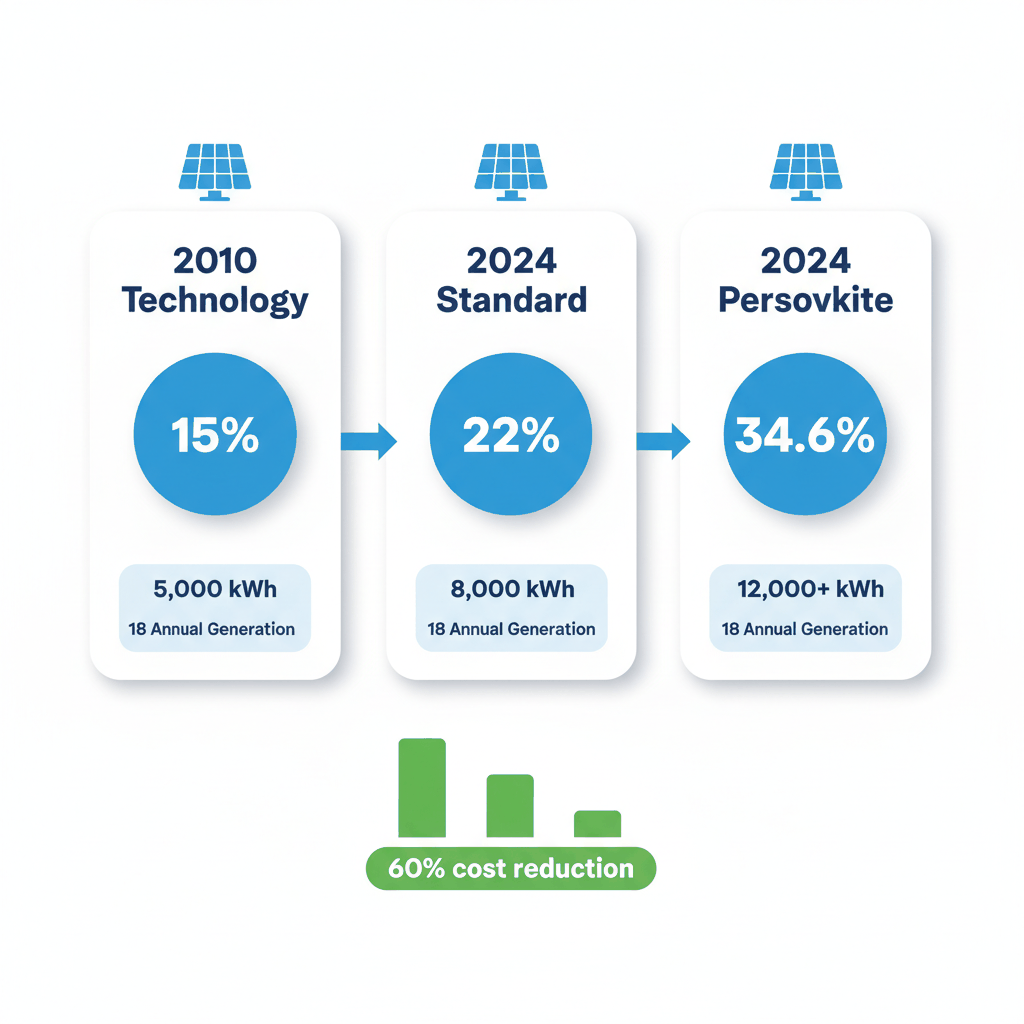
Chinese manufacturer LONGi achieved 34.6% efficiency with perovskite–tandem solar cells in 2024. Oxford PV shipped the first commercial perovskite tandem panels to a U.S. utility-scale project at 24.5% efficiency. Broader commercial availability expands through 2026 and 2027.
For example: A typical residential installation with traditional 22% efficient panels can generate 8,000 kWh annually. The same system with 34% efficient perovskite panels would generate over 12,000 kWh. This means faster payback periods for customers.
What this means for installers: Start following perovskite development closely. Prepare customer education materials about coming efficiency improvements.
Bifacial solar panels capture sunlight from both sides. They generate up to 30% more energy than traditional panels. Bifacial panels accounted for nearly 40% of utility-scale solar installations in 2026.
These panels work especially well in areas with reflective surfaces. Snow, sand, and light-colored roofing materials increase their performance. The additional energy production justifies higher upfront costs.
Installation tip: Train your team on proper bifacial panel mounting. Ground clearance and reflective surface preparation become more important.
The residential solar market faced significant headwinds in 2024. Understanding these challenges helps installers adapt their strategies and find new opportunities.
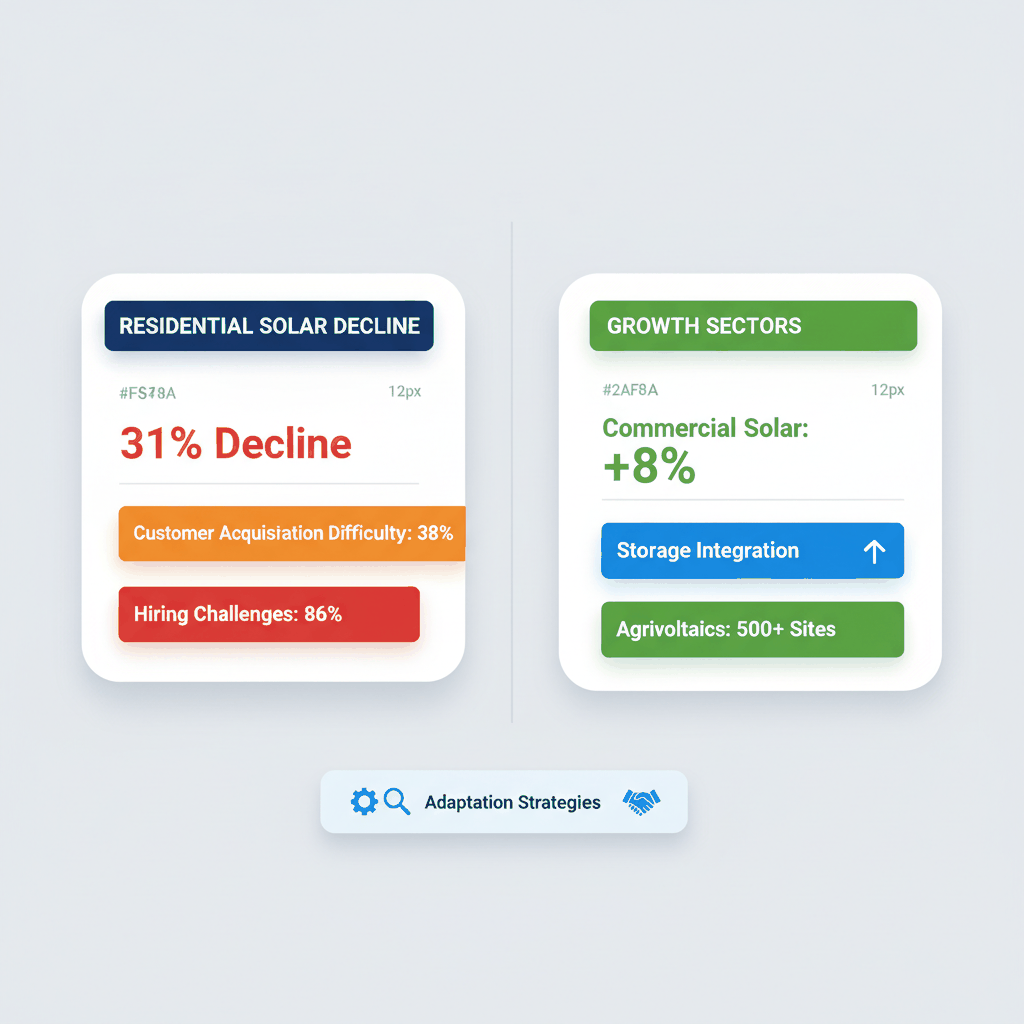
Residential solar installations declined 31% year-over-year in 2024. The segment added only 4,742 MWdc, the lowest since 2021. This represents challenging conditions across the industry.
42 states experienced declines in annual installed capacity. Higher interest rates, financing instability, and policy changes created the perfect storm. Some major providers filed for bankruptcy.
Customer acquisition costs increased dramatically. 38% of installers reported homeowners being reluctant to commit to quotes in 2024. This jumped from 22% in the previous year.
The main reasons include:
Higher financing costs due to interest rates
Policy uncertainty about solar incentives
Stabilizing electricity prices reducing urgency
Market saturation in prime areas
86% of solar employers reported difficulty filling open positions in 2024. 26% described hiring as "very difficult." The industry is understaffed when demand exists.
California's NEM 3.0 implementation cost the industry over 17,000 jobs. Similar changes in other states created additional workforce disruption.
Smart installers are investing in employee retention and training. They're also exploring automation and efficiency tools to do more with existing staff. Lead generation services can help reduce the burden on sales teams.
Energy storage integration became a game-changer for solar installers in 2024. Smart installers adapted by focusing on storage solutions alongside traditional panel installations.
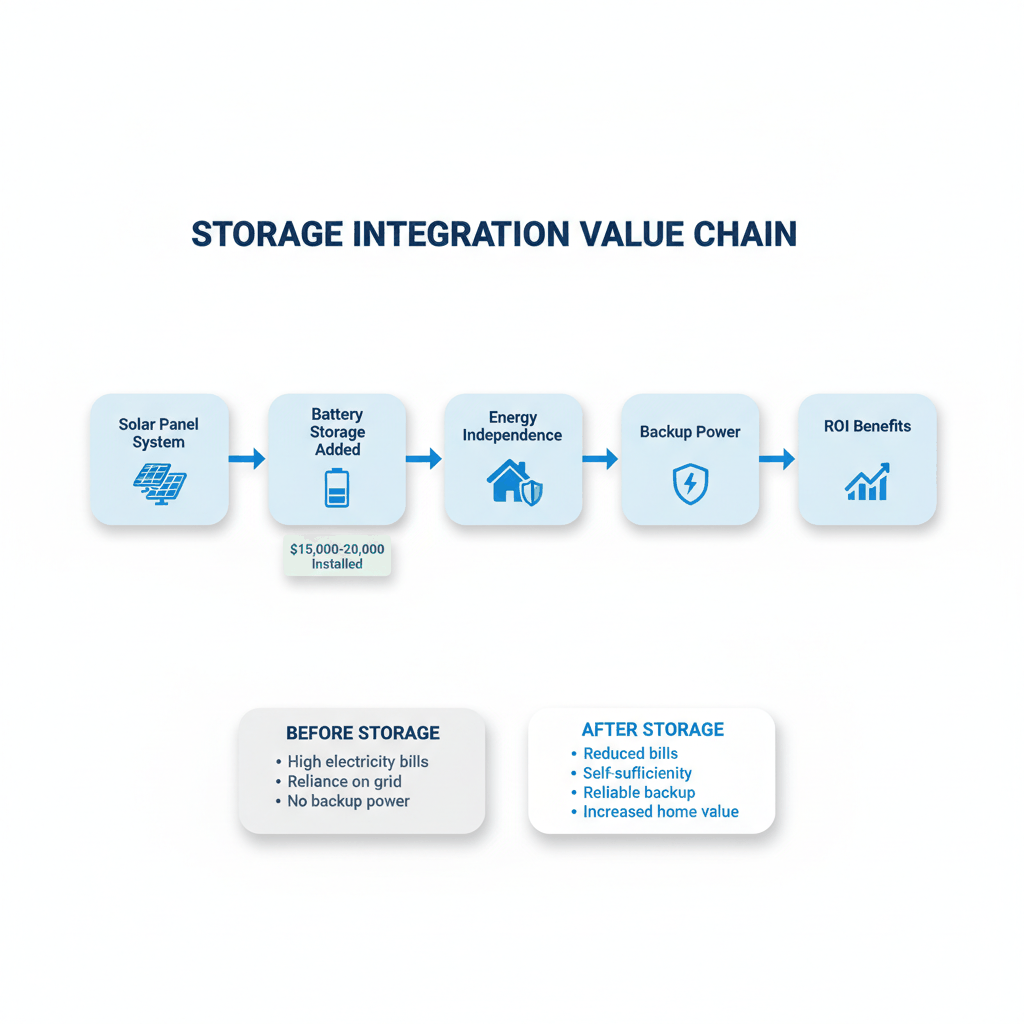
Battery storage addresses the intermittent nature of solar power. It provides stable energy supply during outages. Homeowners increasingly want energy independence, not just cost savings.
Installers in California who historically sold solar plus storage fared much better after NEM 3.0 took effect. They had existing knowledge and customer relationships for storage add-ons.
Enhanced battery technologies improved significantly in 2024. Costs decreased while performance and lifespan increased. Innovative storage systems became more accessible for residential customers.
For example: A typical home backup system now costs $15,000-20,000 installed, down from $25,000-30,000 two years ago. Battery warranties extended to 10-15 years.
Education becomes critical when selling storage systems. Homeowners need to understand payback periods and time to ROI. The upfront costs are higher, but the value proposition is stronger.
Key talking points include:
Energy independence during power outages
Protection against rising electricity rates
Increased home value and marketability
Environmental benefits beyond cost savings
While residential solar struggled, commercial solar and agrivoltaics showed strong growth in 2024. These segments offer new opportunities for installers willing to adapt.
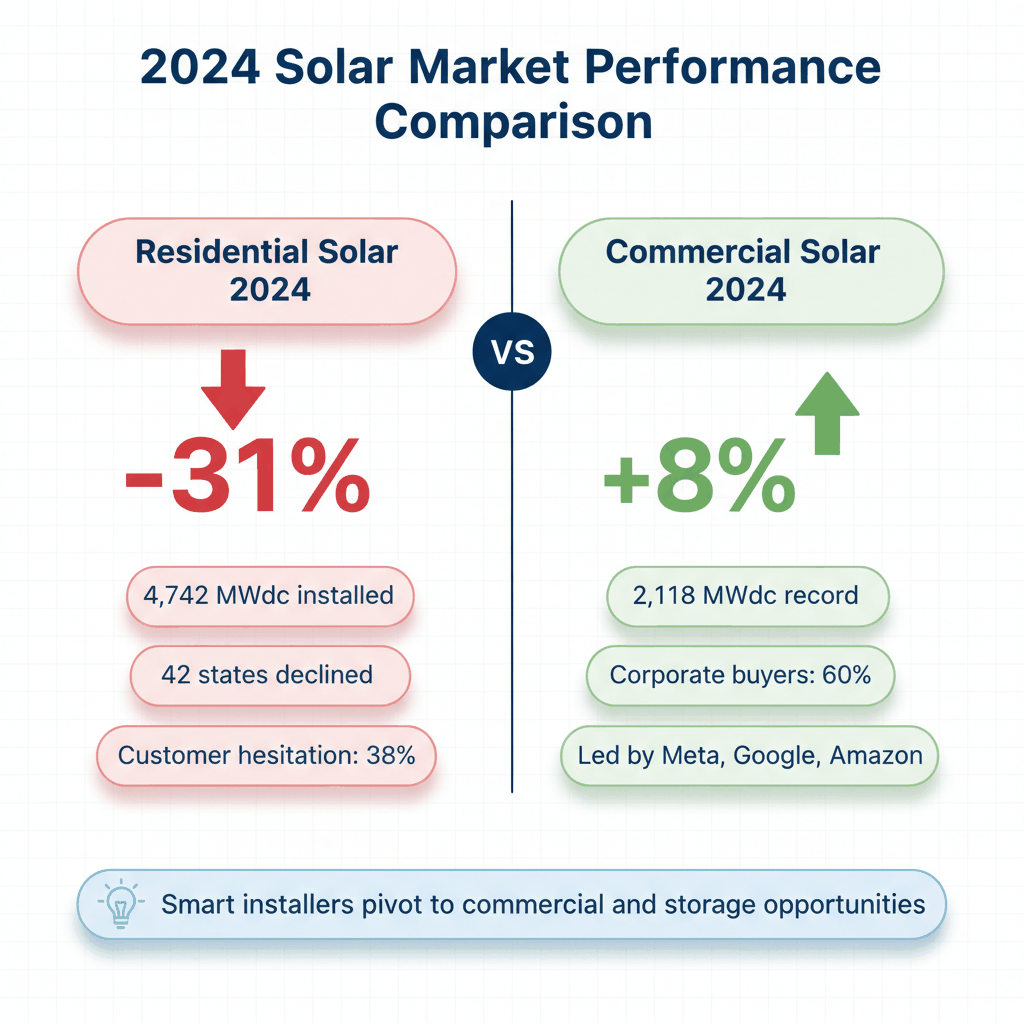
Commercial solar installed 2,118 MWdc in 2024, setting an annual record. The segment grew 8% year-over-year despite residential challenges.
Nearly 60% of projects contracted in Q4 2024 had large corporate buyers. Meta, Google, and Amazon led demand to support growing energy needs and clean energy goals. Most projects with corporate off-takers were in Texas.
Commercial projects offer several advantages:
Larger project sizes mean better profit margins
Corporate buyers have clearer decision-making processes
Less dependence on consumer financing programs
Long-term contracts provide steady revenue
Agrivoltaics combines solar panels with agricultural activities. This approach gained significant traction in 2024. Farmers generate renewable energy while optimizing land use for crops or livestock.
The U.S. has more than 500 active agrivoltaic sites with over 9 GW of combined solar capacity. The approach helps farmers optimize land use, reduce evaporation, protect crops, and create dual income streams.
Benefits for installers include:
Access to large land areas for installations
Reduced competition from traditional installers
Government incentives supporting agricultural innovation
Long-term relationships with farming communities
Commercial and agrivoltaic projects require different skills than residential work. Installers need expertise in larger-scale electrical systems. They also need relationships with commercial electricians and agricultural communities.
Start by partnering with established commercial contractors. Learn the permitting and inspection processes for larger installations. Build relationships with local farmers and agricultural organizations.
The changing market requires new approaches to sales and customer relationships. Successful installers adapted their strategies throughout 2024.
Customer education became more important than ever. Homeowners need clear information about payback periods, financing options, and technology benefits. The sales process shifted from persuasion to education.
Smart installers created educational content addressing common concerns:
How new efficiency improvements affect ROI calculations
Comparison of financing options and their impacts
Storage benefits beyond backup power
Technology roadmaps for future upgrades
Installers offering lower costs thanks to decreasing equipment prices attracted more customers. They also utilized broader ranges of financing options to address different customer needs.
For example: Some installers partnered with credit unions for lower-rate loans. Others offered lease-to-own programs for customers who couldn't qualify for traditional financing.
The most successful installers positioned themselves as energy advisors, not just panel installers. They helped customers understand their entire energy picture, including efficiency improvements and usage patterns.
This approach builds stronger customer relationships. It also creates opportunities for additional services like HVAC optimization, insulation improvements, and electric vehicle charging systems.
Professional lead generation services can help identify customers who are ready for these comprehensive energy solutions. Quality solar lead generation focuses on education-ready prospects rather than just price shoppers.
Technology advances helped solar installers overcome workforce challenges and improve operational efficiency in 2024. Smart automation and management tools became essential.
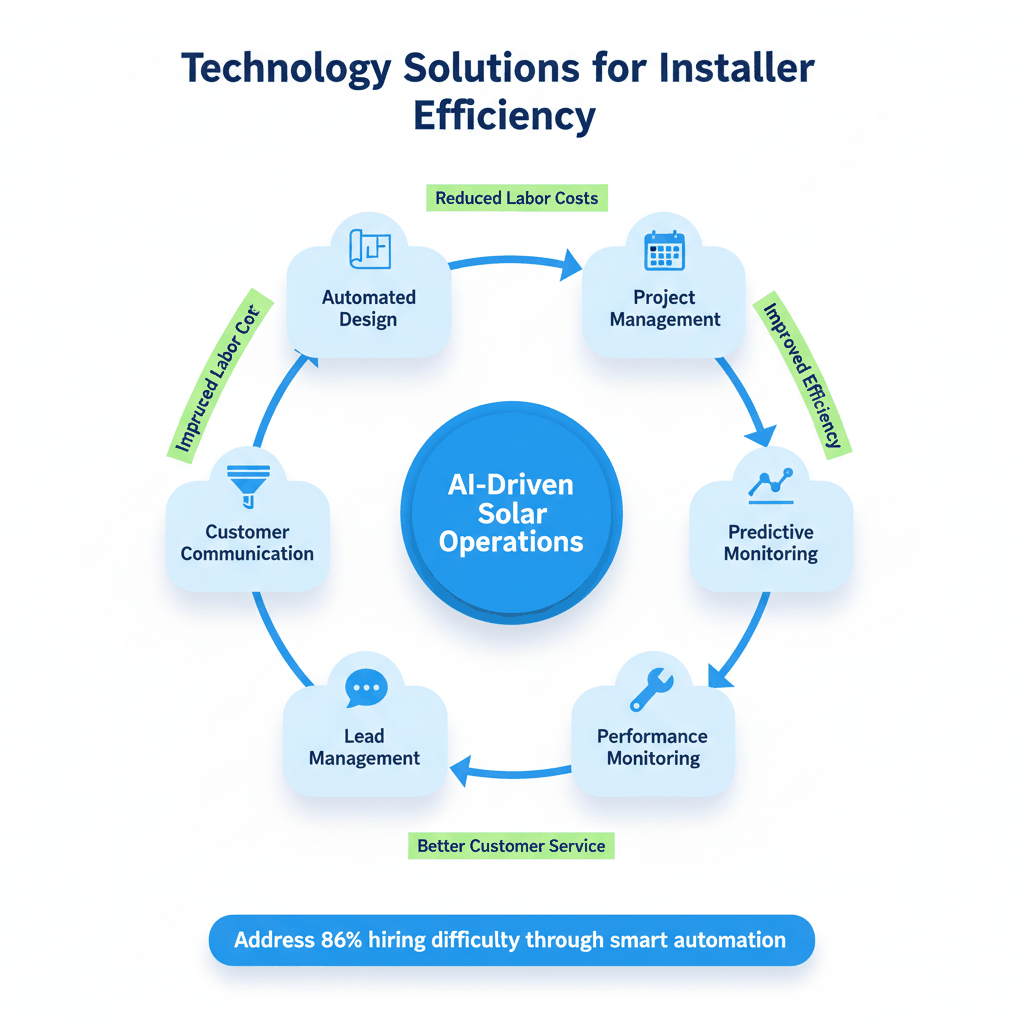
Artificial intelligence transformed solar energy management in 2024. AI-driven platforms optimize energy production, monitor performance, and predict maintenance needs. This ensures seamless and cost-effective operations.
AI tools help with:
Automated system design and proposal generation
Predictive maintenance scheduling
Performance monitoring and optimization
Customer communication and follow-up
All-in-one tools combine project management, solar design, proposal software, lead management, and CRM systems. These platforms simplify processes, save time, and help installers stay organized.
The integration eliminates redundancy in workflows. It also helps solve labor shortages through smart technological dispatching capabilities.
For example: Automated scheduling systems optimize technician routes and installation sequences. This reduces travel time and increases daily productivity.
NCCER's Solar Photovoltaic System Installer curriculum received updates in 2024. The modernized program features expanded coverage of commercial and industrial applications. It also includes enhanced residential content covering heat pumps and home-wide efficiency strategies.
Investing in employee training addresses the skilled worker shortage. Well-trained installers work more efficiently and make fewer mistakes. They also provide better customer service and represent your company professionally.
Effective lead management tools help prioritize high-quality leads and automate follow-ups. They convert interest into sales while ensuring no opportunity slips through the cracks.
Advanced systems track customer interactions across multiple touchpoints. They identify the best prospects for different types of installations. They also provide data for improving sales processes.
What solar energy trends will impact installers most in 2026?
The biggest trends include perovskite solar cell efficiency breakthroughs reaching 34% efficiency, energy storage integration becoming standard, and commercial solar growth outpacing residential. Bifacial panels also gained significant market share at 40% of utility installations.
How can solar installers adapt to residential market challenges?
Focus on education-based selling, diversify financing options, and add energy storage to your service offerings. Many successful installers also expanded into commercial solar and agrivoltaics markets where growth remains strong.
Why is energy storage integration important for solar installers?
Storage addresses customer concerns about energy independence and grid reliability. Installers who offered solar plus storage performed better after policy changes like California's NEM 3.0. Storage systems also provide higher profit margins than panels alone.
What technology should solar installers prioritize in 2026?
Prioritize AI-driven project management tools, automated design software, and integrated CRM systems. These technologies help overcome workforce shortages and improve operational efficiency while reducing customer acquisition costs.
Are there growth opportunities beyond residential solar?
Yes, commercial solar grew 8% in 2024 and set annual records. Agrivoltaics also shows strong potential with over 500 active U.S. sites. Both markets offer larger project sizes and more stable customer relationships than residential work.
The solar industry continues evolving rapidly despite residential market challenges. Installers who stay informed about technology advances, adapt their business models, and focus on emerging opportunities will thrive. Success comes from understanding both technical innovations and market dynamics.
Key strategies include embracing storage integration, exploring commercial and agricultural markets, and leveraging technology for operational efficiency. The installers who invest in these areas now will be positioned for strong growth as the market recovers.
Ready to buy solar leads and only pay per call? Sign up for free with ResultCalls today!

Hello everyone! My name is Alex and I write these blogs to help educate small business owners on different ways to grow their business. My goal is to make lead generation as easy as possible for you. After reading these blogs, I hope you leave with some actionable steps that will get you closer to growing your business :)