Why do some auto insurance agents consistently close deals while others struggle with the same leads? The answer lies in understanding customer psychology. Most agents focus on policy features and competitive rates. Top performers understand what really drives insurance buying decisions.
The truth is, customers don't always make logical choices about insurance. They say "let me think about it" even when they clearly need coverage. They fixate on price while ignoring important policy features. This happens because human psychology plays a bigger role than pure logic in insurance decisions.
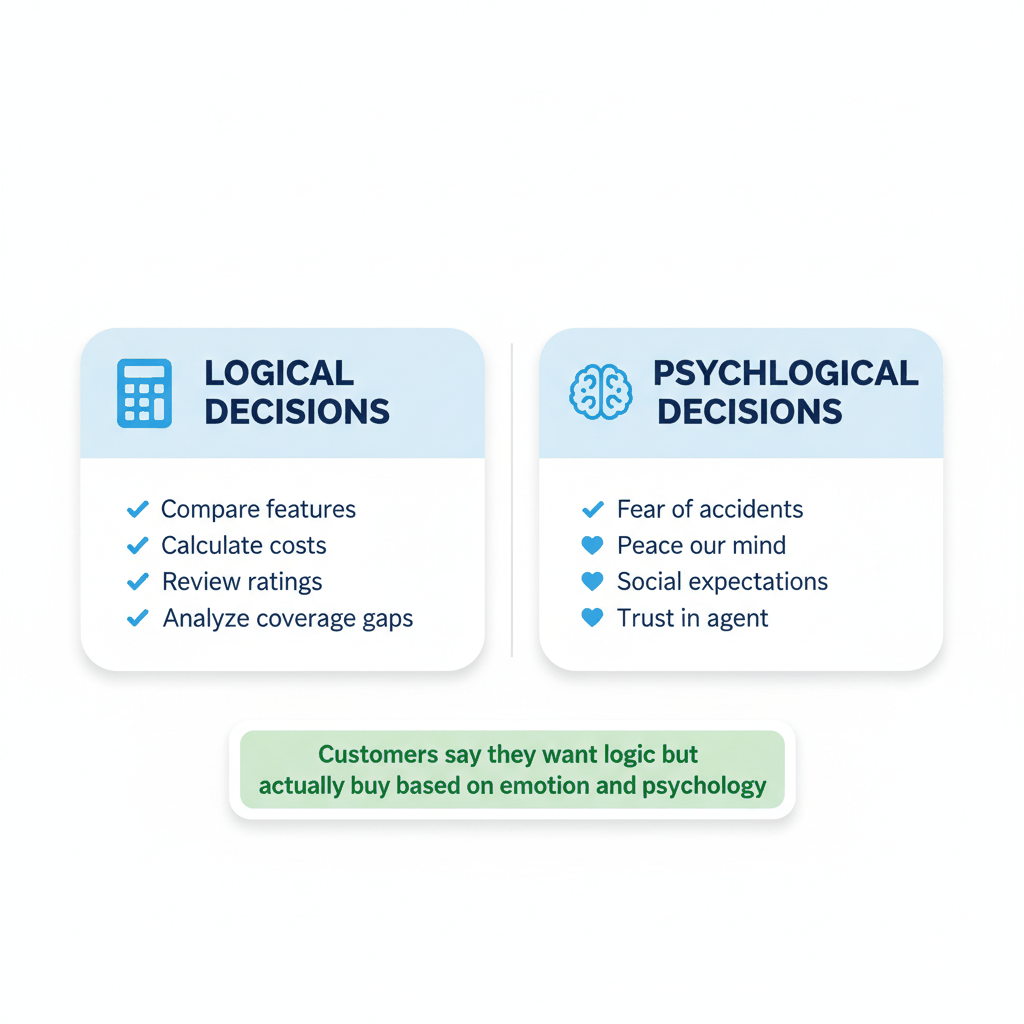
Auto insurance sales psychology uses proven behavioral science principles to understand how customers think and make purchasing decisions. When you master these techniques, you can ethically guide prospects toward better coverage while dramatically improving your conversion rates.
You'll discover the specific psychological triggers that influence insurance buying decisions. Plus, you'll learn practical techniques that turn hesitant prospects into satisfied customers. Quality auto insurance leads become much more valuable when you know how to convert them consistently.
What You'll Learn
Insurance buying involves complex emotional and cognitive processes. Customers must evaluate risks they hope never to experience. They compare abstract benefits while spending real money today. This creates unique psychological challenges that smart agents learn to navigate.
The average conversion rate for insurance search ads is 5.10%. However, agents who understand customer psychology consistently achieve much higher conversion rates. They know which psychological triggers influence buying decisions most.
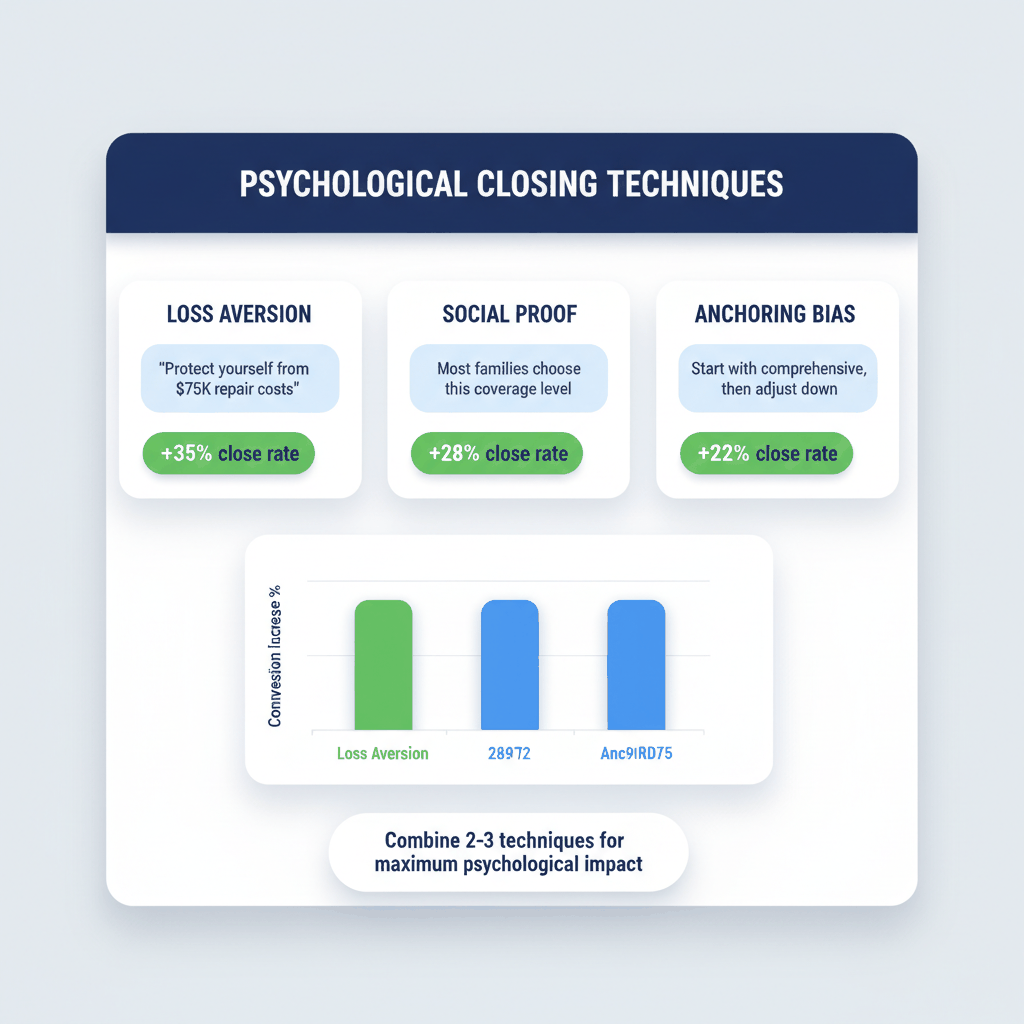
People fear losing what they have more than they want to gain something new. This psychological bias called loss aversion drives many insurance decisions. Smart agents frame their presentations around protection rather than purchase.
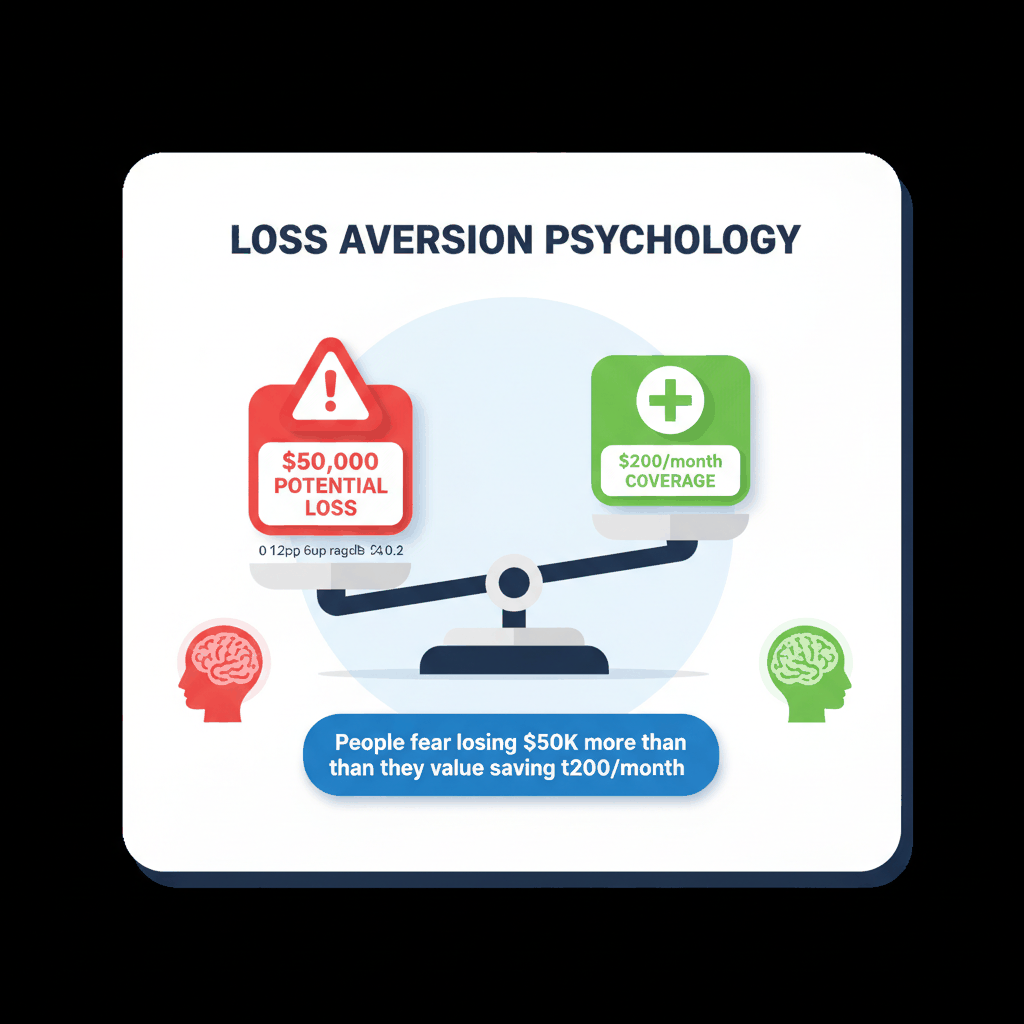
Instead of saying "Buy this comprehensive coverage," try "Protect yourself from massive repair costs." The second approach taps into loss aversion psychology. Customers respond more strongly to avoiding losses than gaining benefits.
Customers want immediate benefits even when buying long-term protection. Present bias makes people discount future benefits in favor of immediate rewards. Auto insurance seems like all cost with no immediate benefit.
Combat present bias by highlighting immediate value. Mention roadside assistance, rental car coverage, and multi-policy discounts. These benefits start immediately and make the purchase feel worthwhile today.
Understanding common psychological barriers helps you address them proactively. Most conversion problems stem from predictable customer psychology patterns rather than actual policy objections.
Choice overload happens when customers face too many options. They become hesitant to make any decision rather than risk making the wrong one. This psychological phenomenon kills many insurance sales.
Research shows that choice architecture significantly impacts customer decisions. Present three clear options instead of overwhelming customers with endless combinations. Most customers choose the middle option when presented with good, better, best choices.
The first number customers hear becomes an anchor in their minds. Everything else gets compared to that initial figure. If they see a low-ball quote first, your fair pricing seems expensive by comparison.
Use anchoring bias strategically. Start conversations with comprehensive coverage options. When customers ask for lower prices, your mid-level coverage seems reasonable. This guides them toward profitable middle-ground policies.
More than 90% of new agents quit within the first year. High turnover creates credibility challenges for the entire industry. Customers worry about agent reliability and company stability.
Build trust through social proof and professional presentation. Share success stories from similar customers. Display certifications and awards prominently. Reference your years of experience and satisfied client testimonials.
Effective closing techniques work with natural human psychology rather than against it. These proven strategies help customers feel confident about their insurance decisions while improving your conversion rates.
How you present information dramatically affects customer perception. The same facts can seem expensive or affordable depending on your framing approach.
Instead of saying "This policy costs $1,200 per year," try "This protection costs less than $100 per month." Better yet, "For less than $3.50 per day, you get complete peace of mind." The smaller timeframe makes the investment feel manageable.
Frame coverage in terms of protection rather than cost. "This ensures you're never stuck paying thousands in repair bills" works better than "This covers collision damage." The first approach connects emotionally with loss aversion psychology.
People want assurance they're making normal, smart decisions. Social proof provides this psychological comfort by showing what others like them choose.
Use these social proof techniques during presentations:
Share how most of your clients choose similar coverage levels
Mention specific examples of how coverage helped real customers
Reference industry statistics about adequate protection needs
Display customer testimonials and success stories prominently
Mention your agency's years of experience and satisfied client base
For example: "Most families in your situation choose this level of liability coverage. It's what I'd recommend for my own family in similar circumstances."
Stories trigger oxytocin release while reducing cortisol levels. This creates emotional connection and reduces stress around purchasing decisions. Insurance naturally lends itself to protective storytelling.
Develop three short stories for common objections. Create a 30-second story about someone who chose minimal coverage and regretted it. Prepare another about a family protected by comprehensive coverage after an accident. Keep stories brief, specific, and relevant to each prospect's situation.
Understanding how customers process information and make decisions gives you a significant advantage. These psychology-based strategies work with natural decision-making patterns rather than fighting them.
Complex decisions create stress and delay. Successful agents structure their presentations to minimize cognitive load while maximizing clarity.
Create three clear packages: Basic, Standard, and Comprehensive. Each package should address specific customer types with obvious benefit differences. This behavioral science approach reduces decision paralysis while guiding customers toward appropriate coverage.
Use visual aids to simplify comparisons. Create simple charts showing coverage differences. Highlight key benefits rather than listing technical policy details. Make the decision process feel manageable and straightforward.
Customers bring predictable biases to insurance decisions. Successful agents recognize these patterns and address them proactively.
Status quo bias makes people resist change from current coverage. Combat this by highlighting gaps in existing protection. Show specific scenarios where current coverage falls short. Make staying with inadequate coverage feel riskier than switching.
Optimism bias leads people to underestimate their accident risk. Counter this with local statistics and relevant examples. "In our county, there's a fender-bender every 18 minutes" sounds more relevant than national statistics.
Psychological urgency motivates action without creating sales pressure. Focus on protection gaps and risk exposure rather than arbitrary deadlines.
Highlight immediate vulnerabilities: "Right now, you're personally responsible for any damage over $25,000. That exposure exists every day until we get better coverage in place." This creates natural urgency around protection rather than artificial pressure around purchasing.
Modern technology amplifies psychological selling techniques when used strategically. The right tools help you implement behavioral science principles at scale while tracking what works best.
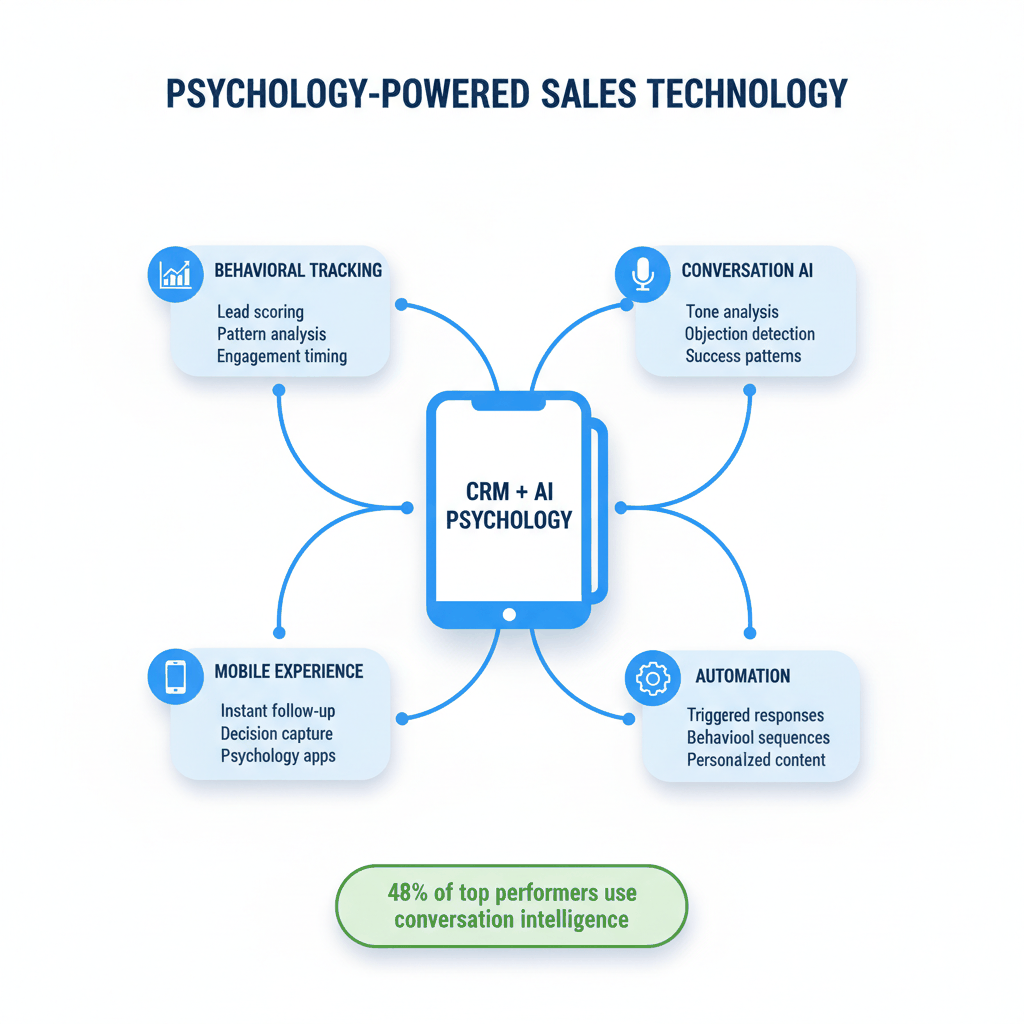
Advanced CRM systems track customer behavior patterns and psychological preferences. This data helps you tailor your approach to each prospect's decision-making style.
Look for CRM features that support psychology-based selling:
Lead scoring based on engagement patterns and behavioral indicators
Automated follow-up sequences that address common psychological objections
Integration with conversation intelligence tools for better customer insights
Mobile functionality for immediate post-meeting follow-up
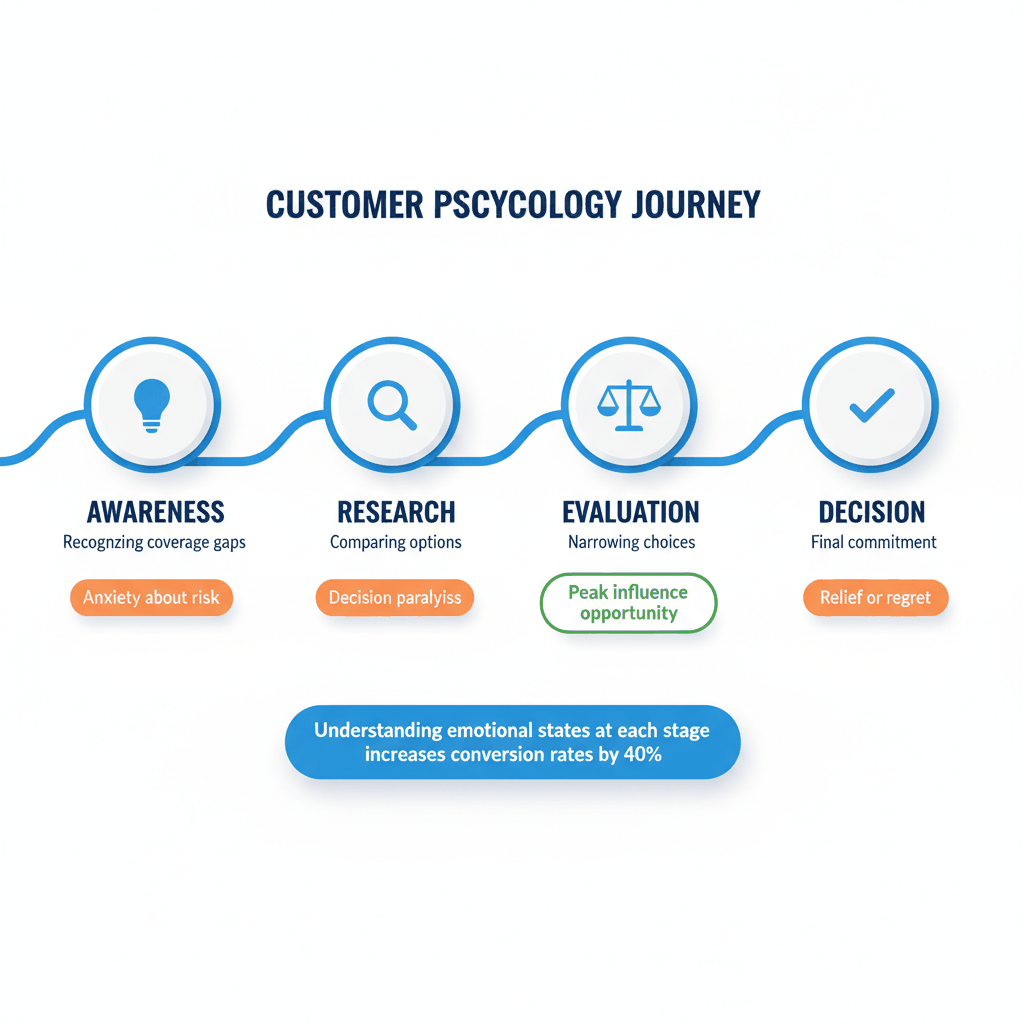
Customizable pipelines that match customer psychology stages
The best systems prioritize leads based on psychological readiness to buy. They identify prospects showing buying signals versus those still in research mode.
AI-powered conversation analysis reveals psychological patterns in customer interactions. These tools identify which approaches work best with different customer types.
About 48% of marketers use conversation intelligence to enhance customer experiences. The technology analyzes phone conversations to identify successful psychological techniques and common objection patterns.
Mobile platforms support immediate psychological reinforcement. Customers can review proposals, access policy information, and complete applications when motivation peaks.
Mobile app revenues reached approximately $613 billion by 2025. Insurance agencies using mobile-first approaches see higher conversion rates because they capture customer interest at peak psychological readiness.
Track specific metrics that reveal how well your psychological techniques perform. These measurements help you refine your approach and identify the most effective strategies for different customer types.
Monitor conversion rates by psychological technique used. Compare closing rates when using social proof versus anchoring bias strategies. Track which framing approaches work best for different coverage types.
The average insurance agent conversion rate provides your baseline. Quality leads combined with psychological selling techniques should produce significantly higher conversion rates than industry averages.
Psychology-based selling should improve customer satisfaction, not just conversion rates. Happy customers refer more business and maintain policies longer.
Track these retention indicators:
Policy renewal rates by sales approach used
Customer satisfaction scores and feedback
Referral rates from psychology-based sales customers
Complaint rates and service issues
Cross-selling success with existing psychology-trained customers
Effective psychological techniques should increase average policy values. Customers who understand their coverage needs typically choose more appropriate protection levels.
Monitor revenue per customer when using different psychological approaches. Track upselling success rates and premium values by technique used. The goal is higher customer lifetime value through better needs assessment and presentation.
How quickly can I see results from auto insurance sales psychology techniques?
Most agents notice improved conversion rates within 2-3 weeks of implementing basic psychological techniques. Framing effects and social proof strategies often produce immediate improvements. Advanced techniques like choice architecture may take 30-60 days to fully integrate into your sales process.
Are psychological selling techniques ethical in insurance sales?
Yes, when used to help customers make better coverage decisions. Ethical psychology-based selling focuses on understanding customer needs and presenting information clearly. Avoid manipulation or pressure tactics that compromise customer interests for short-term sales gains.
Which psychological technique works best for auto insurance closing?
Loss aversion typically produces the strongest results in auto insurance sales. Customers respond powerfully to protection from financial loss. Combine this with social proof and simplified choice architecture for maximum effectiveness across different customer types.
How do I handle customers who resist psychological selling approaches?
Some customers prefer analytical, fact-based presentations. Adapt your approach to match their communication style. Use data, comparisons, and logical arguments instead of emotional appeals. The key is reading customer preferences and adjusting accordingly.
What training is needed to master insurance sales psychology?
Start with basic behavioral economics concepts like anchoring bias, loss aversion, and social proof. Practice framing techniques and storytelling approaches. Many insurance associations offer psychology-based sales training programs specific to the industry.
Ready to buy auto insurance calls? Sign up for free with ResultCalls today!

Hello everyone! My name is Alex and I write these blogs to help educate small business owners on different ways to grow their business. My goal is to make lead generation as easy as possible for you. After reading these blogs, I hope you leave with some actionable steps that will get you closer to growing your business :)