Are your HVAC Google Ads burning through budget without bringing in quality leads? You're not alone. Many contractors believe Google's automation handles everything better than manual control.
The truth is different. Industry data reveals that Google's Smart Campaigns often waste 30-60% of HVAC ad budgets on irrelevant clicks. These include job searches, DIY queries, and retail traffic that never converts.
This guide shows you when to use manual bidding and when automation actually helps. You'll learn proven strategies to reduce wasted spend and get more emergency service leads. The tactics here can save you thousands in ad costs while improving lead quality.
Ready to take control of your HVAC Google Ads performance? Let's dive into what really works for contractors who want better results from their advertising investment.
Table of Contents
Google promotes automation as the solution for all advertising challenges. But HVAC contractors face unique problems that automation can't solve.
Broad match keywords waste massive amounts of budget. Your ads show for searches like "HVAC jobs," "DIY furnace repair," and "wholesale equipment." These clicks cost money but never convert to service calls.
Smart bidding needs high conversion volume to work properly. Most HVAC companies in smaller markets never reach the 30+ conversions per month needed for effective optimization. The algorithm makes bidding decisions based on insufficient data.
After two weeks of testing, broad match experiments drove 50% fewer conversions than exact match controls. The cost per acquisition increased by 62% compared to manual campaigns.
Smart Campaigns lack the customization HVAC companies need. They can't distinguish between emergency repair calls and routine maintenance leads. Emergency calls are worth 3-5 times more than maintenance requests.
Without proper negative keywords, you'll waste budget on irrelevant traffic. Common waste includes job seekers searching for employment and homeowners looking for DIY solutions.
Generic landing pages reduce conversion rates by 30-50%. Automation sends all traffic to your homepage instead of dedicated emergency repair or installation pages.
The choice between manual and smart bidding depends on your specific situation. Both strategies have clear advantages when used correctly.
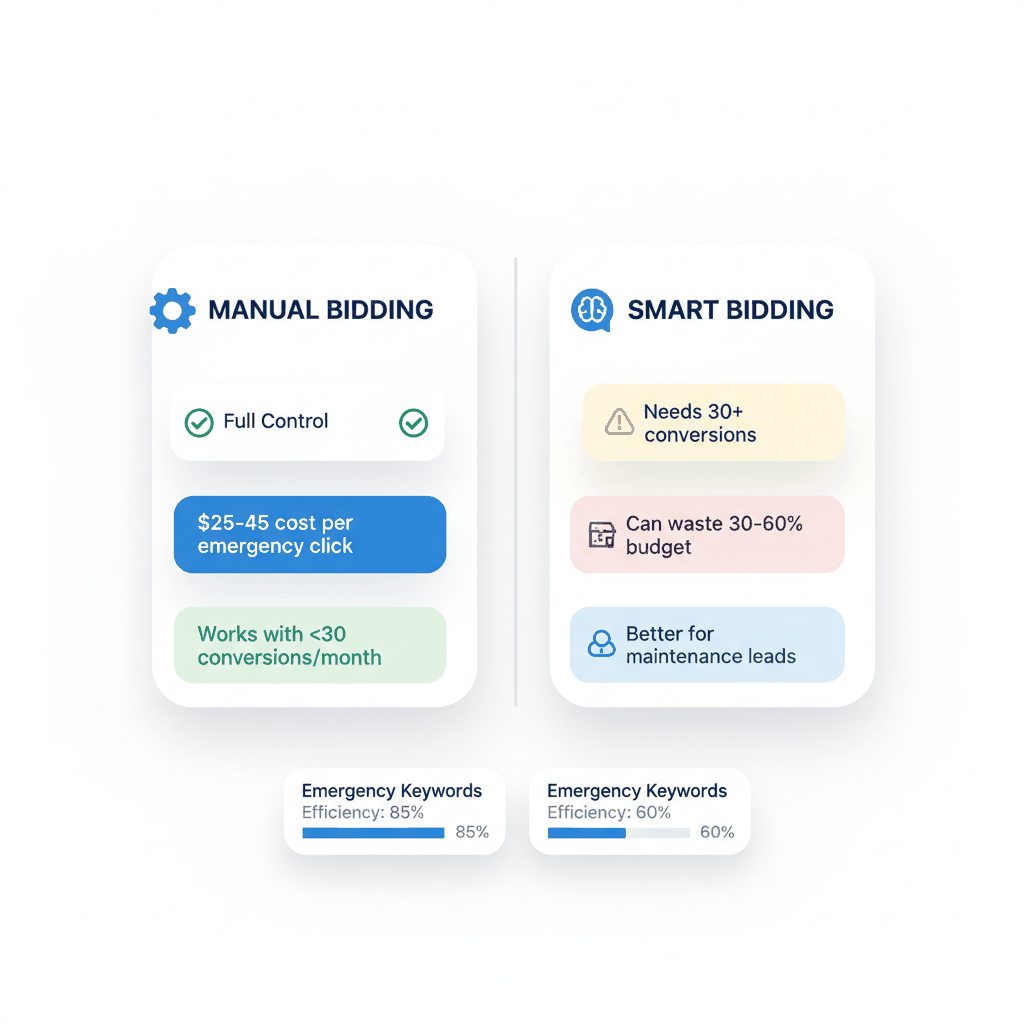
Use manual bidding for new campaigns with limited conversion data. You maintain complete control over your spending while the campaign builds performance history.
Manual CPC works best in smaller markets where search volume is limited. You can adjust bids based on local competition and seasonal demand patterns.
Emergency keywords need manual control. A $45 click for "AC not working" that converts to a $500+ repair job delivers excellent returns. Manual bidding lets you bid aggressively on high-value terms.
Smart bidding performs well with sufficient conversion data and proper tracking setup. Google needs at least 30 conversions per month to optimize effectively.
According to Google Ads Help, advertisers who upgrade exact match keywords see 35% more conversions on average. This works when you have proper conversion tracking.
Use smart bidding for maintenance and tune-up campaigns. These have more consistent volume and lower stakes than emergency repairs.
Emergency repairs need different bidding approaches than routine maintenance. Emergency keywords should have 2-3 times higher bid ceilings because of their superior conversion value.
Set emergency ad groups to Manual CPC or Maximize Conversions with higher target CPA. Maintenance campaigns need tighter CPA targets to remain profitable.
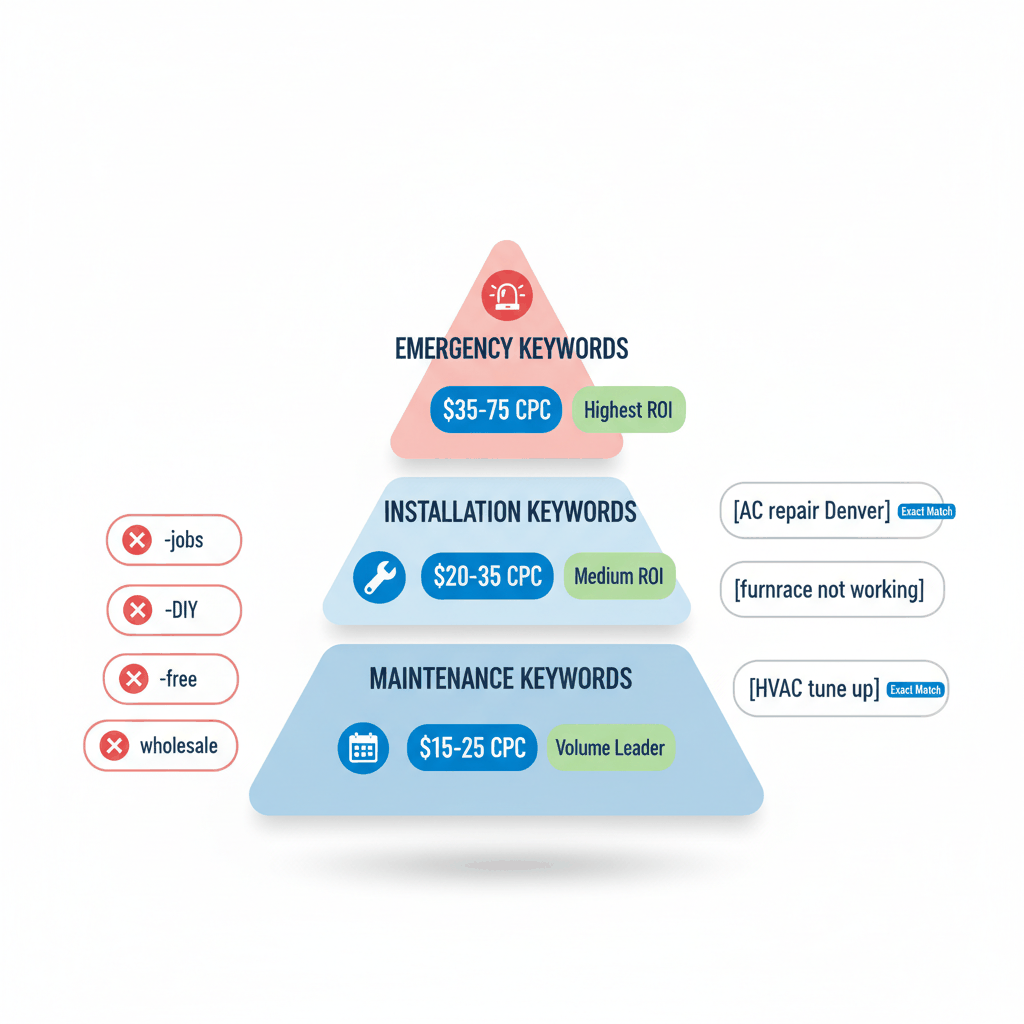
Here's a practical example: Bid $15-25 for "furnace tune up" but $35-75 for "furnace not working." The job values justify the difference in cost per click.
Your keyword strategy determines everything else about campaign performance. Most HVAC contractors use the wrong approach from the start.
Exact match gives you control over who sees your ads. It typically delivers higher click-through rates and better conversion rates than broad match alternatives.
Research from Seer Interactive shows exact match yielded lower CPA in 70% of accounts studied. Similarly, exact match provided better ROAS in 72% of campaigns.
Use exact match for highest-intent searches like [AC repair Denver]. Add phrase match to catch variations like "furnace repair near me." Skip broad match unless you're ready for extensive negative keyword management.
Emergency keywords drive the highest value leads but cost more per click. Target terms like "AC not cooling," "furnace won't start," and "heating emergency."
Maintenance keywords cost less but have lower conversion values. Focus on "HVAC tune up," "air conditioning cleaning," and "furnace inspection."
Install keywords fall between emergency and maintenance in both cost and value. Target "new furnace installation" and "AC unit replacement."
Add location modifiers to increase relevance and reduce competition. Use city names, neighborhoods, and "near me" variations.
Examples include "HVAC repair Chicago," "furnace service downtown," and "emergency AC repair near me." These typically convert better than generic service terms.
Consider ZIP code-level targeting for competitive markets. Focus on areas with higher homeownership rates and good service density.
Build a comprehensive negative keywords list to prevent budget waste. Start with obvious terms like "jobs," "careers," "salary," "free," "cheap," and "DIY."
Add industry-specific negatives like "wholesale," "parts," "supplies," and "training." These prevent clicks from contractors and supply buyers.
Review search term reports weekly for the first two months. New negative keywords will appear consistently as Google learns your campaigns.
Most HVAC conversions happen over the phone. Without proper call tracking, you can't optimize for actual revenue instead of just website clicks.
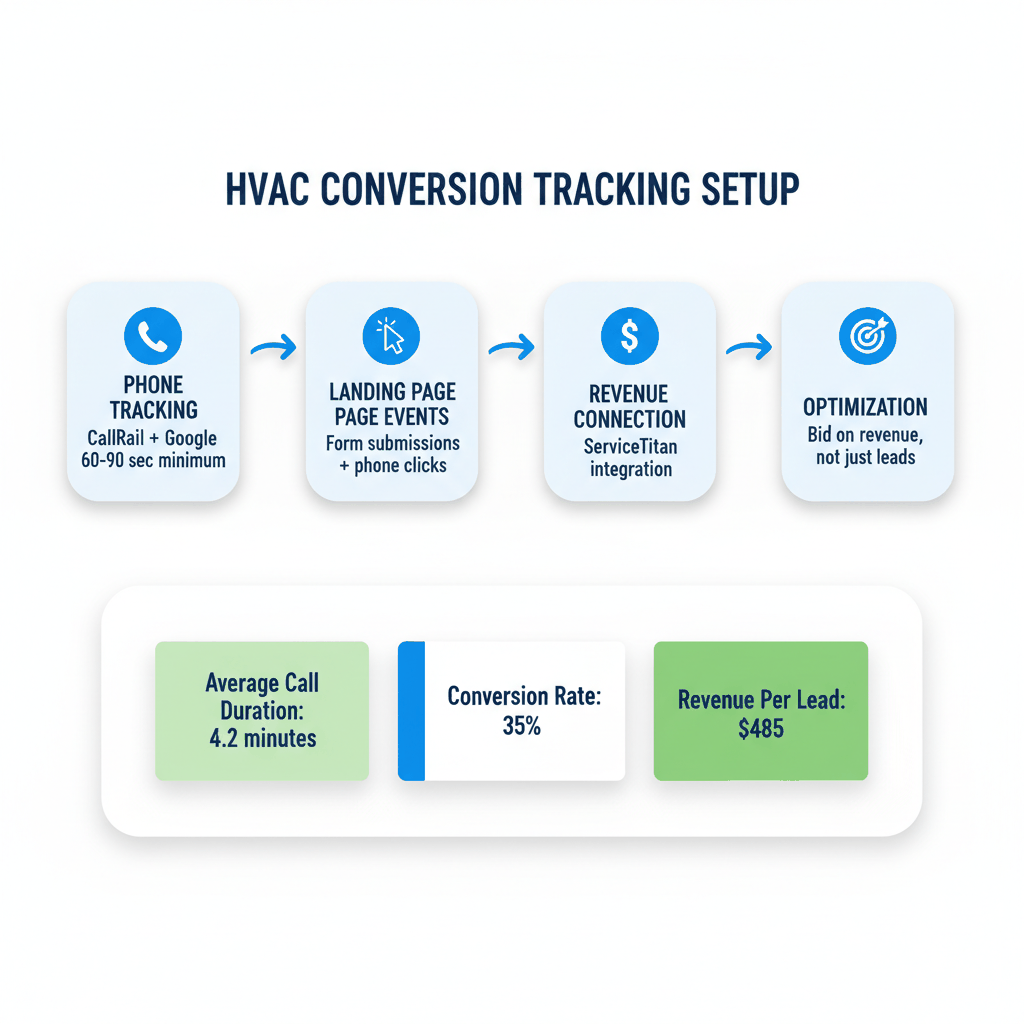
Set up conversion tracking for calls from ads and calls from your website. Use Google's call tracking plus a third-party solution for complete attribution.
Tools like CallRail or CallTrackingMetrics provide keyword-level call attribution. You can see exactly which search terms generate actual service calls.
Set minimum call duration to 60-90 seconds. This filters out wrong numbers and hang-ups that shouldn't count as conversions.
Track form submissions and phone clicks from landing pages. Many prospects call after reading your page instead of filling out contact forms.
Use event tracking for phone number clicks on mobile devices. This captures conversions that happen immediately after someone views your ad.
Set up separate conversion actions for different service types. Emergency repair leads are worth more than maintenance requests in your bidding optimization.
Advanced tracking connects ad clicks to actual job revenue. Platforms like ServiceTitan integrate with Google Ads to optimize for revenue instead of just leads.
This helps Google's algorithm understand which keywords and ads drive the most valuable customers. The result is better bidding decisions and improved campaign performance.
HVAC demand swings 300-400% between peak and off-peak seasons. Companies that adjust their strategies by season outperform static campaigns by 40-60%.
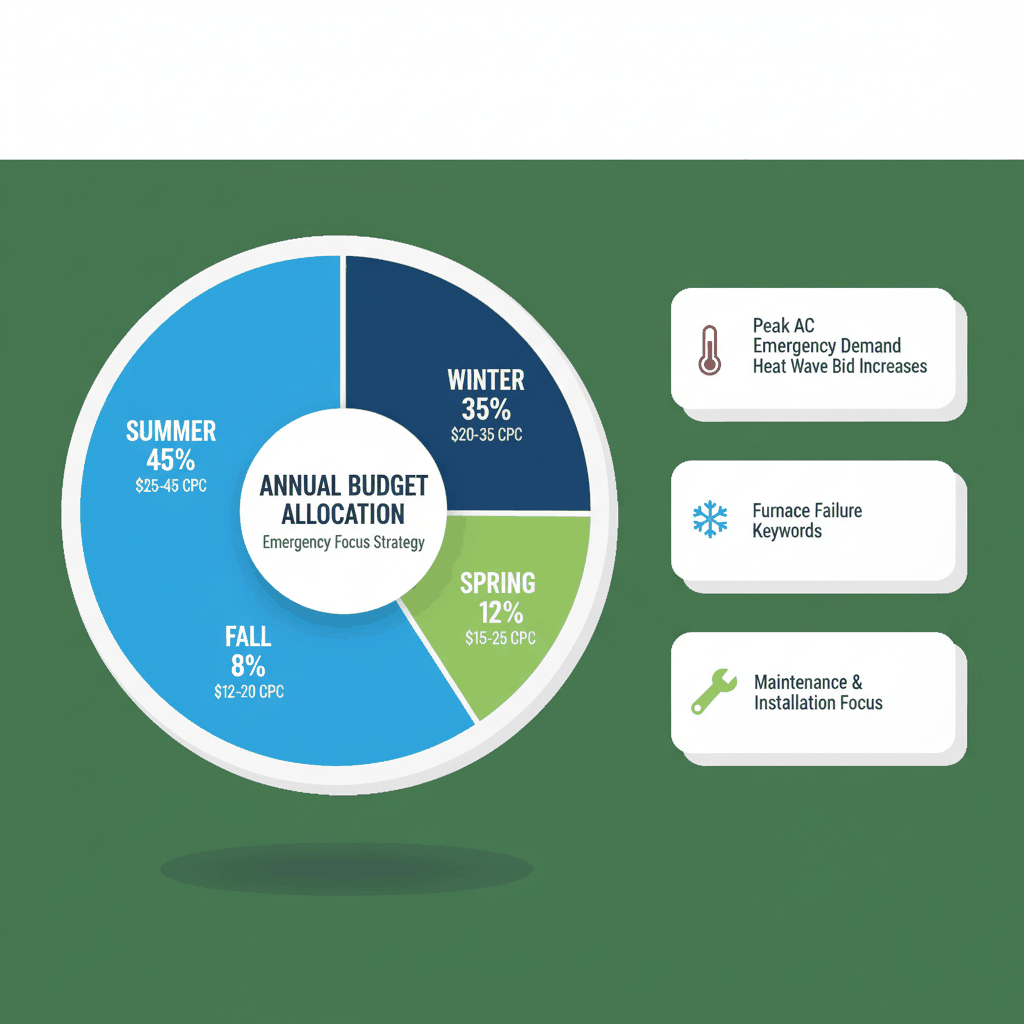
Allocate 40-50% of your annual ad budget to summer months. Emergency AC keywords command $25-45 per click during peak demand.
Focus on urgent keywords like "AC not working," "air conditioner broken," and "emergency AC repair." These drive immediate service calls when temperatures spike.
Increase budgets during heat waves and extreme weather events. People search for emergency repair services when their systems fail during the hottest days.
Heating keywords range from $20-35 per click during winter months. Priority goes to emergency furnace repair and heating system failures.
Target "furnace not working," "no heat emergency," and "heating repair urgent." These searches happen when homeowners face uncomfortable or dangerous situations.
Prepare campaigns before cold weather arrives. Build ad groups and landing pages during fall so you're ready when demand spikes.
Spring and fall offer opportunities for installation and maintenance campaigns. Competition is lower and costs per click decrease significantly.
Focus on proactive services like system tune-ups, duct cleaning, and equipment replacements. Homeowners think about these during mild weather periods.
Use off-peak seasons to build remarketing lists and nurture prospects for future emergency needs.
Tools like VibeAds automate seasonal adjustments and weather-based bidding. The platform increases bids during extreme weather when emergency demand spikes.
Manual adjustments work too. Monitor weather forecasts and increase emergency keyword bids before predicted heat waves or cold snaps.
Understanding current cost benchmarks helps you set realistic expectations and identify optimization opportunities.
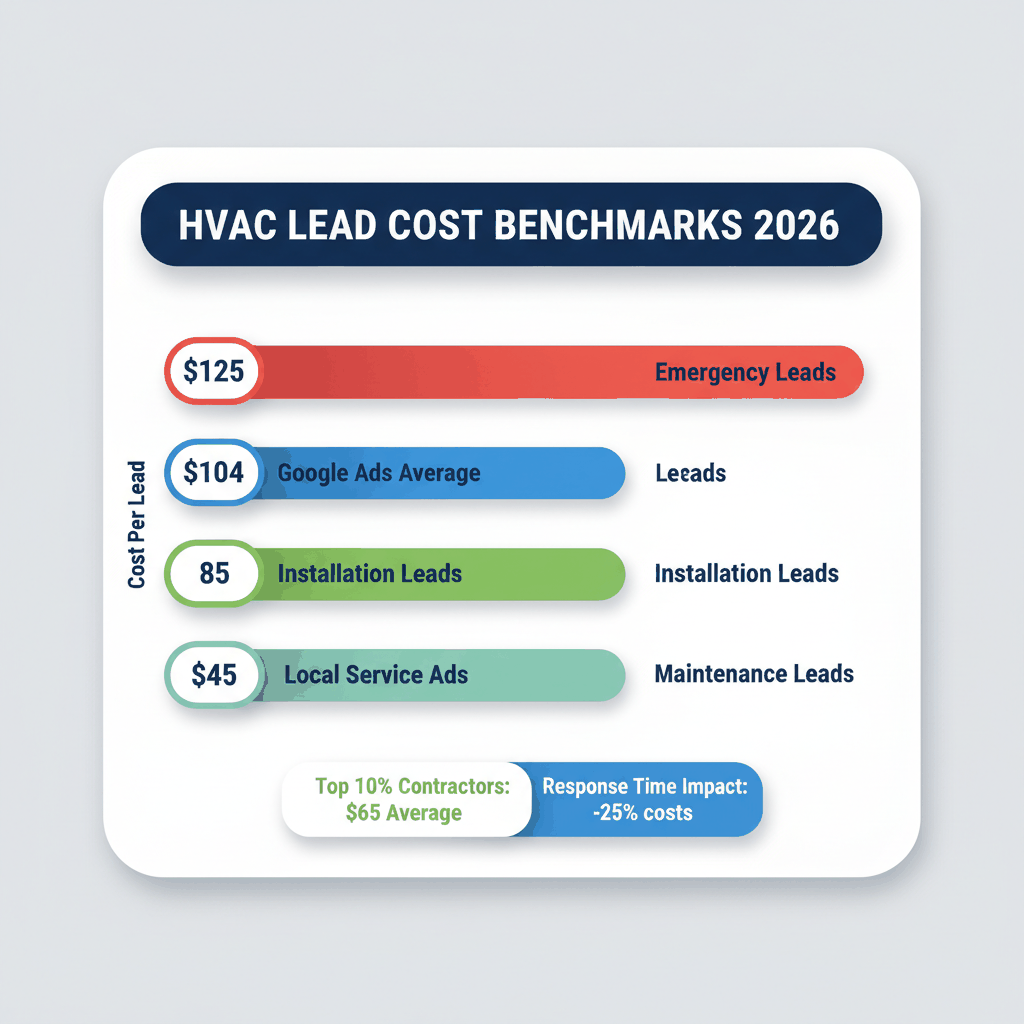
The average cost per lead for HVAC companies has risen to $104 for Google Ads. Non-branded search campaigns average $149 per lead while Performance Max delivers leads at $72.
Emergency leads cost $75-$150+ due to high competition and immediate need. Maintenance leads range from $35-$75 because of lower urgency and longer consideration periods.
Local Service Ads typically deliver leads at $90-$110 for average performers. Top contractors keep emergency LSA costs below $75 by maintaining high ratings and fast response times.
Geographic location significantly impacts costs. Major metropolitan areas see higher competition and increased cost per click for all keyword categories.
Response time affects conversion rates and overall lead costs. Answer calls within three rings and respond to online inquiries within 15 minutes for best results.
Customer ratings influence ad performance and costs. Maintain 4.5+ star ratings to improve Quality Scores and reduce cost per click.
Top-performing HVAC contractors achieve lower costs through strategic campaign management. They use single-keyword ad groups for better control and relevance.
Landing page optimization reduces overall lead costs by improving conversion rates. Create dedicated pages for emergency repairs, installations, and maintenance services.
Negative keyword management prevents budget waste on irrelevant traffic. This can reduce costs by 20-30% while maintaining lead volume.
Should HVAC companies use Smart Bidding or manual bidding for Google Ads?
Use manual bidding for new campaigns and smaller markets with limited conversion data. Smart bidding works better for established campaigns with 30+ conversions per month and proper tracking setup. Emergency repair keywords often perform better with manual control due to their high value and urgency.
What's the average cost per lead for HVAC Google Ads in 2026?
HVAC companies average $104 per lead overall, with emergency leads costing $75-$150+ and maintenance leads ranging from $35-$75. Costs vary significantly by location, with major metropolitan areas seeing higher competition and increased prices.
Which keyword match types work best for HVAC campaigns?
Exact match provides the best control and typically delivers lower cost per acquisition. Use exact match for high-intent searches like "AC repair" and phrase match for variations. Avoid broad match unless you have extensive negative keyword management in place.
How should HVAC companies track phone call conversions from Google Ads?
Set up Google's call tracking plus third-party tools like CallRail for complete attribution. Track calls from ads and website visits with minimum 60-90 second duration to filter out wrong numbers. This reveals which keywords generate actual service appointments.
When should HVAC companies increase their Google Ads budgets?
Allocate 40-50% of annual ad budget to peak seasons - summer for AC and winter for heating. Increase emergency keyword bids during extreme weather events when search volume spikes. Off-peak seasons offer opportunities for lower-cost installation and maintenance campaigns.
The myth that automation always beats manual control costs HVAC contractors thousands in wasted ad spend. Smart bidding has its place, but manual control often delivers better results for emergency keywords and competitive markets.
Start with proper conversion tracking and negative keyword management. These fundamentals prevent budget waste and improve campaign performance regardless of your bidding strategy.
Focus on exact match keywords for high-intent searches. Build separate campaigns for emergency, maintenance, and installation services with appropriate bidding strategies for each.
If you want exclusive HVAC leads delivered to your phone today, sign up for free with ResultCalls!

Hello everyone! My name is Alex and I write these blogs to help educate small business owners on different ways to grow their business. My goal is to make lead generation as easy as possible for you. After reading these blogs, I hope you leave with some actionable steps that will get you closer to growing your business :)