Are you posting on every social media platform but getting no calls? Many HVAC contractors spread themselves thin across six platforms, get overwhelmed, and quit everything. The truth is, homeowners needing emergency AC repair don't scroll Instagram for contractors.
Most HVAC companies treat social media like Google ads. They expect immediate leads from every post. Social media works differently for heating and cooling businesses. It builds trust and brand familiarity over months, not instant phone calls.
This guide ranks the best social media platforms for HVAC contractors. You'll learn which two platforms to focus on, what content actually converts followers into customers, and how to avoid the costly mistakes that waste your marketing budget.
We'll show you the proven 80/20 content strategy that positions you as the helpful expert homeowners call first when their furnace breaks down.
Table of Contents
Not all social media platforms work equally well for HVAC contractors. Here's our definitive ranking based on lead quality, audience demographics, and long-term business growth.
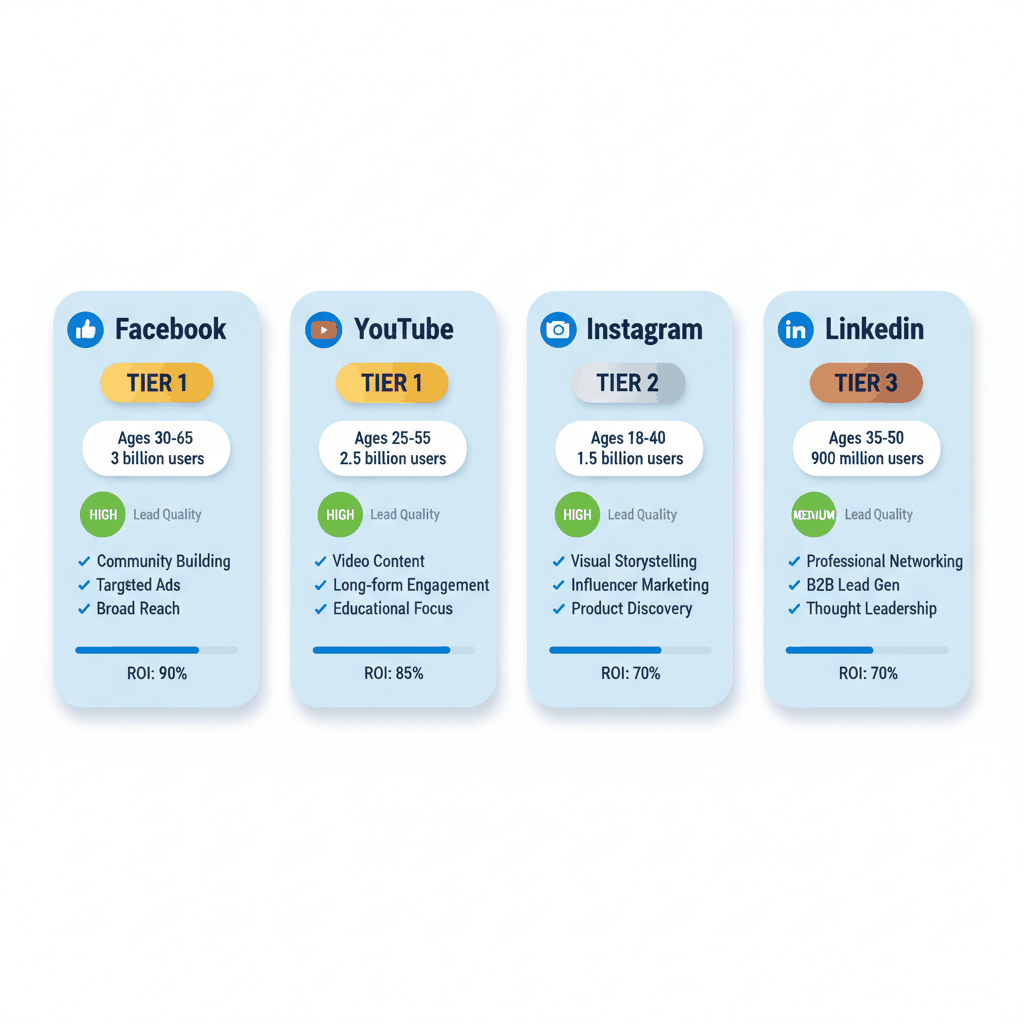
Facebook dominates HVAC social media marketing. The platform has 3 billion users including homeowners aged 30 to 65. This matches your core customer base perfectly.
Facebook offers business pages, customer reviews, local advertising, and direct messaging. All of these features support HVAC marketing goals. Plus, Facebook's targeting lets you reach homeowners in specific zip codes within your service area.
YouTube ranks equally high for different reasons. It's the highest-ROI long-term platform when you publish video content consistently. Many homeowners search YouTube for HVAC troubleshooting before calling contractors.
YouTube ads target people actively searching for "AC installation" or "furnace repair." Facebook ads interrupt people looking at family photos. YouTube reaches homeowners who already have HVAC problems.
Instagram works well for HVAC companies that invest in visual content. Before-and-after installation photos, time-lapse equipment replacement videos, and short clips of technicians explaining common issues all perform well.
Instagram excels at building brand trust through visual proof of your work. The platform skews younger than Facebook but includes many homeowners in their 30s and 40s. Instagram direct messages also generate estimate requests.
LinkedIn serves HVAC companies pursuing commercial accounts. Property managers, facility directors, and commercial real estate professionals use LinkedIn regularly. 40% of B2B marketers rate LinkedIn as the most effective channel for high-quality leads.
Commercial HVAC leads are worth 10 times the average residential call. If you service commercial properties, LinkedIn content targeting building managers with case studies and energy efficiency data generates valuable leads.
TikTok has moved beyond teenagers. The platform now includes significant homeowner demographics, and HVAC content performs surprisingly well. Short videos showing unusual service calls and satisfying before-and-after reveals get strong engagement.
However, TikTok requires daily posting to maintain visibility. Only add TikTok if you can post consistently while maintaining your Facebook and Instagram presence.
Most HVAC contractors make the same costly social media mistakes. Avoid these problems to get better results from your marketing efforts.
We've watched HVAC company owners try to maintain Facebook, Instagram, TikTok, YouTube, LinkedIn, Twitter, and Pinterest simultaneously. They post twice on each platform, get overwhelmed, and quit everything.
You'll get better results focusing on two platforms and creating relevant content for your ideal customers. Pick Facebook and Instagram, or Facebook and YouTube. Master those before adding others.
The biggest misconception is that social media acts like a magic lead machine. Many contractors expect jobs to roll in if they post often enough. Social media is not a primary lead generation channel for HVAC companies.
When homeowners need emergency HVAC service, they search Google. Social media builds trust and brand familiarity. When followers see your helpful content for months, your company becomes the first one they think of during furnace emergencies.
The biggest mistake HVAC companies make on social media is treating every post as an ad. Constant "Call us today!" posts get ignored by followers.
Homeowners follow HVAC companies for helpful tips, not daily sales pitches. The most effective HVAC social media content follows the 80/20 rule we'll explain next.
Other common mistakes include using stock photos instead of real team photos, posting five times one week then nothing for a month, and creating educational content that's either too basic or too technical.
Inconsistent posting is worse than not posting at all. If you outsource social media, make sure the agency uses your actual photos and creates content specific to your market.
The most effective HVAC social media content follows the 80/20 rule. Share 80 percent value-adding content and 20 percent promotional content.
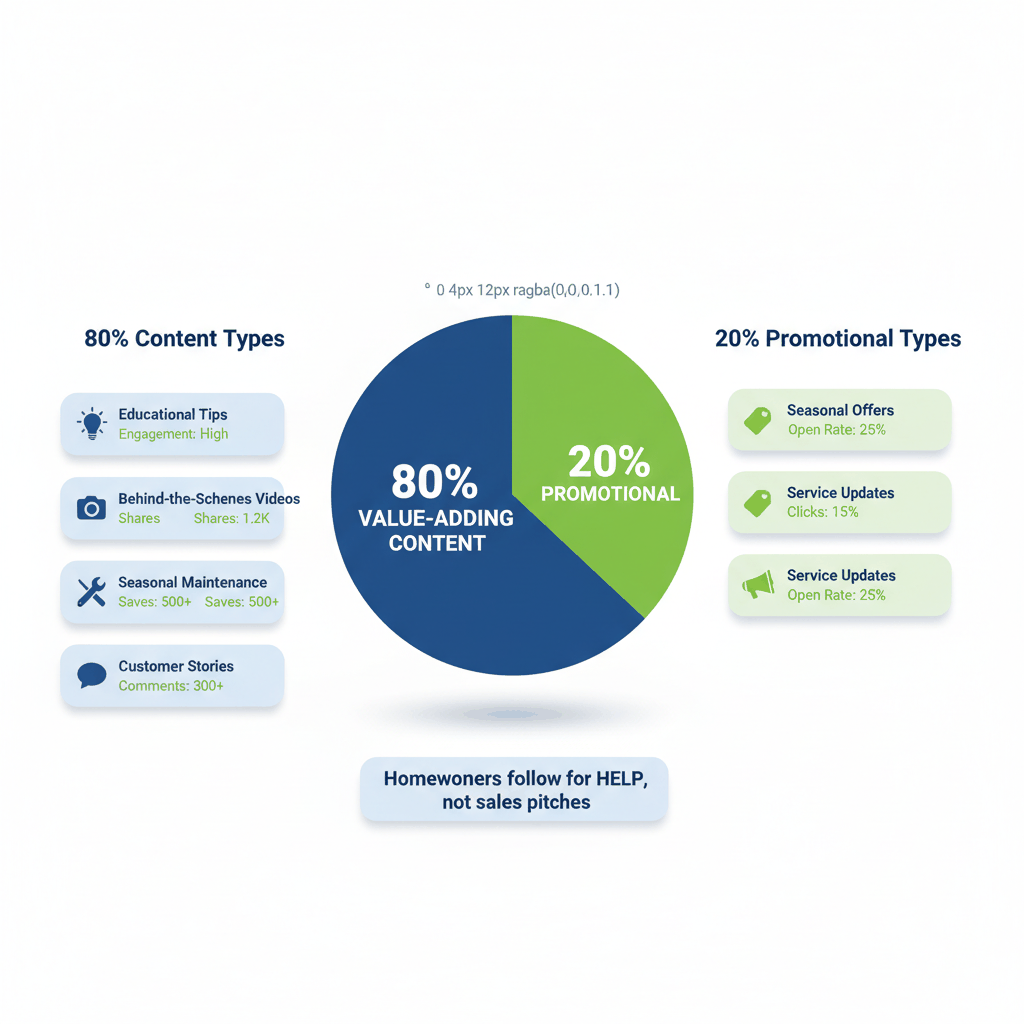
Educational content positions you as a helpful expert, not a salesperson. Share practical tips homeowners can actually use. When these followers eventually need service, they call the company that has been helping them for free.
Behind-the-scenes work videos perform exceptionally well. Show your technicians diagnosing problems, explaining solutions to customers, and completing installations. This content builds trust and demonstrates your expertise.
Seasonal maintenance tips generate consistent engagement. Create content around filter changes, thermostat programming, outdoor unit cleaning, and furnace preparation. Make tips specific and actionable.
Customer testimonials and before-and-after photos provide powerful social proof. A 60-second video of a homeowner explaining that your company showed up Saturday evening, fixed their AC in two hours, and charged fairly will generate more calls than 50 five-star text reviews.
This content also gets shared on Facebook, turning your customers into a marketing channel. For HVAC contractors, customer story content provides the single best ROI when you can get it consistently.
Limit promotional posts to 20 percent of your content. Focus on seasonal offers, new services, and company updates. Make promotional content valuable by including tips or educational information alongside your offers.
For example, instead of posting "Call for AC tune-up," share "5 signs your AC needs professional maintenance" with a call-to-action at the end.
Consistency matters more than frequency in HVAC social media marketing. Posting three times per week every week beats posting daily for a month then going silent.
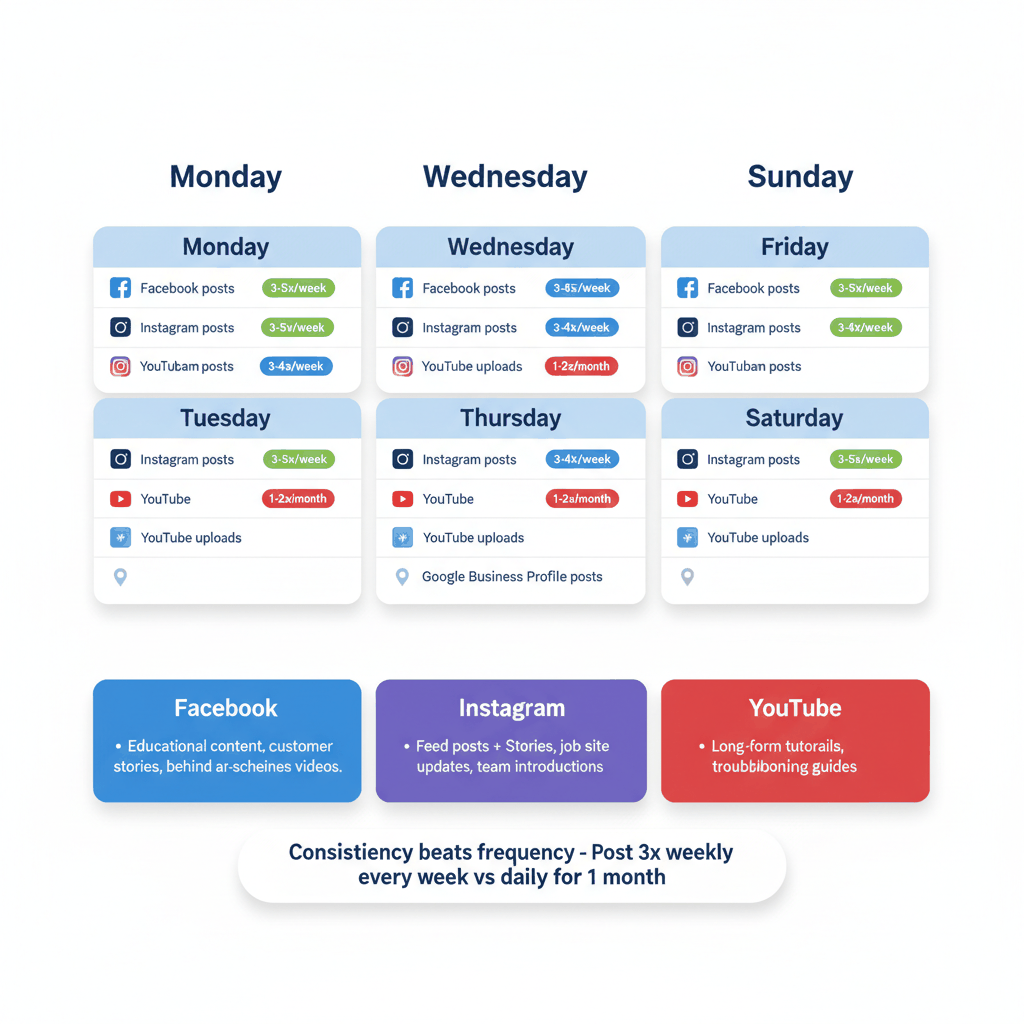
Post 3 to 5 times per week on Facebook. Focus on educational content, customer stories, and behind-the-scenes videos. Facebook's algorithm favors consistent posting over sporadic bursts.
Post 3 to 4 times per week on Instagram. Mix feed posts with Instagram Stories. Use Stories for quick tips, job site updates, and team introductions. Stories disappear after 24 hours, making them perfect for frequent updates.
Upload 1 to 2 videos per month on YouTube. Focus on longer-form educational content like "How to troubleshoot common furnace problems" or "What to expect during AC installation." YouTube rewards quality over quantity.
Sit down once a month and plan posts for the coming weeks using a social media scheduling tool. This prevents the scramble for daily content ideas.
Create content batches during slow periods. Film multiple job site videos in one day. Write several educational posts at once. Having content ready prevents posting gaps during busy seasons.
Fast responses convert more leads. Many leads choose contractors simply because they get quick replies. Aim to respond to all direct messages within 24 hours or less.
Fast responses equal more trust, more leads, and better reviews. Social media messaging often converts better than phone calls because homeowners can communicate on their schedule.
Social media works differently than pay per call lead generation for HVAC companies. The conversion process takes months, not days.
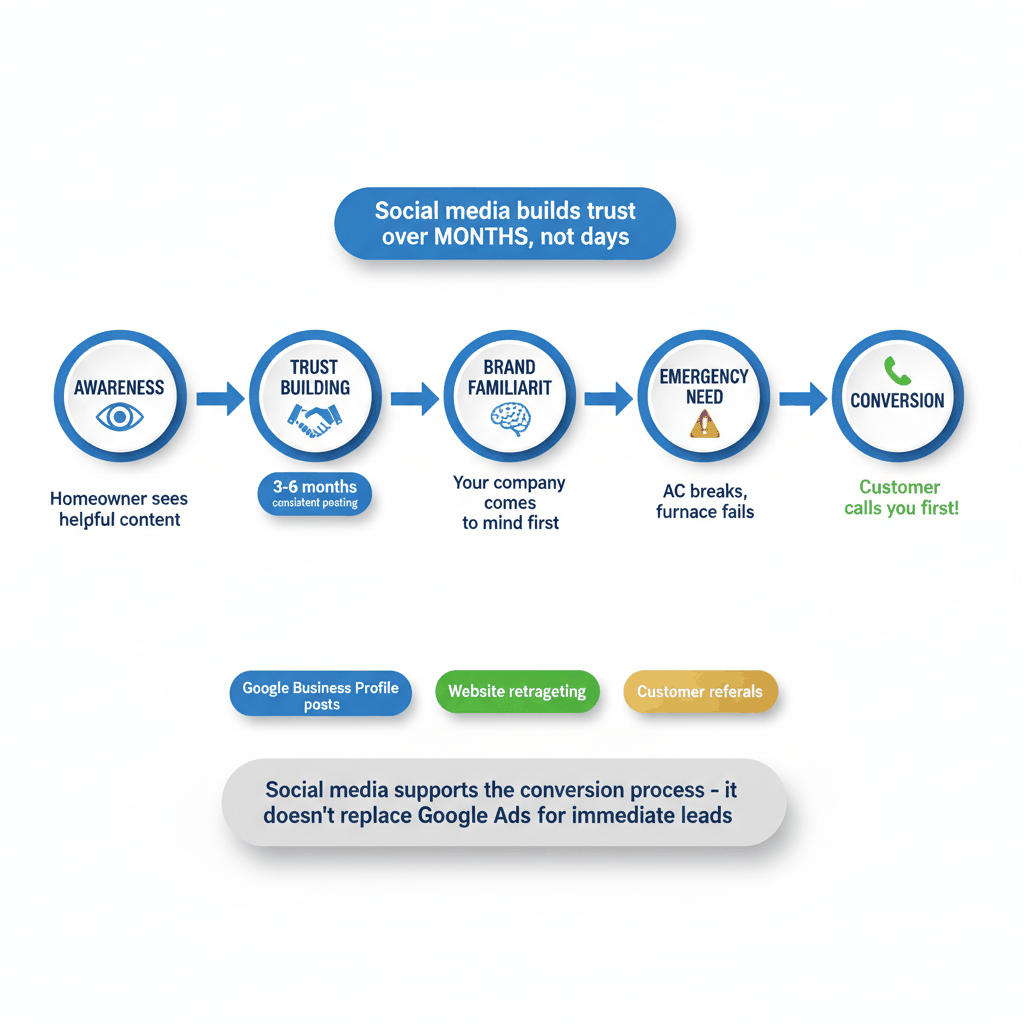
Social media serves as a long-term brand building channel, not an immediate lead generation channel like Google Local Services Ads. Expect 3 to 6 months of consistent posting before social media produces measurable business impact.
The transformation happens gradually. Homeowners who see your helpful content for months develop trust and familiarity with your brand. When they need HVAC service, your company comes to mind first.
The killer advantage comes from Google Business Profile posts. When someone searches "HVAC near me," your recent posts can appear right alongside your listing. That's visibility at the exact moment someone needs you.
Google Business Profile posts take ten minutes to create and directly support your local search rankings. Cross-post your best social media content to your Google listing.
Use Facebook and Instagram ads to retarget website visitors. Create custom audiences of people who visited your website but didn't contact you. Show them customer testimonials and seasonal offers.
This message matching increases conversion rates by 40-60% compared to generic retargeting. It requires more setup time but dramatically improves ROI.
Instead of tracking likes and follows, contractors should monitor website traffic trends, click-to-call actions, form submissions, and Google Business Profile insights. Also ask customers, "How did you hear about us?"
Many HVAC leads come from multiple touchpoints. A customer might see your social media posts, visit your website, read reviews, then call. Social media plays a supporting role in the conversion process.
Real HVAC companies are generating significant results from focused social media strategies. These case studies show what's possible with consistent effort.
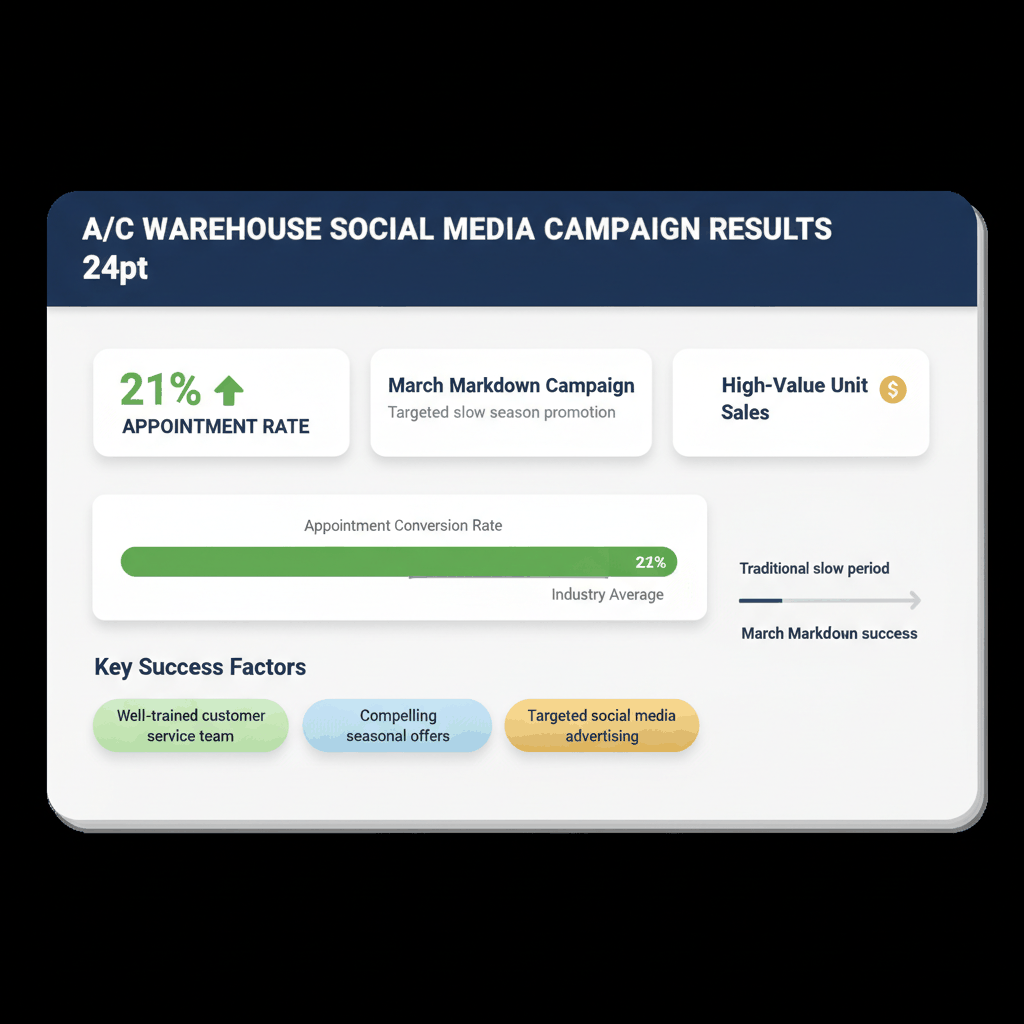
Rooks Advertising developed a social media marketing campaign for A/C Warehouse to boost unit sales during traditionally slow periods. HVAC unit purchases happen based on need, not impulse, so offers must be compelling enough to move customers into consideration.
With an appointment rate of 21%, the well-trained customer service team proved crucial for campaign success. The "March Markdown" campaign demonstrated the power of targeted social media advertising combined with strong follow-up processes.
XYZ Heating & Cooling showcased case studies of successful commercial HVAC installations on social media. This content strategy increased their leads by 40% and secured several high-value contracts.
ABC HVAC Services used targeted social media campaigns featuring case studies of energy-efficient upgrades. They achieved a 25% increase in customer inquiries and generated substantial revenue from the additional leads.
DEF Air Solutions published case studies highlighting their indoor air quality expertise. This positioned them as industry leaders and attracted new clients seeking specialized services. The key was showing real results with specific data.
Customer story videos consistently outperform other content types for HVAC contractors. One company created a simple video testimonial where a homeowner explained their positive service experience.
The video showed up at 8pm on Saturday when AC died, got it fixed in two hours, and charged a fair price. This single video generated more inquiries than months of traditional promotional posts because it provided authentic social proof.
This content performs exceptionally well on Facebook because homeowners share it with friends and neighbors. Your satisfied customers become a marketing channel, extending your reach beyond your immediate followers.
Which social media platform works best for HVAC lead generation?
Facebook provides the best results for most HVAC contractors because it reaches homeowners aged 30-65 in your local service area. The platform's advertising tools let you target specific zip codes and demographics. YouTube ranks second for long-term brand building through educational content.
How often should HVAC companies post on social media?
Post 3-5 times per week on Facebook and 3-4 times per week on Instagram for best results. Upload 1-2 YouTube videos monthly. Consistency matters more than frequency, so posting three times weekly every week beats daily posts for one month then going silent.
What type of HVAC social media content generates the most leads?
Customer testimonial videos and behind-the-scenes work footage generate the most leads. Follow the 80/20 rule: 80% educational and helpful content, 20% promotional content. Before-and-after installation photos and seasonal maintenance tips also perform well for HVAC contractors.
How long does it take to see results from HVAC social media marketing?
Expect 3-6 months of consistent posting before social media produces measurable business impact. Social media builds trust and brand familiarity over time rather than generating immediate leads. The investment pays off when homeowners think of your company first during HVAC emergencies.
Should HVAC contractors use paid social media advertising?
Yes, Facebook ads work extremely well for HVAC businesses because you can target homeowners in specific geographic areas with advanced demographic options. Use retargeting to reach website visitors who didn't convert. YouTube ads are also effective because they reach people actively searching for HVAC solutions.
Ready to buy exclusive HVAC leads today? Sign up for free with ResultCalls!

Hello everyone! My name is Alex and I write these blogs to help educate small business owners on different ways to grow their business. My goal is to make lead generation as easy as possible for you. After reading these blogs, I hope you leave with some actionable steps that will get you closer to growing your business :)