
Picture this: Sarah just got rear-ended at a traffic light. Her car is damaged, her neck hurts, and insurance companies are calling non-stop. She needs a personal injury attorney, but where does she even start?
Sarah's situation isn't unique. Every day, thousands of accident victims face the overwhelming task of choosing legal representation. They're dealing with pain, financial stress, and uncertainty about their future. Yet most personal injury attorneys focus their marketing on credentials and case results while missing the psychological factors that actually drive hiring decisions.
Understanding personal injury client psychology changes everything. It helps you connect with prospects when they're most vulnerable, build trust faster, and convert more leads into paying clients. This psychological approach to client acquisition can transform your entire practice.
You'll discover the hidden emotional triggers that influence attorney selection, proven strategies to improve your conversion rates, and practical tactics that leading PI firms use to win more cases.
Table of Contents
Legal clients are different from general consumers. They're not shopping for a product. They're looking for someone to protect their rights during a personal crisis.
Every stage of their journey carries emotional weight. Fear about medical bills. Anger at the other driver. Confusion about legal processes. These emotions shape how they evaluate attorneys and make hiring decisions.
Most PI firms miss this entirely. They focus on years of experience, case victories, and legal expertise. While these matter, they don't address what injured clients really need: emotional reassurance and confidence in their choice.
Research shows that 74% of consumers hire the first attorney they talk to. This isn't about convenience. It's about psychology. When someone reaches out to your firm, they want to feel heard, understood, and protected immediately.
Effective personal injury lead generation for firms requires understanding these psychological drivers from the very first contact.
MVA clients are particularly vulnerable. They're often dealing with trauma, pain, financial stress, and uncertainty simultaneously. Psychological trauma encompasses anxiety, depression, PTSD, and other mental distress that significantly impacts decision-making.
This vulnerability creates both opportunity and responsibility. Clients need attorneys who acknowledge their emotional state and respond with empathy rather than just legal expertise.
When injured clients evaluate attorneys, logical factors like experience matter. But emotional triggers often make the final decision.
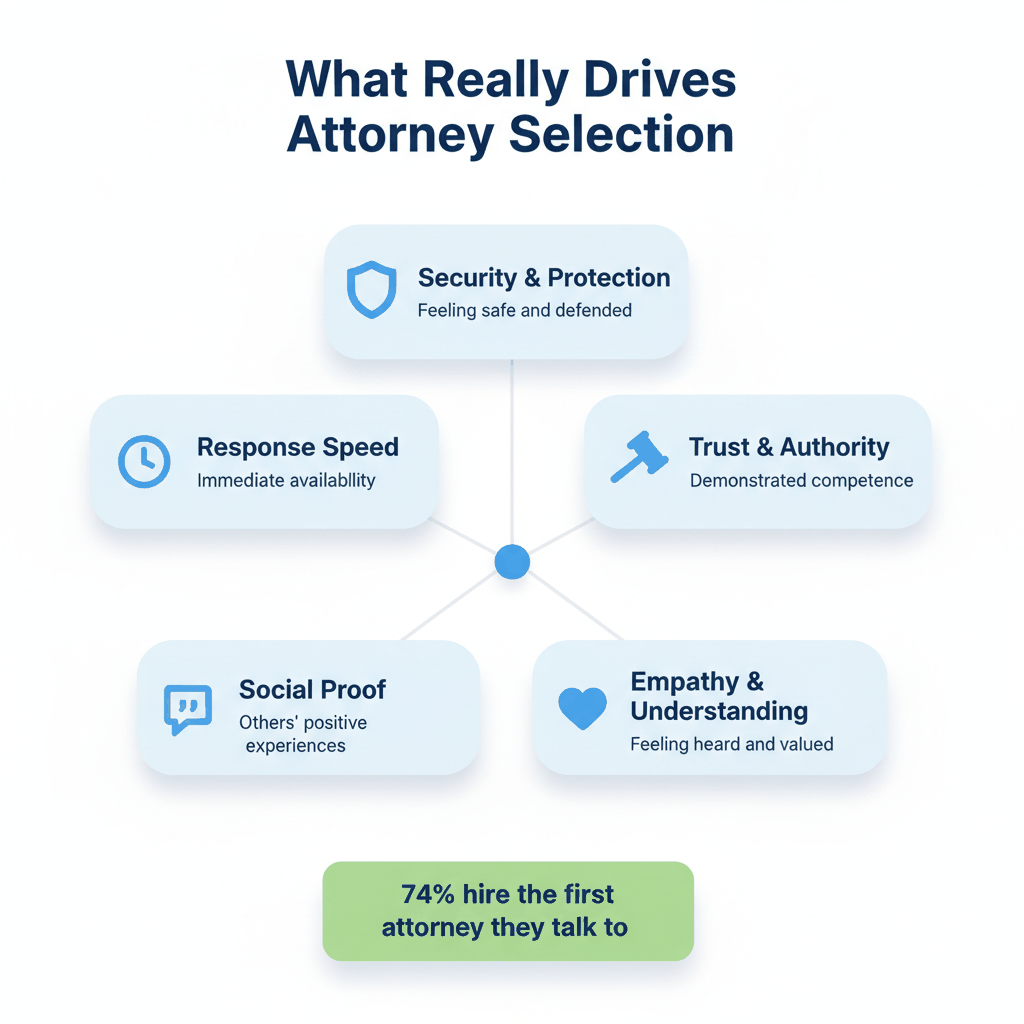
The most powerful emotional drivers include security, trust, understanding, and hope. Clients want to feel safe with their choice. They need confidence that their attorney truly understands their situation and can deliver the outcome they deserve.
Personal injury clients feel exposed and vulnerable. They want an attorney who feels like a shield against insurance companies, medical bills, and legal complications.
Your messaging should emphasize protection. Use phrases like "we'll handle everything," "you focus on healing," and "we fight for your rights." This addresses their deepest need for security.
Clients need to feel heard. They want attorneys who understand the impact of their injuries beyond just monetary damages.
Share stories of similar clients. Acknowledge the non-financial costs of accidents. Show that you see them as people, not just case numbers.
Accident victims often feel stuck in a nightmare of pain, bills, and uncertainty. They're looking for someone who can guide them toward resolution and a better future.
Paint a picture of what life looks like after a successful case. Help them envision getting back to normal, paying their bills, and moving forward.
Dr. Robert Cialdini identified six key principles of persuasion that apply perfectly to PI client acquisition. Understanding these psychological triggers can dramatically improve your conversion rates.
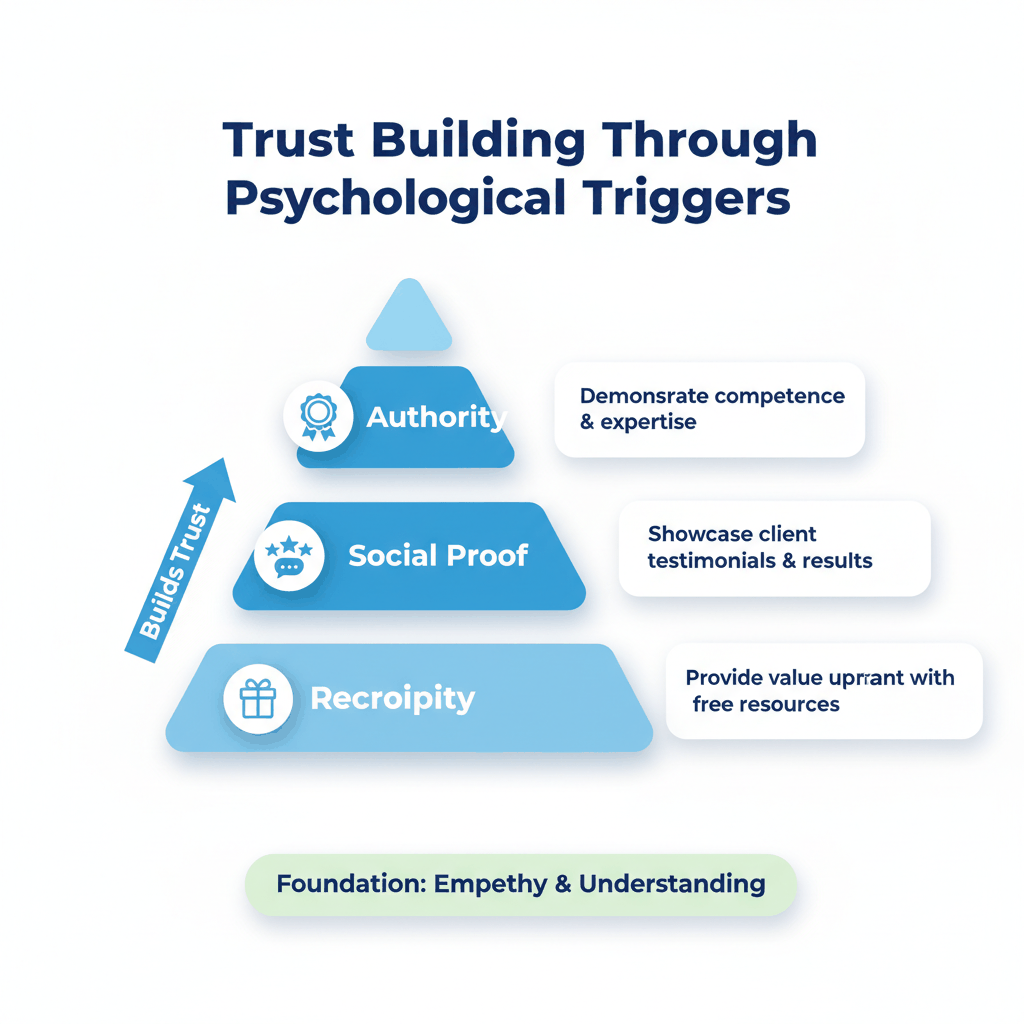
Clients need to believe you can handle their case effectively. Authority doesn't mean being intimidating. It means demonstrating competence and thought leadership.
Share your credentials, but focus on what they mean for clients. Don't just list years of experience. Explain how that experience helps you navigate insurance negotiations or courtroom procedures.
Write helpful content that showcases your knowledge. Answer common questions about accident claims. This builds authority while providing genuine value.
Seeing that others have trusted your firm makes prospects more likely to do the same. Social proof serves as a powerful validator in legal marketing.
Display client testimonials prominently. Focus on stories that mirror your ideal client's situation. A testimonial from another car accident victim carries more weight than one from a slip-and-fall client.
Showcase awards and media mentions. These serve as third-party validation of your expertise and reputation.
People feel obligated to return favors. Providing value upfront creates psychological debt that prospects want to repay.
Offer free resources like accident guides, insurance checklists, or injury documentation templates. This positions you as helpful while creating reciprocity.
Provide valuable information during initial consultations, even if the prospect doesn't hire you immediately. This builds goodwill and increases referral likelihood.
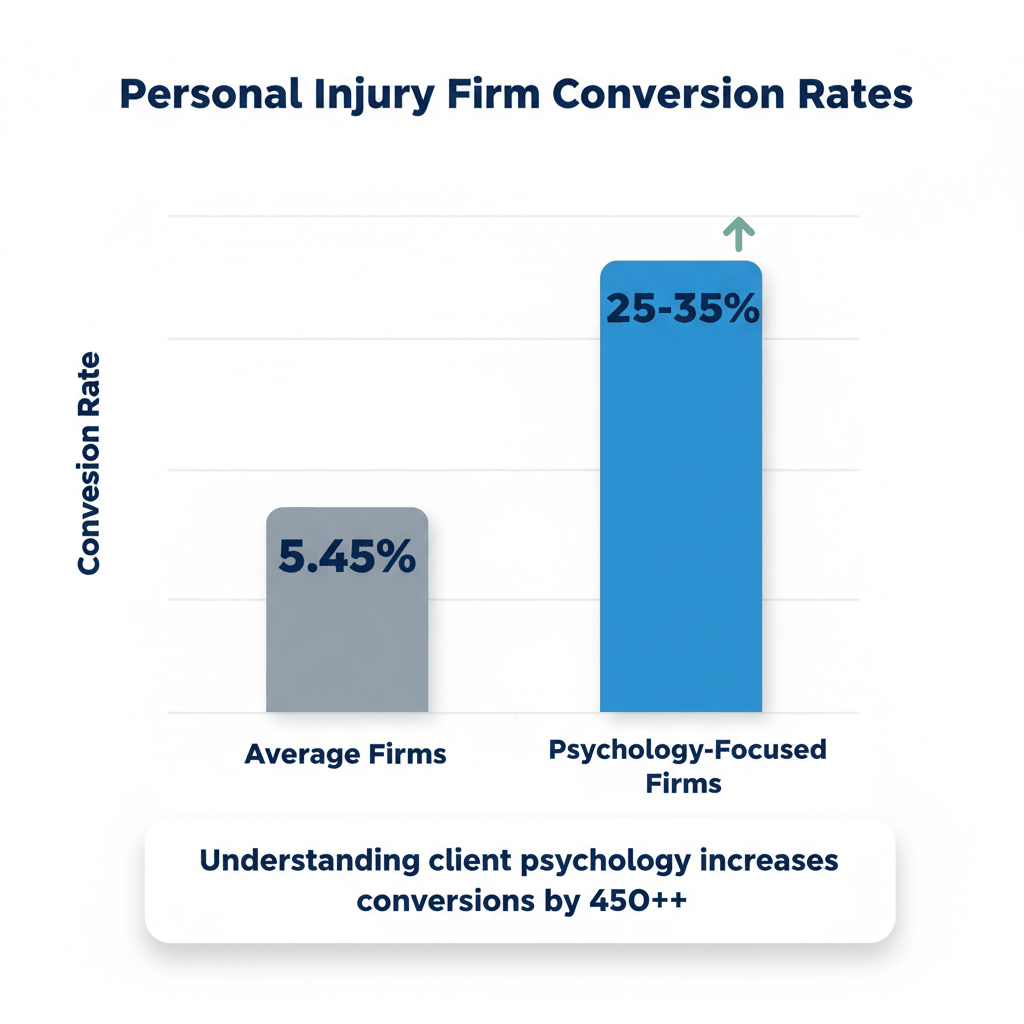
The average PI firm converts only 5.45% of leads into clients. Top-performing firms achieve 25-35% conversion rates by understanding client psychology and optimizing their processes accordingly.
Your first interaction sets the tone for everything that follows. Clients form impressions within seconds that influence their entire evaluation process.
Train your intake staff to be warm and empathetic. The person answering your phones should sound like someone clients want to talk to, not just a receptionist taking messages.
Use your website to create emotional connection. Include photos of real attorneys, not stock images. Write copy that acknowledges client pain points and offers hope.
The consultation is where psychology matters most. Clients aren't just evaluating your legal skills. They're deciding whether they trust you with their future.
Start by acknowledging their situation. Say something like "I can only imagine how stressful this has been for you." This shows empathy and creates connection.
Ask about impact beyond injuries. How has the accident affected their daily life, work, or family? This demonstrates that you see the full scope of their damages.
Explain your process clearly. Unknown procedures create anxiety. Walk them through what happens next, typical timelines, and how you'll communicate with them.
Most client objections stem from psychological concerns rather than logical issues. Address these underlying fears directly.
If they're worried about costs, explain contingency fees in terms of alignment. "We only get paid when you do" shows that your success depends on theirs.
If they're concerned about case strength, acknowledge uncertainty while emphasizing your commitment. "Every case is unique, but I can promise you'll get our best effort regardless."
Speed isn't just about efficiency. It's about psychology. When someone reaches out to your firm, they're often in crisis mode. How quickly you respond sends powerful messages about your priorities and availability.
Data shows that leads contacted within 60 seconds convert at rates 391% higher than those contacted after 5 minutes. After one hour, conversion drops to just 31% of the baseline.
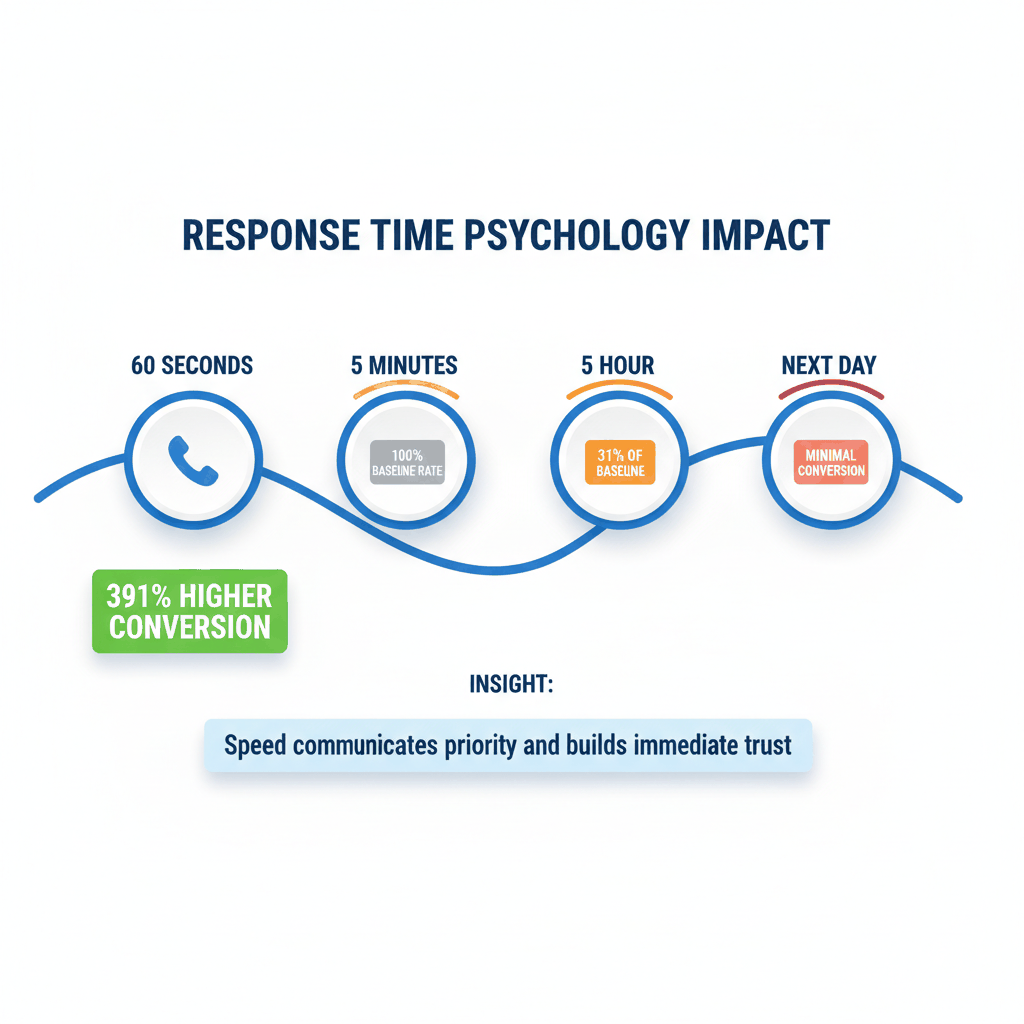
Fast response times communicate urgency and importance. When you call back quickly, clients feel prioritized. They assume this responsiveness will continue throughout their case.
Slow responses have the opposite effect. Clients wonder if you're too busy, disorganized, or simply don't care about their case. These doubts create barriers that are hard to overcome later.
Set up lead notification systems that alert you immediately when someone fills out a contact form or calls your office. Use CRM automation to ensure no leads fall through the cracks.
Train staff to prioritize lead response over other tasks. A new lead should interrupt almost any other activity except client meetings or court appearances.
Have backup systems for after-hours contacts. Consider professional answering services that can handle initial contact and schedule callbacks.
Both attorneys and clients are subject to cognitive biases that affect decision-making. Understanding these biases helps you communicate more effectively and address hidden concerns.
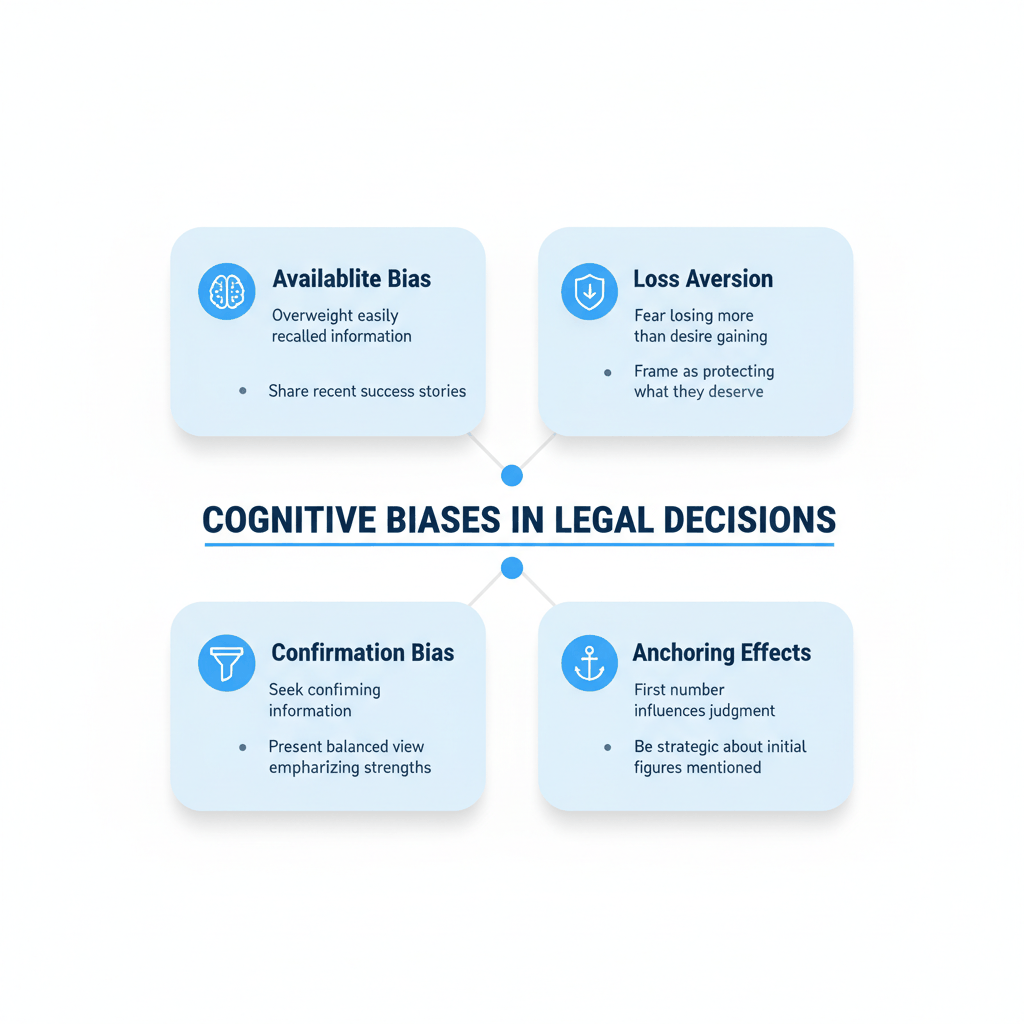
People overweight easily recalled information. If a client recently heard about a case that went poorly, they may worry excessively about similar outcomes.
Combat this by sharing recent success stories and positive outcomes. Make good results more "available" in their memory than negative stories they may have heard.
People fear losing what they have more than they desire gaining something new. Research on cognitive biases shows this applies strongly to legal decisions.
Frame your services in terms of protecting what they deserve rather than just winning money. Talk about preserving their family's financial security or protecting their future earning capacity.
People seek information that confirms their existing beliefs. If a client believes their case is weak, they'll focus on information that supports this view.
Present balanced information while emphasizing positive factors. Acknowledge challenges while focusing on strengths and opportunities.
The first number people hear influences all subsequent judgments. When discussing potential settlements, the initial figure you mention becomes an anchor.
Be strategic about anchoring. If you mention potential ranges, start with higher numbers. This sets expectations appropriately and avoids disappointment later.
How does personal injury client psychology differ from other legal areas?
Personal injury clients are typically dealing with trauma, pain, and unexpected life disruption. Unlike planned legal services, they're often in crisis mode and making emotionally-charged decisions under stress. This requires more empathy and emotional intelligence in your approach.
What psychological triggers work best for attorney client decision making?
The most effective triggers are authority (demonstrating competence), social proof (testimonials and reviews), reciprocity (providing value upfront), and empathy (acknowledging their emotional state). Security and protection messaging also resonates strongly with injured clients.
How can I improve my law firm's conversion rates using psychology?
Focus on fast response times, empathetic communication, and addressing emotional needs alongside legal concerns. Use social proof prominently, train staff in psychological principles, and optimize consultations to build trust and connection rather than just discussing legal strategy.
Why do cognitive biases matter in personal injury cases?
Cognitive biases affect how clients evaluate their cases, choose attorneys, and make settlement decisions. Understanding biases like loss aversion and availability bias helps you communicate more effectively and address hidden concerns that might prevent clients from moving forward.
What role does response time play in client psychology?
Fast response times communicate priority and urgency. When you respond quickly, clients feel important and assume you'll be equally responsive throughout their case. Slow responses create doubt about your availability and commitment to their case.
Ready to get exclusive motor vehicle accident leads? Sign up for free with ResultCalls today!

Hello everyone! My name is Alex and I write these blogs to help educate small business owners on different ways to grow their business. My goal is to make lead generation as easy as possible for you. After reading these blogs, I hope you leave with some actionable steps that will get you closer to growing your business :)