
Are you struggling to stand out in the crowded Medicare market? With beneficiaries receiving more than ten pieces of marketing outreach during Annual Enrollment Period alone, traditional sales tactics are losing their power.
The truth is aggressive marketing practices have created trust issues. One in three seniors report getting seven or more phone calls per week from insurance marketers. This has made prospects skeptical of pushy sales approaches.
Medicare educational marketing offers a better way. Instead of selling, you teach. Instead of pushing plans, you build trust through valuable information. This approach positions you as a trusted advisor rather than just another salesperson.
You'll learn how to create content that builds authority, establish trust through education, and generate qualified leads that convert at higher rates. Plus, you'll discover compliance-friendly strategies that work in today's regulated environment.
Table of Contents
Medicare educational marketing builds trust first. Sales come second. This approach works because it addresses the real problem most prospects face. They're confused, not ready to buy.
Education comes first, then trust follows. When you focus on answering real Medicare questions, you build authority. Prospects see you as knowledgeable rather than pushy. This creates a foundation for long-term client relationships.
Here's what makes educational marketing so effective. You position yourself as an advisor, not a salesperson. Prospects come to you for information. They stay for guidance. They buy when they're ready.
Traditional Medicare marketing feels like pressure. Educational marketing feels like help. When agents spend time educating clients about plan differences and enrollment rules, close ratios can exceed 90%.
The key difference is timing. Instead of pushing for immediate decisions, you guide prospects through their learning process. They appreciate the patience. You benefit from higher conversion rates.
TV airways were flooded with ads during the last AEP. Nearly 650,000 airings of Medicare ads appeared during nine weeks. That's more than 9,500 airings per day.
Educational content cuts through this noise. While competitors shout about benefits, you teach about choices. While they make promises, you provide understanding. This difference matters to overwhelmed prospects.
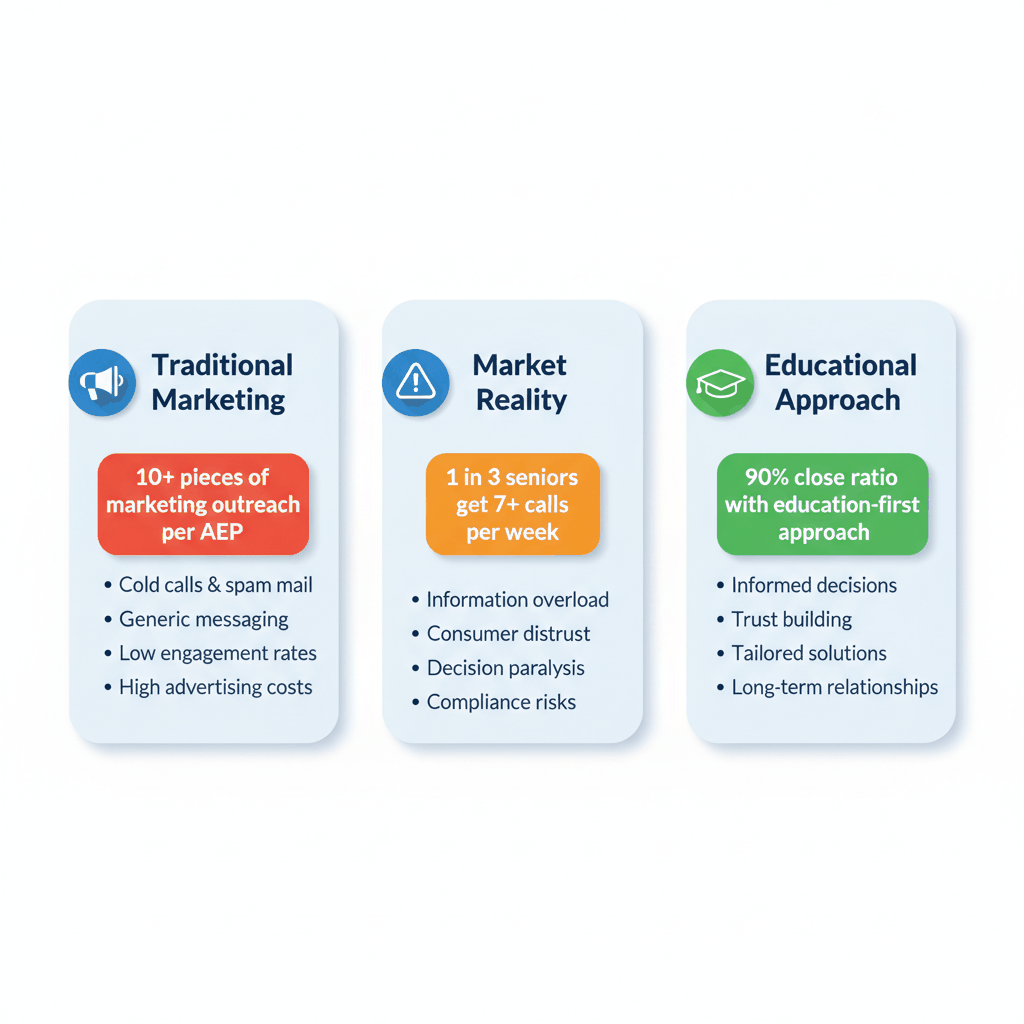
The Medicare marketing landscape has become increasingly difficult. Recent regulatory changes starting January 1st, 2025 make purchasing leads riskier. Many agencies must pivot toward developing their own lead generation strategies.
Market saturation creates additional problems. Beneficiaries feel overwhelmed by marketing messages. They receive multiple calls per week from different agents. This creates resistance to traditional sales approaches.
Cost per acquisition continues rising. Large healthcare companies with massive budgets drive up cost per click rates. Every click must count when acquisition costs are high.
CMS rules add complexity. Marketing Medicare Advantage requires strict compliance. Messaging must be accurate, balanced, and non-coercive. Educational approaches naturally align with these CMS guidelines.
Aggressive marketing tactics have damaged industry trust. Some brokers go door to door wearing white lab coats. They mislead consumers into believing they're medical professionals. These practices create skepticism toward all Medicare marketers.
Educational marketing helps rebuild this trust. When you focus on teaching rather than selling, prospects lower their defenses. They engage with your content instead of avoiding your calls.
More seniors turn to online tools before contacting brokers. A growing number enroll directly through websites. They bypass traditional agent interactions entirely.
However, only 48 percent of members report being fully satisfied with online features during onboarding. This gap creates opportunities for educational content that bridges digital and personal service.
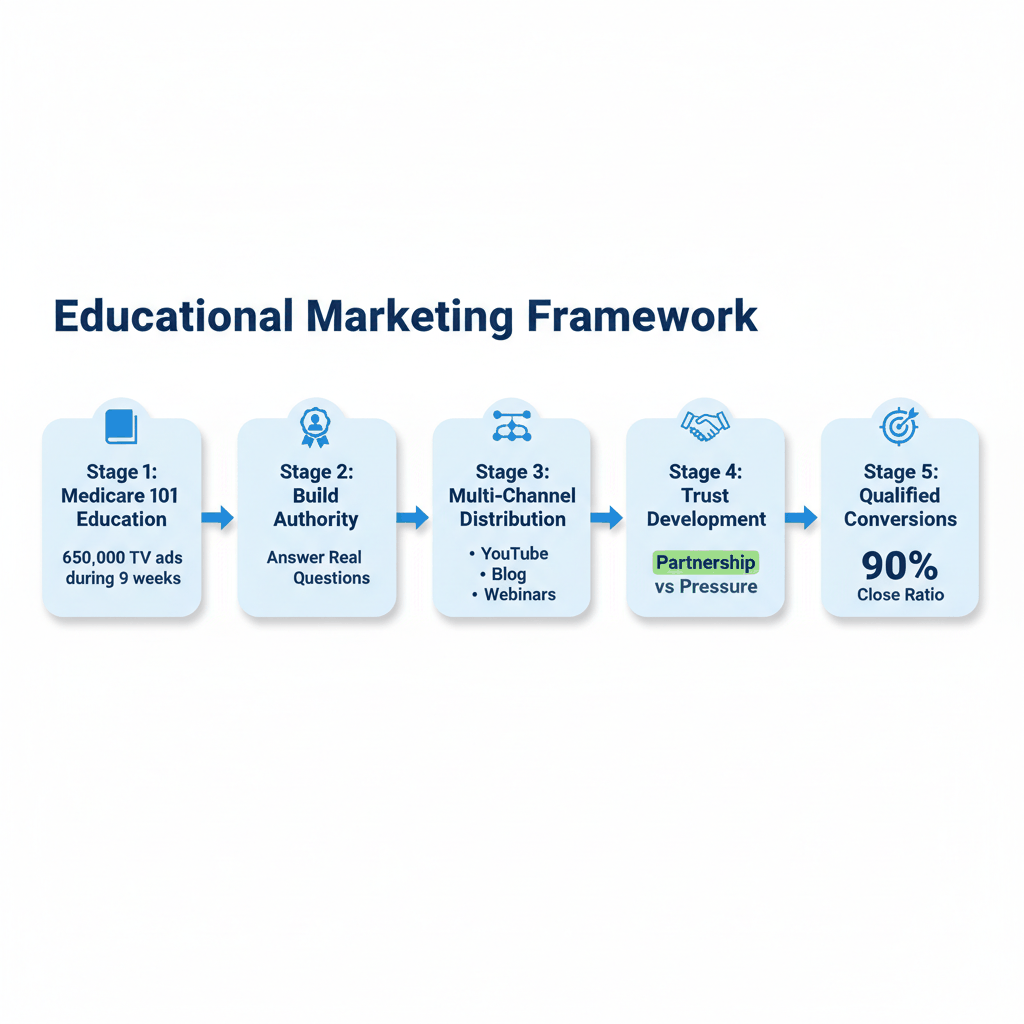
Authority builds through consistent, helpful content. Prospects turn to AI tools like ChatGPT and traditional Google search for Medicare information. To show up in both search engines and AI-generated answers, you need real authority.
Start with Medicare 101 content. It's broad enough to attract prospects but specific enough for deep education. Focus on the exact questions prospects ask during calls. Cover plan differences, enrollment rules, costs, and common mistakes.
Educational webinars and local events build trust when done correctly. Use them to explain how Medicare works. Answer common questions. Compare plan options. Walk through enrollment mistakes without selling.
The objective is education, not conversion. Make this clear in your messaging. Use phrases like "Medicare 101 Educational Seminar" or "Learn About Medicare - Educational Event." State clearly that events are for educational purposes only.
Launch a YouTube channel to answer common Medicare questions. Create blog content that addresses frequently searched topics. Develop newsletters, ebooks, and infographics that explain complex concepts simply.
Publish content across multiple platforms. Each channel serves different learning preferences. Some prospects prefer video explanations. Others want detailed written guides. Some learn best through interactive webinars.
Focus on frequently searched questions like "How to Get More Medicare Clients" and optimize for SEO. This helps prospects find your educational content when they're actively seeking information.
Effective medicare content marketing starts with understanding your prospects' questions. Create content that addresses their real concerns rather than what you want to sell.
Medicare 101 is your best starting point. Cover original Medicare basics. Explain what supplement plans do and don't do. Compare Medicare Advantage benefits and limitations. This foundational content attracts the broadest audience.
Focus on high-value educational topics that prospects actually search for:
Medicare enrollment periods and deadlines
Plan comparison methodology
Common enrollment mistakes to avoid
Cost calculation examples
Provider network considerations
Prescription drug coverage explanations
Each piece of content should solve a specific problem. Avoid trying to cover everything in one article or video. Deep, focused content performs better than broad overviews.
The most successful agents educate first. In consultation calls, they provide brief education about original Medicare, supplement plans, and advantage plans. Based on that conversation, prospects often tell them which type of plan fits better.
This educational approach creates partnership rather than sales pressure. Prospects appreciate agents who take time to ensure they understand their options. This patience typically results in close ratios over 90%.
Implement local search optimization to rank for "Medicare agents near me" and other high-intent terms. Optimize landing pages for your service area. Claim your Google Business Profile. Collect positive client reviews to build local authority.
Local educational content works particularly well. Create guides specific to your area's popular Medicare Advantage plans. Explain local provider networks. Address region-specific enrollment considerations.
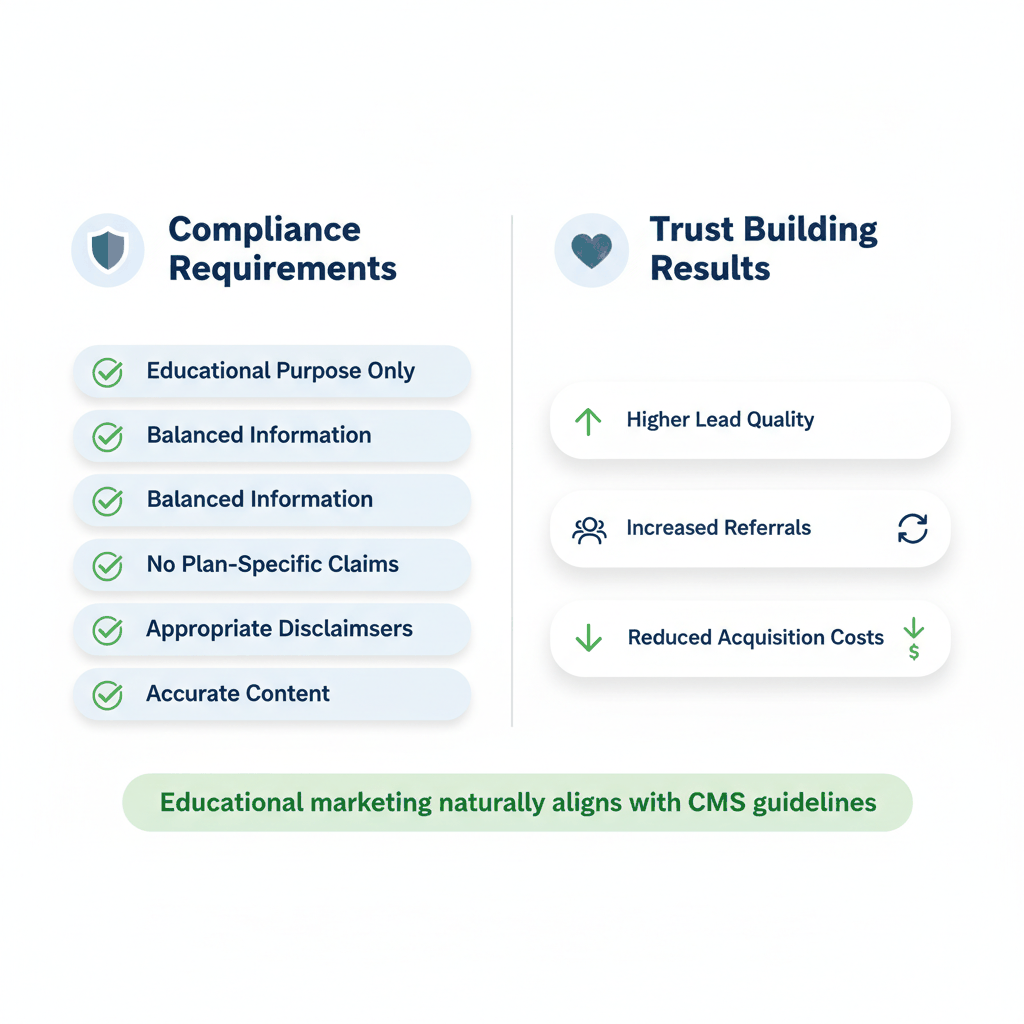
Educational marketing naturally aligns with CMS compliance requirements. When you focus on teaching rather than selling specific plans, you avoid many common marketing rule violations.
Educational events must clearly state their purpose. Use compliant language in all promotional materials. Avoid plan-specific benefits discussions during educational sessions. Focus on general Medicare knowledge instead.
All educational content must remain balanced and accurate. Avoid making claims about specific plan superiority. Instead, teach prospects how to evaluate plans themselves. Provide frameworks for decision-making rather than specific recommendations.
Include appropriate disclaimers on educational materials. Make clear that content is for educational purposes only. Direct prospects to speak with licensed agents for plan-specific information and enrollment assistance.
Trust builds through consistency and transparency. Share your knowledge freely without expecting immediate returns. Answer questions completely, even when they don't lead to immediate sales opportunities.
This approach creates referral opportunities. Satisfied clients recommend agents who took time to educate them properly. Word-of-mouth referrals often convert at higher rates than traditional lead generation methods.
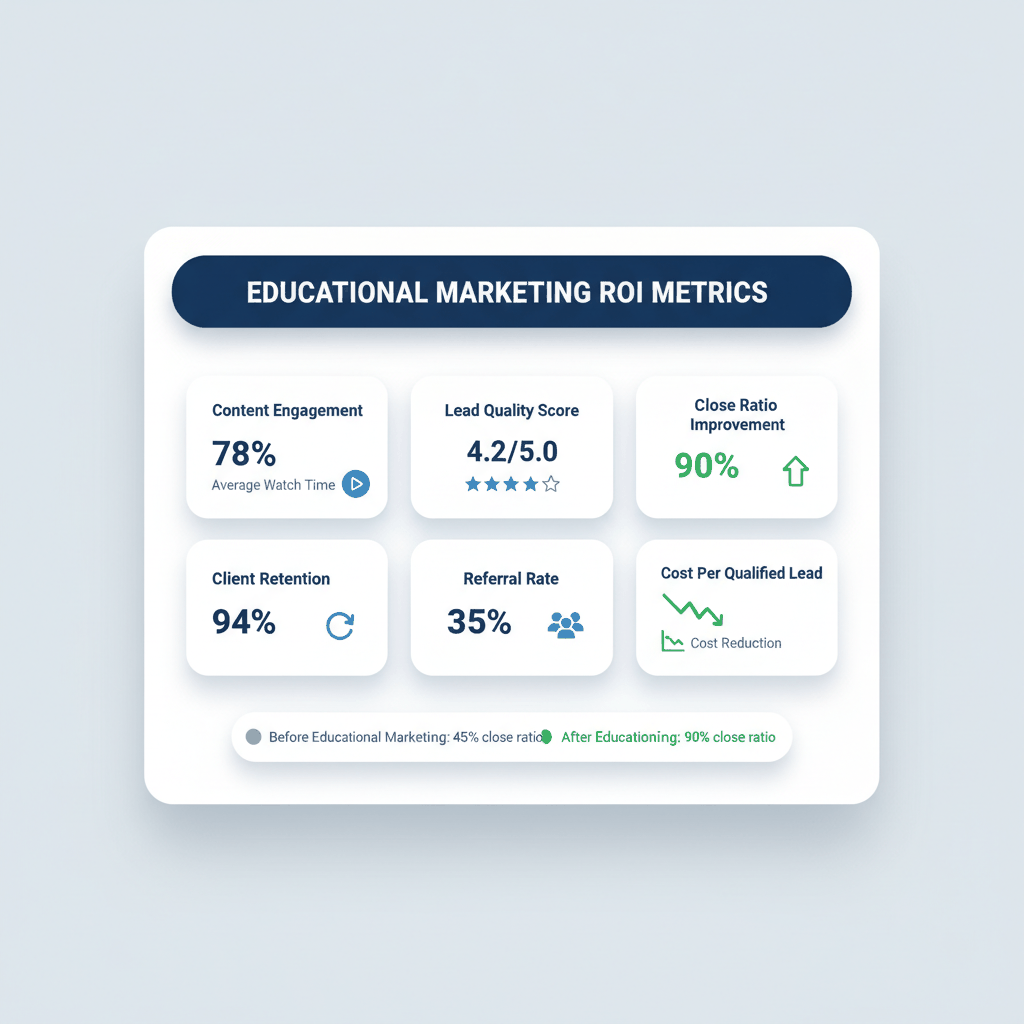
Track engagement metrics across your educational content. Monitor video watch times, blog page views, and webinar attendance. High engagement indicates your content resonates with prospects' needs.
Measure lead quality improvements. Educational marketing often generates fewer leads initially but higher-quality prospects. These leads typically convert at higher rates and require less follow-up effort.
Focus on these metrics to gauge educational marketing effectiveness:
Content engagement rates
Lead qualification scores
Conversion ratios
Client retention rates
Referral generation
Cost per qualified lead
Track the source of your highest-converting leads. Often, prospects who engage with multiple pieces of educational content before contacting you convert at significantly higher rates.
Educational marketing ROI includes both immediate and long-term benefits. Immediate returns come from higher conversion rates on qualified leads. Long-term benefits include referrals, client retention, and reduced acquisition costs.
Compare your close ratios before and after implementing educational strategies. Many agents see improvement from typical industry averages to close ratios exceeding 90% when they focus on education first.
How does medicare educational marketing differ from traditional Medicare advertising?
Educational marketing focuses on teaching prospects about Medicare rather than selling specific plans. You build trust through valuable information instead of promotional messages. This approach attracts prospects who want to understand their options before making decisions.
What compliance considerations apply to medicare education strategy content?
Educational content must remain balanced and accurate without promoting specific plans. Use clear disclaimers stating content is for educational purposes only. Avoid making comparative claims about plan superiority. Focus on teaching evaluation frameworks rather than specific recommendations.
How long does it take to see results from medicare broker content marketing?
Educational marketing typically shows initial engagement within 30-60 days. Lead quality improvements often appear within 3-6 months. Full ROI, including referrals and improved conversion rates, usually develops over 6-12 months of consistent educational content creation.
What types of medicare awareness campaigns work best for local agents?
Local educational seminars and community workshops generate high-quality leads. Online educational content optimized for local search terms attracts area prospects. Direct mail campaigns with QR codes linking to educational resources combine traditional and digital approaches effectively.
Can medicare information marketing help with lead generation costs?
Yes, educational marketing often reduces cost per qualified lead over time. While initial lead volume may decrease, lead quality typically improves significantly. Higher conversion rates and increased referrals often result in lower overall acquisition costs.
Ready to buy medicare leads today? Sign up for free with ResultCalls!

Hello everyone! My name is Alex and I write these blogs to help educate small business owners on different ways to grow their business. My goal is to make lead generation as easy as possible for you. After reading these blogs, I hope you leave with some actionable steps that will get you closer to growing your business :)