
Are your final expense leads not converting like they used to? You're not alone. Many insurance agents struggle with low response rates from traditional marketing methods.
Here's the problem: Email open rates hover around 20%. Phone calls often go straight to voicemail. Yet your competitors are securing more deals and building stronger client relationships.
The solution lies in final expense SMS marketing. Text messages achieve 98% open rates and response rates up to 45%. Your prospects aged 50 and older are already texting regularly.
You'll discover how to use insurance text messaging to convert more leads while staying compliant. Plus, you'll get proven message templates and timing strategies that work.
Table of Contents
Most agents think seniors don't text. This costly mistake leaves money on the table every day.
The truth is different. 86% of Americans over age 50 communicate regularly via text messaging. Nearly 90% of adults aged 50-64 own smartphones. One in three prefer texts to emails or phone calls.
Your final expense prospects are already texting their families daily. They check messages within minutes of receiving them. Text messages get read by 98% of recipients by the end of each day.
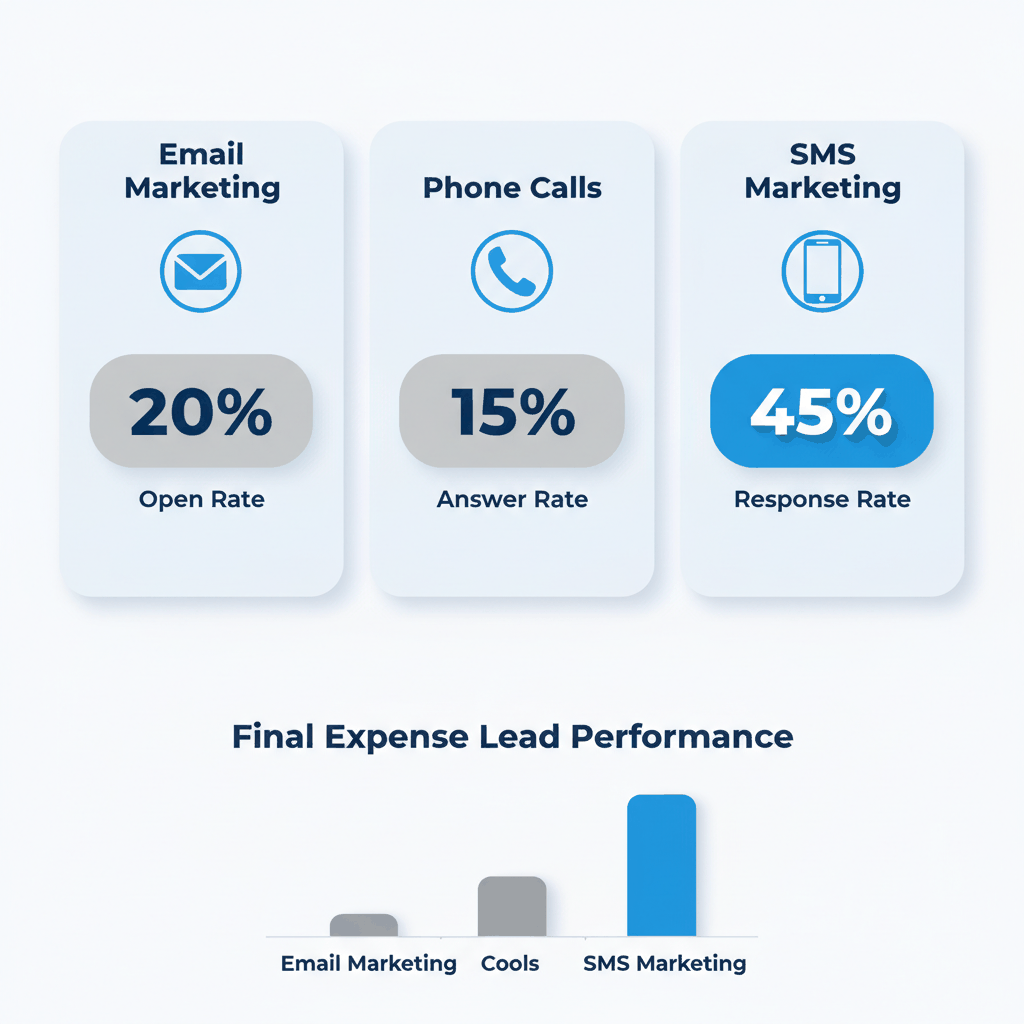
Email marketing struggles with 20% open rates. Phone calls face caller ID screening and voicemail barriers. Text message response rates reach 45% for insurance leads.
Consider this example: Send 100 emails about final expense coverage. Maybe 20 people open them. Maybe 2-3 respond. Send 100 text messages instead. 98 people read them. 20-45 people respond within hours.
This response rate difference transforms your lead conversion process. Quality final expense leads combined with SMS follow-up create a powerful conversion system.
Final expense prospects need trust before they buy coverage. Text messaging feels personal and direct. It mirrors how they communicate with people they care about.
Seniors appreciate the convenience of texting. They can respond when ready without pressure. This comfort level helps build the relationship needed for final expense sales.
TCPA violations cost insurance agents thousands of dollars in penalties. Businesses face $500 minimum penalties per text message that violates regulations. Intentional violations jump to $1,500 per message.
Recent enforcement examples show the stakes. Clover Network paid $15 million for sending over 1 million unsolicited texts. Cash App settled for $12.5 million for referral program text violations.
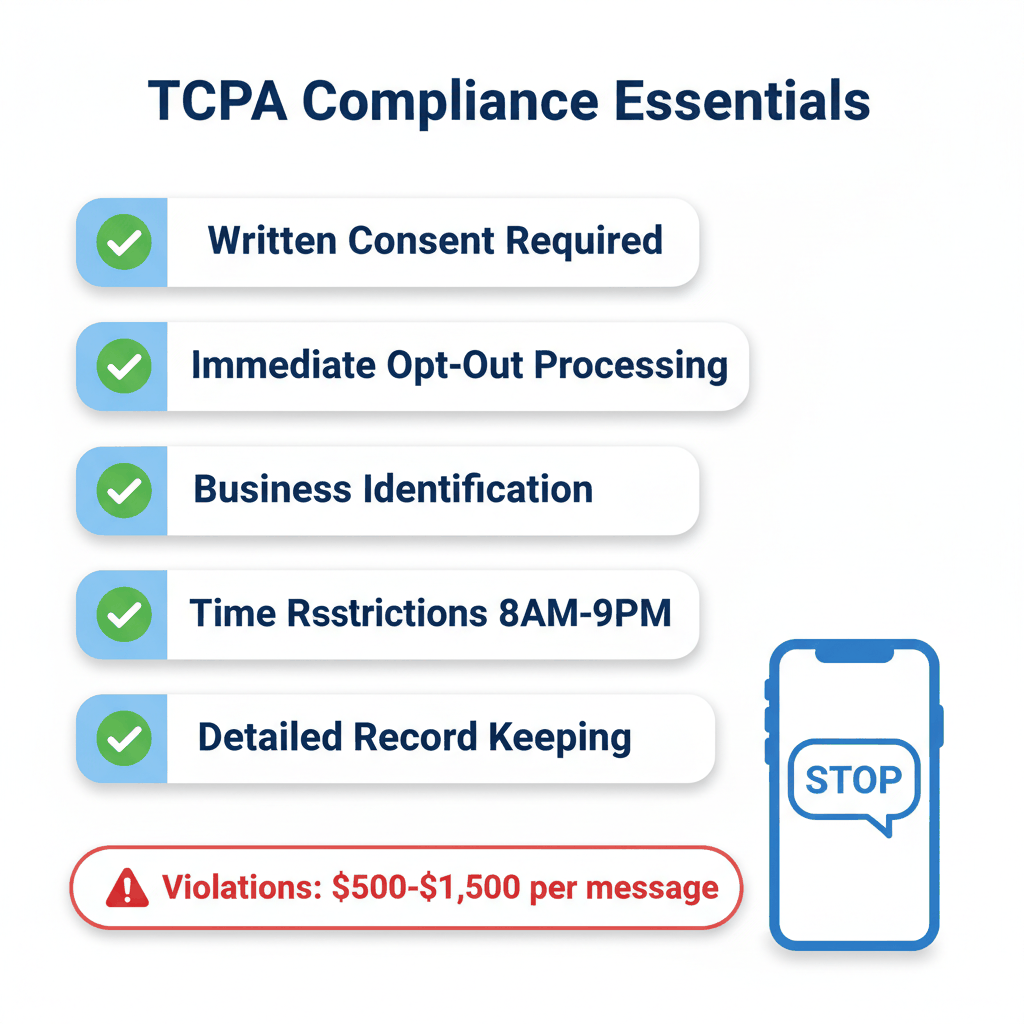
The FCC requires prior express written consent before sending marketing texts. This consent must be documented and saved. Verbal consent doesn't count for marketing messages.
Your consent process should include clear language about text frequency and message charges. Prospects must understand they're agreeing to receive insurance marketing via text.
For example: "By checking this box, I consent to receive text messages about final expense insurance from ABC Insurance at the number provided. Message frequency varies. Standard rates apply."
Consumers can revoke consent anytime by replying STOP, QUIT, or similar terms. Your system must process these requests immediately. No additional texts after someone opts out.
Keep detailed records of all opt-ins and opt-outs. These records protect you if compliance questions arise later.
Marketing texts must identify your business clearly. Include your company name and contact method in initial messages. Avoid misleading or deceptive content.
Never use false urgency or pressure tactics. Final expense prospects respond better to helpful, informative messages than aggressive sales pitches.
Timing determines your text message success. Send at the wrong time and even great messages get ignored. Send at optimal times and response rates soar.
For retired prospects, optimal timing is 10 AM - 2 PM. Retirees aren't tied to work schedules but prefer later mornings. They're often most alert and available during these hours.
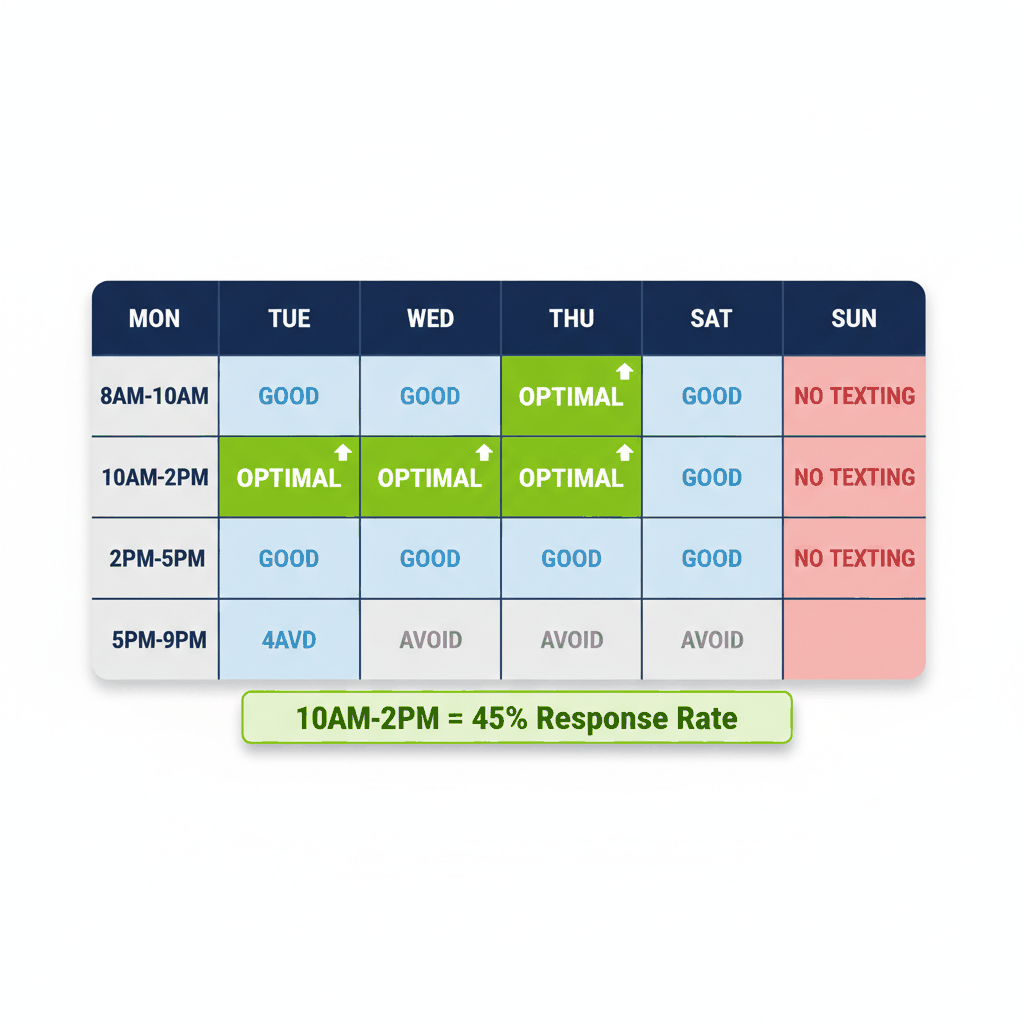
Weekdays 10:00 AM - 12:00 PM local time achieve highest response rates. This window captures seniors after morning routines but before lunch activities.
Weekdays 2:00 PM - 5:00 PM offer the second-best response window. Many seniors handle business matters during afternoon hours.
Saturday 10:00 AM - 1:00 PM works surprisingly well for final expense leads. Seniors often have more time for insurance conversations on weekends.
Never text on Sundays. Response rates drop significantly. Seniors view Sunday as family and rest time.
TCPA regulations prohibit texting during these hours:
Before 8:00 AM local time
After 9:00 PM local time
During 12-1 PM lunch hour
During 6-7 PM dinner time
Violations during these times increase penalty risks and hurt response rates.
Contact timing is critical for final expense leads. Direct mail responses need contact within 24-48 hours. Digital leads require immediate contact within hours.
Seniors often submit multiple inquiries. They typically purchase from the first responsive agent. Quick follow-up via text gives you first-mover advantage.
Use this sequence: Initial text within 1 hour. Follow-up text next day if no response. Phone call on day three. Final text on day five offering to remove from list.
Effective final expense SMS marketing depends on message structure and content. One SMS segment contains 160 characters. Going over causes messages to split into multiple segments that arrive out of order.
Keep messages under 160 characters when possible. If you need more space, stay under 320 characters for two clean segments.
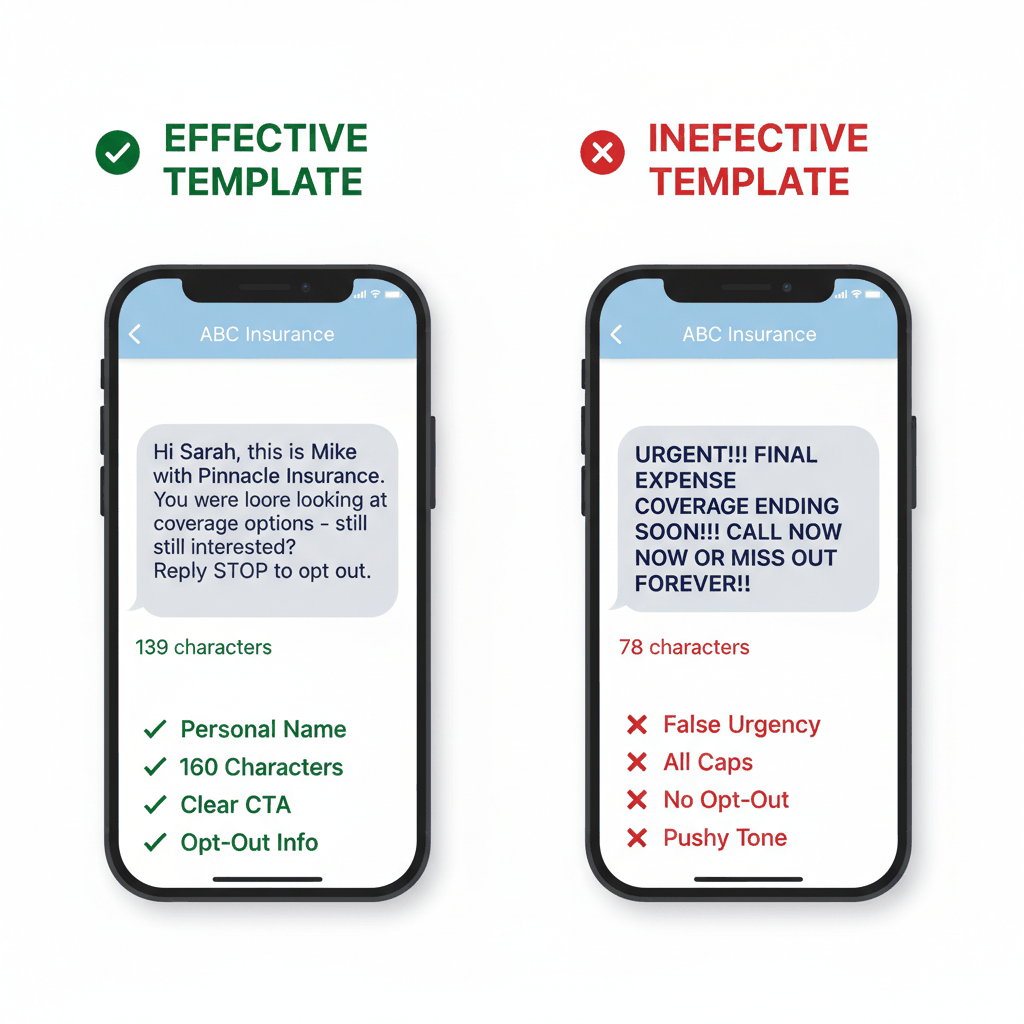
For prospects who requested information:
"Hi Sarah, this is Mike with Pinnacle Insurance. You were looking at coverage options - still interested? Reply STOP to opt out."
This template includes their name, your name, your company, references their inquiry, asks a direct question, and includes opt-out language. It fits in 139 characters.
For direct mail responses:
"Hi John, got your card about final expense coverage. Happy to answer questions about protecting your family. When works for a quick call?"
Second contact after no response:
"Hi Mary, following up on final expense options. Many clients save money while getting better coverage. Free quotes available. Interested?"
This message focuses on value and savings while keeping pressure low.
For policy renewal reminders:
"Hi Bill, it's Sarah from Farmers. Your policy renews soon. Let's review your options and make sure you have the best coverage. Good time to chat?"
Final expense prospects care about protecting families from funeral costs. Address this motivation directly:
"Hi Carol, final expense coverage ensures your family won't face financial stress during difficult times. Quick conversation about options?"
Avoid these common mistakes in messages:
Multiple exclamation marks
All-caps words
Specific pricing before conversations
False urgency phrases
Complex insurance jargon
Every effective message contains three parts:
Greeting with first name. Core message addressing their need. Clear call to action.
For example: "Hi Janet (greeting), final expense plans start at $1 per day and protect your family from unexpected costs (core message). When's good for a 5-minute conversation? (call to action)"
This structure keeps messages focused while guiding prospects toward the next step.
Choosing the right SMS platform determines your compliance, deliverability, and results. Mobile carriers now require all business numbers to register for 10DLC (10-digit long code) messaging.
Unregistered numbers face blocking or filtering. Your messages won't reach prospects. Platform selection becomes crucial for reaching your audience.
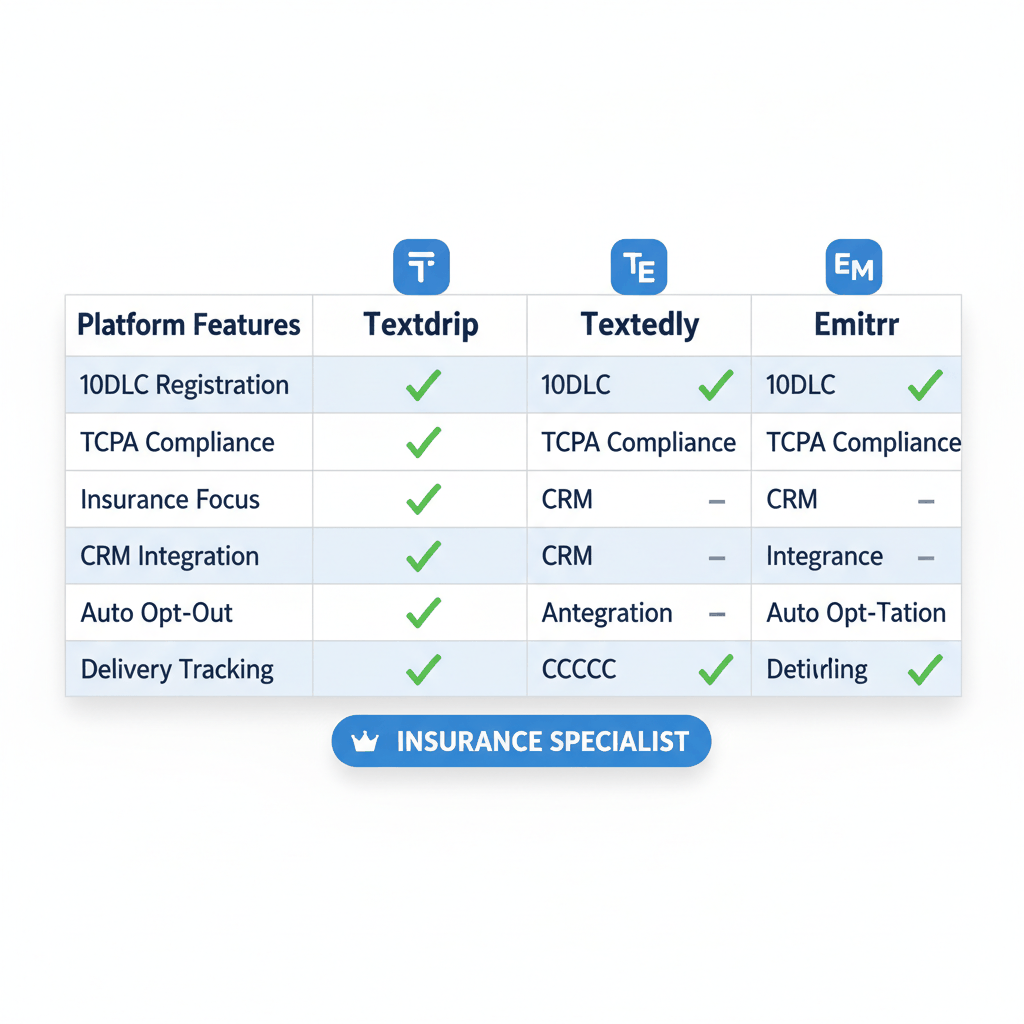
Textdrip offers TCPA and HIPAA-compliant messaging specifically for insurance companies. Their platform handles 10DLC registration and includes compliance features designed for insurance agents.
Textedly provides comprehensive SMS solutions for insurance agencies. Teams communicate with clients from unified dashboards. You can schedule messages, generate leads, and launch full campaigns.
Emitrr has a 4.8/5 rating on Capterra with 5/5 customer service ratings. They appear on Capterra's 2023 list of best SMS marketing software.
Textline offers bulk SMS, text surveys, and two-way messaging with feedback systems. Agents save time while building personalized client touchpoints.
Look for these must-have features:
10DLC registration assistance
TCPA compliance tools
Automated opt-out processing
Contact management systems
Message scheduling capabilities
Delivery and response tracking
Integration with CRM systems
10DLC compliance improves message deliverability and reduces spam filtering. It also demonstrates professionalism to prospects receiving your messages.
Consider these factors when choosing platforms:
Insurance industry experience matters. Platforms serving insurance agents understand compliance requirements and common use cases.
Customer support quality affects daily operations. Look for platforms with responsive support teams who understand insurance marketing challenges.
Integration capabilities with your existing systems streamline workflows. CRM integration prevents duplicate data entry and improves lead tracking.
Pricing structures vary significantly. Some charge per message, others use monthly subscriptions. Calculate costs based on your expected message volume.
Measuring SMS marketing success requires tracking the right metrics. Response rates tell part of the story. Conversion rates and revenue per lead complete the picture.
Track these key metrics for final expense SMS campaigns:
Overall response rate measures how many recipients reply to your messages. Industry benchmarks show 20-45% response rates for insurance SMS.
Calculate response rate by dividing replies by total messages sent. For example: 45 replies from 100 messages equals a 45% response rate.
Time to response shows how quickly prospects engage. Faster responses often indicate higher interest levels. Track average response time to optimize follow-up timing.
Lead-to-appointment conversion measures how many text conversations become scheduled meetings. This metric shows your message quality and follow-up effectiveness.
Appointment-to-sale conversion tracks how many appointments result in final expense policies sold. This reveals the quality of your text-generated appointments.
Revenue per text conversation shows the financial impact of your SMS marketing. Divide total premium revenue by the number of text conversations initiated.
Opt-out rates indicate message relevance and frequency appropriateness. High opt-out rates suggest messaging improvements needed.
Track opt-out reasons when possible. "Too frequent" suggests reducing message frequency. "Not interested" might indicate better targeting needed.
Complaint rates measure how many recipients contact you or carriers about unwanted messages. Keep complaint rates under 0.1% to maintain good carrier relationships.
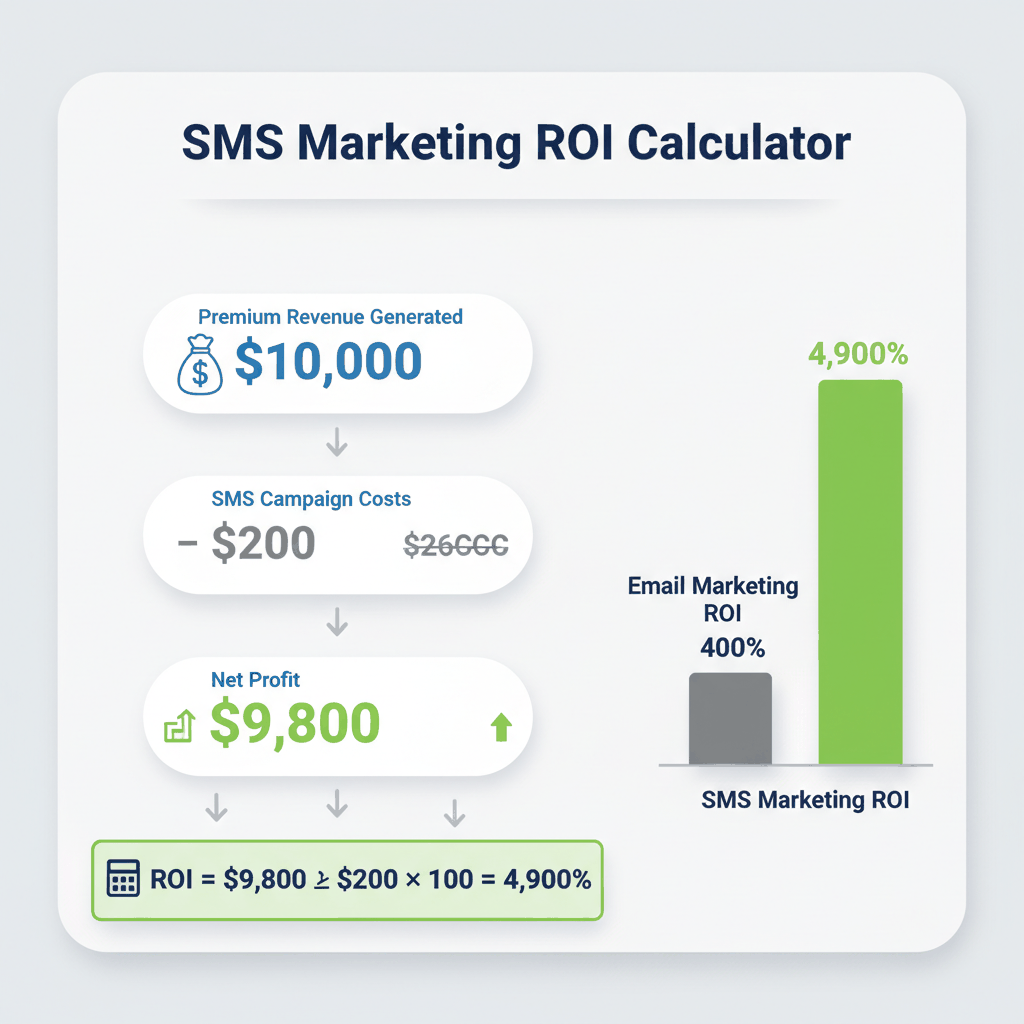
Calculate SMS marketing ROI using this formula: (Revenue generated - SMS costs) divided by SMS costs, multiplied by 100.
For example: $10,000 in premium revenue minus $200 in SMS costs equals $9,800 profit. $9,800 divided by $200 equals 49. Multiply by 100 for 4,900% ROI.
Compare SMS ROI to other marketing channels. High-quality final expense leads combined with SMS follow-up often produce the highest ROI.
Do seniors really respond to final expense SMS marketing?
Yes, 86% of Americans over age 50 communicate regularly via text messaging. Response rates for insurance SMS reach 20-45%, much higher than email marketing. Seniors appreciate the convenience and personal nature of text communication.
What TCPA compliance steps are required for insurance text messaging?
You must obtain prior express written consent before sending marketing texts. Document all consent records. Process opt-out requests immediately. Include clear business identification in messages. Never text outside permitted hours (8 AM - 9 PM local time).
When is the best time to send final expense SMS messages?
For retired prospects, optimal timing is 10 AM - 2 PM on weekdays. Saturday 10 AM - 1 PM also works well. Avoid texting before 8 AM, after 9 PM, during lunch (12-1 PM), dinner (6-7 PM), or on Sundays.
How long should insurance text messages be?
Keep messages under 160 characters to avoid fragmentation. If you need more space, stay under 320 characters for two clean message segments. Include the prospect's name, your name, company, core message, and call to action.
Which SMS platforms work best for insurance agents?
Look for platforms with 10DLC registration, TCPA compliance tools, and insurance industry experience. Textdrip, Textedly, Emitrr, and Textline offer features designed for insurance marketing with proper compliance support.
Ready to buy final expense leads? Sign up for free with ResultCalls today!

Hello everyone! My name is Alex and I write these blogs to help educate small business owners on different ways to grow their business. My goal is to make lead generation as easy as possible for you. After reading these blogs, I hope you leave with some actionable steps that will get you closer to growing your business :)