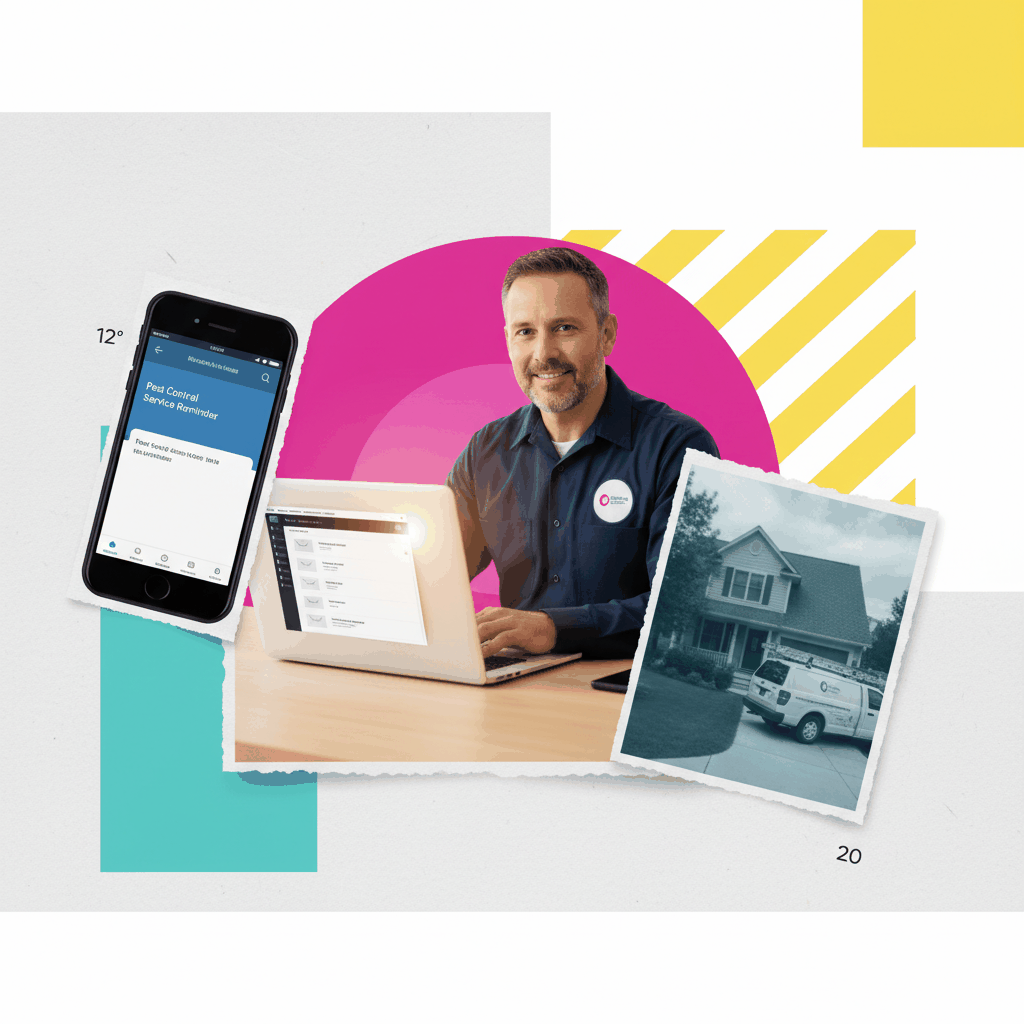
Does your pest control business struggle with customer retention? Many pest control companies collect email addresses during service calls. However, only one-third actually use those emails for effective marketing.
This is a huge missed opportunity. Email marketing delivers an average return of $38 for every $1 spent. That makes it one of the highest-performing marketing channels for service businesses.
Smart pest control email automation solves this problem. You can reduce no-shows, increase service renewals, and stay top-of-mind year-round. Plus, you can do it all without manually sending every email.
This guide shows you exactly how to set up email automation sequences that work. You'll learn proven strategies, see real examples, and discover tools that make automation simple.
Table of Contents
Most pest control businesses face the same email marketing problems. Understanding these challenges helps you avoid common mistakes that hurt your results.
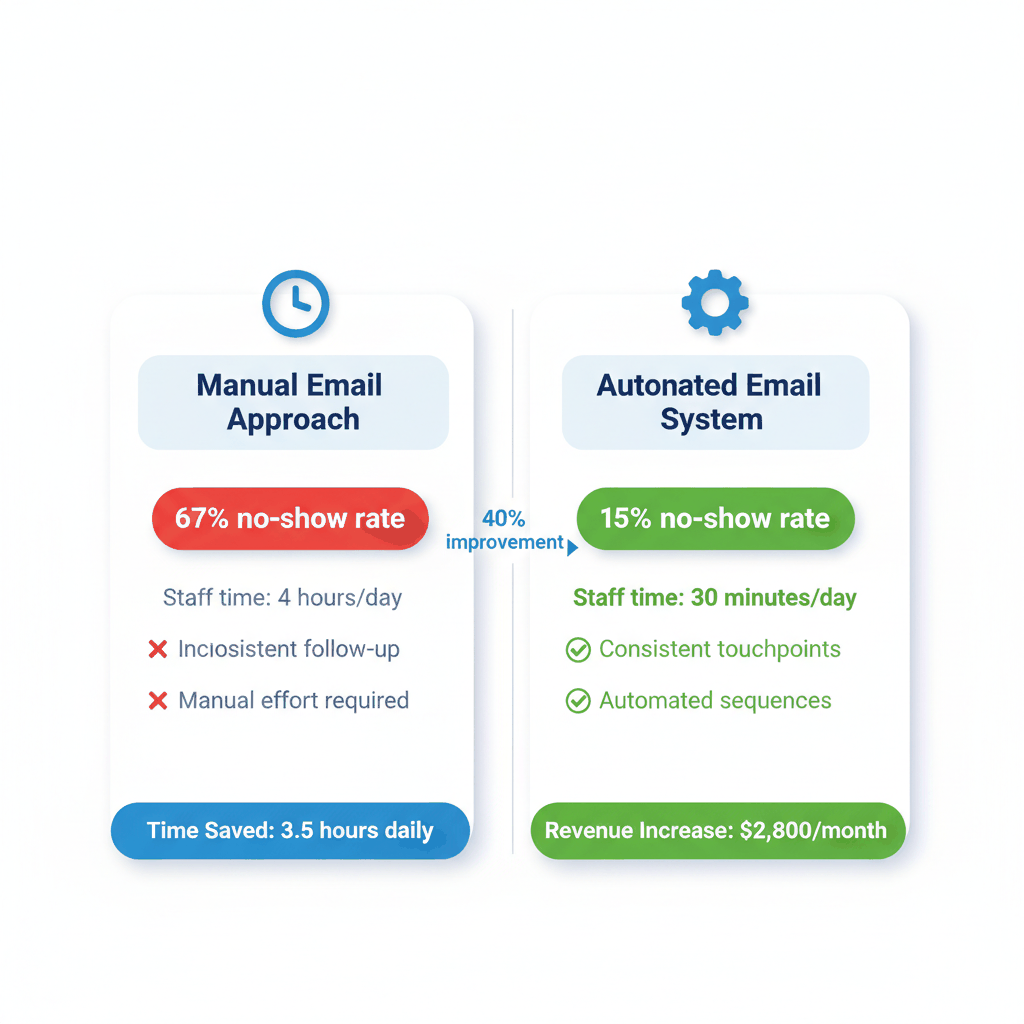
Here's the reality: most pest control companies collect customer emails but don't use them. Research shows only about one-third effectively use email addresses for marketing. This represents a significant revenue gap.
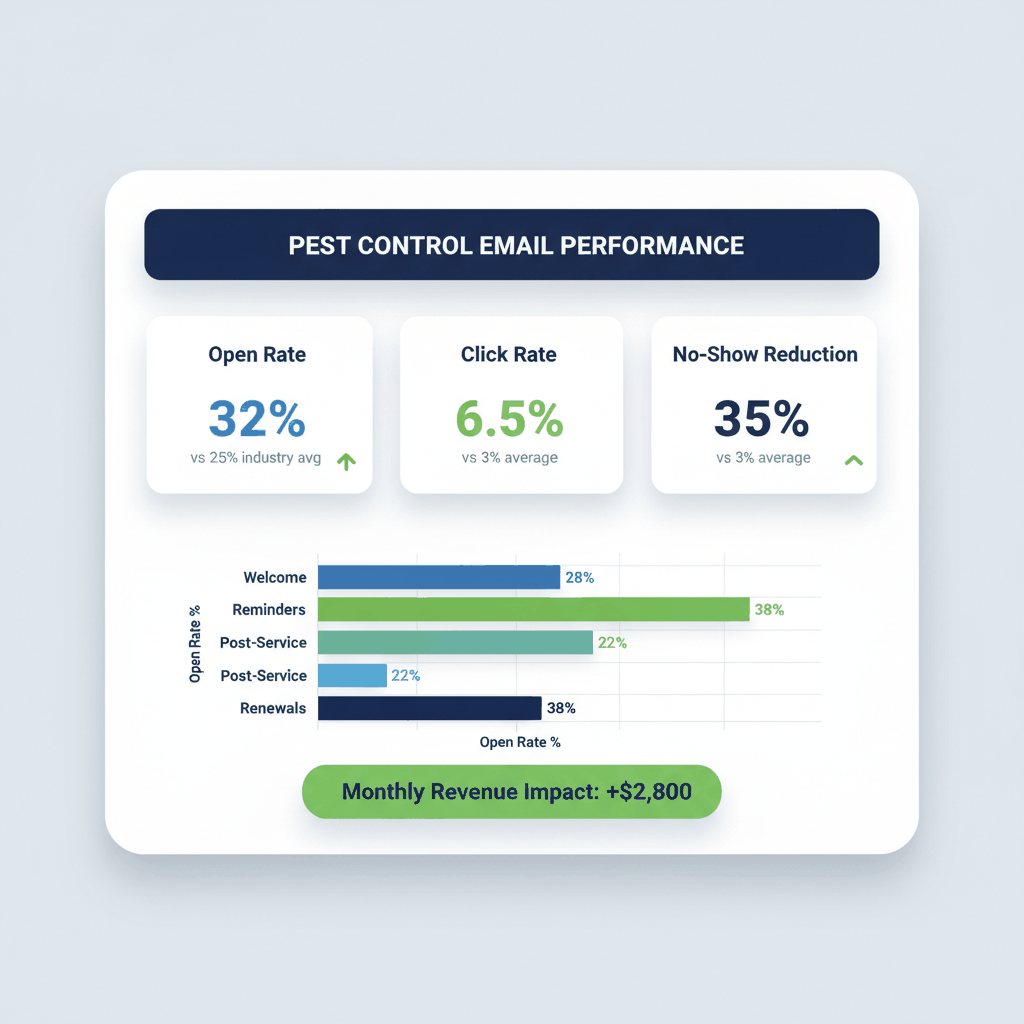
Smart businesses use those email addresses. They send appointment reminders, seasonal pest alerts, and service renewal notices. The result? A 32% increase in service renewals for pest control businesses using email marketing.
Sending generic "spray and pray" emails doesn't work anymore. Today's customers expect personalized, timely communications. Many companies struggle with creating targeted content that connects with different customer segments.
For example, a homeowner dealing with ants needs different advice than a business owner facing a rodent problem. Generic emails ignore these differences and get deleted.
Purchased email lists are a recipe for disaster. They lead to low engagement and spam complaints. You need to build your list organically with customers who actually want to hear from you.
It's also important to regularly clean your email lists. Remove invalid, inactive, or unused email addresses. This helps reduce bounce rates and improves delivery success.
If your email looks terrible on mobile devices, most people will delete it immediately. With 55% of email opens occurring on mobile devices, this represents a critical oversight.
Your emails must be mobile-friendly. Use simple layouts, large buttons, and readable fonts. Test every email on both desktop and mobile before sending.
Email automation transforms how you communicate with customers. It saves time while improving results across every aspect of your business.
Automated reminder workflows reduce no-shows by 25-40% compared to single-reminder or no-reminder approaches. This alone can significantly boost your revenue.
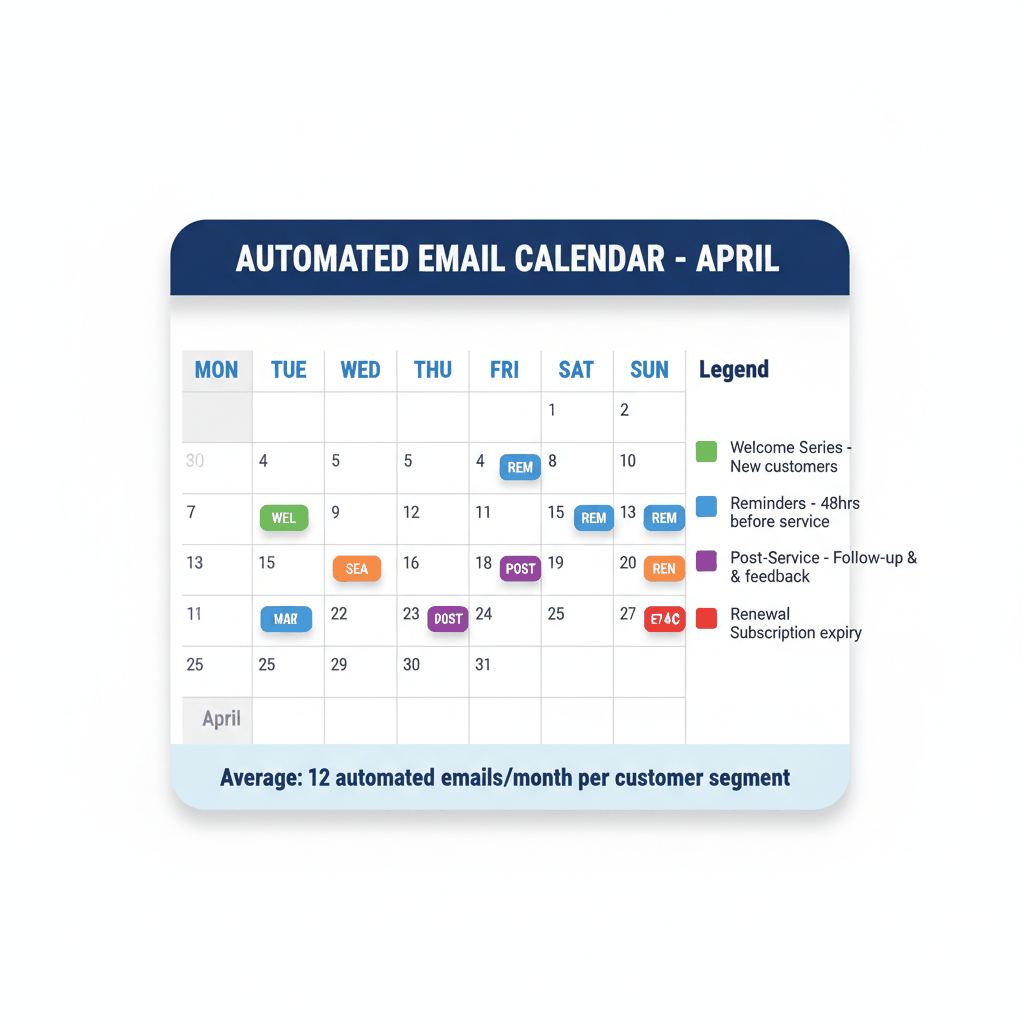
The key is multiple touchpoints. Send an initial confirmation, a reminder three days before, and a final reminder the day before service. Each email includes appointment details and your contact information.
Staying connected between services keeps your company top-of-mind. When customers receive helpful pest prevention tips throughout the year, they're more likely to renew their service contracts.
Automated emails also help you identify problems early. If a customer doesn't respond to renewal reminders, you can reach out personally before they choose a competitor.
Different pests become problematic at specific times of the year. Email automation lets you anticipate customer needs before problems occur.
For example, send termite inspection reminders in early spring. Alert customers about mosquito prevention before summer. These timely messages generate additional service bookings when customers need them most.
These proven email sequences work for pest control businesses of all sizes. Each sequence serves a specific purpose in your customer communication strategy.
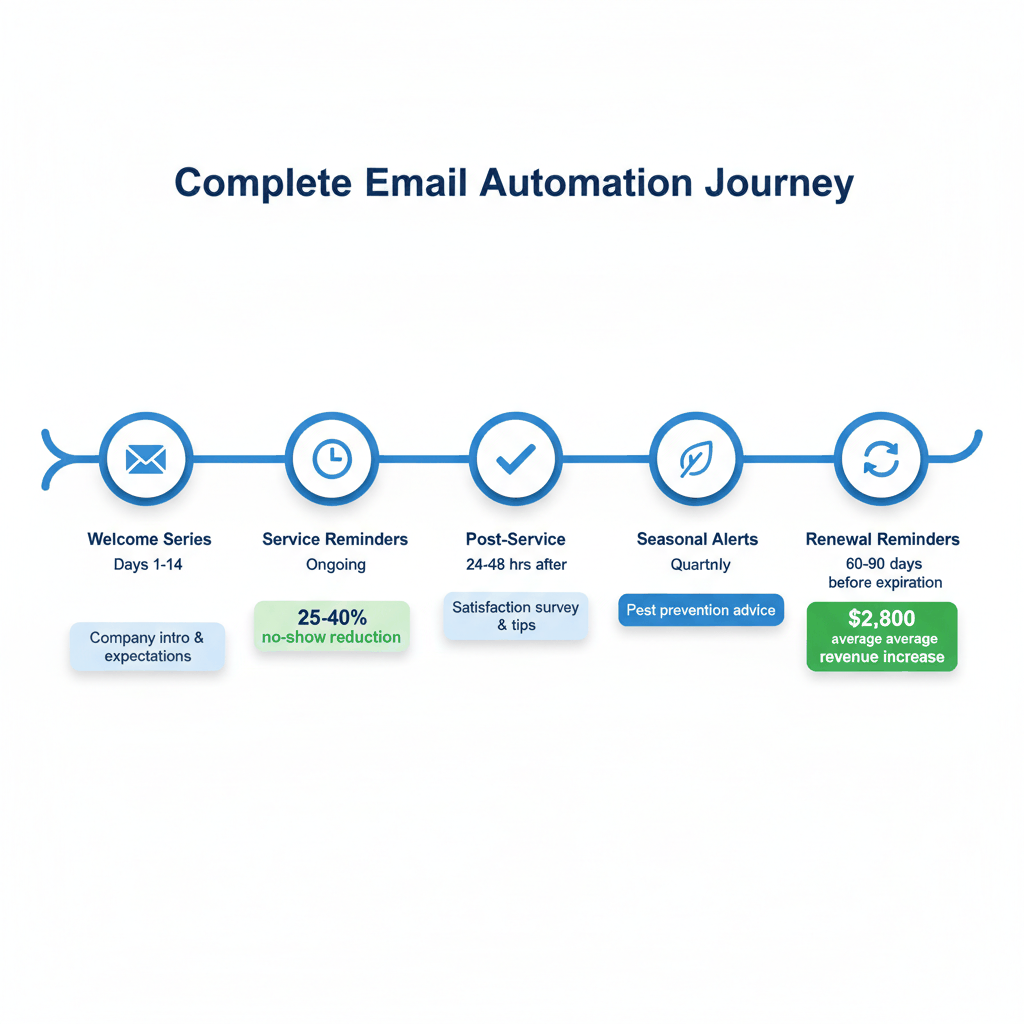
New customers need to understand your approach to pest control. A welcome sequence introduces your company and sets expectations for future communications.
Your welcome sequence should include:
Company introduction and service philosophy
What to expect during their first service
Pest prevention tips for their specific situation
Contact information for questions or concerns
Links to helpful resources on your website
Keep this sequence to 3-4 emails spread over two weeks. The goal is education, not promotion.
Following up after each service visit shows you care about results. These emails should check customer satisfaction and provide aftercare instructions.
Start with a satisfaction survey 24-48 hours after service. Ask about technician professionalism, service effectiveness, and overall experience. This gives you valuable feedback and shows attention to detail.
Send a second email one week later with aftercare tips. Include advice specific to the treatment performed and signs to watch for. End with instructions for requesting additional service if needed.
Don't wait until contracts expire to discuss renewals. Start renewal conversations 60-90 days before expiration dates.
Your renewal sequence should:
Highlight services provided during the past year
Remind customers of problems prevented
Offer incentives for early renewal
Make renewal simple with clear next steps
Send three emails over 30 days. If customers don't respond, have your sales team make personal contact.
These sequences deliver huge value by preventing problems before they start. Create separate sequences for each season and major pest types.
Spring sequences focus on ants, termites, and outdoor pest prevention. Summer emails cover mosquito control and flying insect management. Fall messages emphasize indoor pest prevention as temperatures drop.
Successful pest control email automation requires the right strategy. These proven approaches help you maximize engagement and results.
Not all customers have the same pest problems or needs. Smart segmentation lets you send relevant messages to specific customer groups.
Key segmentation options include:
Geographic location for regional pest challenges
Property type (residential vs commercial)
Service history and frequency
Specific pest problems treated
Customer lifetime value
For example, customers in wooded areas get different advice than those in urban settings. Commercial clients receive different content than residential homeowners.
The right timing makes your emails more effective. Pest control companies should email customers 1-2 times per month. That's enough to stay top-of-mind without pushing unsubscribes.
During peak pest seasons (spring and summer), weekly emails perform well because content is timely and relevant. Off-season, monthly newsletters maintain presence without overwhelming customers.
Sending inconsistently hurts more than not sending at all. If you email once or twice then disappear for three months, it signals to email providers that your list is disengaged.
Design every email for mobile devices first. Use single-column layouts, large buttons, and readable fonts. Keep subject lines under 50 characters so they display completely on mobile screens.
Test every email on multiple devices before sending. What looks good on desktop might be unreadable on smartphones.
The right tools make pest control email automation simple and effective. These platforms integrate with your existing business systems for seamless communication.
FieldRoutes offers built-in email marketing features that integrate with popular tools like Mailchimp and ActiveCampaign. This lets you use customer data from your CRM to create targeted email campaigns.
PestPac allows you to design and deploy email campaigns directly from within the platform. You can measure results, automate drip campaigns for upselling, and create targeted lists based on service history.
ServiceTitan provides enterprise-grade features with marketing automation capabilities. It helps generate and nurture leads while automating appointment reminders and follow-up communications.
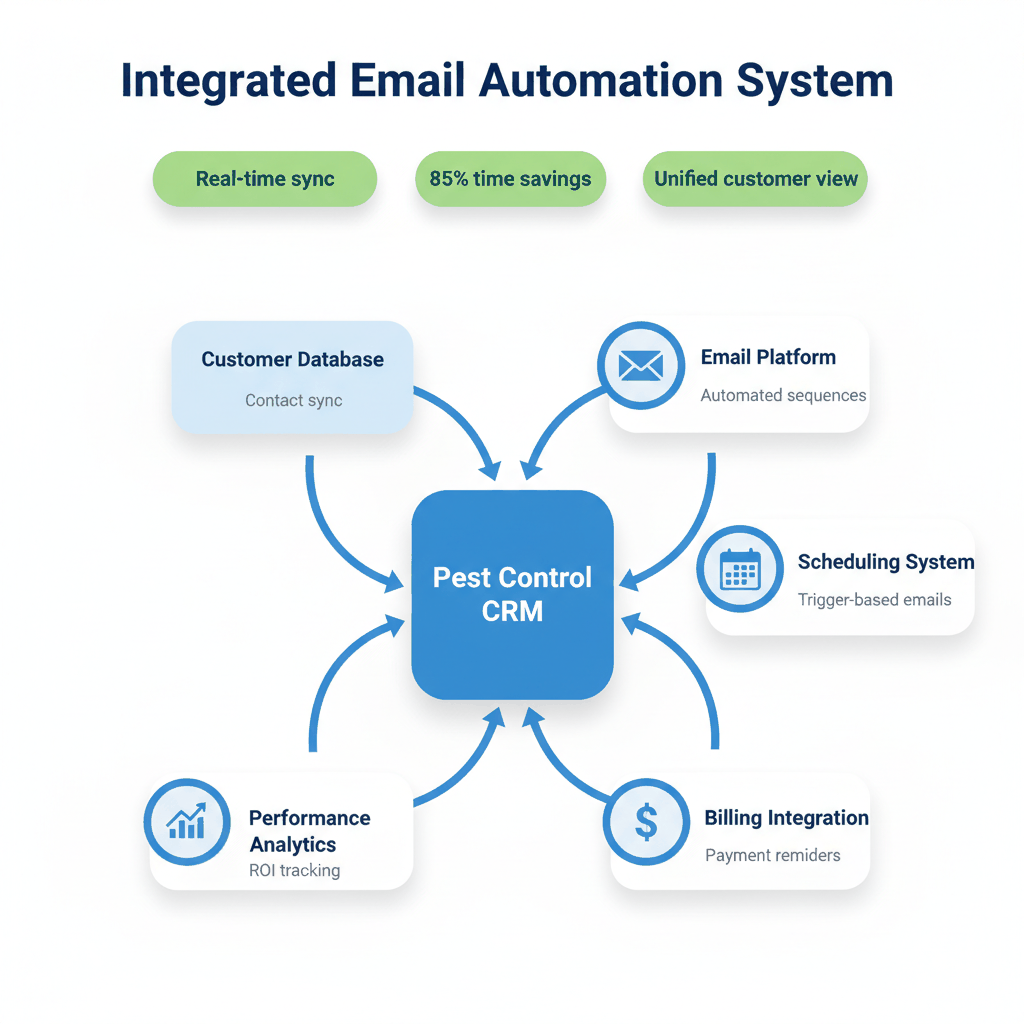
HubSpot's marketing automation tools help create personalized customer journeys. You can automate everything from appointment reminders to seasonal service notifications. The platform handles email design, list segmentation, and performance tracking in one system.
Specialized lead generation services can also integrate with these CRM platforms to provide comprehensive customer communication strategies.
ActiveCampaign and Mailchimp make segmentation easy with intuitive interfaces. Both platforms offer pest control-specific templates and automation workflows.
Choose tools that integrate with your existing systems. Your email platform should connect with your scheduling software, customer database, and billing system.
This integration ensures customer information stays current across all platforms. When someone schedules a service, they automatically enter appropriate email sequences.
Tracking the right metrics helps you improve your email automation over time. Focus on measurements that directly impact your business goals.
For pest control email campaigns, typical open rates range between 25% and 40%, depending on email type. Seasonal pest alerts tend to perform at the high end of this range.
Click-through rates average 3% to 8%, with service reminders often hitting higher rates. These emails get high response because they're necessary and timely.
Automated emails drive 37% of all email-generated sales, despite making up only 2% of email volume. This shows the power of well-timed, relevant messaging.
Connect your email campaigns to actual revenue generated. Track service renewals, additional service bookings, and referrals that come from email communications.
For example, if seasonal pest alert emails generate 15 new service calls per month, calculate the revenue impact. This helps justify your email automation investment and identify your most profitable sequences.
Monitor list growth, unsubscribe rates, and email deliverability. A healthy email list grows consistently and maintains low unsubscribe rates.
If unsubscribe rates exceed 2% per campaign, review your content and frequency. High unsubscribe rates indicate you're sending too often or providing insufficient value.
How often should pest control companies send automated emails?
Send 1-2 emails per month during off-peak seasons and weekly emails during peak pest seasons (spring and summer). Automated sequences like appointment reminders and renewal notices should trigger based on customer actions rather than set schedules.
What's the best pest control CRM for email automation?
FieldRoutes and HubSpot are top choices for pest control email automation. FieldRoutes integrates specifically with pest control operations, while HubSpot offers advanced marketing automation features. Choose based on your business size and automation complexity needs.
How can I improve pest control email open rates?
Focus on mobile-friendly design, compelling subject lines under 50 characters, and seasonal relevance. Segment your list by geographic location and pest problems to send more targeted content. Consistent sending schedules also improve deliverability and engagement.
What automated pest control follow up sequences work best?
Welcome sequences, post-service satisfaction surveys, renewal reminders, and seasonal pest alerts generate the highest engagement. Start with appointment confirmation and reminder sequences to reduce no-shows, then add value-driven content like pest prevention tips.
How do I build a pest control email list organically?
Collect emails during every customer interaction including service calls, phone bookings, and website visits. Train technicians to explain email benefits during service visits. Offer valuable content like seasonal pest guides in exchange for email addresses.
Ready to get exclusive pest control leads? Sign up for free with ResultCalls today!

Hello everyone! My name is Alex and I write these blogs to help educate small business owners on different ways to grow their business. My goal is to make lead generation as easy as possible for you. After reading these blogs, I hope you leave with some actionable steps that will get you closer to growing your business :)