
You spend thousands on marketing flooring services. Your technicians know every product inside and out. Yet customers still choose your competitors or delay their buying decision.
The problem isn't your products or pricing. It's understanding how customers really make flooring decisions. Most contractors miss the psychological factors that drive purchase behavior.
Flooring customer psychology reveals how subconscious mental processes and emotional responses influence buying decisions. Smart contractors use these insights to guide customers through the decision process naturally.
This guide shows you proven psychological tactics that convert more prospects into paying customers. You'll learn how cognitive biases, emotional triggers, and environmental factors affect flooring purchases. ResultCalls flooring lead generation can help you attract more qualified prospects ready to benefit from these strategies.
Table of Contents
Flooring customer psychology focuses on the mental processes behind purchase decisions. Your customers don't just compare prices and features. They make emotional connections and rely on mental shortcuts called cognitive biases.
Understanding these patterns transforms your sales approach. Instead of competing on price alone, you guide customers through their natural decision-making process.
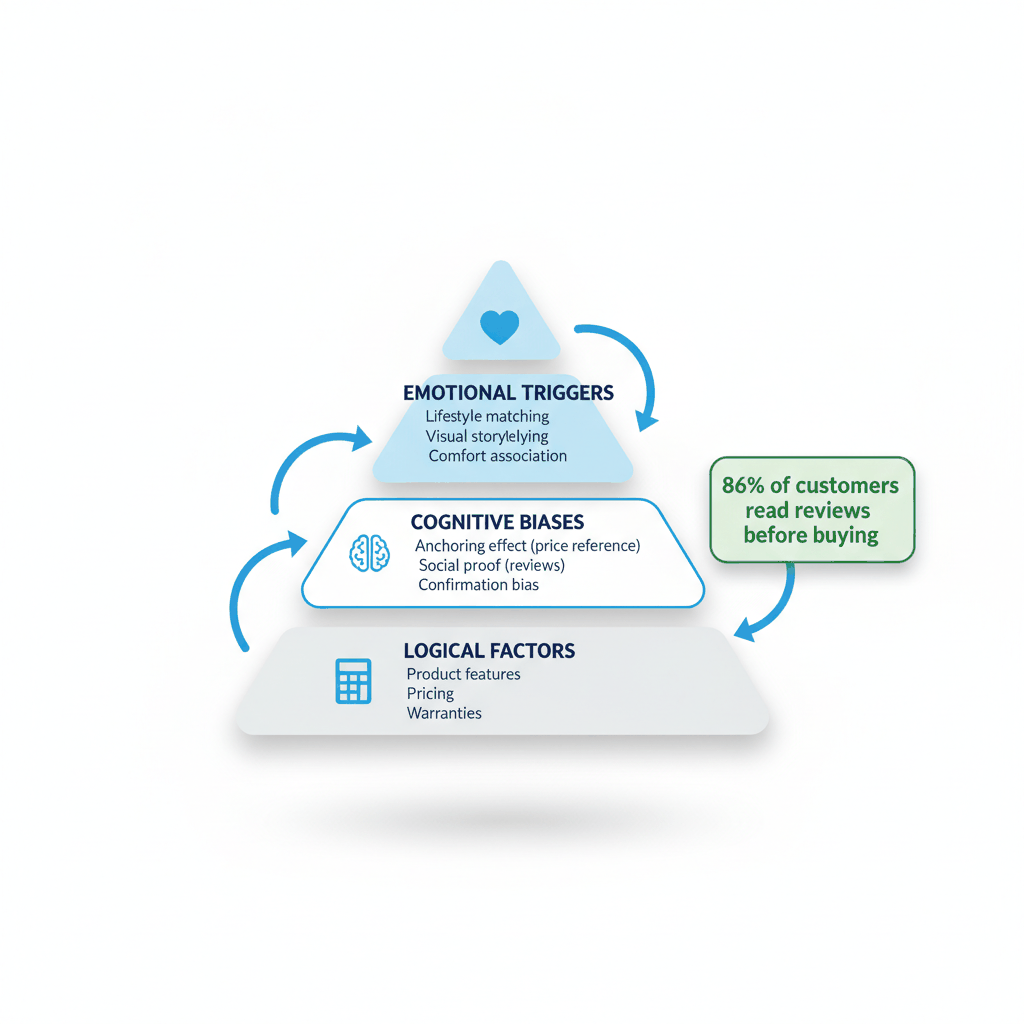
Research from the University of Minnesota shows that physical comfort affects product perception. Customers standing on soft carpet judge distant products as more comfortable. Those on hard surfaces have different emotional responses.
This means your showroom flooring directly influences what customers buy. The texture under their feet shapes their subconscious buying behavior.
Most contractors focus only on product features and pricing. They miss the emotional layer that actually closes deals. Smart flooring businesses tap into both logical and emotional decision factors.
Traditional flooring sales rely heavily on product knowledge and competitive pricing. This approach assumes customers make purely rational decisions. The reality is different.
Customers use emotional shortcuts to make complex decisions. They rely on first impressions, social proof, and gut feelings more than detailed product comparisons.
Price competition becomes less important when you understand customer psychology. You can differentiate your business by addressing the emotional factors that drive purchase decisions.
Cognitive biases are mental shortcuts your customers use to make decisions quickly. Understanding these patterns helps you present information in ways that naturally guide toward purchase decisions.
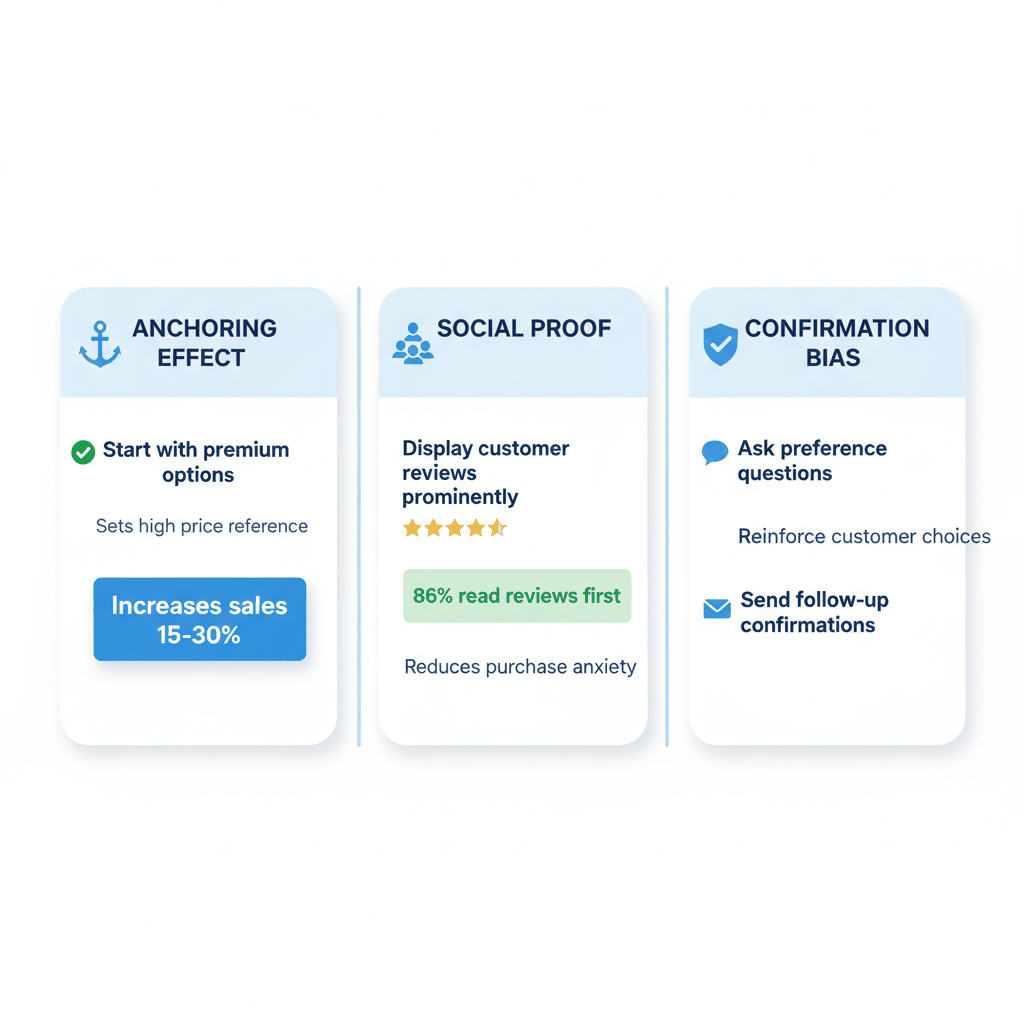
The anchoring effect means the first price customers see becomes their reference point. All other prices get compared to this initial anchor.
Start your presentation with premium options. This sets a high anchor that makes mid-tier products seem more reasonable. Even if customers choose less expensive options, the high anchor increases their willingness to spend.
For example, show your most expensive hardwood first. When you present mid-priced options, customers perceive them as good value compared to the premium anchor.
Behavioral scientist research shows this strategy can increase average sale amounts by 15-30% across various industries.
Social proof leverages customers' tendency to follow what others do. In flooring sales, this means showcasing customer reviews, testimonials, and project photos.
About 86% of consumers read online reviews before buying flooring services. Display your best reviews prominently during sales presentations.
Create a portfolio of completed projects organized by home style and customer type. When prospects see homeowners like themselves choosing your services, it reduces purchase anxiety.
Use specific testimonials that address common objections. If customers worry about timeline, show testimonials praising your punctuality and project management.
Confirmation bias means people seek information that confirms their existing beliefs. Use this to reinforce customers' good decisions after purchase.
Send follow-up emails highlighting benefits of their flooring choice. Share maintenance tips that help their investment last longer. This reduces buyer's remorse and increases referral likelihood.
During sales, ask questions that help customers verbalize their preferences. When they explain why they like certain options, confirmation bias makes them more committed to those choices.
Emotional triggers tap into customers' deeper motivations beyond practical needs. These psychological factors often determine the final purchase decision.
Match flooring recommendations to customers' lifestyle and identity. Don't just sell products - sell how the flooring fits their life.
Ask questions about daily routines, family activities, and long-term plans. A busy family with young children needs different flooring than empty nesters who entertain frequently.
Present options using lifestyle language. Instead of "This is durable laminate," say "This handles everything your kids can throw at it while still looking great for dinner parties."
Create detailed customer personas for different lifestyle segments. Develop specific sales approaches for each type of customer you regularly encounter.
Visual storytelling helps customers imagine their transformation. Before-and-after photos create emotional connections that product specifications cannot match.
Modern customers expect visual experiences. About 62% of Millennial homeowners conduct extensive online research using visual tools before making flooring decisions.
Use room visualization software to show customers exactly how different options look in their space. This removes guesswork and builds confidence in their choice.
Document your best transformations with professional photos. Organize them by room type, home style, and budget level for easy reference during sales presentations.
Effective urgency focuses on benefits customers lose by waiting, not arbitrary deadlines. Help them understand the cost of delayed decisions.
Highlight seasonal factors that affect installation timing. Spring renovations before summer entertaining season creates natural urgency without seeming pushy.
Explain how current flooring problems get worse over time. Water damage under old flooring increases repair costs. Worn carpet collects allergens that affect family health.
Offer genuine limited-time benefits like installation scheduling or material availability. Avoid fake urgency that damages trust and credibility.
Your showroom environment directly influences customer psychology and buying behavior. Every design choice sends subconscious messages about quality and value.
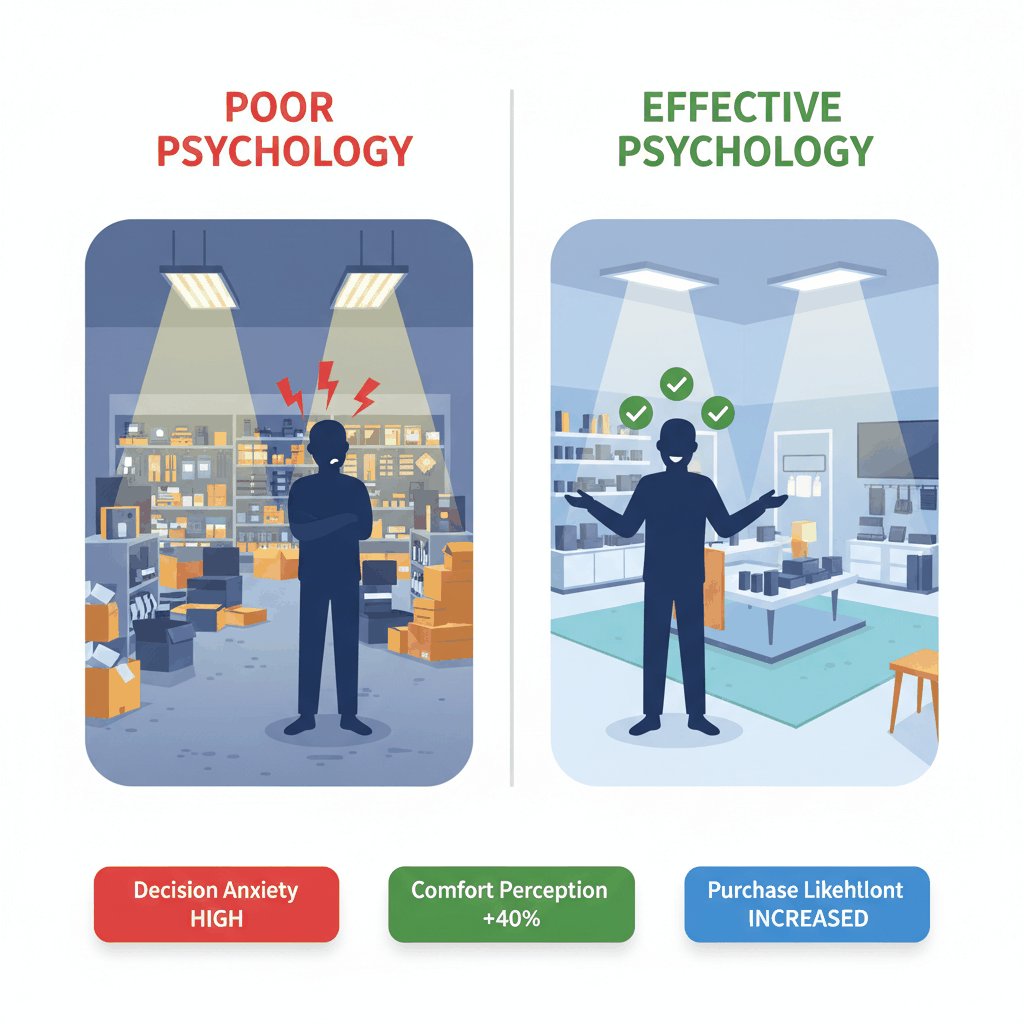
The flooring in your showroom affects how customers perceive your products. Research shows customers standing on plush carpet judge distant products as more comfortable.
Use this knowledge strategically. Place premium hardwood displays in areas with softer flooring underfoot. Customers will unconsciously associate comfort with those higher-end products.
Commercial hardwood floors in your showroom convey quality and sophistication. Customers perceive your business as more upscale and consider higher-priced options more readily.
Avoid conflicting messages. Don't display luxury products while customers stand on worn or outdated flooring. The disconnect creates doubt about your expertise and quality standards.
Colors trigger specific emotional responses that influence purchase decisions. Cool blues and greens create calming effects. Warm reds and yellows stimulate energy and excitement.
Use calming colors in areas where customers make major decisions. Decision-making requires mental clarity that stress and overstimulation can disrupt.
Organize product displays using color psychology principles. Group similar tones together so customers can easily envision how different options work in their homes.
Consider your target market when choosing showroom colors. Traditional customers prefer classic, conservative color schemes. Modern customers respond well to contemporary color combinations.
Lighting dramatically affects how flooring materials appear and how customers feel in your showroom. Poor lighting makes even premium products look cheap and uninviting.
Use LED lighting that closely matches natural daylight. Customers need to see how flooring looks under the lighting conditions in their homes.
Create vignettes that show products in realistic room settings. This helps customers visualize the transformation in their own space rather than seeing isolated product samples.
Avoid fluorescent lighting that creates harsh shadows and unflattering color rendering. Invest in quality lighting systems that showcase your products at their best.
Too many choices paralyze customers and delay purchase decisions. The flooring industry offers hundreds of options that can overwhelm even motivated buyers.
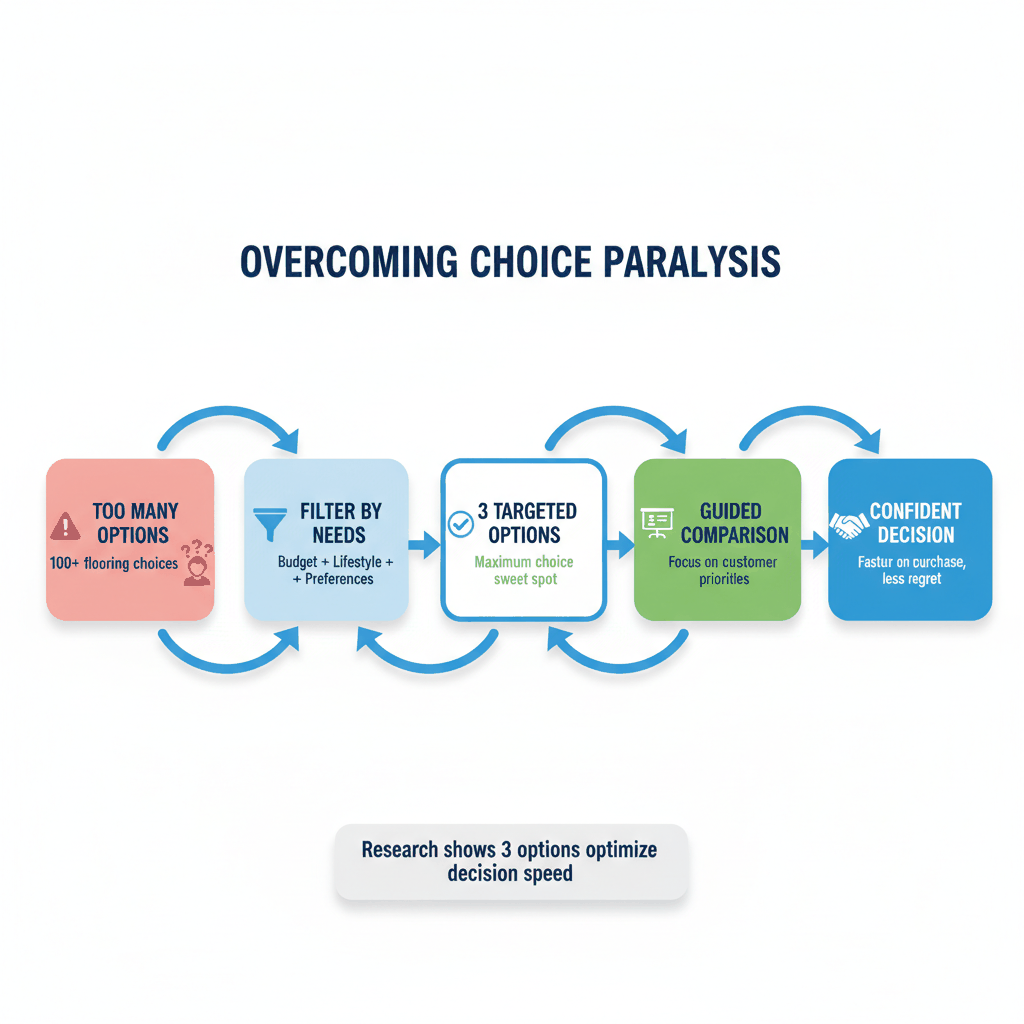
Research shows that too many options actually decrease customer satisfaction and purchase likelihood. Customers facing overwhelming choices often delay decisions or choose nothing.
Limit initial options to three carefully selected choices. Present these based on customer priorities discovered during your needs assessment conversation.
Use a filtering approach. Ask questions about budget, lifestyle, and preferences first. Then present only options that match their criteria.
Save extensive product catalogs for customers who specifically request more choices. Most customers appreciate guidance that simplifies their decision process.
Guide customers through a logical decision sequence. Start with broad categories, then narrow down to specific products that match their needs.
Begin with flooring type decisions - hardwood, laminate, tile, or carpet. Once they choose a category, present style and color options within that category.
Use comparison charts that highlight key differences between recommended options. Focus on factors most important to that specific customer.
Avoid technical specifications that confuse rather than clarify. Translate features into benefits using language customers easily understand.
Confident customers make faster purchase decisions and experience less buyer's remorse. Your role is building confidence through education and reassurance.
Explain your recommendation process. When customers understand why you suggest specific options, they trust your expertise and guidance.
Share stories of similar customers who made comparable decisions. This social proof reduces anxiety about making the wrong choice.
Offer guarantees and warranties that remove financial risk from their decision. Confidence in your backing makes customers more willing to move forward.
Transform your understanding of flooring customer psychology into specific actions that improve sales results. These practical strategies work for contractors of all sizes.
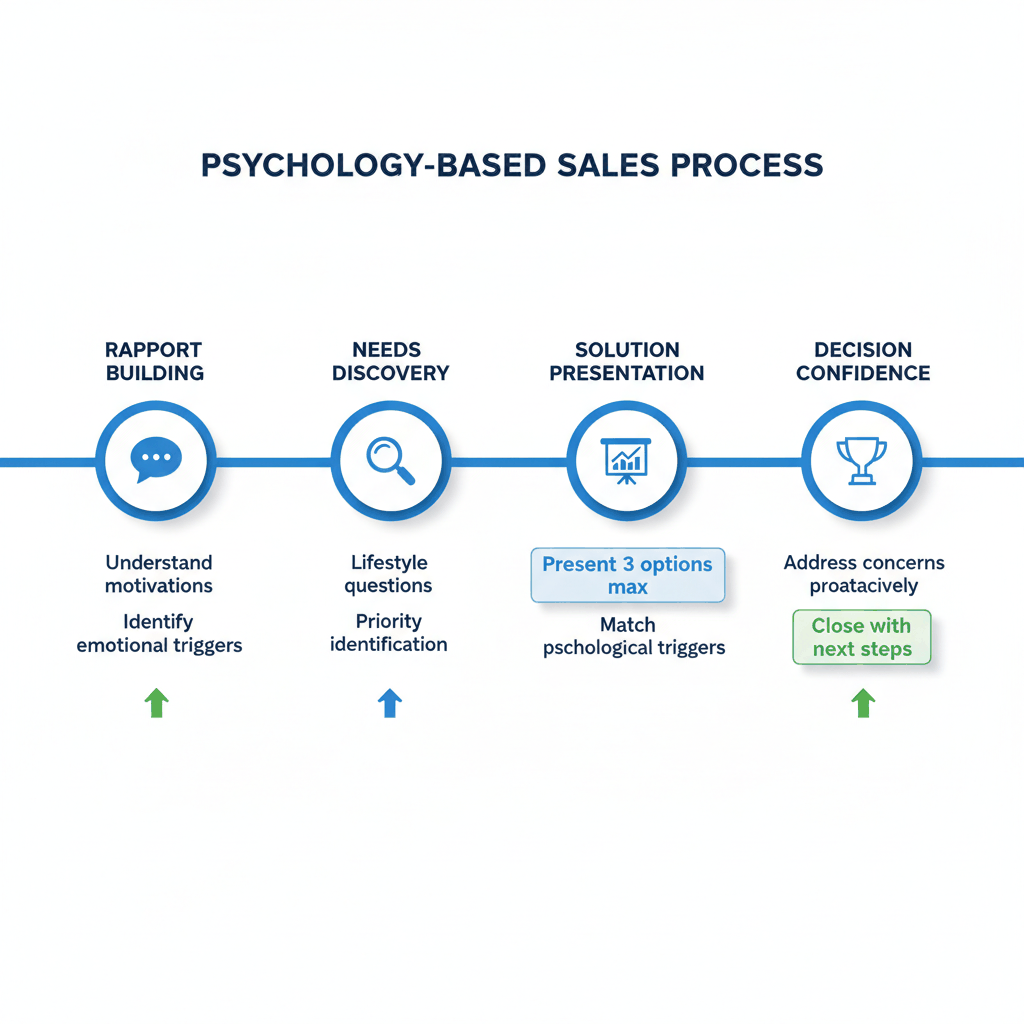
Organize your sales presentations to leverage psychological principles naturally. Start with rapport building and needs discovery before presenting solutions.
Begin every presentation by understanding customer motivations. Are they solving problems, preparing to sell, or creating their dream home? Different motivations require different approaches.
Present solutions in order of psychological impact, not price. Lead with options that best match their expressed needs and emotional triggers.
End presentations with clear next steps and easy ways to say yes. Remove friction from the buying process while maintaining professional guidance.
Strategic follow-up reinforces positive emotions and addresses concerns before they become objections. Most sales happen after multiple touchpoints, not during initial meetings.
Send helpful information between meetings, not just sales pitches. Educational content positions you as a trusted advisor rather than pushy salesperson.
Address common concerns proactively in follow-up communications. If customers typically worry about installation timeline, include timeline information in your follow-up.
Use confirmation bias in follow-up messages. Remind customers of benefits they mentioned wanting and how your solution delivers those specific benefits.
Ensure your entire team understands and applies customer psychology principles consistently. Develop training programs that go beyond product knowledge.
Role-play different customer scenarios focusing on psychological triggers rather than just overcoming objections. Practice identifying emotional buying motivations.
Create customer psychology checklists for sales presentations. This ensures team members consistently apply psychological principles with every prospect.
Review successful sales to identify which psychological factors contributed to positive outcomes. Share these insights across your team for continuous improvement.
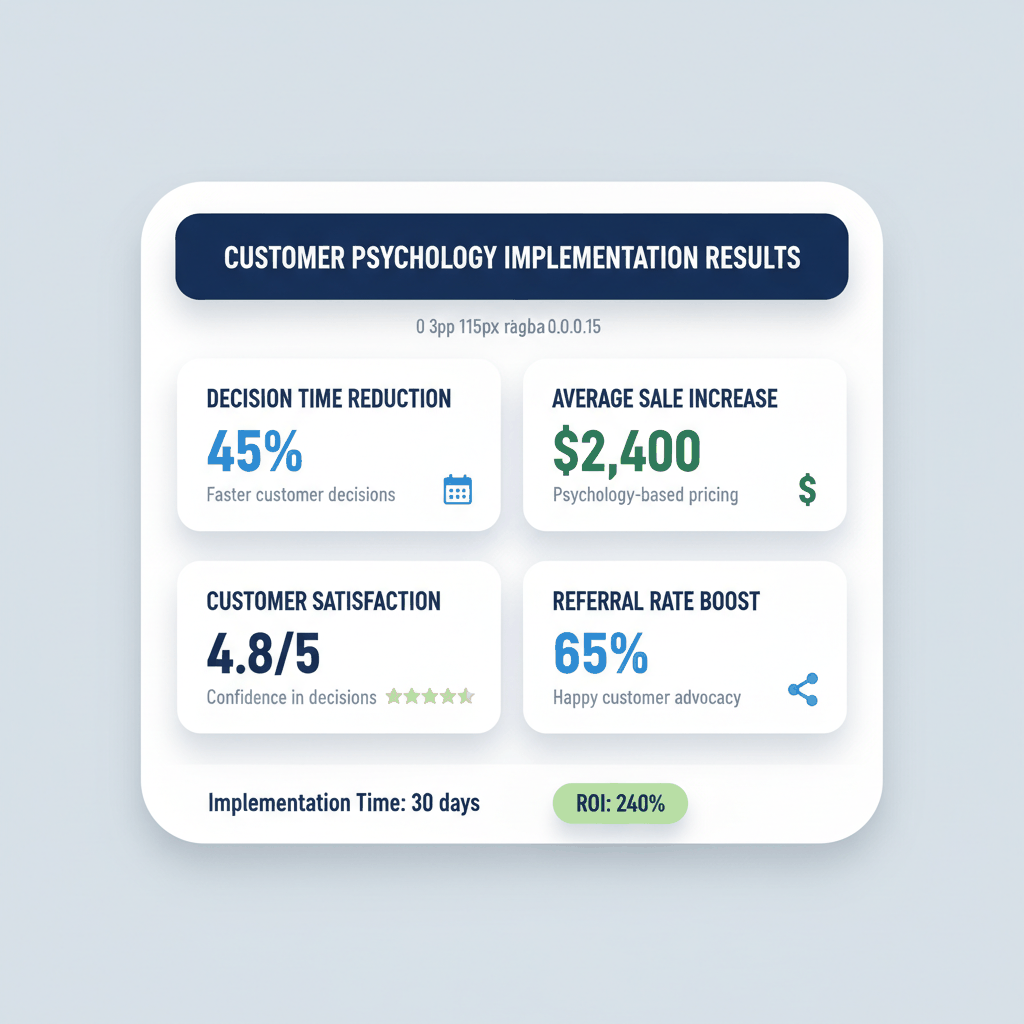
Track metrics that reveal how well you're applying customer psychology principles. Traditional sales metrics don't capture psychological effectiveness.
Monitor time from first contact to purchase decision. Effective psychology reduces decision time by building confidence and addressing concerns proactively.
Track customer satisfaction scores and referral rates. Customers who feel guided rather than sold become enthusiastic advocates for your business.
Survey customers about their decision-making experience. Ask what factors most influenced their choice and how confident they felt throughout the process.
How does flooring customer psychology differ from regular sales tactics?
Flooring customer psychology focuses on subconscious decision-making factors rather than logical arguments. It leverages cognitive biases, emotional triggers, and environmental factors that influence purchase behavior. Traditional sales tactics rely primarily on product features and competitive pricing.
What cognitive biases most affect flooring buying behavior?
The anchoring effect, social proof, and confirmation bias significantly impact flooring purchases. Anchoring influences price perception, social proof reduces purchase anxiety through testimonials, and confirmation bias reinforces customer choices after they express preferences.
How can small flooring contractors compete using customer psychology?
Small contractors can leverage personal relationships and customized experiences that large companies cannot match. Focus on lifestyle matching, visual storytelling, and building emotional connections with homeowners. These psychological approaches don't require large marketing budgets.
Does showroom flooring really affect customer purchase decisions?
Yes, University of Minnesota research proves that showroom flooring directly influences product perception. Customers standing on soft surfaces judge distant products as more comfortable. Your showroom environment sends subconscious messages about quality and value.
How do I avoid overwhelming customers with too many flooring options?
Use a filtering approach that starts with broad categories and narrows to specific products. Limit initial presentations to three carefully selected options based on customer priorities. Too many choices create decision paralysis and reduce purchase likelihood.
Ready to get pay per call flooring leads? Sign up for free with ResultCalls today!

Hello everyone! My name is Alex and I write these blogs to help educate small business owners on different ways to grow their business. My goal is to make lead generation as easy as possible for you. After reading these blogs, I hope you leave with some actionable steps that will get you closer to growing your business :)