Running an appliance repair business means juggling customer calls, technician schedules, parts inventory, and follow-ups. You're managing multiple moving parts while trying to deliver exceptional service. What if there was a way to streamline these daily challenges into organized processes that save time and boost customer satisfaction?
Many appliance repair companies struggle with lost leads, missed appointments, and disorganized customer data. These problems cost you money and stress your team. The solution lies in setting up an effective appliance repair CRM that transforms chaos into clarity.
This guide will show you exactly how to set up CRM for appliance repair businesses. You'll learn which features matter most, how to implement them correctly, and what results you can expect. By the end, you'll have a clear roadmap for turning your customer management challenges into competitive advantages.
Table of Contents
Customer Relationship Management for appliance repair helps you manage customer relationships more effectively. It assists companies in understanding, monitoring, and predicting customer needs. Without proper systems, potential customers fall through the cracks, leading to lost revenue and wasted marketing spending.
Industry research shows that appliance repair businesses implementing specialized CRM solutions report up to 35% improvement in scheduling efficiency. They also see a 28% increase in customer retention rates. These gains translate directly into more completed jobs and higher repeat business.
Without customer management appliance repair systems, your business faces several challenges. Exclusive appliance repair leads need fast responses. Waiting hours or days results in losing high-quality leads to competitors who respond promptly.
Job scheduling becomes one of the toughest challenges. Double bookings happen frequently. Missed appointments frustrate customers. Technicians drive across town unnecessarily, wasting time and fuel. Traditional systems often lack the advanced scheduling tools needed for field service industries.
Having an appliance repair CRM offers multiple benefits. You get improved customer service, cost savings, increased efficiency, and greater customer loyalty. Better customer service happens because customer information is stored in one central place. Customer interactions become automated.
The average return on investment for CRM is $8.71 for every dollar spent. Businesses using CRM software see increases in sales of 29% and sales productivity of 34%. This demonstrates the positive impact these tools deliver.
When choosing a CRM for your appliance repair business, certain features enhance efficiency and customer support. Focus on tools that solve your daily operational challenges while improving customer experience.
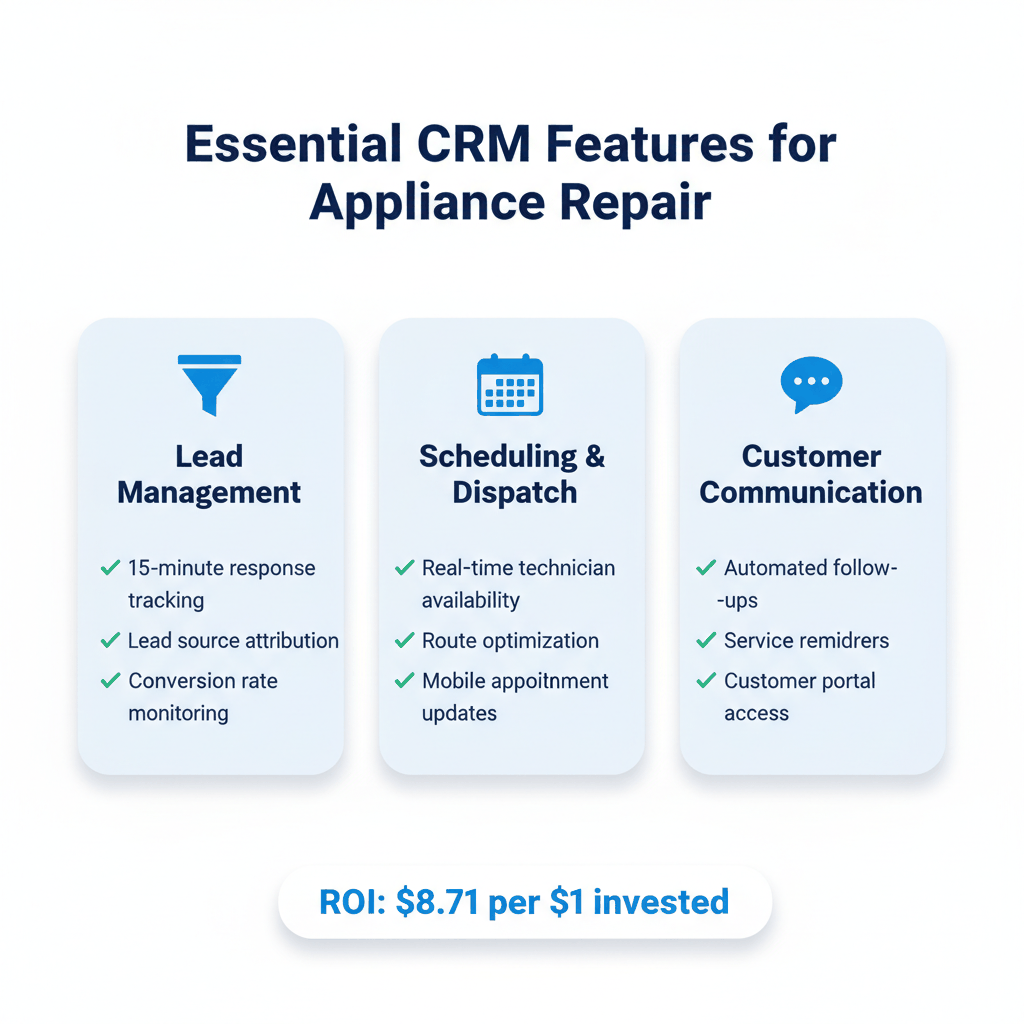
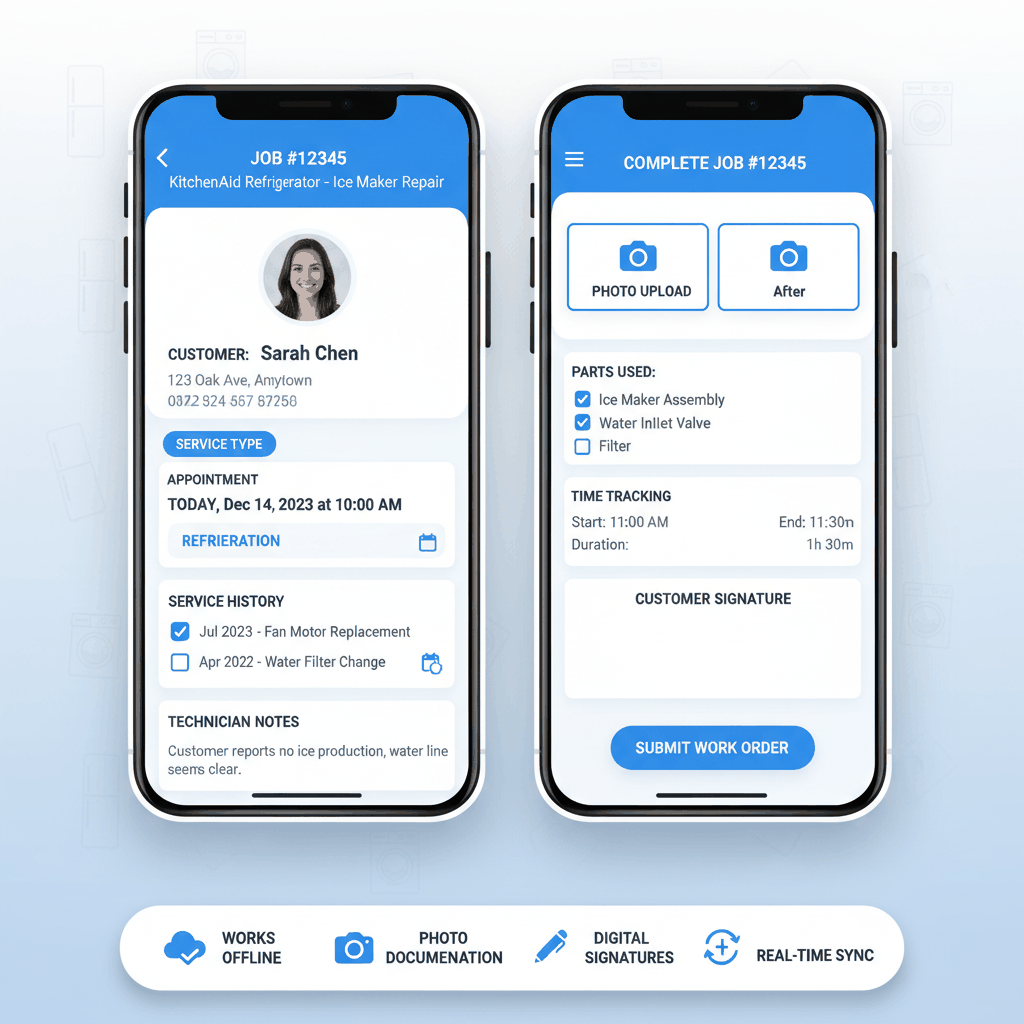
A robust scheduling system should allow service appointments to be easily scheduled, modified, and tracked. It provides a clear view of technicians' availability in real time. Look for a CRM with a robust mobile app that works even with limited connectivity.
Modern customers expect to book appointments, check status, and pay invoices online. A customer portal reduces phone calls while improving satisfaction. Route optimization helps technicians complete 1-2 more jobs per day by reducing travel time.
Your CRM should offer integration with inventory management. This ensures technicians can quickly identify the availability of necessary parts for repairs. With appliance repair management software, all customer management becomes centralized. Business owners and technicians can view appliance service history, past repair jobs, quotes, and service work records in one place.
Maintenance reminders and follow-up communications help build recurring revenue. Automation ensures these opportunities aren't missed. Repetitive tasks like sending follow-up emails and appointment reminders get automated by CRM systems. Time is saved and consistency is ensured.
After a repair, the CRM can automatically send a thank-you email to the customer. It includes a feedback request. Once the appliance repair or installation is complete, collect customer feedback, ask for a review, or just say thanks with automated follow-ups.
Setting up your appliance repair CRM correctly from the start saves time and prevents future problems. Follow this proven process to ensure smooth implementation and quick adoption by your team.
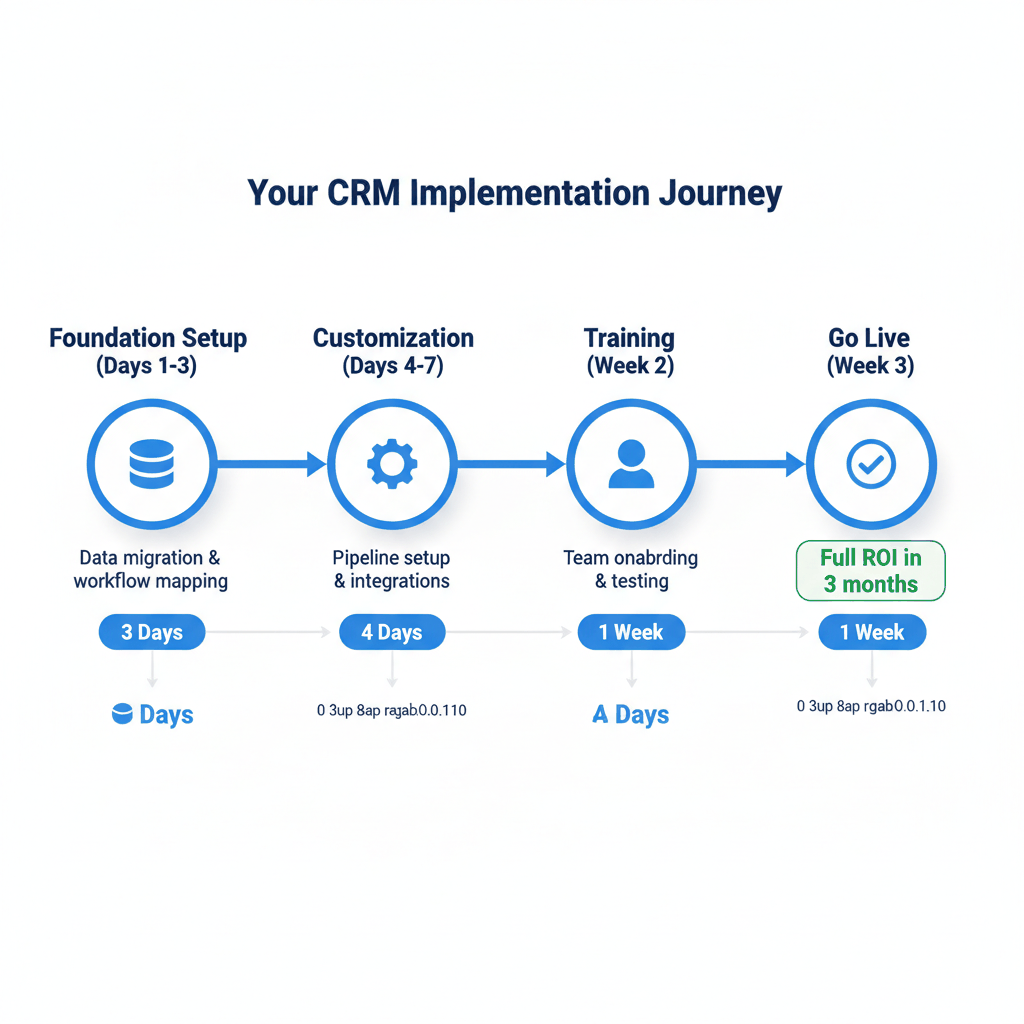
Define your workflow first. Map out your current process from initial customer contact through service completion and follow-up. This helps you configure the CRM to match how your business actually operates.
Organize and import your existing customer records. Ensure data cleanliness before migration. Clean data prevents confusion and duplicate records later. Most appliance repair businesses are up and running within 1-2 weeks. The basic setup can be completed in a day.
Configure your CRM stages to match your company's procedures. For example, a lead in the CRM changes from "New Inquiry" to "Quote Sent" to "Appointment Scheduled." This enables your team to quickly determine each lead's status.
Set up automated workflows for common tasks. Configure appointment reminders, follow-up emails, and maintenance notifications. These automations run in the background, ensuring consistent customer communication without manual effort.
Invest time in proper training for both office staff and field technicians. Start simple by beginning with core features before implementing advanced automation. Consider starting with a pilot team of your most tech-savvy technicians before rolling out to your entire staff.
Gather feedback regularly. Check in with users to identify challenges and opportunities. This helps you refine the system and improve adoption rates across your team.
Effective lead tracking separates successful appliance repair businesses from those that struggle. Your CRM should capture, organize, and nurture leads automatically while providing clear visibility into what drives results.
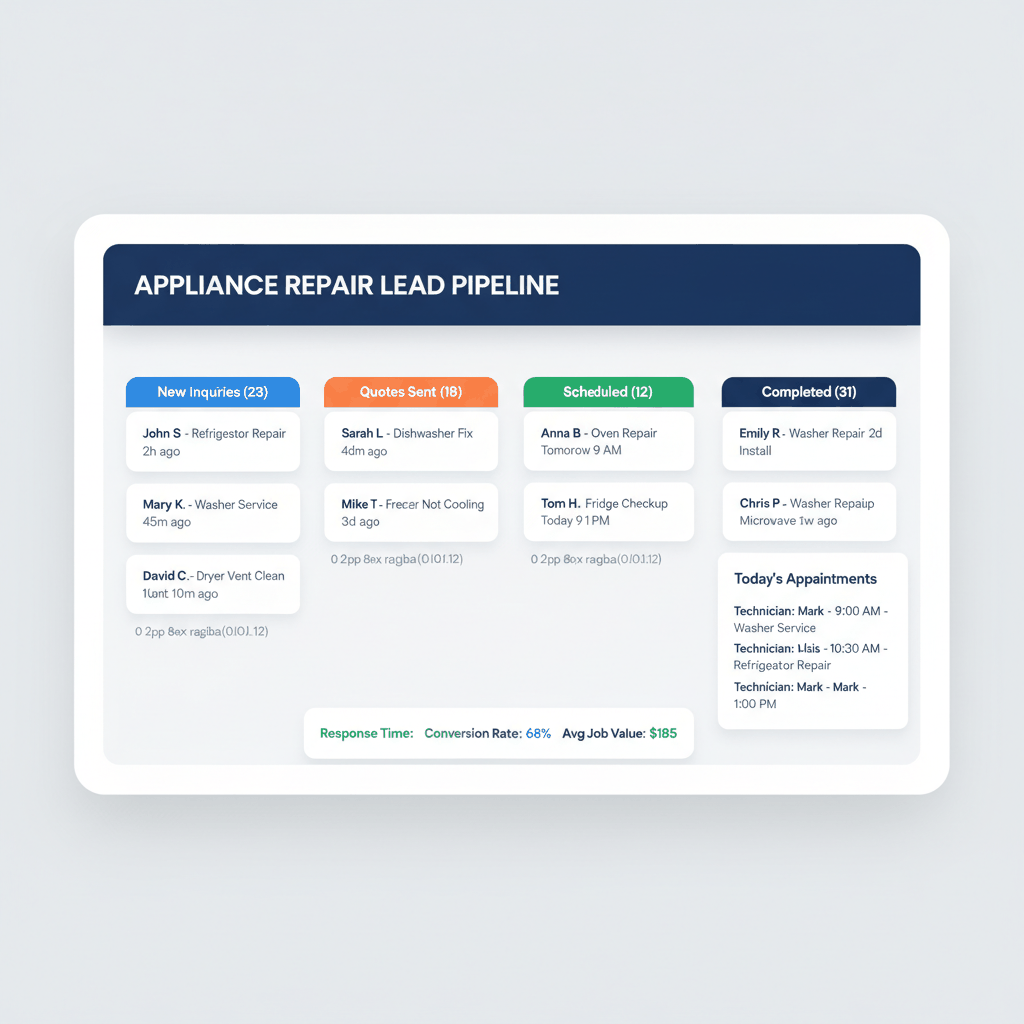
From the initial contact to job completion, track each lead's status using the CRM pipeline. Adjust the stages to match your company's procedures. This systematic approach ensures no opportunities slip through the cracks.
To start fixing lead quality issues, you need to know which marketing campaigns drive the best leads. Call tracking tools help appliance repair companies identify whether leads come from Google Ads, local SEO, or other lead sources. A CRM system then helps you store customer information, track service calls, and follow leads through the booking process.
When your appliance repair business attracts too many leads asking for free quotes but never booking, you're dealing with poor lead quality. Service business crm setup should bring in high-quality leads, not just people comparing costs.
By tracking cost per lead and cost per booked job using tools like Google Analytics, call tracking, or CRM systems, you gain visibility into what actually drives ROI. Lead-to-Close Ratio equals Number of Sales divided by Number of Leads times 100%. This demonstrates the importance of tracking conversion metrics.
Set up automatic follow-up sequences for different customer types. New leads get immediate responses and appointment confirmations. Completed jobs trigger satisfaction surveys and maintenance reminders. Past customers receive seasonal service offers.
A repair company in Florida increased its conversion rate from 8% to 18% by creating separate service pages for each repair type. When leads searched for appliance repair, they landed on pages matching their needs exactly. This made them more likely to schedule service calls.
Tracking the right metrics helps you understand your CRM's impact and identify areas for improvement. Focus on measurements that directly relate to business growth and customer satisfaction.
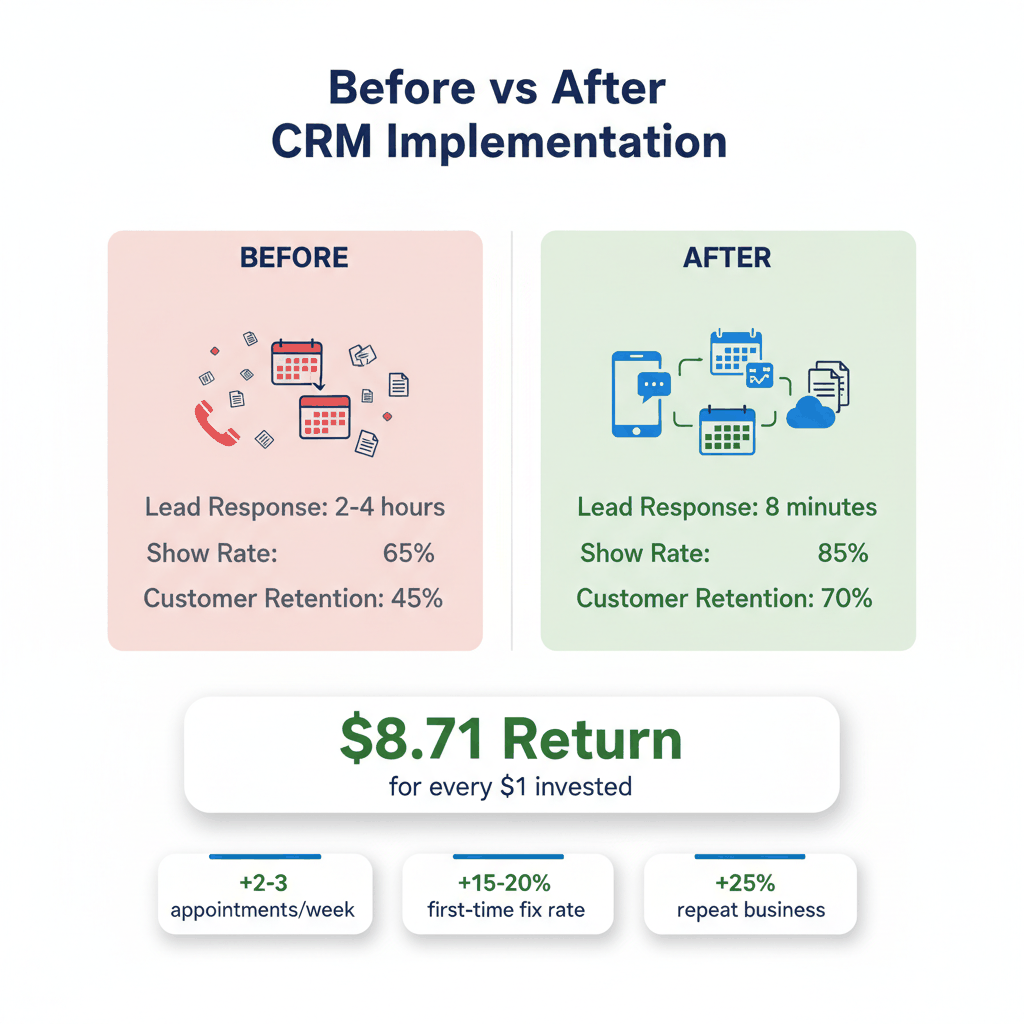
Monitor these essential metrics to gauge your CRM effectiveness. Track response time to new leads - aim for under 15 minutes. Measure appointment show rates and first-time fix rates. Calculate average job value and customer lifetime value.
Here's how CRM typically delivers return on investment for appliance repair businesses. You can reduce scheduling gaps and fill an average of 2-3 more service appointments per week. Decrease travel time by optimizing routes to complete 1-2 more jobs per technician daily.
Improve your first-time fix rate through better preparation and history access. This increases completion rate by 15-20%. Enhanced customer retention happens through automated follow-ups, which increase repeat business by 25-30%. Faster payment collection through digital invoicing reduces payment time by an average of 7 days.
According to industry studies, businesses with CRM-integrated field service software report up to 25% higher customer retention. This comes from better communication and personalized service. One company reported that automation features in their CRM were game-changing for office operations.
Review your metrics monthly to identify trends and opportunities. Look for patterns in lead sources that convert best. Analyze technician productivity data to optimize scheduling. Survey customers regularly to understand satisfaction levels.
Use this data to refine your CRM setup continuously. Add new automation rules based on common customer requests. Update your lead qualification criteria based on conversion data. This ongoing optimization ensures your CRM grows with your business needs.
How much does appliance repair CRM cost monthly?
Most appliance repair CRM systems cost between $19-50 per user per month. ClearCRM starts at $19/user monthly, while premium solutions like ServiceTitan cost significantly more. The ROI typically justifies the investment within 60-90 days through improved efficiency and customer retention.
Can appliance repair CRM work on mobile devices?
Yes, modern appliance repair CRM systems include mobile apps for technicians in the field. These apps work with limited connectivity and sync data when connection improves. Mobile access allows real-time updates, photo uploads, and customer communication from job sites.
How long does appliance repair CRM setup take?
Basic CRM setup can be completed in one day, with full implementation taking 1-2 weeks. This includes data migration, team training, and workflow customization. Most businesses see immediate improvements in organization, with full ROI realized within 3 months.
What's the difference between CRM and scheduling software?
CRM manages customer relationships throughout their entire lifecycle, while scheduling software focuses only on appointments. Appliance repair CRM includes lead tracking, customer history, follow-up automation, and business analytics alongside scheduling features for complete business management.
How does CRM help track appliance repair leads?
Lead tracking appliance service systems capture leads from multiple sources, assign them to sales stages, and track conversion rates. You can see which marketing campaigns generate the best leads, measure response times, and automate follow-up sequences to maximize conversion rates.
Ready to get exclusive appliance repair leads? Sign up for free with ResultCalls today!

Hello everyone! My name is Alex and I write these blogs to help educate small business owners on different ways to grow their business. My goal is to make lead generation as easy as possible for you. After reading these blogs, I hope you leave with some actionable steps that will get you closer to growing your business :)