
Are you tired of chasing cold leads while missing out on the steady stream of work that insurance partnerships can provide? Most roofing contractors struggle to build meaningful relationships with insurance companies. They compete with storm chasers and face increasing industry restrictions.
Here's the reality: storm damage caused approximately 65% of roof repairs in the U.S. in 2022. Insurance companies paid over 850,000 claims annually for roofing work. That's massive opportunity.
Smart roofing contractors build strategic partnerships with insurance providers. These relationships create consistent referrals from carriers who trust reliable contractors. Unlike cold leads that need extensive nurturing, insurance leads come with urgency and approved budgets.
This guide shows you exactly how to transform your relationship with insurance companies from adversarial to profitable. You'll discover proven strategies that successful contractors use to generate millions in referral revenue.
Table of Contents
Insurance partnerships create predictable revenue streams that most contractors never tap into. There's no lead generation source better than referrals from an insurance company. Here's why this approach transforms your business.
Insurance leads come with built-in urgency. Homeowners with active claims are highly motivated to act quickly. They need repairs completed to protect their property and satisfy claim requirements. This eliminates the lengthy sales cycles typical with cold leads.
Budget approval is already secured. Once an insurer approves the work, you can command competitive pricing for restoration services. You're not competing on price alone. Instead, you're competing on reliability and quality.
Climate change drives increased storm frequency and intensity. This creates substantial roofing opportunities. In 2024, State Farm reported paying over $3.8 billion in home repairs for hail damage claims alone.
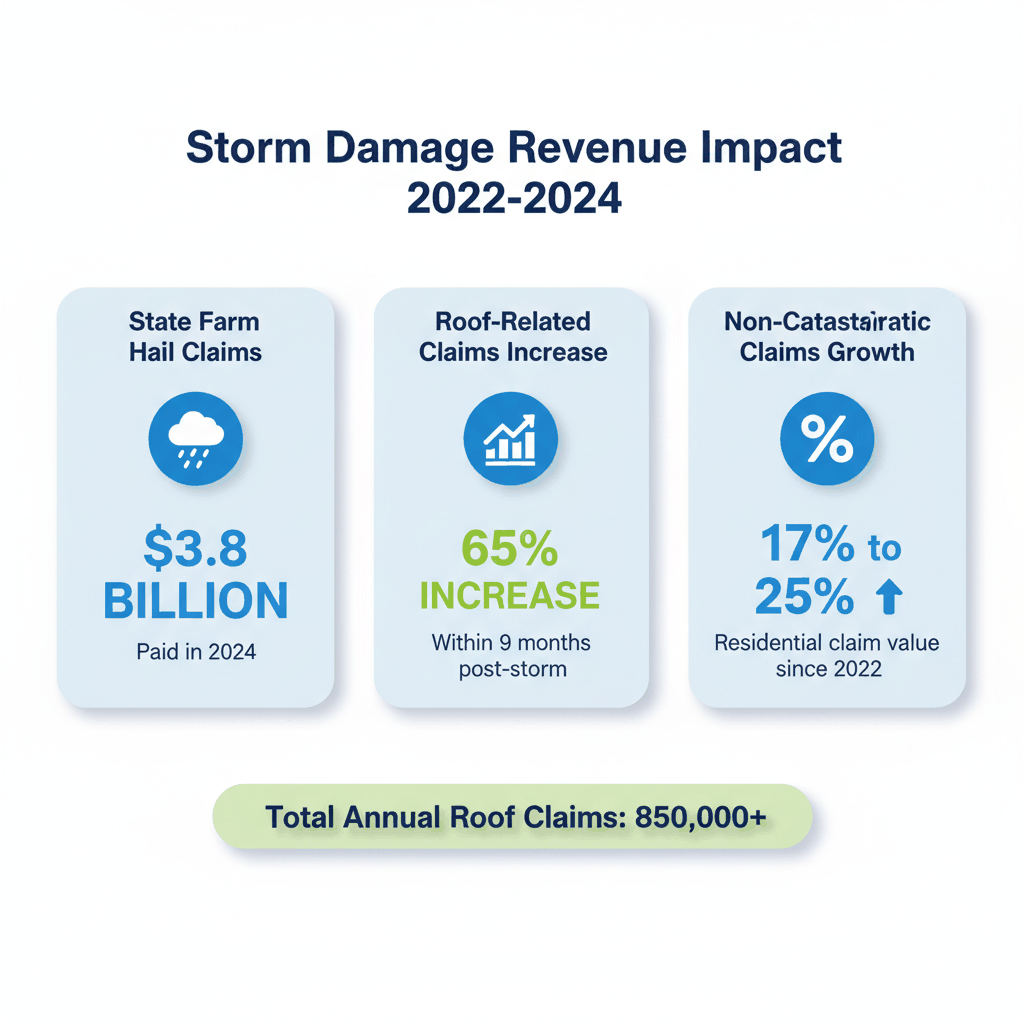
After severe storms, roof-related insurance claims increase by 65% within nine months. Roof line items now account for over a quarter of all residential claim value. Non-catastrophic wind and hail losses climbed from 17% to 25% of residential claims since 2022.
For example: A roofing contractor in Texas built relationships with three major insurance carriers. Within 18 months, those partnerships generated over $2 million in restoration work. The key was demonstrating reliability through consistent documentation and professional service.
Most homeowners prefer local businesses who will be there for future service needs. Storm chasers create temporary competition but lack long-term credibility. Local contractors who build insurance relationships capture more sustainable business.
Insurance companies prefer working with established local contractors. They know these businesses will complete work properly and remain available for warranty issues. This gives you a significant advantage over out-of-town competitors.
Most roofing contractors face predictable obstacles when building insurance relationships. Understanding these challenges helps you avoid common mistakes and accelerate your partnership development.
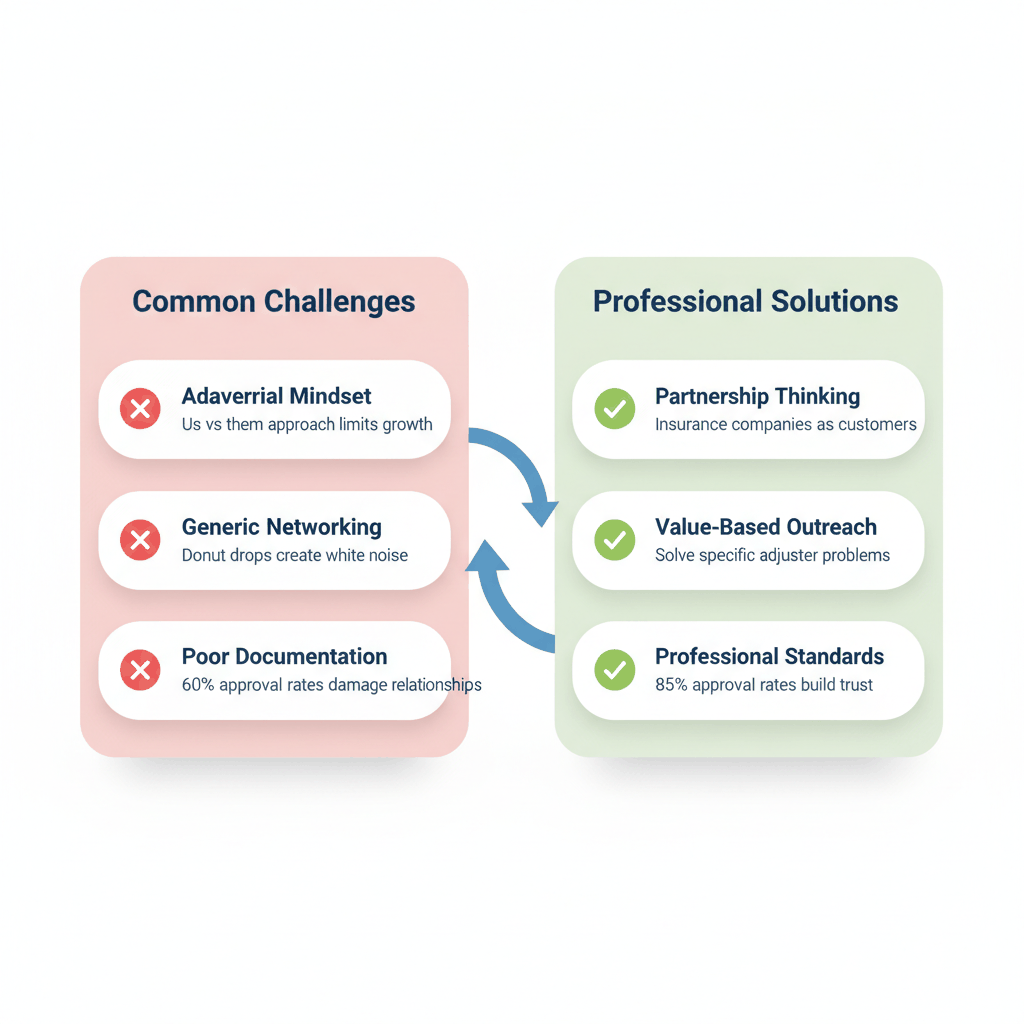
Historically, roofers have had adversarial relationships with insurance companies. Many contractors prioritize homeowners and challenge insurers at every step. This "us versus them" mindset limits your business growth.
Instead, start viewing insurance companies as extensions of homeowners. They're customers who need reliable contractors to complete approved work. This shift in perspective opens partnership opportunities.
Insurance adjusters deal with dishonest contractors regularly. When you demonstrate integrity and professionalism, you stand out immediately. This creates trust that leads to referrals.
Dropping off donuts and talking about how great you are produces minimal returns. This approach is white noise in a competitive market. Insurance professionals hear these pitches constantly.
Effective networking requires systematic approaches that demonstrate value. You need surgical precision to get in front of agents and close them on referring clients exclusively to you. Generic relationship building wastes time and resources.
Focus on solving specific problems that insurance professionals face. Show them how working with you makes their job easier. This creates compelling reasons to refer business your way.
Many roofers treat insurance claims like throwing spaghetti at a wall. They charge for whatever work they can and see what gets approved. This approach creates uncertainty and damages relationships.
Professional contractors demonstrate accountability through clear documentation. They create efficient, trustworthy processes that adjusters can rely on. This consistency builds the foundation for long-term partnerships.
For example: One contractor implemented standardized documentation processes across all insurance jobs. Within six months, his approval rate increased from 60% to 85%. Adjusters began requesting him specifically for complex claims.
Insurance adjusters control claim approvals and contractor referrals. Building positive relationships with these professionals creates your most valuable business asset. Here's how to approach these critical relationships professionally.
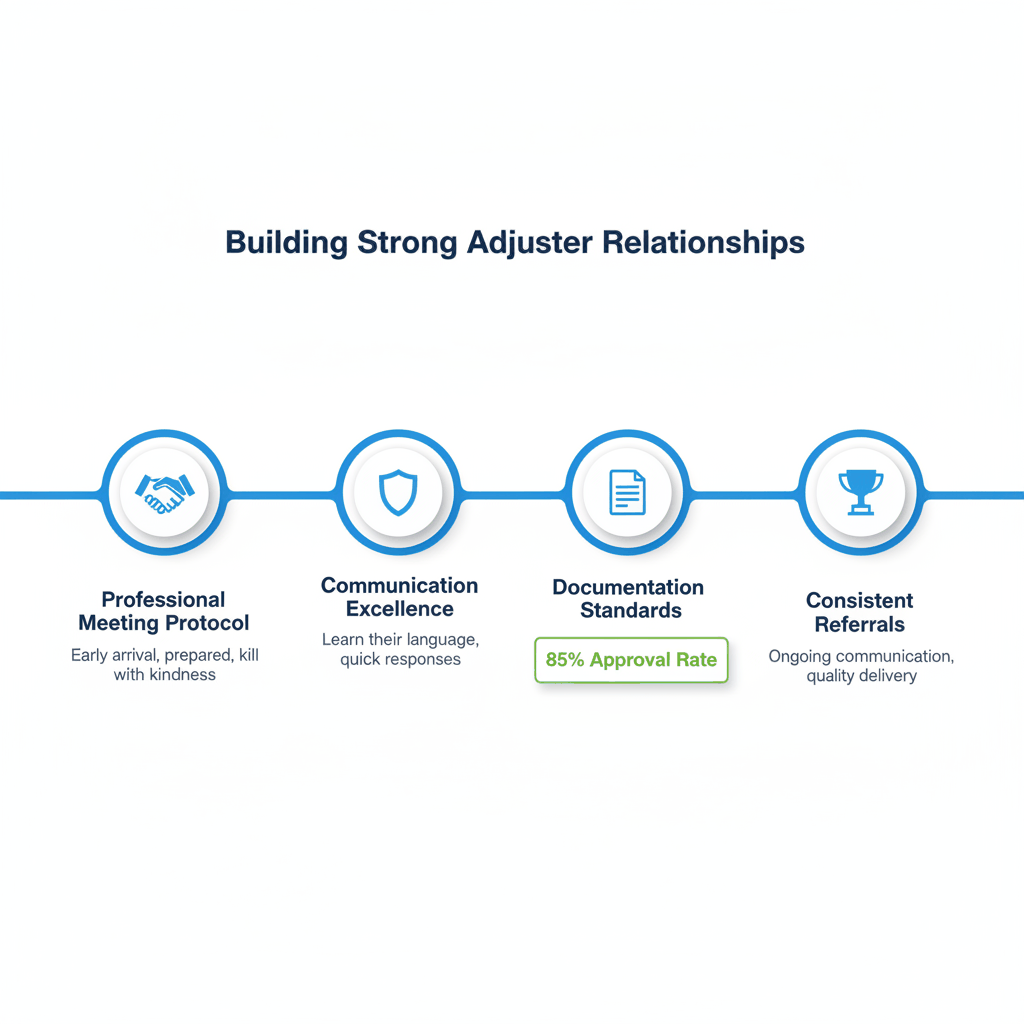
Show up early and prepared for every adjuster meeting. Adjusters are busy people with packed schedules. When you're ready to work immediately, you start the relationship correctly.
Kill adjusters with kindness consistently. Your reputation spreads quickly in the insurance industry. Adjusters will see your logo and associate you as either a "good one" or a "bad one" based on past interactions.
Never point out damage directly during inspections. Instead, ask questions like "What do you think of this?" This approach lets adjusters maintain control while you guide their attention. It's a persuasive tactic that avoids starting debates.
Learn the language that insurance adjusters use. Understanding their terminology helps you communicate more effectively. It also demonstrates your professionalism and industry knowledge.
Be responsive to adjuster requests and questions. Quick response times build trust and demonstrate reliability. Adjusters remember contractors who make their job easier.
Provide unbiased, honest claim estimates. Adjusters need accurate information to process claims efficiently. When you consistently deliver reliable assessments, you become their go-to contractor.
Consistency in quality and service builds lasting relationships. Complete every project to specification and on schedule. Follow up after project completion to ensure satisfaction.
Maintain regular communication even outside active claims. Periodic check-ins show your interest in the relationship beyond individual jobs. Share company updates like new certifications or expanded services.
One satisfied customer stated: "Your crews did a fantastic job and were very patient. Lucas's ability to get the insurance company to address all damage and recover all costs was greatly appreciated. He's an asset to both your company and customers."
Thorough documentation separates professional contractors from unreliable competitors. Insurance adjusters require accurate, comprehensive information to process claims efficiently. Your documentation quality directly impacts approval rates and referral potential.
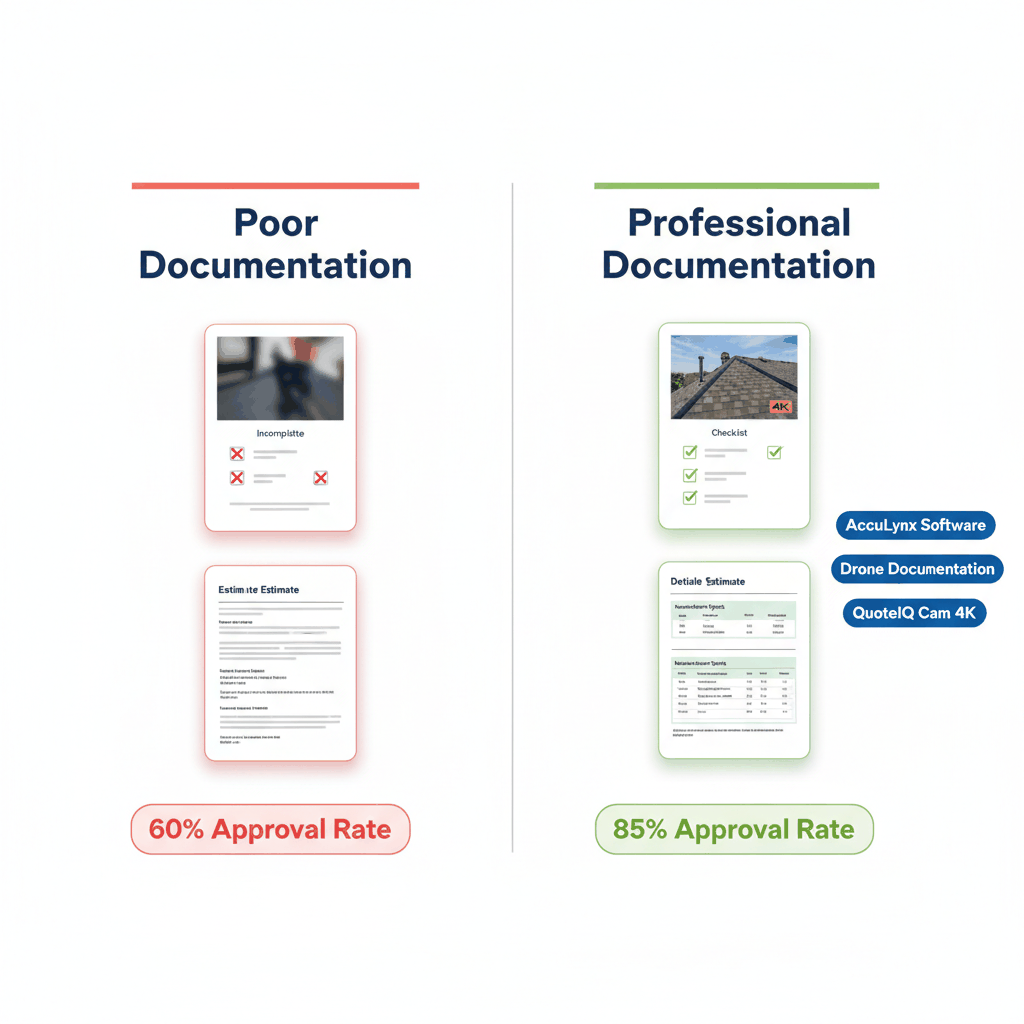
Create detailed estimates with itemized costs for materials, labor, permits, and other expenses. Break down each component clearly so adjusters understand exactly what work is required and why.
Take clear, timestamped photos of damage before, during, and after the repair process. Document all affected areas from multiple angles. Include close-up shots of specific damage and wide-angle shots showing overall impact.
Develop comprehensive inspection reports that highlight damage extent and specify how it impacts property integrity. Include manufacturer recommendations about required materials and installation processes.
Modern roofing contractors use technology to improve documentation accuracy and efficiency. AccuLynx software is designed specifically for roofing companies focused on residential insurance restoration work.
Contractors now use drones for more than 55% of projects according to recent industry data. Tools like EagleView and Hover help generate accurate aerial measurements without ladder climbing.
QuoteIQ Cam provides 4K photo documentation, before/after comparisons, custom inspection forms, and unlimited storage. All documentation saves to archive systems for easy retrieval during adjuster meetings.
Include manufacturer specifications for all recommended materials and installation methods. This shows adjusters that your approach follows industry standards and warranty requirements.
Document safety concerns and code compliance issues clearly. Explain how proposed repairs address these problems and protect the property long-term. This demonstrates professional expertise.
Provide multiple repair options when appropriate. Show adjusters different approaches with cost comparisons. This gives them flexibility while positioning you as a thoughtful problem-solver.
Strategic networking creates the foundation for insurance partnerships. Generic approaches waste time and resources. Focused strategies that demonstrate value generate real results.
Reach out to insurance companies before disasters strike. Identify and contact all major carriers in your service area. Prepare answers for common questions they might have about your services.
Stress quality and safety in all communications. Insurance professionals care about contractors who complete work properly and avoid liability issues. Position yourself as a risk-reducing partner.
Attend insurance continuing education classes, real estate networking events, and chamber of commerce meetings. Make genuine connections without pitching immediately. Be the professional who understands how insurance relationships should work.
Create leave-behind materials that highlight specific strengths like quick response times or 24-hour inspection availability. Show insurance professionals how you make their job easier.
Offer high-value, low-effort services like free storm inspections or emergency response after major weather events. These services demonstrate capability while building goodwill.
Market to insurance professionals by showcasing your understanding of their challenges. Address common pain points like contractor reliability, documentation quality, and customer satisfaction.
Maintain consistent contact with adjusters and agents through structured follow-up systems. Regular communication keeps you top-of-mind for roofing referrals.
Follow up after completing projects to express appreciation and gather feedback. This professional touch reinforces positive relationships and encourages future referrals.
Use CRM systems designed for roofing contractors to track relationship development. These tools help manage contact schedules and referral partnerships systematically.
Track specific metrics to evaluate your insurance partnership development. Clear measurement helps you optimize strategies and demonstrate ROI from relationship-building investments.
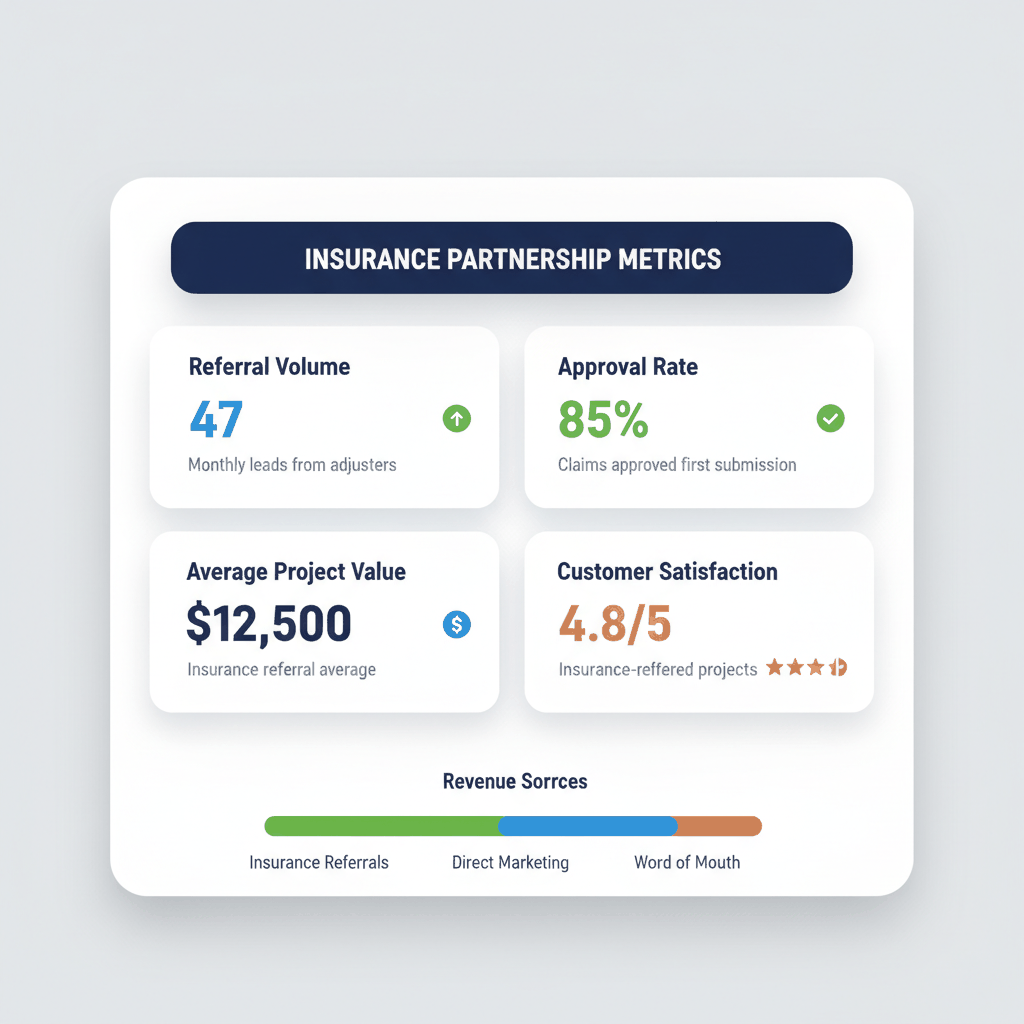
Monitor referral volume from each insurance contact monthly. Track which adjusters and agents send the most business your way. Focus additional effort on your most productive relationships.
Calculate average project value from insurance referrals versus other lead sources. Insurance leads typically convert at higher values because budgets are pre-approved.
Measure claim approval rates for your documentation. Professional contractors achieve approval rates of 85% or higher. Lower rates indicate documentation or process improvements are needed.
Compare customer acquisition costs between insurance referrals and other marketing channels. Referrals typically cost significantly less to convert than cold leads.
Track project completion timelines for insurance work. Faster completion builds adjuster confidence and increases referral likelihood.
Monitor customer satisfaction scores specifically for insurance-referred projects. High satisfaction rates encourage adjusters to continue sending business your way.
Document the number of new insurance professional contacts added monthly. Steady relationship building creates long-term success.
Track response rates to your networking outreach efforts. Improving response rates indicate better messaging and positioning.
Monitor the percentage of repeat referrals from established insurance contacts. Increasing repeat business shows growing trust and relationship strength.
How long does it take to build profitable insurance relationships?
Most successful roofing contractors see meaningful referrals within 6-12 months of consistent relationship building. The key is demonstrating reliability through quality work and professional communication. Some contractors report significant results within three months when using systematic approaches.
What's the biggest mistake contractors make with insurance companies?
Taking an adversarial approach instead of viewing insurance companies as partners. Contractors who challenge adjusters constantly or try to maximize every claim dollar damage long-term relationships. Professional contractors focus on fair, accurate assessments that build trust.
Do I need special certifications to work with insurance companies?
While not always required, certifications from manufacturers like GAF, CertainTeed, or Owens Corning demonstrate professionalism. Insurance professionals prefer working with certified contractors who follow industry standards and provide warranty coverage.
How do I compete with storm chasers for insurance work?
Emphasize your local presence and long-term availability for warranty service. Most homeowners and insurance companies prefer established local contractors over temporary storm chasers. Build relationships before storms hit your area.
What documentation do insurance adjusters need most?
Clear photos of damage, detailed estimates with itemized costs, and manufacturer specifications for materials and installation. Timestamped photos showing before, during, and after conditions help adjusters process claims efficiently.
Ready to buy roofing leads? Sign up for free with ResultCalls today!

Hello everyone! My name is Alex and I write these blogs to help educate small business owners on different ways to grow their business. My goal is to make lead generation as easy as possible for you. After reading these blogs, I hope you leave with some actionable steps that will get you closer to growing your business :)