
Do you know that just one lost customer costs your pest control business $1,200 in revenue? Most pest control companies struggle with customer churn. They win new customers but lose them within the first 90 days.
Here's the problem: 62% of customers cancel because they feel the company no longer cares about them. This happens when communication breaks down during those critical first three months.
The solution is a systematic 90-day pest control customer retention plan. Research shows that increasing retention rates by just 5% can increase profits by 25% to 95%. Plus, 91% of cancellations can be prevented with the right approach.
You'll learn how to create structured touchpoints that keep customers engaged. Transform one-time service calls into recurring revenue streams. Build a retention system that works even when you're busy treating 15 properties per day.
Table of Contents
Customer retention means keeping existing customers actively using your services. It's the difference between a struggling solo operation and a thriving business with predictable income.
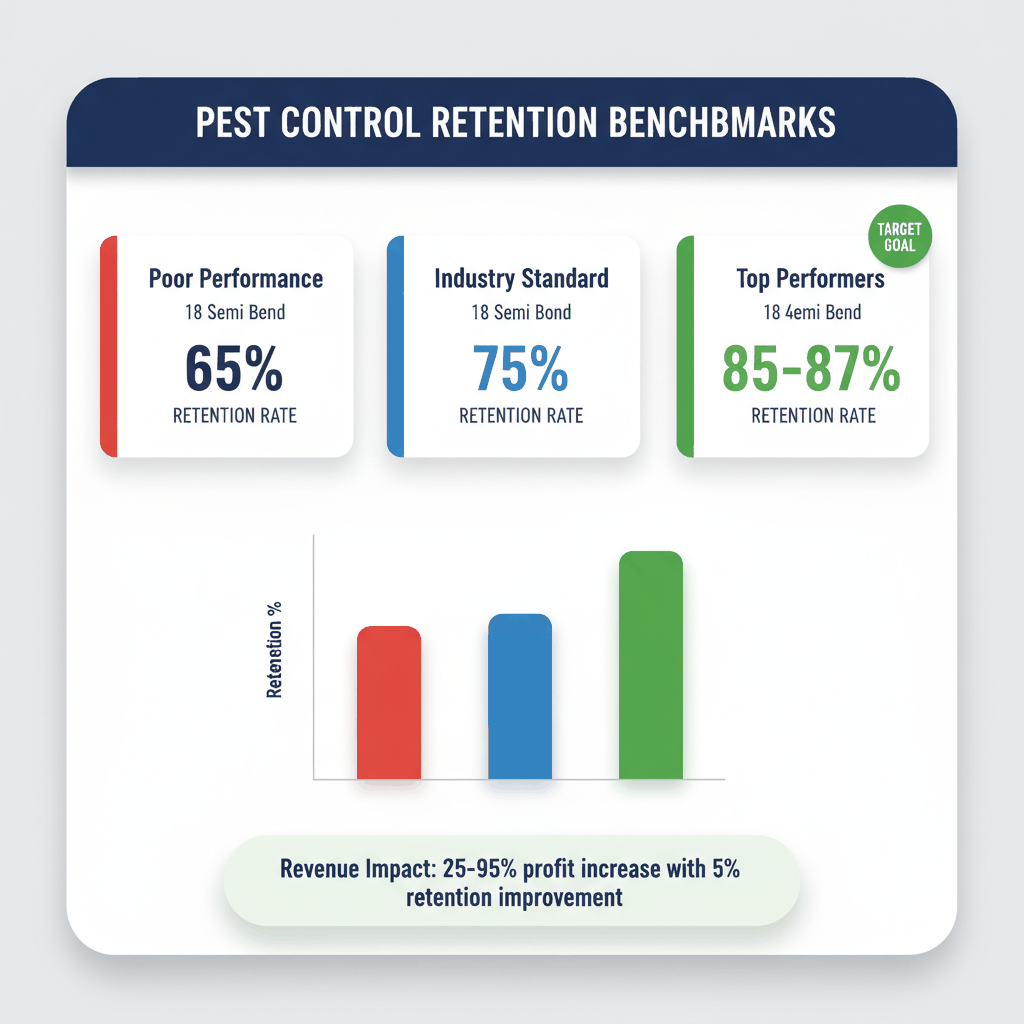
The numbers tell the story clearly. Quality pest control companies retain 75% or greater of their customer base. Top performers reach 82-87% retention rates for residential pest control and over 94% for commercial clients.
New customers are most vulnerable to churn during their first quarter. They haven't developed trust yet. They question whether your service works. Any communication gap creates doubt.
Companies with structured 90-day programs see dramatic results. They reduce cancellations by up to 30% and improve customer satisfaction scores significantly.
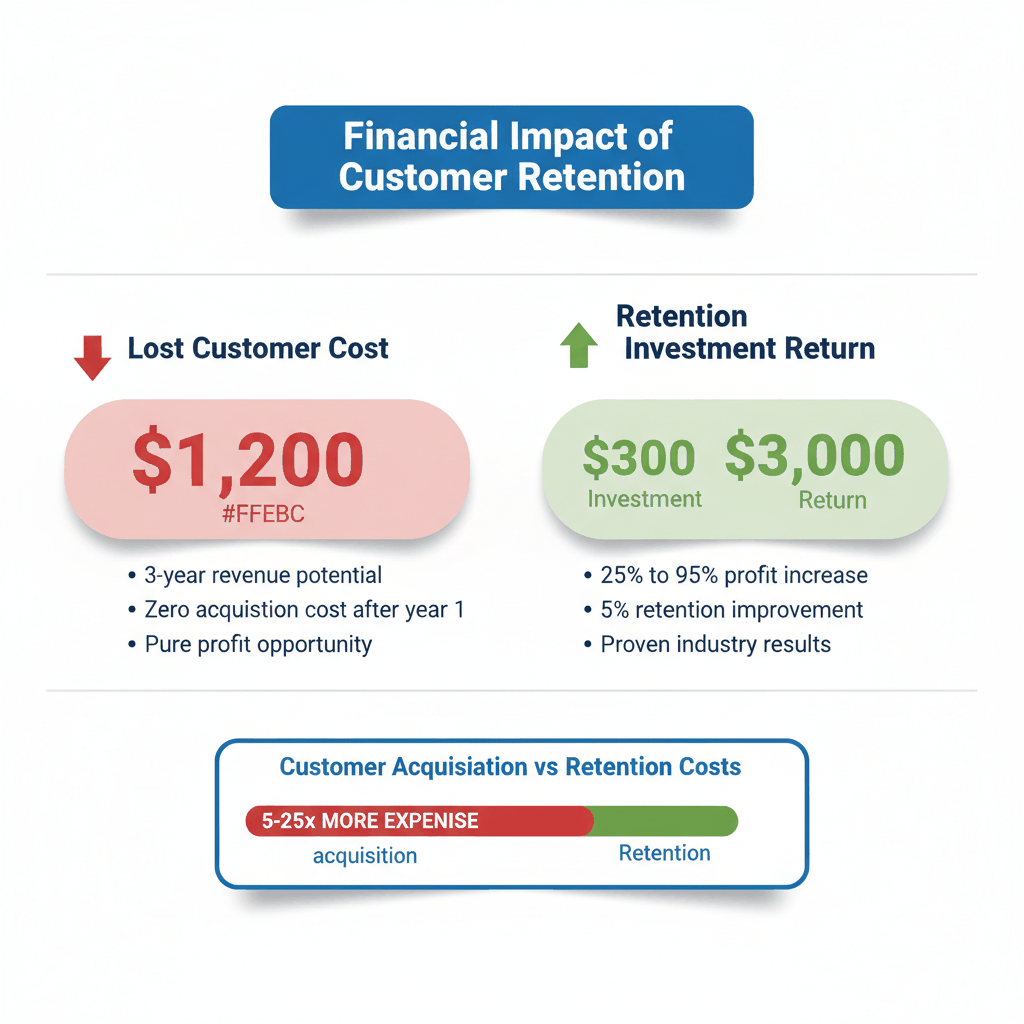
Consider a customer retained for three years. They generate $1,200 in revenue with zero additional acquisition cost. Lose that customer after one treatment, and you've lost all that future profit.
Customer acquisition costs continue rising. It's 5-25 times more expensive to acquire new customers than retain existing ones. Smart pest control operators focus on keeping the customers they already have.
Start by measuring your current retention rate. Track customers who stay active after 90 days, 6 months, and one year. Unless you're retaining 85% or better, you have room for significant improvement.
ResultCalls pest control lead generation services can help you attract quality customers who are more likely to stay long-term, setting the foundation for higher retention rates.
Poor communication is the biggest controllable threat to customer retention. The top reason customers leave is feeling poorly treated or ignored.
Your communication framework needs three elements: timing, method, and message. Get these right, and customers feel valued throughout their journey.
Implement a multi-touch approach that reduces cancellations by up to 30%. Here's the proven schedule:
Day-of text: "On my way to your property. Should arrive around [time]."
Post-service follow-up: "Completed your quarterly service today. Treated [areas]. Next visit: [date]. Questions?"
Mid-cycle check-in: "Just checking in. How are things since our last treatment?"
Pre-service reminder: "Scheduled for your next treatment on [date]. Any new pest concerns?"
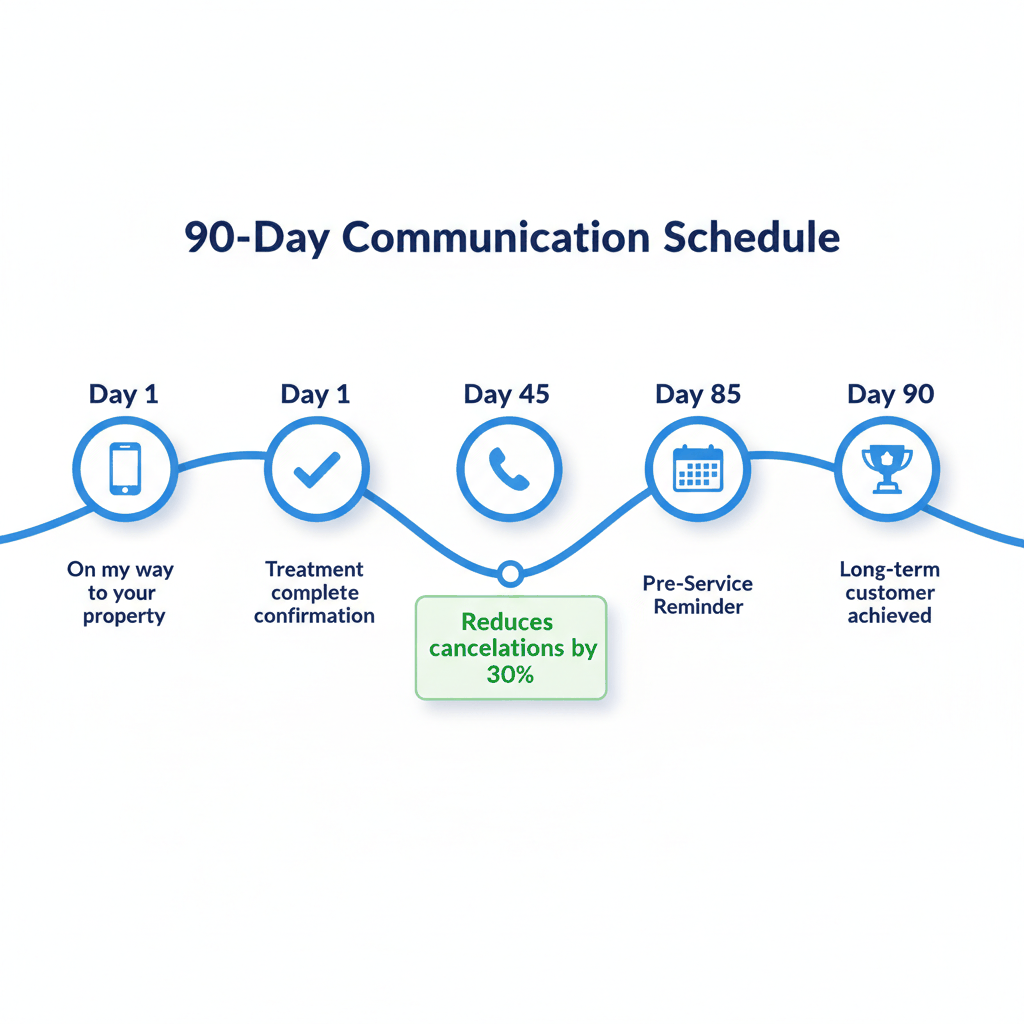
This works because customers feel informed and valued. Communication gaps are where trust erodes and competitors gain footholds.
Different messages need different channels. Understanding how customers prefer to communicate reduces friction throughout your relationship.
SMS works best for short, time-sensitive messages like appointment reminders. Email suits longer communications and advance notices. Voice calls handle urgent information and medium-length messages effectively.
Ask new customers about their communication preferences during onboarding. Then tailor your approach accordingly.
The onboarding process sets expectations for your entire relationship. Several of the best companies ask for permission during the sale to call customers after their first treatment.
During that initial follow-up call, ensure the customer is happy. Re-clarify 1 or 2 key elements of your service. These additional touches during the first several months are invaluable for earning long-term loyalty.
Create an onboarding checklist that covers service expectations, communication preferences, and property-specific needs. This prevents misunderstandings that lead to cancellations.
Maintenance programs transform one-time customers into recurring revenue streams. They position you as the trusted expert rather than just another service provider.
Pest populations follow predictable seasonal patterns. Spring moisture encourages ants indoors. Summer warmth accelerates cockroach reproduction. Cooler months drive rodents toward heat sources.
Build your maintenance programs around these natural cycles. Customers appreciate proactive service that prevents problems rather than just reacting to them.
Spring programs focus on perimeter treatments and moisture control. Summer emphasizes ongoing protection and monitoring. Fall preparations target entry points before rodent season begins.
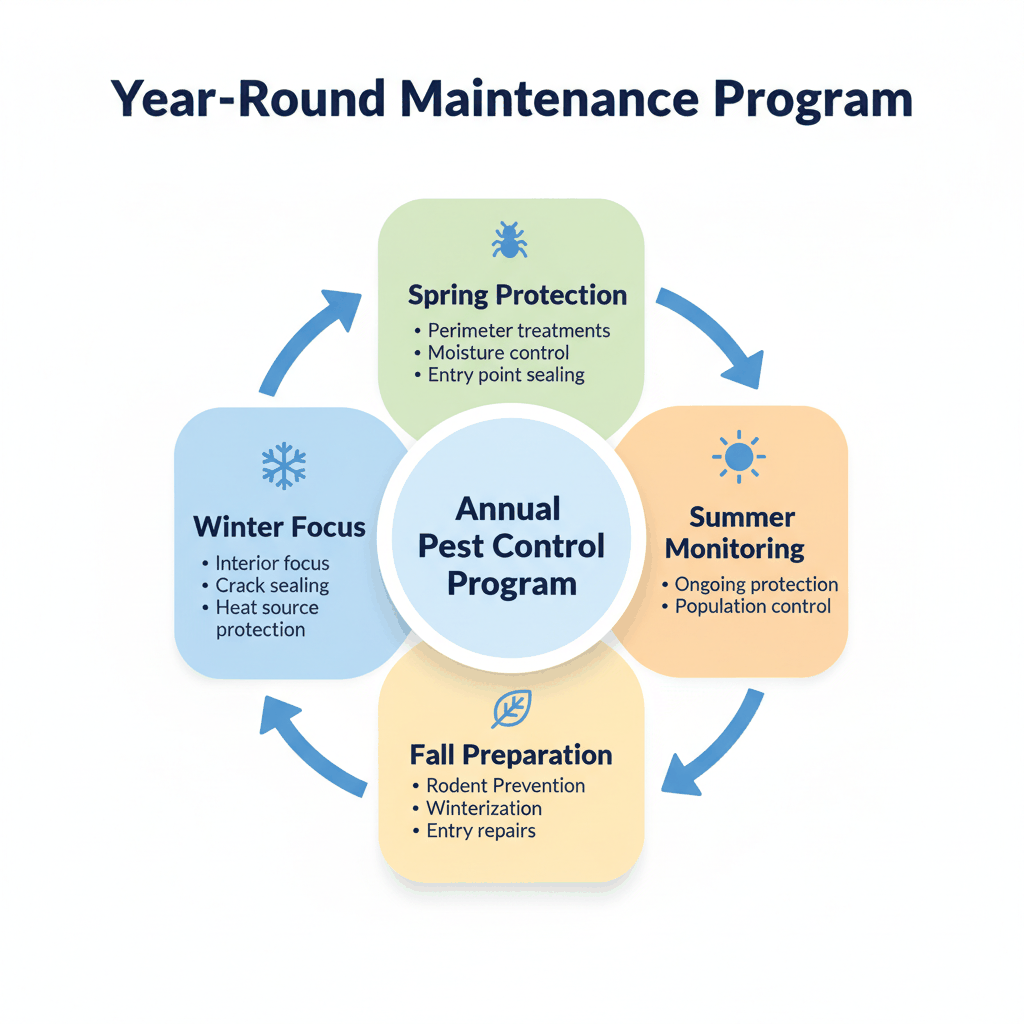
Communicate the seasonal reasoning behind each treatment. Customers who understand why they need service are less likely to skip treatments or cancel contracts.
Exceed expectations by including small extras at no charge. Treat minor issues outside the contract scope when possible. These surprise-and-delight moments cost little but create significant goodwill.
Position yourself as an expert by providing seasonal pest prevention tips, early warning signs, and DIY maintenance advice between services. This keeps your company top-of-mind year-round.
Whenever possible, assign the same technicians to the same customers. Research shows that customer retention increases when service is provided by familiar personnel.
Customers build relationships with people, not companies. When they know their technician's name and trust their expertise, switching to a competitor becomes much harder.
Train technicians to document property-specific details and customer preferences. This information helps maintain consistency even when schedule changes are necessary.
As a solo operator treating 10-15 properties daily, you don't have time for manual follow-up. Automated retention systems keep customers loyal while you focus on service delivery.
The right technology handles reminders, tracks callbacks, and remembers what you did at each property. This consistency is what separates professional operations from amateur services.
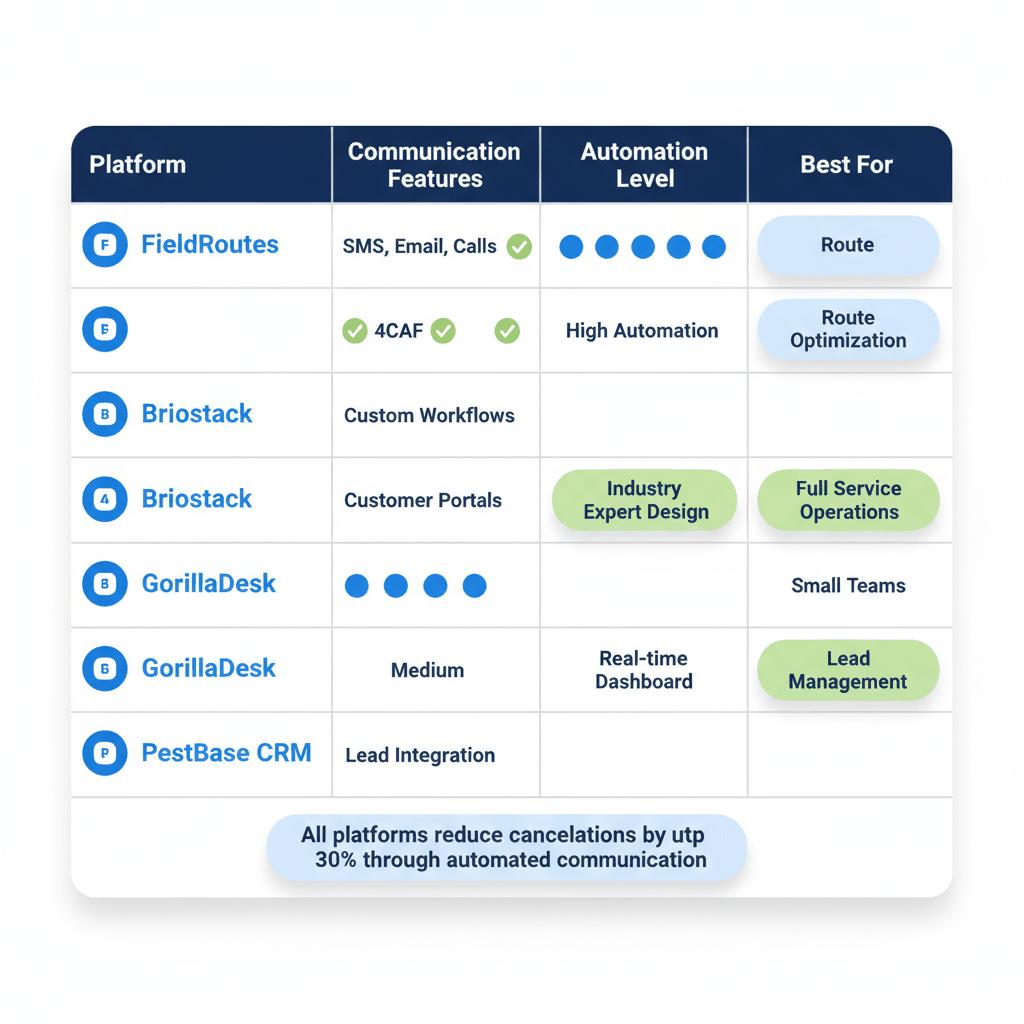
Briostack customizes communication methods based on user preferences. Their workflows and templates are designed by industry experts with over 25 years of experience.
FieldRoutes excels at route optimization, scheduling, and automated customer communications. The platform seamlessly connects the full customer journey from lead to payment and renewal.
GorillaDesk's communication tools and customer portals help you impress customers and over-deliver on your brand promise consistently.
Automation platforms like Cinch integrate customer review data and automate follow-up based on feedback. Your best customers receive targeted retention campaigns while you focus on service quality.
Set up automated sequences for different customer segments. New customers get onboarding messages. Long-term customers receive loyalty rewards. At-risk customers get special attention.
Choose platforms that integrate scheduling, billing, and communication in one system. This prevents customers from falling through cracks during busy periods.
PestBase CRM captures leads from every source and triggers immediate notifications. This ensures follow-up when customer intent is highest.
The best systems provide real-time dashboards showing customer status, upcoming renewals, and at-risk accounts. You can take action before problems become cancellations.
You can't improve what you don't measure. Track specific metrics that indicate retention health and identify improvement opportunities.
Start with basic retention rates: 90-day, 6-month, and annual. These numbers reveal how well your retention plan performs over time.
Customer lifetime value shows the total revenue each customer generates. Healthy pest control businesses generate $150,000 to $200,000 per technician annually.
Track complaint resolution rates and response times. Studies show that customers who have problems effectively handled become more loyal than those who never had issues.
Monitor referral rates from existing customers. Happy customers who refer others are unlikely to cancel their own service.
Implement systematic feedback collection after each service visit. Ask specific questions about technician performance, treatment effectiveness, and communication quality.
Use simple rating systems that customers can complete quickly. Follow up immediately on any scores below expectations.
The most loyal customers are those who have had problems that were effectively handled. Service recovery excellence can actually increase loyalty beyond baseline levels.
Calculate the revenue impact of retention improvements. Increasing retention by just 5% can boost profits by 25% to 95% in the pest control industry.
Track customer acquisition costs versus retention costs. This helps justify investment in retention programs and technology.
Measure the impact of your 90-day retention plan quarterly. Look for trends in customer satisfaction, complaint volume, and renewal rates.
What's a good pest control customer retention rate?
Quality pest control companies retain 75% or greater of their customer base. Residential companies should strive for 82-87% retention, while commercial pest control should aim for greater than 94%. Unless you're retaining 85% or better, you have significant room for improvement.
How much does poor customer retention cost my business?
A customer retained for three years generates $1,200 in revenue with zero additional acquisition cost. Lose that customer after one treatment, and you've lost all future profit. It's 5-25 times more expensive to acquire new customers than retain existing ones.
What's the main reason customers cancel pest control services?
The biggest controllable reason for cancellation is poor communication. 62% of customers cancel because they feel the company no longer cares about them. The top reasons are feeling poorly treated and failure to solve problems in a timely manner.
How can technology help with pest control customer retention?
Automated retention systems handle reminders, track callbacks, and remember property details while you focus on service delivery. CRM platforms like FieldRoutes and Briostack reduce cancellations by up to 30% through consistent communication and follow-up.
Should I assign the same technician to recurring customers?
Yes, whenever possible. Research shows customer retention increases when service is provided by familiar personnel. Customers build relationships with people, not companies, making it harder for them to switch to competitors.
Ready to buy pest control leads? Sign up for free with ResultCalls today!

Hello everyone! My name is Alex and I write these blogs to help educate small business owners on different ways to grow their business. My goal is to make lead generation as easy as possible for you. After reading these blogs, I hope you leave with some actionable steps that will get you closer to growing your business :)