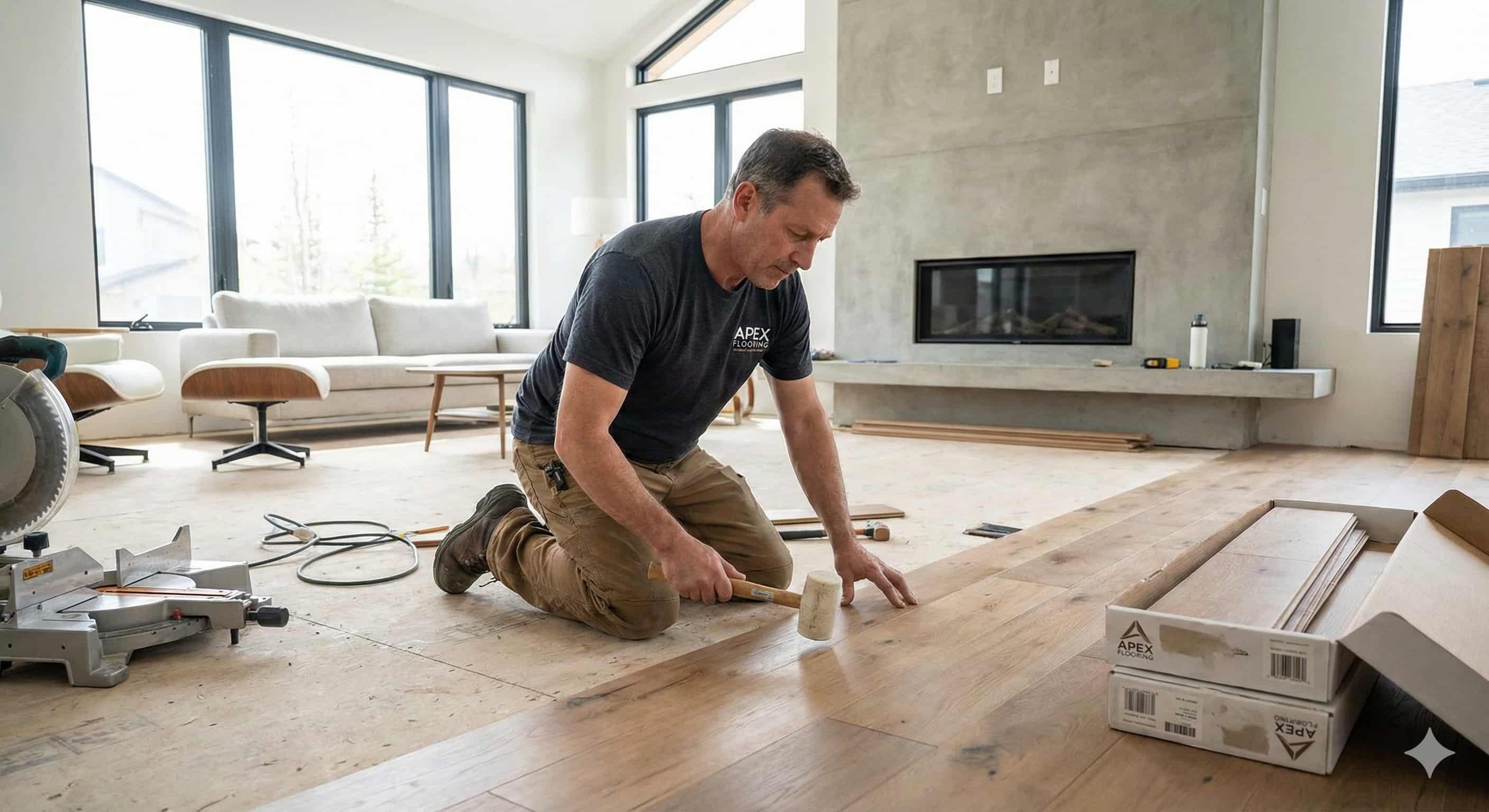
Your phone rings at 2 PM on a Tuesday. A homeowner needs new hardwood floors for their living room. They're ready to hire someone this week. But instead of picking up professionally, your crew member answers with a muffled "Hello?" while a power saw screams in the background. The homeowner hangs up. You just lost a $8,000 job.
Flooring sales calls are your lifeline to consistent revenue. Phone calls convert 10-15 times better than web forms. They represent customers who've moved past online research and want real conversations about their projects. Yet most flooring contractors handle these golden opportunities poorly.
The result? Missed revenue, lost estimates, and watching competitors book jobs while your phone goes to voicemail. This guide shows you exactly how to handle flooring sales calls that actually convert into profitable jobs.
What You'll Learn
Why Flooring Sales Calls Fail
Professional Phone Handling Scripts
Best Flooring Lead Conversion Strategies
Optimal Call Timing and Follow-up
Communication Techniques That Work
Tools and Technology Solutions
Most flooring contractors lose money before they even speak. The problems start with unprofessional call handling. Picture calling a flooring company and hearing chaos instead of competence.
Have you ever called a business and instantly knew you weren't hiring them? After six rings, someone finally picks up with "Yeah?" while power tools scream in the background. No company name, no greeting, just pure chaos. You hang up and move to the next Google result.
Research shows that 23% of businesses never call leads back at all. In the flooring industry, this translates to massive lost revenue. When your average project costs $4,700, missing just one call per week costs you $244,400 annually.
Contractors face unique challenges. You're installing floors, managing crews, and coordinating deliveries. Answering calls feels impossible. But 80% of callers who reach voicemail hang up without leaving messages.
Shared leads create instant competition. Multiple contractors chase the same homeowner. This usually turns into a price war. Your chances of winning drop significantly.
When you're the only contractor calling, you control the conversation. One company found their appointment rates were 2-3 times higher with exclusive leads. Being first matters more than being cheapest.
Professional call handling starts with preparation. You need scripts, systems, and standards. Here's exactly how to answer flooring sales calls that convert.
Your greeting sets the tone for everything that follows. Use this proven formula:
Company name first: "ABC Flooring"
Your name: "This is Mike"
Helpful question: "How can I help you today?"
Complete example: "ABC Flooring, this is Mike. How can I help you today?"
This takes 4 seconds. It sounds professional. Customers know they reached the right business. You've established personal connection by sharing your name.
Once you've greeted them professionally, gather project details systematically. Ask these questions in order:
"What type of flooring are you interested in?"
"How many square feet are we looking at?"
"What's your ideal timeline for installation?"
"Have you removed the old flooring yet?"
"What's the best number to reach you at?"
These questions serve multiple purposes. They show you're thorough and professional. They help you quote accurately. They build rapport through conversation. Most importantly, they qualify the lead before you invest time in an estimate.
Never end a call without scheduling the next step. Use assumptive language that moves prospects forward:
"I'd love to take a look at your project and give you an accurate quote. I have availability Thursday afternoon or Friday morning. Which works better for your schedule?"
This approach offers choices while assuming they want to meet. You're not asking if they want an estimate. You're asking when they prefer to schedule it.
Converting flooring leads requires understanding buyer psychology and sales fundamentals. Homeowners call multiple contractors. Your job is standing out from the competition.
Not every caller is worth your time. The benchmark for qualifying calls should be around 50 percent. If you qualify less than half your leads, you need better targeting.
Qualify leads using the BANT method:
Budget: Can they afford your services?
Authority: Are they the decision maker?
Need: Do they have a real flooring problem?
Timeline: When do they want installation completed?
Ask direct questions about each factor. "What budget range are you working with?" sounds more professional than dancing around price. Most homeowners appreciate honesty about costs.
Homeowners hire contractors they trust. Demonstrate expertise through specific questions and helpful advice. Instead of just quoting price, explain the process.
"Based on your subfloor condition, I recommend engineered hardwood over solid planks. It's more stable in your climate and costs about 20% less to install."
This positions you as an advisor, not just another bid. Customers remember contractors who educate them about their options.
To get flooring marketing leads and only pay per call, sign up for free with ResultCalls.
When you call matters as much as what you say. Timing affects connection rates, conversation quality, and conversion rates.
Research shows the best days to call are Wednesdays and Thursdays. The optimal time window is 4-5 PM, which sees 71% more success than morning calls.
Why does this work? People are wrapping up their workday. They're more relaxed and have time to talk. Morning calls interrupt busy schedules. Evening calls feel intrusive.
For flooring contractors, this timing is perfect. Most installation work happens during business hours. Calling prospects at 4:30 PM means you're probably finished with job sites for the day.
Most contractors give up too early. On average, it takes about eight attempts to reach a prospect. About 80% of sales occur after the fifth call.
Create a systematic follow-up schedule:
Initial call: Same day as inquiry
Follow-up 1: Next business day
Follow-up 2: 3 days later
Follow-up 3: 1 week later
Follow-up 4: 2 weeks later
Vary your approach with each attempt. Leave voicemails, send text messages, and try different times of day. Persistence pays off when your average project value is $4,700.
High-intent leads need responses within 30 minutes. If you wait longer, conversion chances drop by 62%. This immediate response requirement is critical in flooring where homeowners typically request multiple quotes.
Being first to respond dramatically increases your closing rate. Even if you can't provide a detailed quote immediately, acknowledge their inquiry quickly. A simple text saying "Got your request, will call you in 20 minutes" keeps you top of mind.
Effective communication goes beyond scripts. Your tone, pace, and approach affect how prospects perceive your professionalism and expertise.
Speak clearly and at a moderate pace. Nervous contractors often talk too fast, making them sound unprofessional. Use the prospect's name during conversations. It creates connection and shows you're paying attention.
Avoid speakerphone unless you're parked and alone in your vehicle. Find a quiet space for important calls. Background noise from job sites makes you sound disorganized.
Have your calendar readily available so you can schedule consultations immediately without calling back. Take notes during every call. This shows professionalism and helps you prepare for estimates.
Generic questions get generic answers. Specific questions demonstrate expertise and help you provide better solutions.
Instead of asking "What kind of flooring do you want?" try "What drew you to consider hardwood over laminate for this space?" This shows you understand different flooring types and care about their specific needs.
Ask clarifying questions like "When you say 'updated,' what specific changes are you envisioning?" or "What's your ideal timeline for completion?" These details help you provide accurate quotes and set proper expectations.
Starting conversations with "How have you been?" can increase success rates by 6.6 times. This opening acts as a pattern interrupt that keeps prospects engaged.
For return customers, this approach works perfectly. For new prospects, modify it slightly: "Thanks for calling about your flooring project. How's your day going so far?" This sounds natural and creates a positive tone.
The right tools can transform how you handle flooring sales calls. From AI answering services to CRM systems, technology helps you capture and convert more leads.
SkipCalls acts as a full-service business manager by qualifying leads and booking estimates directly into your calendar. If a potential client calls about a $3,000 bathroom tile renovation while you're running a floor sander, SkipCalls collects their details, explains your services, and schedules a site visit.
Unlike traditional receptionists, AI answering services offer unlimited call volume for around $3.99 per week. You never lose high-value leads because your hands were full with installation work.
The technology includes advanced natural language processing that can answer common flooring questions. Customizable voice options let you match your brand personality. Built-in spam detection protects you from time-wasting calls.
Comp-U-Floor CRM is designed specifically for the flooring industry. It simplifies how you manage leads, track sales stages, and organize customer data all in one place.
The system lets you move deals seamlessly through stages like Qualified, Specification, Estimating, Quote, Won, or Lost. You can instantly pull up customer details, notes, and recent activity so you're always prepared for calls.
For contractors who prefer simpler solutions, PipelineCRM helps you manage leads and customers, increase sales, and save time with easy-to-use software designed for field teams.
A virtual receptionist delivers 24/7 availability at a fraction of the cost of hiring in-house staff. Instead of paying for salary, benefits, and training, you get reliable phone service for as little as $20-25 per month.
Compare that to a full-time receptionist who would cost at least $290 per week. The ROI speaks for itself when you consider that missing just one $4,700 flooring job pays for five months of virtual receptionist services.
Services like AnswerForce let you customize call scripts specific to flooring projects. Receptionists use your script to answer customer queries consistently and professionally.
You can't improve what you don't measure. Track these key metrics to optimize your flooring sales call performance and identify areas for improvement.
Aim for the 30/50/50 benchmark as your north star: 30 percent reach rate, 50 percent qualified rate, 50 percent close rate of qualified prospects. Strong follow-up and sales processes should help you book 30% to 40% of incoming leads.
The average conversion rate for sales calls ranges from 13% to 25%. However, with proper qualification and follow-up systems, many flooring contractors achieve close rates between 25% to 40%.
Track these specific numbers monthly:
Total incoming calls
Calls answered vs. missed
Qualified leads from total calls
Estimates scheduled from qualified leads
Jobs sold from estimates completed
Average project value
Revenue per lead
Here's how proper call handling affects your bottom line. Let's say your monthly marketing budget is $1,500, generating 30 leads at $50 per lead.
With a 33% booking rate, you schedule 10 estimates. With a 30% close rate, you complete 3 new projects. If your average project value is $4,500, that's $13,500 in revenue from $1,500 in marketing spend.
Improve your call handling to achieve 40% booking rates and 35% close rates. Now you schedule 12 estimates and close 4 projects, generating $18,000 in revenue from the same marketing investment.
That $4,500 increase in monthly revenue comes directly from better phone skills and systems. Multiply by 12 months, and improved call handling generates an additional $54,000 annually.
How quickly should I respond to flooring sales calls?
Respond to flooring sales calls within 30 minutes when possible. Research shows conversion chances drop by 62% when response times exceed this window. In the competitive flooring market where homeowners typically request multiple quotes, being first to respond dramatically increases your closing rate.
What's the best time to make flooring sales calls?
The optimal time for flooring sales calls is Wednesday and Thursday between 4-5 PM. This timing sees 71% more success than morning calls because prospects are wrapping up their workday and have time for detailed conversations about their flooring projects.
How many follow-up attempts should I make on flooring leads?
Make at least 5-8 follow-up attempts on quality flooring leads. Statistics show 80% of sales occur after the fifth call, and it takes an average of eight attempts to reach a prospect. With flooring projects averaging $4,700, persistence pays off significantly.
What information should I gather during initial flooring sales calls?
Gather essential project details including flooring type preferences, square footage, installation timeline, current flooring removal status, and contact information. Also qualify their budget range and decision-making authority to ensure you're investing time in viable prospects.
How can technology improve my flooring sales call conversion rates?
AI answering services like SkipCalls can qualify leads and schedule estimates 24/7, ensuring you never miss opportunities while on job sites. CRM systems designed for flooring contractors help track leads through your sales pipeline and improve follow-up consistency, leading to higher conversion rates.
Ready to get more flooring marketing leads? Sign up for free with ResultCalls today!

Hello everyone! My name is Alex and I write these blogs to help educate small business owners on different ways to grow their business. My goal is to make lead generation as easy as possible for you. After reading these blogs, I hope you leave with some actionable steps that will get you closer to growing your business :)