Why do some HVAC contractors close 8 out of 10 sales while others struggle to get 3? The difference isn't price or equipment quality. It's understanding HVAC customer psychology.
Most HVAC business owners approach sales backwards. They lead with technical specs or pricing when homeowners make decisions based on trust, fear, and psychological triggers. This disconnect costs thousands in lost revenue every month.
Smart HVAC contractors use homeowner buying behavior to their advantage. They understand how customers think, what drives their decisions, and how to present solutions that feel right. The result? Higher close rates, bigger tickets, and customers who refer friends without being asked.
You'll learn the five psychological principles that control every HVAC sale. Plus proven strategies to increase your close rate and average ticket using simple behavioral insights. Ready to transform how customers see your business? ResultCalls HVAC lead generation helps HVAC contractors connect with homeowners who are ready to buy.
Table of Contents
HVAC customer psychology goes beyond traditional sales tactics. It's about understanding the mental triggers that drive homeowner decisions. When you grasp these patterns, you can align your approach with how customers naturally think and feel.
Most homeowners don't understand HVAC systems. They rely on trust signals and emotional cues to make choices. A survey shows 92% of respondents say contractor reputation is extremely or very important. Yet many contractors still lead with price or technical details.
The psychology works like this. Fear drives urgency. Trust enables action. Value justifies price. When you understand these three pillars, every conversation becomes more effective.
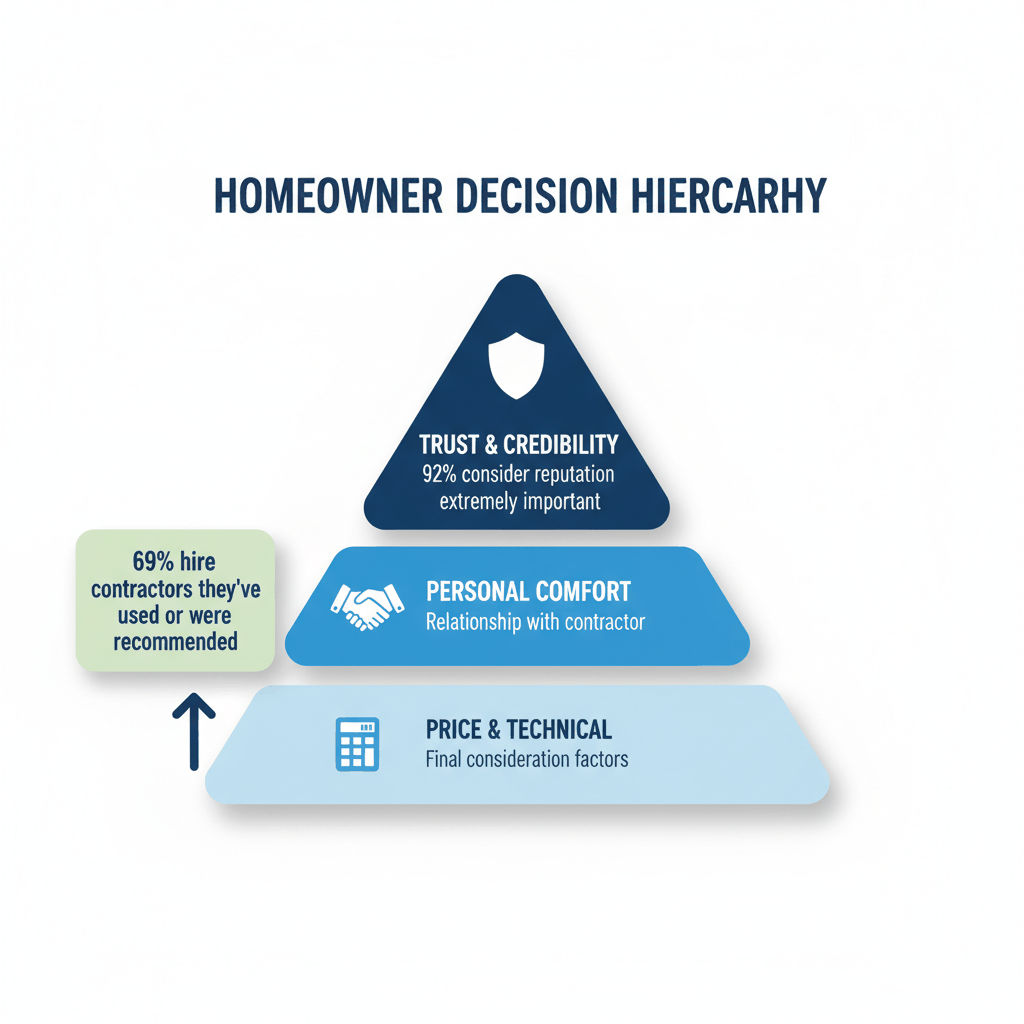
Homeowners follow a predictable pattern when choosing HVAC contractors. First comes trust and credibility. Then comfort level with the person. Finally, price and technical considerations.
Research reveals that 69% of homeowners hired companies they'd used before or that friends recommended. Personal experience and referrals beat online search and advertising every time.
Homeowners make emotional decisions and justify them with logic. The broken AC on a hot day creates urgency. The fear of another breakdown drives action. The desire for comfort seals the deal.
Your job isn't to educate customers about SEER ratings. It's to connect with their emotions and provide logical reasons to move forward. When both align, sales become natural conversations.
Understanding HVAC consumer behavior means recognizing the obstacles that prevent homeowners from making decisions. These psychological barriers affect every sale, but most contractors don't know how to address them.
Choice overload kills sales. When homeowners face too many options, they postpone decisions or choose nothing. A famous study showed that when 24 flavors were available, only 3% of shoppers purchased. When only 6 flavors were offered, 30% bought something.
The same principle applies to HVAC sales. Present three clear options instead of overwhelming homeowners with endless configurations. Good, Better, Best works because it simplifies complex decisions.
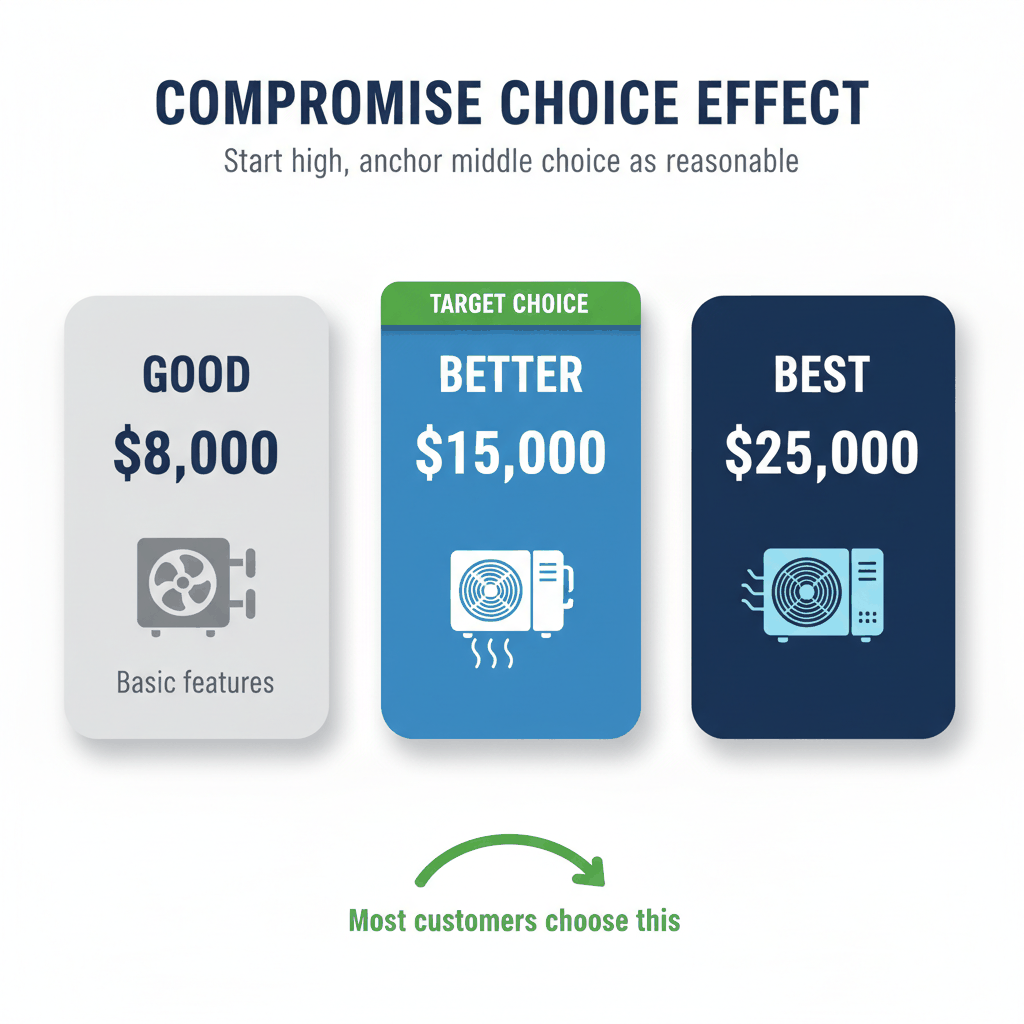
The first price homeowners see becomes their anchor point. If you start low, everything else seems expensive. If you start high, your target price feels reasonable by comparison.
Most HVAC companies present options in ascending price order. This anchors customers low and reduces average tickets. Smart contractors use strategic anchoring to their advantage.
Poor communication creates doubt. When customers don't understand your recommendations, they assume you're trying to oversell them. This triggers defensive behavior and stalls the sales process.
Studies show that 82% of consumer decisions are affected by negative reviews. One bad experience spreads faster than ten positive ones. Clear communication prevents misunderstandings that damage trust.
These behavioral techniques increase close rates and average tickets by working with natural human psychology instead of against it.
People naturally gravitate toward middle options. They don't want the cheapest solution or the most expensive. They want the "just right" choice that feels smart and reasonable.
Structure your presentations around this bias:
Present three clear options: Good, Better, Best
Price the middle option at your target average ticket
Start with the highest-priced option to anchor high
Make the middle option clearly superior to the basic choice
For example: If your target is $15,000, present options at $25,000, $15,000, and $8,000. Most customers will choose the middle option because it feels reasonable compared to the high anchor.
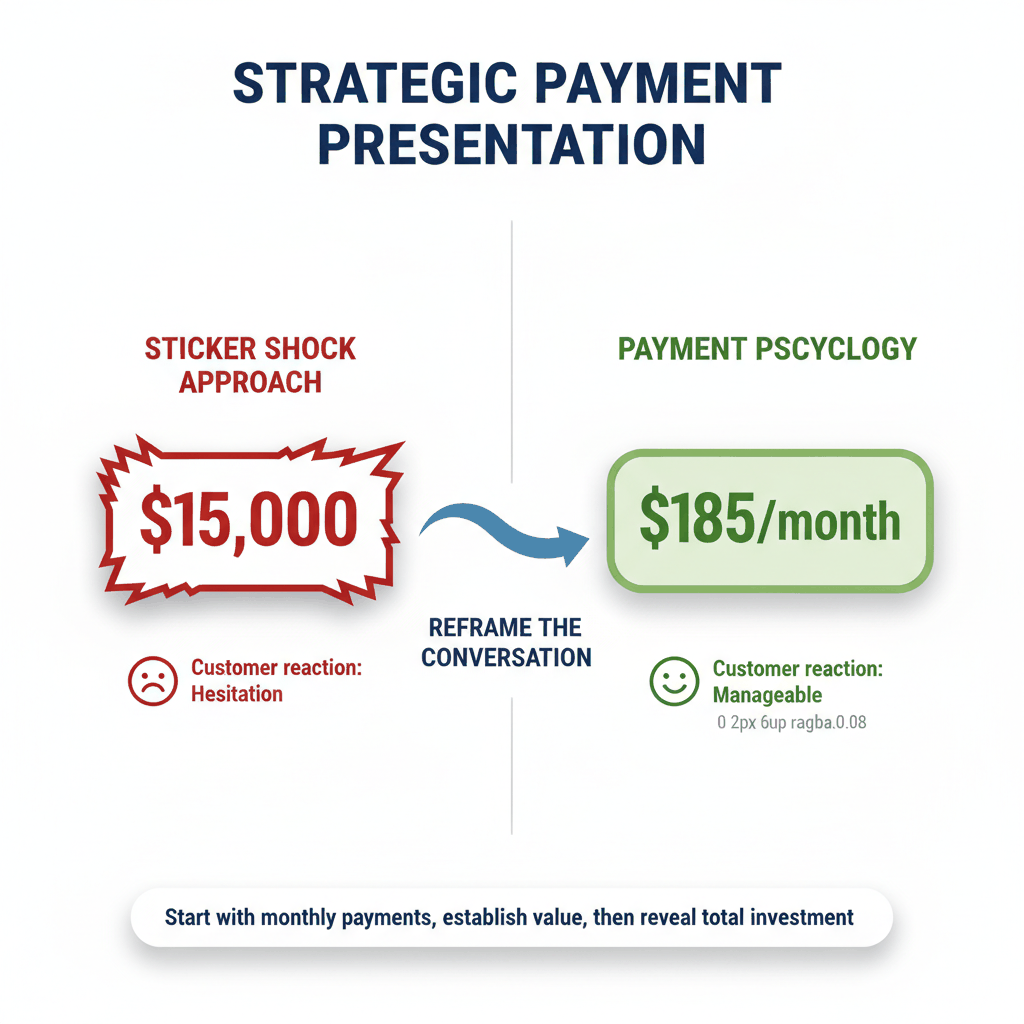
Start conversations with monthly payments, not total prices. This prevents sticker shock and keeps homeowners engaged. Payment discussions feel more manageable than large lump sums.
Here's the sequence:
Discuss monthly payment options first
Establish value through demonstrations and benefits
Present total investment after value is clear
Compare to higher-priced alternatives when possible
Visual and tactile demonstrations overcome skepticism better than words alone. Show quality differences instead of describing them. Let customers touch, see, and experience the contrast.
Effective demonstration techniques include:
Comparing new and old components side by side
Showing energy efficiency ratings on actual equipment
Demonstrating noise levels between systems
Using before and after photos from similar homes
People hate losing more than they enjoy gaining. Frame your presentations around preventing problems rather than just highlighting benefits. "You don't want this breakdown to happen again" hits harder than "This system is more efficient."
Trust accelerates every part of the sales process. When homeowners trust you, they listen to recommendations, accept higher prices, and refer friends. Without trust, every conversation becomes an uphill battle.
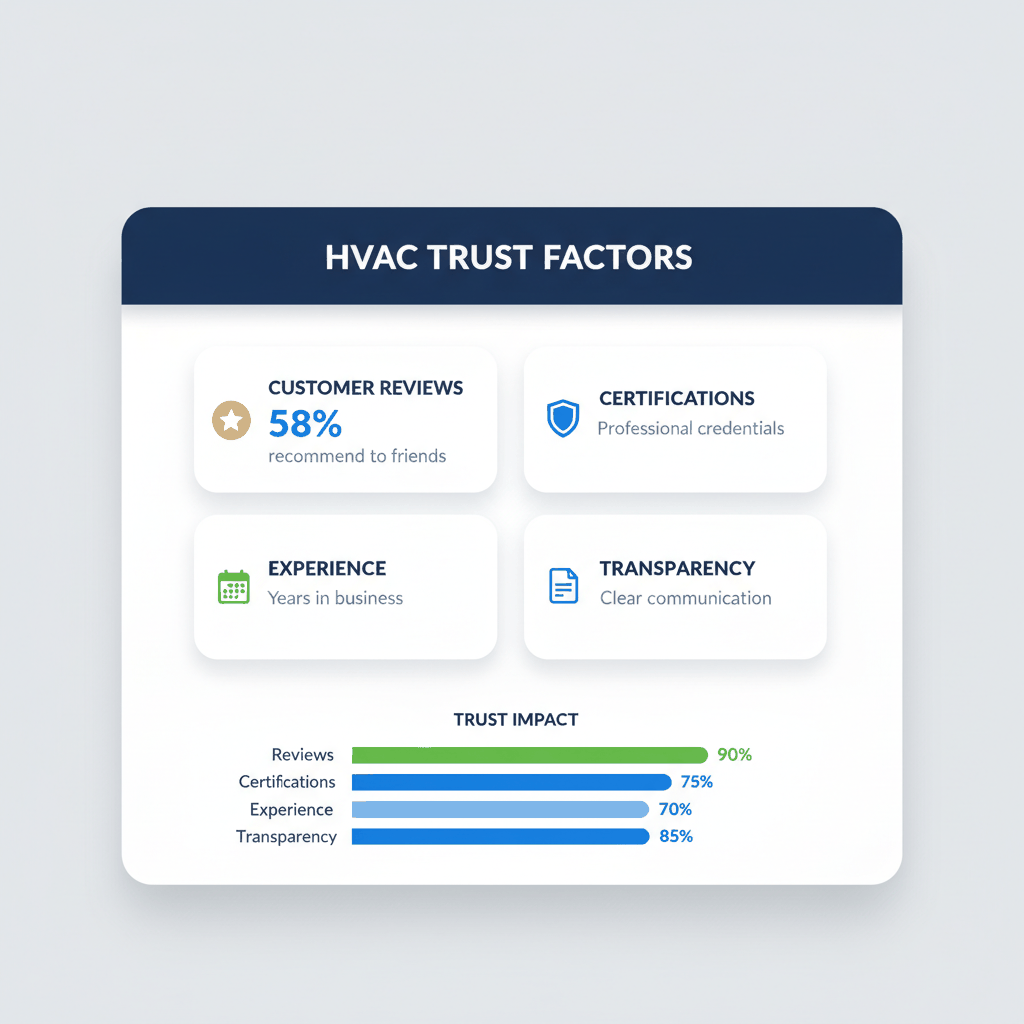
Customer testimonials and reviews provide third-party validation that reduces buying risk. Display positive feedback prominently and address negative reviews professionally.
Recent studies show that 58% of consumers recommend companies they trust to friends and family. Your reputation becomes your best sales tool when managed properly.
Certifications, licenses, and industry affiliations communicate expertise without you having to claim it. Display these credentials prominently on trucks, uniforms, and marketing materials.
Key credibility elements include:
Current licensing and insurance information
Manufacturer certifications and training
Industry association memberships
Years of experience and local presence
Explain your recommendations clearly and honestly. When customers understand why you suggest certain solutions, they're more likely to accept them. Avoid technical jargon that confuses rather than clarifies.
Effective communication involves:
Using simple language to explain complex concepts
Providing written estimates with clear breakdowns
Following up consistently throughout the process
Addressing concerns promptly and thoroughly
The customer journey from initial contact to final sale involves multiple psychological touchpoints. Each interaction either builds confidence or creates doubt. Smart contractors design processes that naturally guide customers toward positive decisions.
You have about seven seconds to make a positive first impression. Everything from your truck's appearance to your technician's professionalism sends signals about your company's quality and reliability.
First impression elements that matter:
Clean, professional vehicle with clear branding
Neat uniforms with name tags and certifications
Professional-looking equipment and tools
Punctuality and courteous communication
Structure your consultations to build trust gradually while gathering information. Start with relationship building, move to problem identification, then present solutions that address specific concerns.
The consultation should flow like this:
Listen to customer concerns and ask clarifying questions
Conduct thorough diagnostic assessment
Explain findings in simple, understandable terms
Present solutions tailored to their specific situation
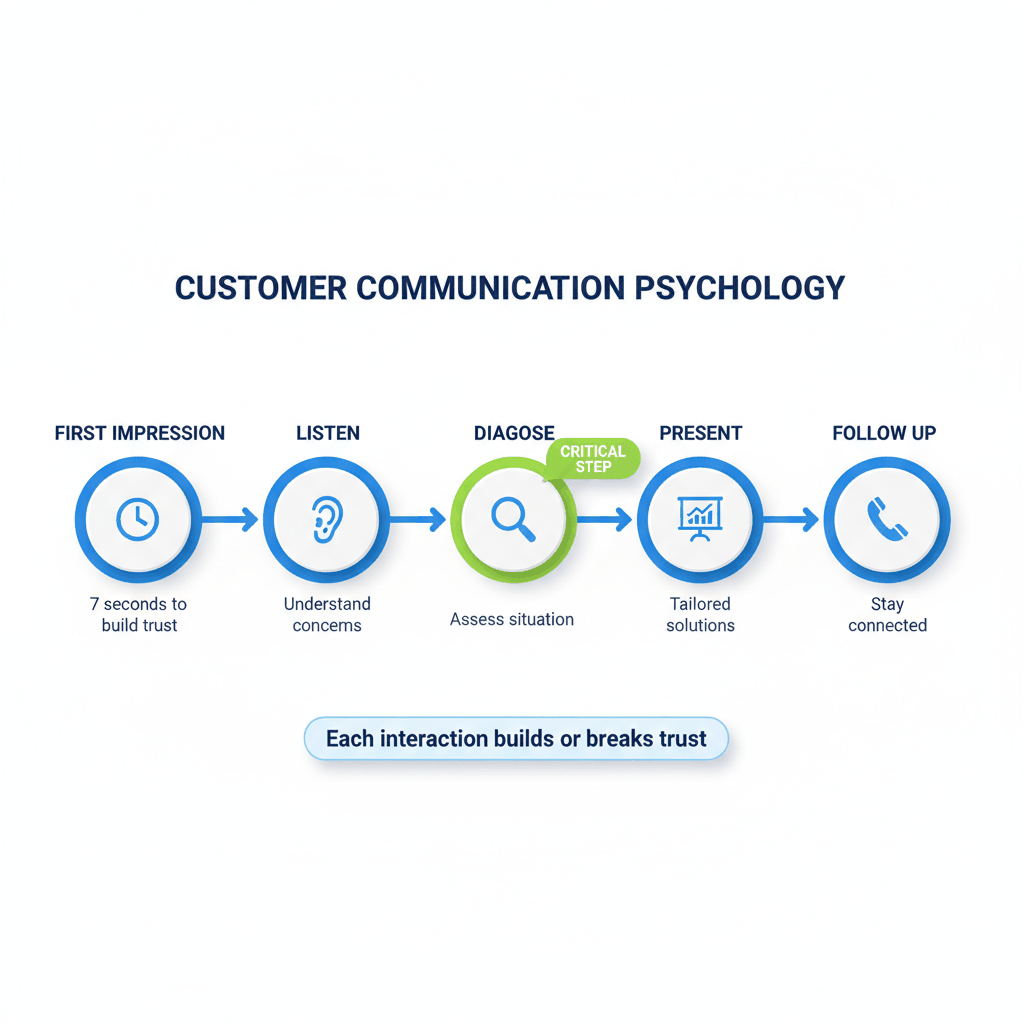
Most sales require multiple touchpoints before customers make decisions. Consistent follow-up shows professionalism and keeps your company top of mind when they're ready to buy.
Effective follow-up includes:
Thank you calls within 24 hours of estimates
Educational content that reinforces your recommendations
Seasonal reminders about maintenance and upgrades
Check-ins after installations to ensure satisfaction
When you understand homeowner buying behavior patterns, you can design processes that feel natural and pressure-free while guiding customers toward positive decisions. Quality HVAC lead generation connects you with homeowners who are already interested in HVAC solutions.
What drives HVAC customer psychology decisions?
Trust and reputation drive most HVAC customer decisions. Research shows 92% of homeowners consider contractor reputation extremely important. Fear of breakdowns and desire for comfort also influence choices more than price alone.
How does homeowner buying behavior affect HVAC sales?
Homeowner buying behavior follows emotional patterns rather than logical ones. They make decisions based on trust and justify with facts. Understanding these patterns helps contractors present solutions that align with natural decision-making processes.
What are the most effective HVAC sales psychology techniques?
The compromise choice effect works best for HVAC sales psychology. Present three options with the middle choice at your target price. Strategic anchoring with high-end options first also increases average tickets significantly.
Which HVAC trust factors matter most to customers?
Customer reviews and referrals are the strongest HVAC trust factors. 69% of homeowners choose contractors they've used before or that friends recommended. Professional certifications and transparent communication also build confidence quickly.
How can I improve my HVAC purchasing process?
Focus on first impressions and clear communication throughout your HVAC purchasing process. Use visual demonstrations instead of technical explanations. Structure consultations to build trust before presenting solutions, and follow up consistently to stay top of mind.
Ready to buy HVAC leads? Sign up for free with ResultCalls today!

Hello everyone! My name is Alex and I write these blogs to help educate small business owners on different ways to grow their business. My goal is to make lead generation as easy as possible for you. After reading these blogs, I hope you leave with some actionable steps that will get you closer to growing your business :)