
Struggling to keep up with final expense leads? Missing that golden 60-second window that can boost your conversions by 400%?
You're not alone. Most final expense agents battle the same problem. They know the leads are high-quality. They understand seniors need this coverage. But manually managing follow-ups and tracking conversations kills their conversion rates.
Final expense CRM automation changes everything. The right system handles lead routing, automated follow-ups, and appointment setting while you focus on closing deals. Top agents using these systems see 40% increases in daily sales and 35% better lead-to-sale ratios within three months.
This guide shows you exactly how final expense CRM automation works, which platforms deliver results, and how to implement systems that turn more leads into policies. You'll discover the specific workflows that help agents write $30,000-$50,000+ monthly and the timing strategies that boost contact rates to 60-80%.
What You'll Learn
Final expense CRM automation transforms how insurance agents handle their sales process. This technology combines customer relationship management with automated workflows designed specifically for selling final expense policies to seniors.
The results speak for themselves. Agents using proper automation systems achieve contact rates of 60-80% for leads called within the first 5-10 minutes. Compare that to industry averages where contact rates drop dramatically after just two minutes.
Timing makes all the difference in final expense sales. Research shows engaging leads within 60 seconds can boost conversions by almost 400%. This drops to 160% when calling two minutes later.
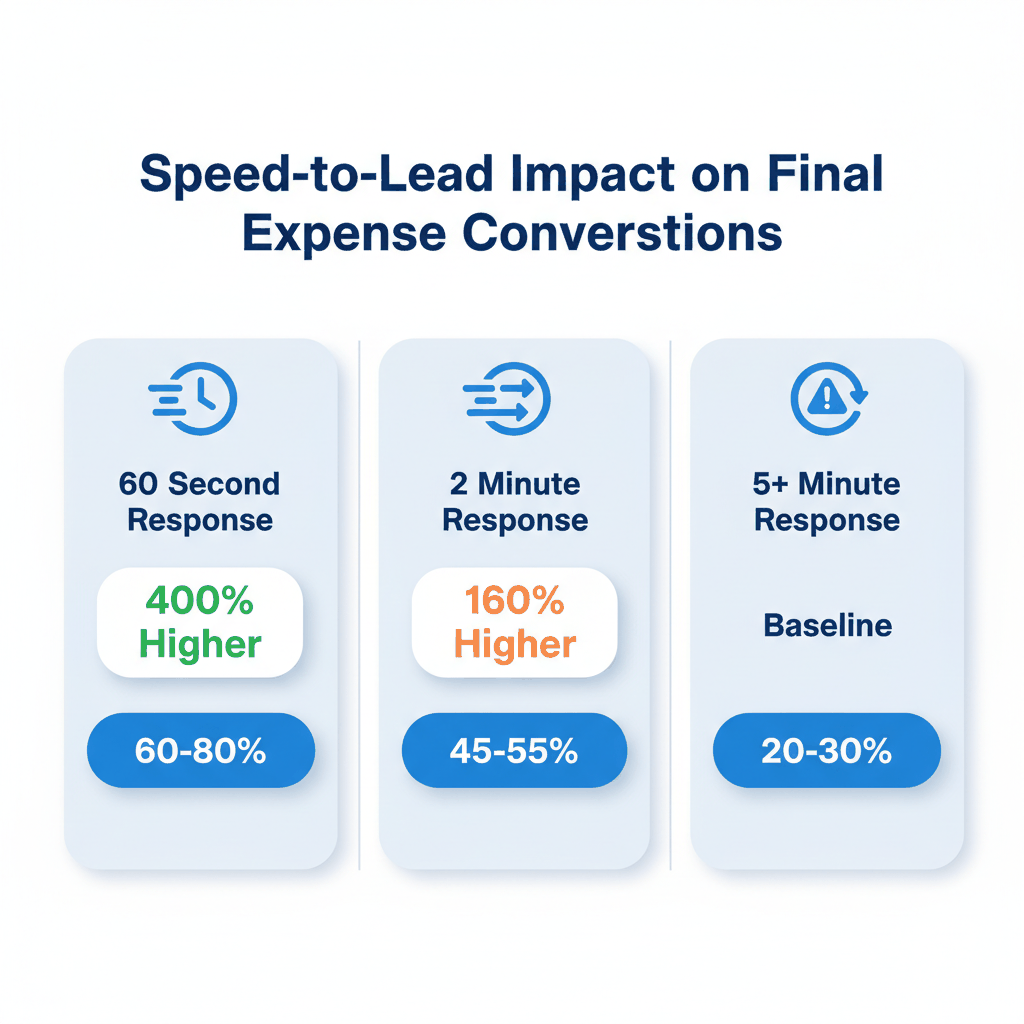
Automated systems solve this problem. They instantly route new leads to available agents or trigger immediate callback sequences. No more manual lead distribution or delayed responses.
Here's a sobering statistic: 92% of salespeople stop after four or fewer contact attempts. Yet 60% of final expense policy sales require at least four contacts.
Final expense CRM automation never forgets. The system automatically schedules follow-ups, sends personalized messages, and tracks every interaction. Your leads get consistent nurturing whether you're on the phone with another prospect or off for the weekend.
Final expense leads already convert better than traditional life insurance inquiries. These prospects have acknowledged their need and typically convert at rates of 15-25% higher than standard life insurance leads.
Add proper automation, and those numbers improve dramatically. Agents report 40% increases in average sales per day and 35% better lead-to-sale ratios within three months of implementing automated systems.
Even with powerful automation tools available, many final expense agents struggle with implementation and optimization. Understanding these challenges helps you avoid common pitfalls.
Nearly 70% of insurance agencies still rely heavily on manual processes for client communication and follow-ups. This creates bottlenecks that automation should eliminate.
The problem often starts with lead management. Agents receive leads through email or text, manually enter information into spreadsheets, and try to remember follow-up schedules. By the time they make contact, the lead has gone cold or connected with a competitor.
Senior prospects have specific communication preferences and availability windows. They prefer talking to real people over digital channels, but reaching them requires precise timing.
Morning hours (8:00-10:00 AM) and late afternoons (4:00-5:00 PM) typically produce the best contact rates. However, manually tracking optimal contact times for hundreds of leads becomes impossible without automation.
The average sales rep spends one hour per day on administrative work. For final expense agents, this includes updating lead statuses, scheduling callbacks, sending follow-up messages, and tracking policy applications.
This administrative burden directly impacts income. Every hour spent on paperwork is an hour not spent talking to prospects or closing deals.
Not all final expense leads carry equal potential. Some prospects are ready to buy immediately, while others need months of nurturing. Without proper scoring and prioritization systems, agents often waste time on low-quality prospects while high-intent leads go cold.
Effective lead scoring considers factors like inquiry source, demographic information, and engagement behavior. Automation systems can automatically assign scores and route the hottest leads for immediate contact.
Successful final expense automation requires specific workflows tailored to senior prospects and the final expense sales cycle. These strategies have proven effective for top-performing agents.
Your first workflow should trigger instantly when new leads enter your system. This includes automatic lead assignment, immediate callback scheduling, and backup communication channels if the primary contact fails.
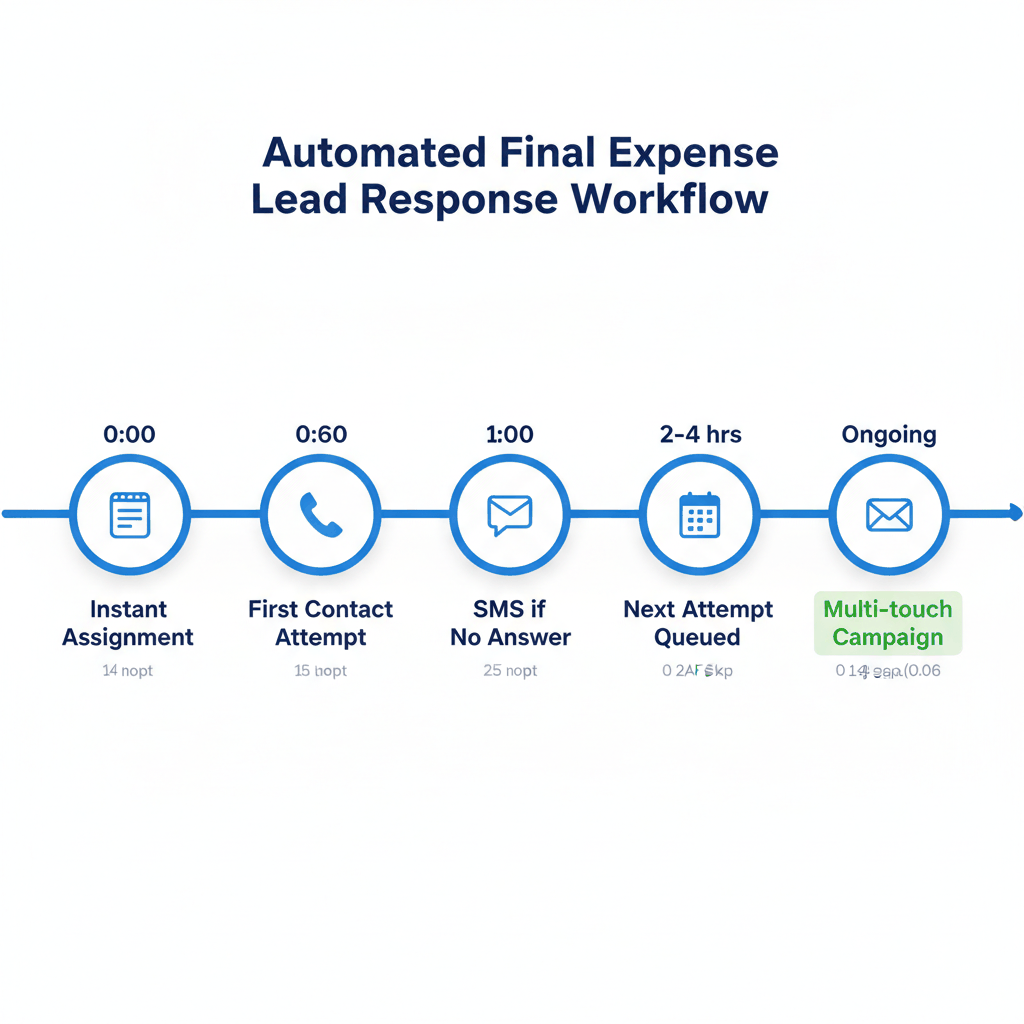
Top producers use auto-dialers that call new leads within 60 seconds. If the prospect doesn't answer, the system immediately sends a personalized text message and schedules the next callback attempt. This multi-touch approach maximizes your chances of early contact.
For example, a lead submits an inquiry at 2:30 PM. Your system immediately assigns the lead to your available agent, triggers a callback within one minute, and sends a text message introducing your agency. If no contact occurs, it schedules the next attempt for 4:30 PM during optimal calling hours.
Remember, 60% of final expense policy sales require at least four contacts. Your automation should handle this persistently and professionally.
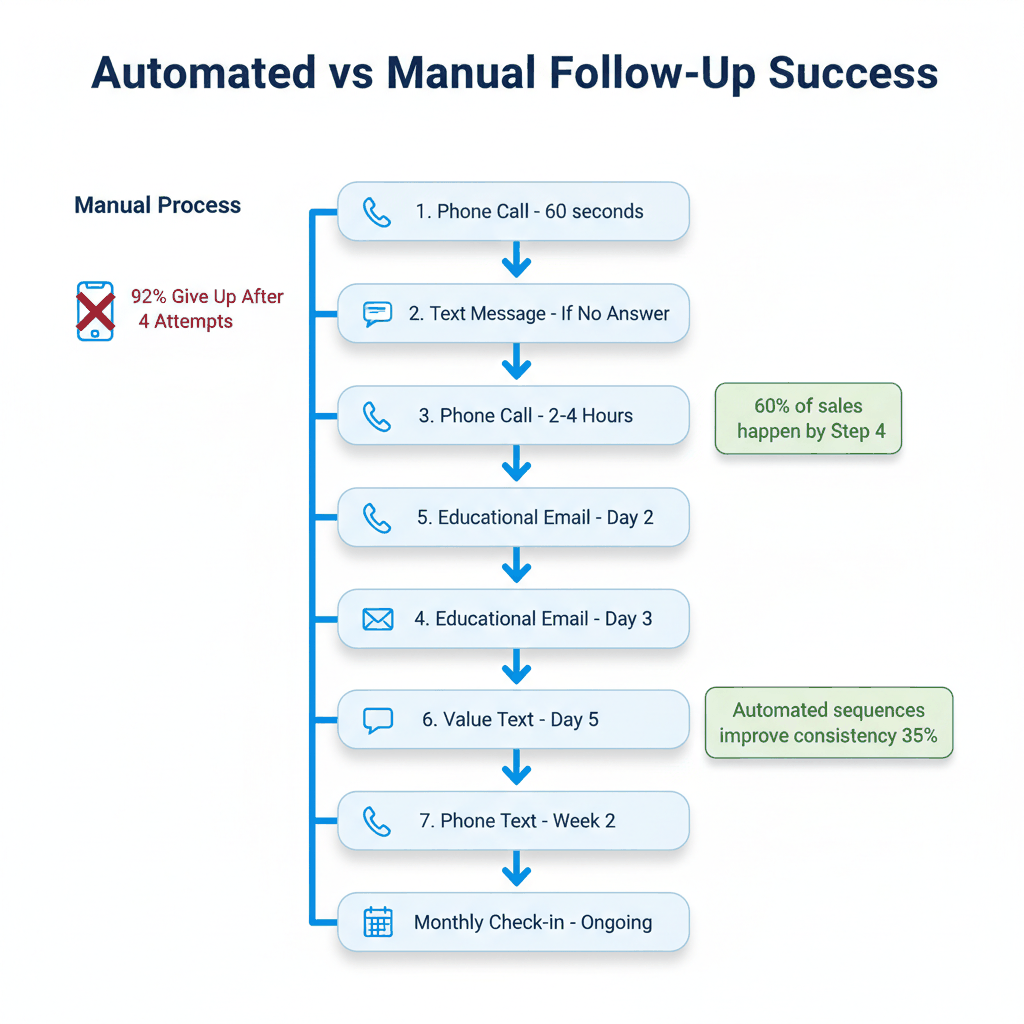
Effective sequences include:
First contact: Phone call within 60 seconds
Second contact: Text message if no answer
Third contact: Phone call 2-4 hours later
Fourth contact: Email with helpful information
Ongoing contacts: Scheduled calls during optimal windows
The key is varying your communication methods while maintaining consistent, helpful messaging. Each touchpoint should provide value, not just ask for a conversation.
Advanced final expense CRM systems automatically score leads based on multiple factors. High-scoring leads get immediate attention, while lower-scoring prospects enter longer nurturing sequences.
Effective scoring considers inquiry source, demographic data, response speed, and engagement behavior. For example, a 68-year-old prospect who submitted an inquiry on Sunday evening and responded to your first text message scores much higher than a 45-year-old who inquired but hasn't engaged.
Your automation should route high-scoring leads directly to your best agents for immediate contact while placing lower-scoring leads in nurturing campaigns.
Many final expense sales require multiple conversations to build trust and explain benefits. Automated appointment setting removes friction from this process.
Modern systems include AI-powered scheduling assistants that handle appointment requests via text message. Prospects can schedule, reschedule, or confirm appointments without human intervention. The system sends automatic reminders and handles common scheduling conflicts.
This is particularly valuable for senior prospects who may need time to check calendars with family members or adjust for medical appointments.
Choosing the right platform makes the difference between automation that helps and automation that creates more problems. These platforms have proven track records with final expense agents.
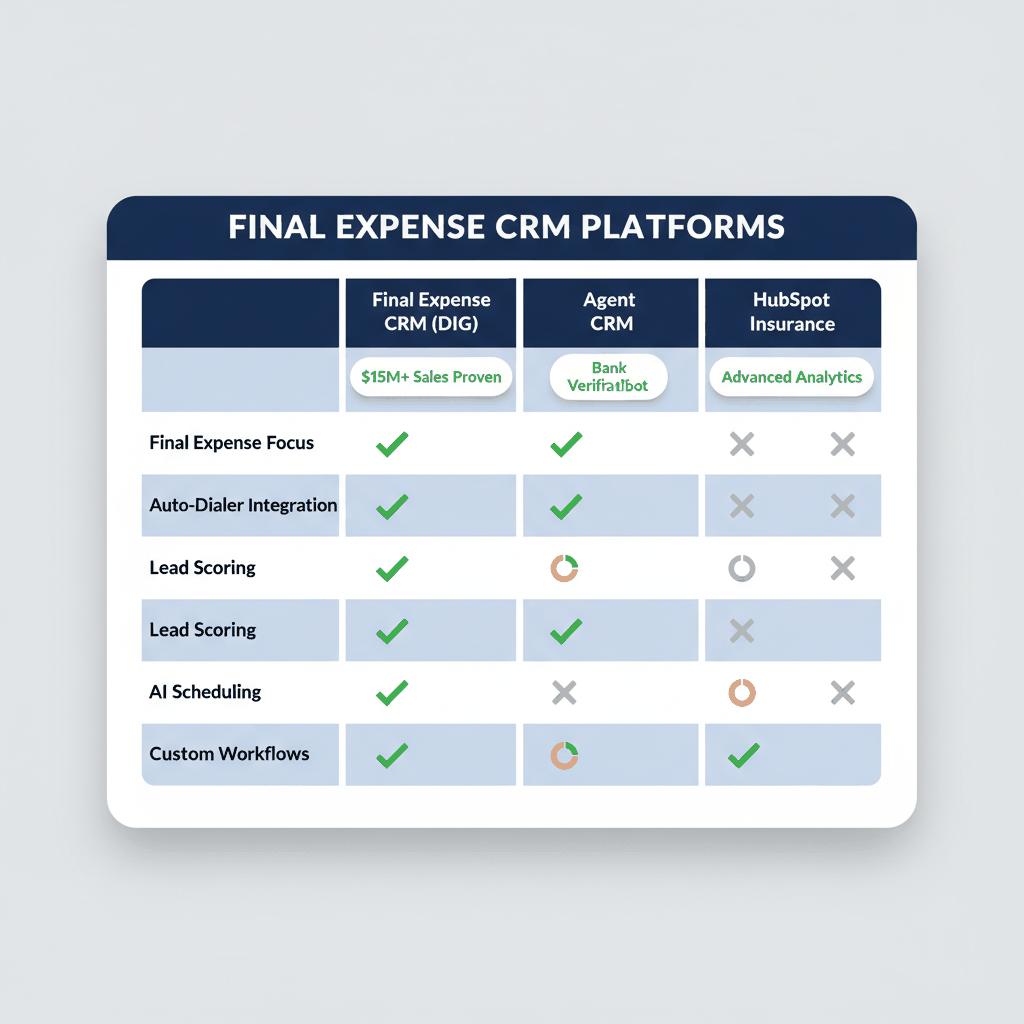
Final Expense CRM is specifically designed for final expense sales cycles. The platform was created by David Duford's DIG Agency, which closed over $15 million in final expense business in 2024 using this exact system.
Key features include automated lead posting, integrated dialer systems, and customizable follow-up sequences designed for senior prospects. The platform includes white-glove onboarding and 24/7 chat support, which is crucial when implementing new automation systems.
What sets this platform apart is its focus on final expense-specific workflows. The system understands the unique timing, communication preferences, and sales cycles that make final expense different from other insurance lines.
DigitalBGA offers automated lead posting with integrated dialer systems. Their platform includes real-time bank account verification, which helps agents determine the likelihood of successful policy placement before investing extensive time.
The system provides one-click final expense quotes using lead information already stored in the CRM. This eliminates manual data entry and speeds up the quote-to-application process.
For agents handling high lead volumes, DigitalBGA's automated text and email sequences keep prospects engaged without constant manual intervention.
Agent CRM offers customizable final expense funnels through their Click & Play library. The platform includes pre-built pipelines covering every stage of final expense business development.
Their AI ScheduleBot handles appointment scheduling through text message conversations. This is particularly valuable for senior prospects who prefer text communication over complex online scheduling systems.
The platform's power dialer feature allows simultaneous, efficient lead calling with organized and branded communications. This helps maintain professional consistency across all prospect interactions.
While not final expense-specific, HubSpot offers powerful automation for insurance agents willing to customize their workflows. The platform excels at renewal automation and upsell sequences.
HubSpot's lead scoring features automatically qualify prospects using selected criteria. You can create smart lists of high-potential leads and trigger specific nurturing campaigns based on engagement behavior.
The platform's reporting capabilities help track automation performance and identify optimization opportunities. This is valuable for agents who want detailed analytics on their follow-up effectiveness.
Successfully implementing final expense CRM automation requires careful planning and gradual rollout. These best practices help ensure smooth adoption and maximum results.
Begin your automation journey by centralizing lead management. All leads should flow into your CRM system automatically, whether they come from online forms, phone calls, or referral sources.
Set up automatic lead assignment rules based on agent availability, geographic territory, or lead source. This ensures every inquiry gets immediate attention without manual intervention.
Configure your system to capture complete lead information including contact preferences, best calling times, and any specific needs mentioned during inquiry. This data feeds your automation sequences and helps personalize communications.
Create follow-up sequences that gradually build trust and provide value. Your first message should acknowledge their inquiry and set expectations. Subsequent messages should educate prospects about final expense benefits and address common concerns.
For example:
Message 1: Thank you for your inquiry, schedule initial conversation
Message 2: Information about final expense vs. traditional life insurance
Message 3: Common questions and answers about coverage options
Message 4: Testimonial from satisfied client in similar situation
Message 5: Reminder about available consultation times
Space these messages appropriately for senior prospects. Daily contact may feel overwhelming, while weekly contact maintains engagement without pressure.
Automation systems only work when your team uses them consistently. Provide comprehensive training on lead management, appointment scheduling, and follow-up customization.
Focus on how automation supports their sales process rather than replacing their expertise. Agents should understand how to review automated communications, personalize messages when appropriate, and override system recommendations for special circumstances.
Regular team meetings should include automation performance reviews and optimization discussions. This helps identify workflow improvements and ensures consistent system usage.
Track key metrics including response times, contact rates, appointment show rates, and conversion percentages. Most CRM platforms provide detailed analytics on automation performance.
Pay particular attention to email open rates, text message response rates, and callback success percentages. These metrics indicate whether your automated communications resonate with prospects.
Test different message timing, content variations, and sequence length to optimize results. Small improvements in automation performance compound into significant increases in overall sales.
Effective measurement ensures your final expense CRM automation delivers maximum return on investment. Focus on metrics that directly impact your bottom line.
Track how quickly your system responds to new leads. Best-in-class systems contact prospects within 60 seconds of inquiry. Monitor your average response time and work to minimize delays.
Also measure the time between follow-up attempts. Consistent spacing maintains prospect engagement without creating communication fatigue. Most successful agents follow up every 2-3 days for hot leads and weekly for nurturing campaigns.
Monitor your actual contact rates for different lead sources and timing strategies. Successful agents achieve contact rates of 60-80% when following proper protocols.
Track contacts by time of day, day of week, and communication channel. This data helps optimize your automated calling schedules and identifies the most effective outreach methods for your market.
Measure conversion rates at every stage of your automated sales funnel. Track lead-to-appointment rates, appointment-to-quote rates, and quote-to-policy rates separately.
Compare performance between automated and manual processes. Most agents see significant improvements in consistency and overall conversion rates after implementing proper automation.
Also track the time from initial inquiry to policy sale. Automation typically shortens sales cycles by maintaining consistent prospect engagement and reducing delays between touchpoints.
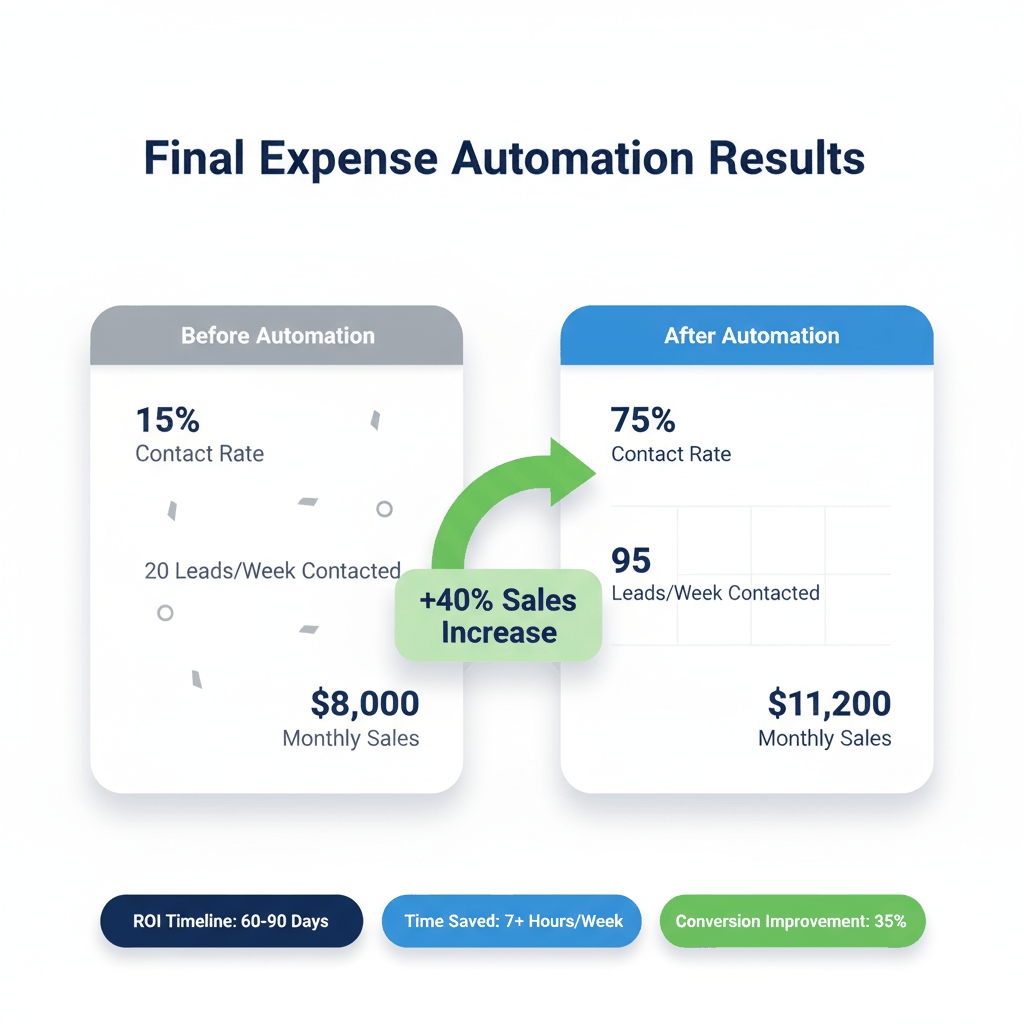
Calculate the revenue impact of your automation investment. Top-performing agents report 40% increases in average sales per day after implementing automated systems.
Factor in time savings from reduced administrative work. The average rep spends one hour daily on admin tasks that automation can handle. This freed time can be redirected to high-value sales activities.
Track your return on investment over time. Quality automation systems typically pay for themselves within 60-90 days through increased sales and operational efficiency.
Frequently Asked Questions
How quickly should I contact final expense leads for best results?
Contact final expense leads within 60 seconds for maximum impact. Research shows this timing can boost conversion rates by 400% compared to longer delays. If immediate contact isn't possible, call within 5 minutes to maintain strong conversion potential.
What's the typical ROI timeline for final expense CRM automation?
Most agents see positive ROI within 60-90 days of implementing final expense CRM automation. The combination of increased contact rates, consistent follow-up, and time savings typically generates 40% increases in daily sales within three months.
How many follow-up attempts does final expense automation require?
Final expense automation should include at least 8-12 follow-up attempts over 30-45 days. Since 60% of final expense sales require at least four contacts and 92% of salespeople quit after four attempts, automation gives you a significant competitive advantage.
Can final expense CRM automation work for both warm and cold leads?
Yes, final expense CRM automation works for all lead types but requires different strategies. Warm leads need immediate contact and faster sequences, while cold leads benefit from longer nurturing campaigns with educational content about final expense benefits.
What's the difference between general insurance CRM and final expense-specific systems?
Final expense-specific CRM systems understand senior communication preferences, simplified underwriting processes, and the unique timing requirements for this market. They include pre-built workflows designed for final expense sales cycles rather than generic insurance processes.
Ready to get pay per call final expense leads? Sign up for free with ResultCalls!

Hello everyone! My name is Alex and I write these blogs to help educate small business owners on different ways to grow their business. My goal is to make lead generation as easy as possible for you. After reading these blogs, I hope you leave with some actionable steps that will get you closer to growing your business :)