Your phone rings at 2 AM. A panicked homeowner discovered water flooding their basement. They need help now, but here's the problem - they don't know who to trust. In those critical moments, homeowners often choose restoration companies they've heard of before. Companies they trust.
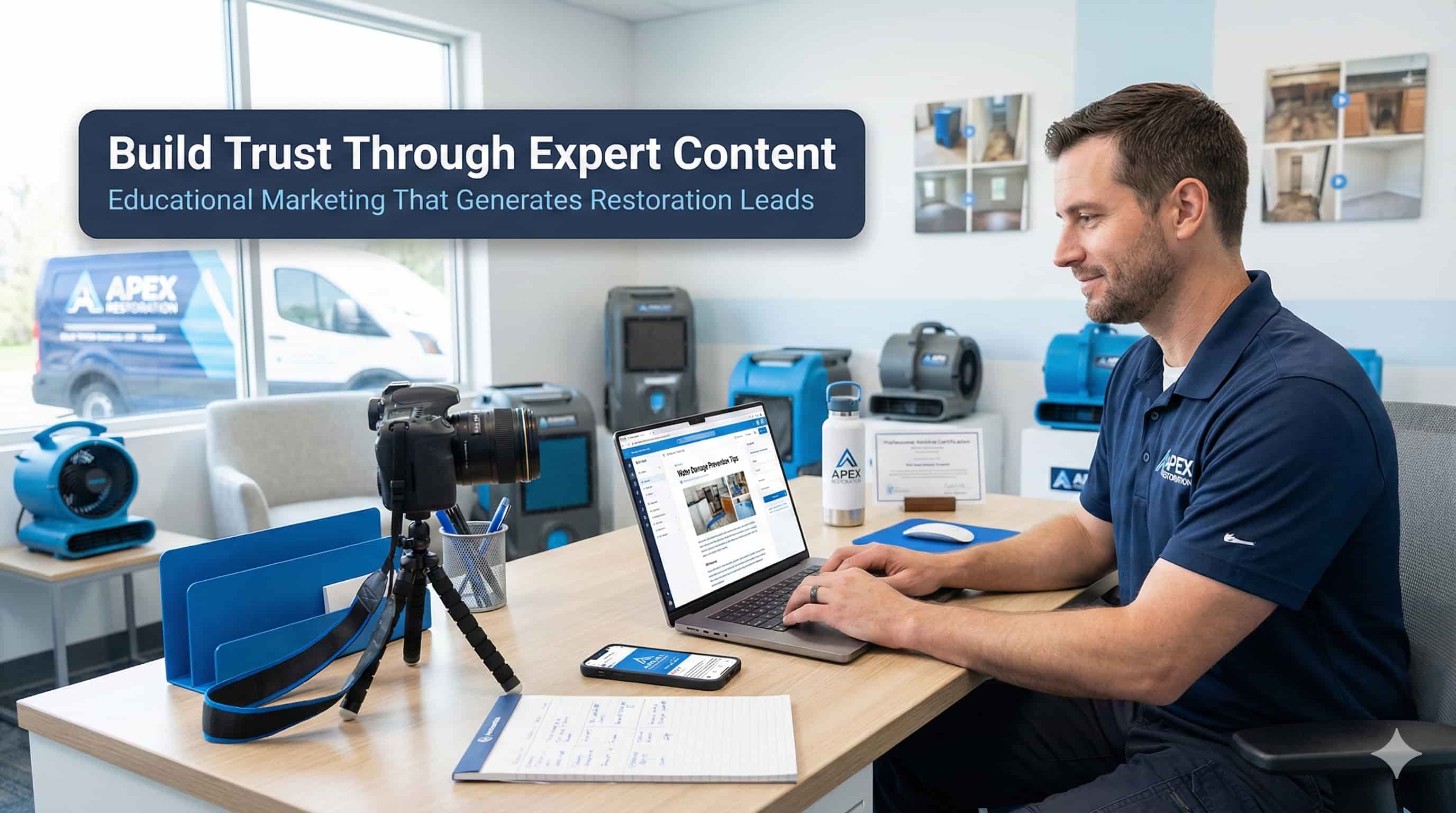
Water damage content marketing helps you become that trusted company. It positions your restoration business as the go-to expert before emergencies happen. When disaster strikes, homeowners remember the company that taught them about prevention and showed real expertise.
This strategy works because trust isn't built during a crisis - it's built before one happens. By sharing helpful content, you connect with property owners when they're calm and can make thoughtful decisions.
You'll learn proven content strategies that generate leads, build authority, and turn your expertise into a powerful marketing tool that works around the clock.
Table of Contents
Why Water Damage Content Marketing Works
Overcoming Trust Challenges in Emergency Services
Educational Content Strategies That Generate Leads
Building Authority Through Expert Content
Content Distribution and SEO Best Practices
Measuring Your Content Marketing Success
Water damage content marketing works because homeowners need information before they need services. Research shows 1 in 60 homeowners experience water damage each year. Most aren't prepared for it.
Only 20% of homeowners routinely perform water damage prevention practices. This creates a huge opportunity for restoration companies to educate their market. When you provide valuable information, you build trust and position yourself as an expert.
Content marketing also solves a key challenge in restoration marketing. Traditional advertising feels pushy during emergencies. But educational content helps people when they're ready to learn. It builds relationships gradually instead of interrupting them.
Trust matters more in restoration than most industries. Water damage claims average $12,514 per incident. Homeowners need confidence they're making the right choice with that much money at stake.
Content marketing builds trust by demonstrating expertise before you ask for business. When homeowners see your helpful articles and videos, they think of you as the expert who cares about their problems.
Most restoration companies rely on expensive pay-per-click advertising. Keywords like "water damage restoration near me" cost approximately $39.29 per click. Content marketing provides a more cost-effective way to reach potential customers.
Plus, content marketing compounds over time. A helpful blog post can generate leads for years. Paid ads stop working the moment you stop paying for them.
Restoration companies face unique trust challenges. Homeowners often need services during their most stressful moments. They're dealing with damaged property and insurance claims. They worry about being overcharged or receiving poor service.
Water damage content marketing addresses these concerns by showing your expertise and professionalism before emergencies happen. It demonstrates that you understand homeowner challenges and have real solutions.
Educational content proves you know your industry. When you explain complex topics in simple terms, homeowners see you as an expert. Create content that answers common questions like:
How quickly does mold grow after water damage?
What should I do immediately after discovering water damage?
How do I prevent water damage in my basement?
What does insurance typically cover for water damage?
How long does the restoration process take?
Each piece of content should solve a real problem homeowners face. This positions you as helpful rather than salesy.
Use content to explain your processes and pricing philosophy. Many restoration companies seem secretive about their methods. You can stand out by being transparent about how you work.
Create content that explains your restoration process step-by-step. Show before and after photos of real projects. Share customer success stories that demonstrate your results.
The best water damage educational content addresses specific problems homeowners face. Focus on prevention, immediate response, and long-term solutions. This approach attracts people at different stages of the water damage experience.
Prevention content attracts homeowners before they have problems. These people often become customers when issues arise because they already know and trust you. Effective prevention topics include:
Seasonal maintenance tips for different weather patterns
Early warning signs of potential water damage
How to inspect your home for water damage risks
Proper ventilation strategies to prevent moisture problems
Winterizing pipes to prevent freeze damage
For example, create a detailed guide titled "5 Signs Your Home Is at Risk for Water Damage." Include photos showing what homeowners should look for. Add a checklist they can use during home inspections.
Emergency response content helps people who already have water damage. This content often generates immediate leads because readers need help right now. Focus on topics like:
First steps to take when you discover water damage
How to stop water flow and minimize damage
When to call professionals versus handling problems yourself
Safety precautions during water damage emergencies
How to document damage for insurance claims
End emergency content with clear calls to action. Offer free consultations or emergency response services. Include your phone number prominently for immediate contact.
Many homeowners don't understand water damage insurance coverage. Content that explains insurance processes positions you as a helpful advocate. Cover topics such as:
What water damage insurance typically covers
How to file successful water damage claims
Working with insurance adjusters during the claims process
Common insurance claim mistakes to avoid
Understanding deductibles and out-of-pocket costs
This content helps homeowners navigate stressful insurance processes while showcasing your expertise in working with insurers.
Authority-building content goes beyond basic tips. It demonstrates deep industry knowledge and professional expertise. This type of content attracts higher-value customers and referral sources like insurance agents and property managers.
Share your technical knowledge in accessible ways. Explain the science behind water damage and restoration processes. Topics might include:
How different materials react to water exposure
The relationship between humidity and mold growth
Professional equipment and why it's necessary
Industry standards for proper restoration
Health risks associated with untreated water damage
Make technical content understandable by using analogies and simple explanations. Include visuals that show complex processes step by step.
Case studies prove your expertise through real examples. They show potential customers exactly what you can accomplish. Effective case studies include:
The original problem and its scope
Challenges you overcame during restoration
Your specific approach and methodology
Timeline and project milestones
Final results with before and after photos
Customer satisfaction and feedback
One successful restoration company generated over $100k in new water damage work during their first month using case study content to demonstrate their expertise.
Share your perspective on industry developments. This positions you as a thought leader who stays current with best practices. Discuss topics like:
New restoration technologies and techniques
Changes in building codes and regulations
Industry statistics and market trends
Professional certification requirements
Emerging challenges in water damage restoration
Reference credible industry sources and studies to support your insights. This adds credibility to your expertise claims.
Creating great content is only half the battle. You need effective distribution strategies to reach your target audience. Focus on channels where homeowners and property managers search for water damage information.
Your website blog should be the foundation of your content strategy. Optimize each post for search engines and user experience. Key optimization strategies include:
Target specific keywords like "water damage prevention" and "flood restoration tips"
Include location-based keywords for local SEO
Create compelling headlines that address specific problems
Use descriptive subheadings to organize content
Include relevant internal and external links
Optimize images with descriptive alt text
Aim for 2-4 blog posts per month focusing on different aspects of water damage education. Consistency matters more than frequency for building authority.
Social media amplifies your content reach and builds community engagement. Focus on platforms where your audience spends time. For restoration companies, this typically includes:
Facebook for community engagement and local networking
Instagram for visual before-and-after content
LinkedIn for connecting with insurance professionals
YouTube for detailed educational videos
Post consistently with at least two updates per week. Share a mix of educational content, project updates, and community involvement. Use local hashtags to reach community members.
Email marketing nurtures leads generated through content marketing. Create email sequences that deliver valuable information over time. Effective email content includes:
Seasonal maintenance reminders and checklists
New blog post notifications with summaries
Emergency preparedness guides and resources
Customer success stories and testimonials
Exclusive tips and insights for subscribers
Segment your email list based on subscriber interests and needs. Property managers might want different content than individual homeowners.
Tracking content marketing results helps you improve your strategy over time. Focus on metrics that directly relate to business growth rather than vanity metrics like social media likes.
Track how content converts visitors into leads. Key metrics include:
Contact form submissions from blog readers
Phone calls generated by content
Email newsletter sign-ups
Consultation requests after reading articles
Social media messages and comments
Use tracking tools to identify which content pieces generate the most leads. Double down on topics that work best for your audience.
Monitor your search engine rankings for target keywords. Track metrics such as:
Organic search traffic to your website
Keyword rankings for water damage terms
Click-through rates from search results
Time spent on site by organic visitors
Pages per session for blog readers
One restoration company achieved a 279.2 percent increase in organic traffic using strategic content optimization.
Connect content marketing efforts to actual business results. Track:
New customers who discovered you through content
Average project value from content-generated leads
Customer lifetime value for content-sourced clients
Referrals from customers who found you through content
Brand recognition improvements in your local market
Survey new customers about how they found your company. This helps you understand which content marketing efforts drive the best results.
How often should I publish water damage content marketing materials?
Aim for 2-4 blog posts per month and weekly social media content. Consistency matters more than frequency. Focus on creating valuable, helpful content rather than publishing just to meet a schedule. Quality content that truly helps homeowners will generate better results than frequent but shallow posts.
What are the best water damage blog topics for generating leads?
Emergency response topics like "5 Things to Do Immediately After Water Damage" generate immediate leads. Prevention content like "How to Prevent Water Damage in Your Home" builds long-term relationships. Insurance-related topics attract homeowners dealing with claims who need professional help.
How do I measure ROI from flood damage educational content?
Track leads generated through contact forms, phone calls, and email sign-ups from your content. Monitor which blog posts drive the most inquiries. Survey new customers about how they found you. Connect content marketing efforts to actual project bookings and revenue.
Should water restoration companies focus on local or national content?
Focus primarily on local content since restoration is a local service business. Include location-specific topics like "Water Damage Help in [Your City]" and seasonal content relevant to your climate. However, also create some general educational content that can attract broader audiences.
How long does it take to see results from water damage content marketing?
Expect to see initial results within 3-6 months of consistent content creation. SEO improvements typically take longer, but social media engagement and direct traffic can increase more quickly. Content marketing builds momentum over time, with the best results coming after 6-12 months of consistent effort.
Ready to get water damage restoration marketing leads? Sign up for free with ResultCalls today!

Hello everyone! My name is Alex and I write these blogs to help educate small business owners on different ways to grow their business. My goal is to make lead generation as easy as possible for you. After reading these blogs, I hope you leave with some actionable steps that will get you closer to growing your business :)