
Most auto insurance agencies struggle to attract quality leads online. They spend thousands on ads that barely convert. Meanwhile, potential customers search for insurance information but leave confused by complex jargon.
The problem is clear. Traditional marketing approaches fail in today's digital world. Customers want education before they buy insurance. They need to understand their options and trust the agency.
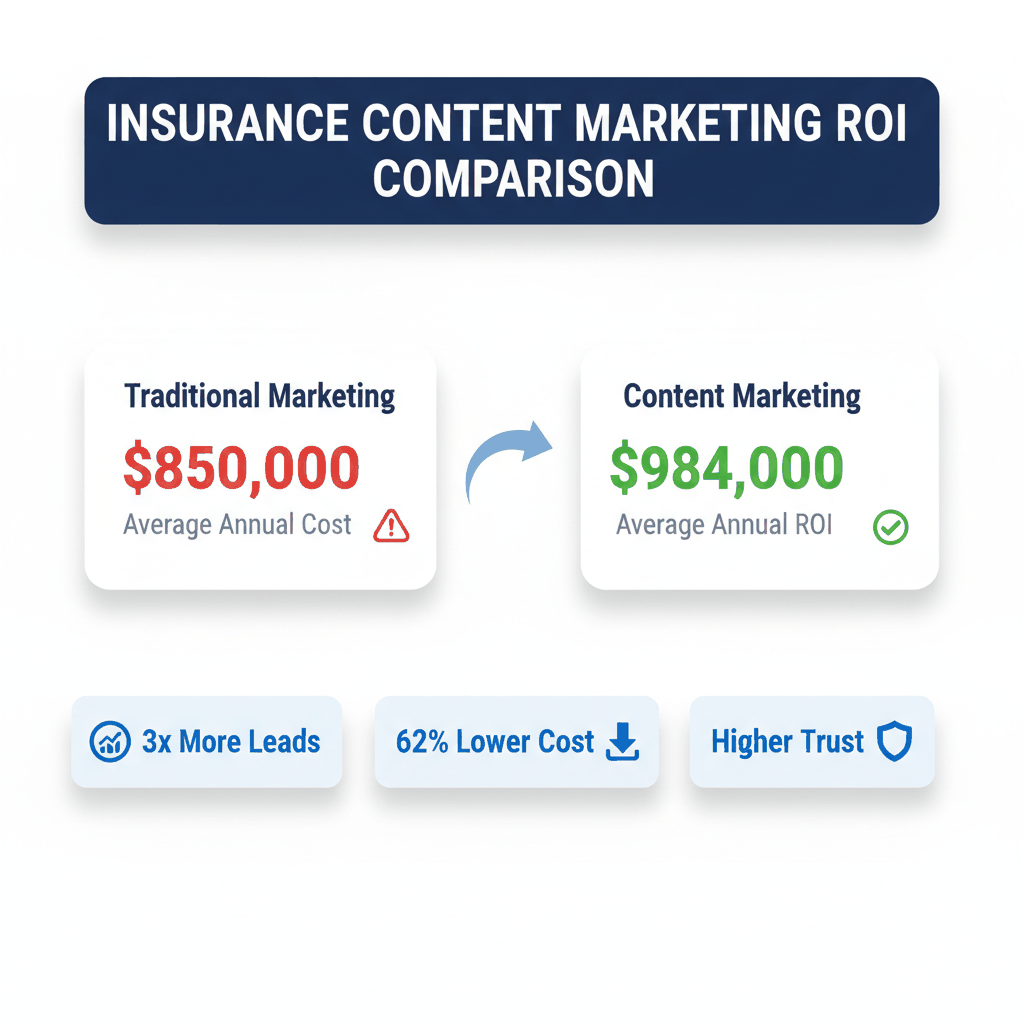
Insurance content marketing solves this challenge. It builds trust through helpful information. Plus, it generates 3x more leads at 62% lower cost than traditional marketing.
You'll learn proven strategies that successful auto insurance agencies use to attract customers. These tactics help you build authority and convert visitors into loyal clients.
Table of Contents
Insurance content marketing creates educational content that helps potential customers understand insurance. Instead of pushing sales messages, you provide helpful information. This builds trust and attracts people searching for insurance answers.
Content marketing transforms how insurance agencies connect with customers. Most people begin their insurance journey online but hesitate to buy digitally. They need education about coverage options, pricing, and benefits.
Smart agencies use content to guide this journey. They answer common questions through blog posts, videos, and guides. When done right, insurance content marketing delivers an average yearly ROI of $984,000.
Insurance is complex and customers feel overwhelmed. Content marketing breaks down complicated concepts into simple explanations. This educational approach helps agencies stand out from competitors who only focus on price.
Research shows that email marketing delivers 42:1 ROI in the insurance sector. Content-driven emails perform even better because they provide value instead of just selling.
The key difference is trust. Traditional ads make claims about being the best or cheapest. Educational content proves expertise by solving real problems customers face.
Most insurance agencies face similar obstacles when starting content marketing. Understanding these challenges helps you avoid common mistakes and create better strategies.
Many agencies still focus on product features rather than customer education. They write about policy details instead of explaining why coverage matters. This approach confuses potential customers who need basic insurance knowledge first.
The solution is shifting to educational content. Write about common insurance scenarios. Explain what happens after an accident. Help customers understand deductibles and coverage limits.
The insurance industry lags behind in digital marketing strategy. Only 35% of marketers measure content marketing ROI properly. This makes it hard to know what content works best.
Start by tracking simple metrics. Monitor website traffic from blog posts. Count email signups from content downloads. Track phone calls that mention specific articles.
Insurance has a trust problem. Customers see the industry as complicated and non-transparent. Poor communication makes this worse.
Address this by being completely transparent in your content. Explain industry terms clearly. Share real customer stories with permission. Admit when coverage has limitations.
Successful auto insurance agencies follow specific content strategies. These approaches build trust, attract qualified leads, and convert visitors into customers.
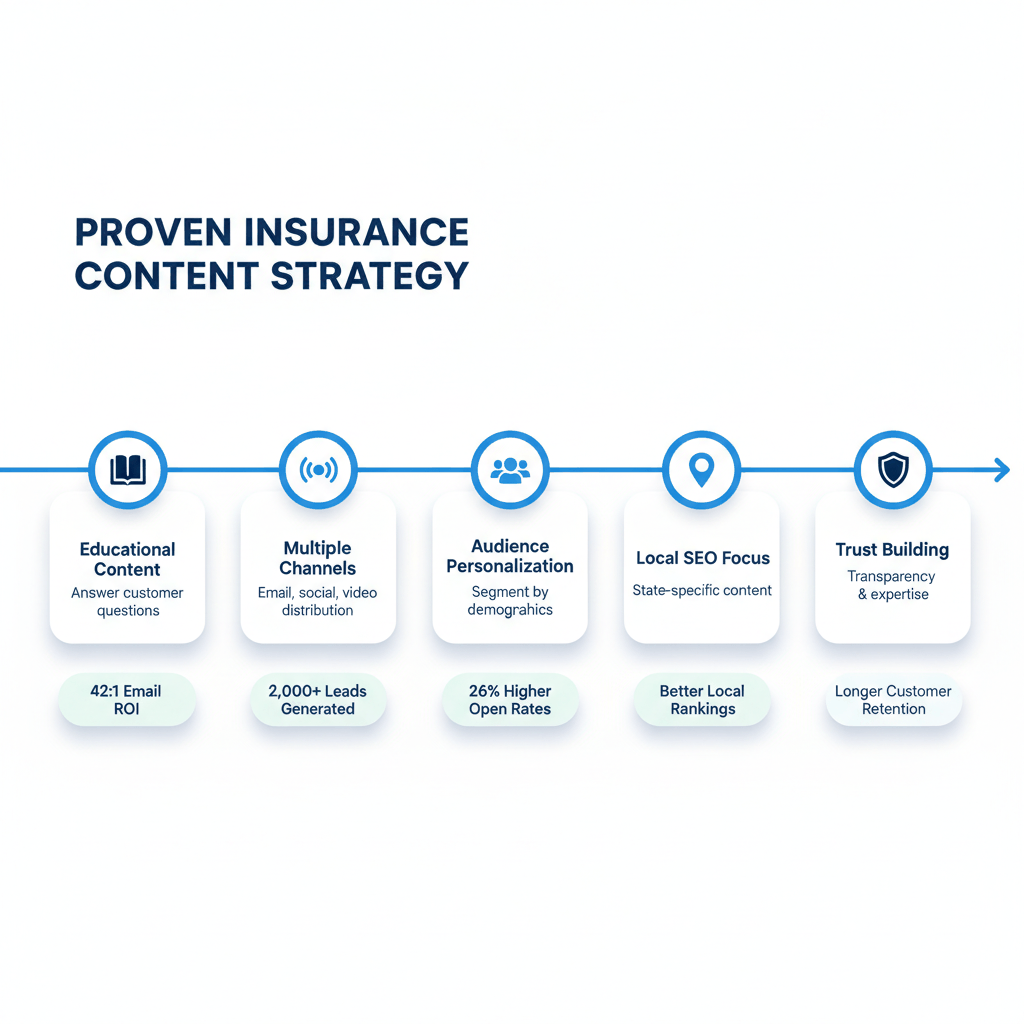
Educational content forms the foundation of successful insurance marketing. Start with questions your customers ask most often. Write detailed answers that anyone can understand.
For example, create guides about choosing car insurance coverage amounts. Explain comprehensive versus collision coverage. Help people understand how credit scores affect insurance rates.
This approach works because it addresses customer pain points directly. People search for insurance information before they buy. Your educational content captures them early in their journey.
Don't rely on just blog posts. Successful agencies distribute content across multiple channels. This includes email newsletters, social media posts, and video content.
Video content especially drives results. DirectAsia generated more than 2,000 leads in six months using short-form video. They also cut their cost per lead by half.
Email marketing remains powerful for insurance agencies. Segmented email campaigns see 14.31% higher open rates than generic emails.
Auto insurance agencies serve different customer types. Young drivers need different information than families with teenagers. Seniors have unique concerns about coverage options.
Create content for each audience segment. Write articles about teen driver safety for parents. Create guides about discounts for seniors. Address first-time car buyer questions.
Personalized content increases engagement significantly. Tailored messages can increase open rates by 26% compared to generic content.
Many insurance searches are local. People want agents in their area who understand state requirements. Create content that targets local keywords and addresses regional concerns.
Write about state-specific insurance laws. Create content about local driving conditions and risks. Share information about area accident statistics or weather patterns that affect coverage needs.
Local content helps you rank better in Google searches. It also demonstrates your connection to the community you serve.
The right blog topics attract qualified visitors and demonstrate your expertise. Focus on topics that address real customer questions and concerns.
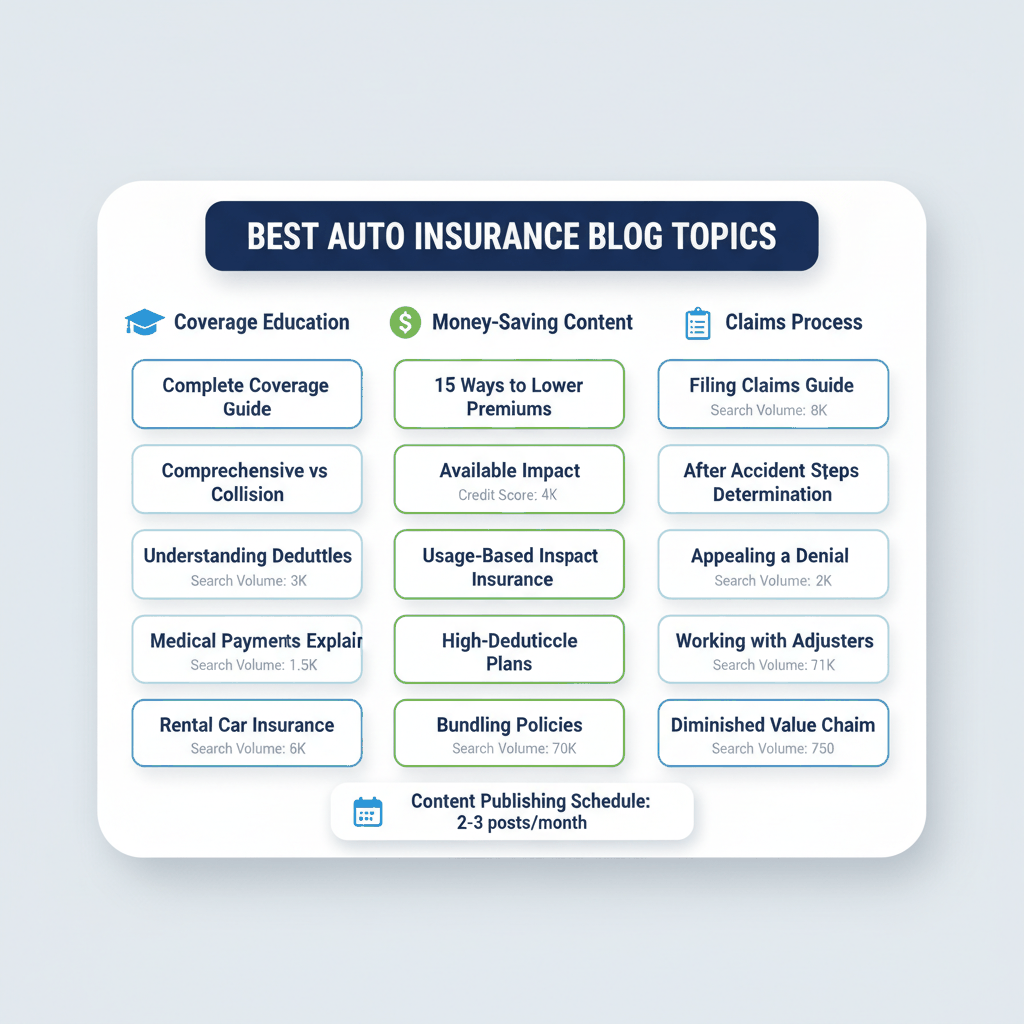
Start with fundamental coverage explanations. These topics attract people beginning their insurance search and establish your authority.
Complete guide to auto insurance coverage types
How much car insurance coverage do you actually need
Comprehensive vs collision coverage explained simply
Understanding deductibles and how they affect your premium
What uninsured motorist coverage protects you from
Gap insurance: when you need it and when you don't
Cost remains the top concern for most insurance shoppers. Create content that helps people save money legitimately.
15 proven ways to lower your car insurance premium
Auto insurance discounts you might be missing
How your credit score affects insurance rates
Bundle discounts: when combining policies saves money
Safe driver programs that reduce insurance costs
People worry about what happens after an accident. Content about the claims process builds confidence in your agency.
Step-by-step guide to filing an auto insurance claim
What to do immediately after a car accident
How insurance companies determine fault in accidents
Rental car coverage: what it covers and costs
The right tools make insurance content marketing more efficient and effective. These platforms help you create, distribute, and track your content performance.
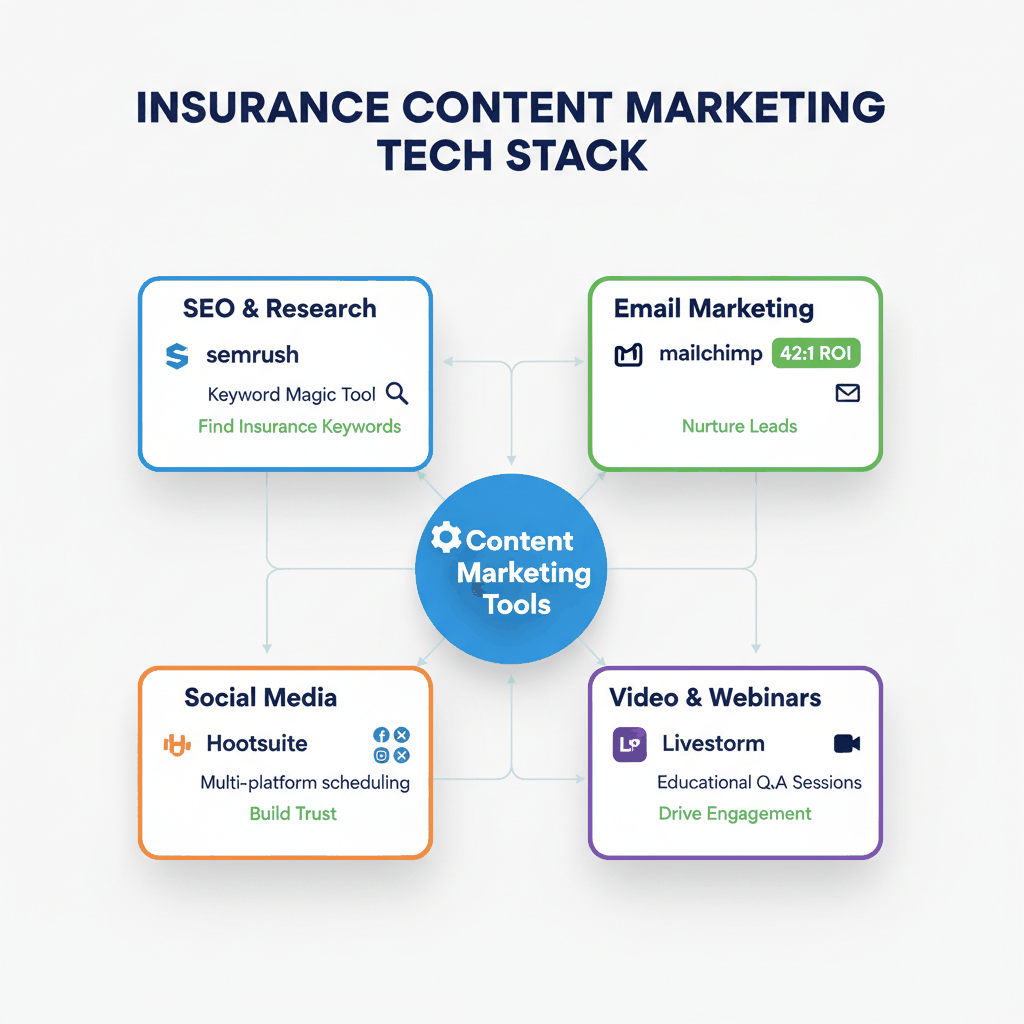
Understanding what your audience searches for is crucial. SEO tools help you find the right keywords and topics.
Semrush offers comprehensive keyword research specifically useful for insurance agents. The Keyword Magic Tool helps you find insurance-related search terms your customers actually use.
Use these tools to discover local insurance questions. Find long-tail keywords like "how much car insurance do I need in Texas" or "cheapest auto insurance for new drivers."
Email marketing delivers exceptional ROI for insurance agencies. The right platform helps you nurture leads with valuable content over time.
Mailchimp works well for insurance agencies starting with content marketing. You can create drip campaigns that educate prospects about different coverage types. Set up automated emails that send helpful guides to new subscribers.
Remember that email marketing delivers 42:1 ROI in insurance. Content-rich emails perform even better than promotional messages.
Consistent social media presence builds trust and extends your content reach. Management tools help you maintain regular posting schedules.
Hootsuite lets you schedule insurance content across multiple social platforms. The approval features help ensure your posts stay compliant with insurance regulations.
Social listening tools track conversations about insurance topics. This helps you understand what questions people ask and what content to create next.
Video content increasingly drives insurance marketing success. Video dominates content marketing in 2025, making these tools essential.
Livestorm works well for hosting educational webinars. You can conduct live Q&A sessions about insurance topics. Record these sessions to create additional content for your website.
Simple video tools help you create explanation videos about coverage types or claim processes. These perform well on social media and your website.
Tracking the right metrics shows whether your insurance content marketing works. Focus on metrics that connect to actual business results.
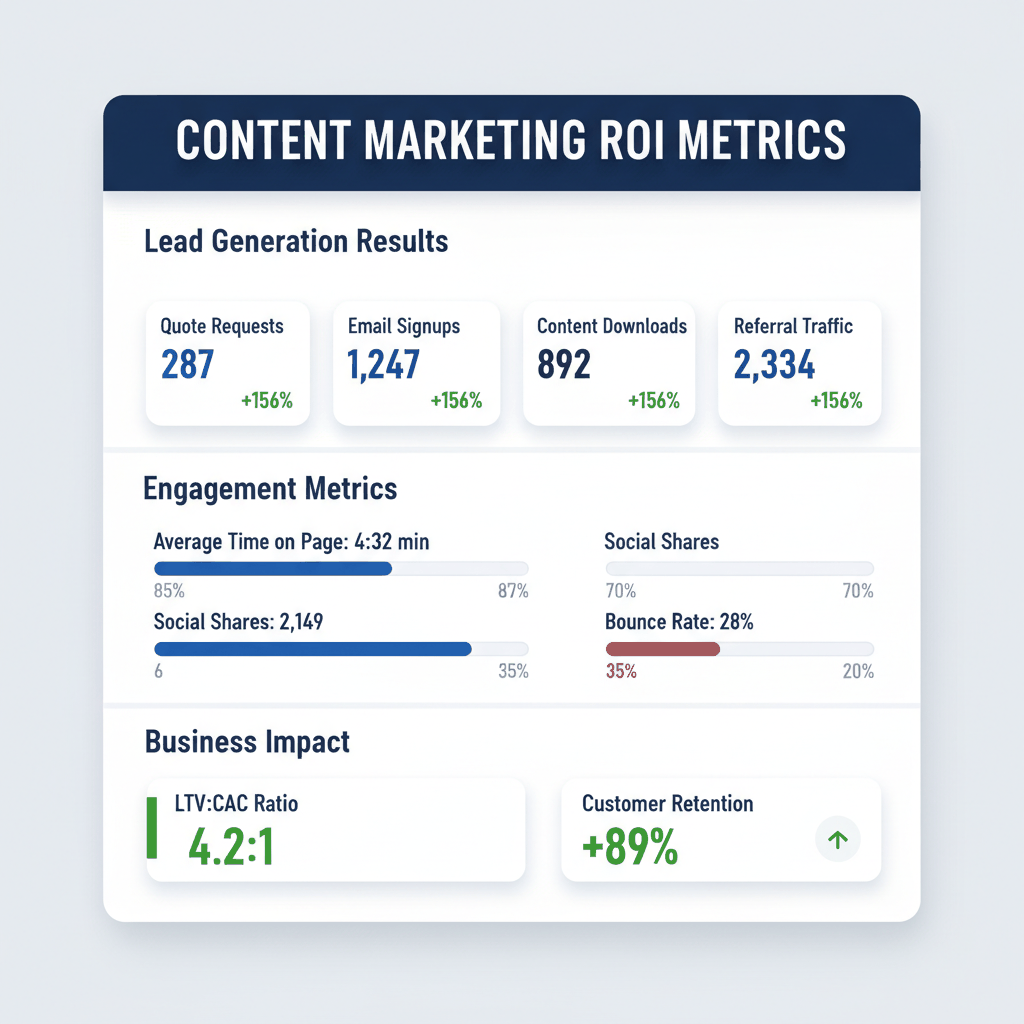
The most important metric is qualified leads generated from content. Track how many people request quotes after reading your blog posts or downloading your guides.
Set up tracking for different content types. Monitor which blog topics generate the most insurance quote requests. Track email signups from specific pieces of content.
Good insurance content typically converts 30-50% of referral traffic. Content-driven leads often perform better than cold advertising leads.
Track how long people spend reading your content. High engagement indicates you're providing valuable information that builds trust.
Monitor social shares and comments on your insurance content. When people share your educational posts, it extends your reach and builds credibility.
Website authority grows when other sites link to your insurance content. Quality backlinks improve your search rankings and establish industry expertise.
Measure the lifetime value of customers acquired through content marketing. These customers often stay longer and refer more people than those from paid advertising.
Track the LTV-to-CAC ratio for content-acquired customers. This helps determine whether your content marketing investment pays off long-term.
Content-educated customers typically require less service time because they understand their coverage better. This reduces operational costs and improves profitability.
How long does insurance content marketing take to show results?
Most insurance agencies see initial results within 3-6 months of consistent content publishing. Lead generation typically improves significantly after 6-12 months as your content library grows and search rankings improve.
What auto insurance blog topics generate the most leads?
Coverage education topics and money-saving content perform best. Articles about choosing coverage amounts, understanding deductibles, and finding discounts attract qualified prospects actively shopping for insurance.
How often should auto insurance agencies publish new content?
Publish at least 2-3 blog posts per month for steady results. Consistency matters more than frequency. Regular publishing builds authority and keeps your agency visible in search results.
Can small insurance agencies compete with big companies through content marketing?
Yes, small agencies often outperform large competitors with personalized, local content. Focus on your community's specific insurance needs and provide more personalized service than national companies offer.
What's the average ROI for insurance content marketing?
When executed properly, insurance content marketing delivers an average yearly ROI of $984,000. Email marketing specifically provides 42:1 ROI in the insurance sector, making it highly profitable for agencies.
Ready to grow your auto insurance lead generation? Sign up for free with ResultCalls today!

Hello everyone! My name is Alex and I write these blogs to help educate small business owners on different ways to grow their business. My goal is to make lead generation as easy as possible for you. After reading these blogs, I hope you leave with some actionable steps that will get you closer to growing your business :)