
Do your final expense prospects hang up within seconds? Are they skeptical before you even start talking? You're not alone. Insurance agents working with seniors face a trust crisis that makes closing nearly impossible.
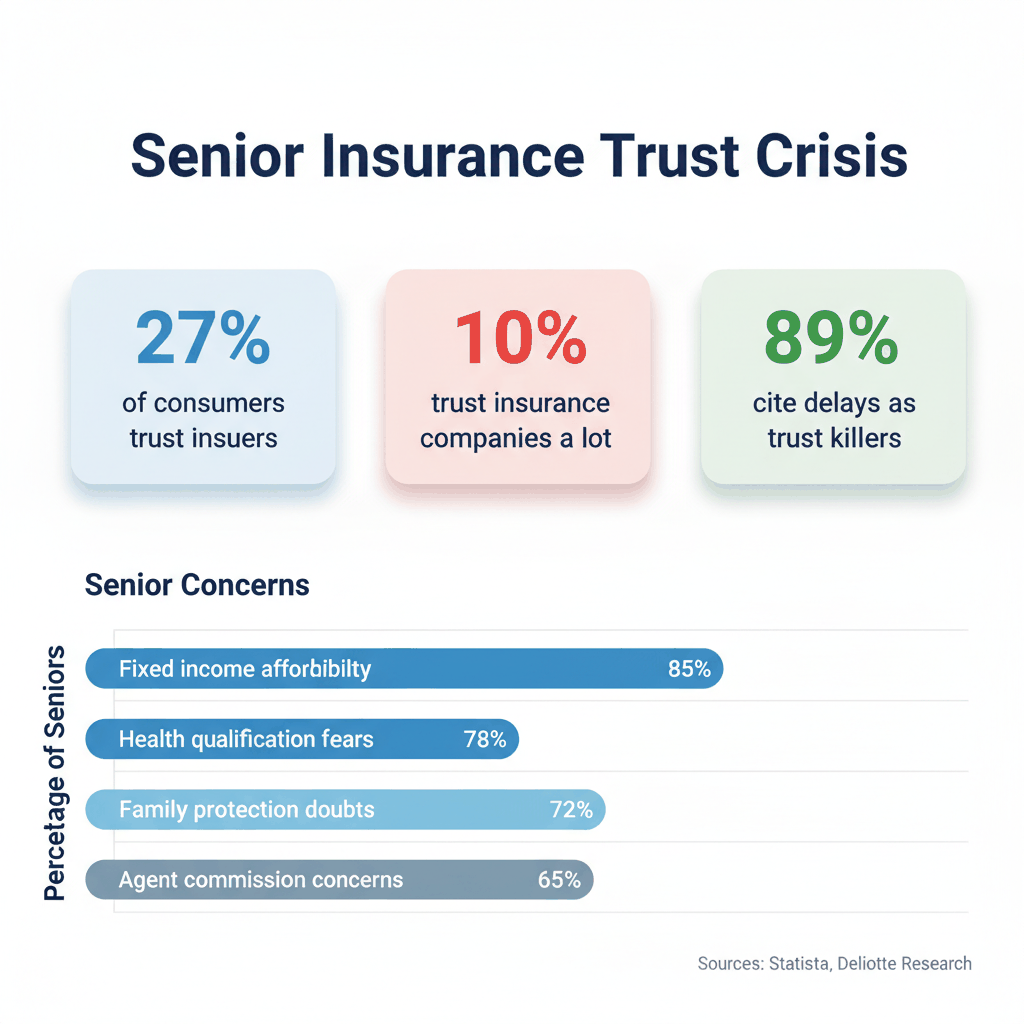
Here's the problem. Only 27% of consumers consider insurers trustworthy. For seniors, that number drops even lower. Years of aggressive sales tactics have created a wall of skepticism.
But smart agents know the solution. They focus on final expense trust building before selling. They use proven strategies to establish credibility with seniors who need protection.
You'll learn the exact trust-building methods that convert seminar attendees at 20-30% rates. Plus communication tactics that address affordability concerns and health qualification fears. ResultCalls has seen these strategies transform agent performance across the senior insurance market.
Table of Contents
Trust drives every final expense sale. Without it, you're fighting an uphill battle against decades of industry reputation problems.
The numbers tell the story. According to Statista research, only 10% of consumers trust insurance companies a lot. Deloitte found that only 11% of people have strong trust in insurance agents and brokers.
Seniors face unique pressures that make trust even more critical. They worry about affordability on fixed incomes. They question whether their health problems will disqualify them. Most importantly, they fear their families won't actually receive the money.
Every final expense conversation includes predictable concerns:
Can I afford monthly payments on my fixed income?
Will I qualify with my health problems?
How do I know my family will get the money?
Are you just trying to make a commission?
Will the insurance company find reasons not to pay?
These aren't product objections. They're trust objections. Address trust first, and product concerns become easier to handle.
Educational seminars consistently outperform aggressive sales tactics. They build trust through value before introducing products.
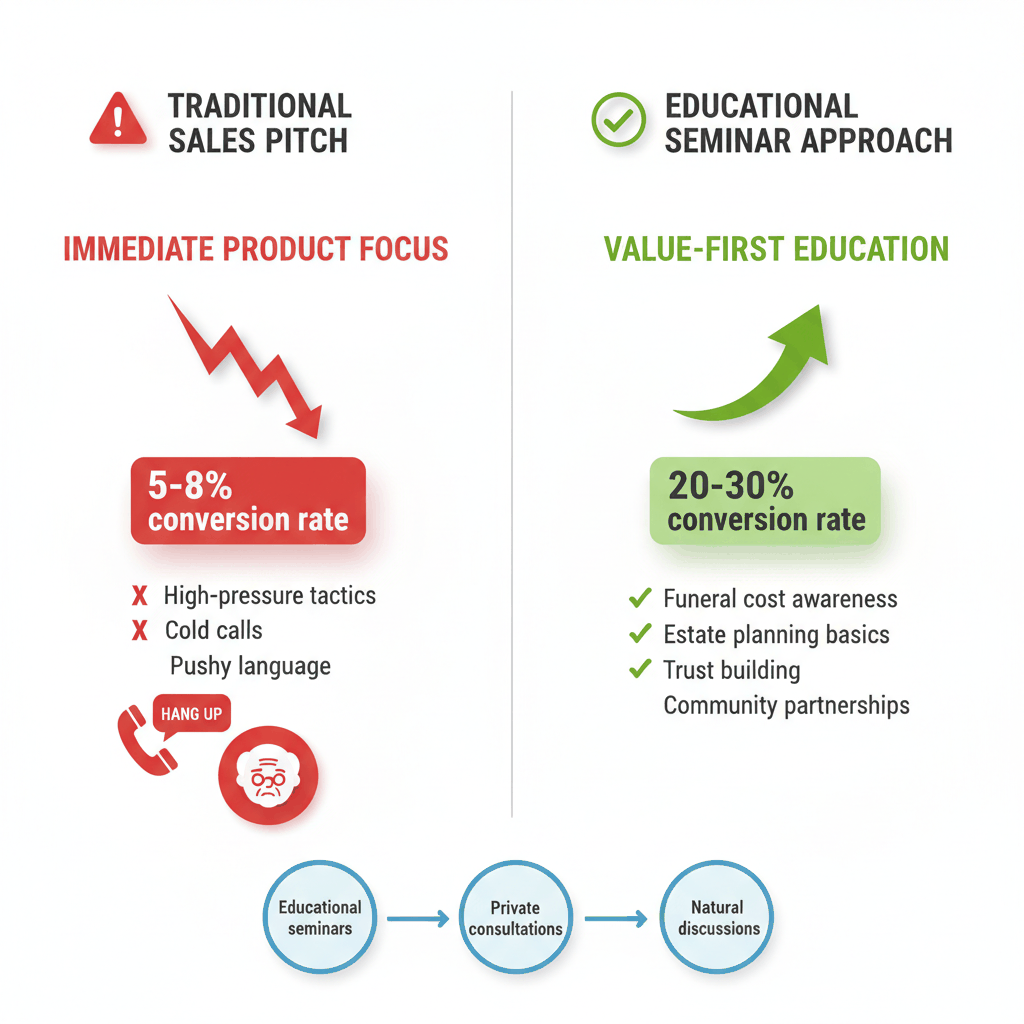
Host educational seminars at senior centers and retirement communities. Focus on funeral costs, estate planning basics, and family protection. Skip the sales pitches entirely during the presentation.
The results speak for themselves. Seminar attendees convert at 20-30% rates due to the educational trust-building approach. This dramatically outperforms cold calling or aggressive sales methods.
Structure your seminars around genuine education:
Current funeral costs in your local area
How burial expenses impact families financially
Basic estate planning principles
Medicare limitations for end-of-life costs
Planning timeline recommendations
Save product details for private follow-up meetings. The seminar plants seeds of trust and urgency.
Work with senior centers, retirement communities, and community organizations. Their endorsement transfers trust to you immediately. These partnerships position you as a resource rather than a salesperson.
For example, offer to speak at monthly senior center meetings. Provide free educational materials. Sponsor community events that serve seniors. Build your reputation as someone who genuinely cares about the community.
Empathy transforms conversations from sales pitches into consultations. Seniors respond to agents who understand their concerns and financial realities.
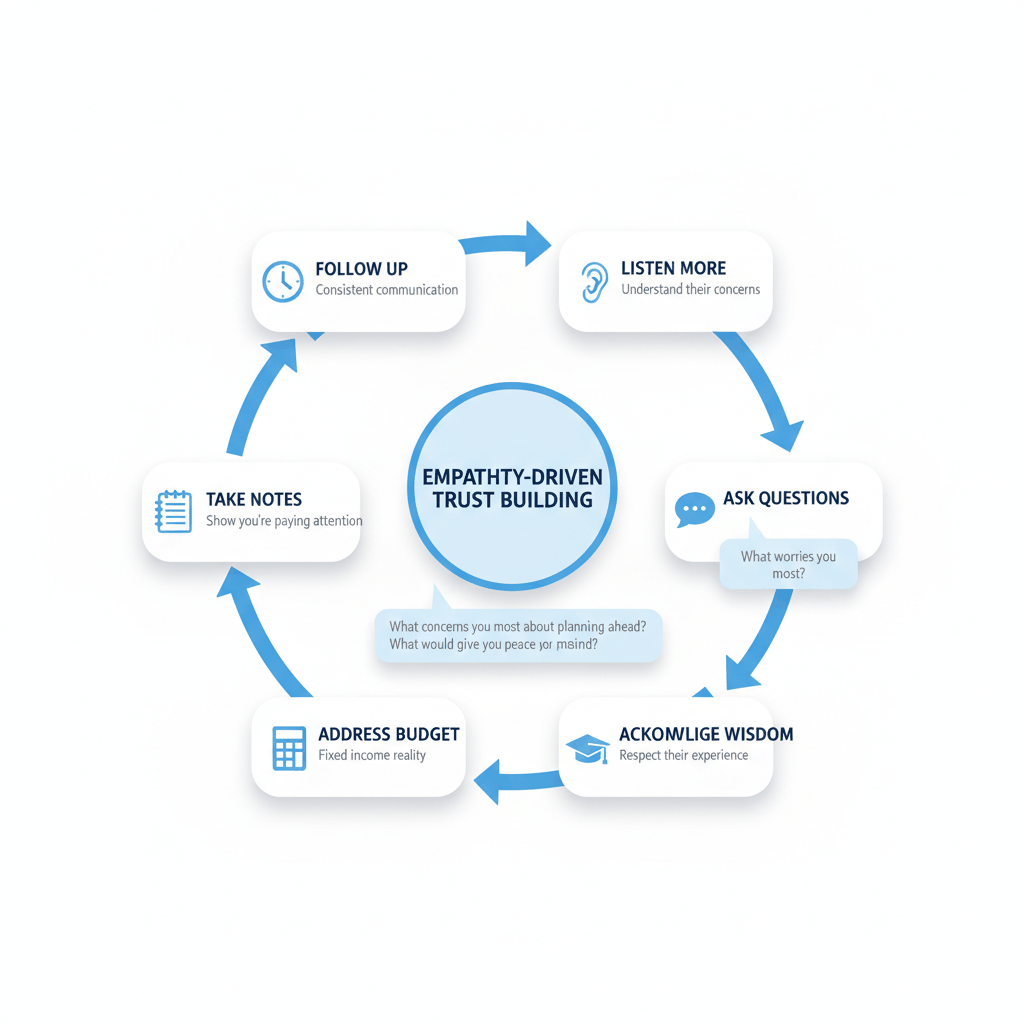
Start every conversation by understanding their situation. Ask about their family, their concerns, and their budget. Listen more than you talk. Take notes that show you're paying attention.
Use language that acknowledges their wisdom and experience. Avoid talking down to seniors or assuming they don't understand financial concepts. They've managed money longer than most agents have been alive.
Use these conversation starters to create genuine connections:
What concerns you most about planning ahead?
How important is protecting your family from expenses?
What's your biggest worry about insurance companies?
Have you had bad experiences with agents before?
What would give you peace of mind?
Their answers guide your entire approach. Address their specific concerns rather than following a generic script.
Most seniors live on fixed incomes. Acknowledge this reality upfront. Discuss affordable options without judgment. Show them how small monthly payments can provide significant protection.
For example, Margaret was a retired schoolteacher concerned about burdening her children. She purchased a $25,000 policy for less than her monthly cable bill. This real example shows how final expense insurance fits senior budgets.
Professional credentials and affiliations provide instant credibility with skeptical seniors. Display certifications prominently in all marketing materials.
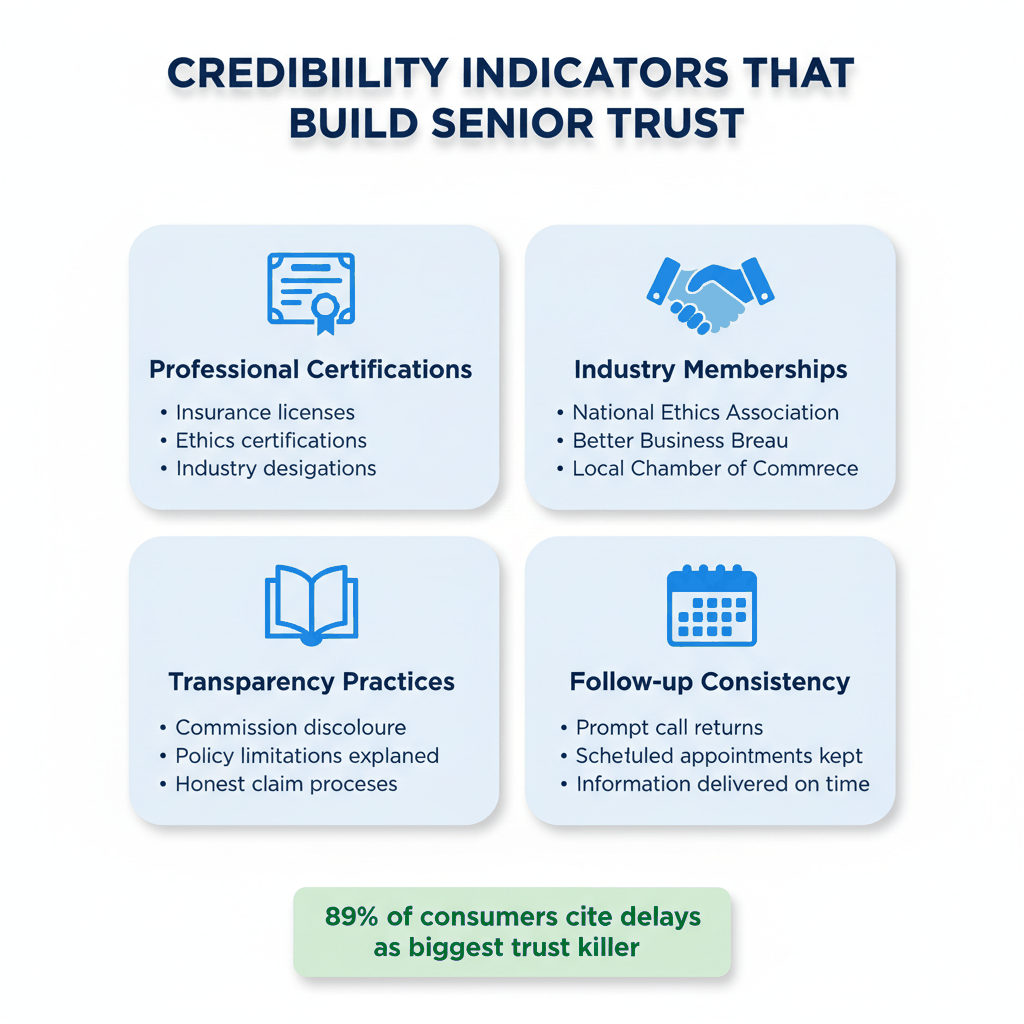
Maintain memberships in respected organizations. For example, membership in the National Ethics Association demonstrates integrity to customers. Better Business Bureau accreditation shows responsiveness and honor.
Share your experience and training regularly. Mention continuing education courses. Discuss industry conferences you attend. Show that you take your profession seriously.
Be transparent about how you're paid and why you recommend specific products. Explain commission structures simply. Show how your recommendations serve their interests.
Discuss policy details honestly, including limitations and exclusions. Don't hide information that might create problems later. Transparency now prevents trust destruction later.
Consistent follow-up builds trust over time. Research shows that 89% of consumers cite delays as the biggest factor that dents trust during difficult times.
Return calls promptly. Send promised information immediately. Keep scheduled appointments religiously. Small actions build big trust over time.
Real customer stories provide social proof that overcomes skepticism. Collect testimonials from satisfied clients and use them strategically.
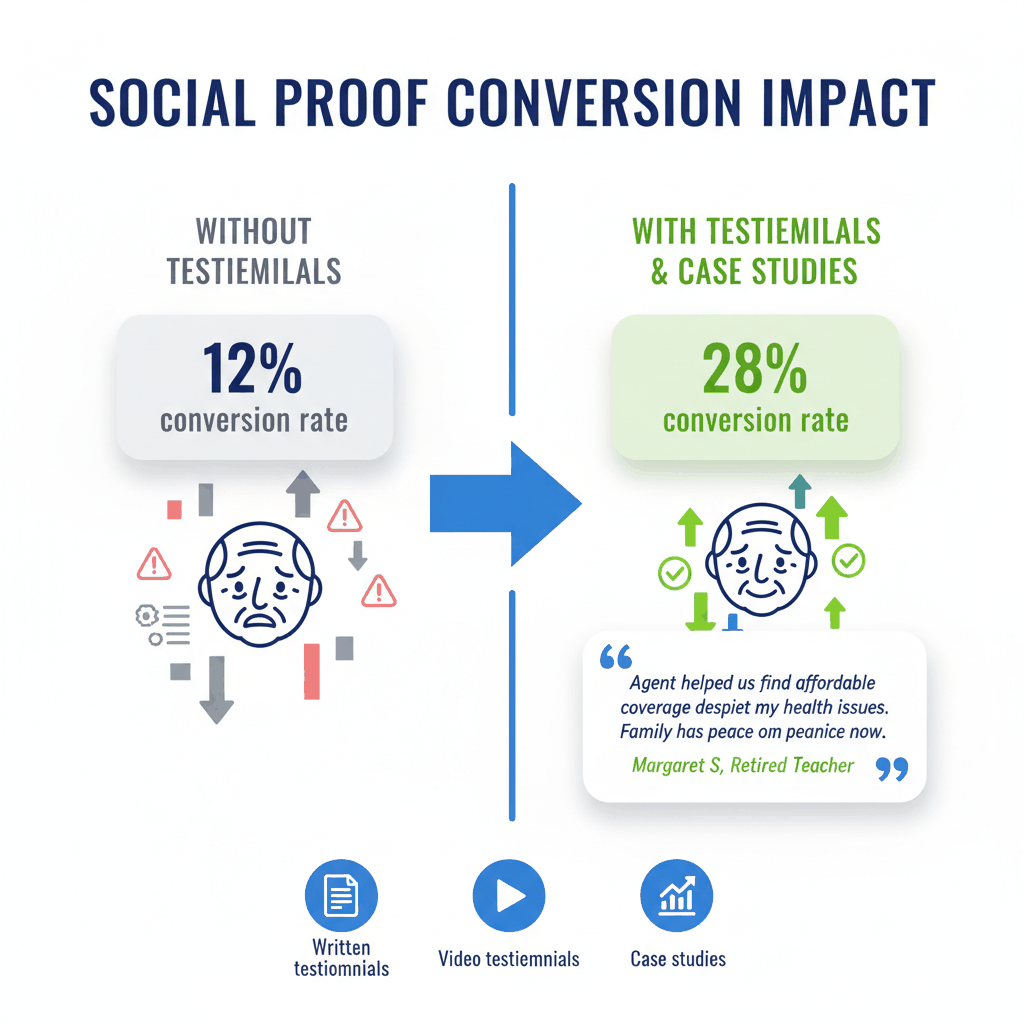
Request feedback from every satisfied client. Ask permission to use their testimonials in marketing materials. Focus on emotional benefits rather than just policy features.
Share examples of how final expense insurance helped real families. Contrast these with stories of families who faced financial strain without coverage.
Make testimonial collection part of your service process:
Ask for feedback immediately after policy delivery
Request written testimonials for marketing use
Gather video testimonials when possible
Focus on peace of mind and family protection
Include specific details about your service
Use these testimonials in seminars, direct mail, and one-on-one meetings. Real stories from real customers overcome theoretical objections.
Develop detailed case studies that show your problem-solving abilities. Include challenges, solutions, and outcomes. Show how you helped families in similar situations.
For example, create case studies about helping families with health issues qualify for coverage. Or show how you found affordable solutions for tight budgets. These stories demonstrate expertise and empathy.
Direct mail remains highly effective for final expense leads when combined with personal follow-up. Achieve 1-2% response rates with properly targeted campaigns.
Focus on clear, benefit-driven messaging that addresses funeral cost concerns. Use senior-friendly design with larger fonts and simple language. Include prepaid return options to make responding easy.
The key lies in personal follow-up.
Create direct mail pieces that feel helpful rather than salesy:
Larger fonts for easy reading
Simple language at 6th-grade level
Local funeral cost statistics
Prepaid response cards
Professional headshot photo
Local address and phone number
Include educational content about funeral planning. Provide genuine value before asking for anything.
Personal follow-up converts direct mail responses into appointments. Call within 24 hours of receiving responses. Reference their specific situation mentioned on the response card.
Use the initial call to schedule an in-home appointment. Focus on education and needs assessment rather than immediate sales. Build relationship first, sell second.
Partner with businesses and organizations that serve your target market. These relationships provide warm introductions and credibility transfer.
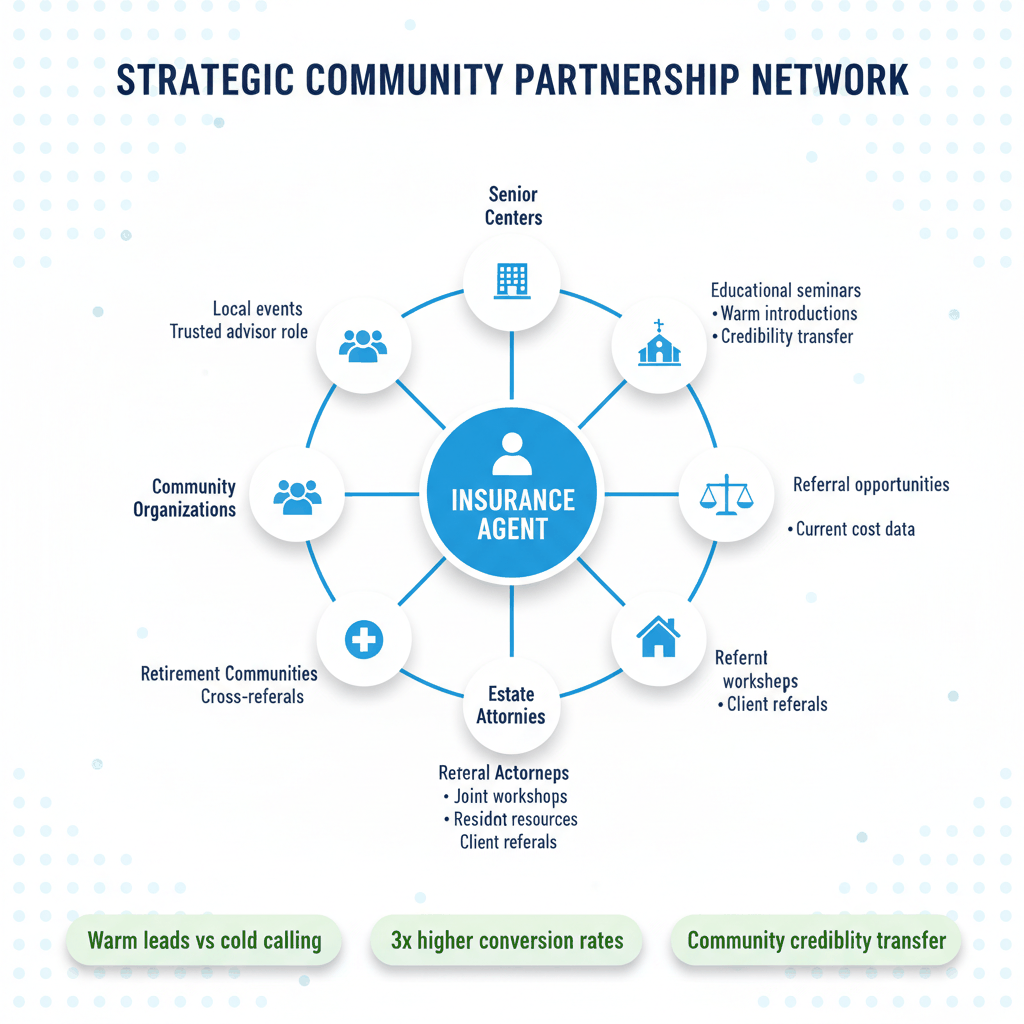
Build relationships with funeral homes, estate planning attorneys, and senior service providers. They interact with families who need your services regularly.
Volunteer at community events and local organizations. Sponsor youth sports teams. Offer educational sessions to local businesses about voluntary benefits. You never know who you'll meet at food banks, libraries, or community events.
Approach partnerships systematically:
Identify businesses serving seniors
Offer educational value before asking for referrals
Provide resources they can share with clients
Attend their community events
Cross-refer when appropriate
Focus on serving their customers rather than getting immediate referrals. Long-term relationship building creates sustainable referral sources.
Build your profile through consistent community involvement. Contribute to local causes. Volunteer regularly at organizations serving seniors. Become known as someone who genuinely cares about community welfare.
This community presence pays dividends when seniors research your background. They'll hear positive things about you from multiple sources.
How long does final expense trust building take with seniors?
Trust building typically takes 2-3 interactions before seniors feel comfortable making decisions. Educational seminars can accelerate this process by establishing credibility upfront. Consistent follow-up and transparent communication help maintain trust throughout the sales process.
What's the biggest trust mistake agents make with senior insurance sales?
The biggest mistake is rushing to product presentations before establishing trust and understanding needs. Seniors respond better to agents who listen first, educate second, and sell third. Building rapport takes time but dramatically improves conversion rates.
How do I overcome senior skepticism about insurance companies?
Address skepticism directly by acknowledging industry reputation problems. Share specific examples of how your recommended companies have paid claims quickly. Provide references from local families who received prompt claim payments. Transparency about industry issues builds credibility.
Should I focus on burial insurance credibility or product features?
Focus on credibility first, product features second. Seniors buy from agents they trust more than products they understand. Once trust is established, they're more receptive to learning about policy details and benefits.
How do senior life insurance trust issues affect closing rates?
Trust issues can reduce closing rates by 50% or more. Agents who master trust-building techniques achieve 20-30% conversion rates from qualified prospects. Without trust, even perfect product presentations fail to convert skeptical seniors.
Ready to buy final expense leads today? Sign up for free with ResultCalls now!

Hello everyone! My name is Alex and I write these blogs to help educate small business owners on different ways to grow their business. My goal is to make lead generation as easy as possible for you. After reading these blogs, I hope you leave with some actionable steps that will get you closer to growing your business :)