
Are you wasting 25-40% of your window installation Google Ads budget without knowing it? Most window companies struggle with this exact problem. They pour money into ads that generate clicks but not customers.
The challenge goes deeper than just high costs. Window replacement has one of the highest cost per lead rates in home services at $200.34 average. Without smart budget management, your ad spend disappears quickly with little to show for it.
Smart budget management transforms window companies from wasting money to generating predictable leads. The window companies getting 40-60 leads monthly at $65-$150 per lead run a proven system. With average projects worth $10,000-$15,000, your budget strategy makes or breaks profitability.
You'll learn the exact budget allocation strategies that work. Plus how to avoid the five costliest mistakes that drain budgets fast. Most importantly, you'll get a framework to scale your lead generation predictably.
Table of Contents
Most window installation companies make predictable budget mistakes. These errors cost thousands monthly in wasted ad spend. Here are the five biggest budget killers.
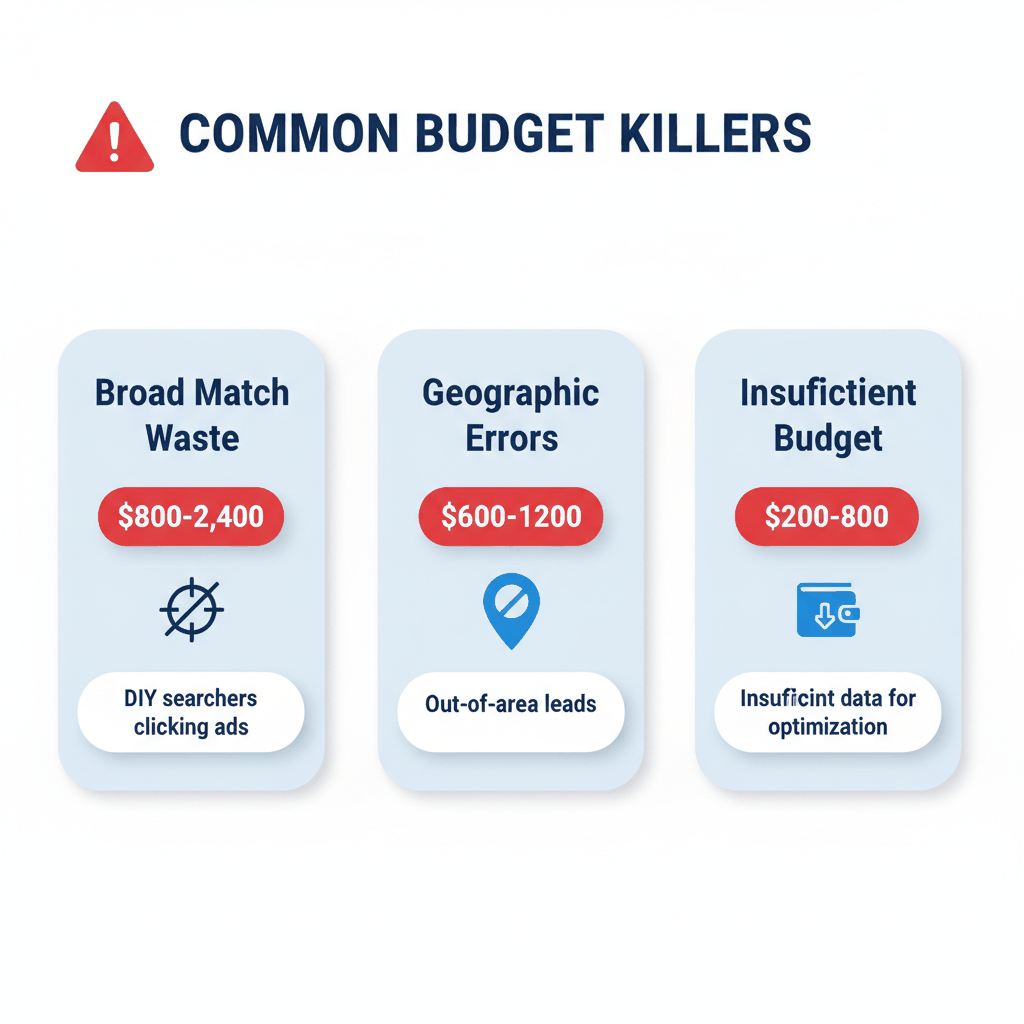
A $50 monthly budget might feel safe. It won't generate enough data to optimize anything. Google's Smart Bidding needs 30-50 conversions monthly to work properly. Budgets below $200-$300 monthly generate insufficient click volume for learning.
For example, you need 200 leads monthly at $40 cost per acquisition. That requires $8,000 monthly budget. If your historical cost per lead is $60, either increase budget or fix efficiency first.
You bid on "window replacement" in broad match. Google shows your ad for completely unrelated searches. You pay $15-$45 per click for people researching DIY projects or car windows. A single month of broad match waste burns $800-$2,400 on a $4,000 budget.
The solution is exact and phrase match keywords only. Plus comprehensive negative keyword lists from day one.
Google defaults to "Presence or interest" targeting. This shows ads to anyone interested in your service area. Even if they live 500 miles away. Change this setting to "Presence" only for your actual service radius.
This simple change typically reduces wasted clicks by 20-30% immediately.
The most common mistake is over-funding emergency replacement while starving research-phase customers. Homeowners planning window projects start researching 3-6 months before buying. These leads cost less and convert better when nurtured properly.
Allocate 60% of budget to scheduled installation campaigns. Reserve 40% for emergency replacement. This balance generates steady lead flow year-round.
Without call tracking, you can't connect phone leads to specific campaigns. You kill profitable campaigns because your dashboard only shows form submissions. One window company paused a campaign generating only 3 form leads. Call tracking revealed it also drove 14 monthly phone calls.
Smart budget allocation starts with understanding your market and goals. Most successful window companies spend 5-12% of total revenue on Google Ads. If you generate $500,000 annually, that means $2,000-$5,000 monthly ad spend.
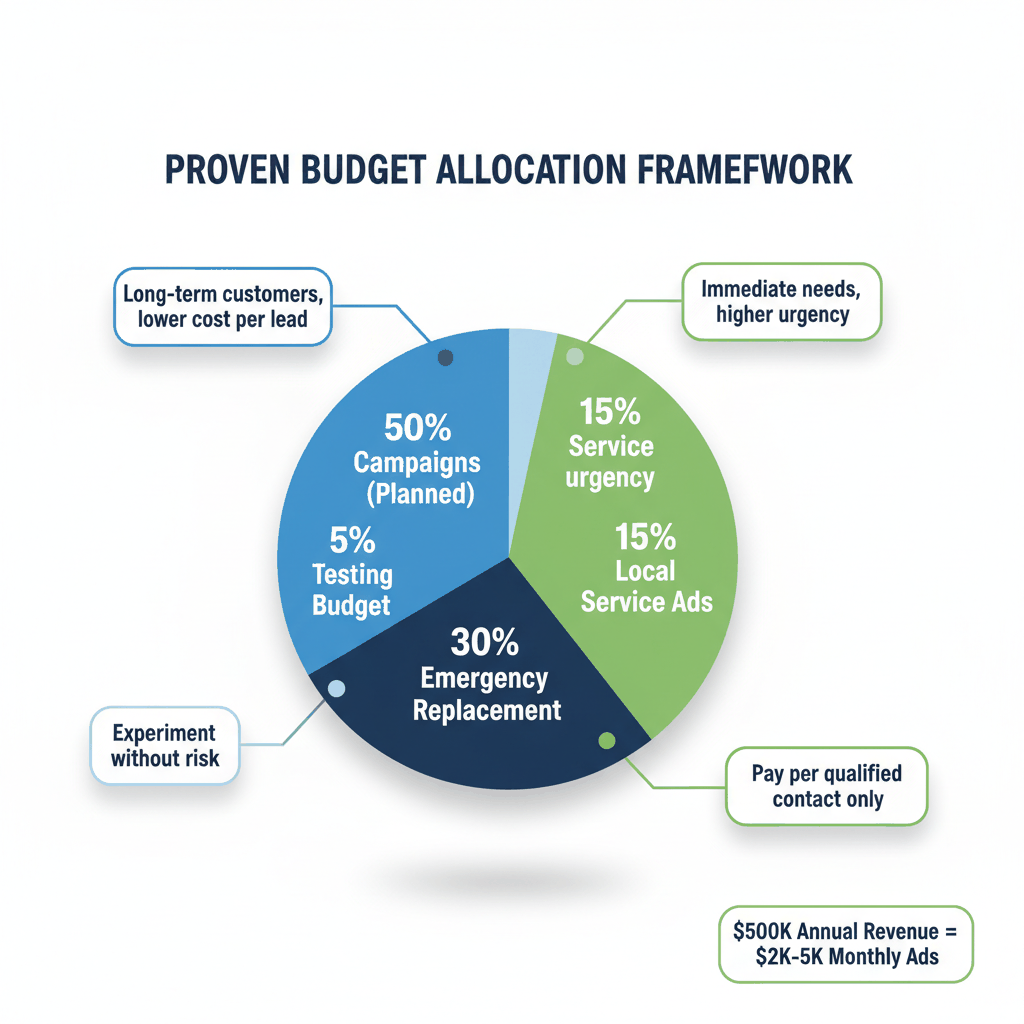
Here's the proven allocation framework for window installation companies:
Search campaigns (planned replacements): 50%
Search campaigns (emergency needs): 30%
Local Service Ads: 15%
Testing new opportunities: 5%
This distribution balances immediate needs with long-term growth. The testing budget lets you experiment without risking core performance.
Window installation has clear seasonal patterns. Increase budgets 25-35% during peak periods: March through June for spring installations and August through October for pre-winter replacements.
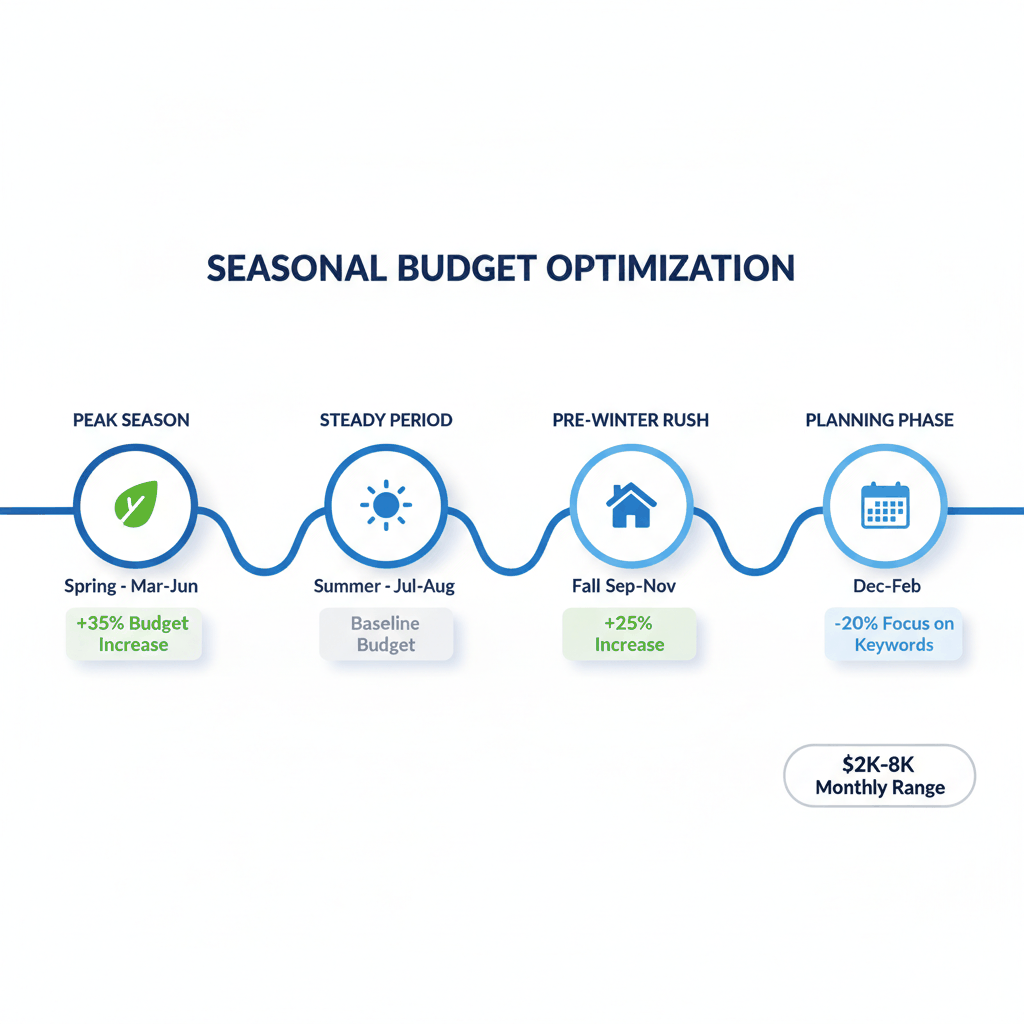
During slower winter months, reduce budgets by 15-20%. Focus spend on planning-phase customers who will buy in spring. This maximizes efficiency while staying competitive during peak seasons.
Local Service Ads generate $25-$85 leads for window replacement. You only pay when homeowners actually contact you. Start with $500-$1,000 monthly budget here. LSAs often produce the cheapest qualified leads.
Campaign structure directly impacts budget efficiency. Well-organized campaigns waste less money and generate better results. Here's the proven structure for window companies.
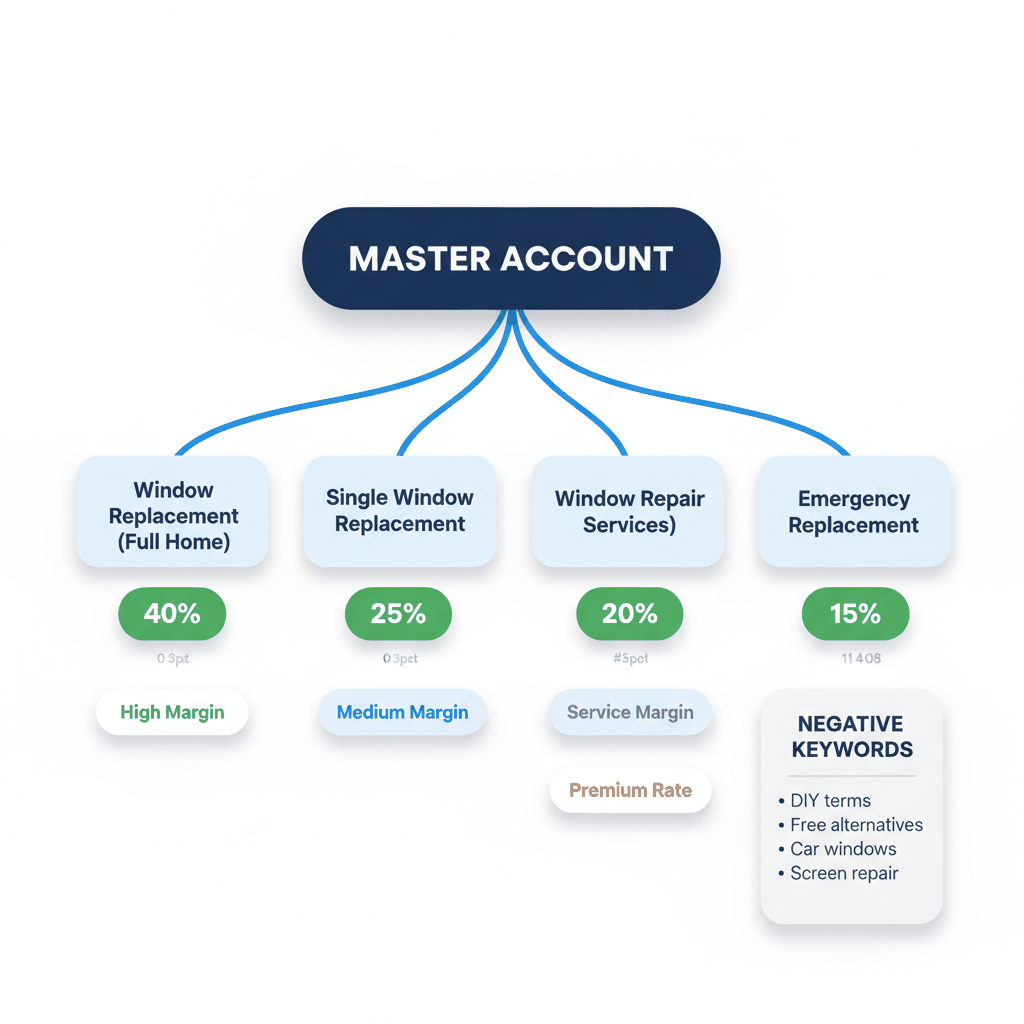
Create separate campaigns for each service type:
Window replacement (full home)
Single window replacement
Window repair services
Emergency window replacement
This structure lets you allocate budgets based on profit margins and demand patterns. Full home replacements justify higher cost per lead than single window jobs.
Top-performing window companies maintain negative keyword lists of 200-500 terms. Start with these essential negatives:
DIY and how-to terms
Free and cheap alternatives
Car and automotive terms
Screen repair terms
Job and career searches
Add new negatives weekly based on search term reports. This ongoing process prevents budget waste from irrelevant clicks.
Dedicated landing pages convert 2-4 times better than homepage traffic. Create specific pages for each campaign focus. Match the landing page message to your ad copy exactly. This improves Quality Score and reduces cost per click.
Accurate tracking determines budget success or failure. Without proper measurement, you make decisions based on incomplete data. This leads to cutting profitable campaigns and funding losers.
Install Google Ads conversion tracking for both form submissions and phone calls. Track these separately to understand your complete lead picture. Many window companies find 60-70% of leads come through phone calls, not forms.
Use call tracking solutions like CallRail or Google's forwarding numbers. This connects phone leads to specific keywords and campaigns. The insight dramatically improves budget decisions.
Monitor cost per lead trends weekly. When costs rise faster than booked job values without adding new keywords, you've hit market saturation. Time to expand geographically or add new services.
Track cost per lead by campaign type. Emergency replacement campaigns typically cost more per lead but close faster. Planned replacement costs less but requires longer nurturing.
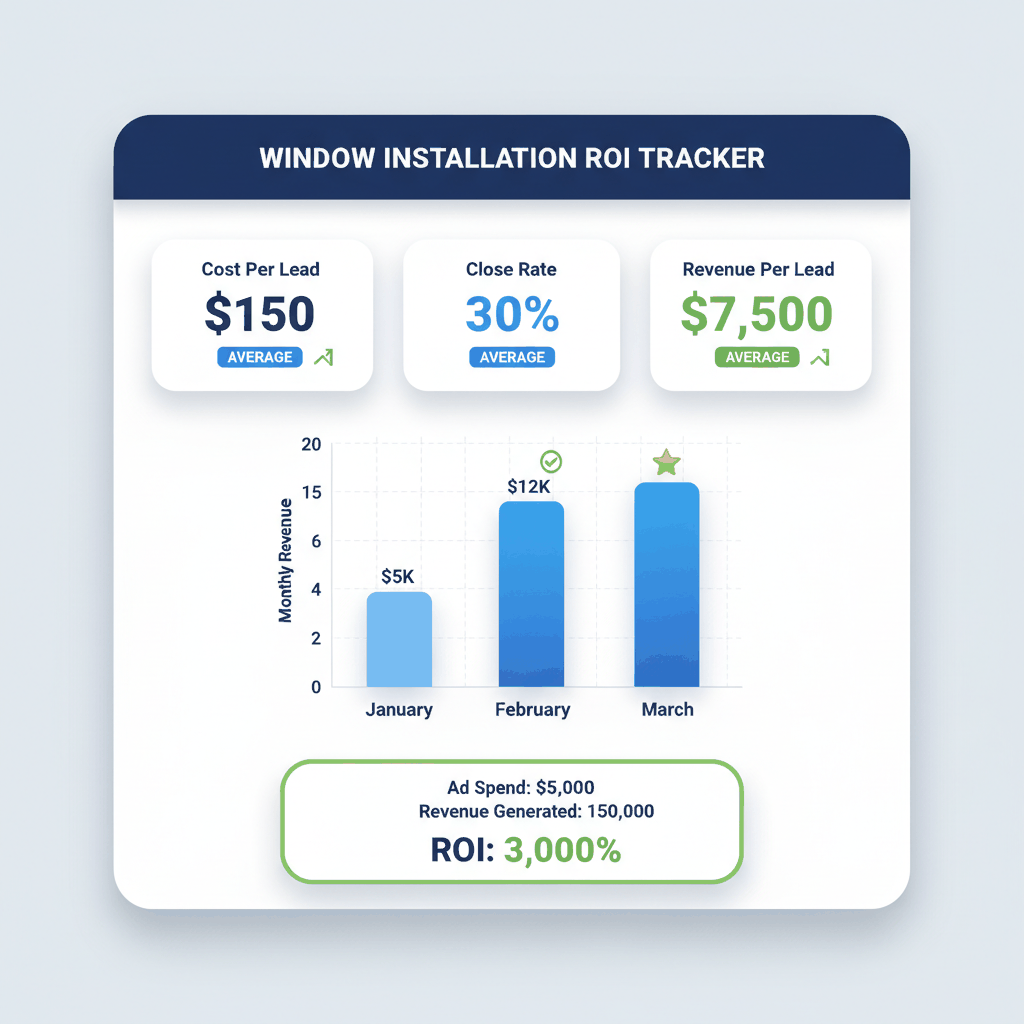
Connect leads to actual revenue whenever possible. A $250 cost per lead sounds expensive until you realize it generates $15,000 average project value. Focus on return on ad spend, not just lead costs.
For example: spending $5,000 monthly at $250 cost per lead generates 20 leads. At 30% close rate and $25,000 average project value, that produces $150,000 revenue from $5,000 ad spend.
Scaling requires systematic testing and gradual increases. Doubling budgets overnight often destroys performance. Smart scaling maintains efficiency while increasing volume.
Allocate 10-20% of monthly spend to structured tests. Test new match types, landing pages, or ad copy. Run experiments for fixed 2-3 week periods. Pause losers quickly to preserve budget for winners.
Label experiments clearly in campaign names. This prevents accidentally optimizing test campaigns that should end soon.
When current markets reach saturation, expand geographically. Add one new city or county at a time. Start with 20% of your main market budget. Monitor performance for 4-6 weeks before expanding further.
Research competitor density in new markets. Less competitive areas often generate cheaper leads initially.
Increase budgets gradually to maintain performance:
Week 1: Increase 20%
Week 2: Monitor performance closely
Week 3: Increase another 20% if metrics hold
Week 4: Evaluate and plan next increase
This measured approach prevents the algorithm shock that kills performance during rapid scaling.
What should my minimum window installation Google Ads budget be?
Start with at least $1,000-$1,500 monthly for meaningful data. Budgets below $500 monthly generate insufficient clicks for optimization. Consider your market competition and average cost per click when setting minimums.
How do I know if my window company PPC strategy is working?
Track cost per lead trends and actual project bookings from ads. Successful campaigns generate leads at $65-$150 each with 25-35% close rates. Monitor return on ad spend monthly to ensure profitability.
Should I use broad match keywords for window installation ads?
Avoid broad match keywords initially. They trigger ads for irrelevant searches like DIY repairs or car windows. Start with exact and phrase match keywords plus comprehensive negative keyword lists.
When should I increase my Google Ads budget for window services?
Increase budgets when current campaigns consistently hit daily limits while maintaining target cost per lead. Scale gradually with 20% increases weekly while monitoring performance metrics.
What's the difference between Local Service Ads and regular Google Ads for window companies?
Local Service Ads charge per qualified lead contact, not per click. They typically generate cheaper leads at $25-$85 each. Regular Google Ads offer more targeting control but require careful optimization to avoid wasted clicks.
Ready to get window installation leads? Sign up for free with ResultCalls today!

Hello everyone! My name is Alex and I write these blogs to help educate small business owners on different ways to grow their business. My goal is to make lead generation as easy as possible for you. After reading these blogs, I hope you leave with some actionable steps that will get you closer to growing your business :)