Are you spending thousands on Google Ads but seeing few new patients? You're not alone. Most dental practices struggle with high click costs and poor conversion rates from traditional advertising.
The challenge gets worse every year. Dentistry has the lowest click-through rate of any industry. Meanwhile, Google expanded Local Service Ads to dental practices in January 2023. This creates a new choice for patient acquisition.
This guide compares Google Ads and Local Service Ads for dental practices. You'll learn which platform fits your practice goals, budget, and patient acquisition strategy. We'll cover real costs, conversion rates, and proven tactics from successful dental practices.
By the end, you'll know exactly which advertising approach will bring you more qualified patients at a lower cost.
Table of Contents
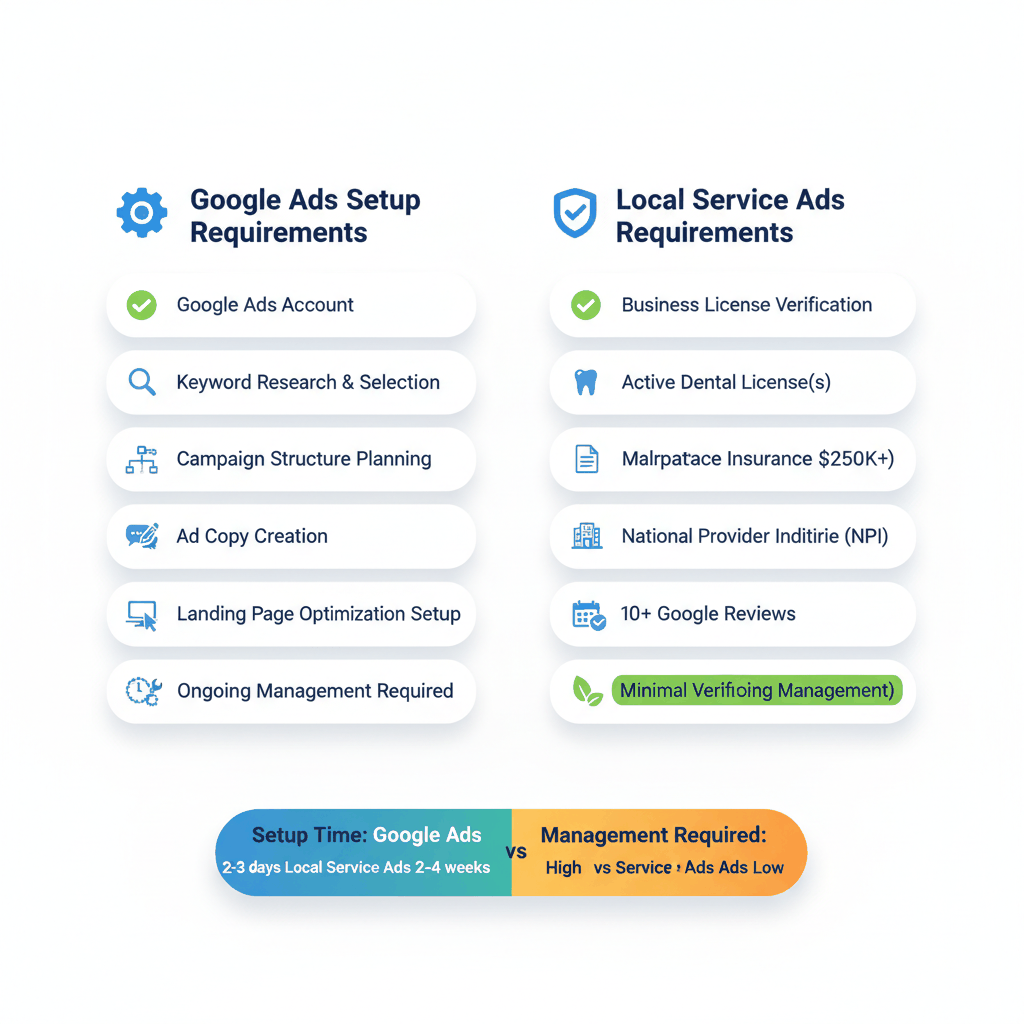
Google Ads operates on a pay-per-click model. You pay when someone clicks your ad. This sounds simple but creates challenges for dental practices.
The average cost per click for dental keywords ranges from $7 to $15. Popular terms like "dentist near me" can cost even more. Many clicks don't turn into patients, making your actual patient acquisition cost much higher.
Your ads appear when people search for dental services. Google uses an auction system to determine which ads show up. You bid on keywords and compete with other practices.
The problem is visibility. Your ads appear below Local Service Ads and Google Maps listings. This pushes your paid ads further down the page where fewer people see them.
For example, someone searching "emergency dentist Atlanta" will see Local Service Ads first. Then Google Maps results. Your traditional Google Ad appears third or fourth on the page.
Most dental practices make expensive mistakes with Google Ads. Broad keyword targeting wastes money on irrelevant searches. We've seen practices spend hundreds of dollars on clicks from people looking for dental assistant training.
Geographic targeting creates another problem. Many practices set a 20-mile radius around their location. In urban areas, this reaches millions of people who won't travel far for dental care. Research shows 80% of dental patients live within 5-10 miles of their dentist.
Poor tracking makes the situation worse. Front desk staff log referral sources as "Google" without distinguishing between ads, maps, or organic search. You can't improve what you can't measure accurately.
Local Service Ads work differently than traditional Google Ads. You pay per lead instead of per click. A lead means someone calls your practice or sends a message through the platform.
Google expanded Local Service Ads to dental practices in January 2023. These ads appear at the very top of search results with a "Google Verified" badge.
Getting approved for Local Service Ads requires several documents and certifications. You need a valid business license and active dental license for each dentist. General liability and professional liability insurance are mandatory, with minimum $250k malpractice coverage.
You also need a National Provider Identifier (NPI) for each dentist. Google requires a minimum number of Google reviews, though they don't publish the exact requirement. Most practices need at least 10-15 recent reviews to get approved.
The verification process takes 2-4 weeks. Google performs background checks on all dentists listed in your account. This creates trust with potential patients who see the "Google Verified" badge.
Local Service Ads appear prominently in search results. They show your practice name, rating, phone number, and services. Potential patients can call directly or send a message.
You only pay when someone contacts you. This eliminates the waste from curious clicks that don't lead to appointments. The cost per lead ranges from $30-$60 in smaller markets to $70-$120 in major cities.
Google tracks everything automatically. You see exactly how many leads each ad generates. This makes ROI calculation simple and accurate.
The fundamental difference between these platforms is the payment model. Google Ads charges per click, while Local Service Ads charge per qualified lead.
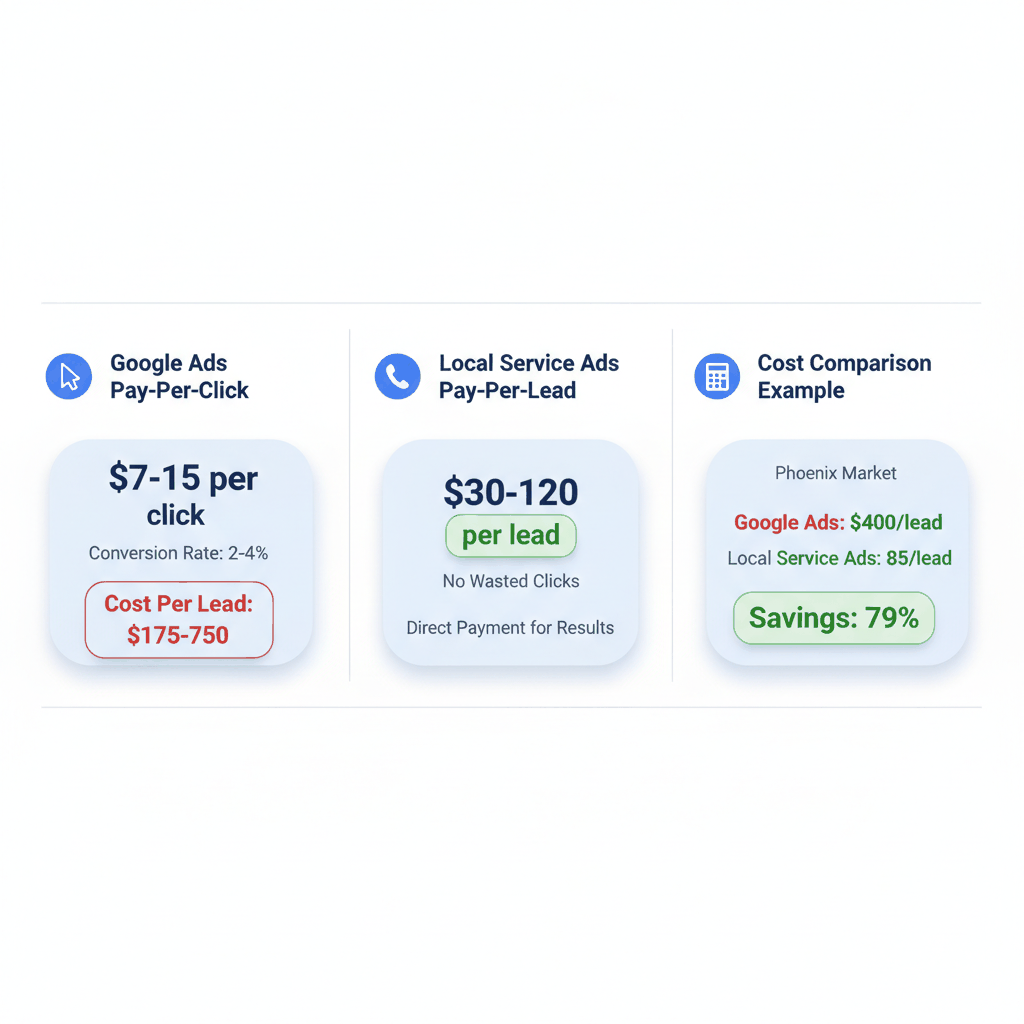
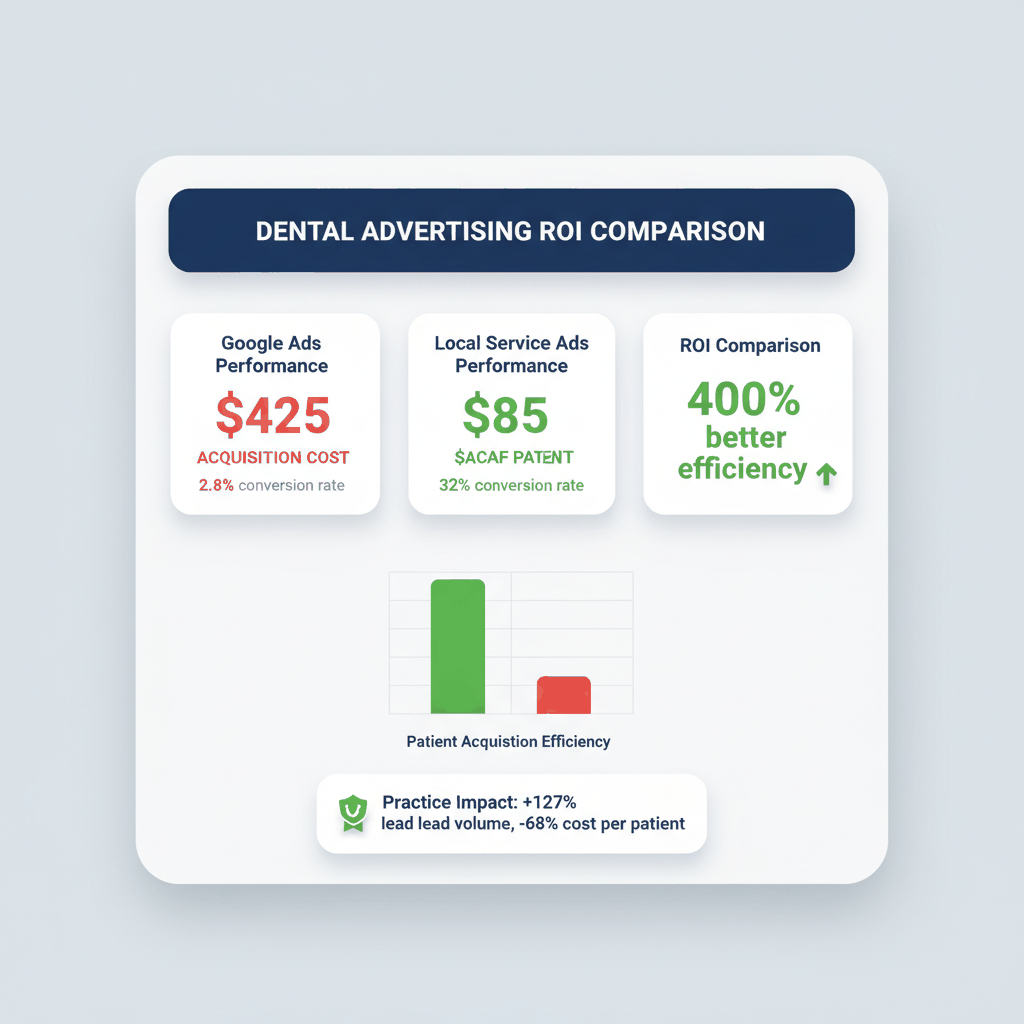
Google Ads costs vary widely based on competition and keyword selection. Dental practices typically pay $7-$15 per click. With average conversion rates around 2-4%, your cost per lead ranges from $175-$750.
Local Service Ads provide predictable pricing. You pay a fixed amount per lead based on your location and service type. General dentistry leads cost $30-$120 depending on your market size.
Here's a real example: A practice in Phoenix pays $12 per click on Google Ads. With a 3% conversion rate, each lead costs $400. The same practice pays $85 per lead through Local Service Ads. That's less than half the cost.
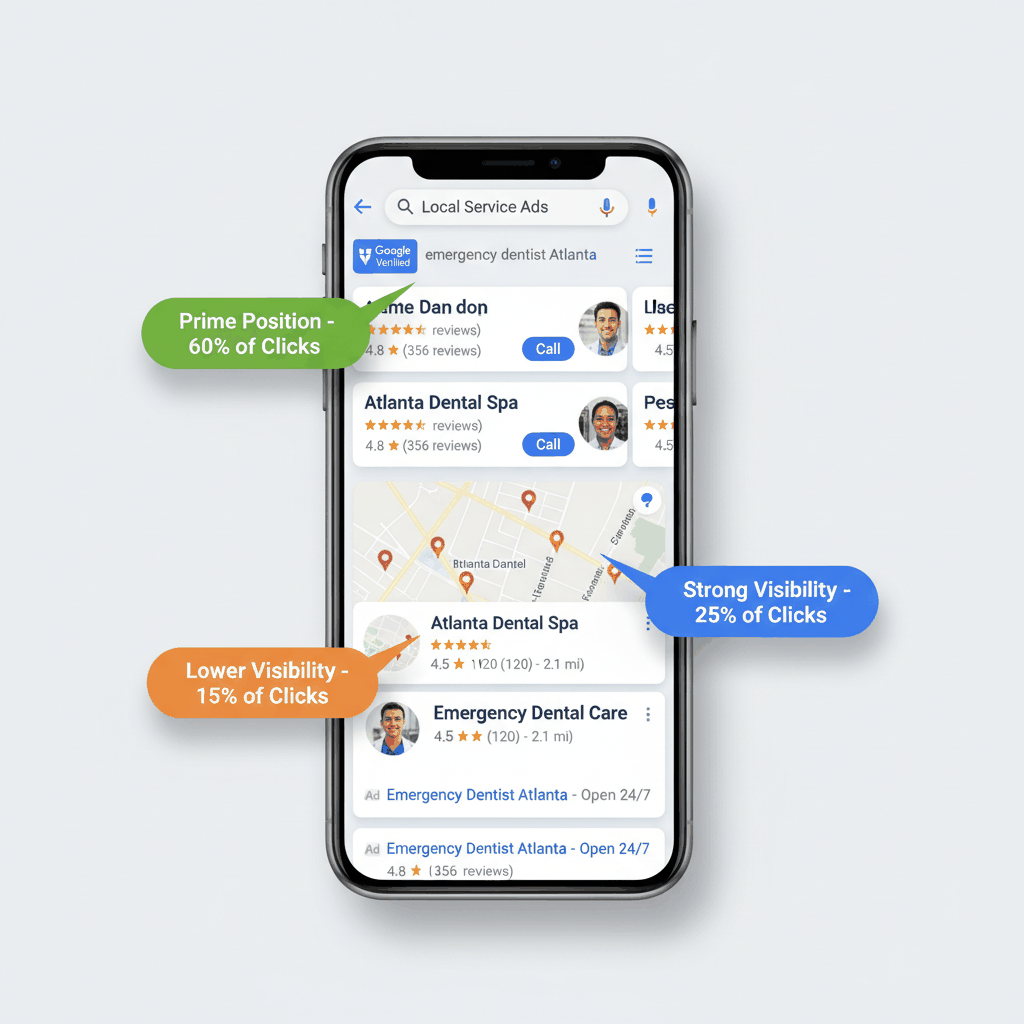
Local Service Ads appear at the top of search results. They get prime real estate above everything else. Your practice appears with a Google Verified badge that builds instant trust.
Google Ads appear lower on the page. They compete with organic results and Google Maps listings for attention. Many users scroll past paid ads to find "real" results.
Mobile placement makes this difference even more important. On mobile devices, Local Service Ads take up most of the screen. Users see your practice information immediately without scrolling.
Google Ads offers detailed targeting options. You control keywords, demographics, device types, and ad schedules. You can create different campaigns for different services or locations.
Local Service Ads provide basic targeting. You select your service areas and the types of dental work you provide. Google handles the rest automatically based on search intent.
For practices wanting detailed control, Google Ads wins. For those preferring simplicity, Local Service Ads work better. Most busy practice owners prefer the set-and-forget approach of Local Service Ads.
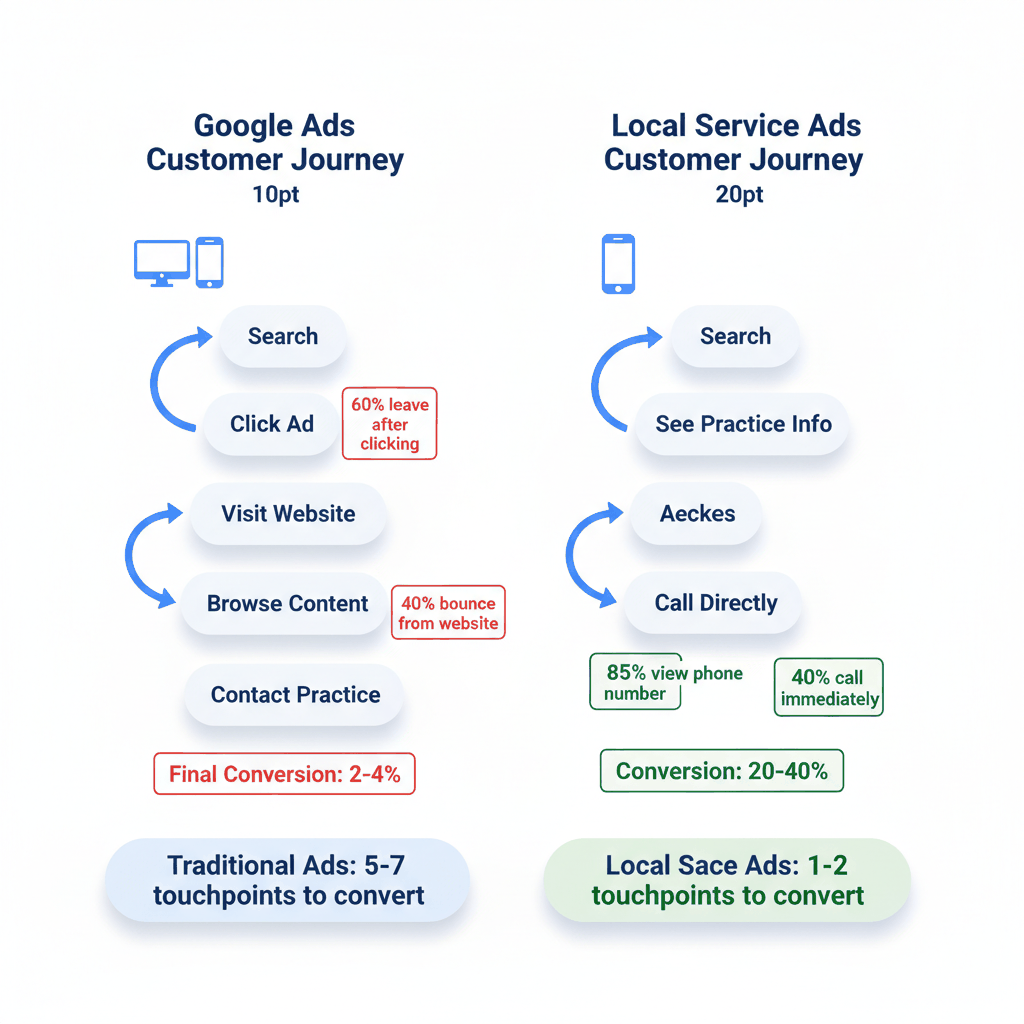
Success with either platform requires following proven strategies. The tactics that work for Google Ads differ significantly from Local Service Ads optimization.
Focus on high-intent keywords for Google Ads success. Terms like "emergency dentist" or "tooth pain relief" indicate immediate need. Avoid broad terms like "dentist" that attract unqualified traffic.
Implement proper call tracking to measure results accurately. Assign unique phone numbers to different campaigns. This shows which ads generate actual patients versus curious callers.
Structure campaigns around specific services. Create separate campaigns for cleanings, cosmetic dentistry, and emergency services. This allows precise budget allocation and performance measurement.
Use negative keywords aggressively. Add terms like "assistant," "school," "jobs," and "salary" to prevent irrelevant clicks. Update your negative keyword list monthly based on search term reports.
Tighten geographic targeting based on patient data. Most dental patients live within 5-10 miles of their dentist. Analyze your current patient addresses to find the optimal radius for your practice.
Your Google review profile determines Local Service Ads performance. Higher ratings and more reviews improve your ad placement. Actively request reviews from satisfied patients.
Response speed affects your lead quality and cost. Google tracks how quickly you respond to inquiries. Faster response times improve your ranking and reduce your per-lead cost.
Complete your Google Business Profile thoroughly. Add photos, services, hours, and practice information. This information appears in your Local Service Ads and influences click-through rates.
Monitor your lead quality and dispute invalid charges. Google occasionally charges for low-quality leads like wrong numbers or spam calls. You can dispute these charges and receive credits.
Many successful practices use both platforms simultaneously. Local Service Ads capture high-intent callers who want immediate appointments. Google Ads reach people who prefer researching practices online first.
Start with Local Service Ads for predictable lead costs. Add Google Ads campaigns for specific high-value services like implants or cosmetic dentistry. This maximizes your reach while controlling costs.
For example, use Local Service Ads for general dentistry and emergency services. Run targeted Google Ads campaigns for Invisalign or teeth whitening to capture research-oriented patients.
Understanding real costs helps you make informed advertising decisions. Both platforms can generate positive ROI when managed properly.
Industry benchmarks show dental practices spend $150-$300 to acquire new patients through digital advertising. However, these numbers vary significantly based on services and patient lifetime value.
General dentistry patients typically cost $200-$400 to acquire. Cosmetic and specialty patients may cost $500-$800 but generate much higher revenue. A $400 acquisition cost makes sense for a patient who accepts a $12,000 full-mouth restoration.
Emergency patients often convert at higher rates but may have lower lifetime value. They solve immediate problems but might not return for regular care. Factor this into your campaign planning and budget allocation.
Local Service Ads provide clear ROI calculations. You pay a fixed amount per lead and can track conversion rates accurately. Most practices see 20-40% of leads convert to scheduled appointments.
For example, a practice pays $75 per lead in Local Service Ads. With a 30% conversion rate, each new patient costs $250. If the average new patient brings $800 in first-year revenue, the ROI is 220%.
Start with modest budgets to test conversion rates. Begin with $500-$800 monthly and track results for three months. Scale up once you confirm profitable lead conversion.
Google Ads ROI depends on multiple variables including click costs, conversion rates, and campaign management quality. Well-managed campaigns can achieve $3-$5 return for every dollar spent.
DIY Google Ads campaigns often underperform due to poor keyword selection and targeting. Many practice owners lack time for ongoing optimization. This leads to high costs and poor results.
Professional management improves results but adds costs. Expect to pay 15-20% of ad spend for management fees. Factor this into your ROI calculations when comparing platforms.
The best platform depends on your practice goals, budget, and management capacity. Consider these factors when making your decision.
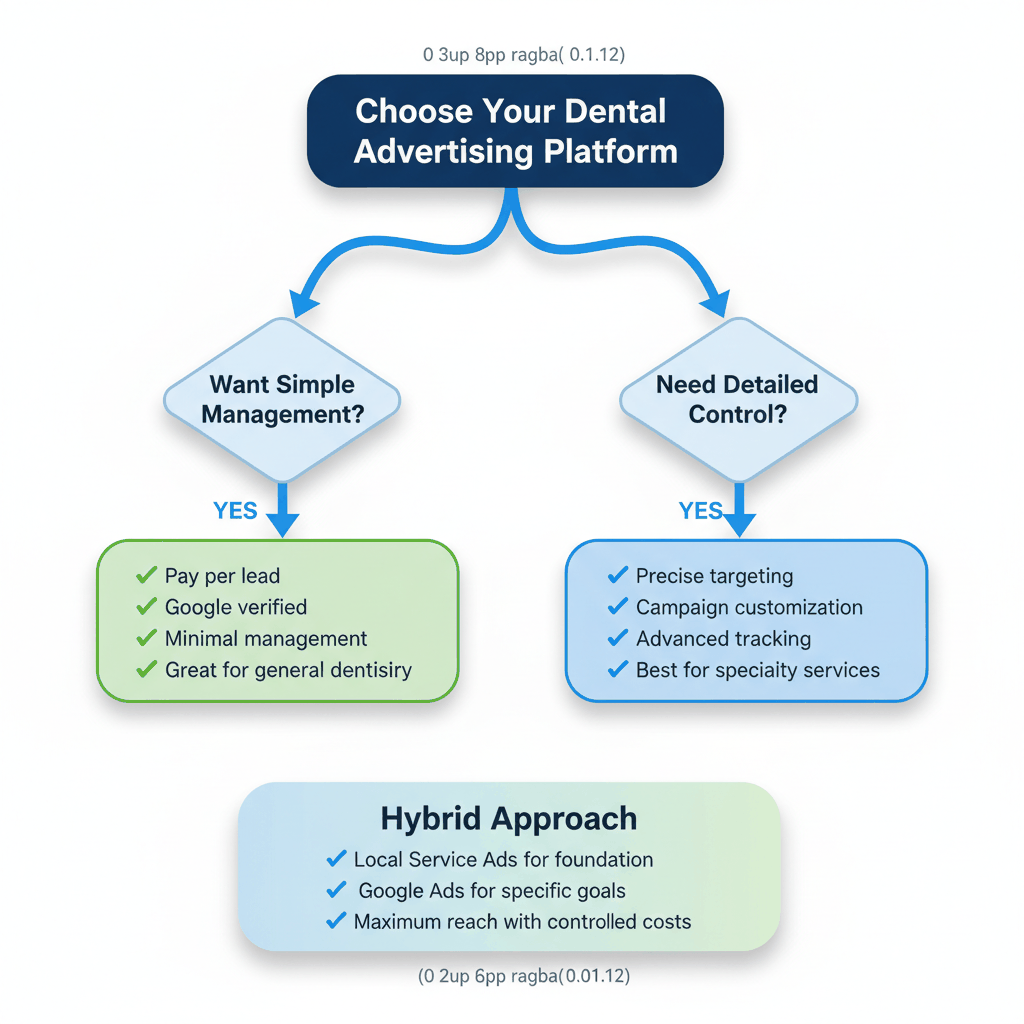
Local Service Ads work best for practices prioritizing simplicity and predictable costs. Choose this platform if you prefer paying for results rather than clicks.
This platform suits practices focused on general dentistry and emergency services. Patients searching for these services often want to call immediately rather than research multiple options.
Local Service Ads require minimal ongoing management. Set your budget and service areas, then let Google handle the rest. This works well for busy practice owners who lack time for detailed campaign management.
The Google Verified badge builds trust with potential patients. This credibility boost helps smaller or newer practices compete with established competitors.
Google Ads provide detailed targeting and campaign control. Choose this platform if you want to promote specific services or target particular demographics.
This platform works well for cosmetic dentistry, orthodontics, and other high-value services. Patients researching these treatments often compare multiple practices before choosing.
Google Ads require ongoing optimization and management. You'll need time or professional help to maintain performance. However, well-managed campaigns can achieve excellent results.
Advanced tracking and analytics help you understand patient behavior and optimize accordingly. This data improves your overall marketing strategy beyond just paid advertising.
Many successful practices benefit from using both platforms strategically. This approach maximizes patient acquisition while controlling costs.
Use Local Service Ads as your foundation for consistent lead generation. Add Google Ads campaigns for specific goals like promoting new services or targeting competitor keywords.
Start with Local Service Ads to establish baseline performance. Once you understand your conversion rates and patient lifetime values, add Google Ads campaigns for additional growth.
This combined approach lets you capture both immediate callers and research-oriented patients. You'll maximize your reach while maintaining predictable lead costs through Local Service Ads.
Dental practice marketing budget allocation strategies
Google Business Profile optimization for dentists
Patient review generation and management systems
Call tracking implementation for dental practices
Conversion rate optimization for dental websites
How much should dental practices spend on Google Ads versus Local Service Ads?
Most dental practices allocate 4-7% of annual revenue to marketing. Start with 60% on Local Service Ads for predictable lead generation and 40% on Google Ads for targeted campaigns. Adjust based on performance after three months of data.
Which platform generates better quality dental leads?
Local Service Ads typically generate higher-intent leads because patients call directly from search results. Google Ads can produce quality leads but require better targeting and landing page optimization to achieve similar conversion rates.
Can new dental practices use Local Service Ads immediately?
New practices need Google reviews and proper licensing before qualifying for Local Service Ads. Build your Google review profile first, then apply for Local Service Ads once you have 10-15 reviews and meet all requirements.
What's the average cost per patient for dental advertising in 2026?
Dental patient acquisition costs range from $150-$300 for general dentistry through digital advertising. Specialty services may cost $250-$500 per patient but generate higher lifetime values.
How quickly can dental practices see results from each advertising platform?
Local Service Ads can generate leads within days of approval. Google Ads typically need 2-4 weeks for optimization and meaningful data. Plan for 2-3 months to properly evaluate either platform's performance.
Ready to buy dental leads? Sign up for free with ResultCalls and only pay per call!

Hello everyone! My name is Alex and I write these blogs to help educate small business owners on different ways to grow their business. My goal is to make lead generation as easy as possible for you. After reading these blogs, I hope you leave with some actionable steps that will get you closer to growing your business :)