Are you tired of the seasonal rollercoaster that defines most HVAC businesses? Picture this: it's December, your phone isn't ringing much, and you're wondering how to cover payroll while waiting for the next emergency call. Meanwhile, successful HVAC companies are collecting thousands in recurring revenue every single month.
The problem isn't your technical skills or work quality. The challenge is that most HVAC contractors rely entirely on emergency calls and seasonal rushes. This creates unpredictable cash flow and makes long-term planning nearly impossible.
HVAC maintenance plans solve this problem by creating predictable monthly revenue. Smart contractors use these programs to stabilize their business and build stronger customer relationships. The best part? Your existing customers already trust you.
You'll learn exactly how to create profitable maintenance plans that generate consistent revenue year-round. Plus, discover the pricing strategies and retention tactics that turn one-time customers into lifelong clients.
What You'll Learn
Why HVAC Maintenance Plans Drive Business Growth
Build HVAC Recurring Revenue Systems
Proven Pricing Strategies for Maximum Profit
HVAC Customer Retention Through Service Excellence
Tools and Software for Easy Implementation
Measuring Your Program's Success
HVAC maintenance plans transform unstable project revenue into predictable monthly income. One contractor saw maintenance fees produce $200,000 in recurring revenue. This same program generated $1.6 million of new HVAC business by year four.
Here's the reality most HVAC contractors face. About 20% ultimately close their businesses. The main reason? They can't build stable revenue streams.
Installation-heavy companies show much more volatility than businesses with recurring maintenance contracts. Buyers prefer companies with loyal customers who book service year after year. This creates real business value when you're ready to sell.
Peak HVAC seasons often last only seven months. Many contractors use credit lines to cover off-season expenses. This cycle keeps you stressed about money instead of focused on growth.
Every year, typical HVAC contractors lose about 11% of their customer base. Most customers (7% out of that 11%) leave because they felt the company didn't respond promptly to their needs. If customers only call during emergencies, you're missing revenue opportunities most of the time.
Customers on maintenance plans are three to four times more likely to call you for replacements and upgrades. They stop price shopping because they trust the relationship. Plus, they refer friends and family more often.
Successful maintenance programs easily account for 50% or more of annual revenue. The recurring revenue model smooths out cash flow and lets you plan ahead instead of guessing what each month brings.
Creating reliable HVAC recurring revenue starts with understanding the right customer ratios. Target 250 service agreements per million dollars of service sales. If you have dedicated maintenance techs, aim for 1000-1500 agreements per million dollars of residential sales.
When your business has 500 members for every $1 million of revenue, it reduces slow times and keeps techs working. This produces better business results and helps you recruit top talent.
Start by developing three maintenance plan tiers: Basic, Standard, and Premium. Each tier offers more service and benefits. Tiered pricing lets you offer different HVAC maintenance plans to meet various customer needs and budgets.
Basic plans should include bi-annual tune-ups (spring AC check and fall furnace check). Standard plans add priority service and discounts on repairs. Premium plans include parts coverage and extended warranties.
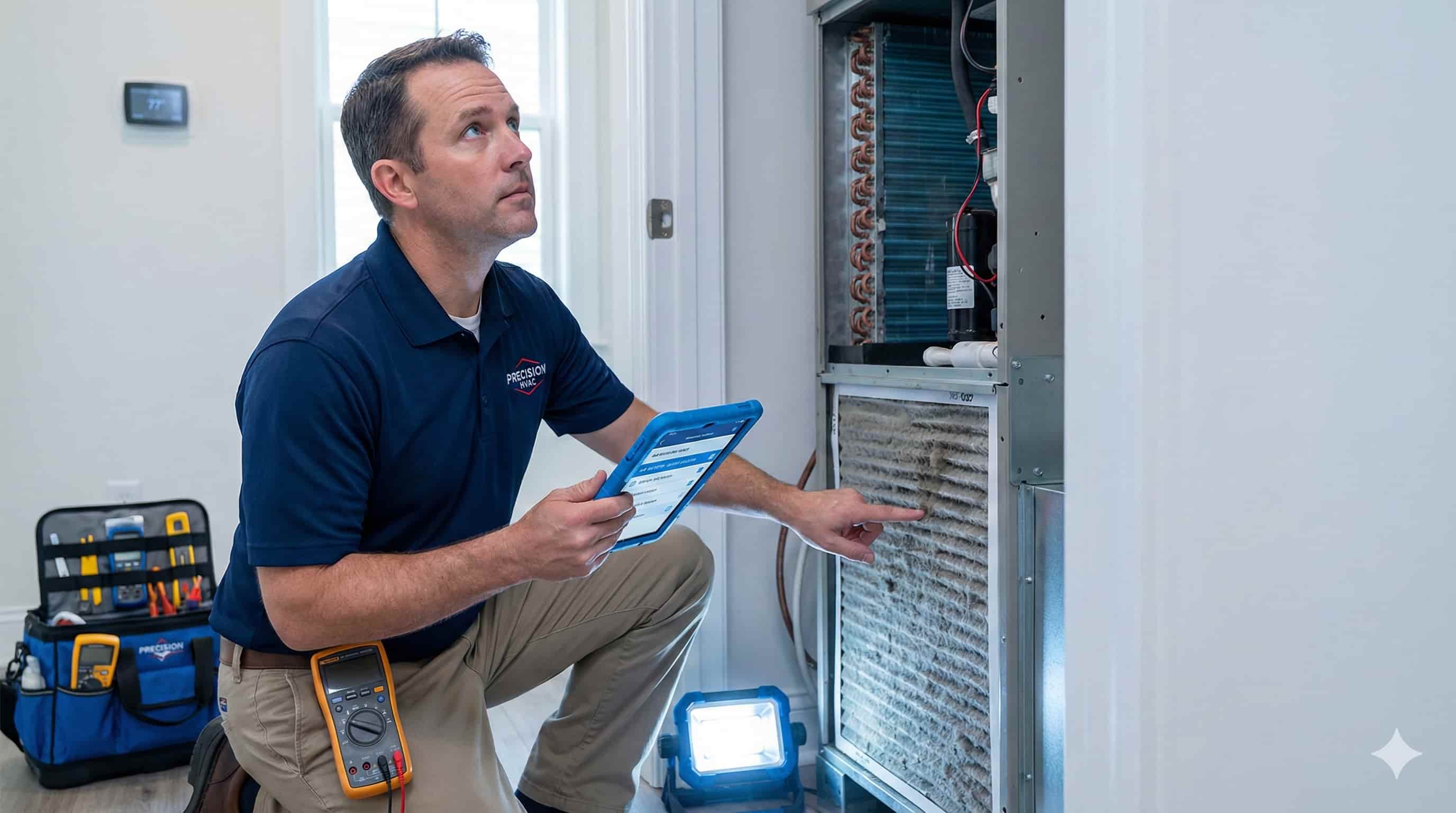
The foundation of every contract is the bi-annual tune-up. This typically includes cleaning coils and drains, checking refrigerant levels, testing electrical connections, and calibrating thermostats. Replace standard 1-inch filters during each visit.
Priority service becomes the psychological hook. Contract holders get to "skip the line" during heat waves or deep freezes. This benefit alone justifies the annual fee for many customers.
Most successful programs achieve renewal rates between 75 and 90 percent. High renewal rates indicate you're delivering real value. Low renewal rates signal pricing problems or service issues that need attention.
Focus on customer communication throughout the year. Send maintenance reminders, seasonal tips, and equipment updates. Regular contact builds relationships that lead to higher retention rates.
HVAC maintenance plans should be priced between $180 to $250 per year for basic service on one system. Premium plans with extra labor and consumables typically range from $350 to $550 annually. Additional systems usually get 20% to 30% discounts for the second unit.
Monthly subscription models work well at $19 to $49 per month. Monthly billing often improves retention because it feels like a predictable subscription rather than a large annual bill.
Consider your typical 90-minute service call rate. Charge around 60-80% of that rate per maintenance visit. The visits increase profitability once you're in the door because of additional repairs you'll identify.
For example, if your standard service call costs $150, price your maintenance visit at $90-120. The maintenance contract covers basic tune-up services. Any repairs or additional work get billed separately at normal rates.
Don't compete solely on price. Emphasize the value customers receive. Peace of mind, priority service, and equipment longevity justify higher prices than basic tune-up services.
Calculate the customer's potential savings from avoiding emergency calls. A single emergency repair often costs more than an entire year's maintenance contract. Make this comparison clear in your sales presentations.
Avoid dramatic seasonal price increases that shock existing customers. Instead, implement modest annual increases (3-5%) that reflect rising labor and equipment costs. Grandfather existing customers at current rates when possible.
Consider offering discounts for customers who pay annually instead of monthly. This improves your cash flow and reduces billing administration costs.
Data shows customers on maintenance plans are 70% to 80% more likely to purchase their replacement system from the same company. This loyalty creates massive long-term value beyond the monthly maintenance fees.
The average sale per maintenance member is more than 2.5 times that of non-members. Members trust your recommendations because you've proven your reliability through consistent service.
Stay in regular contact with maintenance customers throughout the year. Send seasonal maintenance reminders, energy-saving tips, and equipment updates. Regular communication keeps your company top-of-mind when they need additional services.
Use maintenance visits to educate customers about their systems. Explain what you're doing and why it matters. Customers who understand the value are more likely to renew their contracts.
Give maintenance customers priority scheduling for emergency calls. This benefit has real value during peak seasons when non-contract customers might wait days for service.
Track response times for contract customers separately. Advertise specific response time guarantees (like "4-hour response for maintenance customers") that differentiate your service from competitors.
Maintenance visits create natural opportunities to identify additional services. Indoor air quality improvements, duct cleaning, and equipment upgrades become easier sells when customers trust your expertise.
Train technicians to identify and communicate these opportunities professionally. Focus on customer benefits rather than just selling additional services. This approach builds trust and increases average customer value.
The right software makes HVAC maintenance plans much easier to manage. ServiceTitan offers comprehensive contract management with automated scheduling and billing features. You can track technician performance, monitor contract renewals, and generate detailed reports.
Housecall Pro provides automated renewal and billing features that save time and reduce missed payments. The platform generates steady revenue with less manual effort. Plus, it integrates scheduling, dispatch, and customer management in one system.
Choose software that automates contract renewals and sends payment reminders. Manual billing creates too much administrative work and increases the chance of missed renewals.
Look for platforms that integrate with your existing customer management system. Seamless data sharing between scheduling, billing, and customer records saves time and reduces errors.
Mobile access is essential for field technicians. They need to view contract details, update service records, and identify upselling opportunities while on-site.
The best HVAC pricing software automatically applies customer-specific rates during quotes. When techs pull up client records, they see locked-in pricing and the software applies it instantly.
This eliminates pricing confusion and ensures contract customers receive their promised discounts on additional services. Consistent pricing builds trust and reduces billing disputes.
For commercial operations managing multiple properties, BuildOps delivers tools tailored for complex HVAC maintenance. It organizes recurring preventive maintenance, centralizes asset history, and provides live job progress updates.
Residential-focused tools like Housecall Pro work better for smaller operations serving homeowners. Choose software that matches your primary customer base and business complexity.
Track specific metrics to ensure your HVAC maintenance plans generate profitable results. Start with your renewal rate - successful programs maintain 75-90% annual renewal rates. Lower rates indicate pricing or service quality issues that need immediate attention.
Monitor your customer lifetime value (CLV) for maintenance customers versus one-time service customers. Maintenance customers should show significantly higher CLV due to repeat business and referrals.
Calculate the percentage of total revenue from maintenance contracts. Successful HVAC businesses generate 30-50% of revenue from recurring agreements. This percentage should increase over time as you add more contract customers.
Track your cost per acquisition for new maintenance customers compared to one-time service customers. Maintenance customers often cost more to acquire initially but generate much higher long-term value.
Measure your technician utilization rates during traditionally slow periods. Maintenance contracts should keep your team busier year-round and reduce seasonal layoffs.
Monitor average response times for contract customers versus non-contract customers. Contract customers should receive faster service, especially during peak seasons.
Survey maintenance customers regularly about their satisfaction with service quality, communication, and value received. High satisfaction scores predict strong renewal rates and referral generation.
Track referral rates from maintenance customers compared to one-time customers. Satisfied maintenance customers typically refer friends and family at much higher rates.
How much should I charge for HVAC maintenance plans?
Basic HVAC maintenance plans typically cost $180-250 per year for one system. Premium plans with additional services range from $350-550 annually. Monthly subscriptions work well at $19-49 per month for better customer retention.
What services should be included in HVAC service agreements?
Include bi-annual tune-ups (spring AC and fall heating system checks), filter replacements, basic cleaning, and priority service scheduling. Premium plans can add parts coverage, extended warranties, and discounts on additional repairs.
How do HVAC maintenance plans improve customer retention?
Maintenance plans create ongoing relationships through regular service touchpoints. Customers on plans are 70-80% more likely to choose you for system replacements and refer new customers because they trust your consistent service quality.
What's the best software for managing HVAC recurring revenue?
ServiceTitan and Housecall Pro are popular choices that automate scheduling, billing, and renewals for HVAC maintenance plans. Choose software that integrates with your existing systems and provides mobile access for field technicians.
How many maintenance contracts do I need for stable HVAC business growth?
Target 250-500 service agreements per million dollars of annual revenue. This ratio provides significant recurring revenue while maintaining manageable service loads for your technician team.
Ready to buy HVAC leads and only pay per call? Sign up for free with ResultCalls today!

Hello everyone! My name is Alex and I write these blogs to help educate small business owners on different ways to grow their business. My goal is to make lead generation as easy as possible for you. After reading these blogs, I hope you leave with some actionable steps that will get you closer to growing your business :)