Are you tired of waiting for garage doors to break before you make money? Most garage door business owners rely on emergency repairs. This creates unpredictable cash flow and stressful slow periods.
The solution is a garage door maintenance program. This approach shifts your business from reactive repairs to recurring revenue. Instead of waiting for emergencies, you create predictable monthly income.
A well-designed maintenance program offers what industry experts call a "rare form of reliable, recurring revenue." It helps you level out business peaks and valleys while providing better service to your customers.
You'll learn how to design profitable service agreements, price your programs correctly, and market them effectively. Plus, discover how recurring revenue can increase your business valuation by up to 100%.
Table of Contents
Roughly 66% of homes in the United States have a garage door. More than 7 out of 10 homes are at least 20 years old. These older doors need more maintenance.
Emergency repairs create stress for homeowners and unpredictable income for contractors. Maintenance programs solve both problems. You get steady monthly revenue while customers avoid costly breakdowns.
A garage door business focused only on repairs might sell for 2 times annual revenue. But a business with recurring maintenance contracts can sell for 4 times revenue. This dramatic difference comes from predictable cash flow.
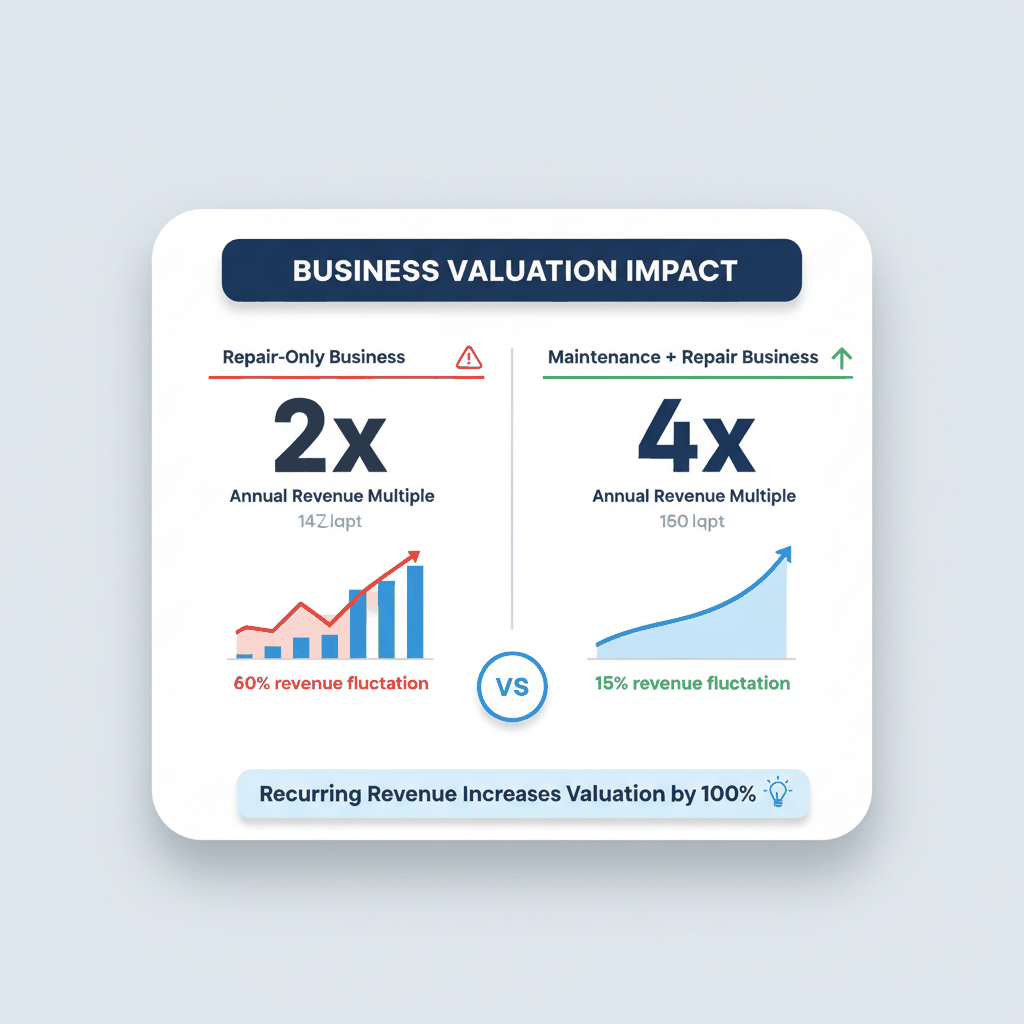
The optimal revenue mix is 60/40 or 70/30 between commercial recurring contracts and home service. This balance maximizes your business valuation while reducing risk.
Customer retention costs far less than acquiring new customers. Returning customers typically spend more than new customers. They also refer friends and neighbors more often.
Maintenance programs keep you connected with customers year-round. You become their trusted garage door expert instead of just another repair company they found online.
Start with a simple program structure that's easy to explain and deliver. Most successful companies offer service contracts with 1-2 visits per year. The exact frequency depends on weather, door type, and customer needs.
Your maintenance program should include these core services:
Complete safety and function testing
Door balance and spring adjustment
Track cleaning and lubrication
Hardware inspection and tightening
Weather seal replacement as needed
Opener maintenance and testing
Written inspection report with photos
Create two service levels to fit different budgets. Your basic plan covers essential safety checks and lubrication. Your comprehensive plan includes minor repairs and priority scheduling.
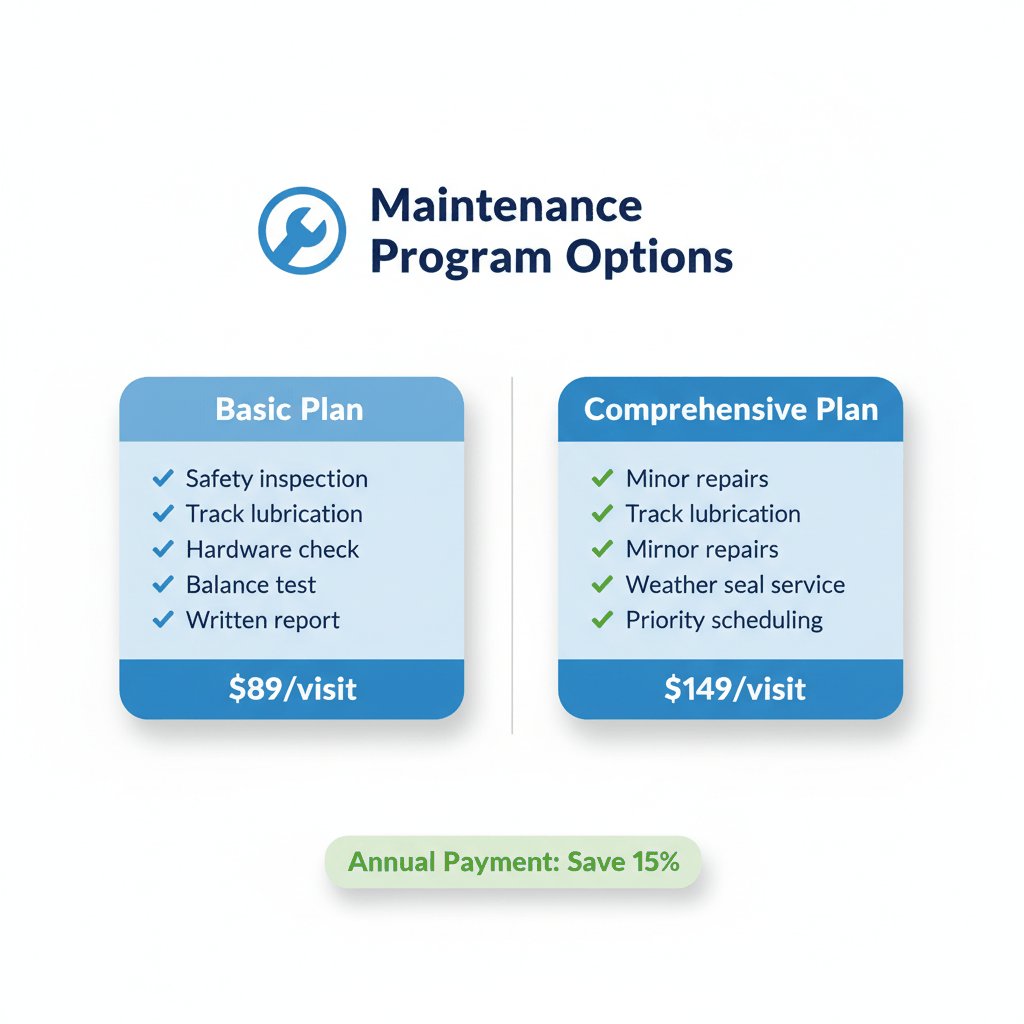
Document everything during each visit. Take before and after photos of problem areas. Provide customers with a written report showing what you checked and any recommendations.
This documentation proves your value and helps identify future repair needs. It also protects you legally by showing you followed proper safety procedures.
Pricing varies based on your market and service level. Some companies charge hourly rates plus supplies. Others offer fixed-price packages with payment plans.
Research what competitors charge for similar services. Your pricing should reflect the value you provide, not just match the lowest price. Remember, you're selling peace of mind and convenience.
Consider offering annual payment discounts versus monthly billing. Annual payments improve your cash flow while giving customers a price break.
Include additional benefits that don't cost you much but add perceived value:
Priority scheduling for emergency calls
Discounts on future repairs and parts
Free seasonal safety inspections
24/7 emergency hotline access
Warranty extensions on work performed
These extras help justify higher prices while building customer loyalty. They also create barriers that make switching to competitors less attractive.
The biggest marketing mistake is targeting too broad an audience. This weakens your message and wastes advertising spend. Focus on homeowners within your service area who value convenience over low prices.
Align your marketing with seasonal patterns. Spring brings home improvement projects. Fall creates demand for preventative maintenance before winter. Understanding these cycles helps you stay ahead of competitors.
Companies that align marketing with seasonal cycles experience more inbound calls and fewer slow months. They also close more profitable installation jobs.
Mobile searches containing "repair near me" have grown by over 110% in two years. Optimize your Google Business Profile to appear when customers search for garage door services.
Email marketing works well for maintenance programs. Most companies see good results with 1-2 emails per month plus seasonal campaigns. SMS messages often get over 90% open rates.
Share helpful maintenance tips and advice through content marketing. This positions you as a trusted local authority while keeping you top-of-mind for future service needs.
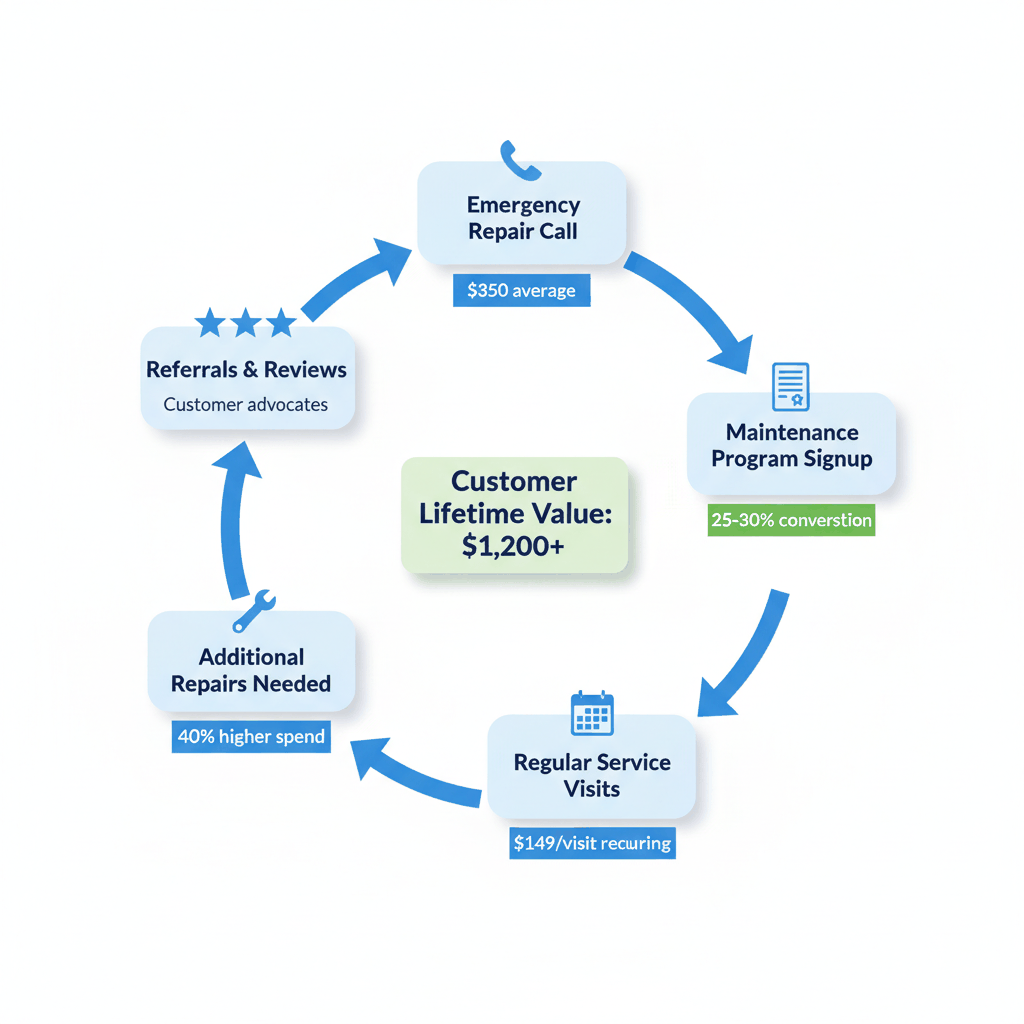
Every emergency repair call is a maintenance program opportunity. After fixing the immediate problem, explain how regular maintenance prevents future breakdowns.
Show customers the problems you found during the repair. Explain how a maintenance program would have caught these issues early. Offer them a discount to sign up on the spot.
Lead generation for garage door repair businesses can help you reach more qualified prospects and only pay per call.
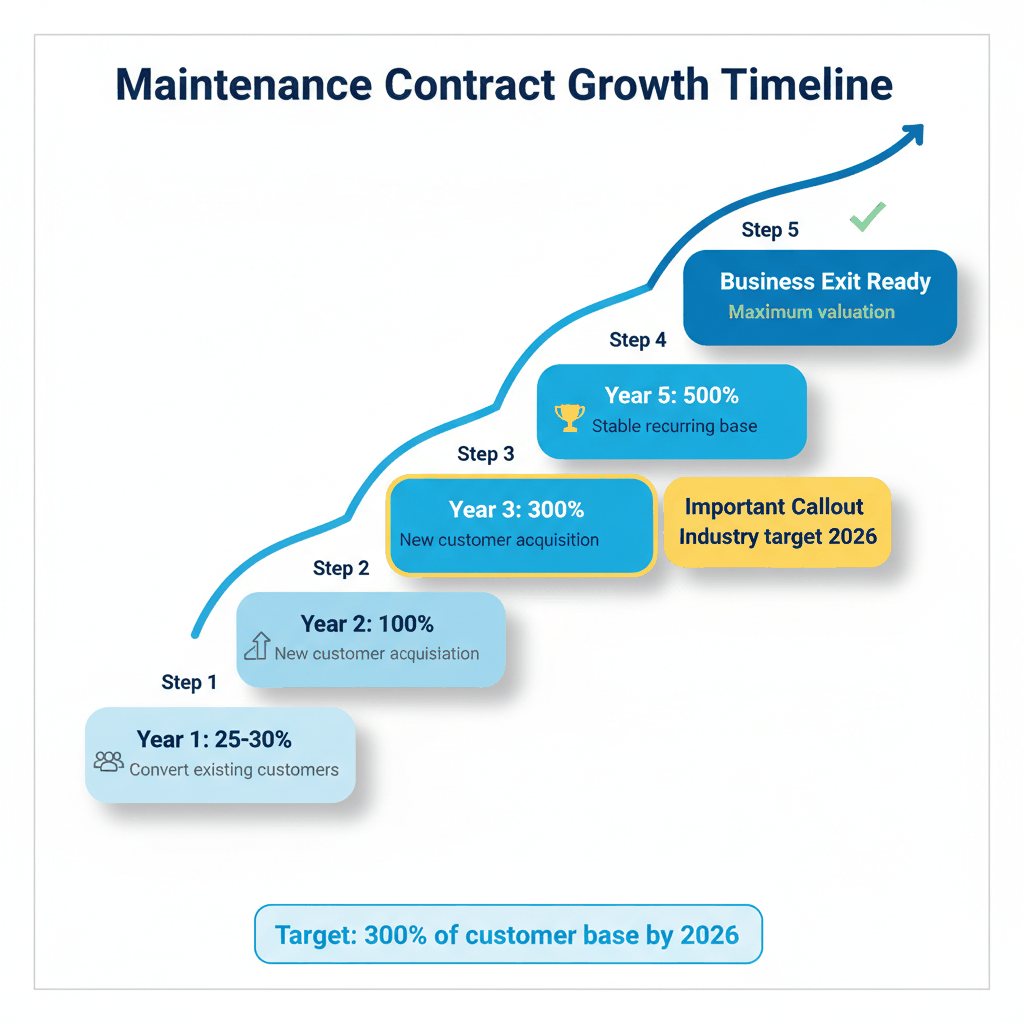
Long-term success requires scaling maintenance agreements significantly. Industry projections show businesses need maintenance contracts for 300% of their customer base by 2026. This number must grow to 500% by 2030 to stabilize recurring revenue.
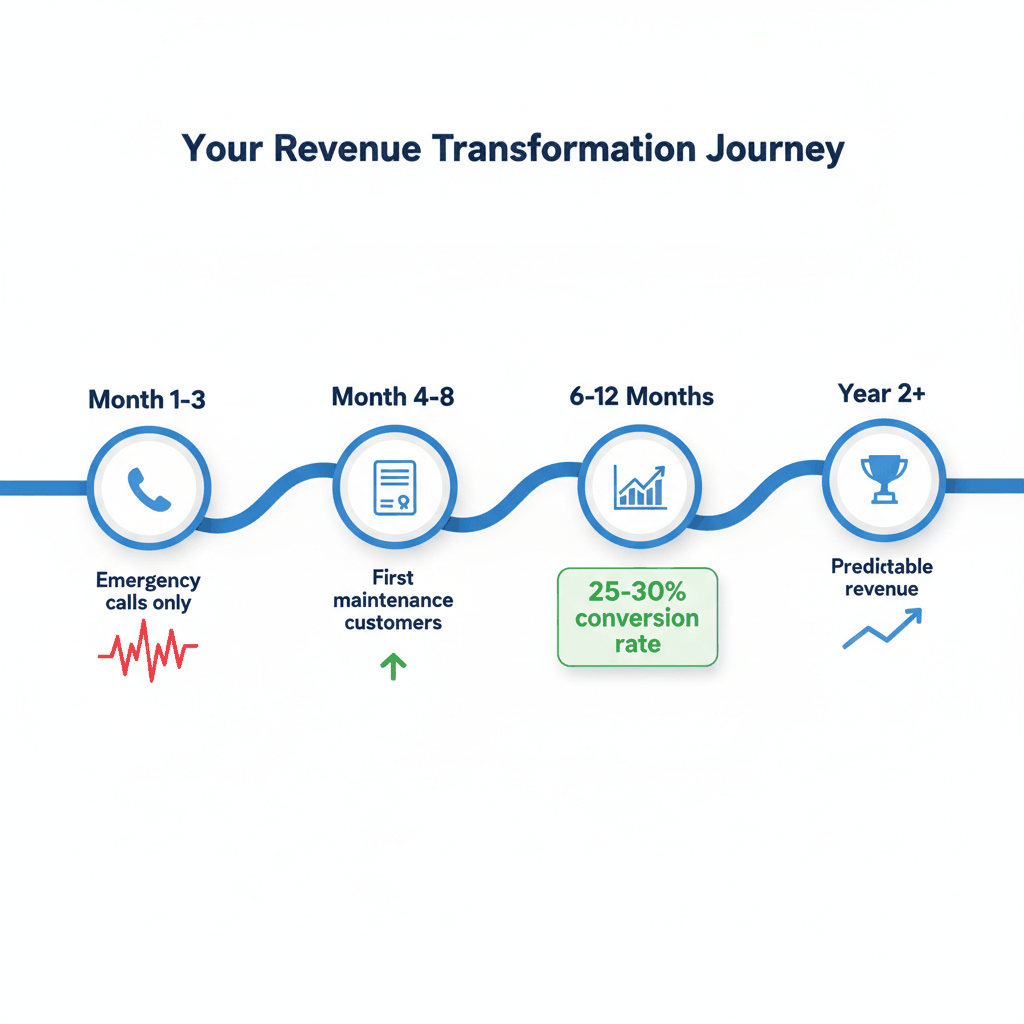
Start by converting existing customers to maintenance plans. These customers already trust you and understand your work quality. Aim to convert 25-30% of repair customers in your first year.
Focus on capturing the 45% volume share represented by residential emergency repairs. This establishes immediate cash flow while you build your maintenance base.
Commercial maintenance contracts provide higher revenue per customer. Emergency commercial door repairs can cost businesses over $13,000 in lost revenue if service can't arrive until the next day.
This creates strong motivation for businesses to invest in preventative maintenance. Commercial contracts also tend to be longer-term and more stable than residential agreements.
Track key metrics to ensure your maintenance program grows profitably. The most important numbers are customer retention rate, average contract value, and monthly recurring revenue growth.
Monitor these essential financial metrics:
Monthly recurring revenue (MRR) growth rate
Customer lifetime value (CLV)
Contract renewal rates by customer type
Average revenue per maintenance customer
Cost of acquiring maintenance customers
Set targets for each metric and review them monthly. Adjust your marketing and service delivery based on what the numbers tell you.
Quality metrics help ensure customer satisfaction and retention:
Customer satisfaction scores from post-service surveys
Number of emergency calls from maintenance customers
Percentage of maintenance visits that identify issues
Average time between service visits and customer calls
High-quality maintenance programs should reduce emergency calls and increase customer satisfaction scores over time.
How often should garage door maintenance be performed?
Most companies offer maintenance programs with 1-2 visits per year. The exact frequency depends on door age, weather conditions, and usage patterns. Commercial doors typically need more frequent service than residential doors.
What's the typical cost of a garage door maintenance program?
Pricing varies by market and service level. Some companies charge hourly rates plus supplies, while others offer fixed annual packages. Research local competitors and price based on the value you provide, not just the lowest price.
How do maintenance programs improve business valuation?
Businesses with recurring revenue sell for higher multiples than those focused only on repairs. A garage door company with maintenance contracts can achieve valuations up to 4 times annual revenue versus 2 times for repair-only businesses.
What's the best way to convert repair customers to maintenance plans?
After completing emergency repairs, show customers the problems you found and explain how maintenance would have prevented them. Offer an immediate discount to sign up and emphasize the convenience of scheduled service.
How many maintenance customers do I need for stable recurring revenue?
Industry projections suggest maintenance agreements should grow to 300% of your customer base by 2026 and 500% by 2030. Start by converting 25-30% of existing repair customers in your first year.
Ready to build a profitable garage door maintenance program that generates predictable recurring revenue? Contact ResultCalls today to discuss how our lead generation services can help you get exclusive garage door repair pay per call leads.

Hello everyone! My name is Alex and I write these blogs to help educate small business owners on different ways to grow their business. My goal is to make lead generation as easy as possible for you. After reading these blogs, I hope you leave with some actionable steps that will get you closer to growing your business :)