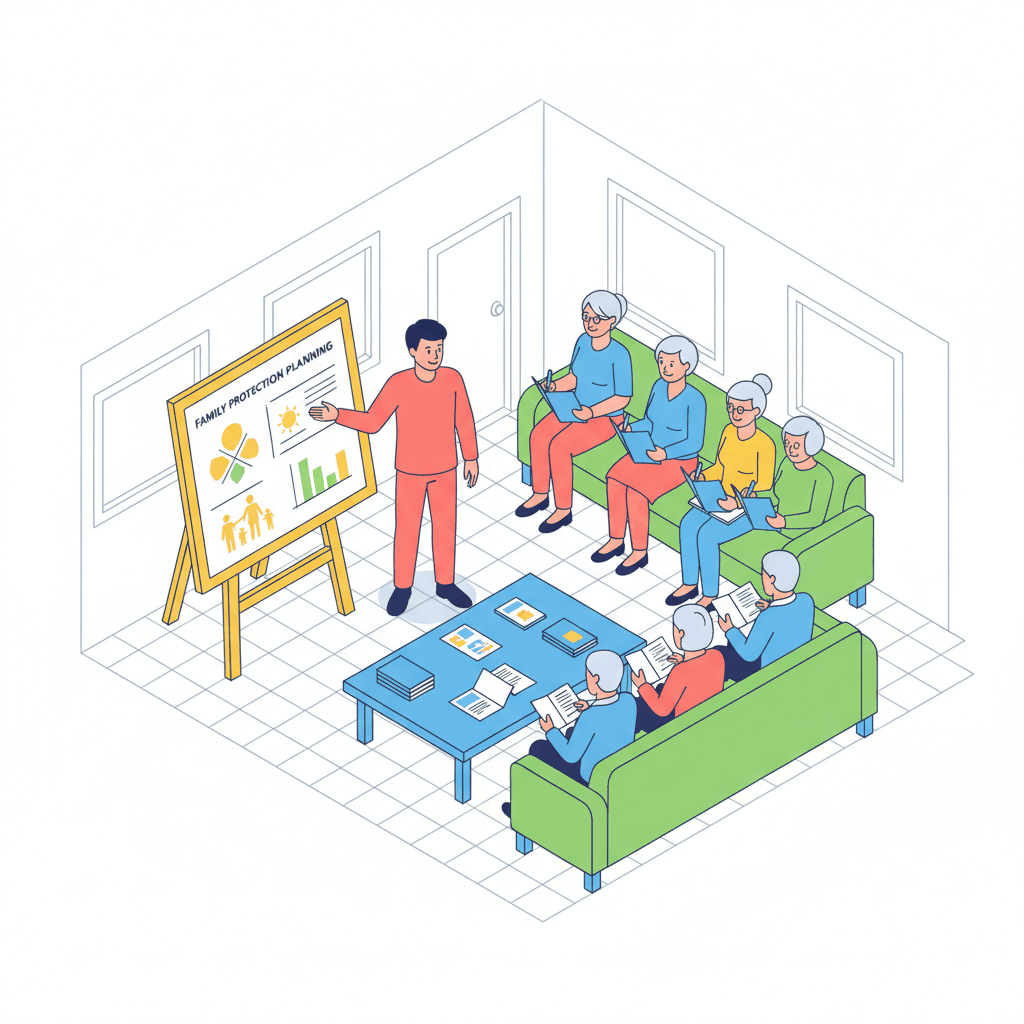
Most final expense agents struggle with expensive lead costs and low conversion rates. Traditional referral programs rely on simple incentives, but seniors today need more than money to trust you with their personal information. The old "refer a friend, get a gift card" approach doesn't work anymore.
The senior market has changed dramatically in recent years. Older adults are more privacy-conscious and skeptical of insurance sales tactics. Senior fraud losses exceeded $4.8 billion in 2024, making this demographic extremely cautious about sharing personal details.
Smart final expense agents are shifting toward relationship-based referral systems. These programs focus on education, community involvement, and genuine value delivery rather than transactional incentives. The result? Higher-quality leads, better conversion rates, and stronger client relationships.
You'll learn how to build trust through educational workshops, create sustainable referral networks, and leverage community relationships. These strategies generate warm leads that convert at 3-4 times higher rates than cold prospects.
Table of Contents
Traditional final expense referral programs face serious challenges in today's market. The biggest problem? They focus on transactions instead of relationships.
Most agents offer simple incentives like gift cards or cash rewards. However, only 1% of sales reps actually ask for referrals regularly. Meanwhile, 99% of satisfied customers would be happy to refer new businesses when they're truly satisfied with the service.
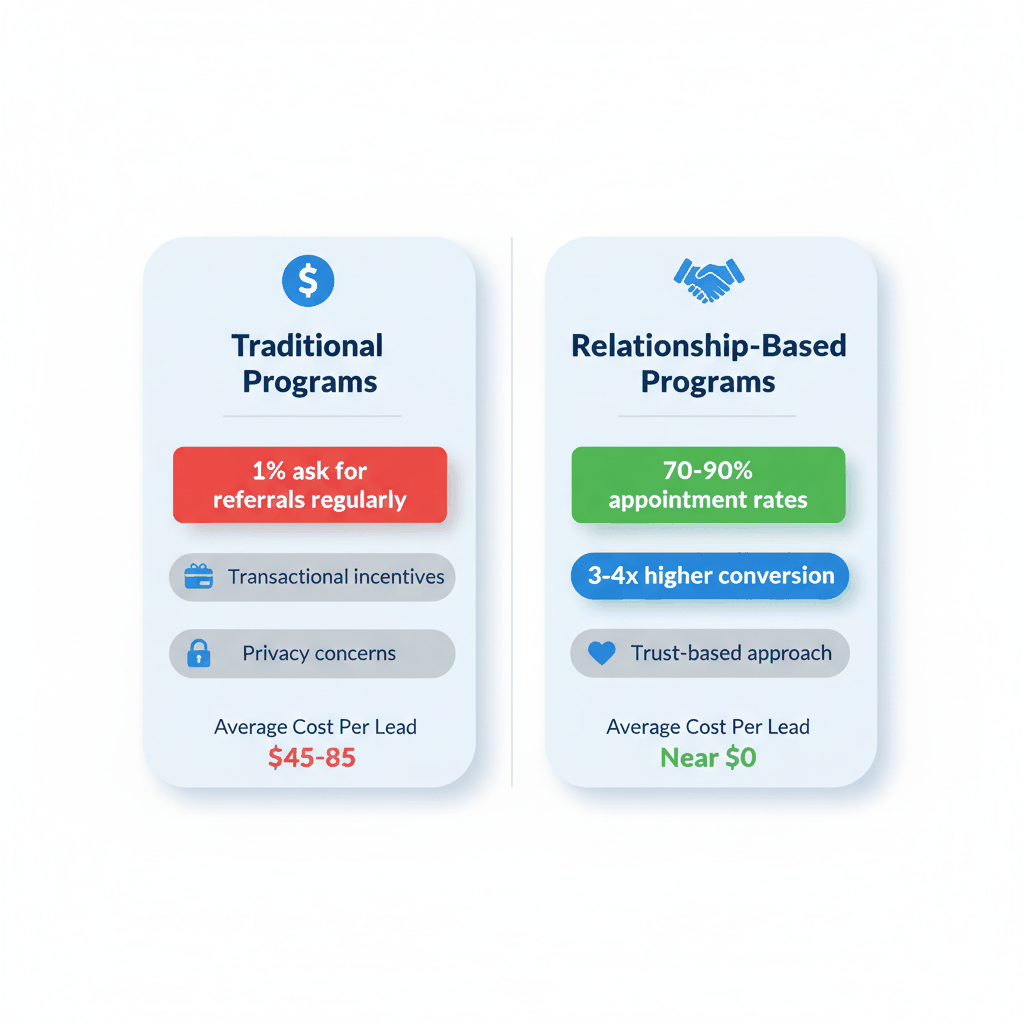
Privacy protection has become a top priority for seniors. They're increasingly targeted by scammers and fraud schemes. The FBI reported over 92,000 senior victims of fraud in recent years, with losses exceeding $1.6 billion.
This reality makes seniors extremely cautious about sharing personal information. Traditional referral programs that ask for contact lists or personal details trigger immediate red flags.
Lead generation costs continue climbing across the insurance industry. Financial services leads increased by 17% compared to 2021 according to marketing research. Referrals cost almost nothing and typically deliver higher lifetime client value.
The math is simple. Referred clients convert at 3-4 times higher rates than cold prospects. They also have 16-25% higher lifetime value compared to non-referrals.
Seniors make insurance decisions emotionally, not logically. They need to trust the agent before they'll consider purchasing coverage. Quick transactional approaches fail because they don't address the emotional component of the buying decision.
Older adults want to work with agents who demonstrate expertise and genuine care. They prefer local agents who participate in their communities and understand their specific needs.
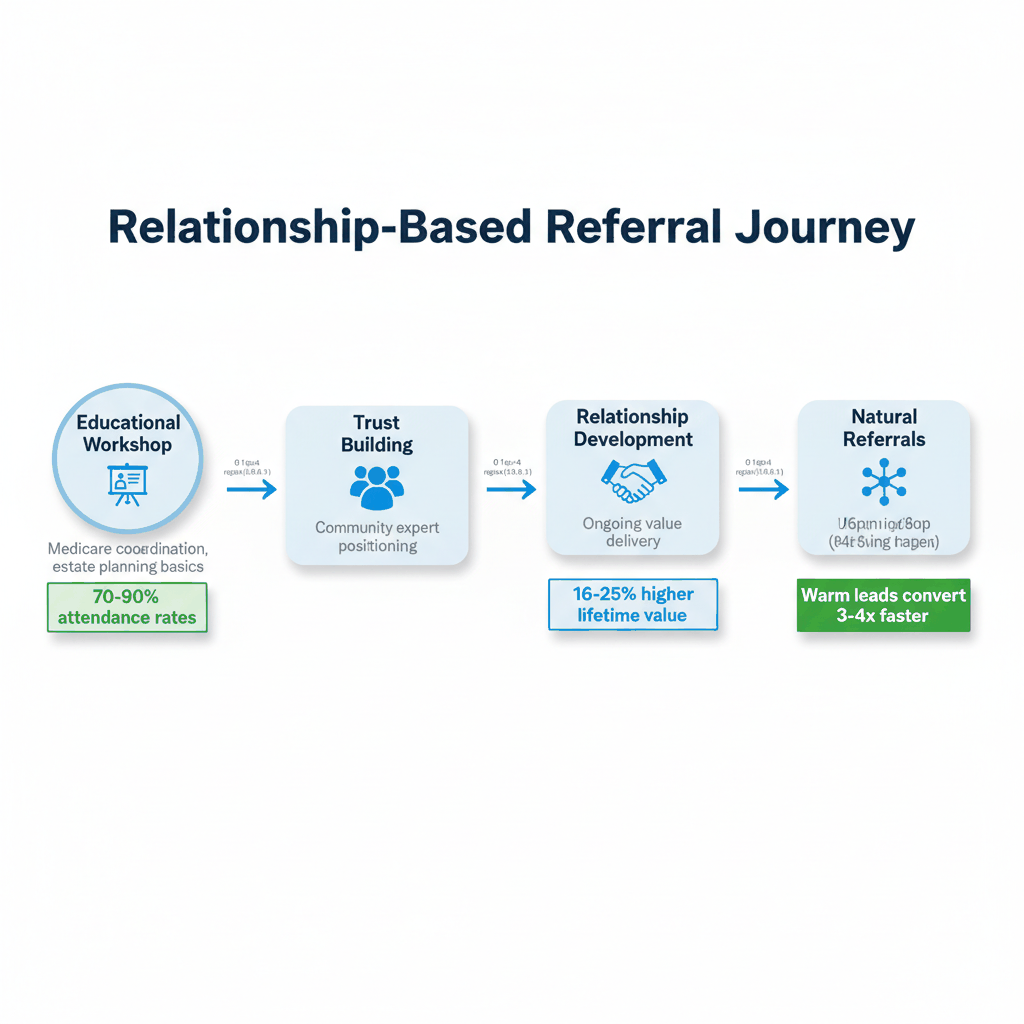
Relationship-based final expense referral programs focus on delivering genuine value before asking for anything in return. This approach builds trust, positions you as an expert, and creates natural referral opportunities.
The key difference is timing and motivation. Instead of asking for referrals immediately after a sale, you invest time in building relationships. You become a trusted resource in your community before you need referrals.
Start every interaction by asking how you can help. Offer educational resources, answer questions, and provide guidance without pushing products. This approach builds trust and positions you as a helpful expert rather than a pushy salesperson.
For example, create educational materials about Medicare coordination, estate planning basics, or funeral cost planning. Share these resources freely with prospects and clients. The goal is to become their go-to person for insurance-related questions.
Think beyond the immediate sale. Build relationships that last for years. Stay in regular contact with clients through newsletters, educational updates, and check-in calls. This ongoing communication creates multiple opportunities for referrals.
One successful agent in Ohio built a practice around monthly educational sessions at local senior centers. Over time, these sessions generated consistent referrals because attendees saw him as a trusted local expert rather than just another insurance salesperson.
Become actively involved in your local community. Sponsor events relevant to seniors. Partner with organizations that serve your target market. Volunteer for causes that matter to your prospects and clients.
Community involvement creates visibility and demonstrates your commitment to the area. People prefer to work with agents who are invested in their community and understand local needs and concerns.
Educational workshops represent the most effective way to generate final expense referral programs that actually work. These events position you as an expert while providing genuine value to potential clients.
Agents typically get only 20-30% appointment rates from traditional seminars. However, agents using value-focused educational approaches report 70-90% appointment rates with very few cancellations.
Choose topics that address real concerns and provide actionable information:
Understanding Medicare coordination with life insurance
Estate planning basics for middle-income families
How to protect your family from funeral debt
Avoiding senior financial scams and exploitation
Social Security optimization strategies
Focus on education, not sales. Provide valuable information that attendees can use regardless of whether they purchase insurance. This approach builds trust and positions you as a helpful resource.
Workshops offer safety in numbers for cautious seniors. Many older adults feel much safer attending a group educational session than meeting one-on-one with an insurance agent. Group settings feel less threatening and more informative.
Use this dynamic to your advantage. Encourage questions and group discussion. Let attendees learn from each other while you facilitate and provide expert guidance.
Partner with local organizations to host your workshops:
Senior centers and community centers
Libraries and adult education centers
Faith-based organizations and churches
Retirement communities and assisted living facilities
Local businesses that serve seniors
These partnerships provide built-in credibility and access to your target audience. The organizations benefit from valuable educational content, while you gain access to qualified prospects in a trusted environment.
Community networking creates the foundation for sustainable final expense referral programs. When you become a recognized part of the local community, referrals happen naturally through ongoing relationships and reputation.
The insurance industry average client retention rate is 84%. However, agents with strong community networks often achieve retention rates above 90% because their clients see them as trusted local partners, not just policy providers.
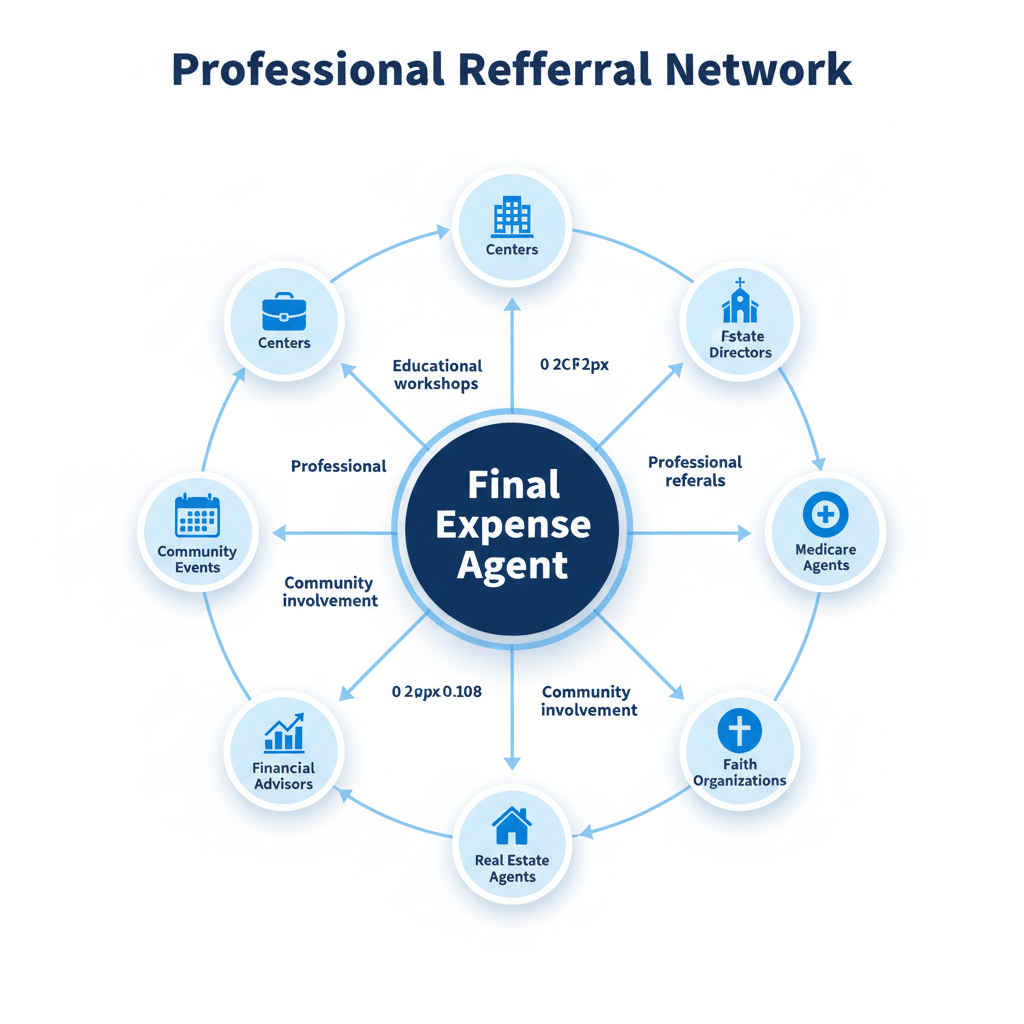
Build relationships with professionals who serve your target market:
Estate planning attorneys and elder law specialists
Financial advisors and accountants
Funeral directors and cemetery staff
Medicare agents and health insurance brokers
Real estate agents specializing in senior transitions
These professionals regularly encounter people who need final expense coverage. When you provide value to their clients through educational resources or expert consultation, they become natural referral sources.
Sponsor events that matter to seniors in your community. Health fairs, senior expos, and community festivals provide visibility and demonstrate your investment in the local area.
For example, sponsor a booth at the local farmer's market or community health fair. Provide educational materials and answer questions. Avoid aggressive sales tactics. Focus on being helpful and building relationships.
Volunteer for organizations that serve your target demographic. Senior meal programs, community transportation services, and senior advocacy groups offer opportunities to demonstrate your character and commitment.
Volunteering shows you care about the community beyond just making sales. This authentic involvement creates trust and generates referrals from both clients and fellow volunteers who see your genuine commitment.
Measuring the success of relationship-based final expense referral programs requires different metrics than traditional lead generation approaches. Focus on relationship quality, community engagement, and long-term value rather than just immediate sales numbers.
Referred clients typically have 16-25% higher lifetime value compared to non-referrals and are 18% more likely to remain loyal over time.
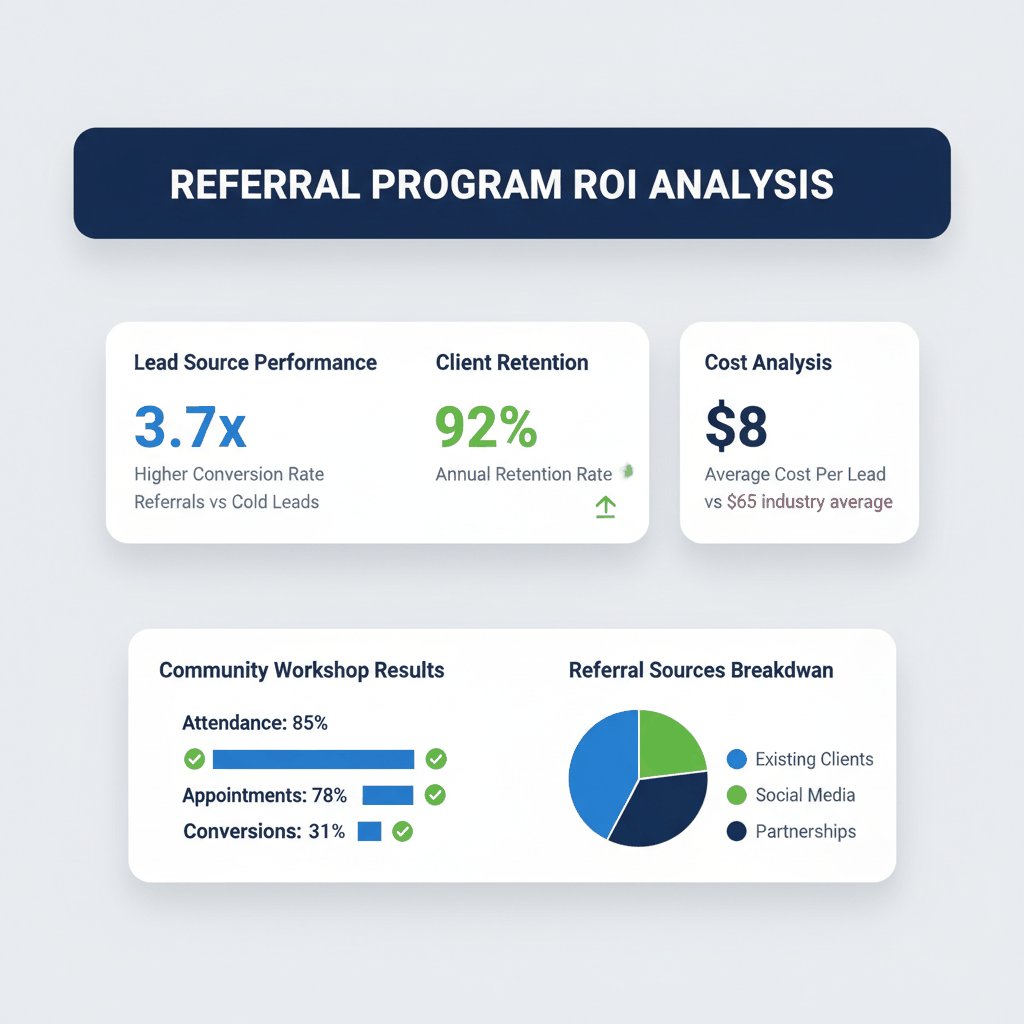
Track these metrics to measure your relationship-based approach:
Workshop attendance rates and repeat attendees
Referral conversion rates compared to cold leads
Client retention rates and policy persistency
Community engagement levels and participation
Professional network strength and reciprocal referrals
Document the source of each referral. Track whether referrals come from workshops, community involvement, professional networks, or existing clients. This data helps you focus time and resources on the most effective activities.
Relationship-based systems typically generate fewer leads than high-volume approaches, but the leads are much higher quality. Warm referrals convert 3-4 times faster than cold prospects because trust is already established.
Focus on conversion rates and client lifetime value rather than total lead volume. A smaller number of high-quality, referred prospects often generates more revenue than a large number of cold leads.
Track the ongoing value of your community relationships. Clients who come through relationship-based referrals often become referral sources themselves, creating a compound effect over time.
Measure how many second-generation referrals you receive from clients who were originally referred to you. This metric indicates the strength of your relationship-building approach.
Technology can support and enhance your relationship-based final expense referral programs without replacing the personal touch that seniors value. The key is using automation to maintain consistent contact while preserving authentic relationships.
Automated referral systems like ReferMe IQ help agents track referral sources, manage follow-up communications, and reward referral partners systematically.
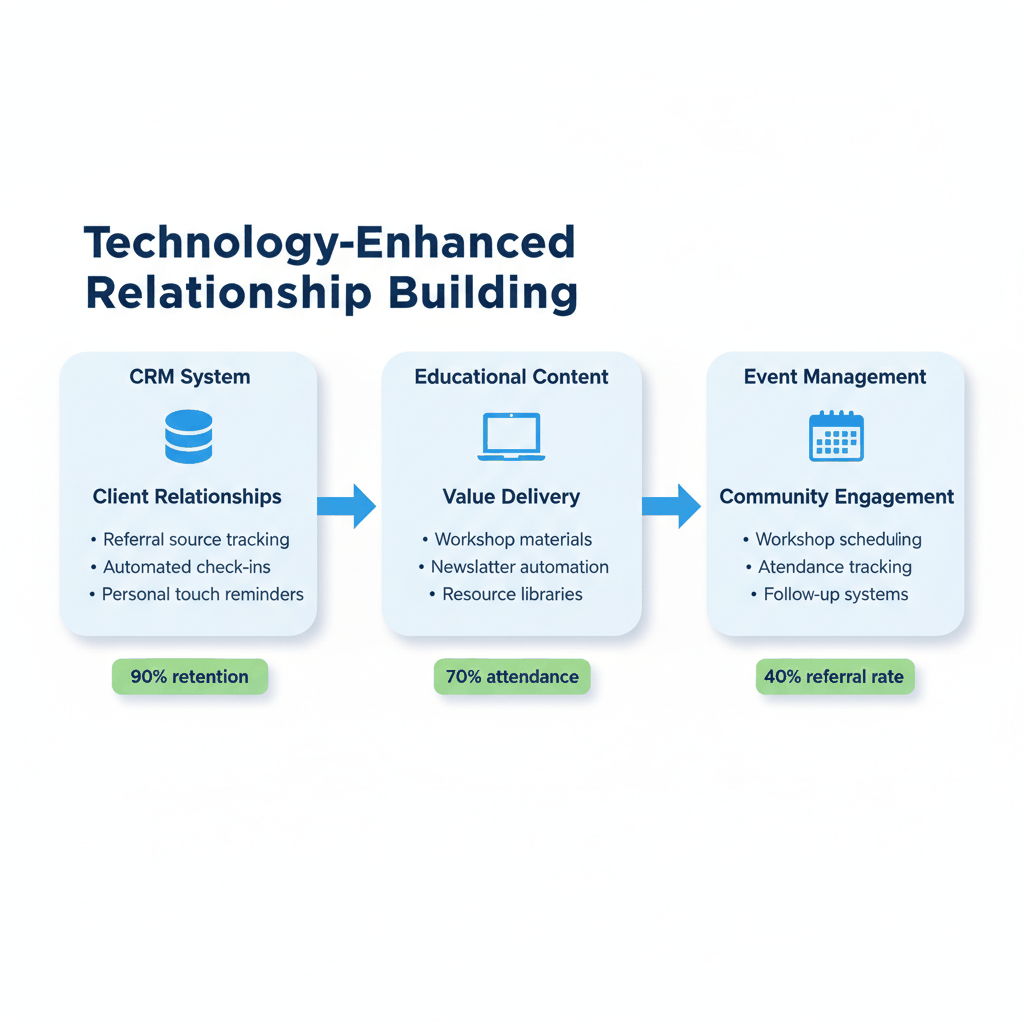
Use CRM systems designed for insurance agents to track client relationships, referral sources, and community involvement activities. Modern CRM platforms can automate routine communications while allowing for personalized touches.
Set up automated reminders for client check-ins, birthday wishes, and policy anniversary communications. However, always add personal notes and customization to maintain the relationship focus.
Create systems to deliver valuable educational content consistently. Email newsletters, educational video series, and resource libraries help you stay top-of-mind with clients and prospects.
Focus on content that serves your community rather than just promoting your services. Share information about Medicare changes, estate planning updates, or local senior resources.
Use event management platforms to organize and promote your educational workshops. These tools help track attendance, manage registrations, and follow up with participants effectively.
Integrate workshop attendee data with your CRM system to track the long-term relationship development and referral generation from educational events.
How long does it take to see results from relationship-based final expense referral programs?
Relationship-based referral programs typically take 3-6 months to generate consistent results, compared to immediate results from paid lead generation. However, the quality and conversion rates of relationship-generated leads make the investment worthwhile. Most agents see their first referrals within 60 days of starting community involvement activities.
What's the best way to ask senior insurance referrals without seeming pushy?
Focus on providing value first, then ask for referrals naturally during positive interactions. Instead of directly asking for contact information, ask if they know anyone who might benefit from similar educational workshops or resources. This approach feels helpful rather than sales-focused to seniors.
Should I still offer incentives for final expense client retention referrals?
Small appreciation gestures work better than large cash incentives for relationship-based programs. Consider thank-you notes, charitable donations in their name, or small local gifts rather than significant monetary rewards. Seniors often prefer recognition and appreciation over cash payments.
How do I measure ROI on community involvement and insurance agent networking activities?
Track the lifetime value of clients who come through community relationships compared to other lead sources. Include referral generation, client retention rates, and policy persistency in your calculations. Many agents find community-generated clients have 2-3 times higher lifetime value despite slower initial acquisition.
What topics work best for educational workshops targeting final expense prospects?
Focus on practical topics that address real concerns: Medicare coordination, avoiding funeral debt, protecting families from financial burden, and estate planning basics. Avoid sales-focused presentations. The most successful workshops provide actionable information attendees can use regardless of whether they purchase insurance.
Ready to get exclusive final expense leads? Sign up for free with ResultCalls today!

Hello everyone! My name is Alex and I write these blogs to help educate small business owners on different ways to grow their business. My goal is to make lead generation as easy as possible for you. After reading these blogs, I hope you leave with some actionable steps that will get you closer to growing your business :)