
Your roofing company website gets visitors. But they leave without calling. The problem isn't your services or prices. It's your content strategy.
Most roofing companies treat their blog like an afterthought. They post random job photos or generic roofing tips. This approach fails because homeowners want specific answers to their roofing questions before they contact contractors.
Content marketing generates three times more leads than traditional advertising. It costs 62% less than outbound marketing methods. For roofing companies, this approach works because 80% of consumers search online for local businesses weekly.

This guide shows you proven roofing blog content ideas that attract qualified prospects and convert them into customers. You'll learn exactly what topics to write about, how to optimize for search engines, and how to avoid the mistakes that waste your marketing budget.
Table of Contents
Most roofing companies make the same content mistakes. They create generic posts that could apply to any roofing company anywhere. This approach fails because homeowners search for specific information about their local area and unique roofing problems.
Successful roofing content follows the 80/20 rule. Create 80% educational content that helps homeowners. Only 20% should directly promote your services. This balance builds trust and positions your company as the local roofing expert.
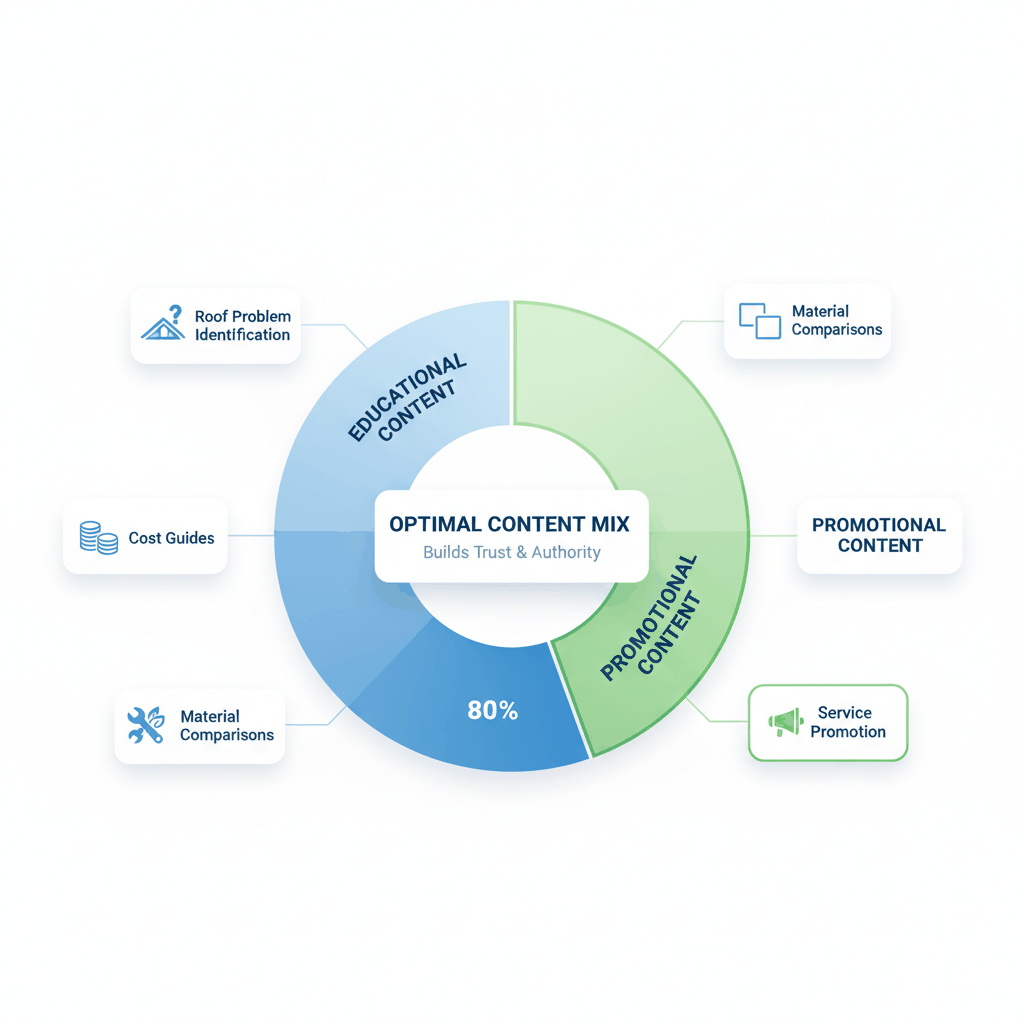
When homeowners search "signs I need a new roof," they're not ready to buy immediately. They're researching and learning. If your blog provides helpful answers, you capture their attention early in the buying process.
Companies using this educational approach see 340% growth in annual leads. The key is answering real questions that homeowners ask about roofing problems, costs, and solutions.
Generic roofing tips work for any company anywhere. Your content should be specific to your service area. Write about "Common Roofing Problems for Dallas Homeowners" instead of "Common Roofing Problems."
This local focus helps with search rankings. It also connects better with your target audience. Homeowners want contractors who understand their local weather patterns and building codes.
These roofing blog content ideas are proven to attract qualified leads. Each topic addresses specific questions that homeowners search for when they need roofing services.
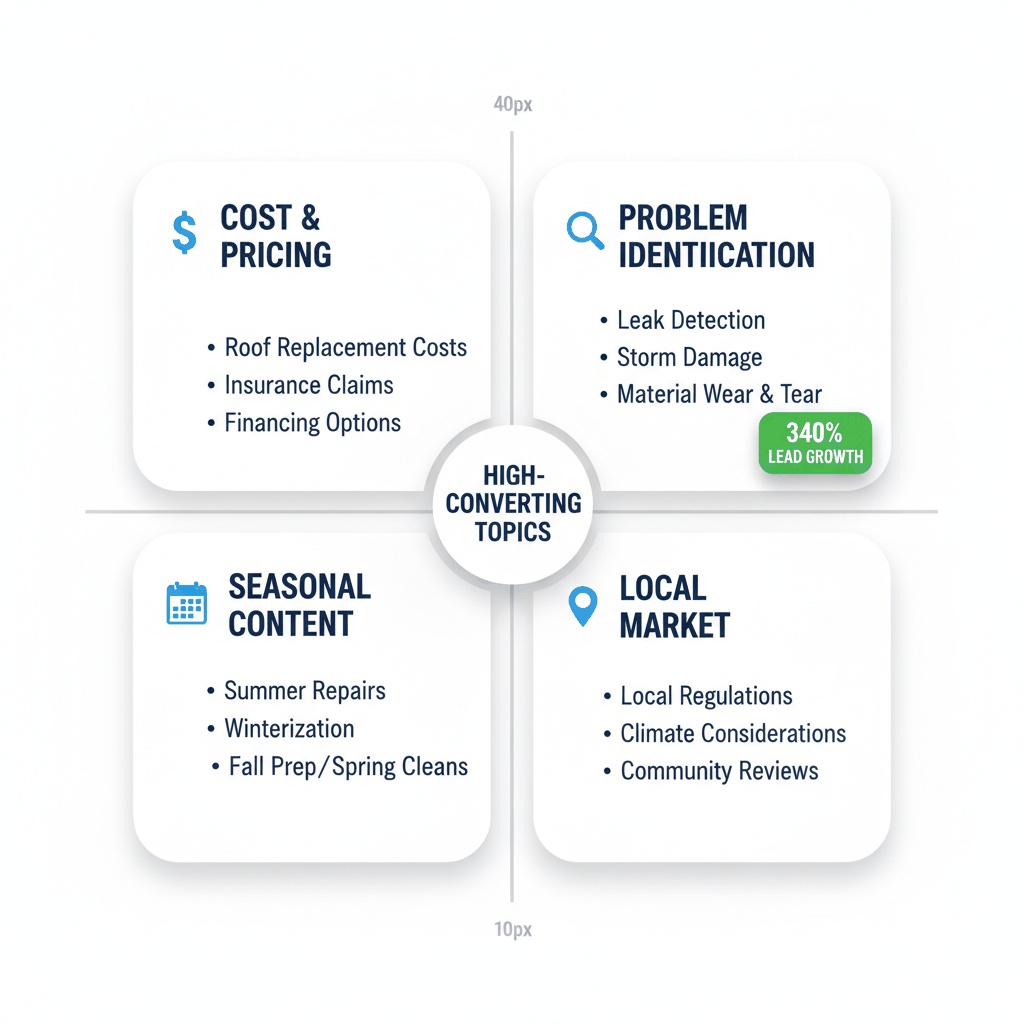
Cost-related topics generate the most qualified leads. Homeowners searching for pricing information are closer to making decisions. Here are the most effective cost-focused topics:
How Much Does Roof Replacement Cost in [Your City]
Metal Roof vs Asphalt Shingles: Complete Cost Comparison
Hidden Costs of Roof Repair Most Contractors Don't Mention
Insurance Claims for Roof Damage: What's Actually Covered
Financing Options for Emergency Roof Replacement
For example, a post titled "2024 Roof Replacement Costs in Phoenix" should include local labor rates, material costs, and seasonal pricing factors. This specificity helps homeowners budget and positions your company as transparent about pricing.
These topics help homeowners identify when they need roofing services. They're perfect for capturing early-stage prospects:
10 Warning Signs Your Roof Needs Immediate Repair
How to Spot Hail Damage on Different Roof Types
Why Your Roof is Leaking (And What to Do Next)
Is That Roof Stain Serious? A Homeowner's Guide
Storm Damage Checklist: When to Call a Roofing Professional
Include photos showing different types of damage. Visual content helps homeowners compare what they see on their roof with your examples.
Seasonal content performs well because roofing problems often relate to weather patterns. Time these posts to publish before relevant seasons:
Preparing Your Roof for Winter: Essential Maintenance Tips
Spring Roof Inspection Checklist for Homeowners
How Summer Heat Affects Different Roofing Materials
Hurricane Season: Emergency Roof Repair Preparation
Snow Load Limits: When Your Roof Needs Help
Homeowners research different roofing options before contacting contractors. These comparison posts capture that research traffic:
Asphalt vs Metal vs Tile: Which Roof is Right for You
GAF vs Owens Corning: Shingle Brand Comparison
Cool Roof Options for Hot Climate Areas
Flat Roof Materials: EPDM vs TPO vs Modified Bitumen
Solar Roof Integration: Tesla vs Traditional Solar Panels
These topics help you dominate local search results while providing valuable community-specific information:
Best Roofing Materials for [Your City] Climate
Local Building Codes: What [City] Homeowners Need to Know
Why [City Name] Homeowners Choose [Your Company Name]
Case Study: Historic Home Roof Restoration in [Neighborhood]
[City] Storm Damage: How We Helped 50 Families Rebuild
Creating content is only half the battle. Following these best practices ensures your roofing blog posts attract and convert qualified prospects.
Every blog post should follow this proven structure. Start with a relatable problem that your target audience faces. Explain why this problem matters and what happens if it's ignored.
Provide a clear solution with step-by-step guidance. Include specific examples and real-world scenarios. End with a clear next step that moves readers toward contacting your company.
The ideal blog post length is 1,500 to 2,500 words. This length allows comprehensive coverage while maintaining reader engagement.
Include photos of actual roofing projects from your portfolio. Before-and-after images work especially well for repair and replacement topics. These visuals help homeowners understand the quality of your work.
Video content performs even better. Consider creating short videos showing common roofing problems or explaining repair processes. Videos can be embedded in blog posts and shared on social media platforms.
Every blog post needs a clear call-to-action. Don't just ask readers to "call for more information." Be specific about what they'll get when they contact you.
For example: "Get a free roof inspection and detailed repair estimate. We'll identify any problems and provide written recommendations with photos." This specific offer provides clear value and reduces the barrier to contact.
Roofing lead generation services can help you convert more blog visitors into actual appointments and estimates.
Consistency matters more than frequency. Publishing one high-quality post per week is better than sporadic posting of multiple articles. Search engines favor websites that publish fresh content regularly.
Create a content calendar that covers different topic categories each month. Week one covers cost topics. Week two focuses on problem identification. Week three addresses seasonal issues. Week four features local projects or case studies.
Great content needs SEO optimization to reach your target audience. These strategies help your roofing blog posts rank higher in search results.
Start with keyword research before writing any blog post. Use tools like Google Keyword Planner or Answer the Public to find questions homeowners actually ask about roofing topics.
Focus on high-intent keywords that show someone is ready to hire a contractor. Examples include "roof repair contractor near me" and "emergency roof leak repair."
Long-tail keywords work better for local roofing companies. Instead of targeting "roof repair," focus on "roof repair contractor in Phoenix" or "emergency roof repair Phoenix Arizona."
Include your target keyword in the blog post title, first paragraph, and at least one subheading. Use the keyword naturally throughout the content without forcing it into sentences where it doesn't fit.
Write compelling meta descriptions that include your target keyword and encourage clicks. Keep meta descriptions under 160 characters and include a clear benefit for reading the post.
Use header tags (H1, H2, H3) to structure your content logically. Search engines use these headers to understand your content topic and organization.
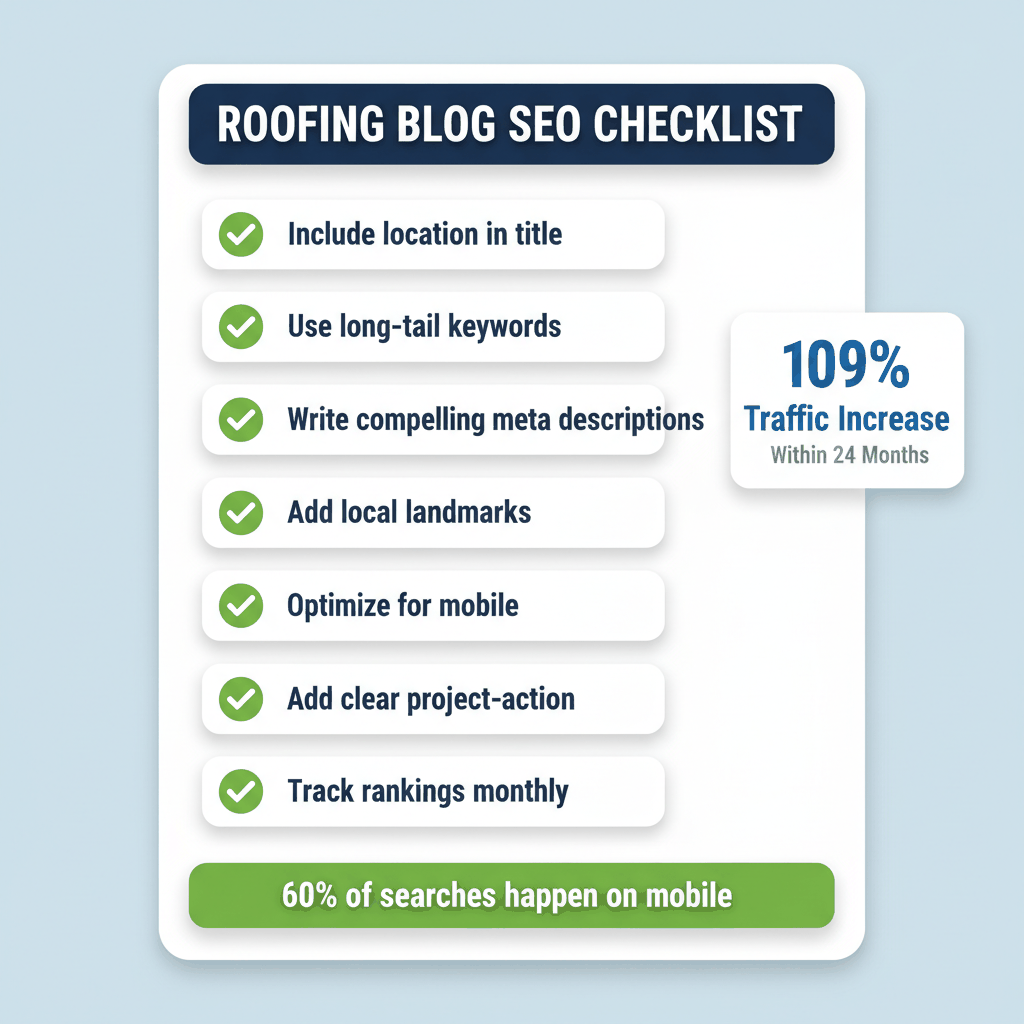
Include location-specific keywords throughout your content. Mention nearby landmarks, neighborhoods, and local weather patterns that affect roofing needs.
Create location pages for each city you serve. Link to these pages from relevant blog posts to strengthen your local SEO signals.
Over 60% of homeowners search for roofing services on mobile devices. Your blog must load quickly and display properly on smartphones and tablets.
Use short paragraphs and bullet points for easy mobile reading. Large blocks of text are difficult to read on small screens.
Track these key metrics to measure your roofing content marketing success and identify which topics generate the most qualified leads.
Monitor organic search traffic growth over time. Successful roofing companies typically see 109% increases in annual website traffic within two years of consistent content marketing.
Track which blog posts generate the most traffic and leads. These high-performing posts show you what topics resonate with your audience. Create more content around similar topics.
Monitor average time on page and bounce rate. If visitors leave quickly, your content may not match their search intent or may be difficult to read.
Track how many leads each blog post generates. Use Google Analytics to see which content pages visitors view before contacting your company.
Calculate the customer lifetime value from content-generated leads. Content marketing typically produces higher-quality leads that close at better rates than advertising-generated prospects.
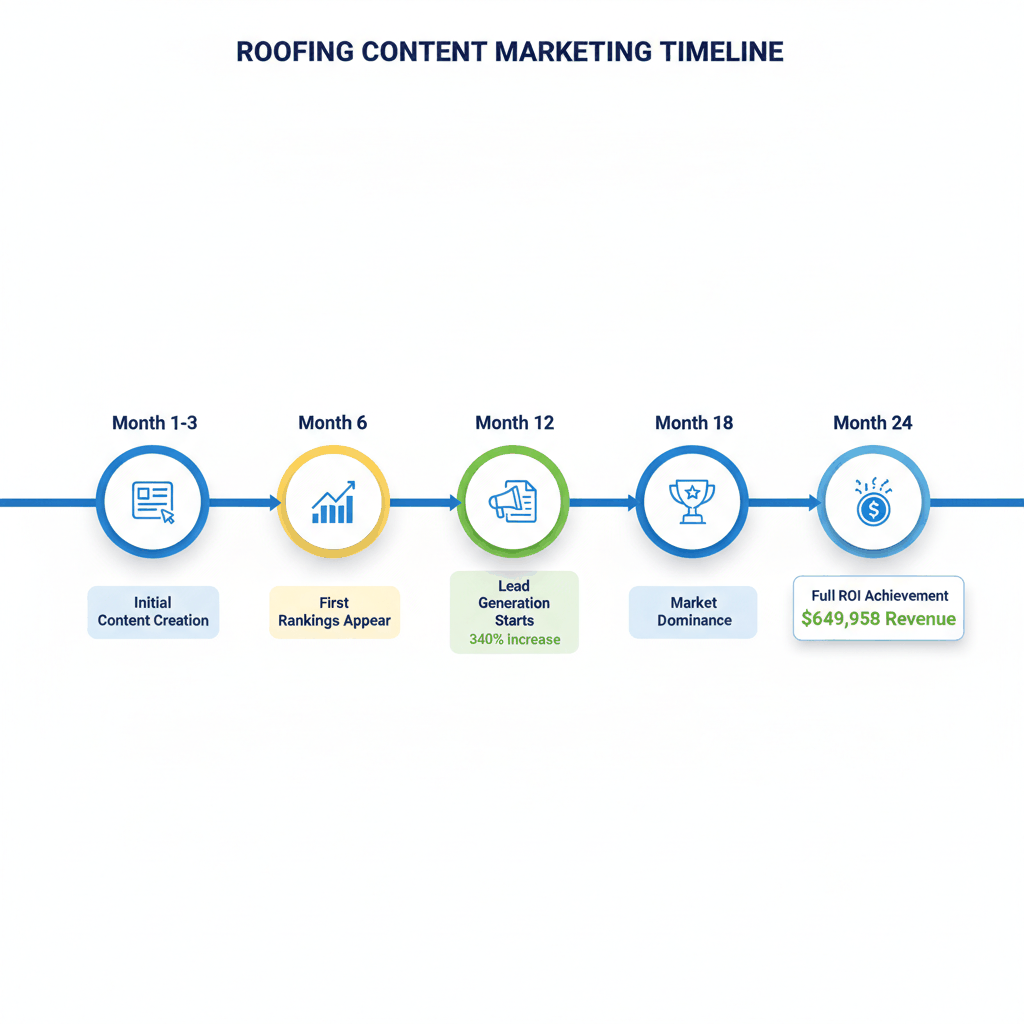
Monitor your rankings for target keywords. Most roofing companies see initial ranking improvements within 3-6 months of consistent content creation.
Track local search rankings for location-specific keywords. These often improve faster than general roofing terms and generate more qualified local leads.
Content marketing typically takes 6-12 months to generate significant lead volume. However, the long-term ROI is higher than paid advertising because content continues attracting leads without ongoing costs.
Companies using comprehensive content strategies see $649,958 in revenue from organic search efforts alone within 12 months.
How often should roofing companies publish new blog content?
Publish one high-quality blog post per week consistently. This schedule provides fresh content for search engines while being manageable for most roofing businesses. Focus on quality over quantity for better results.
What roofing blog content ideas generate the most leads?
Cost-related topics like "roof replacement cost" and problem identification posts like "signs you need a new roof" generate the most qualified leads. Local weather-specific content also performs well for roofing companies.
How long should roofing blog posts be for SEO?
Aim for 1,500-2,500 words for comprehensive roofing blog posts. This length allows you to cover topics thoroughly while providing the depth that search engines favor for ranking purposes.
Should roofing companies write about competitors in blog content?
Focus on material and product comparisons rather than direct competitor mentions. Posts like "GAF vs Owens Corning shingles" provide value to readers without creating unnecessary conflicts with local competitors.
How long does roofing content marketing take to generate leads?
Most roofing companies see initial results within 3-6 months of consistent content creation. Significant lead generation improvements typically occur after 6-12 months as search rankings improve and content library grows.
ResultCalls gets you roofing leads and you only pay per call! Sign up for free today!

Hello everyone! My name is Alex and I write these blogs to help educate small business owners on different ways to grow their business. My goal is to make lead generation as easy as possible for you. After reading these blogs, I hope you leave with some actionable steps that will get you closer to growing your business :)