Your HVAC business lost money this week. Not from equipment failures or supply chain problems. You lost money because customers you served disappeared forever after one service call.
Here's the brutal truth: The average HVAC contractor loses 11% of customers each year. Most leave because they feel forgotten, not because they found better pricing. Meanwhile, contractors with strong maintenance programs report 96% retention rates and lifetime customer values exceeding $20,000.
HVAC maintenance program tools solve this problem. These digital platforms help you create recurring maintenance agreements, automate customer follow-ups, and build predictable revenue. The result? Customers stay loyal, your cash flow stabilizes, and your business value increases dramatically.
You'll learn how to choose the right tools, structure profitable agreements, and turn one-time repairs into year-round revenue streams.
Table of Contents
Most HVAC contractors think customers don't want maintenance plans. That's wrong. The problem is timing and follow-up, not customer interest.
Customers are most interested in maintenance agreements right after you solve their problem. This window lasts just 48 hours. After three days, urgency fades and trust cools. Your maintenance flyer ends up in the recycling bin.
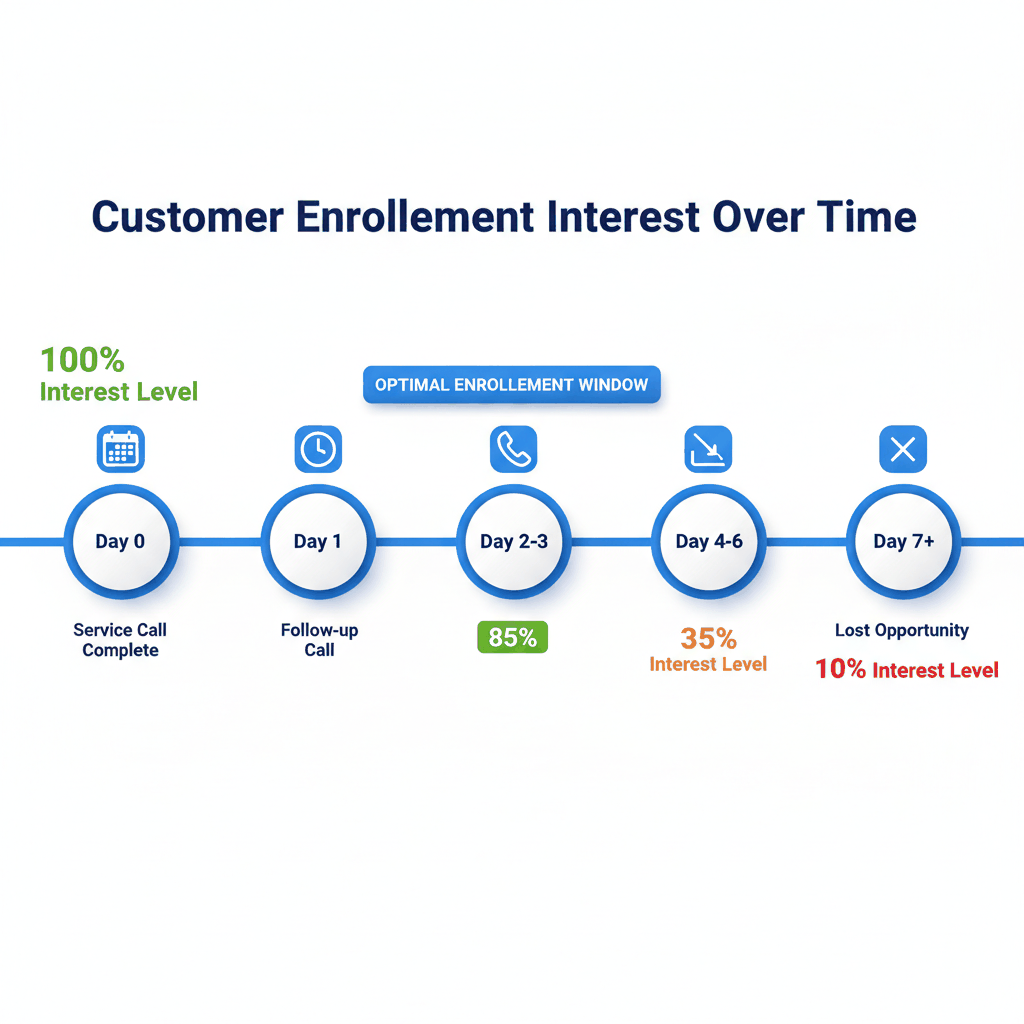
Without systematic follow-up, you miss this critical enrollment period. Studies show that 70% of customer losses happen because people feel forgotten, not because of pricing issues.
Field techs are expensive, skilled professionals. Every minute they spend on sales pitches reduces billable service time. Most techs entered HVAC work to fix equipment, not sell memberships.
Forcing enrollment conversations into their workflow creates inconsistency. Some techs excel at it, others avoid it completely. This inconsistent approach leads to unpredictable results and frustrated technicians.
Customer retention requires active management. Someone needs to call every customer 30 days before their agreement expires. They need to confirm renewal interest and collect payment promptly.
Companies with proper renewal systems achieve 85% renewal rates or higher. Without these systems, even satisfied customers simply forget to renew.
HVAC customer retention software transforms one-time service calls into recurring revenue relationships. The financial impact is substantial and measurable.
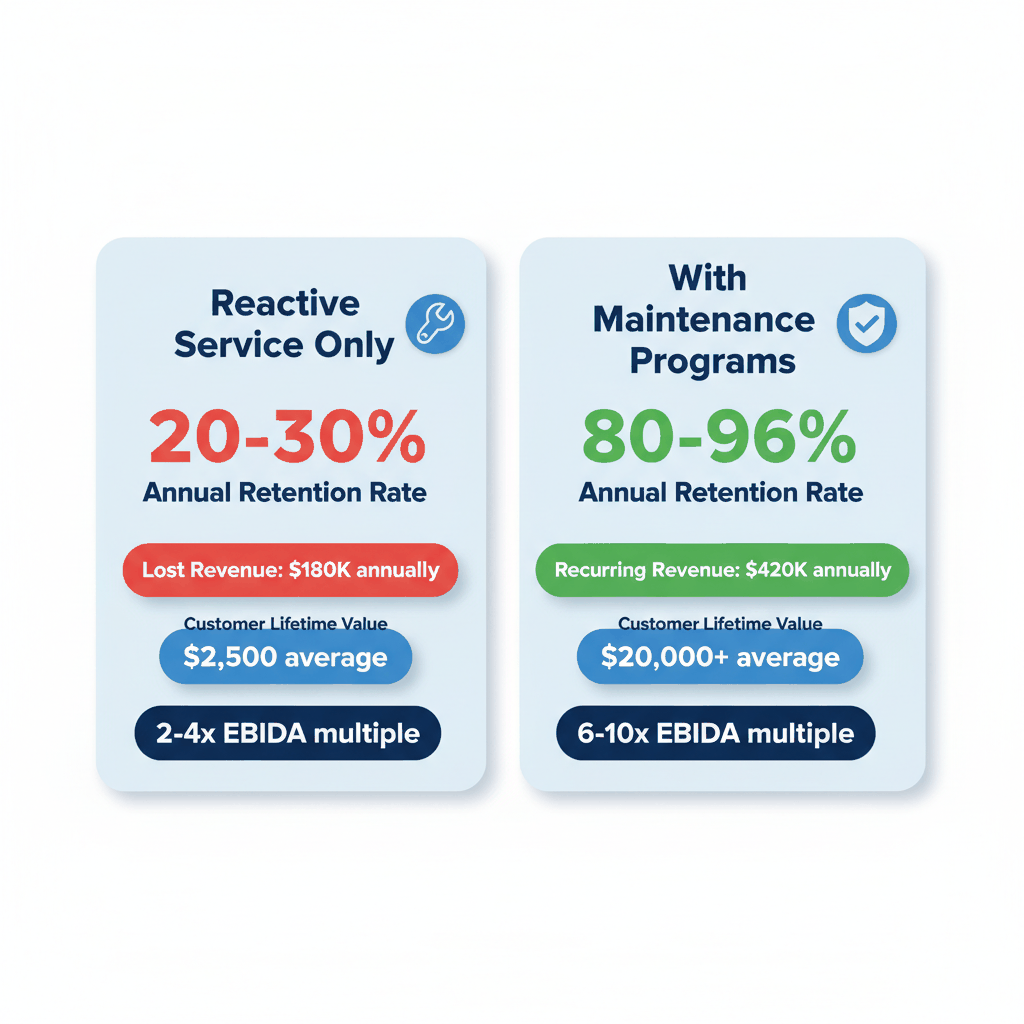
Companies with active service agreement programs see 60-80% customer retention year-over-year. Reactive service companies only retain 20-30% of customers.
The benchmark for healthy service businesses is 250 service agreements per million dollars of service sales. If you're below this target, significant revenue is walking out your door.
Recurring revenue dramatically impacts business value. HVAC companies with less than 20% recurring revenue typically sell for 2-4 times EBITDA. Companies with 20-40% recurring revenue sell for 4-6 times EBITDA. Those with over 40% recurring revenue command 6-10 times EBITDA multiples.
For example: A company with $500K EBITDA and 18% recurring revenue might sell for $1.5M. Growing recurring revenue to 35% could increase the sale value to $2.5M or more.
Retention software separates technical work from sales work. Techs focus entirely on diagnostics, repairs, and service delivery. Front office teams handle enrollment, renewals, and customer communication.
This division of labor lets everyone operate in their zone of competence. Service capacity increases while enrollment rates improve dramatically.
The right HVAC maintenance program tools automate agreement management, scheduling, and customer communication. Here are the top platforms contractors trust.
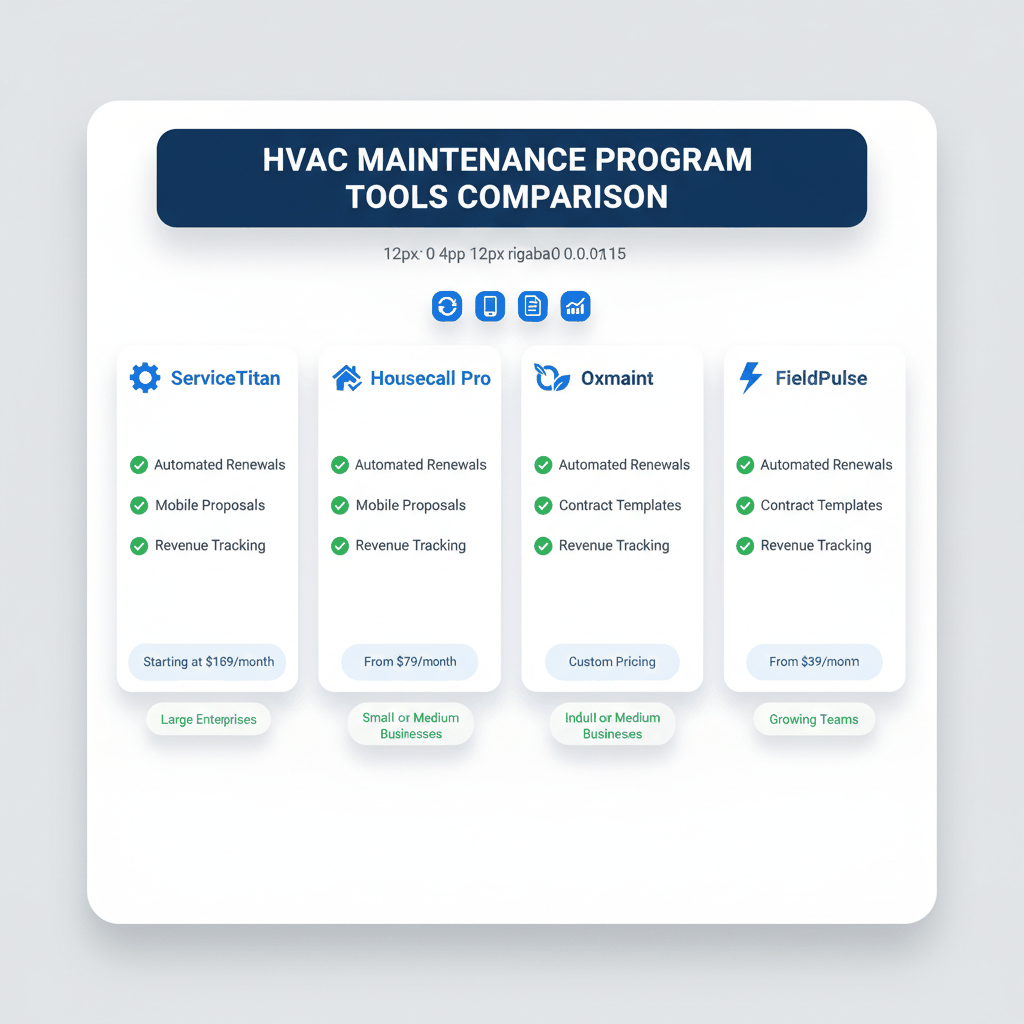
ServiceTitan offers comprehensive maintenance agreement management. The platform includes automated bidding that shows agreements on jobs where customers meet your criteria.
Key features include customizable contract templates, mobile presentation tools for techs, and automated renewal tracking. ServiceTitan integrates scheduling, invoicing, and customer communication in one system.
Housecall Pro goes beyond basic scheduling and dispatch. The platform creates professional sales proposals, tracks equipment and maintenance history, and manages both residential and commercial projects.
The software optimizes team communication and streamlines invoicing and payments. Built-in marketing tools handle customer reminders and track profitability from office or field locations.
Oxmaint specializes in HVAC service agreement management. The platform helps create, sell, schedule, bill, and renew recurring maintenance contracts.
It automates renewal reminders, generates recurring work orders, and tracks contract profitability. No service visit gets missed and no invoice goes out late.
FieldPulse streamlines recurring services from proposal generation through service completion. The platform automates maintenance agreement scheduling and keeps customers satisfied with consistent service timing.
All contracts are managed in one location. The system ensures timely, consistent service delivery for ongoing maintenance relationships.
Creating Profitable HVAC Maintenance Agreements
Profitable maintenance agreements balance customer value with business sustainability. Structure them correctly and they become your most reliable revenue source.
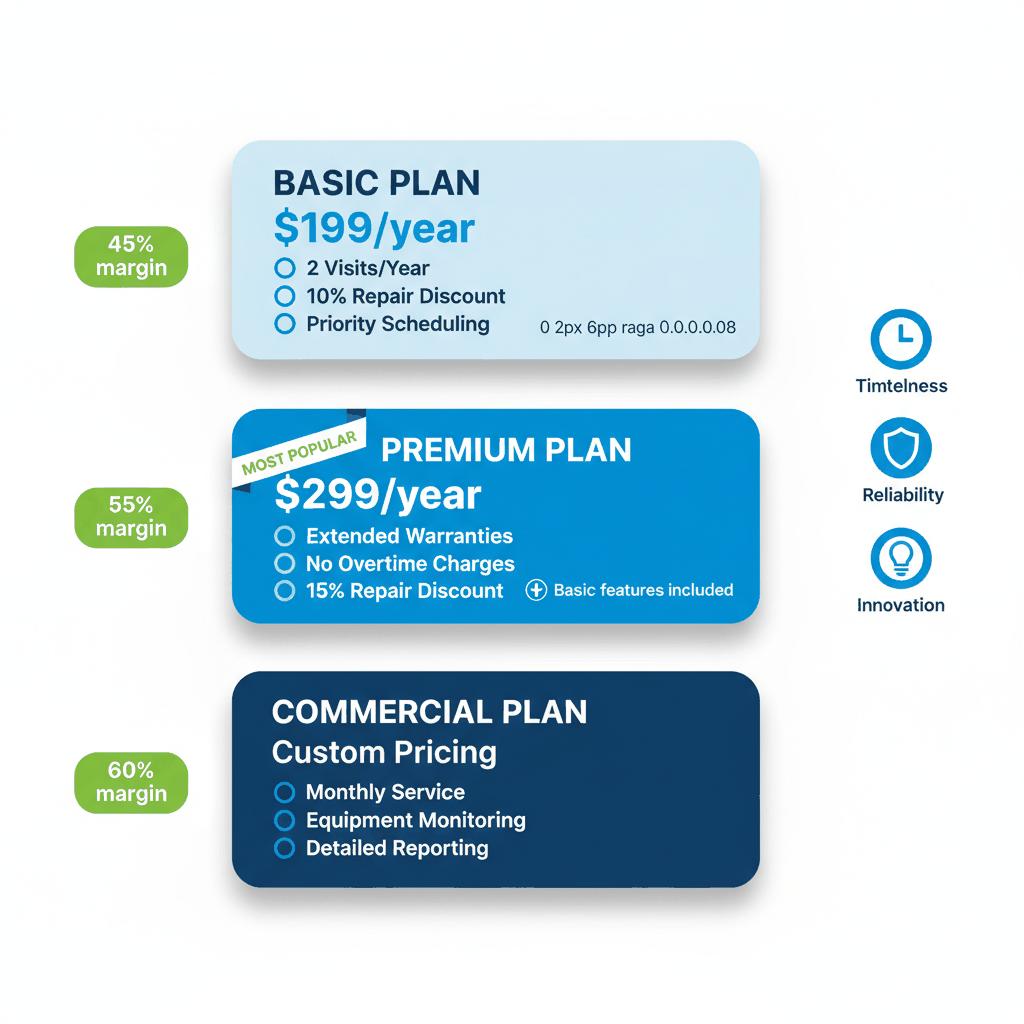
Effective HVAC maintenance agreements include specific, valuable services. Include two scheduled maintenance visits per year - one for heating systems and one for cooling systems.
Add priority scheduling for emergency service calls. Members get faster response times than non-members. Offer a discount on repairs, typically 10-15% off standard rates.
Include no overtime or after-hours charges for members. This removes price anxiety during emergency situations. Extended parts warranties add extra perceived value.
Most residential HVAC maintenance agreements range from $150 to $300 annually. Base your pricing on local market conditions, service frequency, and included benefits.
Calculate your costs first. Include labor time, travel expenses, and administrative overhead. Add your desired profit margin, typically 30-50% for service agreements.
Test different price points with existing customers. Track enrollment rates and customer feedback to find your optimal pricing sweet spot.
Offer multiple agreement levels to match different customer needs. Basic plans include standard maintenance visits and member discounts.
Premium plans add extended warranties, additional service visits, and priority emergency response. Commercial agreements include more frequent service, detailed reporting, and equipment monitoring.
This tiered approach lets customers choose their comfort level while maximizing your revenue per customer.
Systematic follow-up separates successful maintenance programs from failed attempts. Automation ensures no customer falls through the cracks.
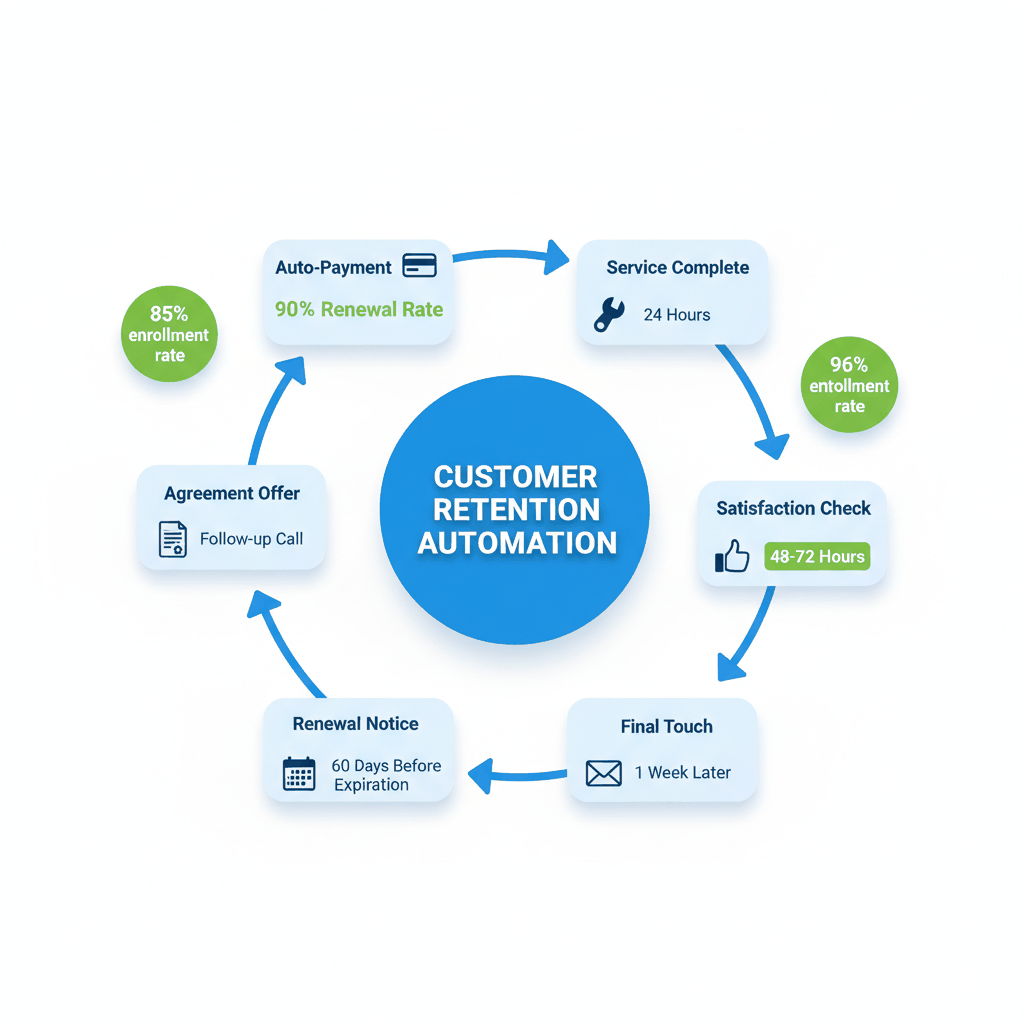
Contact customers within 24 hours after service completion. A quick message asking "Everything still running well?" reinforces confidence in your work.
Follow up again 48-72 hours later with maintenance agreement information. This hits the optimal enrollment window when customers still feel the value of your service.
Send a final follow-up one week later for customers who haven't enrolled. After this point, enrollment rates drop significantly.
Contact customers 60 days before agreement expiration. Send initial renewal notices via email or mail. Follow up with personal phone calls 30 days before expiration.
Make renewal easy with automatic payment options. Customers who set up auto-pay renew at rates above 90%.
Track renewal rates monthly. If they drop below 85%, investigate service quality issues or communication problems.
Maintenance isn't just about equipment service. Regular communication builds relationships that last decades.
Send seasonal reminders about system preparation. Spring messages remind customers about AC tune-ups before summer heat. Fall messages focus on heating system preparation.
Share helpful tips and energy-saving advice. The Better Business Bureau recommends six to eight relationship-building touches for every sales solicitation.
Track specific metrics to optimize your maintenance program performance. Numbers reveal what's working and what needs improvement.
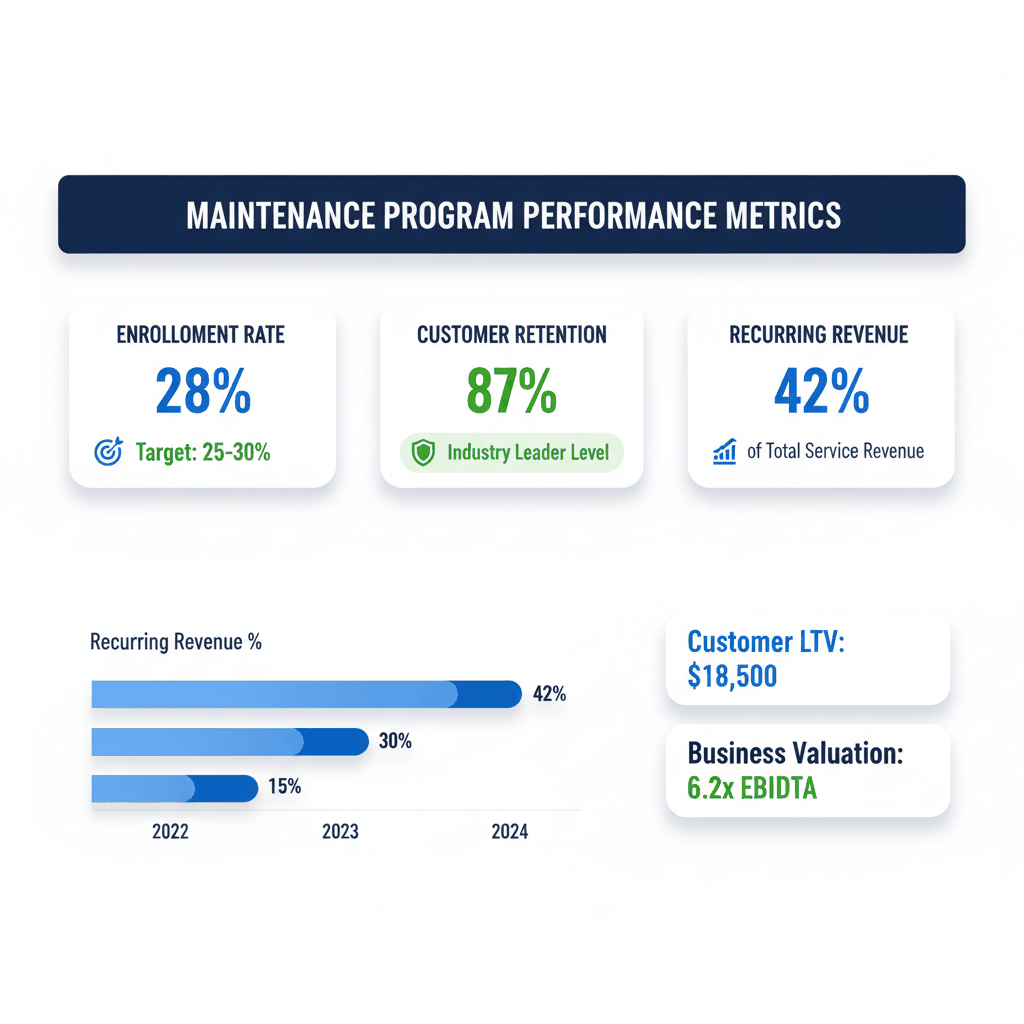
Monitor your enrollment rate from service calls. Target 25-30% enrollment from qualified service visits. If you're below 20%, your follow-up system needs work.
Track customer retention rates annually. Healthy programs retain 80-85% of customers year-over-year. Exceptional programs achieve 90% or higher retention.
Calculate average customer lifetime value. Multiply annual agreement value by average customer lifespan. This reveals the true cost of lost customers.
Measure recurring revenue as a percentage of total service revenue. Industry leaders achieve 55% recurring revenue or higher.
Track agreement profitability separately from repair work. Maintenance agreements should generate 40-60% gross margins when properly managed.
Calculate the business value impact of your recurring revenue growth. Use industry valuation multiples to project how retention improvements affect company worth.
Survey customers regularly about service satisfaction. Happy customers renew at much higher rates and provide valuable referrals.
Monitor complaint resolution effectiveness. Companies that follow up effectively recover 95% of initially unhappy customers.
Track referral rates from maintenance agreement customers. Satisfied members typically generate 2-3 referrals annually through word-of-mouth marketing.
What are the best HVAC maintenance program tools for small contractors?
ServiceTitan and Housecall Pro offer comprehensive solutions for smaller contractors. Both platforms include agreement management, automated scheduling, and customer communication tools. FieldPulse provides a more affordable option with essential maintenance agreement features.
How much should HVAC maintenance agreements cost?
Most residential HVAC maintenance agreements range from $150 to $300 annually. Price based on your local market, included services, and desired profit margins. Include two maintenance visits, priority scheduling, and repair discounts in your basic package.
What's the best way to improve HVAC customer retention?
Systematic follow-up within 48 hours after service creates the highest retention rates. Use HVAC customer retention software to automate contact sequences, manage renewals, and track customer satisfaction. Focus on relationship building, not just equipment maintenance.
How do I get customers to sign up for HVAC maintenance agreements?
Contact customers within 24-48 hours after service when they still feel the value of your work. Use front office staff for enrollment conversations instead of field techs. Offer multiple agreement tiers and make enrollment easy with automated payment options.
What's a good retention rate for HVAC maintenance programs?
Target 80-85% annual retention rates for healthy programs. Exceptional programs achieve 90% or higher retention. Track renewal rates monthly and investigate any drops below 85%. Companies with proper follow-up systems consistently achieve these benchmarks.
Ready to get pay per call HVAC leads? Sign up for free with ResultCalls today!

Hello everyone! My name is Alex and I write these blogs to help educate small business owners on different ways to grow their business. My goal is to make lead generation as easy as possible for you. After reading these blogs, I hope you leave with some actionable steps that will get you closer to growing your business :)