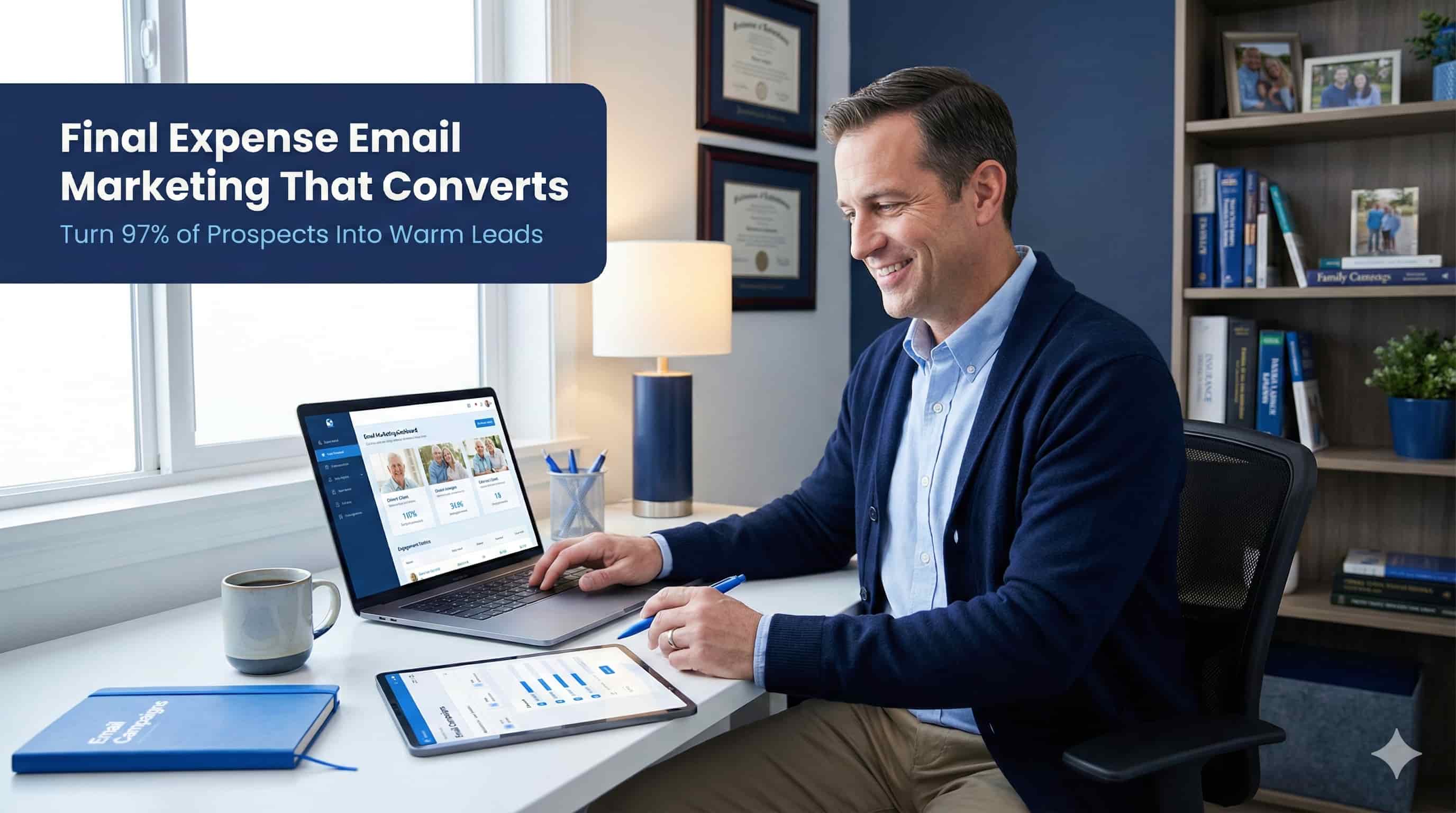
Most final expense agents leave money on the table every single day. They get leads, make calls, and give up after one or two attempts. Here's the thing though. Only three percent of your prospects are ready to buy right now.
What about the other 97%? They need time to research. They need to build trust. They need education about final expense insurance benefits. This is where final expense email marketing becomes your secret weapon.
Email marketing generates an average return on investment of $36 for every $1 spent. For final expense agents, this means turning cold prospects into warm leads without constant cold calling.
You'll discover proven email sequences that convert. Learn automation strategies that work while you sleep. Master lead nurturing tactics that position you as the trusted advisor your prospects want to work with.
What You'll Learn
Why Most Final Expense Email Campaigns Fail
Building Email Sequences That Convert
Final Expense Lead Nurturing Best Practices
Advanced Email Campaign Strategies
Marketing Automation for Final Expense Agents
Essential Tools and Platforms
Nearly 74% of insurance agents have never tried email marketing. Those who do often make critical mistakes that cost them sales.
Nearly 80% of customers buy from the first agent who contacts them. But most agents give up too quickly. They send one email and wait for a response. The prospect doesn't reply immediately, so they move on to the next lead.
This approach wastes money and opportunities. Your prospects need multiple touchpoints. They want to research their options. They need time to discuss decisions with family members.
A systematic follow-up sequence solves this problem. It keeps you top-of-mind without being pushy. Plus, it positions you as the persistent professional who cares about their needs.
Most agents send boring, corporate-sounding emails. These messages feel like they came from a template. They sound like every other agent in the market.
Your prospects can spot generic content immediately. They delete these emails without reading them. Why would they respond to an agent who doesn't seem to understand their specific situation?
Personal, conversational emails get better results. Share relevant stories. Address common concerns. Write like you're talking to a friend who needs your help.
Timing matters in final expense marketing. Sending a price quote to someone who doesn't understand final expense insurance benefits is pointless. Pushing for a meeting before building trust creates resistance.
Your email sequence must match your prospect's journey. Early emails should educate and build trust. Later emails can focus on benefits and solutions. Final emails should include clear calls to action.
Over 40% of seniors are unaware of final expense insurance. They often confuse it with regular life insurance. Many believe the premiums are too expensive.
Your emails must address these knowledge gaps. Explain the differences between final expense and traditional life insurance. Share examples of affordable monthly premiums. Use simple language that resonates with your target audience.
A lead nurturing email sequence guides prospects from awareness to purchase. Each email serves a specific purpose in building trust and moving prospects closer to a buying decision.
Your welcome series sets the tone for everything that follows. Make it warm, personal, and useful. No hard sells allowed.
Email 1: Thank them for their interest. Introduce yourself briefly. Set expectations for future communications. Include one valuable tip about final expense planning.
Email 2: Share your background and why you help families with final expense insurance. Include a brief client success story. Provide another useful tip or resource.
Email 3: Address the most common question you receive about final expense insurance. Keep the answer simple and helpful. Include a soft invitation to continue the conversation.
Educational emails position you as a trusted advisor. They provide value without pushing for a sale. This approach builds trust with prospects who aren't ready to buy immediately.
Focus on topics that matter to your audience. Common final expense planning mistakes work well. So do explanations of how final expense insurance differs from regular life insurance.
Keep educational content simple and actionable. Use examples your prospects can relate to. Share stories about real families who benefited from proper final expense planning.
Your prospects have concerns about final expense insurance. Address these objections directly in your email sequence. This shows you understand their situation and have solutions.
Common objections include cost concerns, confusion about coverage amounts, and questions about the application process. Create individual emails that address each major objection thoroughly.
Use data and examples to support your points. Share stories of clients who had similar concerns. Explain how you helped them find the right solution.
Lead nurturing transforms cold prospects into warm opportunities. It requires strategy, patience, and consistent value delivery.
Not all final expense prospects are identical. Age, income, health status, and family situation all affect their needs and concerns. Segment your email list based on these factors.
Create different sequences for different age groups. A 55-year-old has different concerns than a 75-year-old. Their financial situations vary. Their health considerations differ too.
Use behavior-based segmentation as well. Prospects who visit your pricing page need different emails than those who read educational content. Track their actions and respond accordingly.
Real personalization goes beyond using someone's first name. Reference their specific situation. Mention their age group. Address their particular concerns.
For example, if a prospect downloaded a guide about funeral planning, subsequent emails should focus on that topic. If they visited your coverage options page, send information about policy benefits.
Share relevant stories and examples. A prospect in their 60s wants to hear about clients in similar situations. This makes your emails more relatable and valuable.
Every email must provide value to your prospect. This might be educational information, helpful tips, or useful resources. Never send emails that only ask for something.
Create helpful resources like final expense planning checklists. Develop guides that explain complex insurance concepts simply. Share articles about end-of-life planning considerations.
Include subtle calls to action in every email. Give prospects an easy way to take the next step when they're ready. But make the primary focus about helping them, not selling to them.
Once you master basic sequences, advanced strategies can dramatically improve your results. These tactics separate successful agents from those who struggle with email marketing.
Set up emails that trigger based on prospect actions. When someone visits your pricing page, send emails about coverage options. If they download a funeral planning guide, follow up with related content.
Website behavior reveals buying intent. Use this information to customize your follow-up sequence. Hot prospects get different emails than those still in research mode.
Email engagement also triggers actions. When someone opens multiple emails about a specific topic, send more related content. If they stop engaging, try a different approach or offer.
Include client testimonials in your email sequence. Real stories from satisfied customers build trust and credibility. They show prospects that others made similar decisions successfully.
Share specific examples of how you helped families. Use actual coverage amounts and monthly premiums when possible. This makes the benefits more concrete and believable.
Include reviews and ratings from third-party sites. This provides additional social proof that you're trustworthy and competent. It addresses concerns about working with insurance agents.
Combine email marketing with other outreach methods. Send an educational email, then follow up with a phone call. Reference the email content during your conversation.
Use direct mail to complement your email campaigns. Mail a physical newsletter or planning guide. Then send emails that reference the mailed piece.
Social media can amplify your email content. Share educational articles on Facebook. Use these posts to drive traffic to your email signup forms.
Marketing automation handles repetitive tasks while maintaining personal connections. It ensures consistent follow-up without requiring constant manual effort.
Drip campaigns deliver the right message at the right time automatically. They nurture prospects systematically while you focus on other business activities.
Set up different drip sequences for different prospect types. New leads get welcome sequences. Warm prospects get benefit-focused emails. Cold leads receive re-engagement campaigns.
Include branching logic in your campaigns. If someone opens an email about policy benefits, send more benefit-focused content. If they ignore those emails, try educational content instead.
Assign scores to prospects based on their actions. Email opens, link clicks, and page visits all indicate interest levels. Use these scores to prioritize your personal outreach efforts.
Focus phone calls on high-scoring leads first. These prospects show strong engagement and buying signals. They're more likely to convert into customers.
Lower-scoring leads continue receiving automated emails. This keeps them engaged until their interest level increases. Then you can prioritize them for personal contact.
Create follow-up sequences that trigger after specific actions. When someone requests a quote, start a quote-focused sequence. If they schedule an appointment, send preparation materials.
Post-purchase sequences are equally important. New customers need onboarding information and policy details. They also appreciate thank-you messages and referral requests.
Failed sale sequences help recover lost opportunities. Send educational content to prospects who didn't purchase initially. Address their concerns and invite them to reconsider when circumstances change.
The right tools make final expense email marketing much easier and more effective. Choose platforms that offer automation, segmentation, and integration capabilities.
MailChimp and Constant Contact work well for basic email campaigns. They offer templates, automation, and basic segmentation features. These platforms are user-friendly and affordable for new agents.
ActiveCampaign and HubSpot provide more advanced features. They include CRM functionality, advanced automation, and detailed analytics. These platforms suit agents who want sophisticated marketing capabilities.
ConvertKit focuses on creator-friendly features. It offers simple automation, tagging systems, and landing page builders. This platform works well for agents who create educational content regularly.
AgencyBloc AMS+ integrates email marketing with agency management systems. You can create campaigns and manage client lists in one location. This eliminates the need to export and import contact lists constantly.
AgentMethods AMPlify provides ready-made campaigns for insurance agents. It includes pre-written email sequences and automated cross-selling campaigns. This solution works for agents who want turnkey marketing automation.
These specialized platforms understand insurance regulations and compliance requirements. They include features specifically designed for insurance agent workflows and needs.
CRM systems track all prospect interactions in one place. They help personalize follow-ups and understand lead behavior patterns. Popular options include Salesforce, Pipedrive, and insurance-specific CRMs.
Google Analytics tracks website behavior and email campaign results. It shows which emails drive website visits and conversions. This data helps optimize your campaigns for better results.
Call tracking systems connect phone calls to email campaigns. They show which emails generate the most phone inquiries. This information helps you focus on your most effective email content.
How often should I send final expense email marketing campaigns?
Send educational emails once or twice per week during your initial nurture sequence. After the first month, reduce frequency to weekly or bi-weekly emails. Always prioritize value over frequency to avoid overwhelming your prospects.
What's the best time to send insurance agent email campaigns?
Tuesday through Thursday mornings (9-11 AM) typically get the best open rates for final expense audiences. However, test different times with your specific list since senior demographics may check email at different times than younger audiences.
How long should my final expense lead nurturing sequence be?
Plan for a 6-8 email welcome sequence over 2-3 weeks, followed by ongoing monthly educational emails. Since final expense purchases often take time, maintain contact for at least 6-12 months before considering leads inactive.
Can I use burial insurance marketing automation for compliance?
Yes, but ensure your automation platform allows for proper compliance tracking and opt-out mechanisms. Always include required disclosures and make sure your automated emails meet state insurance marketing regulations in your operating areas.
What email open rates should I expect for final expense prospects?
Insurance email campaigns typically see 15-25% open rates, with final expense emails often performing better due to the targeted senior demographic. Focus more on engagement and conversion rates than just opens, as these metrics better predict actual sales results.
Ready to get pay per call final expense leads? Sign up for free with ResultCalls today!

Hello everyone! My name is Alex and I write these blogs to help educate small business owners on different ways to grow their business. My goal is to make lead generation as easy as possible for you. After reading these blogs, I hope you leave with some actionable steps that will get you closer to growing your business :)