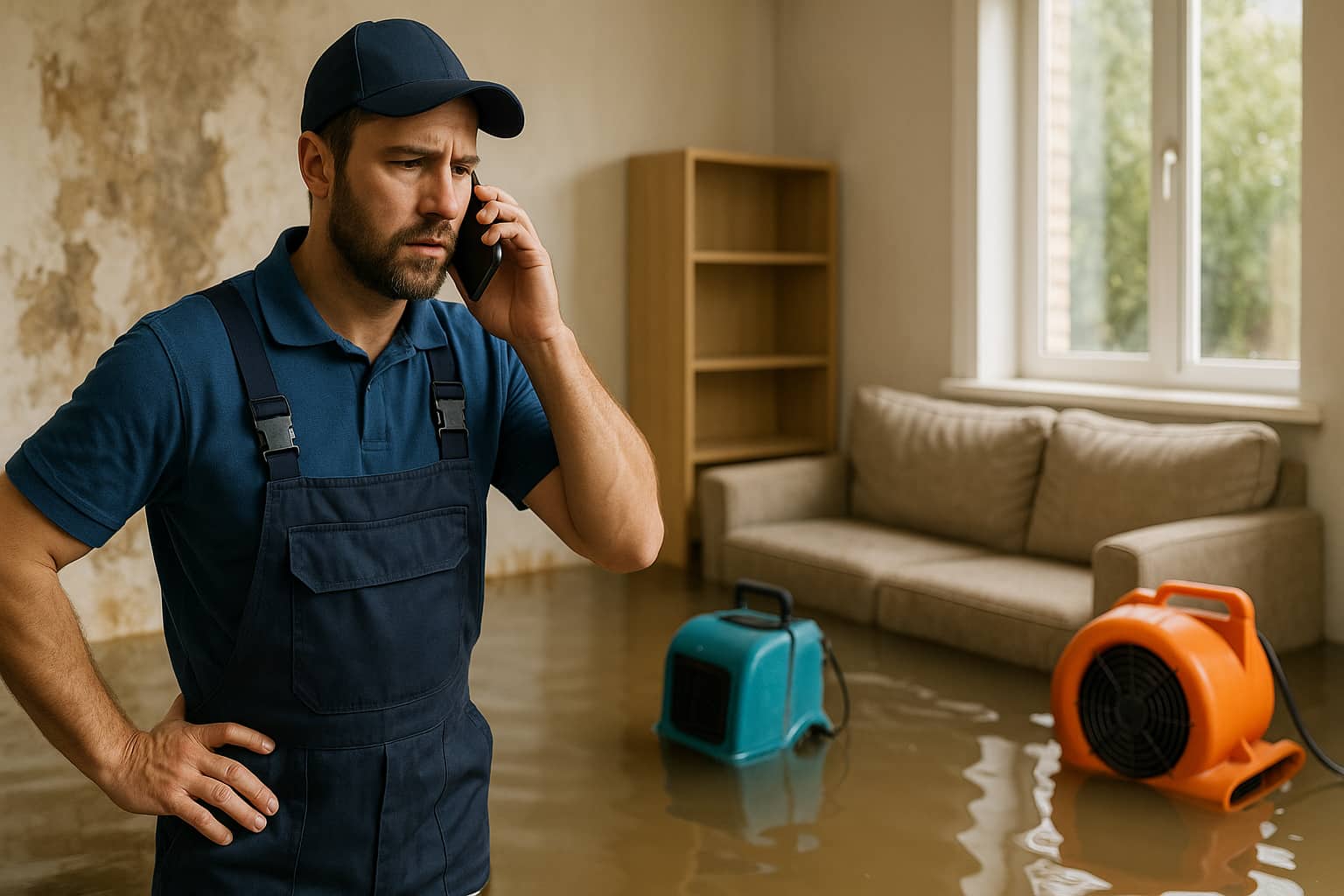
Water damage emergencies strike without warning. Homeowners need help immediately. They're actively searching for restoration contractors who can respond fast.
For restoration business owners, this urgency creates a golden opportunity. But it also means intense competition. If you're looking to buy water damage restoration leads to grow your business, you need to know what you're getting into. Lead costs can range from $50 to over $700 per lead. Quality varies dramatically.
Here's the problem. Not all leads are created equal. Some restoration contractors report that shared marketplace leads can be "overwhelmingly bogus," featuring disconnected numbers or consumers who never requested service. Meanwhile, others find success with exclusive, high-intent leads. These convert at rates exceeding 30%.
The water damage restoration industry faces unique challenges. Restoration companies pay an average of $542 per lead nationally. Some competitive markets like Dallas average $775 per lead. With such high stakes, making the wrong choice drains your marketing budget fast.
In this guide, you'll learn five proven strategies to buy water damage restoration leads effectively. You'll discover how to avoid common pitfalls that waste your budget. You'll learn how to maximize your return on investment. Whether you're exploring exclusive water damage restoration leads, pay per call water damage restoration leads, or other lead sources, we'll help you navigate this complex landscape.
Ready to scale your water damage restoration business with quality leads? ResultCalls specializes in exclusive water damage restoration lead generation that connects you with homeowners in crisis moments—when they're ready to hire immediately.
Understanding the Lead Buying Landscape
Exclusive vs. Shared Leads: Know the Difference
Pay-Per-Call: The Premium Lead Option
Spotting Red Flags in Lead Providers
Measuring Lead Quality and ROI
Setting Up Proper Call Tracking Systems
Understanding Lead Pricing and Budgeting
Best Practices for Converting Purchased Leads
Before you spend a dollar on leads, you need to understand the different types available. You also need to know how they're created. The water damage restoration lead marketplace works differently than other home service sectors. This is mainly because of the emergency nature of the work.
Water damage restoration companies can purchase leads in several categories:
Exclusive leads are sold to only one contractor in a service area. When you purchase an exclusive lead, you're the only restoration company receiving that customer's information. These leads typically offer the highest conversion potential. There's no competition once you're speaking with the homeowner.
Shared leads are sold to multiple contractors at the same time. Sometimes three, five, or even more companies get the same lead. Marketplaces like HomeAdvisor and Thumbtack operate mainly on this model.
Pay-per-call leads are live inbound phone calls transferred directly to your business. These represent homeowners actively calling for help right now. This makes them extremely valuable for emergency services. ResultCalls offers pay-per-call water damage leads starting around $259 per call. Pricing is based on your location and service area.
Web form leads come from online inquiries. Potential customers submit their information through a website form. While less immediate than phone calls, these can still be valuable. You just need a rapid response system in place.
Water damage restoration operates in one of the most expensive lead generation markets. Google Ads keywords for water damage restoration often cost $50–$150 per click in competitive markets. And that's just for a click, not even a lead. This drives up the cost of leads across all channels.
The high costs reflect the value of these jobs. The average water damage job ranges between $2,500 and $7,000. Large-loss projects run much higher. When a single customer can bring in thousands in revenue, lead providers know contractors will pay premium prices.
Understanding where leads come from helps you judge quality. Exclusive lead vendors like Service Direct, 33 Mile Radius, Inquirly, and ResultCalls use their own advertising. They use SEO, PPC, and affiliates to create inquiries. They then route these calls or form submissions directly to one restoration contractor in the relevant area.
Aggregator marketplaces take a different approach. They collect consumer requests through their platforms. Then they distribute them to multiple contractors. HomeAdvisor generates high traffic volumes for water damage services. But contractors pay per lead regardless of whether they win the job.
For restoration business owners serious about growth, ResultCalls' water damage restoration marketing solutions take away the guesswork. They deliver exclusive, qualified leads from homeowners who need immediate help.
The single most important decision when you buy water damage restoration leads is choosing between exclusive and shared options. This choice directly affects your conversion rates. It impacts your customer costs. It determines your overall profitability.
Exclusive water damage restoration leads mean you're the only contractor receiving the customer's information. When that homeowner calls or submits their information, only your phone rings. This removes the race to respond first. It eliminates the frustration of competing with four other contractors for the same job.
The conversion rate difference is big. Exclusive leads consistently convert 3-4 times higher than shared leads. Many restoration contractors report conversion rates of 20-40% on exclusive leads. Compare that to single-digit percentages for shared leads.
Here's why exclusivity matters so much. Water damage is an emergency. Homeowners dealing with flooding or severe water intrusion are stressed. They need immediate help. They want to work with the first responsive, professional contractor they reach. When you're the only one calling, you have the opportunity to build rapport. You can demonstrate expertise. You can secure the job without battling competitors.
Shared leads create an entirely different situation. When you purchase a shared lead, you're immediately in competition mode. The customer receives multiple calls within minutes. They often become overwhelmed or frustrated by the volume of contact.
Contractor lawsuits against HomeAdvisor show that shared leads often feature disconnected numbers. Many consumers never requested service. Some are "over-distributed" leads sold to too many contractors. Even legitimate shared leads convert at very low rates. By the time you call, the homeowner may have already hired someone else. Or they're simply tired of fielding calls.
The math often doesn't work in your favor. Shared leads cost less per lead—typically in the $50-$100 range. But the lower conversion rate makes them less cost-effective. If you pay $70 for shared leads but only convert 5%, your cost per customer is $1,400. Meanwhile, paying $400 for an exclusive lead with a 30% conversion rate costs only $1,333 per customer. Plus it wastes far less of your team's time.
For most water damage restoration businesses, exclusive leads deliver better ROI. Yes, they cost more upfront. However, your choice should consider:
Budget: Exclusive leads require more capital per lead but typically fewer leads to hit your customer goals
Response capacity: Shared leads demand lightning-fast response times. Exclusive leads give you more breathing room
Market competition: In highly competitive markets, shared leads become even harder to convert
Team expertise: Converting shared leads requires exceptional sales skills and persistence
If you're serious about growing your restoration business efficiently, exclusive water damage restoration job leads from ResultCalls remove wasted effort. They connect you with motivated homeowners when they need you most.
Among all lead types available when you buy water damage restoration leads, pay per call water damage restoration leads represent the gold standard. Here's why phone calls outperform other lead formats. Plus how to use them effectively.
Water damage is an emergency service. Emergencies demand immediate action. Homeowners in crisis prefer to call for help rather than wait for a response to a web form. When water is actively flooding their basement or they've discovered mold behind drywall, they don't have time to fill out forms and wait for callbacks.
The numbers back this up. Pay-per-call leads convert 5-7 times better than form submissions for water damage services. Industry data shows that 25-50% of calls convert into booked jobs when handled properly. Compare that to form leads that often convert in the 5-15% range.
Pay-per-call lead generation operates on a simple idea. You only pay when a qualified customer calls your business. Lead providers use various advertising channels—paid search, SEO, emergency response websites—to create calls from homeowners seeking water damage restoration. These calls are then routed directly to your business phone line.
ResultCalls delivers pay-per-call water damage leads by connecting your restoration company with homeowners at the exact moment they're searching for help. The calls are exclusive. No other contractor receives the same lead.
Most reputable pay-per-call providers use quality controls:
Minimum call duration filters ensure you're not charged for wrong numbers or immediate hang-ups (typically calls under 20-30 seconds aren't billable)
IVR prompts and audio CAPTCHAs block robocalls and telemarketers
Geographic filtering ensures callers are within your service area
Call recording provides proof of call quality for dispute resolution
Google's Local Services Ads (LSA) platform operates on a similar pay-per-lead model. Google charges for each qualified call or message from the ad. Costs range from roughly $15 to $100+ per lead depending on region. For water damage restoration, LSA leads typically cost on the higher end. This is due to urgency and job value.
The advantage of LSA is Google's verification process. The "Google Guaranteed" badge builds immediate trust with consumers. Many contractors report LSA producing high-intent calls with 25-40% conversion rates for water damage jobs.
To get the most from pay-per-call leads:
Answer every call immediately: Every ring reduces conversion probability
Train your team on emergency call handling: These callers are stressed and need reassurance
Have a 24/7 answering solution: Water damage doesn't follow business hours
Track and record all calls: Use call tracking to measure performance and dispute bad leads
Follow up on missed calls instantly: Even a few minutes can cost you the job
Pay-per-call leads require investment. But the high conversion rates and exclusive nature make them one of the most profitable ways to grow your water damage restoration business.
Not all companies selling water damage restoration marketing leads have your best interests at heart. The lead generation industry has its share of bad actors. Choosing the wrong vendor can cost you thousands in wasted marketing dollars. Here's how to protect yourself.
Lack of transparency in lead sourcing is the biggest red flag. If a provider won't explain how they generate leads, be cautious. Legitimate companies are proud of their marketing methods. They're happy to explain their process.
Unrealistic promises should immediately raise concerns. No legitimate company can guarantee "hundreds of leads" quickly without quality suffering. Quality lead generation takes time. It takes investment and expertise. If it sounds too good to be true, it is.
No refund or dispute policy means you're stuck with whatever you get. Reputable vendors like ResultCalls allow you to dispute low-quality leads. This includes spam calls, wrong numbers, or out-of-area inquiries. You receive credit for these. If a provider won't stand behind their leads, don't give them your money.
Long-term contracts or high upfront fees lock you into relationships before you can judge performance. Many modern lead services operate month-to-month. They use "pay only for leads you receive" models. This flexibility protects you. It ensures the provider must continuously earn your business.
Absence of real testimonials or case studies suggests the provider either doesn't have satisfied clients or doesn't want you talking to them. Look for reviews from contractors who can verify lead quality and customer service.
Some lead sources create inquiries through questionable methods. These produce low-quality prospects:
Incentivized traffic includes contest entries, gift card offers, or rewards for submitting information. These leads have extremely low intent. The person's goal was the incentive, not restoration service.
Recycled leads are inquiries that have already been sold elsewhere. Or they're weeks or months old. Always ask how fresh leads are. Verify they're genuinely new inquiries.
Over-distributed shared leads create bidding wars. Five, ten, or more contractors chase one homeowner.
Verification Methods Used by Quality Providers
Legitimate lead companies use multiple quality control measures:
Call recording and QA review: Quality assurance teams listen to recordings to confirm caller intent
Clear billable lead criteria: Providers define exactly what qualifies as a billable lead (new customer, correct service, within service area, minimum call duration)
Real-time filtering: Technology blocks spam, wrong numbers, and repeat callers before charging you
Transparent reporting: Dashboards showing lead sources, conversion data, and detailed call information
Protect yourself by asking potential lead vendors:
How do you generate your leads? (What specific marketing channels?)
Are leads exclusive or shared? If shared, with how many contractors?
What is your refund/credit policy for bad leads?
Can I see sample call recordings or lead examples?
What is the typical conversion rate your clients see?
Are there any long-term contracts or cancellation fees?
Can you provide references from current restoration contractor clients?
If a provider hesitates or gives vague answers to these questions, move on. Your marketing budget is too valuable to risk on questionable lead sources.
Once you buy water damage restoration leads, measuring their quality and return on investment becomes critical. Without proper tracking, you're flying blind. You can't determine which lead sources deserve more budget. You can't tell which are draining your resources.
Conversion rate is your north star metric. It's the percentage of purchased leads that turn into booked jobs. Restoration contractors should target conversion rates around 20-30% for quality exclusive lead sources. Anything in the low single digits signals problems.
Contact rate measures how often you actually connect with leads. This is particularly important for form leads. If you're only reaching 40% of web inquiries, you're leaving money on the table.
Cost per acquisition (cost per booked job) is calculated by dividing your total lead spend by the number of jobs won. This metric reveals the true cost of customer acquisition across different sources.
Return on ad spend (ROAS) compares revenue created to lead costs. Most restoration companies aim for 4:1 revenue-to-cost ratio. That's $4 in revenue for every $1 spent on leads.
Different lead types produce vastly different conversion rates:
Inbound call leads: Industry data shows 25-50% conversion for water damage calls with timely follow-up. When Service Direct clients answer a qualified call, 54% book immediately.
Form leads: These typically convert at 5-15%. Consumers filling out web forms are often shopping around or less urgent. However, response speed dramatically affects this. Contacting web inquiries within one minute can boost conversion by 391%.
Exclusive leads: Conversion rates typically range from 20-40%. There's no competition for the customer's attention.
Shared leads: These often convert below 10%. Customers receive multiple calls. They frequently hire whichever contractor responds first or makes the best impression among several options.
Here's a practical example. You pay $400 for an exclusive lead and convert 30% of your leads. Your cost per customer is $1,333. If the average job value is $4,500, your ROAS is 3.4:1. That's solid but with room for improvement through better conversion tactics.
Compare that to shared leads at $80 each with a 7% conversion rate. Your cost per customer is $1,143. Seems better, right? But factor in the time your team wastes calling leads that have already hired competitors.
The real calculation must include:
Direct lead costs
Staff time spent pursuing leads that don't convert
Opportunity cost of missed calls while chasing dead ends
Impact on team morale from constant rejection
When you factor in these hidden costs, exclusive leads often deliver better overall ROI despite higher upfront prices.
Never lump all lead sources together in your analytics. Use unique tracking phone numbers or campaign tags for each vendor and channel. This allows you to accurately attribute revenue. You can calculate source-specific ROI.
Track each lead source separately to identify which vendors deserve increased budget. Identify which should be cut. You might discover that Source A costs twice as much per lead as Source B. But it delivers three times the conversion rate, making it far more profitable.
Based on industry benchmarks, set clear targets:
Answer rate: Aim for 85-90% of calls answered (some companies charge for missed calls)
Qualification rate: Target 50%+ of leads being genuine service inquiries
Conversion rate: Achieve at least 25% for exclusive leads, 8-10% minimum for shared
ROAS: Maintain 4:1 or better revenue-to-cost ratio
Response time: Contact form leads within 5 minutes, return missed calls within 15 minutes
Use these benchmarks to judge lead provider performance. Identify areas for internal improvement in your sales process.
You can't optimize what you don't measure. Setting up robust call tracking systems is essential when you buy water damage restoration leads. These systems protect your investment. They help you optimize conversion. They provide proof when disputing low-quality leads.
Unique tracking phone numbers for each lead source form the foundation. Assign different numbers to your Google LSA campaigns, pay-per-call vendors, shared lead sources, and organic channels. This allows precise attribution when homeowners call.
Call recording serves multiple critical purposes. First, it provides clear evidence for disputing bad leads. If the call was spam or the caller wanted a different service, you have proof. Second, recordings are invaluable training resources. Use them to improve how your team handles inquiries and overcomes objections.
Real-time call analytics show when calls come in. They show how long they last. They show whether they were answered and the outcome. This data helps identify patterns. You might discover most valuable calls arrive between 6-9 PM. Or that Tuesday mornings produce higher conversion rates.
CRM integration automatically logs calls and creates lead records. This ensures no inquiry falls through the cracks. Your team should have immediate visibility into lead source, previous contact attempts, and conversation notes.
Several tools can power your call tracking system:
CallRail, AvidTrak, or CallTrackingMetrics for complete call tracking and analytics
Built-in dashboards from lead providers like ResultCalls that show lead performance metrics
Google Local Services Ads dashboard for LSA campaigns, allowing you to listen to recordings and dispute charges
CRM systems like Jobber, ServiceTitan, or HubSpot that connect with call tracking
The specific platform matters less than ensuring you have complete visibility. Track every lead's journey from initial call through job completion.
Top water damage restoration companies answer 87% of calls on average. Every missed call potentially means a lost job. Your call tracking should monitor:
Answer rate: What percentage of calls are you actually answering? Set alerts when this dips below your target threshold.
Call duration: Calls under 20-30 seconds typically indicate wrong numbers or hang-ups. Calls resulting in bookings usually last several minutes. You discuss damage assessment and scheduling.
Time to answer: How many rings before your team picks up? Every additional ring increases abandonment risk.
After-hours performance: Are you missing evening and weekend calls? This is when homeowners discover water damage. Many water damage emergencies occur outside business hours.
Call outcome: Track whether each call resulted in a booking, requires follow-up, was unqualified, or was spam.
Call tracking data reveals specific ways to improve:
If you notice high abandonment rates during lunch hours, use a dedicated answering service. If certain times of day produce higher conversion, adjust your pay-per-call bidding or lead delivery preferences accordingly. If particular staff members consistently outperform others, record their calls. Use them as training examples.
Many providers consider calls over 20-30 seconds as billable. But your internal standards should be higher. Analyze which calls actually had service needs. Determine which were non-qualified. Then work with lead providers to improve filtering.
Quality call tracking protects your budget through dispute management. When you receive a call that's clearly spam, wrong service, or outside your area, reputable providers let you dispute and receive credit.
Your tracking system should flag potentially disputable leads automatically. Base this on duration, caller ID patterns, or call content. Review these regularly. Submit disputes promptly. Most providers have timeframes for disputes (often 30-90 days).
Call recordings are your evidence in disputes. If a caller asks about roof repair when you purchased water damage leads, the recording proves this lead should be credited. Clear billable lead criteria from your provider makes the dispute process straightforward.
Without proper call tracking, you're essentially hoping lead providers are honest. You're hoping your team remembers details about every inquiry. Professional tracking systems turn hope into certainty.
Knowing what to expect when you buy water damage restoration leads helps you budget right. It helps you avoid overpaying. Lead prices vary dramatically based on type, quality, geography, and market conditions.
Exclusive water damage restoration job leads represent the premium tier. Typical prices range from about $100 on the low end to $700+ per lead. Most quality providers charge in the $400-$600 range. Service Direct reported an average of $542 per lead nationally. Competitive markets run much higher.
Geographic variations significantly affect pricing. Texas averaged around $680 per lead. Dallas specifically averaged $775 per lead. Densely populated areas with more competition consistently command higher prices.
Shared leads from aggregator platforms typically cost much less. They generally cost $15 to $85 per lead depending on region. Water damage is at the higher end of that range due to emergency nature. However, remember that these go to multiple contractors. This dramatically reduces conversion probability.
Pay-per-call services vary by provider and market. ResultCalls offers pay per call water damage restoration leads starting around $259 per call. Pricing is adjusted based on your coverage area. Some markets may see pay-per-call leads priced up to $700 for high-intent emergency calls in major metros.
Google Local Services Ads operate similarly on a per-lead basis. While Google's average for home services is roughly $25-$45, water damage restoration leads typically cost $50-$100 or more. This is due to high job values.
Understanding what influences pricing helps you budget and negotiate:
Market competition directly impacts cost. Google Ads keywords for "water damage restoration [city]" are among the most expensive keywords. They often exceed $100 per click in top markets. This intense bidding drives up costs across all channels.
Job urgency and value matter greatly. Leads for active flooding emergencies command premium prices. Homeowners have immediate needs. Restoration companies know these jobs often run into thousands of dollars. Average water damage jobs range from $2,500 to $7,000. Large-loss projects create even more revenue.
Seasonality and weather events create pricing changes. Winter freezes, spring floods, and hurricane seasons spike demand. After major storms, lead volume increases. But so does contractor demand for those leads. This sometimes drives costs up in affected regions.
Lead exclusivity and type fundamentally affect price. You'll always pay more for exclusive leads than shared. Phone calls cost more than form submissions due to higher conversion rates.
When planning your lead budget, work backward from your revenue goals:
Determine your revenue target: How much total revenue do you need this quarter?
Calculate required customers: At your average job value, how many jobs do you need?
Factor in conversion rate: If you convert 25% of leads, multiply needed customers by 4
Apply lead cost: Multiply total leads needed by expected cost per lead
Add buffer: Include 15-20% extra for testing and improvement
Example: You want $100,000 in revenue this quarter. At $4,000 average job value, you need 25 jobs. With a 25% conversion rate, you need 100 leads. At $500 per exclusive lead, that's a $50,000 lead budget. Adding 20% buffer brings you to $60,000.
High lead costs aren't inherently bad if the math works. Restoration marketers suggest aiming for a 4:1 revenue-to-cost ratio. This ensures profitability after accounting for labor, materials, and overhead.
Example ROI calculation: Paying $150 per exclusive lead with a 30% conversion rate costs approximately $500 per acquired customer. Against a $3,800 average job, this yields healthy margins even after job costs.
The key is matching lead cost to your operational efficiency. If your conversion rate is 40% instead of 30%, that same $150 lead costs only $375 per customer. This dramatically improves ROI. This is why investing in sales training, rapid response systems, and proper call handling often delivers better returns than simply buying cheaper leads.
Scale up lead purchases when:
Conversion rates exceed targets (you're efficiently turning leads into customers)
Your capacity can handle more work (crews available, not overbooked)
ROI meets or exceeds 4:1 revenue-to-cost targets
A particular lead source consistently outperforms others
Pull back when:
Conversion rates drop below acceptable thresholds
You're at capacity and can't service more customers well
Seasonal slowdowns reduce job values or customer urgency
Lead quality deteriorates from a specific source
Remember: the goal isn't finding the cheapest leads. It's finding leads that deliver the best cost per acquired customer.
Even the highest-quality exclusive water damage restoration leads won't grow your business if you can't convert them. Your lead handling process directly impacts ROI. It determines whether buying leads is profitable or wasteful.
In water damage restoration, response time isn't just important. It's often the deciding factor. Homeowners dealing with flooding need immediate help. They'll hire the first professional, responsive contractor they reach.
Research shows that contacting web inquiries within one minute boosts conversion by 391% compared to later follow-up. Even with exclusive leads where you're not competing directly, delays signal to homeowners that you might not prioritize their emergency.
Use these response time standards:
Phone calls: Answer within 3 rings maximum
Missed calls: Return within 15 minutes
Form submissions: Contact within 5 minutes
After-hours inquiries: Have 24/7 answering service or on-call response
Every minute you delay gives homeowners time to second-guess. They might call competitors (even with exclusive leads, they might seek additional quotes). Or they feel less confident in your urgency.
Your staff must understand they're speaking with stressed, often panicked homeowners. Water damage represents a crisis. Whether it's a burst pipe flooding their basement or hidden mold threatening their family's health.
Effective call scripts should:
Acknowledge the emergency: "I understand this is stressful. Let's get you help right away."
Ask qualifying questions: Determine damage extent, location, and urgency
Demonstrate expertise: Explain your process and what they can expect
Provide immediate next steps: Schedule a same-day or next-day assessment
Address pricing concerns early: While exact costs depend on inspection, give general ranges
Create urgency: Explain why immediate action prevents further damage
Train your team to:
Schedule follow-up calls or emails for prospects who need time to decide
Send confirmation texts with your arrival window
Provide educational content about water damage risks while they consider options
Top restoration companies answer 87% of calls on average. But you should target 95%+ to maximize lead value. Every unanswered call is potentially thousands in lost revenue.
Strategies to improve answer rates:
Call forwarding system: Route unanswered calls to multiple team members
24/7 answering service: For after-hours and high-volume periods
Dedicated lead response person: One team member's primary job is answering new inquiries
Mobile app notifications: Alert multiple staff when calls come in
Automated SMS response: If you can't answer immediately, send a text. "We received your call about water damage. Calling you back within 15 minutes."
Remember: some lead providers charge for missed calls as billable leads. Poor answer rates waste money twice. You pay for the lead and lose the opportunity.
Not every lead converts on first contact, especially form submissions. Use a structured follow-up sequence:
Day 1:
Immediate call upon receiving lead
Follow-up email with your credentials and next steps
Second call attempt if first goes to voicemail
Day 2:
Morning call/text if still not connected
Email with educational content (water damage risks, restoration process)
Day 3-5:
Final call attempts
"Last chance" message noting you'll close their file without response
Week 2-4:
Monthly check-in emails for leads who showed interest but didn't book
Seasonal reminders about preventive maintenance
Track all follow-up in your CRM. This ensures consistency and prevents leads from slipping through cracks.
Modern tools can dramatically improve conversion:
SMS automation: Send instant confirmation and updates
Email sequences: Nurture leads with educational content
Online booking: Let customers schedule assessments without phone tag
Video assessments: For minor issues, offer remote preliminary evaluations
Customer portal: Provide photo uploads so you can assess damage before arriving
Many homeowners suffer sticker shock with restoration costs. Prepare your team to address this:
Emphasize insurance coverage: Most homeowners have coverage for sudden water damage. Explain your insurance claim assistance.
Break down the scope: Help them understand what's involved. Extraction, drying, antimicrobial treatment, reconstruction, etc.
Highlight long-term costs of delay: Waiting creates mold growth, structural damage, and higher eventual costs.
Offer financing: Payment plans or third-party financing makes large jobs manageable.
Provide social proof: Share testimonials or examples of similar jobs and outcomes.
Track conversion metrics by:
Individual team member (who closes best?)
Time of day (when do leads convert highest?)
Lead source (which vendors deliver best conversion?)
Call handling duration (optimal conversation length?)
Use call recordings to identify training opportunities. When someone on your team closes a difficult lead, share that recording as a training example. When leads are lost, analyze what went wrong. Adjust your approach.
The difference between 20% and 40% conversion on $500 leads is huge. You either need 50 leads or 25 leads to get ten customers. That's $25,000 vs $12,500 in lead costs for the same revenue. A massive impact on profitability.
Successfully navigating the water damage restoration lead marketplace requires knowledge, strategy, and the right partnerships. When you buy water damage restoration leads, you're making a significant investment in your business growth. But only if you choose quality sources and handle leads effectively.
The key takeaways for restoration business owners:
Prioritize quality over quantity. While shared leads might seem affordable, exclusive water damage restoration leads convert 3-4 times better. They often deliver superior ROI despite higher upfront costs.
Invest in pay-per-call options. Pay per call water damage restoration leads convert 5-7 times better than form submissions. They capture homeowners at the moment of urgency.
Vet lead providers carefully. Look for transparency, fair refund policies, no long-term contracts, and real testimonials. Avoid vendors who can't explain their lead sources or make unrealistic promises.
Use robust tracking systems. You can't optimize what you don't measure. Call recording and analytics protect your investment. They reveal ways to improve.
Focus on conversion excellence. Even the best leads are worthless if you don't answer calls promptly. Handle inquiries professionally. Follow up systematically.
The water damage restoration market is competitive. But it's also lucrative. With average job values between $2,500 and $7,000, converting just a handful of quality leads monthly can transform your business.
Ready to scale your restoration business with high-converting, exclusive leads? ResultCalls specializes in water damage restoration lead generation that connects you with homeowners who need immediate help. Our pay-per-call model delivers only qualified, exclusive leads. No shared leads. No long-term contracts. No wasted budget on fake inquiries. Let's discuss how our proven lead generation system can help you grow profitably.
Lead costs vary significantly based on quality and exclusivity. Exclusive water damage restoration job leads typically range from $100 to $700+ per lead. Most quality providers charge $400-$600. The national average is approximately $542 per lead. Competitive markets like Dallas average $775. Shared leads from marketplace platforms cost less—usually $50-$100. But they convert at much lower rates. When budgeting, focus on cost per acquired customer rather than cost per lead. Higher-priced exclusive leads often deliver better overall ROI.
Exclusive leads are sold to only one contractor in a service area. You're the only company receiving that customer's information. Exclusive leads convert 3-4 times higher than shared leads. Typical conversion rates are 20-40% compared to under 10% for shared leads. Shared leads are distributed to multiple contractors at the same time. Sometimes five or more companies get them. This creates intense competition. While shared leads cost less upfront, the race to respond first and lower conversion rates often make them less cost-effective than exclusive options.
Yes, significantly better. Pay-per-call leads convert 5-7 times better than form submissions for water damage services. This is because homeowners in emergency situations prefer to call immediately. They don't want to wait for responses to web forms. Industry data shows 25-50% of calls convert into booked jobs when handled properly. Compare that to form leads that typically convert at 5-15%. Phone calls capture customers at their moment of highest urgency. They're ready to hire immediately.
Look for these quality indicators: transparency about lead sourcing methods, clear refund/dispute policies for bad leads, no long-term contracts, reasonable promises (avoid "hundreds of leads guaranteed"), and verifiable testimonials from other restoration contractors. Red flags include vague explanations about lead generation, unrealistic guarantees, and reluctance to provide references. Ask potential vendors specific questions about their verification processes. Ask about average conversion rates their clients achieve. Ask whether leads are exclusive or shared. Legitimate providers will answer these questions confidently. They'll provide documentation.
Conversion rates vary dramatically by lead type. Exclusive leads typically convert at 20-40% when handled properly. Shared leads often convert below 10%. Service Direct reports that when their water damage clients answer qualified calls, approximately 54% book immediately. Your actual conversion rate depends on multiple factors. Response speed matters (contacting leads within minutes versus hours). Call handling quality matters. Lead source exclusivity matters. Market competition matters. Track your conversion rates by source. This identifies which vendors deliver the best performance. It also shows where internal process improvements could boost results.

Hello everyone! My name is Alex and I write these blogs to help educate small business owners on different ways to grow their business. My goal is to make lead generation as easy as possible for you. After reading these blogs, I hope you leave with some actionable steps that will get you closer to growing your business :)