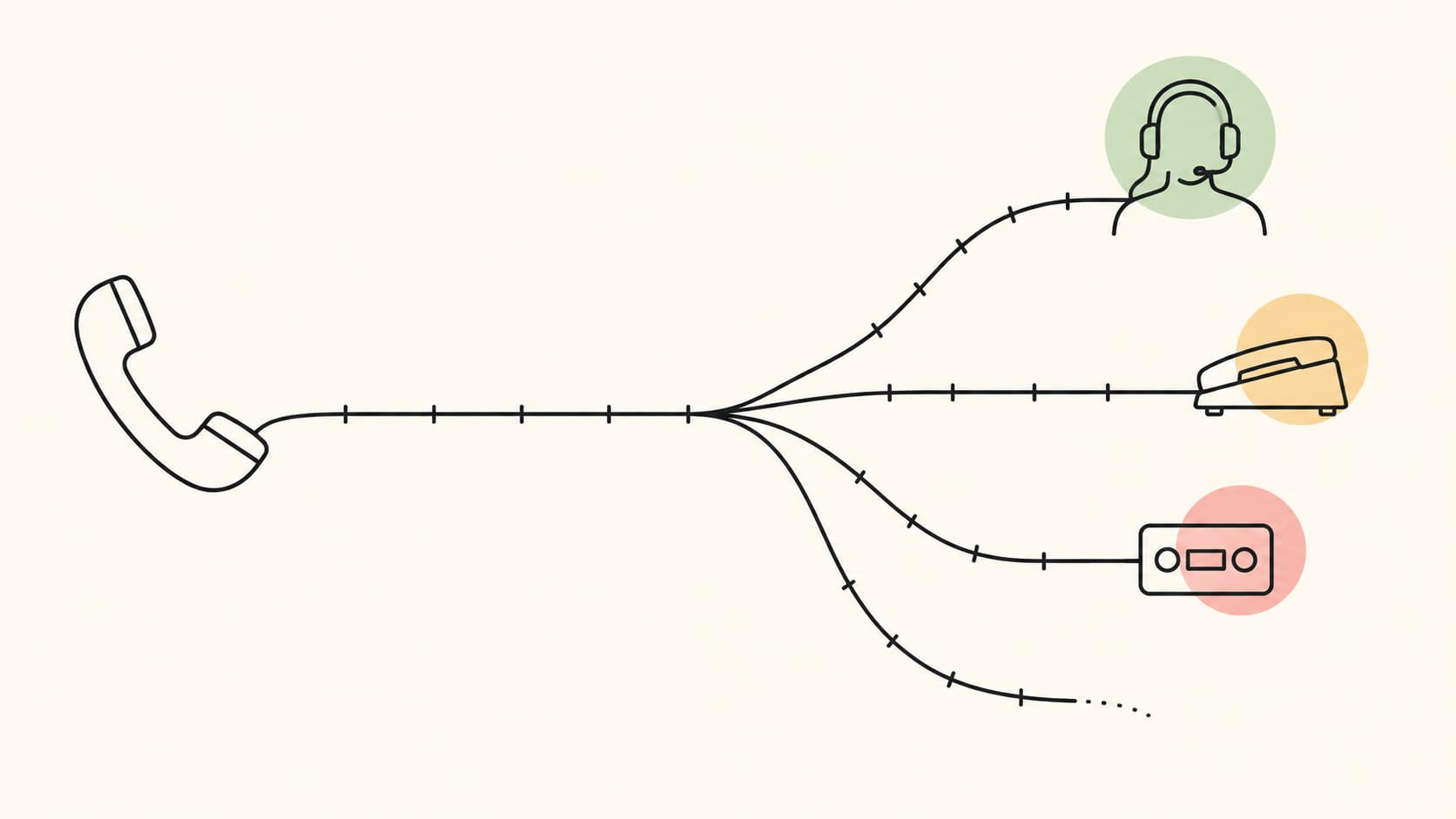
Pest control software and pest control lead sources solve different problems. Software manages the customers you already have. Lead sources produce customers you do not have yet.
Confusing the two is the most expensive mistake in this trade. A pest control operator buys GorillaDesk at $49 a month, expects the phone to ring, and it does not. GorillaDesk never promised that.
The software vendors say so themselves. GorillaDesk's CEO Chris Moreschi stated that customers point to lead generation as their main struggle, in their own words needing help making the phone ring.
The money is worth getting right. A quarterly residential pest plan is worth $1,200 to $2,100 over its life, and recurring revenue makes up 74% of pest control company income.
This guide compares both categories on cost, speed, and risk, then tells you which one to buy first. If you want exclusive inbound calls rather than a monthly platform fee, that is what ResultCalls sells.
Pest Control Lead Generation Tools Defined
What Pest Control Software Actually Does
What Pest Control Lead Sources Do
Cost: Monthly Fees Versus Per-Lead Pricing
Speed: Which One Fills Next Week
Risk: Where Each Category Fails
Where the Two Categories Overlap
The Verdict: Which You Need First
Building Your 2026 Strategy
Frequently Asked Questions
Pest control lead generation tools are products that produce new inbound inquiries. They are a separate category from pest control software, which organizes work you have already won.
Both categories bill monthly. Only one of them makes the phone ring.
Pest control software vendors market heavily on growth language. Their websites show revenue charts and customer counts. The feature lists include review requests, automated emails, and customer portals.
Those features retain existing customers. They do not attract new ones. One 2026 software comparison notes that FieldRoutes' marketing suite focuses on customer retention and reviews rather than advanced lead generation or SEO.
Pest control software schedules jobs, routes technicians, logs chemicals, and bills customers. GorillaDesk, WorkWave PestPac, FieldRoutes, Briostack, and QuoteIQ all serve this function. None of them generates demand.
The category is properly called field service management, or a pest control CRM when the customer record is the focus.

GorillaDesk prices per route rather than per user. Basic runs $49 per month with a 25-stop routing limit. Pro runs $99 and adds online booking, GPS tracking, QuickBooks Online sync, and review generation. Growth runs $149 and adds a sales pipeline and multi-branch support.
The platform serves more than 3,100 companies according to its published numbers. QuoteIQ Essentials starts at $29.99 per month for solo operators.
Enterprise pest platforms cost considerably more. WorkWave PestPac is quote-based at roughly $150 per user per month, landing near $800 to $1,500 monthly for a ten-user shop. FieldRoutes typically starts near $350 per month per 1,000 active customers.
Routing is the highest-return feature in any pest control software. Pest routes run dense, with 10 to 15 stops per technician per day sequenced through neighborhoods on quarterly cycles.
Bad sequencing costs hours of windshield time each week. That is capacity you could have sold.
Recurring service automation matters equally. Pest control earns 74% of its revenue from recurring plans, so a platform that auto-generates the next quarterly visit protects the majority of your income.
Software protects the revenue you have. ResultCalls produces the calls you do not have yet. Each pest control lead goes to only one company, and the homeowner calls your number directly in real time. Pricing runs on pay per call with no contract and no sign-up fee. Details are on the pest control leads page.
Pest control lead sources produce new inquiries from homeowners who do not know your company yet. Google Local Services Ads, Google Search Ads, pay-per-call platforms, shared marketplaces, and specialist agencies all belong to this category.
They bill per lead, per call, or per month of ad management. They do not schedule, route, or invoice anything.
Google Local Services Ads deliver residential pest leads at $15 to $28 with a 38% to 45% book rate, and commercial leads at $40 to $75
Google Search Ads deliver pest control leads at $50 to $150, with termite and bed bug clicks reaching $25 to $60 each
Pestnet is a pest-only lead generation agency operating since 2008, advertising leads at $27 or less with claimed conversion rates above 61%
Shared marketplaces including Angi and Thumbtack sell the same inquiry to several operators at once
Pay-per-call platforms sell live inbound phone calls priced per call
Cost per lead is the wrong metric for a pest control operator. Cost per sold job across the trade lands between $150 and $700.
Break-even sits near $52 per lead for a one-time customer. On a recurring plan worth $1,200 to $2,100, you can pay considerably more and still profit.
Treat any vendor's published conversion claim as marketing until your own data confirms it. Pestnet's 61% figure is its own claim, not an independently verified benchmark.
Pest control software costs $29.99 to $1,500 per month regardless of how busy you are. Pest control lead sources cost $15 to $150 per lead, and the bill scales with volume.
That difference in billing structure matters more than the absolute numbers.

A GorillaDesk Pro subscription bills $99 in July and $99 in January. Published pest control software pricing runs $29.99 to $699 per month across platforms that publish rates.
Enterprise tiers add implementation fees. FieldRoutes typically adds $1,500 to $2,000 in setup costs plus an annual contract.
Google Local Services Ads bill per validated lead. Pay-per-call platforms bill per qualified call. Neither charges you in a slow month when you buy nothing.
Pest demand swings hard with weather and season. A variable-cost channel you can throttle in June and pause in January behaves better than a fixed fee that bills identically in both months.
A quarterly residential plan produces $1,200 to $2,100 in lifetime value. One new plan customer per month covers a GorillaDesk Growth subscription roughly ten times over.
One new plan customer per month does not appear because you bought software. It appears because a lead source produced the call.
Lead sources fill next week. Pest control software does not. Software improves how you handle work you already have, starting immediately, but it creates no new inquiries at any point.
If your schedule is empty in seven days, software cannot fix that. Only a lead source can.
Pay per call produces inbound calls within days of activation
Google Local Services Ads produce leads within one to two weeks after Google verification clears
Google Search Ads produce clicks immediately and qualified leads within days
Local SEO and content produce meaningful volume in four to twelve months
Pest control software produces zero new customers at any point
Pest control software shortens the gap between a booked call and a serviced account. Online booking, automated confirmations, and route optimization all compress that timeline.
That is real value on existing demand. It is not demand creation.
Pest control software fails by becoming an expensive filing cabinet. Pest control lead sources fail by producing calls you cannot service profitably.
The two failure modes are opposite, and knowing which you can absorb decides your order of purchase.
You pay $99 to $1,500 monthly while your schedule sits half empty
Enterprise implementation costs $1,500 to $2,000 before the first job is scheduled
Annual contracts lock you in during the season you most want to cut costs
Marketing features get mistaken for lead generation and nothing changes
Migration costs make switching platforms painful later
Shared marketplace leads go to three or four operators, pushing cost per sold job toward $700
Leads arrive outside your route density and burn drive time
Volume arrives faster than your technicians can absorb it
One-time treatment callers close at low value against a $52 break-even
Spend stops, and so do the calls, with nothing retained
That last point is the honest limitation of any lead source, including pay per call. Software and SEO build assets. Bought calls do not.
The categories overlap in three places: review generation, online booking, and add-on marketing services sold by software vendors. The overlap is real but narrow.
Understanding the boundary prevents you from paying twice for the same function.

GorillaDesk Pro includes review generation at the $99 tier. Reviews sit among the top three factors in Google's local ranking, and pest control companies with 100 or more reviews get roughly twice the leads of companies below that.
That makes review generation a genuine lead-adjacent feature inside a software subscription. It is the strongest crossover in the category.
GorillaDesk launched three lead generation products: the Silverback Website Builder, the PowerCart Plugin, and Local SEO Services. The company positioned them as a natural extension to drive leads directly into the GorillaDesk CRM.
Evaluate those products as lead sources, not as software features. Price them against Google Local Services Ads at $15 to $28 per residential lead and judge them on cost per sold job.
An online booking widget raises conversion on traffic that already reached your website. It does not produce that traffic.
Buy it for conversion. Do not buy it expecting volume.
Buy the lead source first if your schedule has open capacity. Buy the software first if your schedule is full and your admin is breaking. Most pest control operators under $1 million in revenue need the lead source first.
The ResultCalls Pest Stack Test settles it in one question: can your current technicians service 20% more accounts next month without hiring?
Your technicians have open slots most weeks
You are running fewer than 10 to 15 stops per tech per day
Your recurring plan count is flat or declining
You already track jobs adequately, even in a spreadsheet
Your technicians are at 10 to 15 stops per day and routing is manual
You are missing quarterly service dates on existing accounts
Chemical and EPA logging happens on paper
Recurring billing consumes office hours every week
A pest control company past roughly 300 recurring accounts needs software to protect the 74% of revenue that recurs. The same company needs a lead source to replace the accounts it loses to churn each year.
The sequence matters more than the selection. Buy demand when you have capacity. Buy systems when you have demand.
Three actions resolve the software versus lead source question. Complete them in this order.
Ask whether your technicians could service 20% more accounts next month without hiring. A yes means buy demand. A no means buy systems.

Residential pest LSA leads cost $15 to $28 at a 38% to 45% book rate, against a break-even near $52. No other channel competes on cost per booked job.
Cost per sold job across pest control runs $150 to $700. Judge Pestnet, Google Ads, pay per call, and any software marketing add-on against that number, not against their monthly fee.
No. Pest control software such as GorillaDesk, WorkWave PestPac, and FieldRoutes schedules jobs, routes technicians, logs chemicals, and bills customers. Its marketing features handle retention and reviews rather than demand creation. GorillaDesk's own CEO has said customers point to lead generation as their main struggle.
They are products that produce new inbound inquiries, separate from pest control software. The category includes Google Local Services Ads at $15 to $28 per residential lead, Google Search Ads at $50 to $150, pay-per-call platforms priced per call, shared marketplaces like Angi and Thumbtack, and pest-only agencies such as Pestnet.
GorillaDesk prices per route rather than per user. Basic costs $49 per month with a 25-stop routing limit. Pro costs $99 and adds online booking, GPS tracking, QuickBooks Online sync, and review generation. Growth costs $149 and adds a sales pipeline and multi-branch support.
Buy the lead source first if your technicians could service 20% more accounts next month without hiring. Buy the software first if your routes are already at 10 to 15 stops per tech per day and routing is manual. Most pest control operators under $1 million in revenue need demand before systems.
Break-even sits near $52 per lead for a one-time customer. On a recurring quarterly plan worth $1,200 to $2,100 in lifetime value, you can profitably pay considerably more. Judge every source on cost per sold job, which runs $150 to $700 across the trade.
Pest control software and pest control lead generation tools are not competitors. They solve problems at opposite ends of the same business.
Software protects the 74% of pest control revenue that recurs. Lead sources replace the accounts churn takes every year. Buying the wrong one first costs you a season.
Run the ResultCalls Pest Stack Test, then act on the answer. If it says you have capacity to fill, start with a small batch of exclusive pest control calls and measure your own cost per sold job.

Hello everyone! My name is Alex and I write these blogs to help educate small business owners on different ways to grow their business. My goal is to make lead generation as easy as possible for you. After reading these blogs, I hope you leave with some actionable steps that will get you closer to growing your business :)