You've probably noticed the feast-or-famine cycle in your roofing business. One month you're scrambling to keep up with demand. The next month, the phone goes quiet and crews sit idle.
Most roofing companies treat this as an unavoidable reality. They react to seasonal demand instead of planning for it. This reactive approach costs them thousands in lost revenue and creates the stressful ups and downs that plague the industry.
Understanding seasonal roofing demand psychology changes everything. When you align your marketing with how homeowners actually think and buy, you transform predictable cycles into steady revenue. You'll learn exactly when homeowners make roofing decisions and how to position your business accordingly.
This guide reveals the psychology behind seasonal roofing purchases. Plus the proven strategies to keep your crews busy year-round.
What You'll Learn
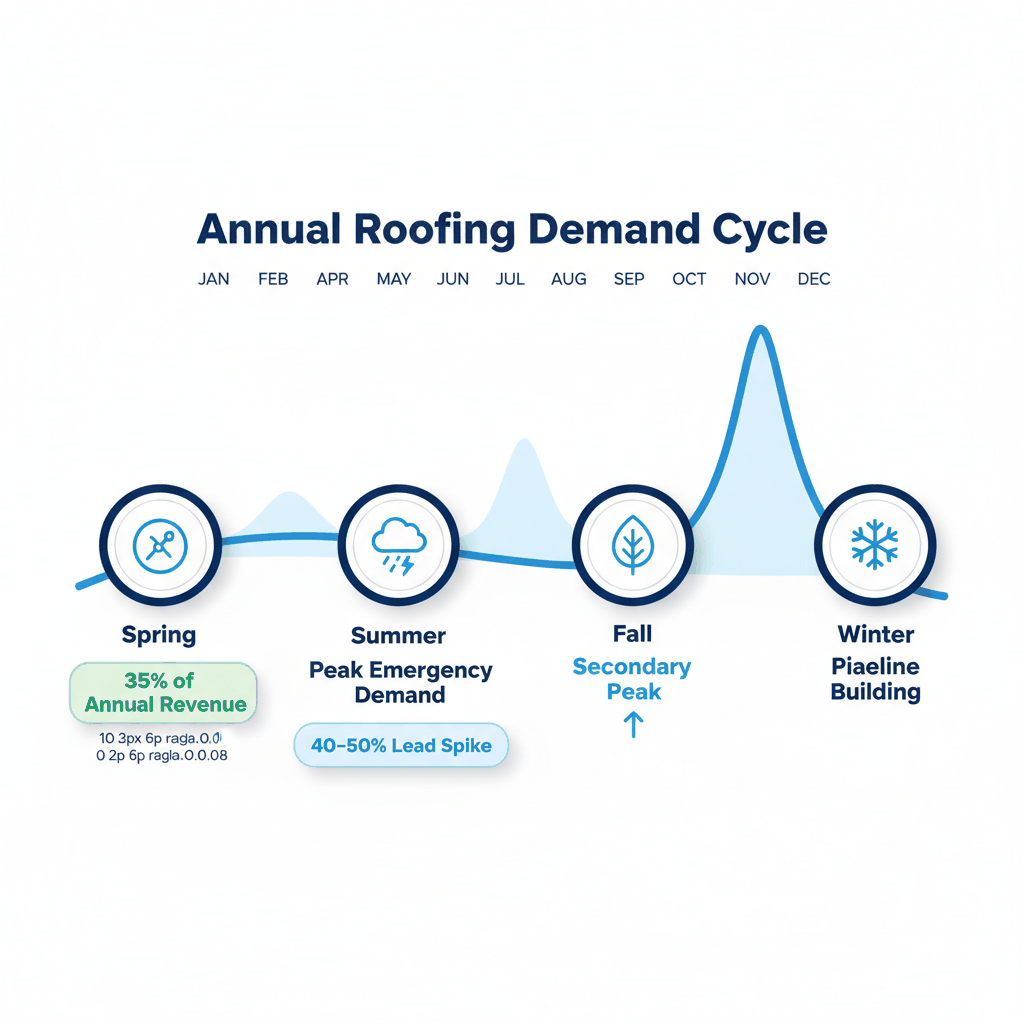
Roofing demand follows predictable patterns throughout the year. Spring and early fall are peak seasons in most markets. Summer brings storm-driven emergency spikes. Winter slows down except for urgent leak repairs.
But here's what most contractors miss: these patterns aren't just about weather. They're about homeowner psychology and decision-making cycles.
Spring generates the highest volume of planned replacement projects. Homeowners inspect winter damage and plan major improvements. Industry data shows spring accounts for 35% of annual roofing revenue.
Summer brings weather-driven urgency. Hail storms and severe weather create immediate demand spikes. Companies that respond quickly to storm events can capture 40-50% more leads than those who wait.
Fall represents the last push before winter. Homeowners who delayed spring projects realize they can't wait another year. This creates a secondary demand peak with higher conversion rates.
Winter focuses on emergency repairs and planning. While immediate demand drops, smart contractors use this time to build spring pipelines and nurture relationships.
Your local climate shapes demand patterns significantly. Texas recorded 878 major hail events in 2024, creating year-round storm opportunities. Northern markets see spring demand spikes as homeowners assess winter damage.
Coastal areas deal with hurricane seasons that concentrate demand into specific months. Mountain regions have shorter construction windows that compress annual demand into 6-8 months.
Understanding when homeowners actually make roofing decisions is crucial for timing your marketing. The psychology behind these decisions reveals why seasonal marketing works.
Planned roofing purchases happen during specific decision windows. Homeowners typically start researching 30-90 days before they're ready to buy. They compare multiple options and focus on value, not just price.
Emergency purchases operate on completely different psychology. Research shows homeowners in emergency situations prioritize speed and availability over extensive comparison shopping.
For planned purchases, trust and credentials matter most. For emergencies, response time and immediate availability win the job.
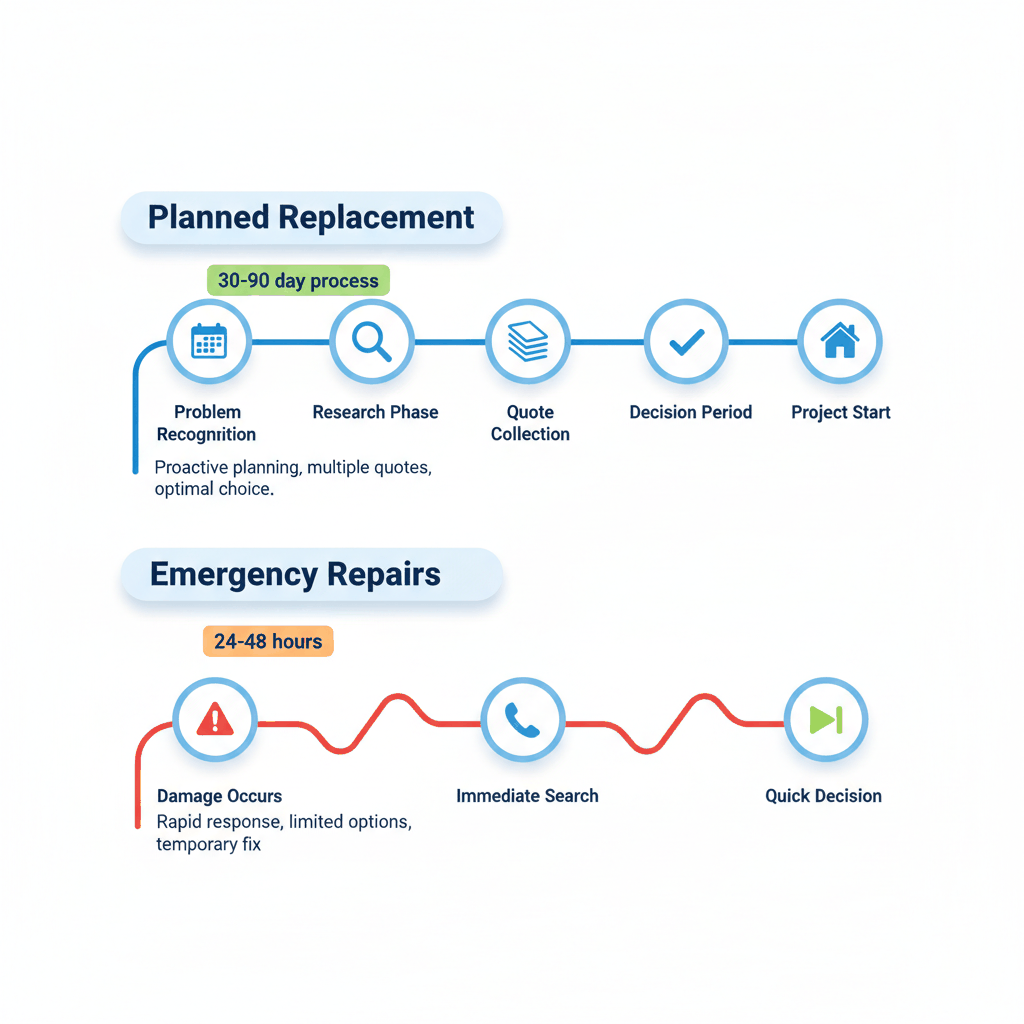
Most homeowners follow a predictable decision path for major roofing projects. It starts with noticing a problem or planning home improvements. Then comes the research phase where they gather information and quotes.
The decision phase typically lasts 2-4 weeks for planned projects. Emergency decisions happen within 24-48 hours. Understanding this timeline helps you nurture leads appropriately and follow up at the right intervals.
Different seasons trigger different motivations for roofing purchases. Spring motivation centers on home improvement and increasing property value. Summer urgency comes from storm damage and immediate protection needs.
Fall motivation focuses on winter preparation and preventing future problems. Winter motivation is purely about emergency repairs and stopping ongoing damage.
Your messaging should match these seasonal motivations. Energy efficiency messaging works well in summer. Winter preparation themes resonate in fall.
Effective seasonal roofing marketing requires different approaches for each season. Your budget allocation, messaging, and channels should adapt to seasonal demand patterns.
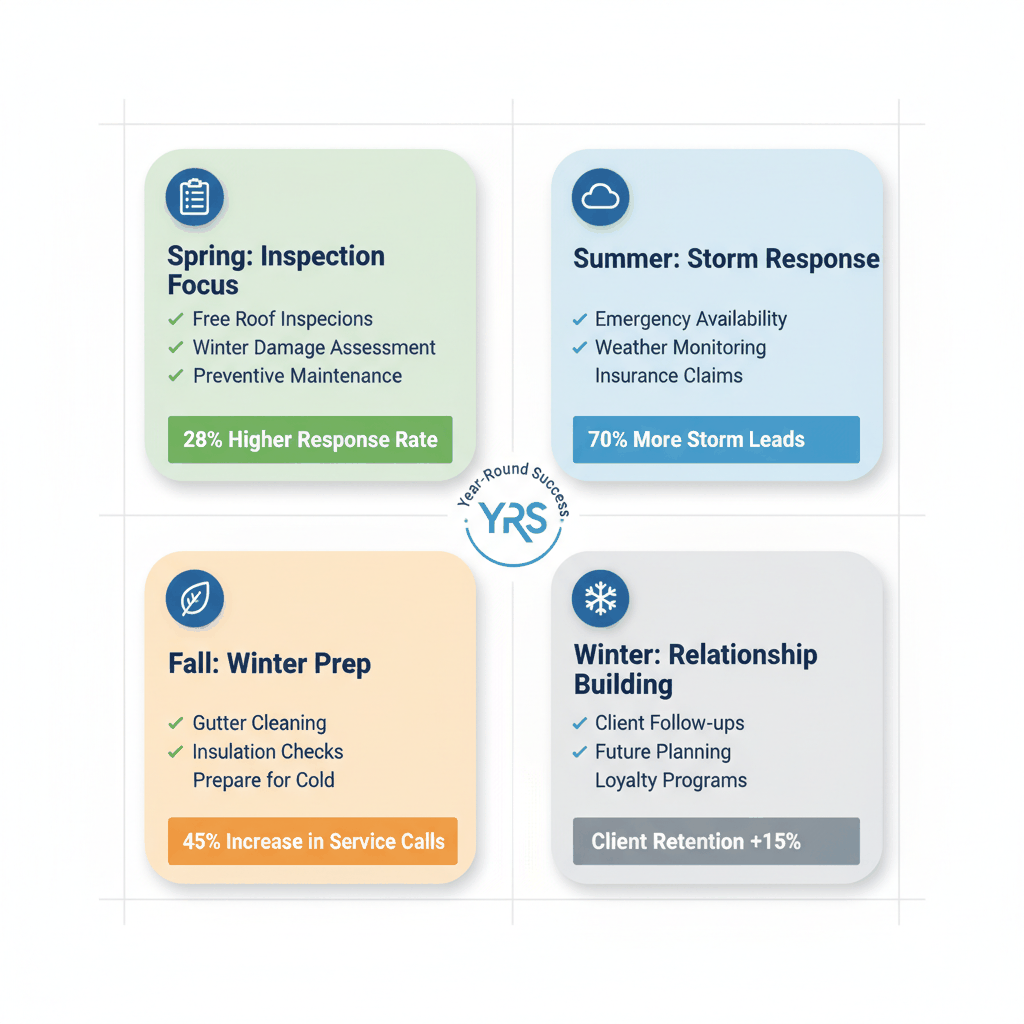
Spring marketing should emphasize roof inspections and preventive maintenance. After winter weather, homeowners worry about hidden damage. Free inspection offers convert well during this season.
Target keywords like "roof inspection near me" and "winter damage assessment" perform strongly in spring. Marketing data shows inspection-focused campaigns generate 28% higher response rates in March-May.
Spring messaging should focus on:
Post-winter damage assessment
Preventive maintenance benefits
Home value improvement
Energy efficiency upgrades
Limited spring availability
Summer marketing requires two approaches: proactive storm preparation and reactive storm response. Monitor weather patterns and have campaigns ready to launch immediately after severe weather events.
Storm response marketing needs speed above everything else. Have landing pages, ad campaigns, and response systems ready before storm season starts. The window after a major weather event is short.
Summer campaigns should emphasize:
24/7 emergency availability
Fast response times
Insurance claim assistance
Temporary repairs and tarping
Local contractor advantages
Fall marketing taps into homeowner anxiety about winter weather. Position your services as protection against upcoming harsh weather. This season often produces higher conversion rates because urgency is real but not immediate.
Fall messaging works well with:
Winter weather preparation
Last chance before cold weather
Ice dam prevention
Energy efficiency for heating
Holiday season scheduling
Winter marketing focuses on nurturing relationships and building spring pipelines. While immediate demand is lower, this season offers opportunities to build trust and stay top-of-mind.
Winter strategies include:
Educational content about roof maintenance
Past customer follow-up campaigns
Referral incentive programs
Planning and estimation services
Review generation campaigns
Storm response marketing can make or break a roofing company's annual revenue. Weather events create massive demand spikes that require immediate, coordinated response.
The biggest mistake roofing companies make is waiting until storms hit to begin marketing. By then, you're competing against every contractor with identical timing and messaging.
Prepare storm response campaigns 60-90 days before typical storm seasons. Have landing pages, ad campaigns, and phone systems ready to scale immediately. Industry research shows companies with pre-built storm response systems capture 70% more storm leads.
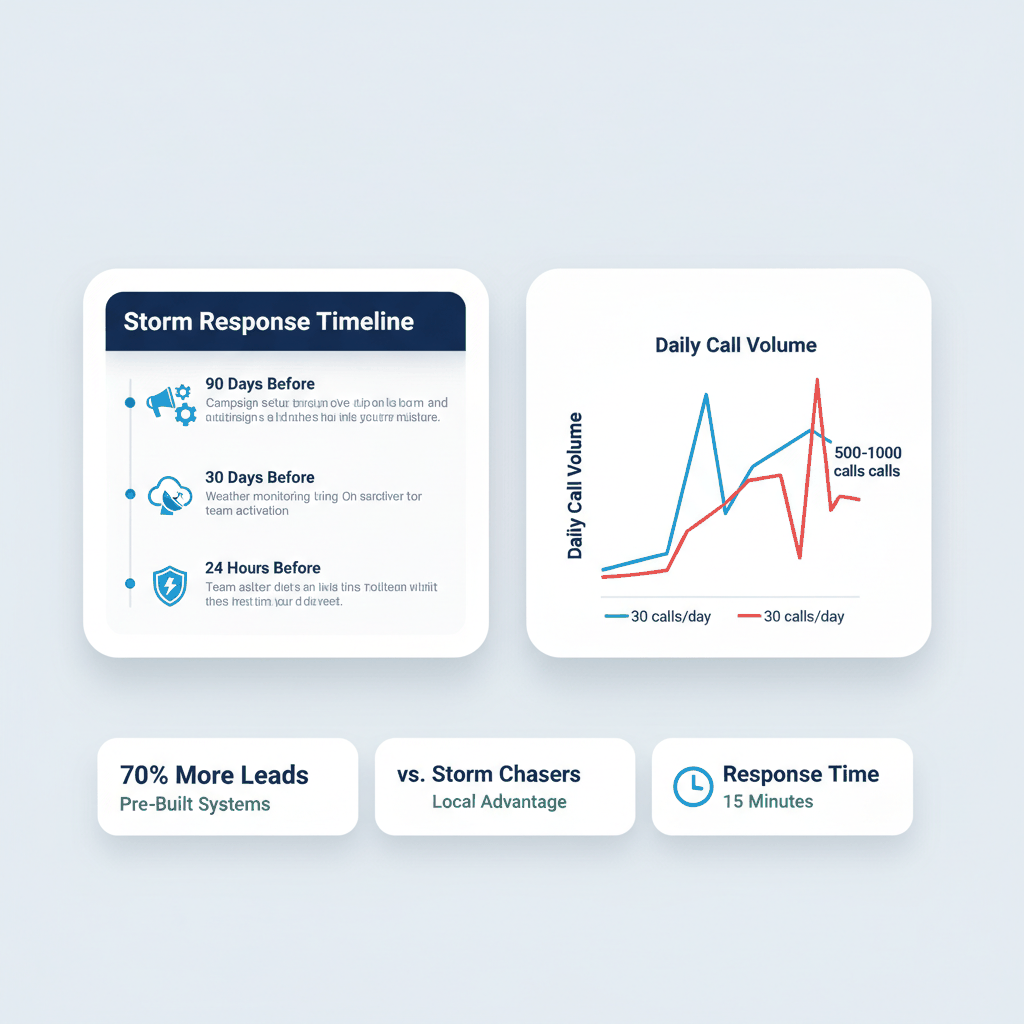
Storm events create call volumes that overwhelm traditional phone systems. A typical roofing company might receive 30 calls on a normal day. After a significant storm, that number can spike to 500-1000 calls within hours.
Voice AI systems help manage these surges by automatically answering calls, collecting basic information, and triaging urgency levels. This ensures no emergency call goes unanswered while your team focuses on the most critical situations.
Storm damage rarely hits entire areas evenly. Use weather data to pinpoint the hardest-hit neighborhoods and concentrate marketing spend there. This focused approach maximizes your budget while reaching the most qualified prospects.
Local contractors have significant advantages over storm chasers when they move quickly and leverage community credibility. Emphasize your local presence and long-term commitment to the community.
Timing affects every aspect of roofing sales, from lead generation to conversion rates. Understanding optimal timing helps you allocate resources more effectively.
Smart budget allocation doesn't mirror demand patterns—it anticipates them. Invest more heavily in marketing during shoulder seasons when competition is lower and costs are reduced.
For example, start spring campaigns in February when search volume is growing but competition hasn't peaked. Begin storm season preparation before weather patterns intensify.
Data shows companies that front-load seasonal marketing spend see 30-40% better ROI than those who wait for peak demand.
Follow-up timing varies by season and project type. Emergency repairs need immediate follow-up within hours. Planned replacements respond well to structured follow-up over 3-4 weeks.
Industry benchmarks show 20-30% of roofing quotes convert without follow-up. With structured follow-up sequences, conversion rates rise to 45-55%. Large re-roof projects respond best to follow-ups that address timeline and materials questions.
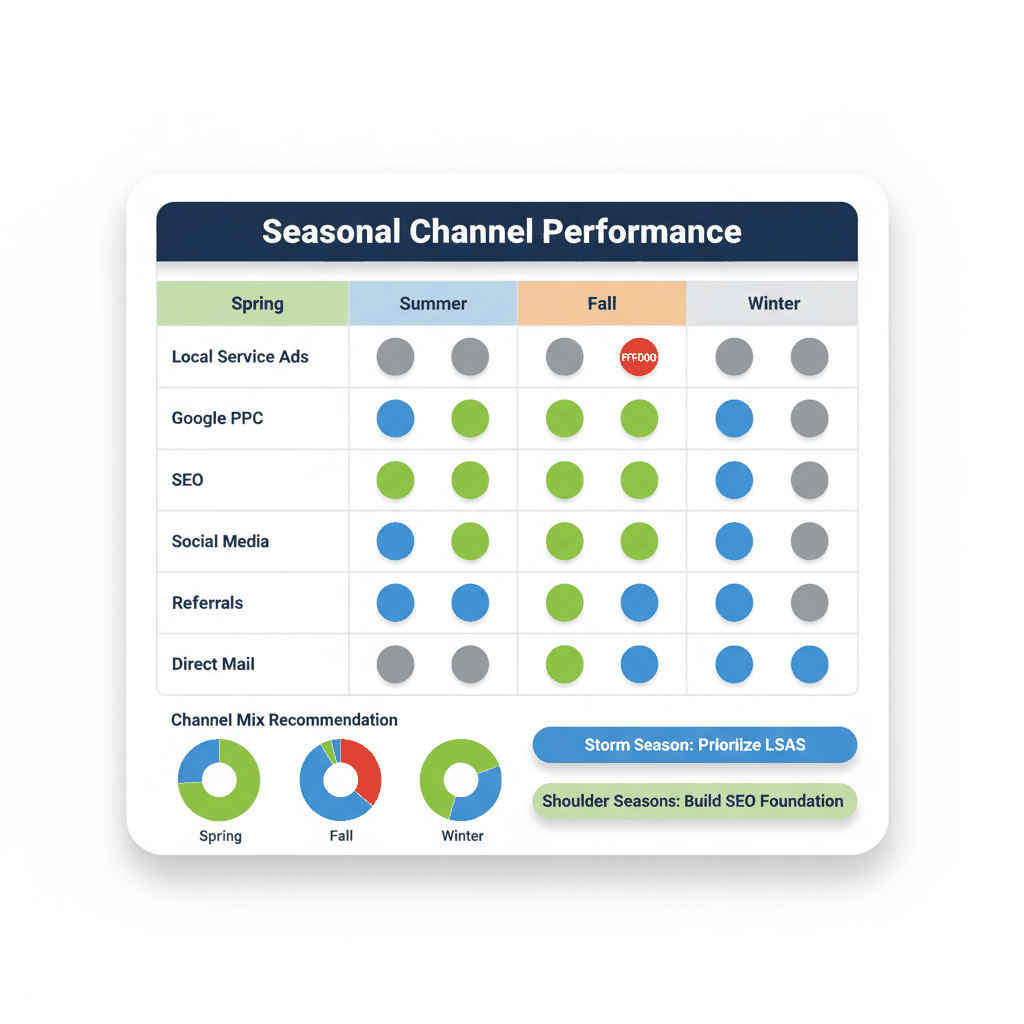
Different marketing channels perform better in different seasons. Local Service Ads work exceptionally well during storm seasons when homeowners search for immediate help. SEO and content marketing build long-term authority but take months to generate results.
During peak demand periods, prioritize fast-response channels like LSAs and PPC. During slower months, invest in SEO, content creation, and relationship building.
The most successful roofing companies don't rely on seasonal demand alone. They build systems that generate consistent leads throughout the year.
Most roofing companies struggle because they rely too heavily on one lead source. When that channel slows due to seasonality or increased competition, revenue becomes unpredictable.
Research indicates 63% of roofing business owners say generating new leads is their biggest growth challenge. Companies using 3-4 lead generation channels see 50% more stable revenue than single-channel businesses.
Only 28% of roofers currently use a CRM to track leads, meaning most are leaving money on the table. Roofers who adopted CRM plus marketing automation reported generating twice as many leads year-over-year.
Effective lead nurturing keeps your company top-of-mind during long decision cycles. A homeowner who requests a quote in winter might not be ready to buy until spring. Nurturing campaigns bridge this gap.
Reviews matter more in roofing than most industries because the purchase decision involves significant trust. Data shows 40+ reviews at 4.5 stars consistently win the majority of local search clicks.
Build review generation into your seasonal marketing calendar. Winter is an excellent time to collect reviews from recent customers when they're not busy with outdoor projects.
When is the best time to start seasonal roofing marketing campaigns?
Start your seasonal campaigns 60-90 days before peak demand periods. Begin spring marketing in February, storm season preparation in early spring, and winter preparation campaigns in late summer. This timing captures leads when competition is lower and conversion rates are higher.
How do roofing demand patterns differ by geographic region?
Geographic patterns vary significantly based on climate and weather patterns. Texas sees year-round storm opportunities, northern markets have strong spring demand spikes, coastal areas concentrate around hurricane seasons, and mountain regions compress annual demand into 6-8 months due to shorter construction windows.
What's the biggest mistake roofing companies make with storm marketing?
Waiting until storms hit to begin marketing forces you into reactive mode competing against every contractor with identical timing. Smart companies prepare storm response campaigns months in advance with ready-to-launch ads, landing pages, and scalable phone systems.
How can roofing companies maintain leads during slow winter months?
Winter is ideal for relationship building and pipeline development. Focus on nurturing past customers, generating reviews, building referral programs, creating educational content, and preparing spring campaigns. Use this time to strengthen your foundation for busy seasons.
Why do homeowners buy roofing services at different times of year?
Homeowner psychology changes with seasons. Spring buyers focus on home improvement and property value. Summer purchases are driven by storm damage urgency. Fall buyers worry about winter preparation. Winter purchases are purely emergency-driven. Match your messaging to these motivations.
Ready to get exclusive roofing leads? Sign up for free with ResultCalls today!

Hello everyone! My name is Alex and I write these blogs to help educate small business owners on different ways to grow their business. My goal is to make lead generation as easy as possible for you. After reading these blogs, I hope you leave with some actionable steps that will get you closer to growing your business :)