
Does your plumbing website struggle to appear in local search results? Most plumbers invest in websites that never generate the leads they expected. The truth is, even the best plumbing services can remain invisible online without proper local SEO optimization.
Your local competitors get calls while your phone stays quiet. This happens because they understand what search engines need to rank plumbing websites higher. Small technical issues, missing information, and optimization gaps keep your business from appearing when customers search for plumbers in your area.
A systematic local SEO audit fixes these problems. This comprehensive checklist examines every element that affects your search visibility. From Google Business Profile optimization to technical website issues, you'll discover exactly what needs attention.
You'll learn the 20 essential audit points that transform struggling plumbing websites into lead-generating machines. Plus, you'll see real case studies showing how these strategies helped plumbers achieve dramatic ranking improvements and business growth.
Table of Contents
A local SEO audit plumbing businesses need starts with understanding what search engines evaluate. Google examines hundreds of factors when deciding which plumbing companies appear in local search results. Your audit must address each critical element systematically.
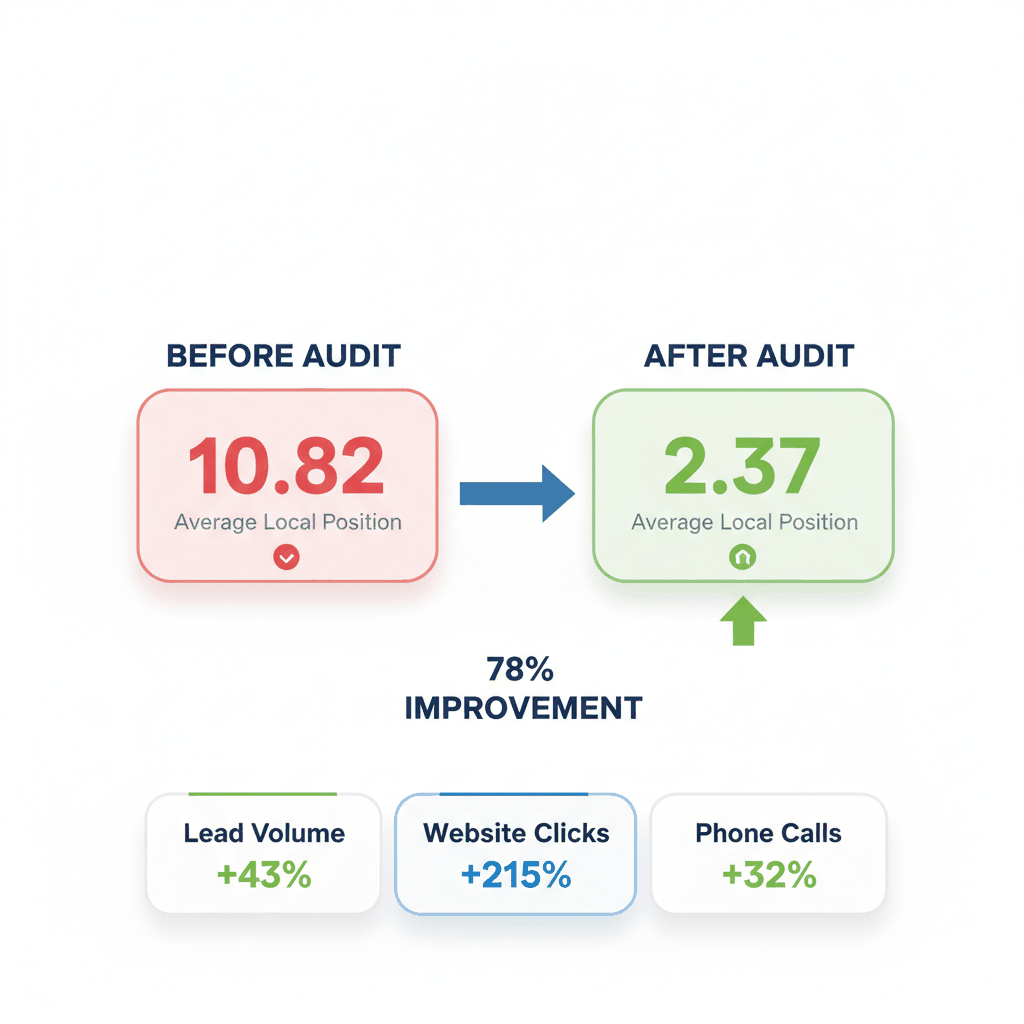
The business transformation potential is significant. One case study shows a plumbing business jumping from position 10.82 to 2.37 in just six months. This represents a 78% improvement in local search visibility.
Local SEO for plumbers focuses on specific ranking factors. These include an optimized Google Business Profile, consistent NAP data across directories, and location-specific content on your website. Traditional SEO targets broad keywords, while local SEO captures customers searching in your service area.
With approximately 246,000 monthly searches for "plumbers near me" in the U.S., effective local SEO directly impacts lead generation and revenue growth.
Most plumbing websites fail audits in predictable areas. Inconsistent NAP information confuses Google and hurts visibility. Even small formatting differences like writing "Street" in one place and "St." in another can reduce your local SEO authority.
Technical SEO neglect creates additional problems. Missing schema markup, duplicate meta titles, and poor internal linking structure all hurt rankings. Many plumbing companies treat SEO as a "set it and forget it" task without regular auditing.
Your Google Business Profile serves as your virtual storefront. Most plumbers leave it half-empty or completely unoptimized. One plumbing client saw a 43% increase in calls after just optimizing their GBP before making website changes.
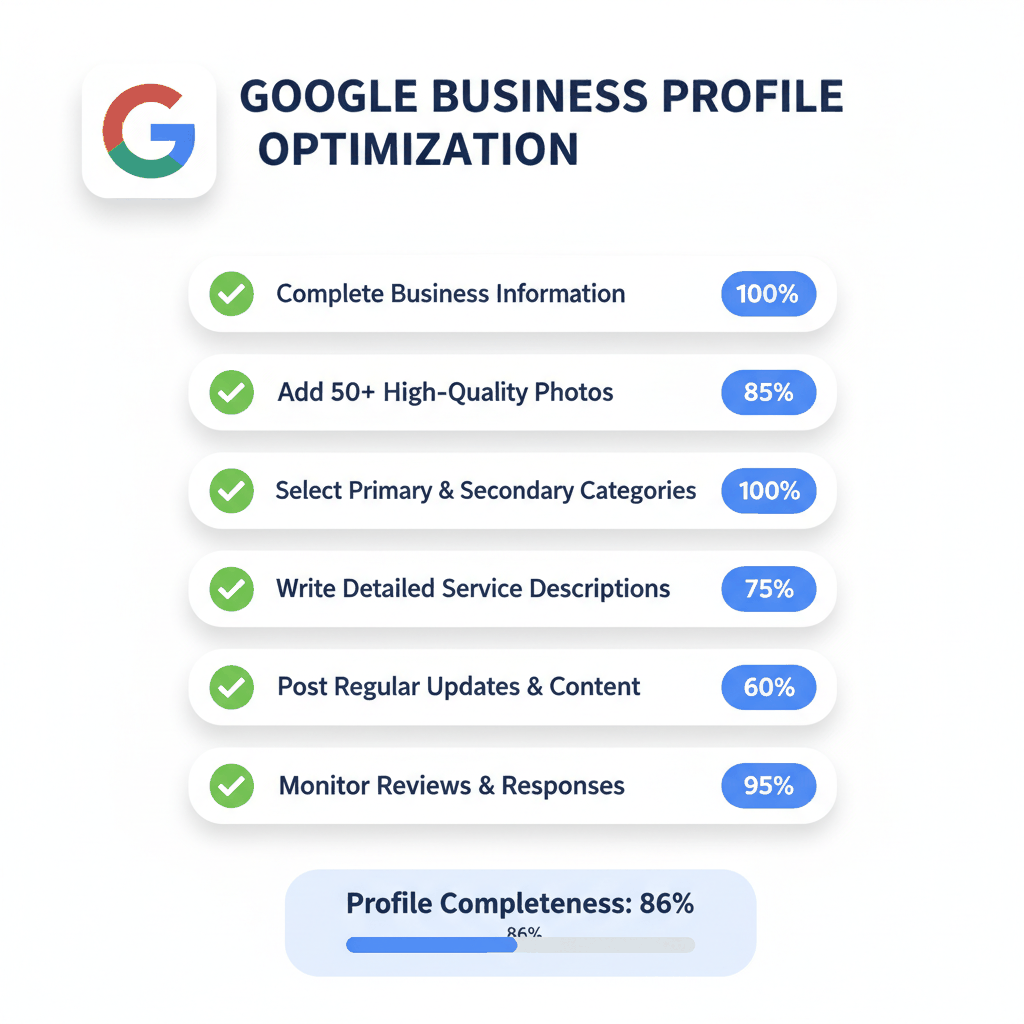
Fill out every available field in your Google Business Profile. Add your business description using natural language that includes your primary services. Include specific service areas you cover and operating hours for regular and emergency services.
Upload high-quality photos showing your team, vehicles, and completed work. Google recommends at least 10 photos, but successful plumbing profiles often have 50 or more images that showcase different services and projects.
Select primary and secondary categories that match your services exactly. Choose "Plumber" as your primary category, then add specific secondary categories like "Emergency Plumber" or "Drain Cleaning Service" based on your specialties.
Write detailed service descriptions for each offering. Instead of listing "drain cleaning," explain "professional drain cleaning and unclogging for residential and commercial properties using advanced equipment and techniques."
Post regular updates about your services, seasonal tips, and completed projects. Google Business Profile posts appear in search results and show potential customers that your business stays active and engaged with the community.
Respond to all customer questions through the Q&A feature. This shows engagement and provides opportunities to include relevant keywords naturally in your responses.
Technical SEO forms the foundation of your local search visibility. Search engines must easily crawl, index, and understand your website content. Technical issues often prevent even great plumbing companies from ranking well.
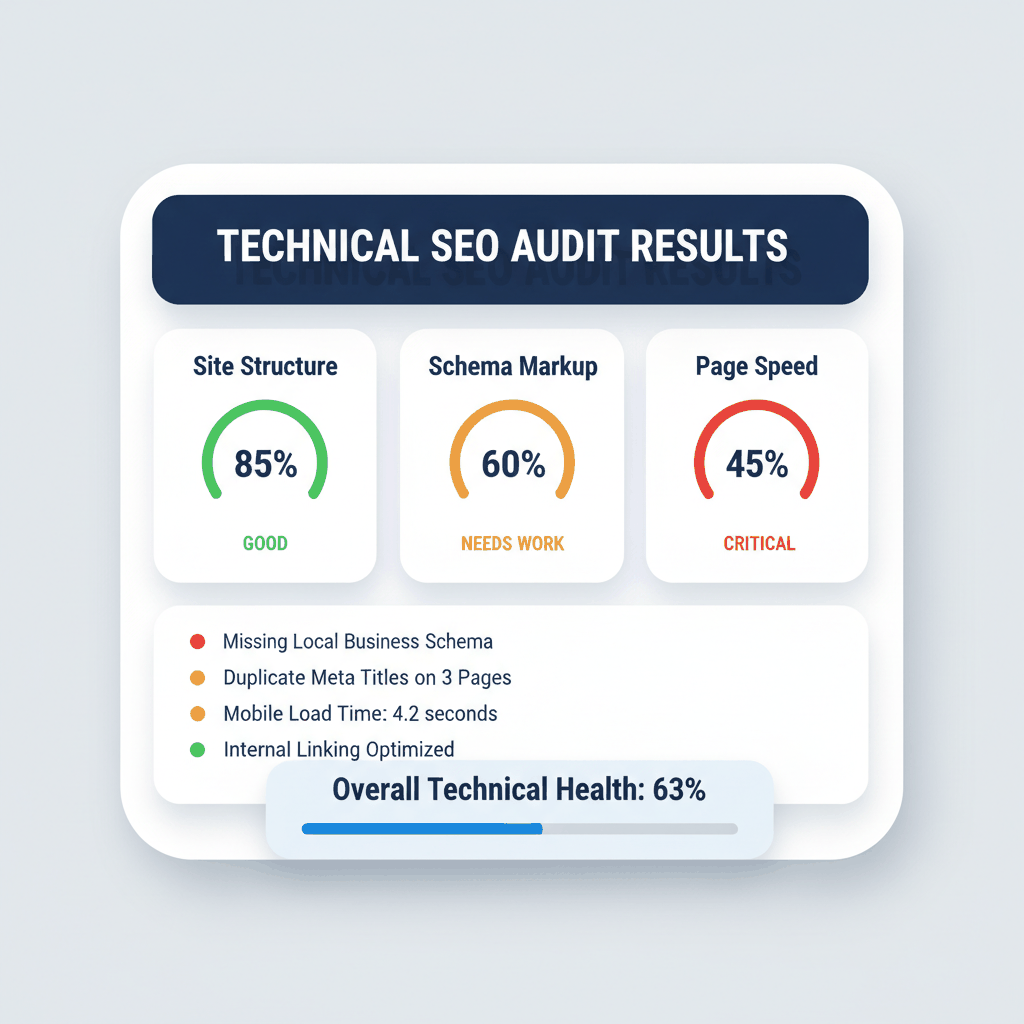
Create a logical website structure with clear navigation paths. Your homepage should link to main service pages, which then connect to specific location pages. This internal linking helps search engines understand your content hierarchy and service offerings.
Use descriptive URLs that include location and service keywords. Instead of "/page1," use "/emergency-plumber-miami" for better SEO value and user experience.
Implement local business schema markup on every page. This structured data tells search engines exactly what your business does, where you're located, and what services you offer. Schema markup often appears in rich snippets that attract more clicks.
Add service-specific schema for different plumbing services. Mark up your contact information, service areas, operating hours, and customer review data to maximize search engine understanding.
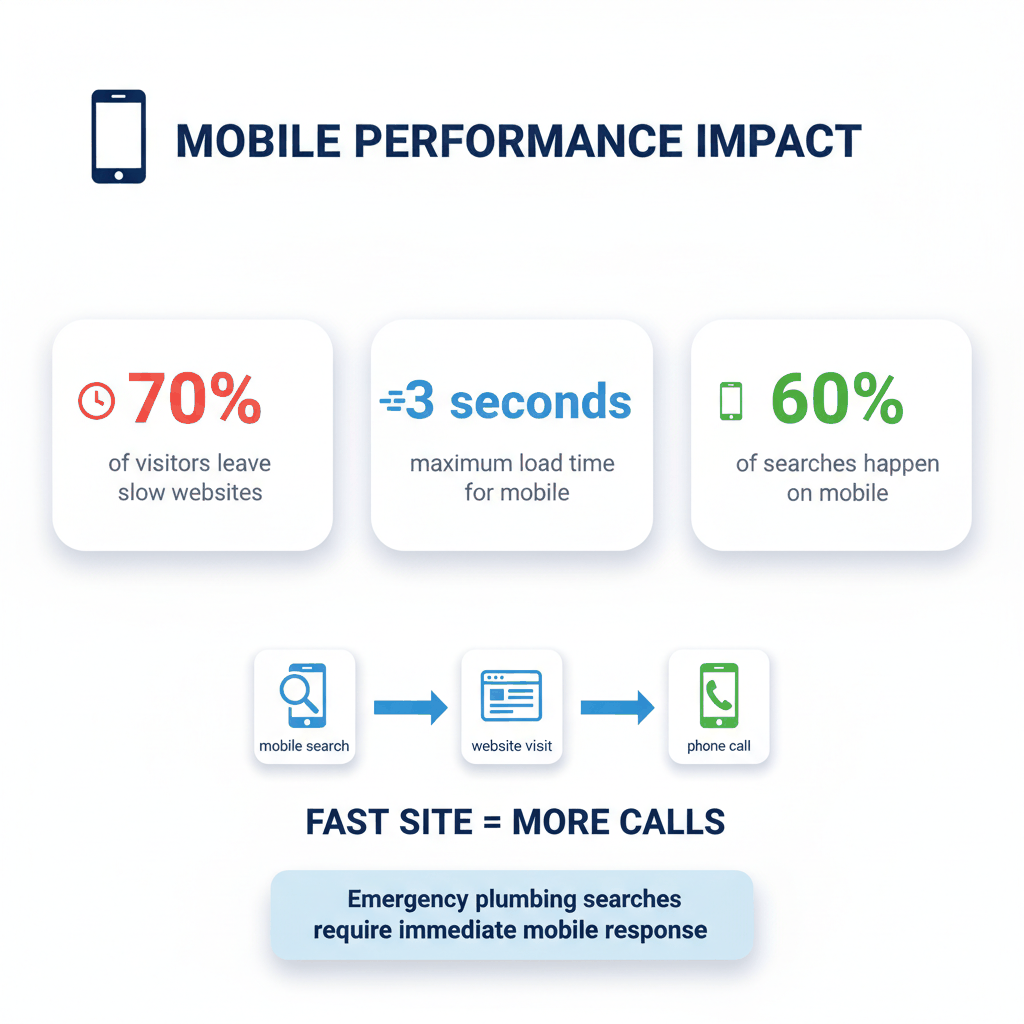
A 2024 survey found that 70% of visitors leave slow-loading websites. Since most homeowners search from their phones, your site needs to load quickly on any device.
Optimize images, minimize code, and use reliable hosting to achieve load times under 3 seconds. Use tools like Google PageSpeed Insights to identify specific performance issues that need attention.
Citations are online mentions of your business name, address, and phone number. Consistent citations across directories, review sites, and business listings strengthen your local SEO authority and help customers find accurate contact information.
Your Name, Address, and Phone Number must be identical across all online listings. Even tiny differences split up citation signals and reduce your local SEO effectiveness. Create a master document with your exact business information to ensure consistency.
Check major directories like Yellow Pages, Yelp, Angie's List, and industry-specific platforms. Verify that your information matches exactly, including abbreviations, suite numbers, and phone number formatting.
Submit your business to plumbing and home service directories. These industry-specific citations carry more weight for local SEO than general business directories. Focus on platforms where your customers actually search for plumbing services.
Popular plumbing directories include HomeAdvisor, Thumbtack, TaskRabbit, and local contractor directories specific to your region. Maintain active profiles with complete information and regular updates.
Use tools like Moz Local or BrightLocal to track and manage citations. These platforms help you identify inconsistent information and monitor new citations that appear online.
Set up alerts for your business name to catch new mentions or reviews. Regular monitoring helps you maintain accurate information and respond to customer feedback promptly.
Most plumbing websites target broad terms like "plumber" or "plumbing services" that are nearly impossible to rank for. Effective keyword strategy focuses on local terms that actual customers search when they need your services.
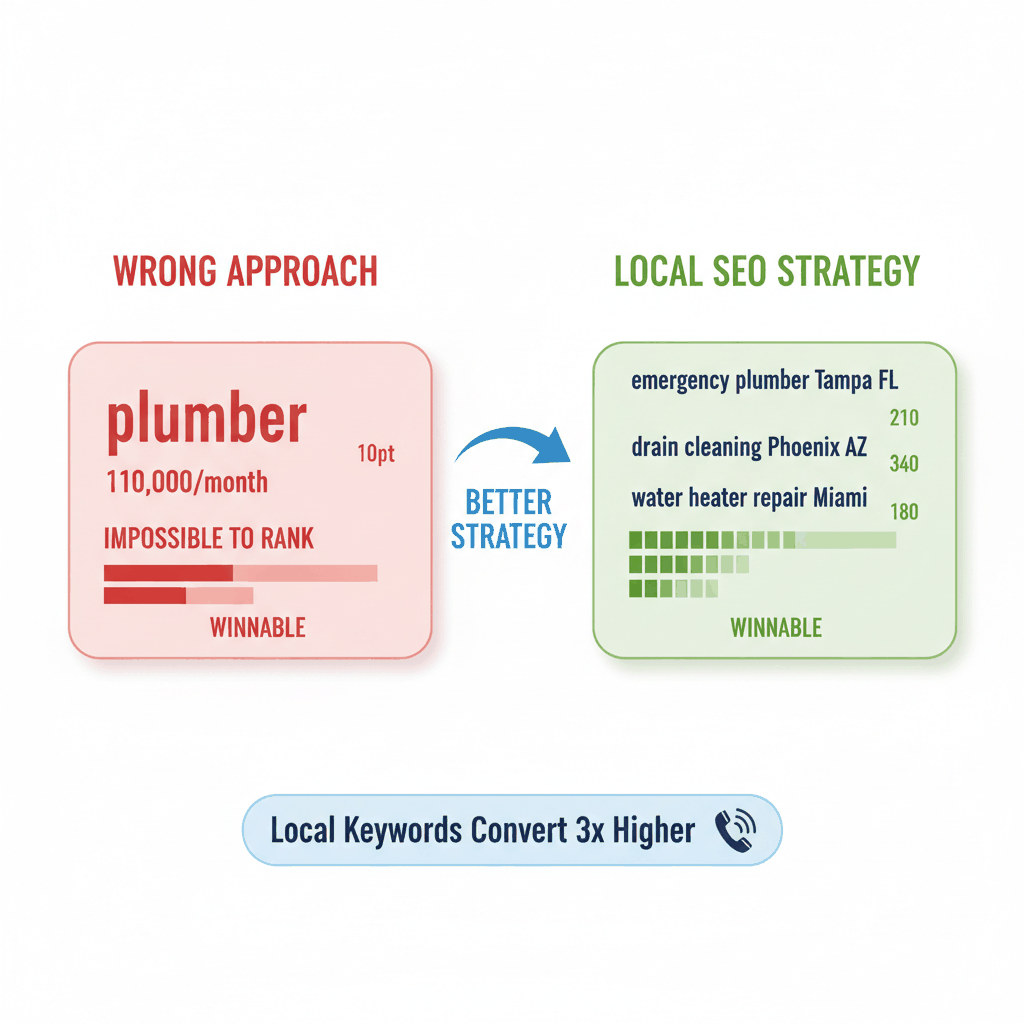
The local difference is huge. "Plumber" has 110,000 monthly searches and massive competition, while "emergency plumber in Riverside CA" has 210 monthly searches but actual customers who need you right now.
Research location-specific terms using tools like Google Keyword Planner or Ahrefs. Focus on service plus location combinations that match how people search: "drain cleaning Tampa," "water heater repair Phoenix," or "emergency plumber near me."
Create dedicated pages for each service you offer in each location you serve. One client created just 7 city-specific service pages and saw their local visibility increase by 215% in three months.
Each service page should include the service name, location, detailed description, benefits, and clear contact information. Use natural language that explains what you do and how it helps customers solve their problems.
Regularly publish original, helpful content relevant to your plumbing services. Blog posts about common plumbing problems, seasonal maintenance tips, and service guides build topical authority and attract long-tail searches that convert into calls.
Over 60% of converting website traffic comes from hidden keywords. Content marketing helps you capture these searches that your competitors miss.
Customer reviews directly impact local search rankings and influence potential customers' decisions. Plumbing businesses with strong review profiles appear more frequently in search results and generate more leads.
Data shows plumbing businesses with 50+ Google reviews appear in 3x more local search results than those with fewer than 10 reviews. One plumbing company went from 7 to 63 reviews in 90 days, corresponding with a 32% increase in Google visibility.
Develop a systematic approach to requesting reviews from satisfied customers. Send follow-up emails after completed jobs with direct links to your Google Business Profile review section.
Don't focus only on Google reviews. Build your reputation across multiple platforms where customers research plumbing services: Yelp, Facebook, Better Business Bureau, and industry-specific sites.
Different customers prefer different review platforms. A diverse review profile shows search engines and potential customers that your business consistently delivers quality service.
Respond to all reviews, both positive and negative. Thank customers for positive feedback and address concerns in negative reviews professionally. Your responses show potential customers how you handle problems and value customer satisfaction.
Quick response times to reviews and questions demonstrate active business management. Set up notifications so you can respond within 24 hours of receiving new reviews.
Mobile optimization is critical for plumbing businesses because most emergency searches happen on smartphones. Your website must load quickly and function perfectly on mobile devices to capture these high-value leads.
Google uses mobile-first indexing, meaning they evaluate your website based on the mobile version. Your mobile site must include all the same content, functionality, and optimization as your desktop version.
Test your website on different mobile devices and screen sizes. Ensure buttons are large enough to tap easily, text is readable without zooming, and contact information is prominently displayed.
Make your phone number clickable on mobile devices. Add click-to-call functionality using proper HTML markup so customers can call you directly from search results or your website with one tap.
Display your phone number prominently at the top of every page. Emergency plumbing searches require immediate contact, and obvious phone placement increases call conversion rates.
Optimize for mobile local search features like Google Maps integration and location-based results. Ensure your business appears correctly in map results with accurate directions and contact information.
Mobile users often search for "plumbers near me" or similar location-based queries. Your mobile optimization should capture these searches and make it easy for customers to find and contact you immediately.
Understanding your local competition helps identify opportunities and benchmark your performance. Analyze what successful competitors do well and find gaps you can exploit to gain competitive advantage.
Identify competitors who rank well for your target keywords in your service areas. Focus on businesses that appear in the Google Local Pack and top organic results for searches like "plumber [your city]" or "emergency plumber near me."
Use tools like Ahrefs or SEMrush to analyze competitor websites, keywords, and backlink profiles. This research reveals opportunities you might miss otherwise.
Compare your content to successful competitors. Look for services they cover that you don't, locations they target, and content topics that generate engagement. Find gaps where you can create better, more comprehensive content.
Analyze competitor Google Business Profiles, review strategies, and social media presence. Identify what works in your market and adapt successful strategies to your business.
Look for weaknesses in competitor strategies that you can exploit. Maybe they have inconsistent NAP information, poor mobile optimization, or weak content. These gaps represent opportunities for you to rank higher.
Monitor competitor changes over time. New services, location expansions, or marketing strategies can impact your visibility and require strategic adjustments.
Track specific metrics to measure your local SEO audit effectiveness. Focus on rankings, traffic, and most importantly, leads and revenue generated from your optimization efforts.
Monitor Google My Business insights for profile views, website clicks, and phone calls. Track local search rankings for your target keywords using tools like Local Falcon or BrightLocal to see position improvements over time.
Use Google Analytics to track organic traffic, especially from local searches. Set up goal tracking for phone calls, contact form submissions, and service requests to measure actual business impact.
Real results demonstrate what's possible with systematic local SEO auditing. One case study shows a plumbing business achieving remarkable improvements: jumping from position 10.82 to 2.37 in just six months represents a 78% improvement in visibility.
Another success story shows dramatic business growth. Since gaining search engine traction, Shamrock Plumbing grew from a two-man operation to a team of 7 full-time technicians with a 2,000 square foot office and over $2.5 million in annual revenue.
Run comprehensive audits every 3-6 months using tools like Google Search Console or Screaming Frog to catch and fix issues before they hurt performance. SEO requires ongoing attention, not one-time optimization.
Set up automated alerts for ranking changes, new reviews, and citation mentions. Regular monitoring helps you maintain your competitive advantage and respond quickly to changes in your market.
How often should I conduct a local SEO audit for my plumbing website?
Conduct comprehensive local SEO audits every 3-6 months to catch technical issues, update content, and maintain competitive rankings. Monthly monitoring of key metrics helps identify problems early before they impact your search visibility and lead generation.
What's the most important part of a plumbing SEO checklist?
Google Business Profile optimization delivers the fastest results for local plumbers. One client saw a 43% increase in calls after GBP optimization alone. Focus on complete business information, regular posts, customer reviews, and accurate service descriptions.
How long does it take to see results from local SEO optimization?
Initial improvements typically appear within 2-4 weeks for Google Business Profile changes. Significant ranking improvements usually take 3-6 months of consistent optimization. One case study showed a 78% ranking improvement in just six months.
Should I hire a professional or do plumber website audits myself?
Professional SEO services typically cost $1,000-3,000 monthly but deliver faster, more comprehensive results. DIY audits require 10-15 hours per week and deep technical knowledge. Consider your time, expertise, and growth goals when deciding.
What keywords should plumbers target for local search optimization?
Focus on service plus location combinations like "emergency plumber Tampa" or "drain cleaning Phoenix" rather than broad terms like "plumber." Local keywords have less competition but higher conversion rates from customers who need immediate service.
Ready to get more plumbing leads? Sign up for free with ResultCalls today!

Hello everyone! My name is Alex and I write these blogs to help educate small business owners on different ways to grow their business. My goal is to make lead generation as easy as possible for you. After reading these blogs, I hope you leave with some actionable steps that will get you closer to growing your business :)