Are you tired of waiting months for SEO results while your competitors steal customers? You're not alone. Most pest control companies struggle to get enough quality leads to grow their business consistently.
The challenge is clear. Your potential customers need help with pest problems right now. They're searching for solutions on Google every day. But without the right advertising strategy, they're calling your competitors instead of you.
Google Ads for pest control offers the fastest path to high-quality leads. Unlike other marketing methods that take months to show results, Google Ads can start generating calls within days of launching your campaigns.
You'll discover proven strategies that successful pest control companies use to dominate their local markets. Plus, you'll learn how to avoid the costly mistakes that waste thousands of dollars every month.
Table of Contents
Google Ads is a pay-per-click advertising platform. It displays your ads when potential customers search for pest-related services. You only pay when someone clicks your ad.
This targeting precision makes Google Ads incredibly powerful. Studies show that 76% of people who search for a local business visit within 24 hours. Your ads reach people ready to hire you today.
The transformation potential is significant. Done right, pest control Google ads provide a steady stream of high-quality leads. You can target specific pests, service areas, and even times of day when your ideal customers search.
Pest problems create urgency. People don't browse casually when they find bed bugs or see termite damage. They need solutions immediately.
Your Google Ads appear exactly when customers experience this urgency. Someone searching "bed bug exterminator near me" at 2 AM is ready to book service. They're not comparison shopping or gathering information.
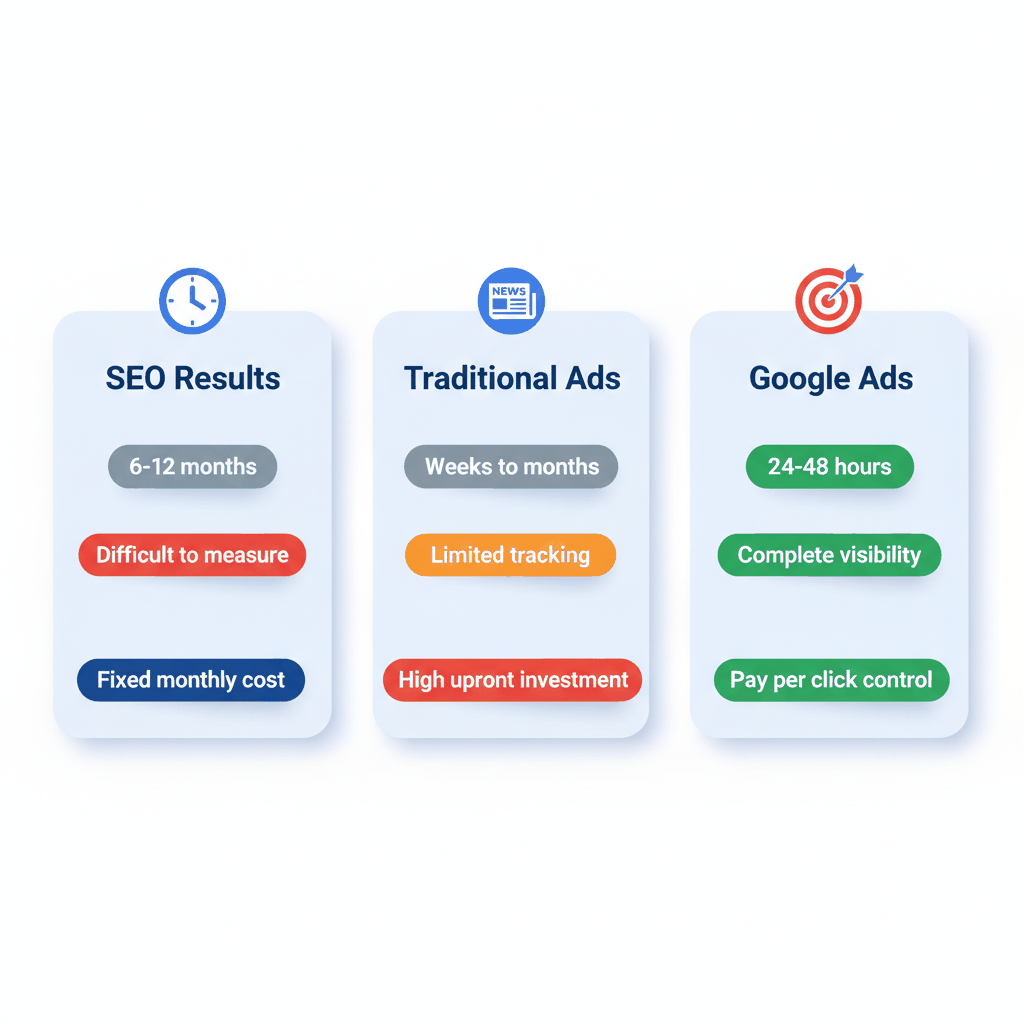
Plus, you control your visibility. SEO takes months to show results. With Google Ads, you can appear at the top of search results starting today.
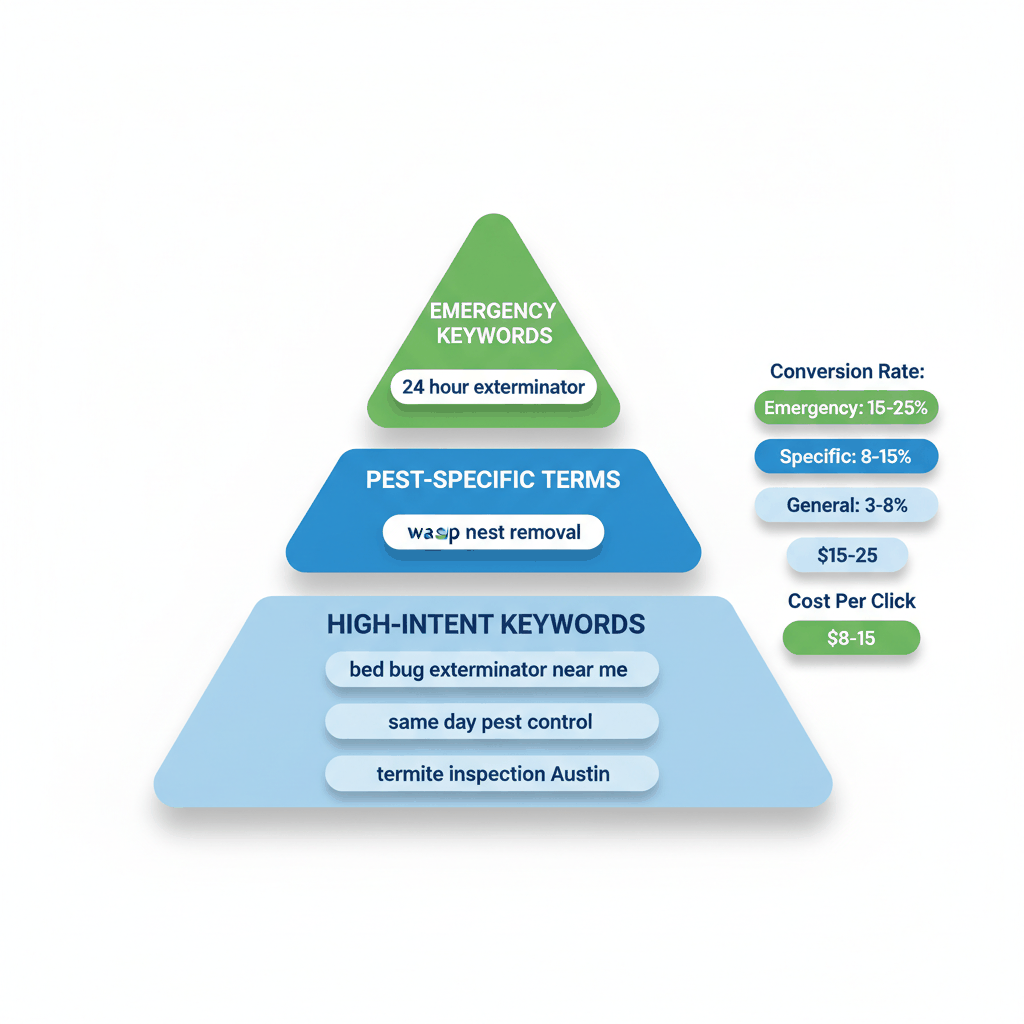
Different pest problems trigger different urgency levels. Bed bugs, termites, and wasp nests create emergencies. Target pest-specific terms like "bed bug exterminator" and "termite inspection."
Local keywords show buying intent. "Pest control Austin" and "exterminator near me" indicate customers ready to hire someone local. These searches convert at much higher rates than generic terms.
Emergency keywords capture desperate customers. "Same day pest control" and "24 hour exterminator" target people willing to pay premium prices for immediate help.
Most pest control companies make expensive mistakes with their Google Ads campaigns. These errors waste budget and generate poor-quality leads.
A comprehensive study revealed that 61% of ad spend is wasted on average. The median account wastes more than 75% of their budget.
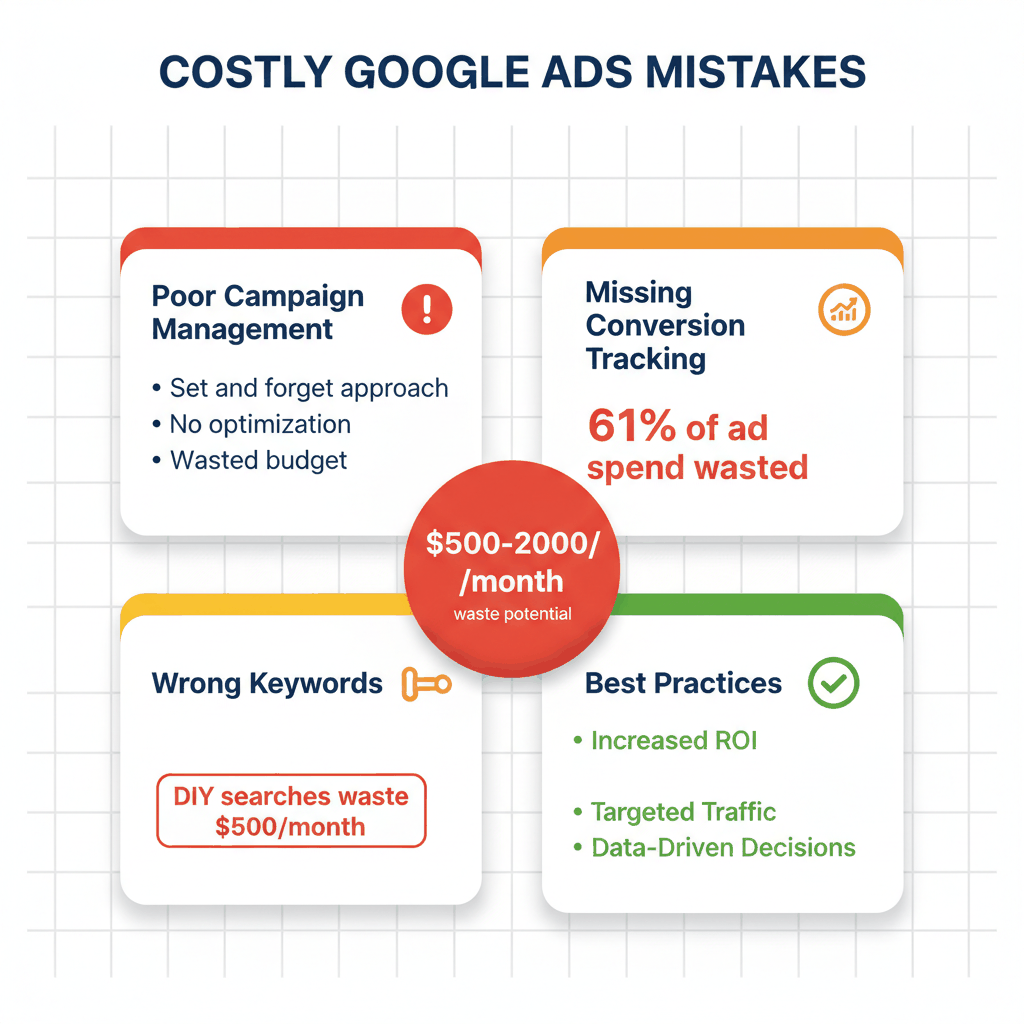
Many companies set up Google Ads once and forget about them. They assume Google's automated recommendations help optimize performance. This is wrong.
Google wants you to spend more money, not less. Their recommendations increase budgets and expand targeting. Sometimes this works. Often it just increases costs without improving results.
Successful campaigns require ongoing management. You need to analyze performance data, adjust bids, and refine targeting based on actual results.
You're running ads but have no idea which keywords generate actual phone calls. You might know your cost per click. Without conversion tracking, you're optimizing for the wrong metrics.
For example, one pest control company spent $500 monthly on "general pest control" keywords. They also spent $500 on "bed bug treatment" keywords. Both got similar clicks and cost per click.
After implementing call tracking, they discovered something shocking. Bed bug campaigns generated 80% of booked jobs. General pest campaigns generated mostly tire-kickers.
Generic keywords like "pest control" get expensive and attract low-quality traffic. Broad match keywords show your ads for irrelevant searches.
Your ads might appear when someone searches "pest control products" or "DIY pest control." These people want to handle problems themselves. They're not ready to hire a professional service.
Add negative keywords like "DIY," "products," and "how to" to prevent wasted clicks. Focus on long-tail keywords that show clear buying intent.
High-value pest control keywords can cost $34 per click or more in competitive markets. Every irrelevant click wastes significant money.
Your ads might show up for searches completely unrelated to hiring pest control services. Without proper negative keyword management, you pay for clicks that will never convert.
The solution is aggressive negative keyword research and ongoing refinement based on search query reports.
Successful pest control advertising requires strategic planning and execution. These proven practices help maximize your return on investment.
Target long-tail keywords instead of broad terms. "24-hour pest control near me" is more specific and less competitive than "pest control." These keywords generate higher conversion rates.
Focus on pest-specific keywords based on your services:
"Bed bug exterminator" for bed bug services
"Termite inspection" for termite treatments
"Ant control service" for ant problems
"Wasp nest removal" for stinging insects
"Rodent control near me" for mouse and rat issues
Include location modifiers in your keywords. City names, ZIP codes, and neighborhood references ensure you only pay for clicks in your service area.
Use call tracking services like CallRail or CallTrackingMetrics. Assign unique phone numbers to your Google Ads campaigns. This shows exactly which keywords generate actual phone calls.
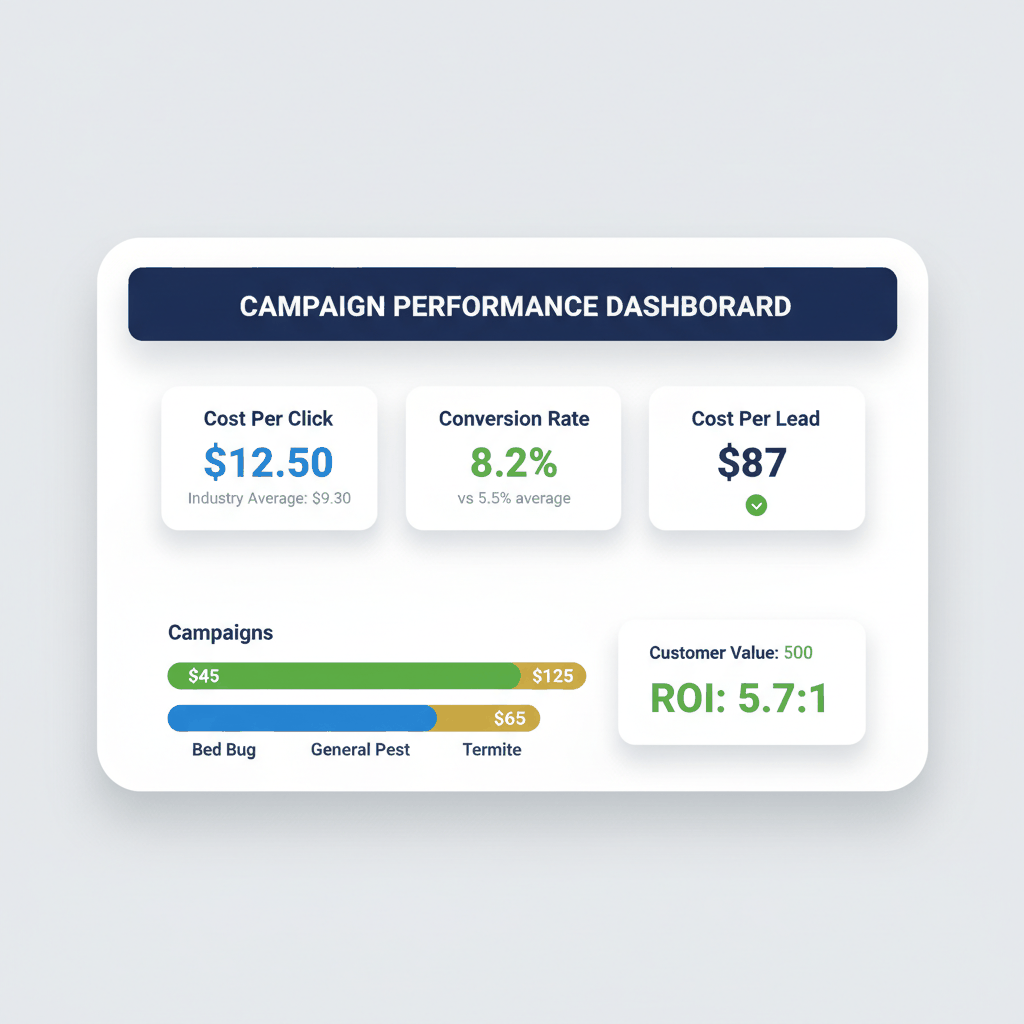
Set up form submission tracking for online lead forms. Track both calls and form fills as conversions. If your average customer is worth $500, set your conversion value accordingly.
This data helps Google optimize for valuable conversions instead of just clicks. The algorithm learns which searches lead to actual business.
Your ads must stand out from competitors. Highlight your unique selling points like same-day service, licensed technicians, or satisfaction guarantees.
Use emotional triggers that connect with customer pain points. "Stop bed bugs from ruining your sleep" speaks to the frustration people feel. "Protect your home from termite damage" addresses their fears.
Include clear calls-to-action like "Call now for free inspection" or "Book same-day service." Make it obvious what step customers should take next.
Your ads might be compelling, but poor landing pages kill conversions. Send traffic to specific pages that match your ad content.
If your ad promotes bed bug treatment, send clicks to a dedicated bed bug landing page. Don't send them to your homepage where they have to hunt for relevant information.
Include multiple contact options on landing pages. Phone numbers, contact forms, and click-to-call buttons give customers easy ways to reach you.
Proper campaign organization sets you up to outperform competitors. Smart structure improves your quality scores and lowers click costs.
Create separate campaigns for your main services. Structure campaigns around ants, termites, bed bugs, and rodents. Each campaign speaks directly to the specific problem customers need solved.
Use ad groups to organize keywords by theme. For example, create one ad group for "ant control" keywords and another for "roach control" keywords. This results in more relevant ads and landing pages.
This structure allows better budget control. You can spend more on high-value services like termite treatment and less on lower-margin services.
Set up location targeting to match your service areas exactly. Don't waste money on clicks from areas you don't serve.
Use radius targeting around your business location. Start with a 15-20 mile radius and adjust based on where you actually get customers.
Consider bid adjustments for different locations. You might pay more for clicks from affluent neighborhoods where customers spend more on pest control services.
Use sitelink extensions to showcase specific services. Link directly to your ant control, termite inspection, and bed bug treatment pages.
Add call extensions to make it easy for customers to call directly from your ads. Display your business phone number prominently.
Location extensions help local customers find you easily. Display your address with a map link for immediate directions.
Structured snippet extensions highlight your services, hours, and payment options. This additional information helps your ads stand out from competitors.
Understanding costs and managing budgets effectively determines your Google Ads success. Smart spending generates more leads without breaking your budget.
Pest control Google Ads costs vary significantly by keyword type and competition level. According to industry data, the average cost per click for pest control is $9.30.
Emergency services cost more but convert better. Bed bug and termite keywords often cost $15-40 per click. However, these searches have high intent and customers pay premium prices.
General pest control keywords cost less but attract more tire-kickers. "Pest control near me" might cost $8-12 per click but generate lower conversion rates.
Start with a manageable daily budget like $30-50 per day. This provides enough data for optimization without overspending initially.
Allocate more budget to high-value services. Termite treatments and bed bug services justify higher click costs because average job values are much higher.
The sweet spot for most pest control companies is $100-300 per day. This budget allows multiple campaigns, algorithm optimization, and consistent lead generation.
Track your customer lifetime value to determine profitable click costs. If your average customer is worth $800, you can afford higher click costs than companies with $200 average jobs.
The average conversion rate for pest control is 5.5%. Well-optimized accounts achieve rates of 8-15% or higher.
Calculate your cost per acquisition and compare it to customer value. If you spend $50 to acquire a customer worth $500, that's a 10:1 return on investment.
Pest control demand varies dramatically by season. Summer generates 2-3 times more calls than winter in most markets.
Increase budgets during peak seasons when demand is high. Reduce spending in winter when call volume drops naturally.
Plan for seasonal pest emergencies. Wasp and bee problems peak in late summer. Ant issues surge in spring. Adjust campaigns accordingly.
Real pest control companies achieve dramatic results with properly managed Google Ads campaigns. These case studies show what's possible.
Midsummer Agency helped a pest control company increase conversions by 300%. They achieved this through granular service-focused campaigns driving traffic to specific landing pages.
The key was optimizing for the client's preferred contact channel: direct phone calls. By tracking calls and optimizing for phone conversions, they dramatically improved campaign performance.
This approach works because phone calls typically convert at much higher rates than web form submissions for pest control services.
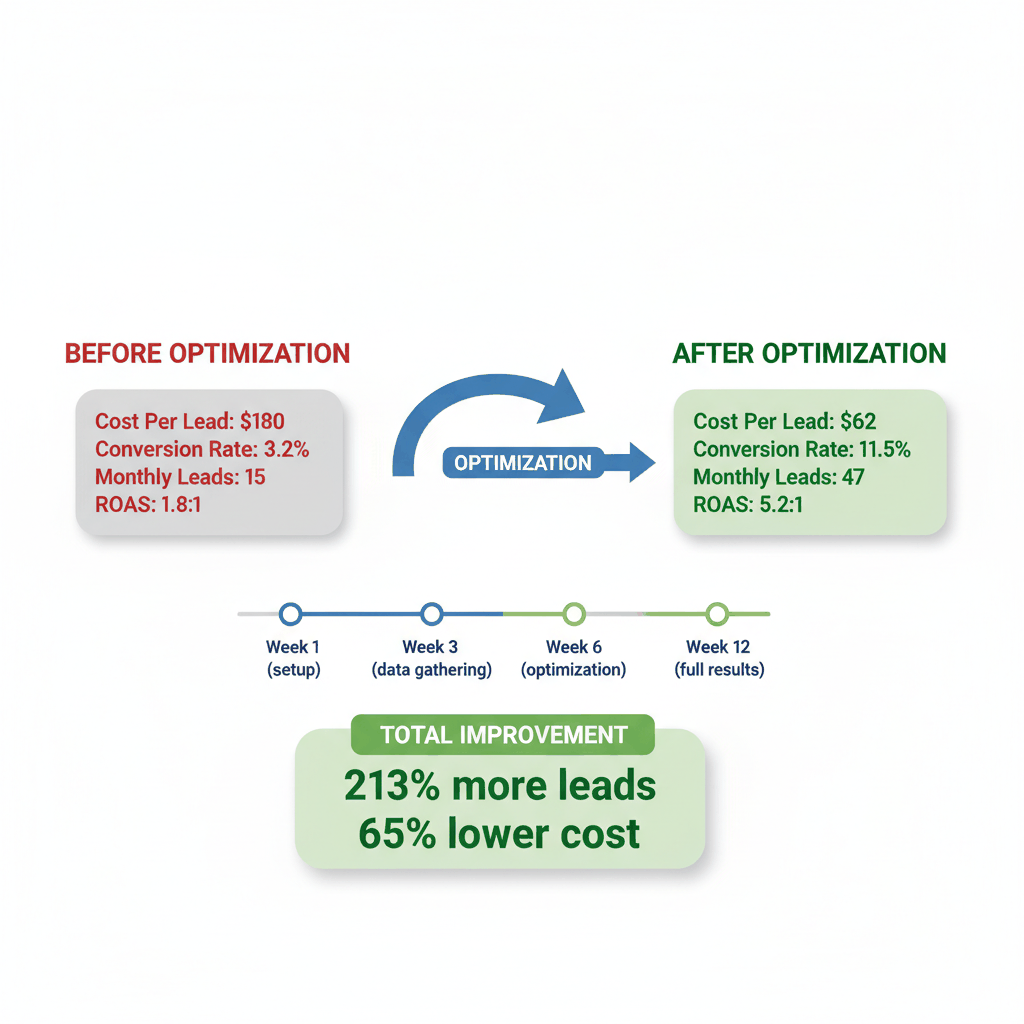
Turner Pest Control reduced their cost per conversion by 73% after rebuilding their PPC campaigns. They increased leads by over 200% compared to the previous year.
The strategy involved segmenting campaigns by time of day and organizing ad groups by specific services. This granular approach improved targeting and reduced wasted spend.
Full campaign optimization and ongoing management were crucial to maintaining these improved results long-term.
OuterBox helped a pest control company increase their return on ad spend from barely breaking even to 5:1. They achieved this through robust campaign optimization and scaling strategies.
The key was developing an ever-evolving paid media strategy that adapted to performance data and market conditions. Continuous optimization was essential for sustained success.
Triad Media Lab reduced cost per lead by 50.87% for one of their pest control partners. This dramatic improvement came from implementing proven optimization strategies.
The approach focused on eliminating wasted spend and improving conversion tracking. Better data led to smarter bidding and targeting decisions.
Small improvements in multiple areas combined to create significant overall performance gains.
How much should pest control companies spend on Google Ads?
Most successful pest control companies spend $100-300 per day on Google Ads. Start with $30-50 daily to gather data, then scale up based on results. Your budget should align with your customer lifetime value and growth goals.
What's the average cost per click for pest control Google Ads?
Average cost per click ranges from $9-34 depending on keywords and market competition. Emergency services like bed bug treatment cost more but convert better. General pest control keywords are cheaper but attract lower-intent traffic.
How quickly can Google Ads generate pest control leads?
Google Ads can start generating leads within 24-48 hours of campaign launch. However, optimal performance typically develops after 2-4 weeks of data collection and optimization. Immediate results are possible with proper setup.
Should pest control companies use broad match keywords?
Use broad match cautiously with extensive negative keyword lists. Phrase match and exact match typically work better for pest control because they provide more control over search queries and reduce wasted spend on irrelevant clicks.
What conversion rate should pest control Google Ads achieve?
Well-managed pest control Google Ads campaigns achieve 5-15% conversion rates. The industry average is 5.5%, but optimized accounts often reach 8% or higher. Top-performing accounts achieve 20% or more through excellent targeting and landing pages.
Ready to generate more high-quality pest control leads with Google Ads? Sign up for free with ResultCalls today!

Hello everyone! My name is Alex and I write these blogs to help educate small business owners on different ways to grow their business. My goal is to make lead generation as easy as possible for you. After reading these blogs, I hope you leave with some actionable steps that will get you closer to growing your business :)