The problem is simple but costly. Without a steady stream of referrals, you're spending way too much on marketing. Customer acquisition costs $296-350 per customer while acquiring new customers costs five times more than keeping existing ones.
The solution is an HVAC referral program that works automatically. You'll create a system that motivates customers to recommend your services without you having to ask.
In this guide, you'll learn how to build referral programs that generate leads consistently. Plus, you'll discover the exact rewards and timing strategies that turn happy customers into your best salespeople.
Table of Contents
HVAC referral programs outperform traditional marketing by huge margins. 67% of homeowners still find their HVAC contractors through word-of-mouth recommendations.
Here's why referrals work so well. Customers trust recommendations from people they know. In fact, 93% of consumers trust referrals from friends and family over other marketing.
The numbers get even better. Referred customers are 4 times more likely to make a purchase. They also have a 37% higher retention rate than other customers.
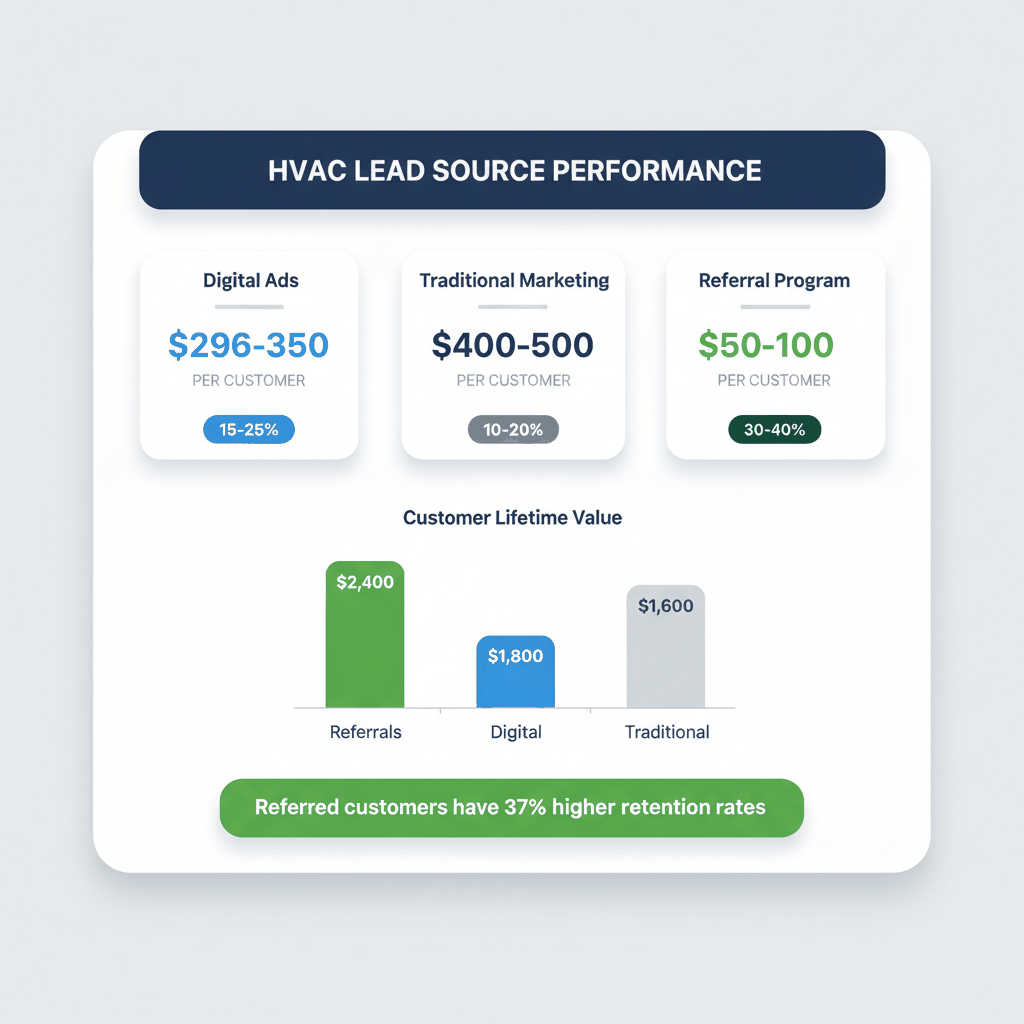
Traditional HVAC marketing is expensive. Digital ads, direct mail, and local advertising costs add up quickly. Most HVAC companies spend hundreds per lead.
Referral programs change this equation completely. 54% of businesses report that referral programs have lower cost-per-lead than other channels.
Your existing customers do the marketing work for you. The result is high-quality leads at a fraction of traditional marketing costs.
Referred customers come to you already trusting your services. They've heard positive experiences from someone they know personally.
This pre-existing trust shortens your sales cycle dramatically. You spend less time convincing prospects and more time solving their HVAC problems.
For example, when a satisfied customer tells their neighbor about your excellent furnace installation, that neighbor already expects quality work before you even arrive.
Most HVAC companies make the same referral mistakes. Understanding these problems helps you avoid them completely.
The biggest mistake is having no referral system at all. You rely on customers to remember you when their friends need HVAC help.
This passive approach misses huge opportunities. Customers forget about referring you as soon as they get busy with work or family responsibilities.
Manual tracking of referrals is time-consuming and error-prone. You need automated systems that work without constant attention.
Many contractors ask for referrals at the wrong time. Asking during service visits feels pushy and unprofessional.
The best time to ask is after you've solved their problem and they've experienced the value. This usually happens several days after service completion.
Timing matters more than most contractors realize. Ask too early and customers haven't fully appreciated your work. Ask too late and they've forgotten the positive experience.
Some programs offer rewards that don't match customer needs. A $10 gift card doesn't motivate referrals for $5,000 HVAC installations.
Other programs make rewards too complicated. Customers shouldn't need to read fine print to understand what they'll receive.
Keep rewards simple and valuable. "Refer a friend and you both get $50 off your next service" works better than complex point systems.
Creating an effective HVAC referral program starts with clear goals and the right foundation. Here's how to build yours step by step.
Start by defining what you want your referral program to achieve. Most successful HVAC companies aim for 20-30% of new customers from referrals.
Set specific monthly targets. For example, if you want 10 new customers per month, aim for 3 referral customers. This gives you a clear benchmark for success.
Track both referral quantity and quality. High-value service customers are worth more than emergency repair calls.
Not all customers make good referral sources. Focus on customers who already love your work and have positive personalities.
Look for customers who:
Pay bills promptly without complaints
Praise your technicians during service calls
Have service agreements or maintenance contracts
Own homes in neighborhoods you want to serve
Work in businesses that need commercial HVAC services
These customers are most likely to refer high-quality prospects who become long-term clients.
Your referral program rules should fit on one page. Complicated programs confuse customers and reduce participation.
Include these essential elements in your program:
What qualifies as a successful referral
What rewards both parties receive
How customers submit referrals
When rewards are delivered
How to track referral status
For example: "When someone you refer books a service call worth $200 or more, you both get $50 off your next service."
The right reward structure motivates referrals without hurting your profit margins. Here are proven approaches that work for HVAC companies.
Service credits work best for HVAC referral programs. They provide immediate value while encouraging future business.
Popular service credit options include:
$50-100 off next maintenance visit
Free annual system inspection
20% discount on next repair service
Complimentary air filter replacement for one year
Priority scheduling for emergency calls
Service credits keep customers engaged with your business. They also have lower actual costs than cash rewards since they use your existing service capacity.
Tiered rewards match incentives to the value of referred business. This approach maximizes your return on referral investments.
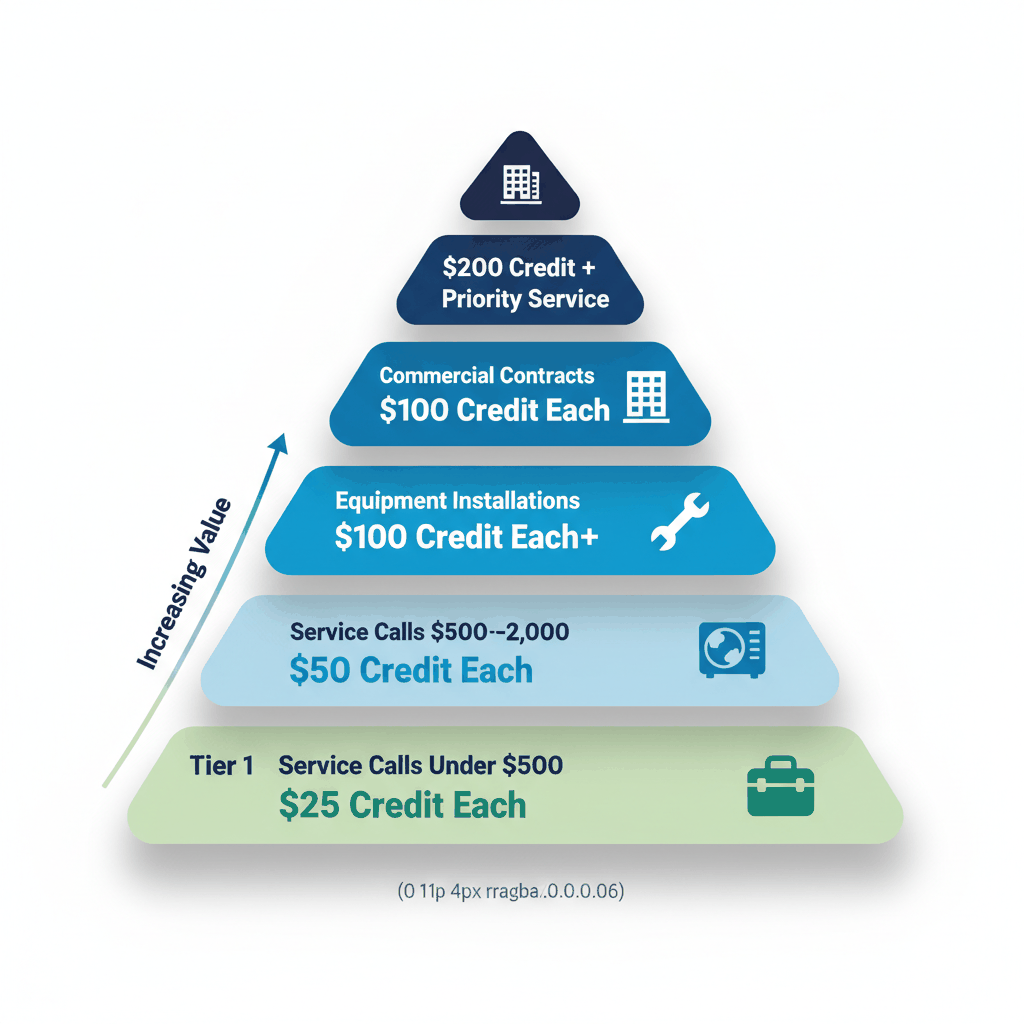
For example:
Service calls under $500: $25 credit each
Service calls $500-$2,000: $50 credit each
Equipment installations over $2,000: $100 credit each
Commercial contracts: $200 credit plus priority service
This structure encourages referrals for your most profitable services while still rewarding smaller referrals.
Rewarding both the referrer and the new customer increases program participation. New customers feel welcomed while existing customers see immediate benefits.
A typical double-sided structure offers equal rewards to both parties. "You both get $50 off your next service" is simple and fair.
Some companies offer larger rewards to referrers since they're doing the marketing work. Others give new customers bigger incentives to encourage their first purchase.
When you ask for referrals matters more than how you ask. Great timing turns satisfied customers into enthusiastic advocates.
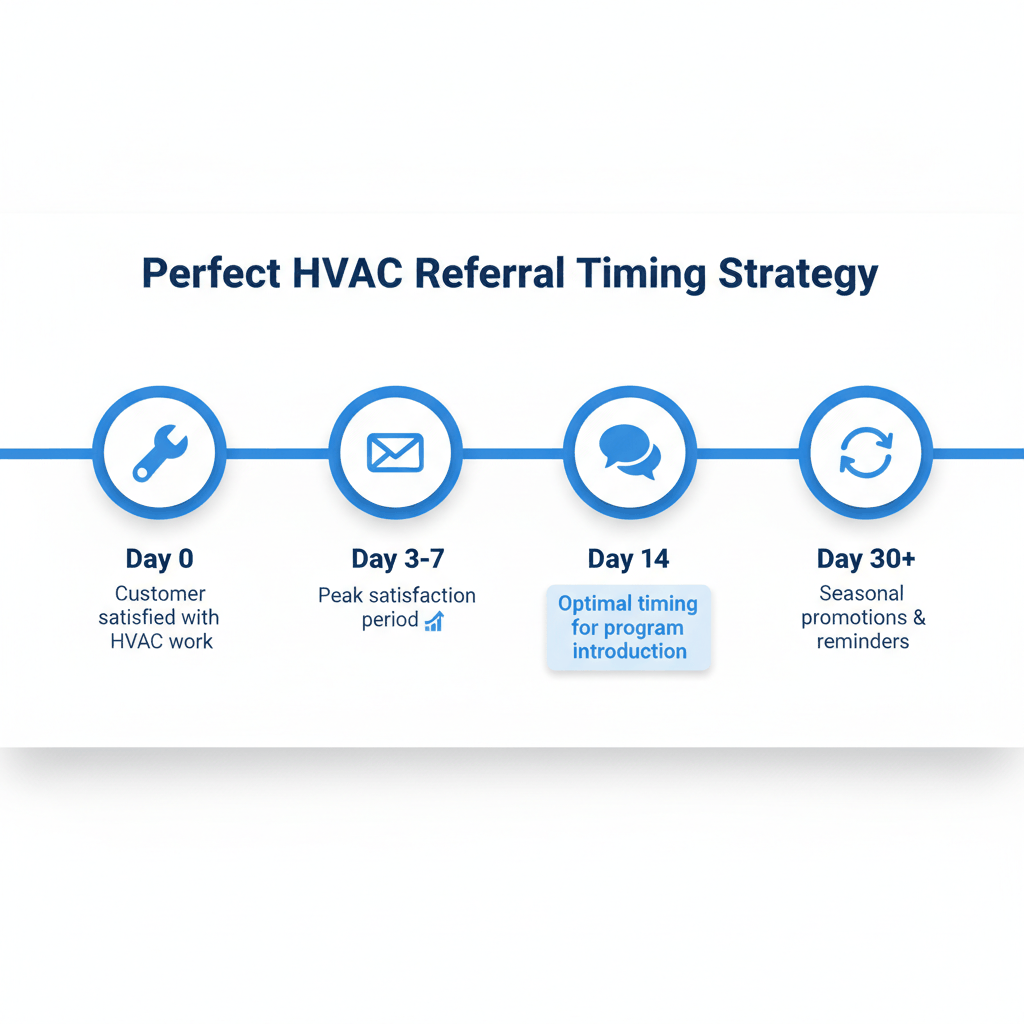
The best time to introduce referral programs is 3-7 days after completing successful service. Customers have experienced the benefits but still remember the positive interaction.
This timing works because:
Equipment is working properly
Customer satisfaction is at its peak
Service experience is fresh in their memory
Any initial concerns have been resolved
Use email or text messages during this window. Phone calls can feel too pushy for referral requests.
HVAC demand follows seasonal patterns. Smart referral timing takes advantage of these natural cycles.
Spring and fall are ideal for referral programs. Customers think about HVAC maintenance before peak seasons. Their friends and neighbors have the same concerns.
For example, after completing spring AC maintenance, remind customers that their friends probably need the same service. The timing feels natural and helpful rather than sales-focused.
Annual service agreement renewals create perfect referral opportunities. Satisfied customers are already committing to another year of service.
Offer referral bonuses specifically tied to service agreement renewals. "Refer a friend who signs up for annual maintenance and you both get an extra month free."
This approach generates high-value recurring revenue customers rather than one-time service calls.
Manual referral tracking wastes time and misses opportunities. Automation ensures consistent follow-up while providing valuable program insights.
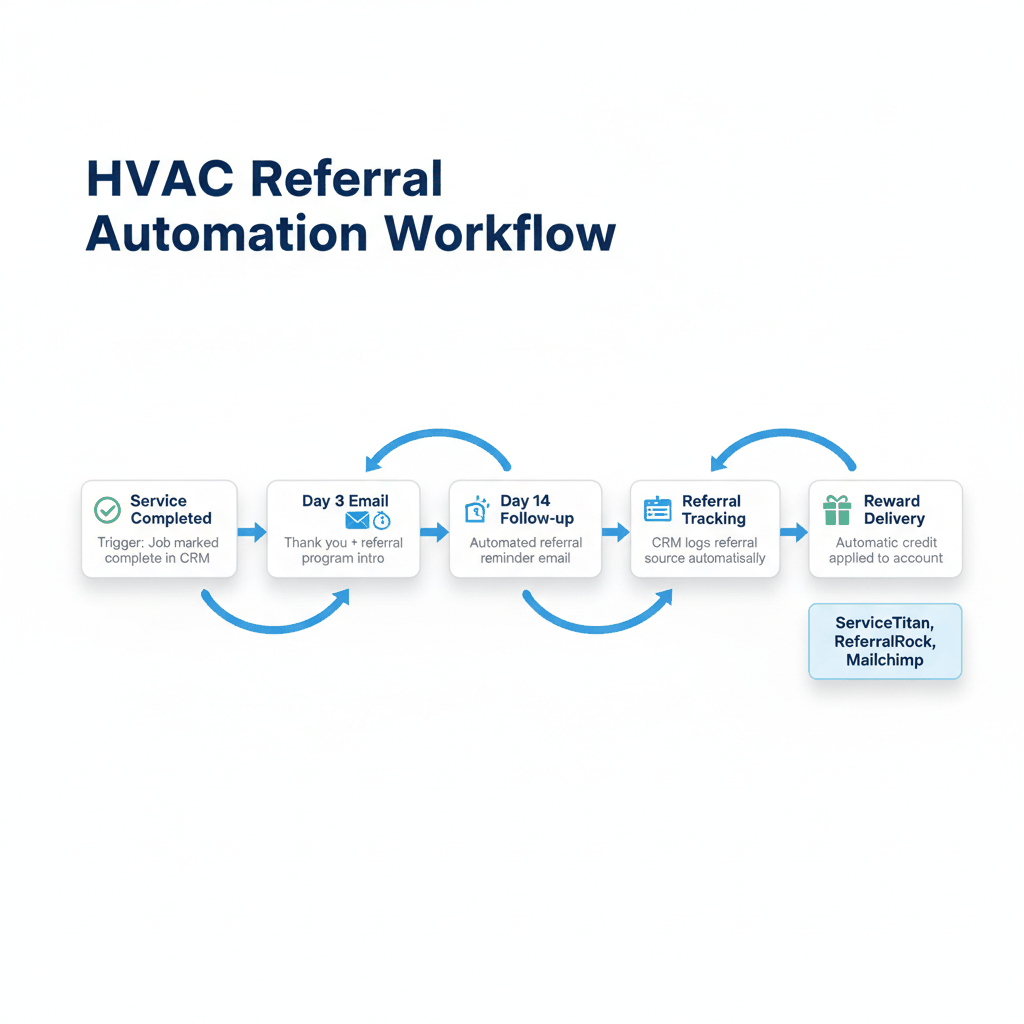
Automated email sequences keep your referral program active without constant manual effort. Set up triggered emails based on service completion dates.
A typical sequence includes:
Day 3: Thank you email with referral program introduction
Day 14: Referral reminder with customer testimonials
Day 30: Seasonal promotion combining referrals with maintenance offers
Day 60: Case study showing how referrals help local homeowners
Use tools like Mailchimp or Constant Contact to automate these sequences. Most CRM systems also include email automation features.
ServiceTitan offers field reporting software that tracks referral program effectiveness with real-time dashboards.
ReferralRock provides automated referral systems specifically designed for service businesses like HVAC companies.
Locorum offers a streamlined referral platform that captures, tracks, and manages referrals while saving time and enhancing customer engagement.
These tools integrate with your existing CRM and automatically track referral sources, conversion rates, and reward delivery.
Your CRM system should track referral sources for every new customer. This data helps you identify your best referral sources and measure program ROI.
Track these key metrics in your CRM:
Which customers provide the most referrals
Referral conversion rates by source
Average job value from referred customers
Seasonal patterns in referral activity
Geographic areas with highest referral rates
Use this data to focus your referral efforts on the most productive customers and areas.
Tracking the right metrics helps you optimize your referral program for maximum results. Focus on these key performance indicators.
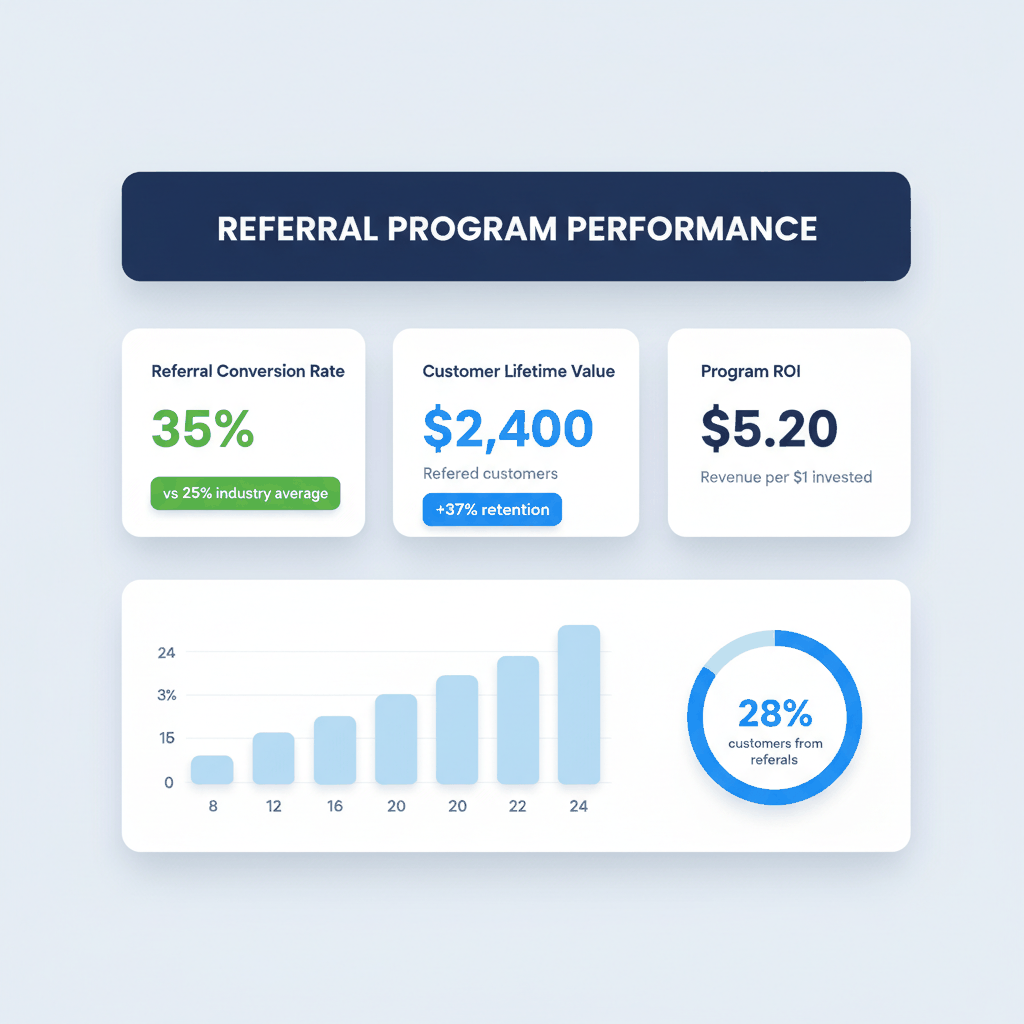
Measure how many referrals turn into actual customers. A good HVAC referral program should convert 30-40% of qualified referrals into paying customers.
Track conversion rates by:
Referral source (which customers refer the most)
Service type (maintenance vs. installation referrals)
Season (heating vs. cooling season performance)
Geographic area (neighborhood-specific conversion rates)
Low conversion rates might indicate poor referral quality or weak follow-up processes.
Referred customers typically have 37% higher retention rates. Track how referral customers perform compared to other acquisition channels.
Compare these metrics between referred and non-referred customers:
Average annual spending
Service agreement signup rates
Equipment purchase frequency
Payment speed and reliability
Additional service recommendations acceptance
This data proves the long-term value of referral program investments.
Calculate your referral program return on investment by comparing program costs to the revenue generated from referred customers.
Include these costs in your calculation:
Referral rewards and incentives paid
Software or tool subscription costs
Staff time for program management
Marketing materials and communication costs
Most successful HVAC referral programs generate $4-6 in revenue for every $1 invested in the program.
How much should I spend on HVAC referral program rewards?
Spend 5-10% of the average job value on referral rewards. For a $1,000 installation, offer $50-100 in rewards split between referrer and new customer. This provides good incentive while maintaining profit margins.
When is the best time to ask customers for HVAC referrals?
Ask 3-7 days after completing successful service when customer satisfaction peaks. Avoid asking during service visits or immediately after work completion. Use email or text messages rather than phone calls for referral requests.
What types of rewards work best for HVAC referral programs?
Service credits work better than cash rewards for HVAC companies. Offer discounts on future maintenance, free inspections, or priority scheduling. These rewards encourage future business while having lower actual costs than cash payments.
How do I track HVAC referrals without complicated systems?
Use simple CRM tags or dedicated referral software like ReferralRock or ServiceTitan. Track referral source for every new customer and measure conversion rates monthly. Automation reduces manual work while improving accuracy.
Should I offer the same rewards for all HVAC referral types?
Use tiered rewards matching the value of referred business. Offer $25-50 for service calls, $75-100 for equipment installations, and $150-200 for commercial contracts. This maximizes ROI while encouraging high-value referrals.
Ready to buy HVAC leads? Sign up for free with ResultCalls today!

Hello everyone! My name is Alex and I write these blogs to help educate small business owners on different ways to grow their business. My goal is to make lead generation as easy as possible for you. After reading these blogs, I hope you leave with some actionable steps that will get you closer to growing your business :)