
Your dental practice needs patients. You know this. But here's what's frustrating: you've tried different marketing approaches, maybe spent money on ads, and the results feel unpredictable.
The problem isn't your clinical skills or patient care. The problem is that most dental practices approach marketing backwards. They focus on tactics that cost money every month instead of building systems that compound over time.
This guide shows you how dental marketing and SEO for dental offices creates predictable patient flow. You'll learn strategies that work together to attract high-intent patients who are actively searching for dental services in your area.
Here's what you'll discover: how to dominate local search results, convert more website visitors into appointments, and build marketing systems that generate patients month after month without paying for every click.
Table of Contents
Most dental practices waste money on marketing that stops working the moment you stop paying. Dental marketing and SEO for dental offices builds differently. It creates compound growth.
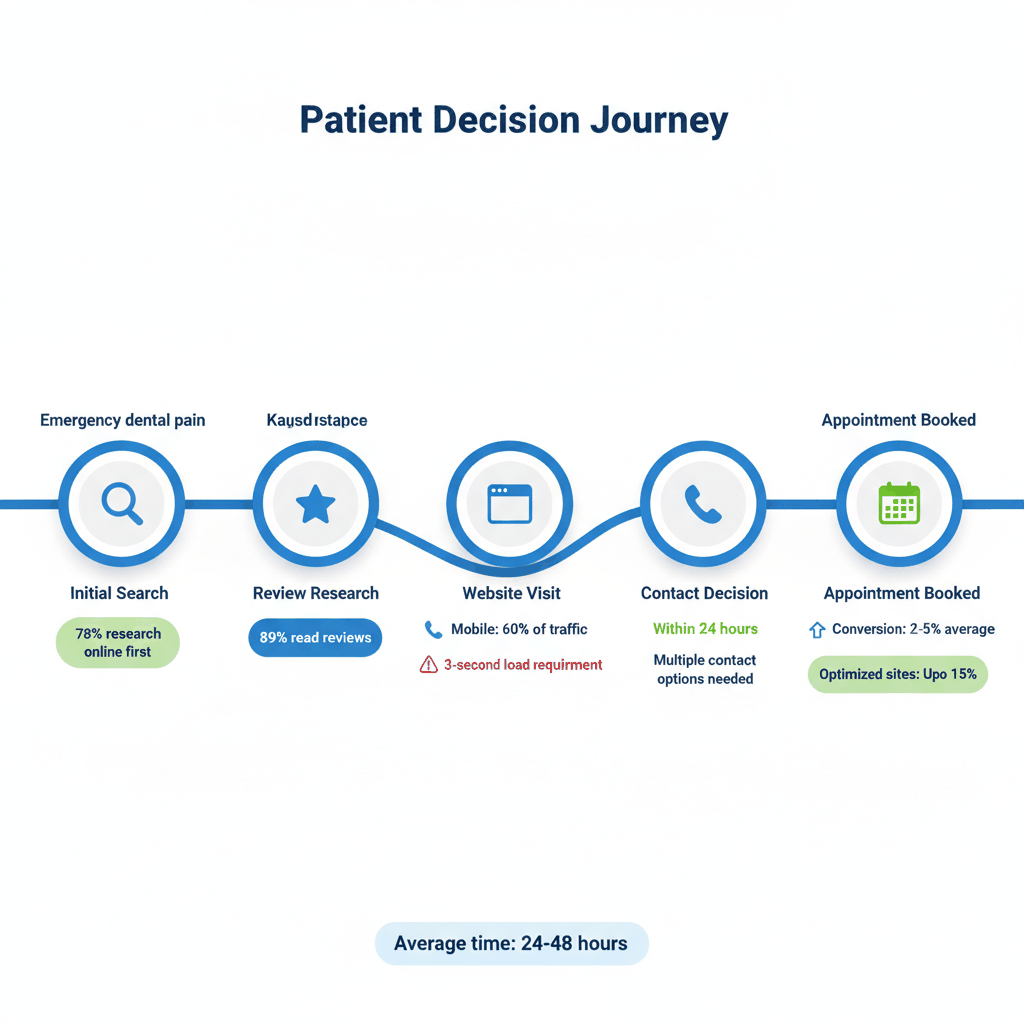
Here's the reality: 78% of patients research dental services online before making appointments. When you rank at the top of local search results, you capture these high-intent searches automatically.
The conversion rate of local SEO for healthcare is nearly 50%. Compare this to social media advertising at 3%. Local search delivers qualified patients who need your services right now.
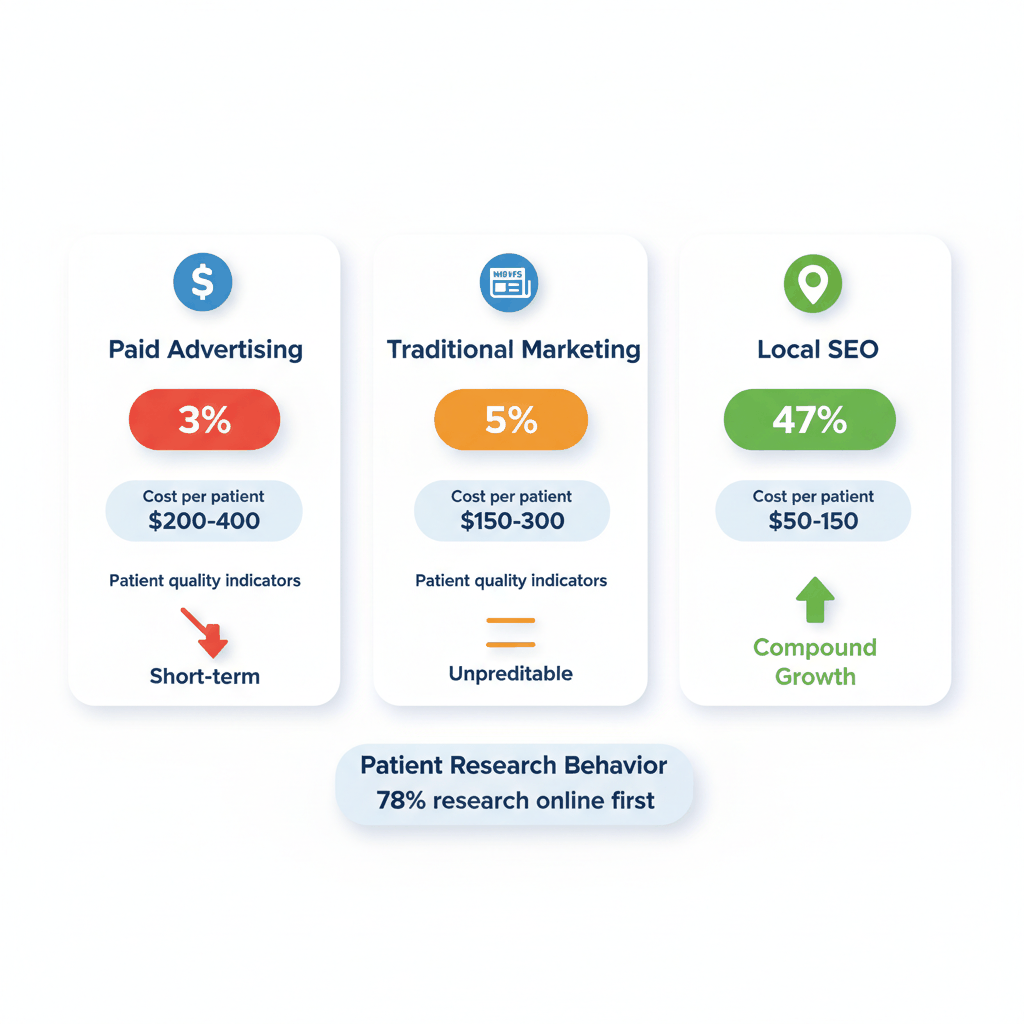
For example, "emergency dentist near me" searches convert at 89% higher rates than general dental terms. These patients have immediate problems and need solutions today.
Unlike paid ads, dental practice SEO gets better over time. Each optimized page strengthens your entire website. Every positive review improves your local rankings. All content you create continues working 24/7.
A strong local presence drives calls, direction requests, website visits, and booked appointments month after month. You stop paying for every patient and start building an asset that grows your practice.
Dental lead generation services can accelerate this process by combining SEO with proven conversion strategies.
Patients are no longer just "Googling" their dental questions. They're using ChatGPT, Google's AI Mode, and other AI-powered platforms for instant answers about oral health concerns and provider recommendations.
Google's AI Overviews now appear for 10.4% of keywords and increased 119% on mobile in March 2025. Your dental office marketing must adapt to these AI-driven results.
This means optimizing for both traditional search and AI-powered recommendations. Practices that master both approaches capture patients from every search method.
Local SEO for dentists is the highest-leverage marketing channel because it targets patients in your service area who need treatment now. Most practices get this wrong by treating it like general SEO.
Here's the uncomfortable truth: most dental practices lose the local SEO game before they realize they're playing it. With 78% of local mobile searches resulting in visits within 24 hours, practices that master local SEO capture the majority of high-intent searches.
Your Google Business Profile is your most important local SEO asset. Practices with fully optimized profiles see 18 times more search visibility than incomplete profiles.
Yet 60% of dental practices have never posted on their profile. Top-performing practices update theirs every 7-10 days with fresh content.
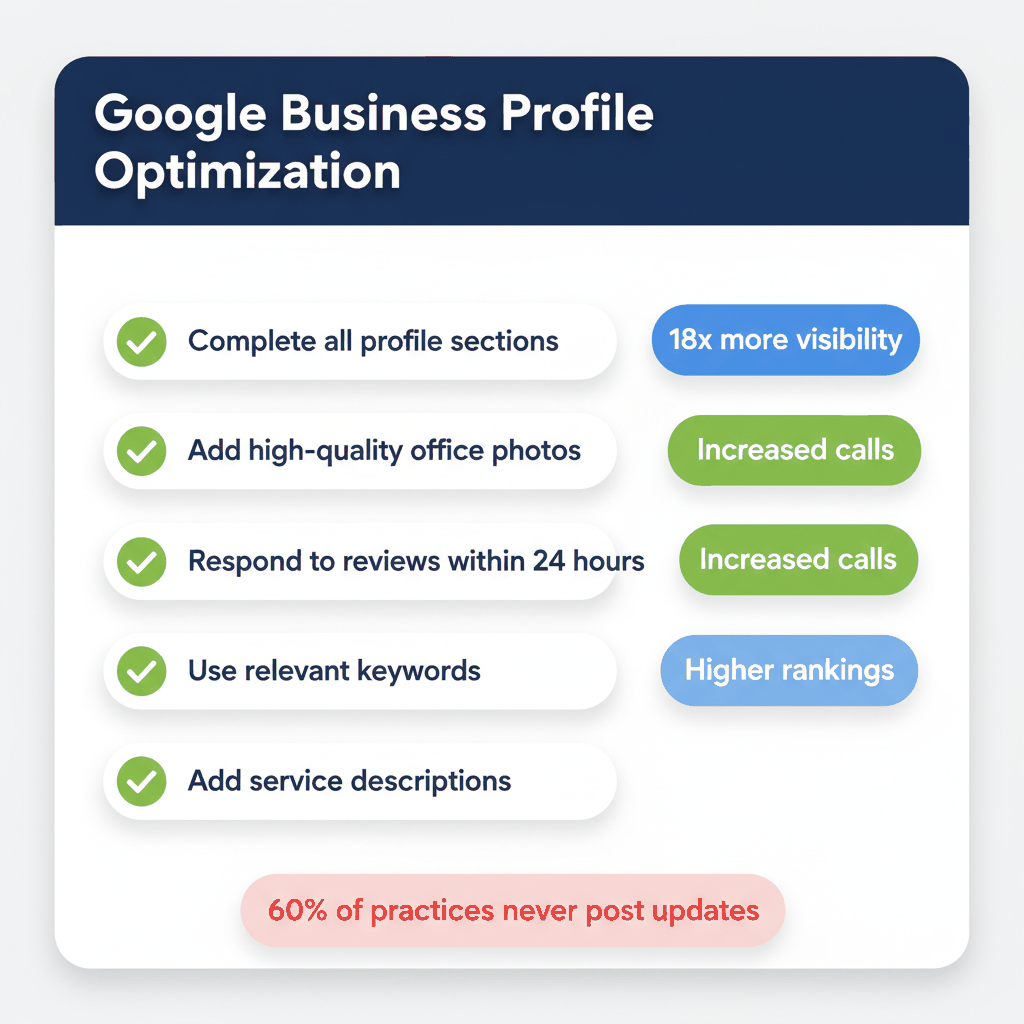
Here's what to optimize immediately:
Complete all profile sections with accurate information
Add high-quality photos of your office and team
Post weekly updates about services and patient care
Respond to all reviews within 24 hours
Use relevant keywords in your business description
Keep your hours and contact information current
A common mistake in dental SEO is trying to rank one homepage for every treatment. This weakens relevance for specific searches.
Build dedicated pages for high-intent services like teeth whitening, dental implants, emergency dental care, and cosmetic dentistry. Each service page should explain who the treatment is for, what the process involves, common concerns, and financing options.
These pages capture patients searching for specific treatments. They also allow you to target long-tail keywords that convert better than general terms.
Your Name, Address, and Phone number must match exactly across all online platforms. Inconsistent NAP information confuses search engines and hurts local rankings.
Audit your listings on Google, Yelp, Facebook, healthcare directories, and industry sites. Fix any variations in how your practice name, address format, or phone number appears.
This seemingly small detail has major impact on local search performance. Search engines use NAP consistency as a trust signal for local businesses.
The average dental website conversion rate hovers between 2-5%. This means 95-98% of visitors leave without taking action. For a practice receiving 500 monthly visitors, improving from 2% to 5% conversion adds 15 monthly appointments.
That's 180 additional appointments annually from the same traffic. The difference isn't more visitors - it's better dentist website optimization.
Over 60% of patients search for dental services on mobile devices. Yet most dental websites fail basic mobile usability tests.
Mobile pages that load in under 3 seconds have dramatically higher conversion rates. The average dental website takes 7+ seconds to load on mobile devices. This kills both rankings and conversions.
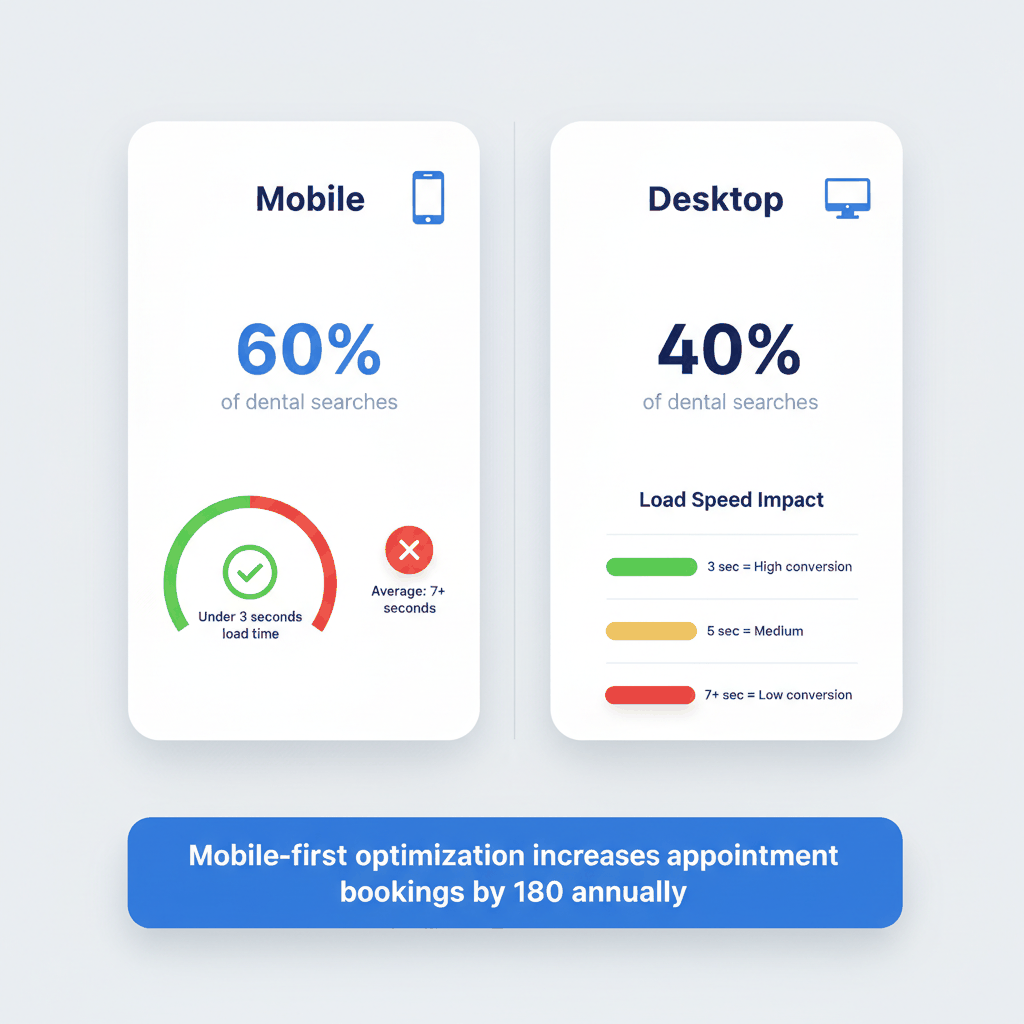
Critical mobile optimization requirements:
Page load speed under 3 seconds
Clickable phone numbers for instant calling
Easy-to-find contact information
Simple navigation that works on small screens
Readable text without zooming
Buttons large enough for finger tapping
Your website must guide visitors toward appointment booking. Most dental websites display information but don't encourage action.
Every page needs clear next steps. Use prominent call-to-action buttons, multiple contact options, and compelling reasons to choose your practice.
Display patient testimonials, before/after photos where appropriate, and information about payment options. Address common concerns like insurance acceptance and financing.
Create content that demonstrates your connection to the local community. Write about local oral health issues, community events you support, and why you chose to practice in your area.
This content serves dual purposes: it helps with local SEO rankings and builds trust with potential patients who want to support local businesses.
Include location-based keywords naturally throughout your content. Mention nearby landmarks, neighborhoods you serve, and local partnerships.
Most dental practices make the same SEO mistakes that limit their patient growth. These errors are easy to fix once you identify them.
Technical problems hurt your rankings even when your content is excellent. Common technical mistakes include slow loading speeds, broken links, missing meta descriptions, and poor site structure.
Google's mobile-first indexing means mobile performance directly impacts all search rankings. A poor mobile experience doesn't just cost you patients - it hurts your search visibility.
Run regular technical audits to catch issues before they impact your rankings. Fix broken links, optimize images, and ensure all pages load quickly.
Reviews aren't just customer feedback - they're SEO content that Google indexes. Practices that respond to reviews within 24 hours consistently outrank those with higher ratings but poor response rates.
A Harvard Business School study found that a 1-star increase in rating can lead to 5% revenue growth. Your review responses show search engines you're actively engaged with patients.
Develop a systematic approach to requesting reviews from satisfied patients. Respond professionally to all reviews, both positive and negative.
Some practices try to manipulate rankings by stuffing keywords unnaturally into content. This hurts both user experience and search performance.
Focus on creating helpful content that naturally incorporates relevant keywords. Write for patients first, search engines second.
Use keywords in titles, headings, and throughout content, but only when they fit naturally. Search engines have become sophisticated at detecting forced keyword usage.
Many dental websites have multiple pages targeting the same keywords. This creates internal competition and weakens your ranking potential.
Each page should target unique keywords and serve a specific purpose. Avoid creating multiple pages about the same service unless they target distinctly different search intents.
Conduct keyword mapping to ensure each important term has one primary page targeting it.
Successful dental office marketing requires tracking the right metrics. Most practices focus on vanity metrics like website traffic instead of business outcomes.
The metrics that matter are appointment bookings, new patient acquisition, and revenue per patient. These numbers tell you if your marketing generates business growth.
Track these essential metrics monthly:
New patient appointments booked
Website conversion rate (visitors to appointments)
Local search ranking positions
Google Business Profile views and actions
Cost per new patient acquisition
Patient lifetime value
Review acquisition rate
Google Analytics and Google Search Console provide free insights into website performance and search visibility. Set up conversion tracking to measure appointment bookings from your website.
Your Google Business Profile insights show how patients find and interact with your listing. Monitor views, website clicks, direction requests, and phone calls.
Patient management software often includes marketing analytics. Use this data to connect marketing efforts to actual patient appointments and revenue.
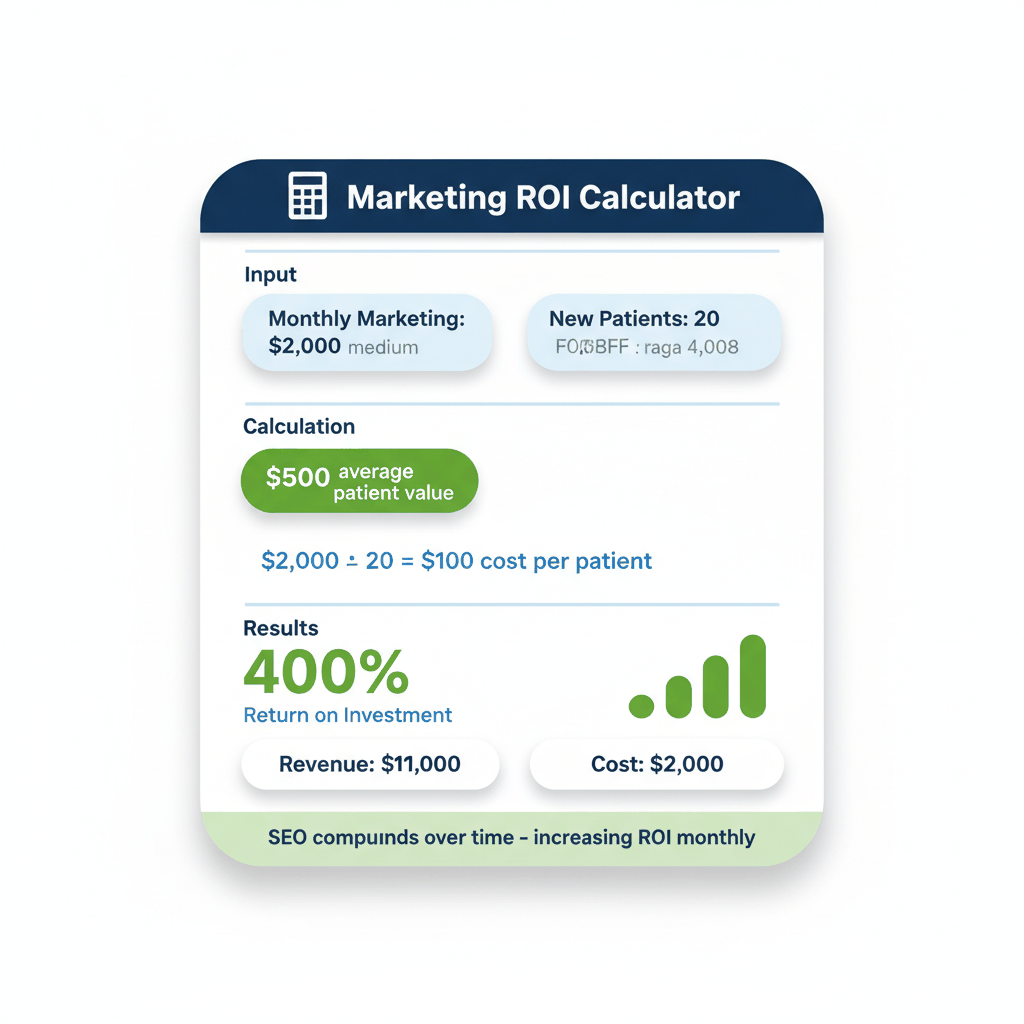
Calculate your marketing return on investment by comparing total marketing costs to new patient revenue. Include both direct costs like advertising and indirect costs like staff time.
For example, if you spend $2,000 monthly on marketing and acquire 20 new patients worth $500 each in first-year revenue, your ROI is 400%. Track this monthly to optimize your marketing budget allocation.
Focus investment on channels and strategies that deliver the highest ROI. Reduce or eliminate tactics that don't generate positive returns.
How long does dental SEO take to show results?
Local SEO for dentists typically shows initial results in 3-6 months, with significant improvements in 6-12 months. Unlike paid advertising, dental practice SEO builds momentum over time. Early wins include improved Google Business Profile visibility and better local map rankings.
What's the average cost of dental marketing per new patient?
Effective dental office marketing typically costs $50-200 per new patient, depending on your location and competition. SEO-driven strategies generally have lower per-patient costs than paid advertising because the results compound over time without ongoing ad spend.
Should dental practices focus on SEO or paid ads?
The best dental marketing and SEO strategy combines both approaches. SEO builds long-term patient flow while paid ads provide immediate results. Start with local SEO for sustainable growth, then add targeted advertising for specific services or seasonal campaigns.
How important are online reviews for dental practices?
Online reviews are critical for both patient trust and local search rankings. Practices with 4.5+ star ratings receive significantly more clicks and calls. Reviews also provide fresh content that search engines index, improving your local SEO performance.
What dental services should I create separate pages for?
Create dedicated pages for high-value services like dental implants, cosmetic dentistry, emergency dental care, and teeth whitening. Each service page should target specific keywords and address patient concerns about that particular treatment option.
Ready to get exclusive dental leads? Sign up for free with ResultCalls now!

Hello everyone! My name is Alex and I write these blogs to help educate small business owners on different ways to grow their business. My goal is to make lead generation as easy as possible for you. After reading these blogs, I hope you leave with some actionable steps that will get you closer to growing your business :)