Are you spending money on ads but not getting enough house painting jobs? You're not alone. Most painting contractors struggle to choose the right advertising platform.
The truth is, Google Ads and Facebook Ads work differently. Google shows your ads to people actively searching for painters. Facebook shows ads to people who might need painting services. This difference affects how many leads convert into paying customers.
One Google lead often produces the same number of jobs as 3-4 Facebook leads. But Facebook leads cost less upfront. So which platform should you choose? The answer depends on your budget, timeline, and business goals.
In this guide, you'll learn the real costs, conversion rates, and ROI data for both platforms. Plus, you'll get proven strategies to maximize your painting lead generation on whichever platform you choose.
Table of Contents
Google Ads display your website when people search for painting services. This creates high-intent leads. Someone typing "house painter near me" is actively looking for help.
Here's what makes Google Ads powerful for painters. Your ads appear exactly when customers need you. They see your business at the moment they're ready to hire.
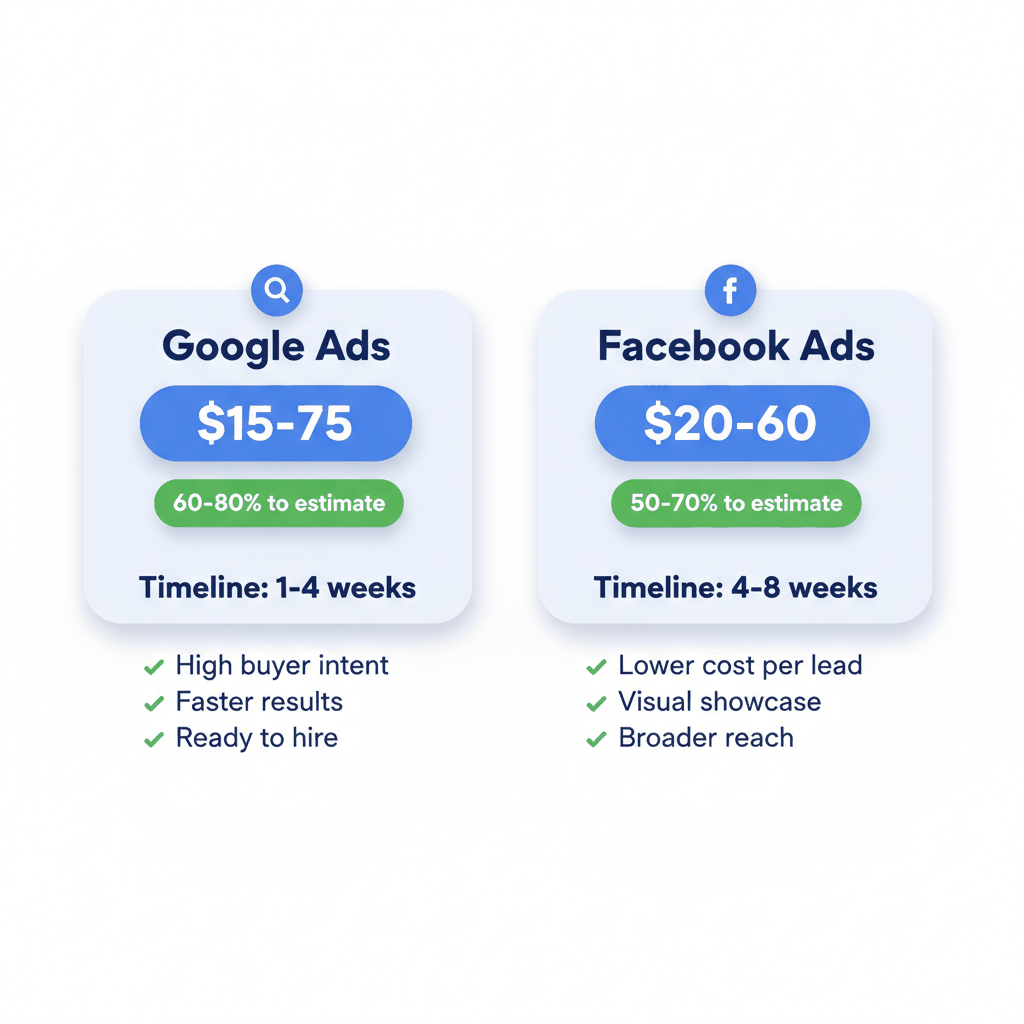
The average cost per lead for painting contractors on Google Ads ranges from $15 to $75. However, lead quality matters more than cost.
You can expect to spend between $100-$150 per booked estimate using Google Ads. The conversion rate from lead to estimate typically runs 60-80% because of buyer intent.
For example: A $50 Google lead that converts at 4% costs $1,250 per customer. That customer might be worth $3,000-$8,000 in revenue. The math works when you focus on customer value, not just lead cost.
Google Ads take between 1 to 4 weeks to generate painting leads. The exact timeframe depends on several factors:
Campaign budget and daily spend
Local competition levels
Ad relevance and quality score
Keyword selection and match types
Seasonal demand fluctuations
Start with Google Search Ads rather than display ads. Search ads generate higher quality leads because they target people actively searching for painting services.
Use Google Trends to identify keywords with higher search volume. For example, "house painter" gets more searches than "residential painter" despite meaning the same thing.
Focus on location-based keywords like "exterior painters [your city]" or "interior painting [neighborhood]." These terms show strong local intent and typically cost less than broad keywords.
Set up conversion tracking for phone calls and contact forms. Send closed-deal data back to Google so their algorithm optimizes for revenue, not just form fills.
Facebook Ads show your services to people who might need painting work. These people aren't actively searching, so they require different messaging and follow-up.
Facebook excels at reaching homeowners who haven't started shopping yet. Your ads can educate them about painting benefits and generate interest in your services.
Facebook's average cost per lead climbed 21% to $27.66 in 2025. For painting contractors, expect to pay $20-$60 per lead depending on your market.
However, Facebook leads require more nurturing. You can expect a healthy set rate between 50-70% for Facebook leads compared to 60-80% for Google leads.
The key difference is intent level. Facebook users weren't looking for painters when they saw your ad. This means longer sales cycles but potentially less competition.
We recommend a daily budget between $50-65 (roughly $1,500-$2,000 per month) for painting contractors starting with Facebook Ads.
This budget allows Facebook's algorithm to optimize effectively. Smaller budgets limit the platform's ability to find your ideal customers and improve performance over time.
Short-form video (15-30 seconds) consistently produces cost per leads 20-40% lower than static images. Show before and after transformations, team members at work, or customer testimonials.
Use broad audience targeting rather than detailed interests. Facebook's algorithm works better when given flexibility to find interested users beyond narrow demographic categories.
Focus on educational content rather than direct sales pitches. Highlight problems homeowners might not notice, like fading paint protection or outdated color schemes affecting home value.
Let's compare the real costs of getting customers from each platform. Remember, the cheapest lead isn't always the cheapest customer.
Google Ads typically cost more per lead but convert better:
Average cost per lead: $15-$75
Conversion rate to estimate: 60-80%
Cost per booked estimate: $100-$150
Timeline to first leads: 1-4 weeks
Facebook Ads cost less per lead but require more follow-up:
Average cost per lead: $20-$60
Conversion rate to estimate: 50-70%
Recommended monthly budget: $1,500-$2,000
Timeline to optimization: 4-8 weeks
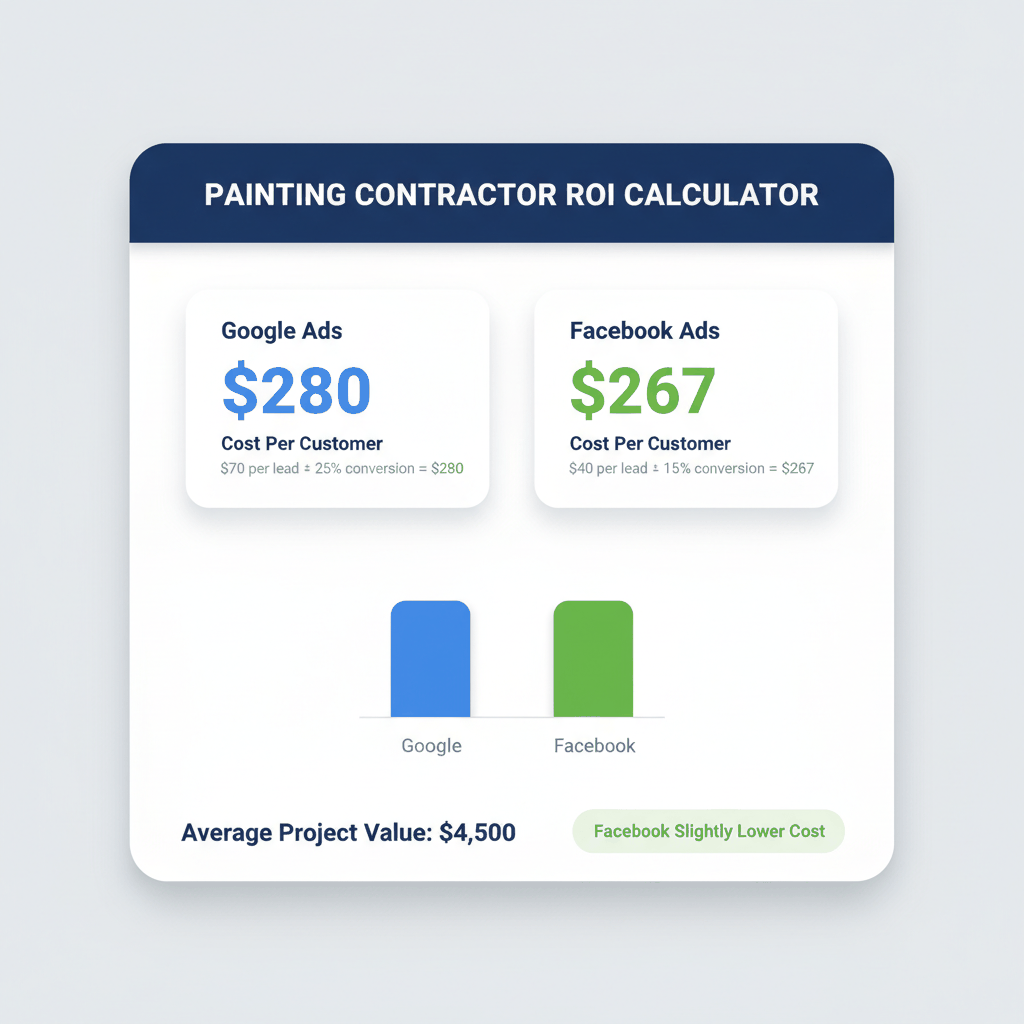
Here's the math that matters. Calculate your cost per customer, not just cost per lead.
Google example: $70 cost per lead × 25% conversion rate = $280 cost per customer
Facebook example: $40 cost per lead × 15% conversion rate = $267 cost per customer
In this scenario, Facebook produces slightly cheaper customers. But Google customers often have higher urgency and project values, improving your cash flow.
The average conversion rate for home services in 2026 is 7.33%. The average cost per lead is $90.92 across all home service industries.
Painting contractors with the highest costs per click this year averaged $13.74, representing increased competition in the space.
The most successful painting contractors don't choose one platform. They start with one, optimize it, then expand to others.
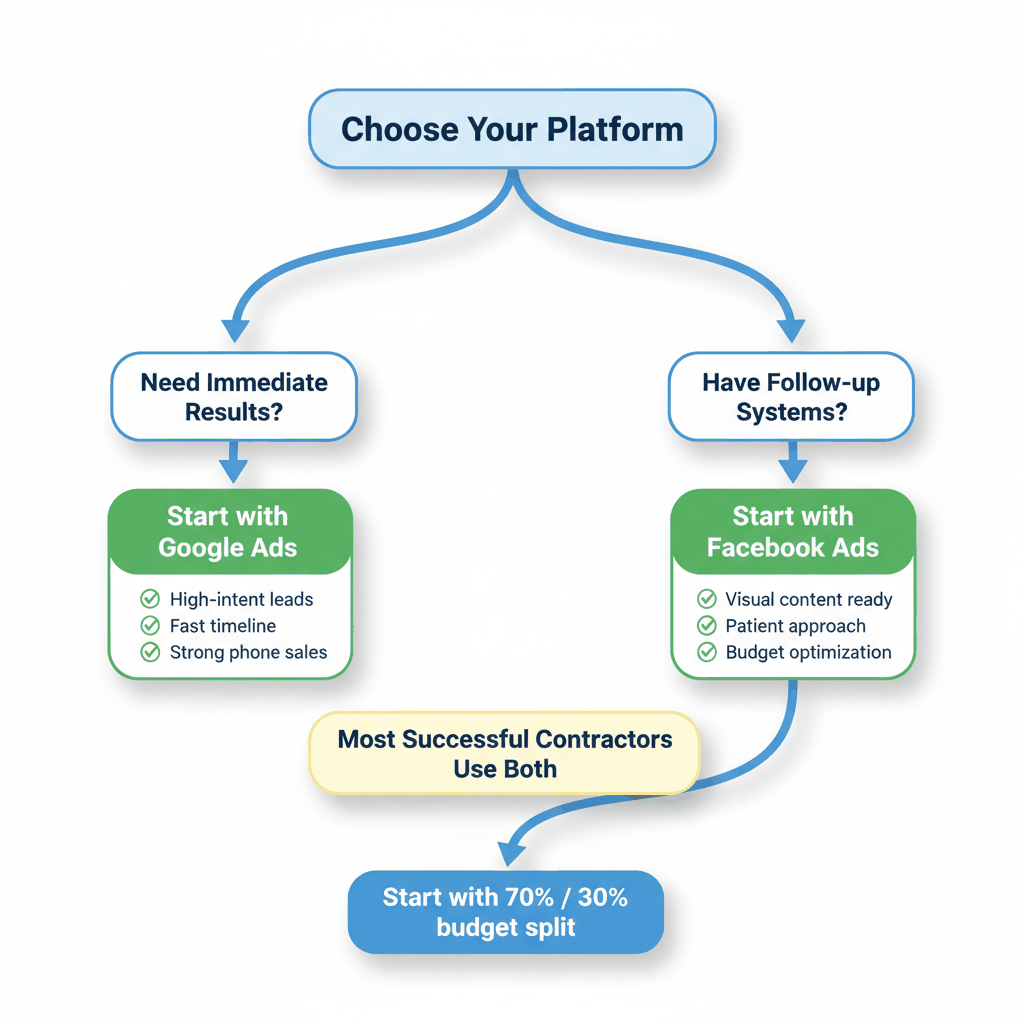
Choose Google Ads first if you have:
Limited time for lead nurturing
Higher project values ($2,000+ average)
Immediate cash flow needs
Strong phone sales skills
Choose Facebook Ads first if you have:
Strong follow-up systems in place
Good video content or willingness to create it
Longer sales cycle tolerance
Lower average project values
Add one qualifying question to your lead forms. This filters out unqualified prospects before they enter your sales process.
For example, ask about project timeline, budget range, or property type. Expect cost per lead to rise 10-15% while volume drops 30-40%. But cost per qualified lead improves dramatically.
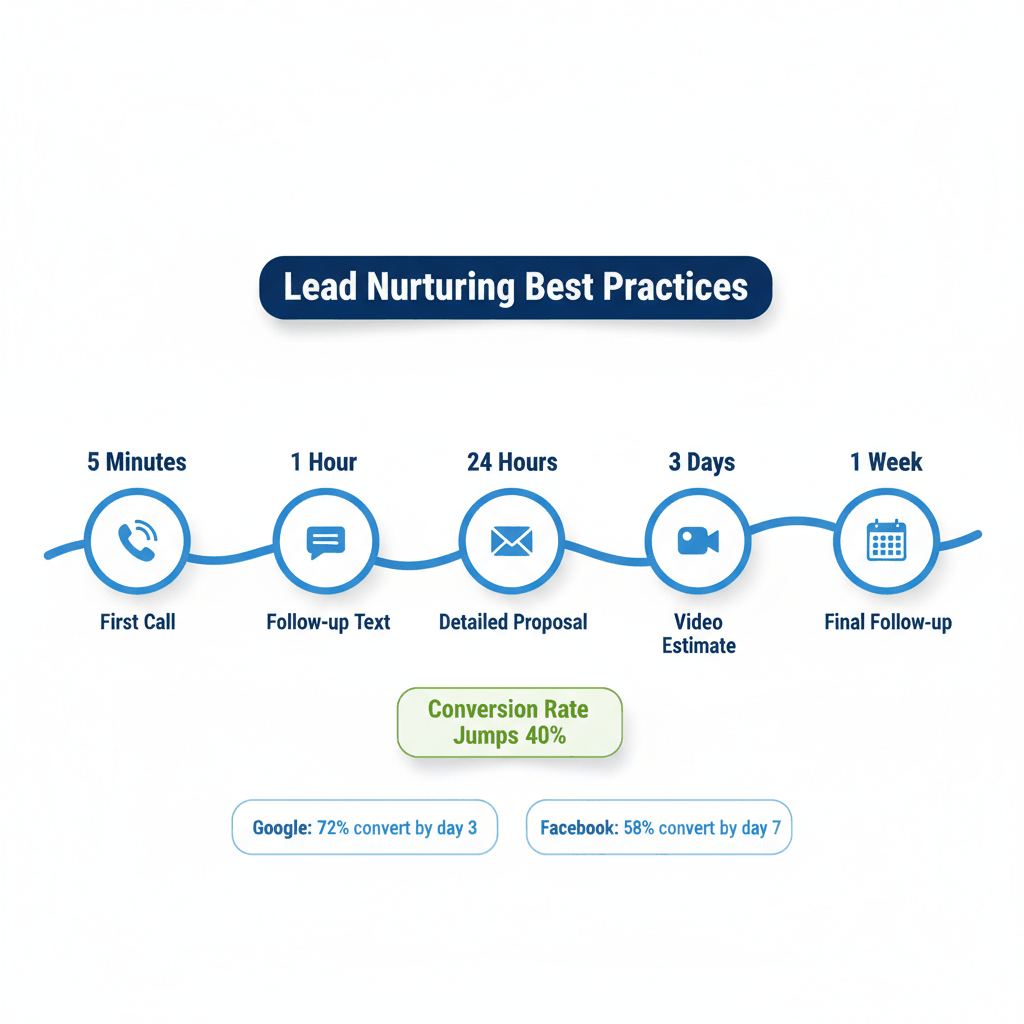
Follow up within 5 minutes for best results. Speed-to-lead significantly impacts conversion rates on both platforms.
Most marketing companies don't understand painting seasonality. Exterior season differs from interior season. A $15,000 whole-house client looks different from a $500 accent wall customer.
Adjust your campaigns based on seasonal demand. Focus on interior painting during winter months and exterior projects during spring and summer.
Successful painting contractor advertising goes beyond choosing the right platform. Your follow-up systems and lead management determine your actual ROI.
Use a painting contractor CRM to track leads from both platforms. Popular options include:
Houzz Pro for pricing jobs faster and keeping leads organized
Builder Prime for automated email and SMS campaigns
ServiceTitan for tracking unsold opportunities and follow-up reminders
Your CRM should track which platform generated each lead and their conversion rates. This data helps you optimize budget allocation between Google and Facebook.
Most painting contractors lose money because they focus on generating leads instead of converting them. Here are proven conversion strategies:
Call leads within 5 minutes of form submission
Send automated text messages for immediate engagement
Use video estimates to stand out from competitors
Follow up at least 7 times before marking a lead dead
Track which lead sources produce the highest project values
One contractor reported: "Only 20% of our leads converted to estimates, the rest were tire kickers. We paid over $20k and only sold $14k." This happens when you focus on lead volume instead of lead quality and follow-up.
Start with one platform and dial it in before expanding. Contractors who chase every channel at once create chaos and run out of resources before seeing results.
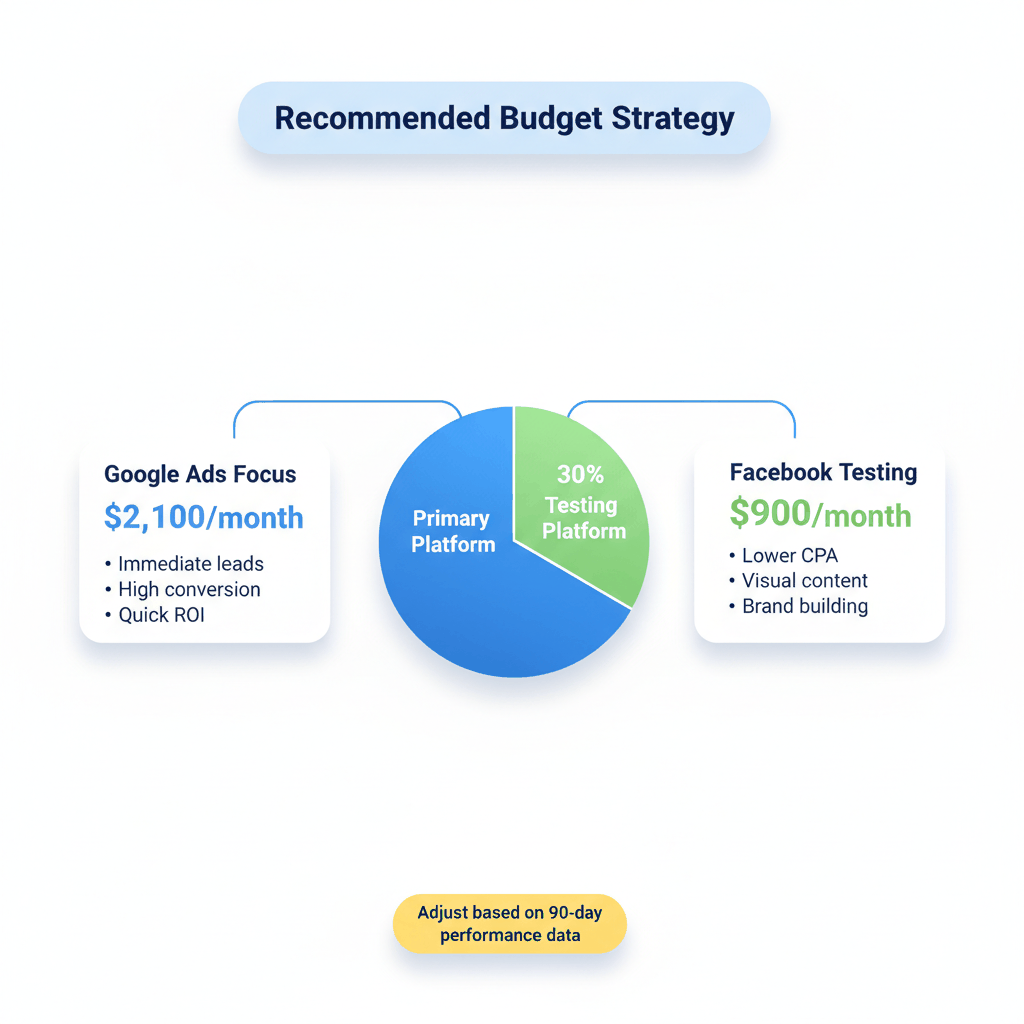
Once you're profitable on your first platform, test the second platform with 20-30% of your budget. This approach reduces risk while allowing you to compare performance.
Your choice between Google Ads and Facebook Ads depends on your business situation, not industry best practices.
Google Ads work best for established painting contractors who need immediate results. The platform delivers high-intent leads faster but requires higher budgets.
Choose Google if you have strong phone sales skills and can convert leads quickly. The higher conversion rates offset the increased cost per lead.
Google also works better for emergency or urgent painting needs. When someone's selling their home and needs quick interior touch-ups, they search Google first.
Facebook Ads work well for newer painting businesses or those with strong follow-up systems. The platform requires patience but can produce lower cost per customer over time.
Choose Facebook if you can create compelling video content or before-and-after photos. Visual platforms reward businesses that showcase their work effectively.
Facebook also excels for specialty services like decorative painting, color consultations, or high-end residential work where education matters more than urgency.
If you're testing both platforms, allocate 70% of your budget to your primary platform and 30% to testing the secondary platform.
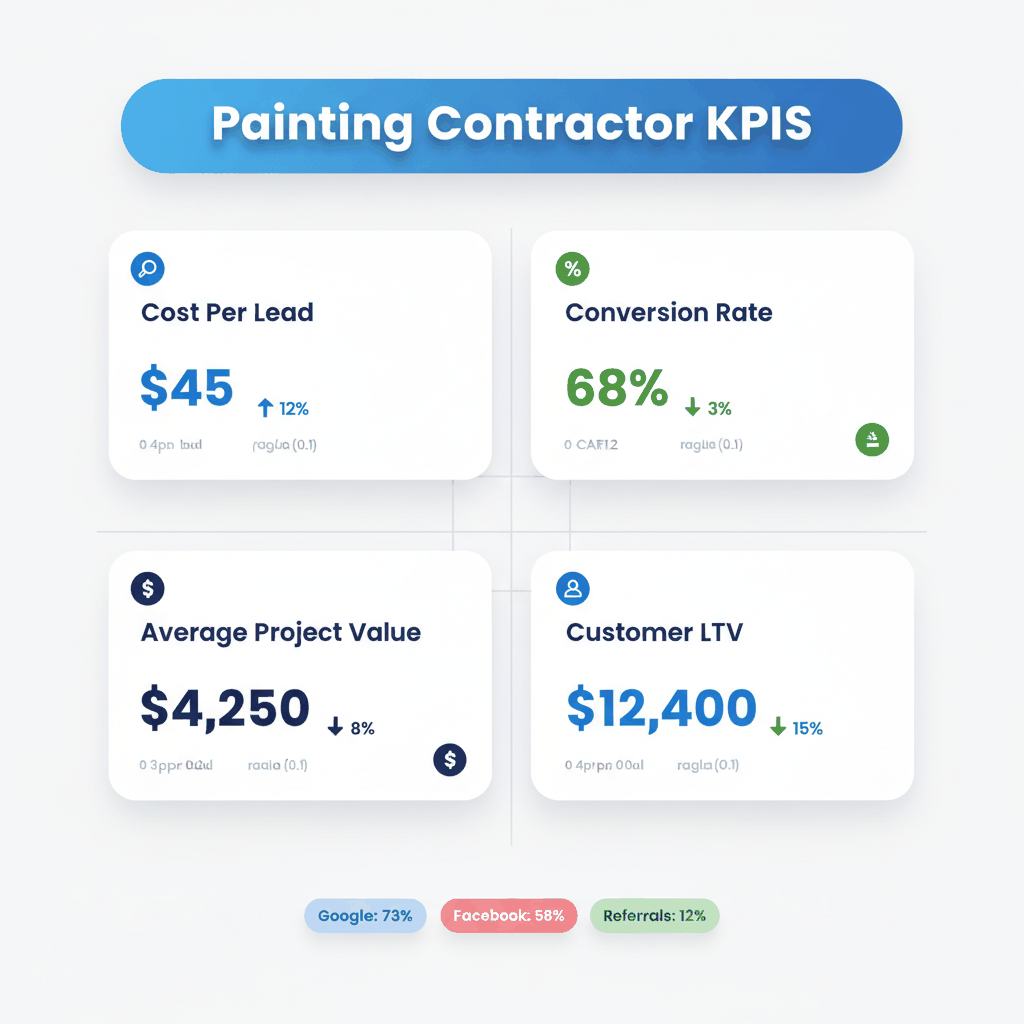
Track these metrics for each platform:
Cost per lead and cost per customer
Average project value from each source
Time from lead to closed sale
Customer lifetime value and referral rates
Adjust your budget allocation based on which platform delivers better return on investment, not just cheaper leads.
Which is better for painting contractors: Google Ads or Facebook Ads?
Google Ads typically work better for immediate house painting jobs because they target high-intent searchers. Facebook Ads work well for long-term brand building and educating potential customers. Most successful painting contractors use both platforms strategically.
How much should painting contractors spend on Google Ads monthly?
Painting contractors should budget $1,500-$3,000 monthly for Google Ads to see meaningful results. This allows for adequate testing and optimization while competing effectively in most local markets for residential painting leads.
What's the average cost per lead for painting contractor advertising?
Google Ads cost $15-$75 per lead while Facebook Ads cost $20-$60 per lead for painting contractors. However, Google leads convert 60-80% to estimates while Facebook leads convert 50-70%, making cost per customer more important than cost per lead.
How long does it take to get painting leads from digital advertising?
Google Ads generate painting leads within 1-4 weeks of launching campaigns. Facebook Ads require 4-8 weeks for optimal performance as the algorithm learns your ideal customer profile and optimizes for better results.
Should new painting businesses start with Google Ads or Facebook Ads?
New painting businesses should start with Google Ads if they need immediate cash flow and have strong sales skills. Choose Facebook Ads if you have limited budget, good visual content, and can nurture leads over longer timeframes.
Ready to get more painting leads? Sign up for free with ResultCalls today!

Hello everyone! My name is Alex and I write these blogs to help educate small business owners on different ways to grow their business. My goal is to make lead generation as easy as possible for you. After reading these blogs, I hope you leave with some actionable steps that will get you closer to growing your business :)