Your refrigerator stops working at 11 PM on a Saturday night. Your washing machine floods the laundry room just before your family vacation. Your oven dies right before Thanksgiving dinner.
These scenarios create stress and urgency for homeowners. They need solutions fast. Yet most appliance repair ads completely miss this psychological moment.
Business owners spend hundreds or even thousands of dollars each month on digital advertising. Their appliance repair leads remain low. Their return on investment doesn't justify the cost.
Understanding appliance repair advertising psychology can transform your customer acquisition strategy. You'll learn why most ads fail and discover the psychological triggers that actually convert stressed homeowners into paying customers.
Table of Contents
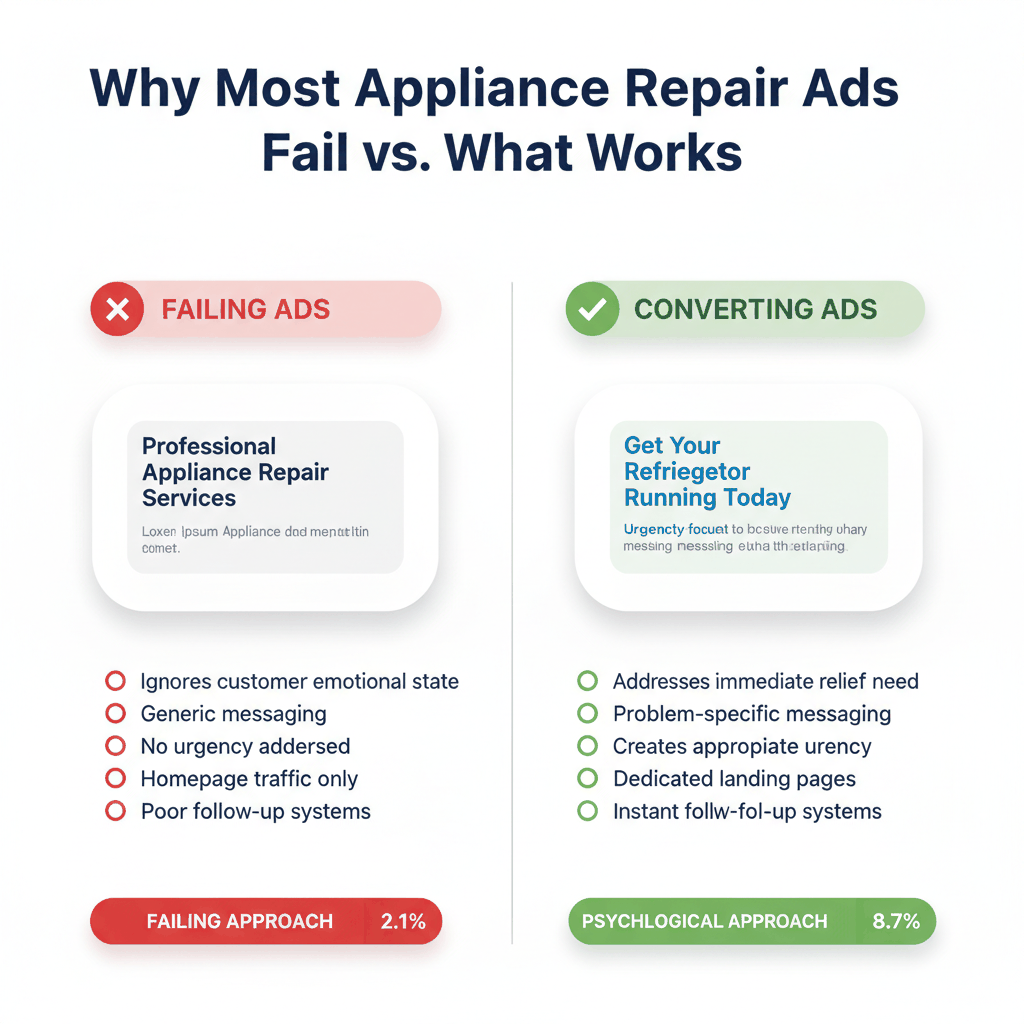
The biggest mistake in appliance repair advertising isn't budget size or platform choice. It's completely missing the customer's emotional state.
Most appliance repair businesses create generic ad copy that blends in with competitors. They write boring headlines like "Professional Appliance Repair Services" or "Quality Repair at Affordable Prices."
These ads ignore a crucial fact. When someone searches for appliance repair, they're not comparison shopping. They need help now.
Poor geographic targeting wastes thousands of advertising dollars. Many business owners set up campaigns that show ads outside their service areas. This drives up costs without generating leads.
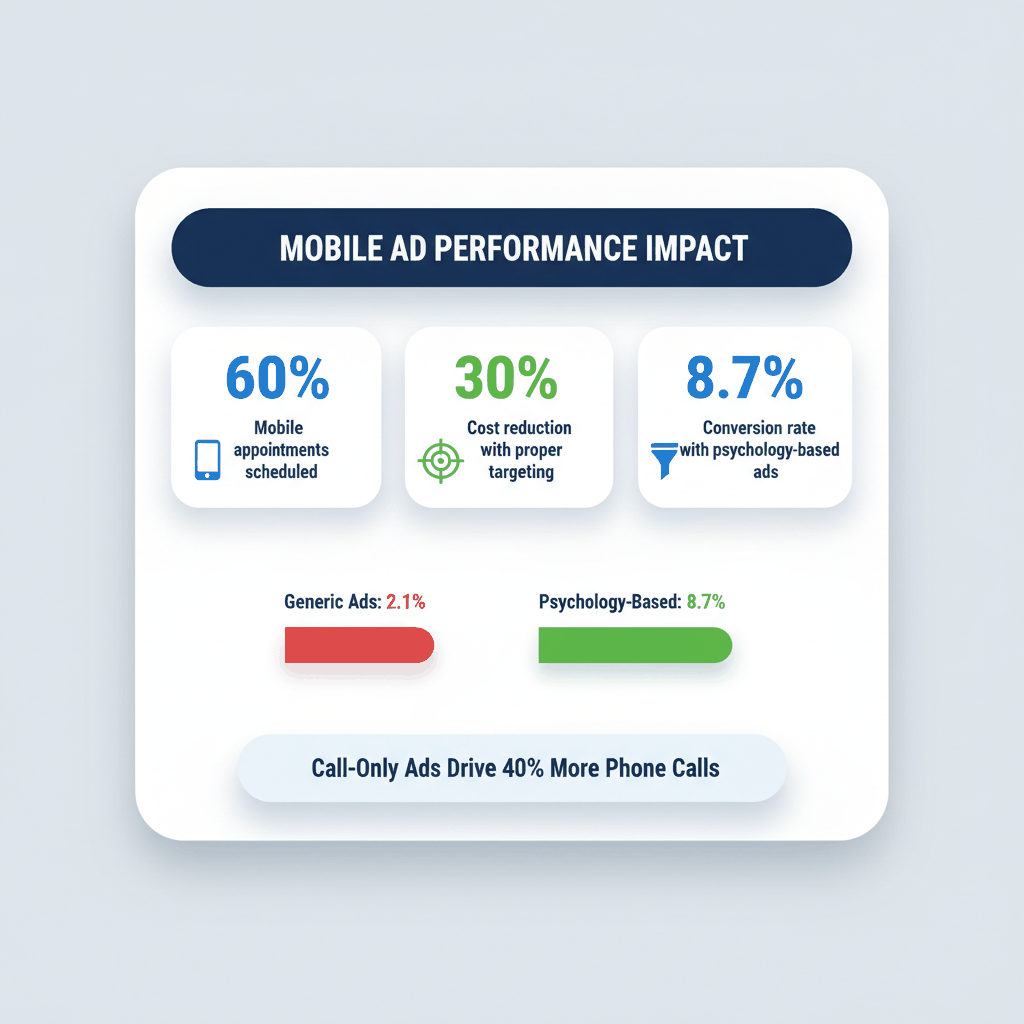
To optimize your appliance repair ads, select your exact service area in Google Ads settings. Exclude areas where you don't provide services. This simple step can reduce wasted ad spend by 30% or more.
Here's another costly mistake. Directing paid traffic to your homepage instead of a dedicated landing page.
Your homepage serves many purposes. It tells your company story, lists all services, and provides general information. But it doesn't focus on one specific problem that brought the visitor to your site.
This confusion leads to high bounce rates and low conversion rates. You're paying for clicks but not getting leads.
Generating leads means nothing without proper follow-up. Many appliance repair businesses lose potential customers because they lack tracking systems.
Without proper lead management, potential customers fall through the cracks. This leads to lost revenue and wasted marketing spending.
Appliance breakdowns trigger specific psychological responses. Understanding these emotions helps you craft ads that connect with stressed homeowners.
When a refrigerator stops cooling, customers experience immediate anxiety. They worry about food spoilage, replacement costs, and finding reliable help. Industry research shows that 84% of customers value being treated like a person during these stressful moments.
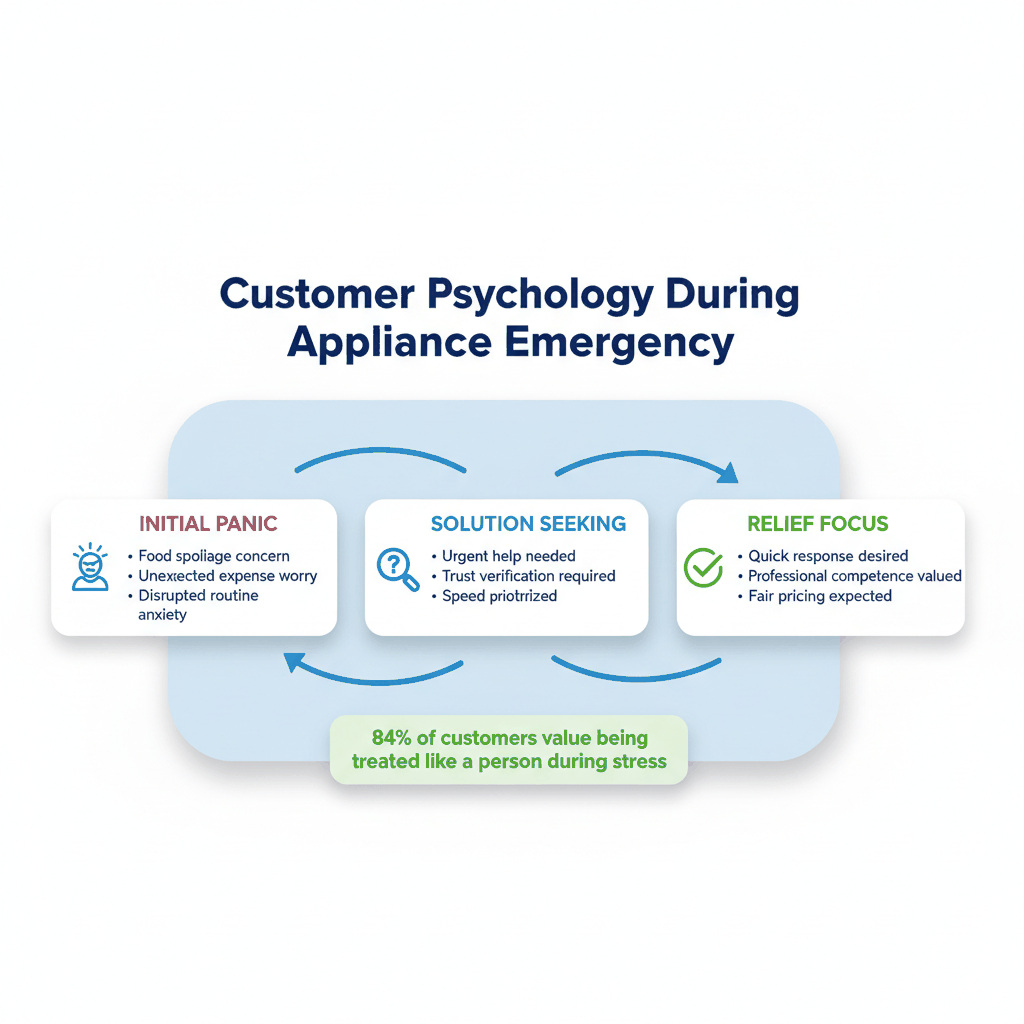
Broken appliances create genuine urgency. Unlike other home services, appliance repair can't wait for convenient scheduling.
This urgency triggers what psychologists call the "action response." Customers want to solve the problem quickly to return to normal life. Consumer psychology research shows that urgency drives faster decision-making when the outcome provides clear relief.
Stressed customers need reassurance more than sales pitches. They want proof that you'll show up when promised and fix the problem correctly.
Effective appliance repair advertising psychology addresses these trust concerns upfront. Use specific language like "licensed technicians," "same-day service," and "satisfaction guaranteed."
Appliance repairs create unexpected expenses. Customers often worry about repair costs versus replacement costs.
Smart ads acknowledge this concern. Mention free estimates, upfront pricing, or diagnostic fee policies. This transparency reduces customer anxiety and increases call volume.
High-converting appliance repair ads tap into specific psychological triggers. These triggers motivate stressed homeowners to take immediate action.
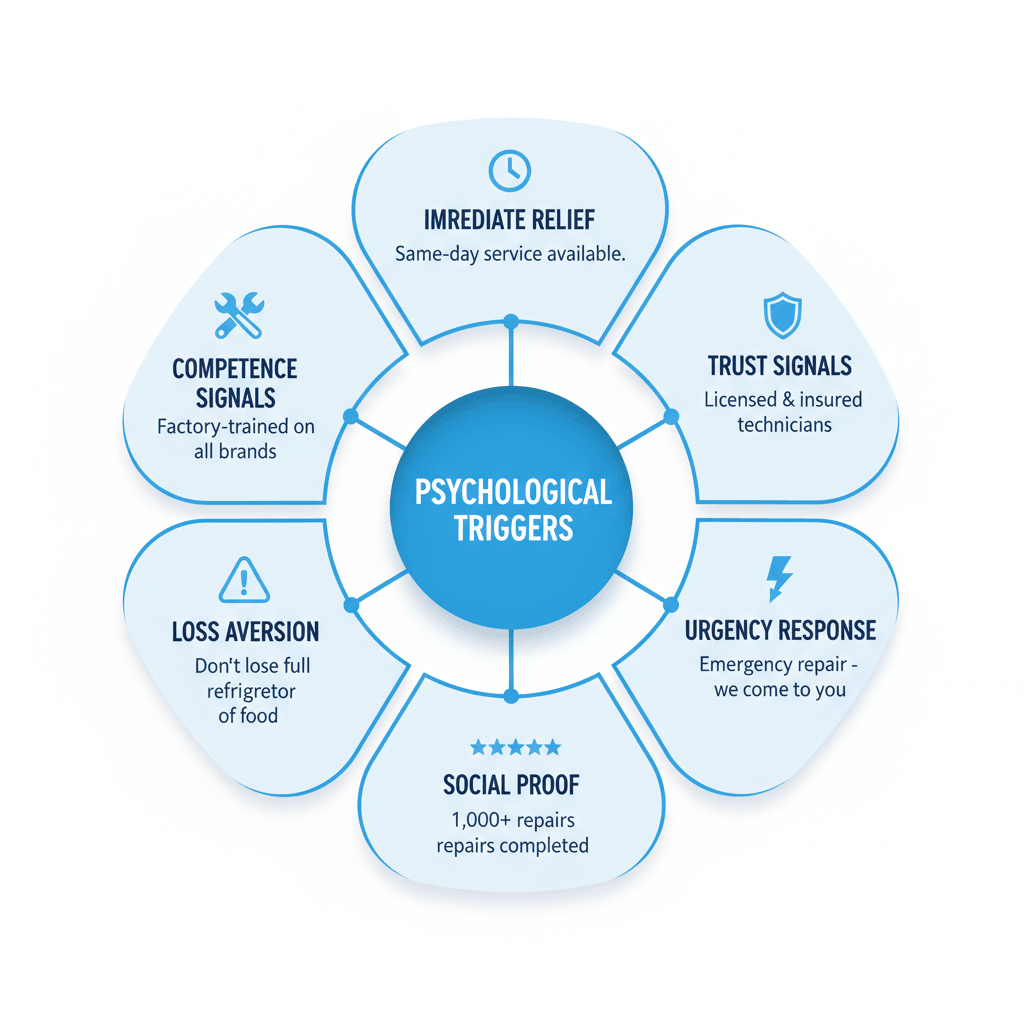
The most powerful trigger for appliance repair customers is the promise of immediate relief. Your ads should focus on ending their current problem quickly.
Examples of relief-focused headlines include:
"Get Your Refrigerator Running Today"
"Same-Day Washer Repair Available"
"Emergency Appliance Repair - We Come to You"
"Fix Your Broken Oven This Afternoon"
Notice how each headline promises specific, fast solutions. This appeals to customers who need help now.
Stressed customers want proof that you're the right choice. Social proof reduces decision-making anxiety during urgent situations.
Include elements like:
Years in business ("Serving homes since 1995")
Customer count ("Over 10,000 repairs completed")
Certifications ("Factory-trained technicians")
Response time ("Average 2-hour response")
Industry data shows that businesses with first-time fix rates above 70% have significantly higher customer satisfaction levels.
Limited availability creates action. But use this trigger carefully in appliance repair advertising.
Real scarcity works better than artificial scarcity. Messages like "Only 3 same-day slots left" work when they're true. False scarcity damages trust.
Better approaches include:
"Same-day service based on availability"
"Book now for fastest response time"
"Limited evening appointments available"
Customers fear losing more than they value gaining. In appliance repair, they fear losing food, time, or convenience.
Effective ads highlight what customers avoid by calling you:
"Don't lose a full refrigerator of food"
"Avoid expensive appliance replacement"
"Stop wasting time with unreliable repair companies"
The most successful appliance repair ads follow specific patterns. These patterns align with customer psychology and drive higher conversion rates.
Most appliance repair searches happen on mobile devices. Customers discover problems and immediately search for solutions on their phones.
Recent studies show that 60% of all appointments are scheduled through mobile devices. Your ads must work perfectly on smartphones.
Use call-only ads for mobile campaigns. These ads show a direct "Call Now" button instead of website links. This removes friction between seeing your ad and contacting your business.
The most effective advertising mirrors how people actually search. Stressed homeowners don't search for "appliance repair services."
They search for specific problems:
"refrigerator not cooling"
"washer won't drain"
"oven not heating"
"dishwasher leaking"
Create ads that directly address these problem-focused searches. Your headlines should echo the customer's exact concern.
Include trust signals in every ad. Stressed customers need reassurance before they'll contact you.
Effective trust elements include:
Licensing information ("Licensed and insured")
Experience markers ("25 years of experience")
Response guarantees ("2-hour response guarantee")
Pricing transparency ("Upfront pricing, no surprises")
Appliance repair is a local business. Your ads must emphasize local service and quick response times.
Local search data shows that 46% of all Google searches are for local businesses. Include your city name and service area in ad copy.
Examples include:
"Emergency Appliance Repair in [City Name]"
"Same-Day Service Throughout [County Name]"
"Local Technicians Near You"
Emergency appliance repair messaging requires careful psychological positioning. Your words must convey urgency without creating panic.
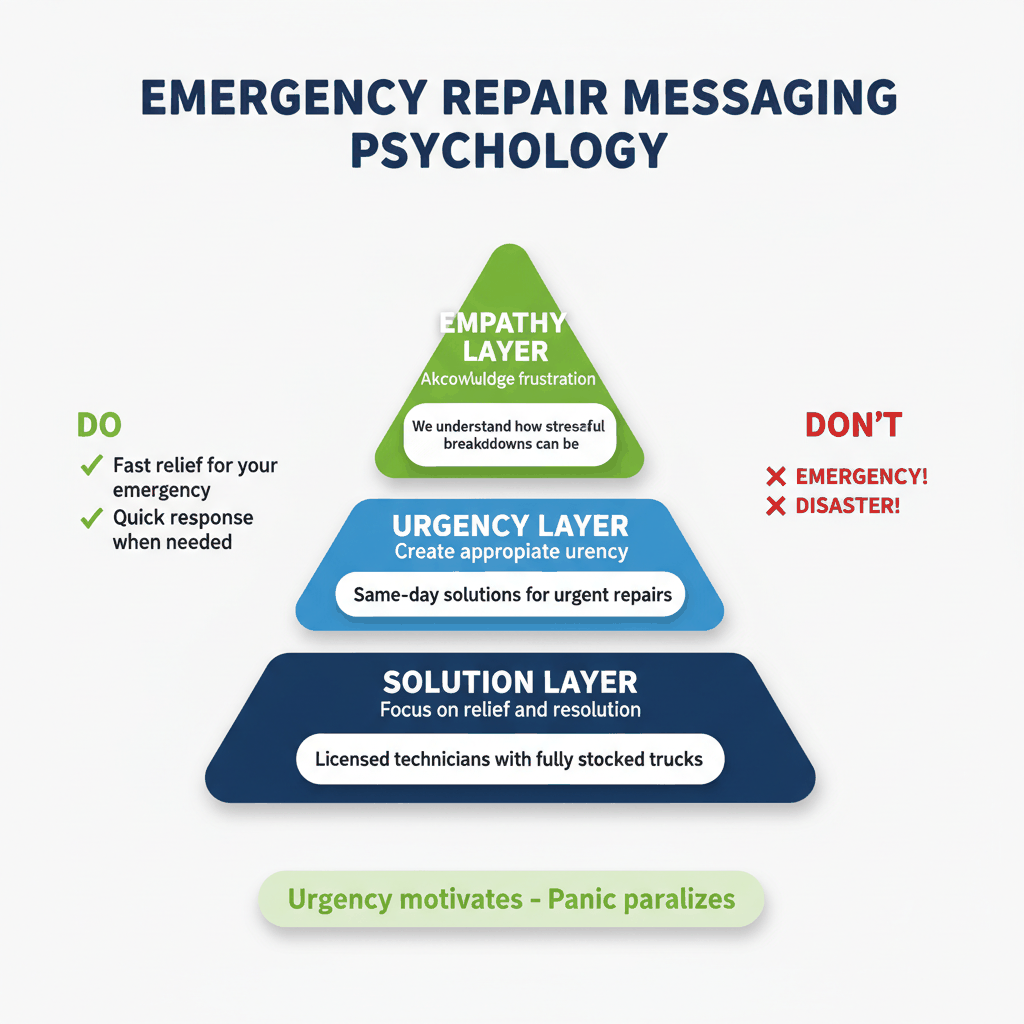
There's a crucial difference between creating urgency and creating panic. Urgency motivates action. Panic creates decision paralysis.
Good urgency messaging focuses on solutions:
"Fast relief for your appliance emergency"
"Quick response when you need it most"
"Same-day solutions for urgent repairs"
Avoid panic-inducing language like "EMERGENCY!" or "DISASTER!" These words increase stress without providing comfort.
Acknowledge the customer's frustration without dwelling on it. Show understanding, then pivot to solutions.
Empathetic messaging examples:
"We understand how frustrating appliance breakdowns can be"
"When your appliances fail, we're here to help"
"Don't let a broken appliance ruin your day"
This approach builds connection while maintaining solution focus. Customer service research shows that empathetic communication increases satisfaction and repeat business.
Your ads must signal technical competence without using confusing jargon. Customers want expert help but need simple communication.
Balance technical credibility with clear language:
"Factory-trained on all major brands"
"We fix what others can't"
"Professional diagnosis and repair"
"Certified technicians with fully stocked trucks"
High-converting appliance repair advertising requires continuous optimization. Small changes in messaging psychology can dramatically improve results.
Response speed wins appliance repair customers. Industry research shows that if a homeowner receives a response within one minute, they often stop shopping for other options.
Emphasize speed at every opportunity:
"Fastest response time guaranteed"
"We answer phones on the first ring"
"Quick diagnosis, quicker repairs"
"Same-day service when you call before 2 PM"
Your call-to-action (CTA) should match the customer's emotional state. Stressed customers need clear, simple directions.
High-converting CTAs for appliance repair:
"Call Now for Same-Day Service"
"Get Help Today - Call [Phone Number]"
"Schedule Emergency Repair Now"
"Talk to a Technician Right Away"
Avoid generic CTAs like "Learn More" or "Contact Us." These don't match the urgency customers feel.
Your landing page must continue the psychological journey started by your ads. Maintain the same urgency and solution focus.
High-converting landing pages include:
Large, prominent phone number
Simple contact form (name, phone, problem)
Clear service area information
Trust signals (reviews, certifications, guarantees)
Response time promises
Follow-Up Communication
The psychology doesn't end when customers contact you. Your follow-up communication must maintain the trust and urgency established in your ads.
Effective follow-up includes:
Immediate response (within 5 minutes)
Clear scheduling options
Technician information and arrival windows
Confirmation texts or calls
SMS marketing works particularly well for appliance repair businesses because it maintains the urgency customers feel.
What psychological triggers work best for emergency appliance repair ads?
The most effective triggers are immediate relief, trust signals, and speed promises. Customers want fast solutions from reliable technicians. Focus on same-day service, licensed professionals, and upfront pricing to address their main concerns.
How can I improve my appliance repair ad conversion rates?
Use problem-focused headlines that match customer searches like "refrigerator not cooling" or "washer won't drain." Include strong trust signals, emphasize speed of service, and use mobile-optimized call-only ads for immediate phone contact.
Why do most appliance repair advertising campaigns fail?
Most campaigns fail because they use generic messaging that doesn't address customer psychology during appliance emergencies. They also make targeting mistakes, send traffic to homepages instead of dedicated landing pages, and lack proper follow-up systems.
What messaging strategy works best for emergency appliance repair services?
Focus on immediate relief and solution-oriented language. Use empathetic messaging that acknowledges frustration, then quickly pivot to your ability to solve the problem. Emphasize same-day service, quick response times, and technical expertise.
How important is mobile optimization for appliance repair advertising psychology?
Mobile optimization is crucial since 60% of appliance repair appointments are scheduled through mobile devices. Customers discover problems and immediately search for help on their phones. Use call-only ads and mobile-friendly landing pages to reduce friction between seeing your ad and contacting your business.
If you need pay per call appliance repair leads, sign up for free with ResultCalls now!

Hello everyone! My name is Alex and I write these blogs to help educate small business owners on different ways to grow their business. My goal is to make lead generation as easy as possible for you. After reading these blogs, I hope you leave with some actionable steps that will get you closer to growing your business :)