You just finished a beautiful hardwood installation. The customer loves their new floors. But what happens next? Most flooring contractors simply pack up and leave. They miss out on the biggest opportunity of the entire job.
Here's the problem: while 83% of happy customers say they'll refer your business, only 29% actually do it. That gap costs you thousands in lost revenue every year.
Smart flooring contractors build systems to turn every satisfied customer into a referral machine. These programs convert at impressive rates between 40-60%. Plus, referred customers show 16% greater lifetime value compared to those from traditional advertising.
You'll learn how to create scripts that generate 5-7 referrals per job. Get reward structures that motivate customers without hurting margins. Plus discover the tools that make tracking referrals automatic.
Table of Contents
Referrals beat every other marketing method for flooring contractors. Here's why they work so well.
Trust comes built-in with referrals. When someone recommends your flooring service, you skip the entire trust-building phase. The new customer already believes you'll do great work because their friend or neighbor said so.
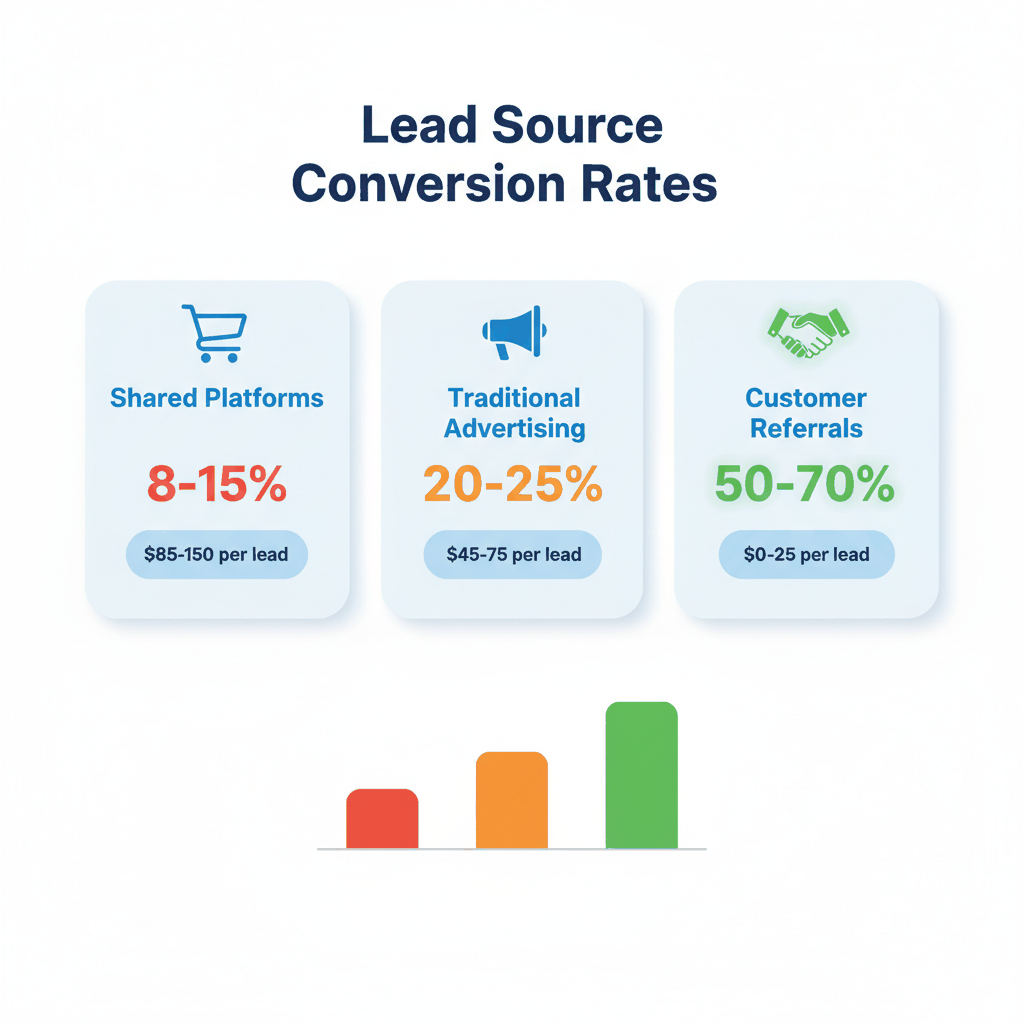
Your cost per lead drops dramatically. Acquiring customers can cost five to twenty-five times more than referrals from existing ones. Most flooring businesses pay $85-$150 per lead from shared platforms like Angi or HomeAdvisor.
Referred customers convert at much higher rates. While shared platform leads close at only 8-15%, referrals convert at 50-70%. That's one sale for every two referrals instead of one sale for every seven paid leads.
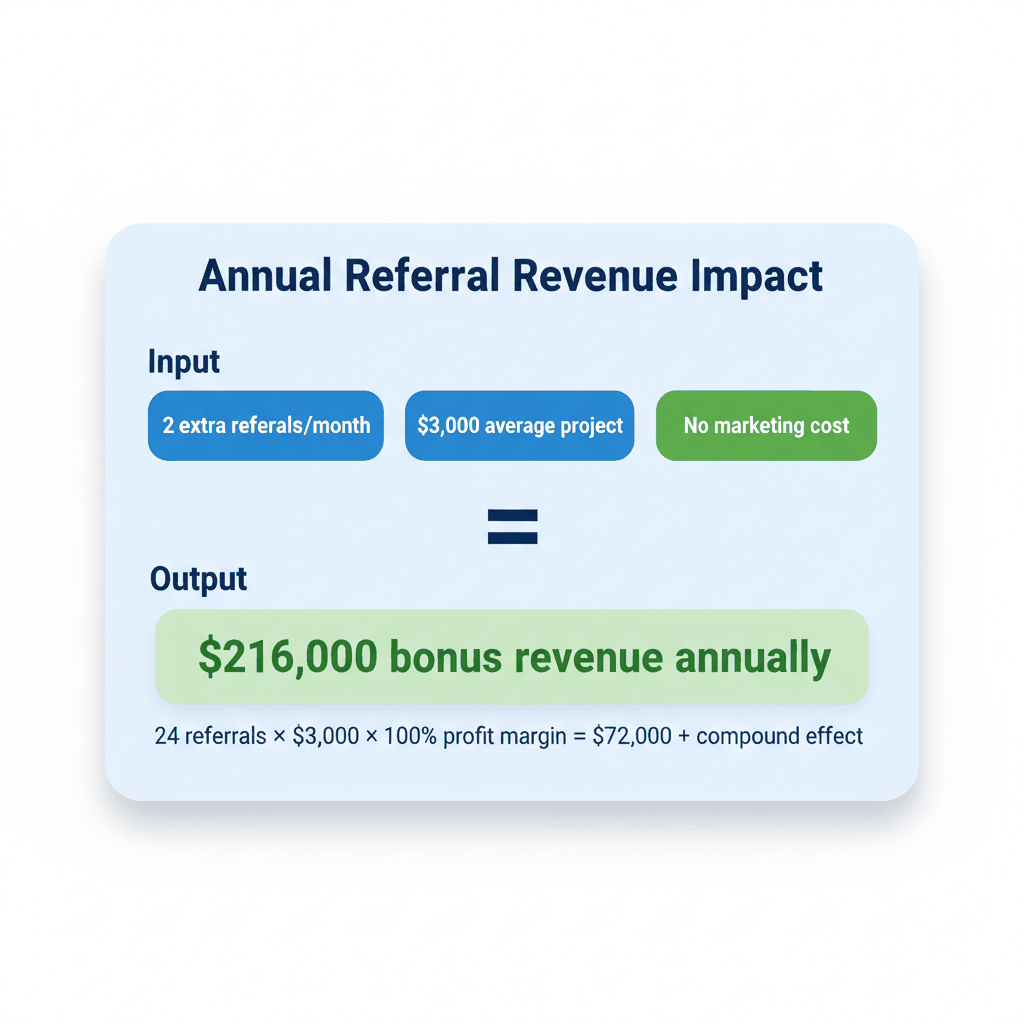
Let's look at real numbers. A flooring contractor with $3,000 average projects getting just two extra referral jobs per month generates $216,000 bonus revenue annually. That costs nothing except setting up the system.
Plus referred customers spend more money. They're more likely to upgrade materials, add extra rooms, and book additional services. They also refer more people themselves, creating a compound effect.
Most flooring contractors make the same referral mistakes. Avoid these problems to get better results.
The biggest mistake is waiting for referrals to happen naturally. Most companies cite referrals as their most important business source. Yet they do nothing to increase referral flow.
You complete beautiful installations and move to the next job. You miss revenue opportunities by not nurturing client relationships. Successful contractors never wing referral requests. They use scripts and systems.
Mismatched rewards kill referral programs. The offer is either too small, too large, or irrelevant to customers. A $50 reward feels cheap when someone refers a $20,000 commercial job. This leaves referrers feeling undervalued.
Too large rewards hurt your margins and seem suspicious to customers. They wonder why you're paying so much. The sweet spot is 5-8% of project value or fixed amounts between $100-$300.
Complex referral systems kill momentum. Don't force customers to log in, fill out forms, or share through specific channels. If it's too difficult, they won't bother.
Keep it simple. Give customers your business card to pass along. Create one-click share links. Make referring as easy as sending a text message.
You promise referral rewards but provide no thank-you, no gift card, no follow-up call. This guarantees you'll never get another referral from that customer. Always follow through on promises quickly.
Send thank-you notes within 24 hours. Deliver rewards within a week of the referred customer signing a contract. Keep referring customers updated on their referral's project status.
Referrals are too important to leave to chance. Use these tested scripts to generate consistent results.
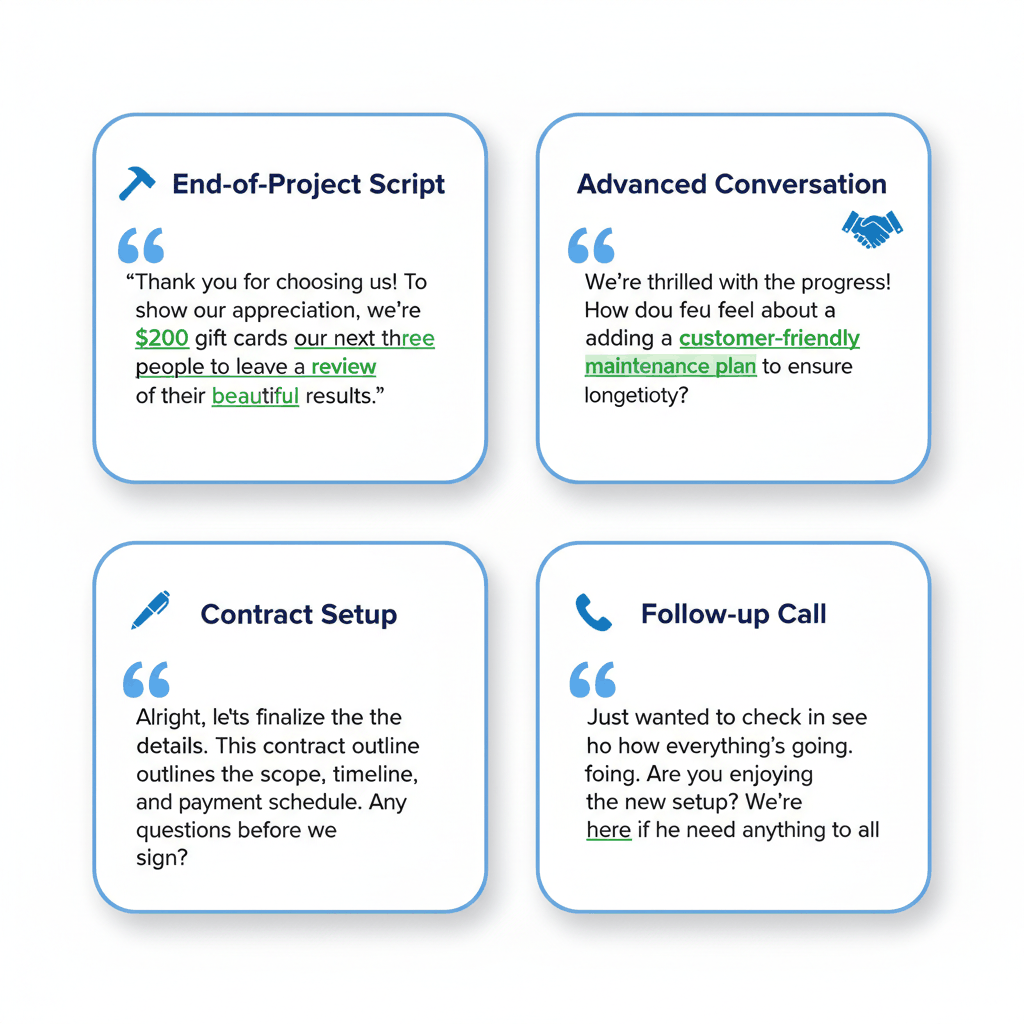
Use this script when completing installations:
"Mrs. Johnson, we're so glad you love your new floors! We'd love to help your friends and neighbors get the same great results. We give $200 gift cards for every referral that becomes a customer. Do you know anyone who might appreciate the same level of service we provided?"
This works because you ask when satisfaction is highest. The new floors look amazing and the customer feels excited about the transformation.
Try this approach for bigger projects:
"Mr. Thompson, we pride ourselves on providing a customer-friendly, risk-free flooring process. Do you know anyone who might appreciate the opportunity to enjoy the same level of service and personal attention we provided on your project?"
This positions referrals as doing favors for friends rather than helping your business. It feels more natural and less salesy.
Plant referral seeds at contract signing:
"Mrs. Davis, I know you're going to be thrilled with our work quality and overall experience. At project completion, I'll ask you to identify three people who might be interested in achieving the same beautiful results."
Setting expectations early makes the later referral request feel natural and expected rather than pushy.
Call customers two weeks after project completion:
"Hi Mrs. Martinez, this is Sarah from ABC Flooring. How are you enjoying your new floors? Great! I'm calling because we're looking to help a few more families get beautiful results like yours. Can you think of anyone who mentioned wanting new flooring?"
Phone-based outreach converts 10-15 times better than email because it shows higher intent and creates real conversations.
Your reward structure determines referral program success. Get this right and customers actively promote your business.
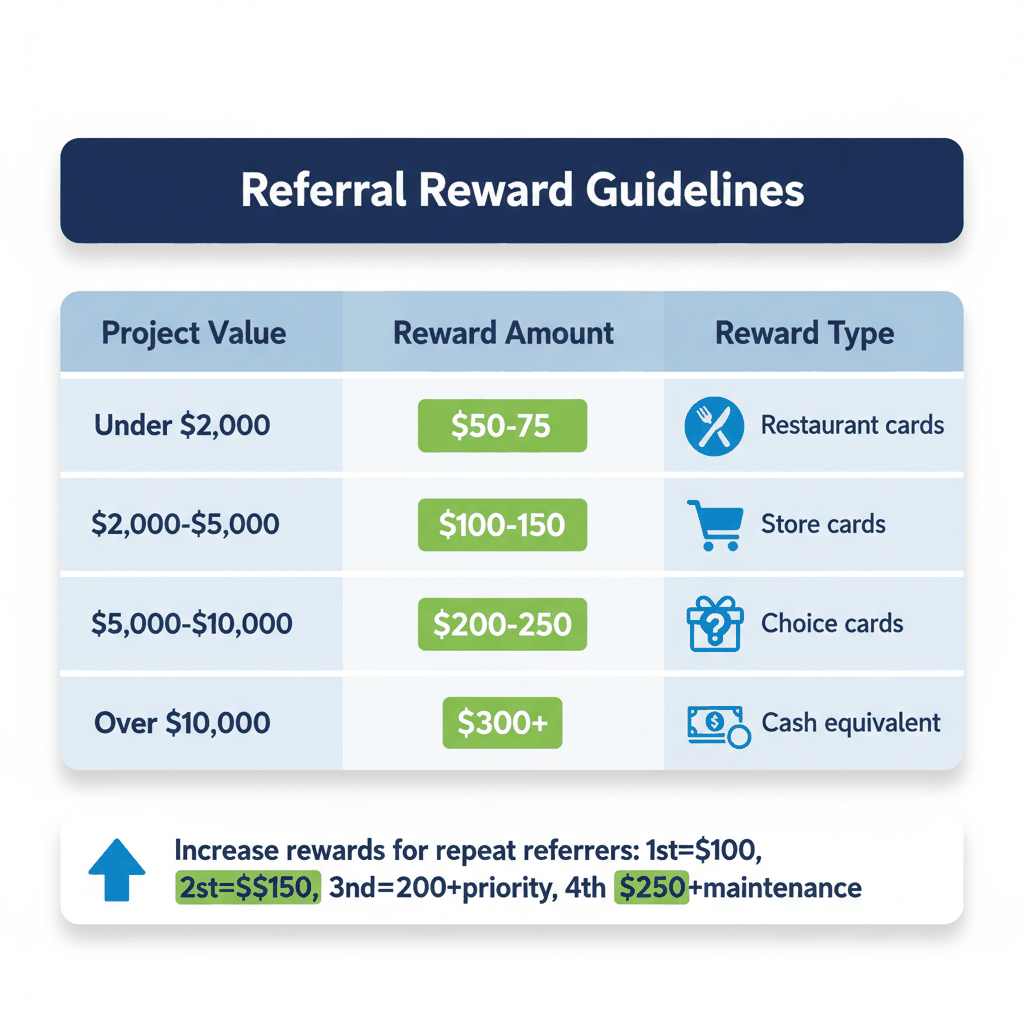
For residential flooring projects, use these guidelines:
Projects under $2,000: $50-75 gift cards
Projects $2,000-$5,000: $100-150 gift cards
Projects $5,000-$10,000: $200-250 gift cards
Projects over $10,000: $300+ or 3-5% of project value
Gift cards to popular local restaurants or stores work better than cash for smaller amounts. They feel more like gifts than payments.
Commercial referrals deserve bigger rewards because project values are higher. Some contractors pay $250-500 for every commercial referral that becomes a customer.
Calculate rewards as 2-5% of final project value. This scales appropriately and maintains healthy margins. Always cap rewards at reasonable amounts like $1,000 to protect profitability.
Reward repeat referrers with increasing benefits:
First referral: $100 gift card
Second referral: $150 gift card
Third referral: $200 gift card plus priority scheduling
Fourth+ referrals: $250 gift card plus annual maintenance visit
This encourages customers to refer multiple times and builds stronger relationships with your best advocates.
When you ask for referrals matters as much as how you ask. Time your requests for maximum impact.
The end of successful installations creates peak satisfaction. Customers love their new floors and feel excited about the transformation. This is perfect timing for referral requests.
Don't wait weeks to ask. Strike while emotions run high and the experience feels fresh. Customers remember details better and feel more enthusiastic about recommendations.
Create systematic follow-up schedules:
Day 1: Project completion referral request
Day 3: Thank-you email with referral reminder
Week 2: Phone call to check satisfaction and ask again
Month 3: Quarterly check-in with referral request
Month 12: Annual maintenance reminder with referral ask
Multiple touchpoints increase referral rates because customers think of different people at different times.
Time referral campaigns around home improvement seasons. Spring and fall generate more flooring inquiries as homeowners plan renovations.
Send referral reminders before holidays when people host gatherings. They notice flooring more when expecting guests and think about their own home improvements.
Deliver referral rewards quickly to maintain momentum. Send thank-you notes within 24 hours of receiving referrals. Process gift cards within one week of referred customers signing contracts.
Fast reward delivery shows professionalism and encourages more referrals. Slow delivery makes customers forget about referring others.
You need systems to track referrals, measure results, and identify your best customers. Start simple and upgrade as you grow.
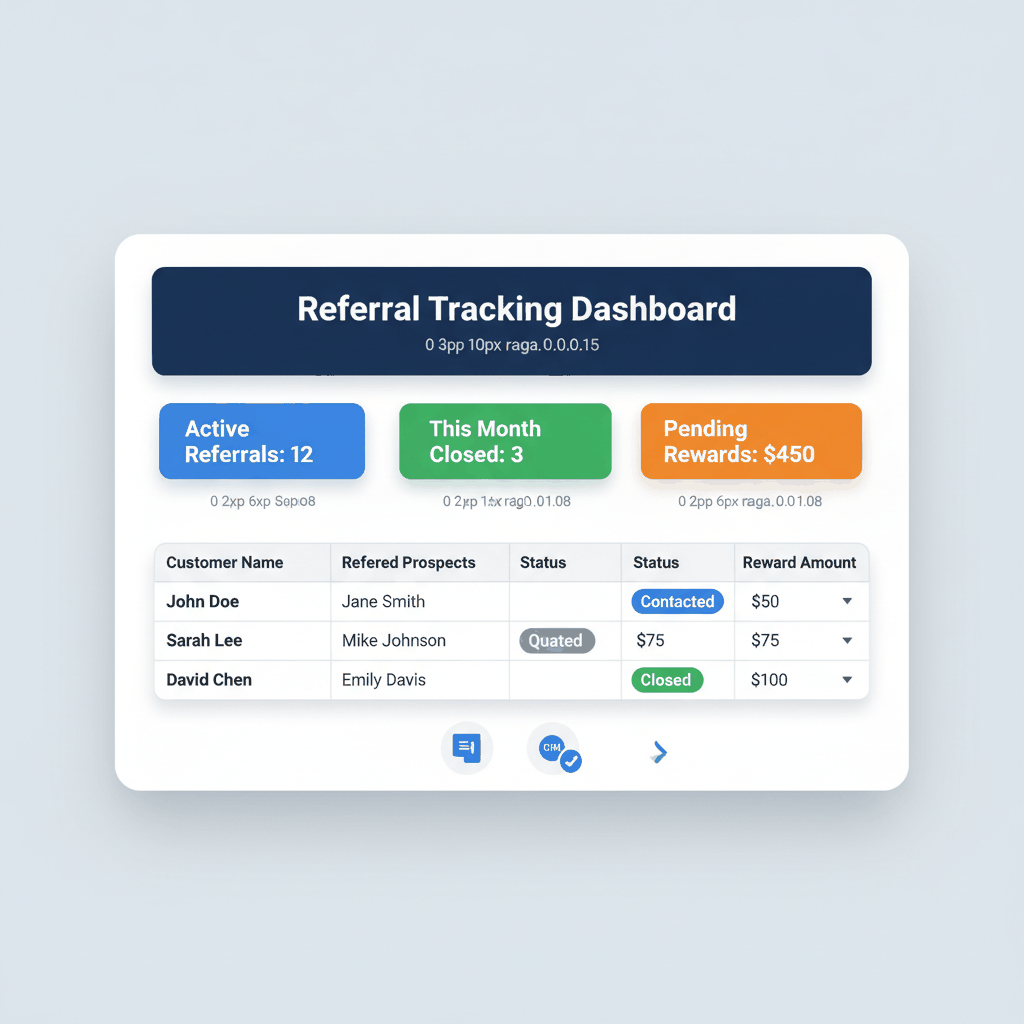
Build basic referral tracking in Google Sheets with these columns:
Referring customer name and contact info
Referred prospect name and phone number
Referral date and follow-up status
Project value and close status
Reward amount and delivery date
Add dropdown menus for status tracking like "New Referral," "Contacted," "Quoted," "Sold," or "Lost." This creates a simple CRM for referral management.
As referral volume grows, integrate tracking with customer relationship management software. Builder Prime combines CRM, estimating, scheduling, and payments for flooring contractors.
Floorzap brings quoting, scheduling, invoicing, and customer management into one platform built specifically for flooring pros. Keep all customer details in one place for personalized service.
HubSpot's free CRM provides customizable pipelines, contact records, email tracking, and task reminders. It's capable and easy to set up in an afternoon.
Dedicated referral software eliminates manual tracking hassles. These programs monitor customer-generated recommendations and measure program revenue contribution.
Look for features like automated referral tracking, customizable reward structures, and integration with existing business software. The investment pays off when referral volume justifies automation costs.
Track these key referral program metrics:
Referral conversion rate (referrals received to customers asked)
Close rate (referred prospects to actual customers)
Average project value from referred customers
Cost per acquisition compared to other marketing channels
Customer lifetime value of referred vs. traditional customers
Aim for 5-10% referral rates from satisfied customers. Excellent service combined with strong incentives can achieve these results. ResultCalls helps flooring contractors build systematic approaches to lead generation and get pay per call flooring leads.
What's the best reward amount for flooring contractor referrals?
For most residential projects, $100-250 gift cards work well. Calculate 3-5% of project value for larger jobs. Gift cards feel more personal than cash for smaller rewards and are easier to manage.
When should I ask customers for referrals?
Ask at project completion when satisfaction peaks. Follow up with phone calls 2 weeks later and quarterly check-ins. Multiple touchpoints increase referral rates because customers think of different people at different times.
How do I track flooring customer referrals effectively?
Start with Google Sheets tracking referrer info, prospect details, and reward status. As volume grows, upgrade to CRM software like Builder Prime or Floorzap that integrates with your existing business processes.
What makes contractor referral programs successful?
Systematic approaches work better than hoping for referrals. Use scripts, offer appropriate rewards, ask at peak satisfaction moments, and deliver rewards quickly. Follow up consistently to stay top-of-mind with past customers.
How much can referrals improve my flooring business?
Referrals convert at 50-70% compared to 8-15% from shared lead platforms. Just two extra referral jobs monthly can generate $216,000 in additional annual revenue for contractors with $3,000 average projects.
Ready to buy flooring leads? Sign up for free with ResultCalls today!

Hello everyone! My name is Alex and I write these blogs to help educate small business owners on different ways to grow their business. My goal is to make lead generation as easy as possible for you. After reading these blogs, I hope you leave with some actionable steps that will get you closer to growing your business :)