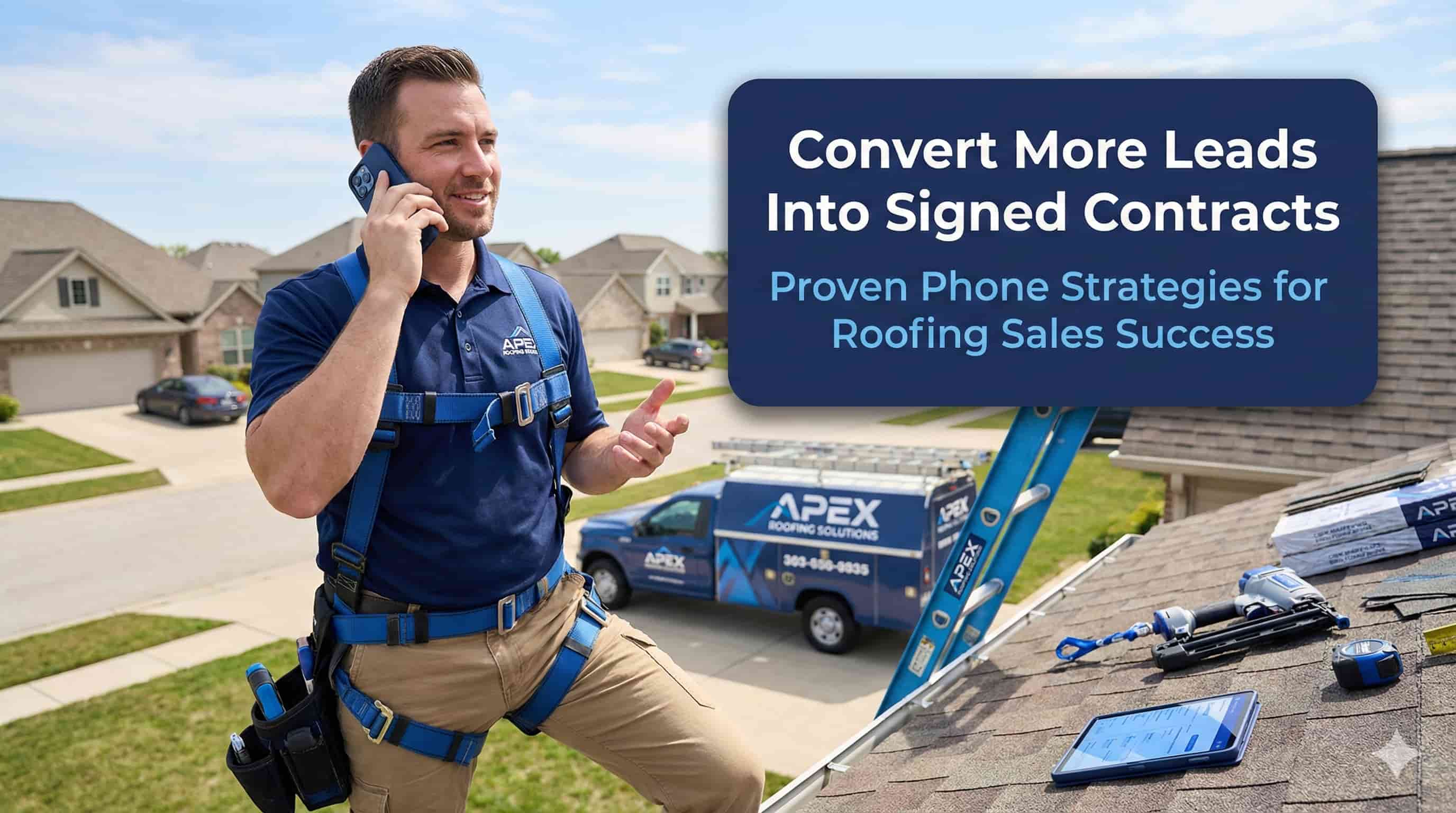
Your phone rings at 6 AM after last night's storm. A worried homeowner needs a roof inspection. Your competitor's automated system already scheduled three appointments.
Every roofing company faces this challenge. Storm damage creates urgent leads. But poor phone handling loses 20-30% of potential customers before you ever speak with them.
The solution lies in proven roofing sales call strategies. With structured phone scripts and proper follow-up systems, you can capture more leads and convert them into signed contracts.
This guide shows you exactly how to master roofing sales calls. You'll learn proven scripts, timing strategies, and tools that convert more leads into customers.
Table of Contents
Essential Roofing Phone Scripts That Work
Converting Roofing Leads With Perfect Timing
Roofing Customer Follow-up Systems That Close
Advanced Roofing Sales Techniques
Best CRM Tools for Roofing Companies
Tracking Your Roofing Sales Performance
Essential Roofing Phone Scripts That Work
Your roofing phone scripts determine whether leads become customers or hang up. Research shows that structured scripts increase engagement rates by 40% compared to unscripted calls.
Start every call with a clear introduction. State your company name, your name, and the reason for calling within the first 10 seconds. Homeowners appreciate transparency from the beginning.
After severe weather events, timing matters most. Call within 24-48 hours when urgency is highest. Here's the opening that works:
"Hi, this is [Your Name] from [Company Name]. We're reaching out because last night's storm affected several homes in your neighborhood. Are you experiencing any visible damage to your roof or gutters?"
This approach acknowledges the immediate concern. It positions you as responsive rather than pushy. Most homeowners appreciate contractors who reach out proactively after storms.
Many homeowners feel overwhelmed by insurance processes. Position yourself as their advocate. According to ServiceTitan research, contractors who offer insurance guidance close 35% more deals.
"I understand dealing with insurance can be confusing. We work directly with your insurance company to handle the paperwork and ensure you get fair coverage for all necessary repairs."
Ask specific questions to understand their situation. Avoid generic surveys. Focus on immediate concerns and decision-making authority.
"When did you first notice the damage?"
"Have you contacted your insurance company yet?"
"Are you experiencing any leaks inside your home?"
"Who else is involved in this decision?"
These questions reveal urgency levels and help you tailor your approach. They also demonstrate your expertise in handling storm damage situations.
Timing your roofing sales calls can double your success rate. Industry research shows specific time windows generate the highest response rates.
Early mornings work best for residential calls. Homeowners are typically home before work between 8-9 AM. They have time to discuss roofing concerns without feeling rushed.
Peak response times vary by day and situation. Tuesday through Thursday generate the highest engagement rates. Avoid Mondays when people feel overwhelmed and Fridays when they're distracted.
Morning calls: 8-9 AM on weekdays
Evening calls: 6-8 PM for working families
Post-storm calls: Within 24-48 hours
Weekend calls: Saturday 10 AM-2 PM
Emergency situations require immediate response. Water damage from roof leaks can worsen within hours. Prioritize these calls regardless of normal business hours.
Storm seasons create 300-500% increases in call volume. Prepare your phone handling systems before peak weather arrives. Your competitors who wait until storms hit will lose opportunities.
Spring and fall represent ideal roofing seasons. Homeowners plan major repairs during moderate weather. Start your outreach campaigns 2-3 weeks before optimal installation conditions.
For immediate response during emergencies, consider partnering with roofing lead generation services that can get you pay per call leads.
Authentic urgency converts leads better than artificial deadlines. Focus on real consequences of delayed action rather than limited-time offers.
"If we wait until you see water spots on your ceiling, the damage has already progressed to your decking and insulation. This turns a $5,000 repair into a $15,000 renovation."
This approach educates rather than pressures. Homeowners understand the logical need for prompt action when you explain the progression of damage.
Most roofing sales require multiple contacts before closing. The National Sales Executive Association reports that 80% of sales need five follow-up contacts. Yet 44% of salespeople quit after one rejection.
Systematic follow-up separates successful roofing companies from struggling ones. Your follow-up system should use multiple channels and provide value with each contact.
Vary your communication methods to stay top-of-mind without becoming annoying. Research shows multi-channel approaches increase contact rates by 108% compared to phone-only sequences.
Day 1: Initial phone call and estimate delivery
Day 3: Follow-up phone call to address questions
Day 7: Email with customer testimonials
Day 14: Text message with weather forecast reminder
Day 21: Final phone call with special consideration
Each contact should offer new value. Share maintenance tips, weather updates, or financing options. Avoid repeating the same sales pitch repeatedly.
Provide helpful information during follow-up contacts. This builds trust and demonstrates expertise beyond just selling services.
Send weather alerts when storms approach their area. Include photos of similar completed projects. Offer maintenance checklists they can use immediately.
Share insurance claim tips even if they haven't hired you yet. This positions you as a trusted advisor rather than just another contractor trying to make a sale.
Technology can handle routine follow-up tasks while you focus on estimates and installations. Email automation and text messaging keep prospects engaged without manual effort.
Set up triggered sequences based on prospect actions. Send different messages to insurance claim leads versus cash-pay customers. Customize timing based on project urgency levels.
Professional roofing sales techniques build trust and address concerns before they become objections. Focus on education rather than high-pressure tactics.
Start with a thorough inspection process. Take detailed photos and explain what you find. Most homeowners can't assess roof damage themselves, so your expertise provides immediate value.
Price objections often mask other concerns. Address the underlying worries about quality, reliability, or necessity before discussing costs.
"I understand price is important. Let me explain exactly what's included and why quality materials matter for your specific situation."
Break down pricing components clearly. Show the cost difference between repair and replacement scenarios. Most homeowners appreciate transparency in pricing explanations.
Demonstrate knowledge through every interaction. Explain roofing terminology in simple terms. Point out details other contractors might miss during inspections.
Share relevant experience from similar projects. Describe challenges you've solved for neighbors or similar homes. Specific examples build confidence in your capabilities.
Provide references from recent customers in their area. Local references carry more weight than distant testimonials. Offer to drive by completed projects nearby.
Effective closing assumes the sale and focuses on implementation details. Ask when they'd like to start rather than if they want to proceed.
"Based on the weather forecast, we could start your project next Tuesday or the following Monday. Which works better for your schedule?"
This approach moves past the yes/no decision to practical planning. It makes the next step feel natural rather than pressured.
Only 28% of roofers currently use CRM systems to track leads. Companies that adopt CRM plus marketing automation report generating 2x more leads year-over-year than those without systems.
The right CRM system manages every aspect of your roofing sales process. From initial contact through project completion and follow-up maintenance reminders.
ServiceTitan offers specialized features for roofing contractors. Their Phones Pro platform uses AI to identify missed opportunities and suggest follow-up actions.
The system tracks call performance with metrics like hold times, completion rates, and conversion statistics. You can see exactly when to adjust your approach or pause campaigns.
ServiceTitan's CRM functionality manages every sales opportunity within the same system you use for job management. This eliminates data silos and improves customer communication.
AccuLynx provides AI-powered lead prioritization features. The system analyzes lead sources, response times, and conversion patterns to rank opportunities automatically.
Store unlimited photos and documents directly in customer records. Convert estimates into contracts digitally. Collect electronic signatures and send automated follow-up communications.
The platform integrates with popular marketing tools and provides detailed analytics on lead sources and conversion rates by campaign type.
HubSpot success stories include companies like Roof Maxx, which increased exclusive dealer growth by over 200% using their CRM and marketing automation features.
The free version provides essential CRM features for smaller roofing companies. Paid plans add advanced automation, detailed reporting, and integration capabilities.
HubSpot excels at nurturing long-term relationships through email marketing and content management. Perfect for companies focusing on maintenance contracts and repeat customers.
A full-time receptionist costs $35,000-$45,000 annually plus 25-35% in benefits. CRM systems with automated features cost significantly less while providing 24/7 availability.
Calculate ROI based on captured leads rather than just cost savings. If a CRM system helps you capture 10 additional projects per year at $8,000 average value, the investment pays for itself quickly.
What gets measured gets improved. Track specific metrics that directly impact your roofing sales success. Focus on leading indicators rather than just final results.
Monitor call response times, appointment setting rates, and conversion percentages by lead source. These metrics reveal bottlenecks in your sales process.
Track metrics that predict future success rather than just historical results. Leading indicators help you adjust strategies before problems affect revenue.
Average response time to new leads
Percentage of calls that result in appointments
Conversion rate from estimate to signed contract
Average project value by lead source
Customer lifetime value including referrals
Benchmark your performance against industry standards. The average roofing lead conversion rate ranges from 2-5% depending on lead source and follow-up quality.
Different lead sources require different approaches and generate varying conversion rates. Storm damage leads convert faster but may have lower profit margins due to insurance constraints.
Referral leads typically convert at higher rates and generate larger project values. Track referral sources and implement systematic referral request processes.
Digital marketing leads require longer nurturing periods but often represent homeowners who have researched options thoroughly. Adjust your follow-up timelines accordingly.
Review performance metrics weekly during peak seasons and monthly during slower periods. Look for trends rather than focusing on individual calls or days.
Test different script variations and track results. Small improvements in each stage of the process compound to create significant performance gains.
Even a 5% improvement in response time, appointment setting, and closing rates can result in 15-20% more completed projects overall.
What's the best time to make roofing sales calls?
Early mornings (8-9 AM) and early evenings (6-8 PM) on Tuesday through Thursday generate the highest response rates. After storms, call within 24-48 hours regardless of normal timing preferences.
How many follow-up calls should I make to roofing leads?
Research shows 80% of roofing sales require five follow-up contacts. Use a multi-channel approach alternating between phone calls, emails, and text messages over 2-3 weeks for best results.
Do roofing phone scripts really improve conversion rates?
Yes, structured roofing phone scripts increase engagement rates by 40% compared to unscripted calls. Scripts ensure consistent messaging while allowing personalization based on specific customer situations.
What CRM features matter most for roofing companies?
Essential CRM features include lead tracking, automated follow-up sequences, photo storage for inspections, digital contract capabilities, and integration with your existing business management software.
How can I handle high call volumes during storm season?
Implement call automation systems or partner with professional answering services. This ensures every potential customer gets a professional response while you focus on inspections and installations.
Ready to get roofing marketing leads? Sign up for free with ResultCalls today!

Hello everyone! My name is Alex and I write these blogs to help educate small business owners on different ways to grow their business. My goal is to make lead generation as easy as possible for you. After reading these blogs, I hope you leave with some actionable steps that will get you closer to growing your business :)